
 Last week I wrote about the recent PLM Road Map & PDT Spring 2021 conference day 1, focusing mainly on technology. There were also interesting sessions related to exploring future methodologies for a digital enterprise. Now on Day 2, we started with two sessions related to people and methodology, indispensable when discussing PLM topics.
Designing and Keeping Great Teams
This keynote speech from Noshir Contractor, Professor of Behavioral Sciences in the McCormick School of Engineering & Applied Science, intrigued me as the subtitle states: Lessons from Preparing for Mars. What Can PLM Professionals Learn from This?
 You might ask yourself, is a PLM implementation as difficult and as complex as a mission to Mars? I hoped, so I followed with great interest Noshir’s presentation.
Noshir started by mentioning that many disruptive technologies have emerged in recent years, like Teams, Slack, Yammer and many more.
The interesting question he asked in the context of PLM is:

As the domain of PLM is all about trying to optimize effective collaboration, this is a fair question
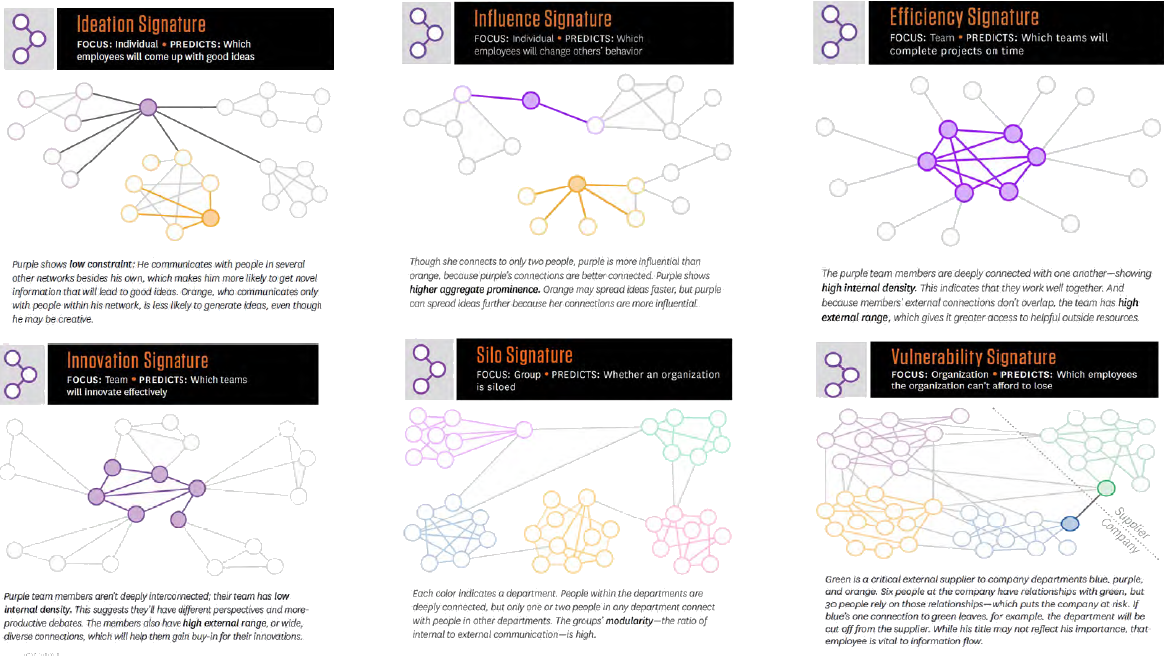
Structural Signatures
Noshir shared with us that it is not the most crucial point to look at people’s individual skills but more about who they know.
Measure who they work with is more important than who they are.
Based on this statement, Noshir showed some network patterns of different types of networks.
Click on the image to see the enlarged picture.
It is clear from these patterns how organizations communicate internally and/or externally. It would be an interesting exercise to perform in a company and to see if the analysis matches the perceived reality.
Noshir’s research was used by NASA to analyze and predict the right teams for a mission to Mars.
 Noshir went further by proposing what PLM can learn from teams that are going into space. And here, I was not sure about the parallel. Is a PLM project comparable to a mission to Mars? I hope not! I have always advocated that a PLM implementation is a journey. Still, I never imagined that it could be a journey into the remote unknown.
Noshir explained that they had built tools based on their scientific model to describe and predict how teams could evolve over time. He believes that society can also benefit from these learnings. Many inventions from the past were driven by innovations coming from space programs.
I believe Noshir’s approach related to team analysis is much more critical for organizations with a mission. How do you build multidisciplinary teams?
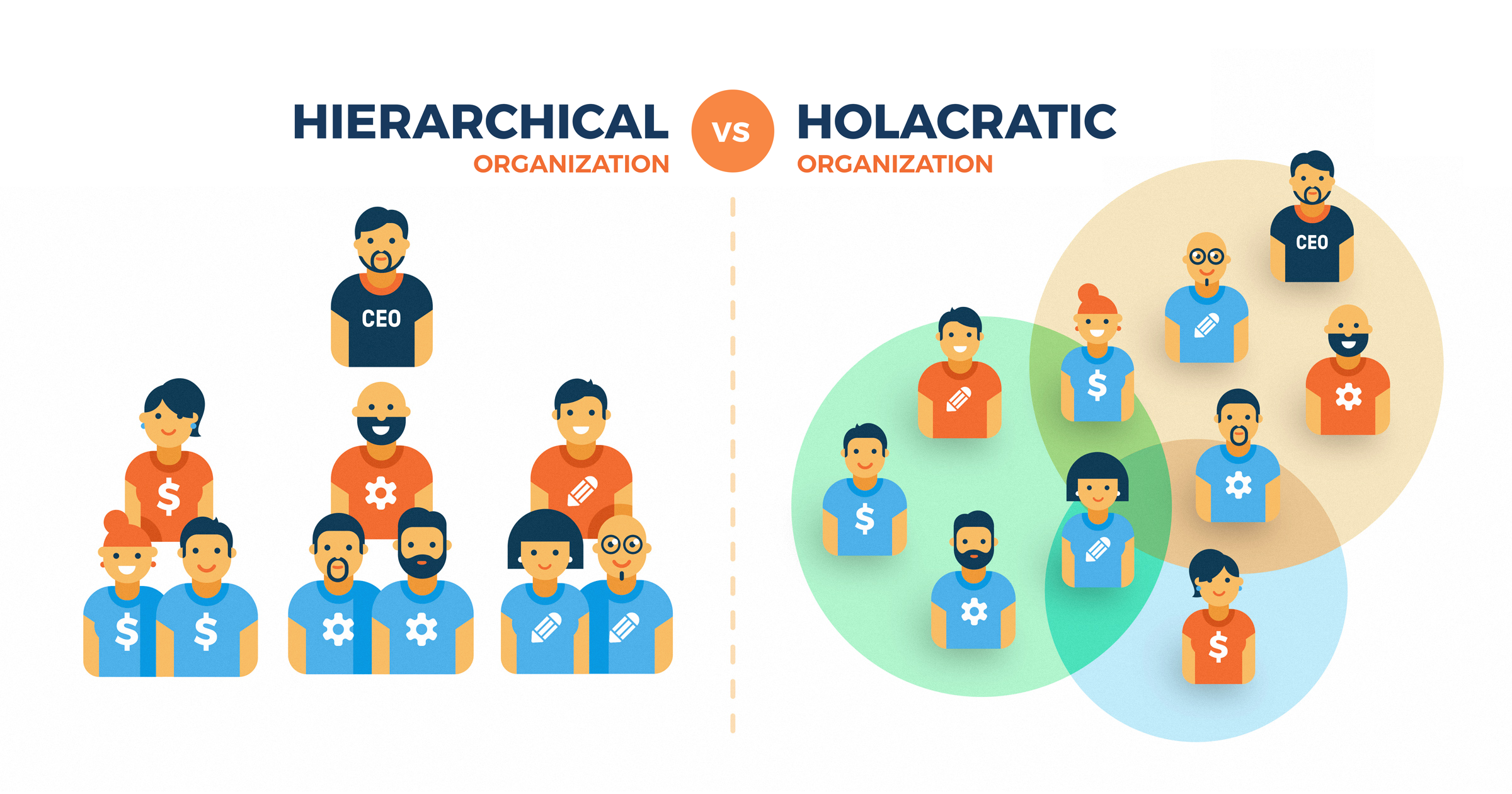 The proposed methodology is probably best for a holocracy based organization. Holocrazy is an interesting concept for companies to get their employees committed, however, it also demands a type of involvement that not every person can deliver. For me, coming back to PLM, as a strategy to enable collaboration, the effectiveness of collaboration depends very much on the organizational culture and created structure.
DISRUPTION – EXTINCTION or still EVOLUTION?
We talk a lot about disruption because disruption is a painful process that you do not like to happen to yourself or your company. In the context of this conference’s theme, I discussed the awareness that disruptive technologies will be changing the PLM Value equation.
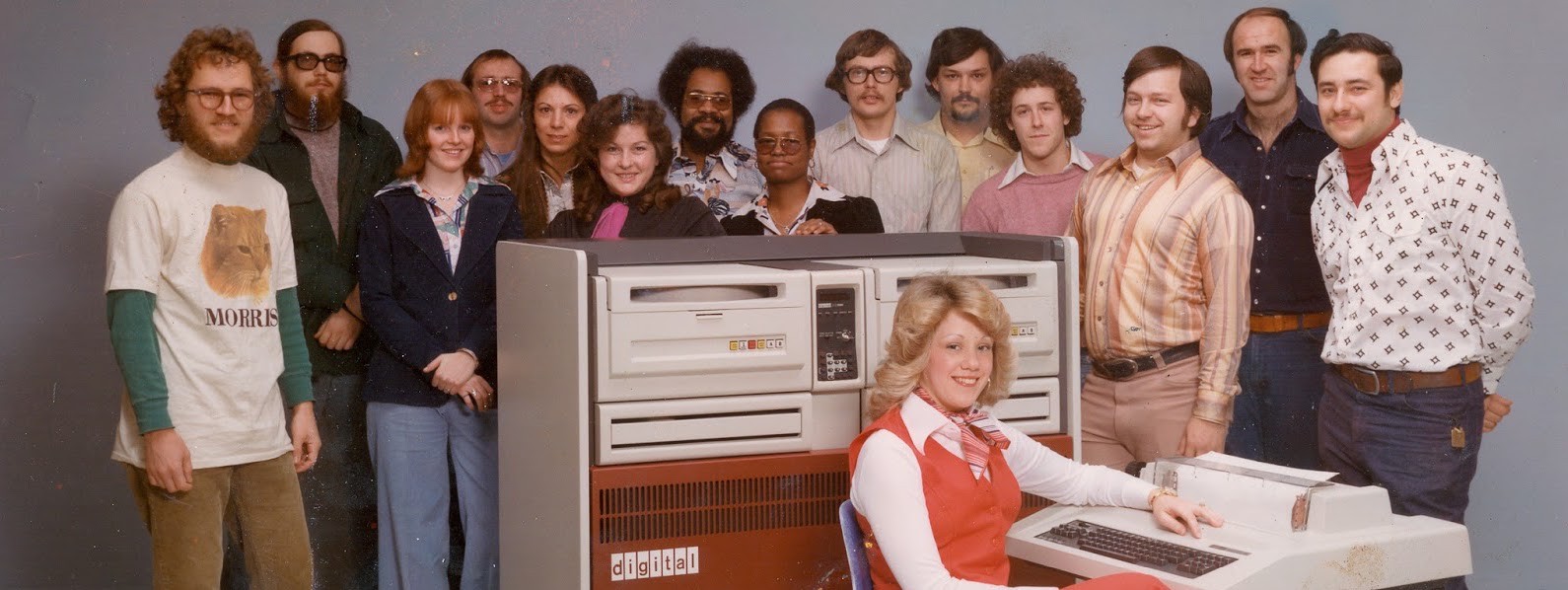
A disruption like the switch from mini-computers to PCs (killed DEC) or from Symbian to iOS (killed Nokia) is therefore not likely to happen that fast. Still, there is a need to take benefit from these new disruptive technologies.
My presentation was focusing on describing the path of evolution and focus areas for the PLM community. Doing nothing means extinction; experimenting and learning towards the future will provide an evolutionary way.

Starting from acknowledging that there is an incompatibility between data produced most of the time now and the data needed in the future, I explained my theme: From Coordinated to Connected. As a PLM community, we should spend more time together in focus groups, conferences on describing and verifying methodology and best practices.

Nigel Shaw (EuroStep) and Mark Williams (Boeing) hinted in this direction during this conference (see day 1). Erik Herzog (SAAB Aeronautics) brought this topic to last year’s conference (see day 3). Outside this conference, I have comparable touchpoints with Martijn Dullaert when discussing Configuration Management in the future in relation to PLM.
In addition, this decade will probably be the most disruptive decade we have known in humanity due to external forces that push companies to change. Sustainability regulations from governments (the Paris agreement), the implementation of circular economy concepts combined with the positive and high Total Share Holder return will push companies to adapt themselves more radical than before.
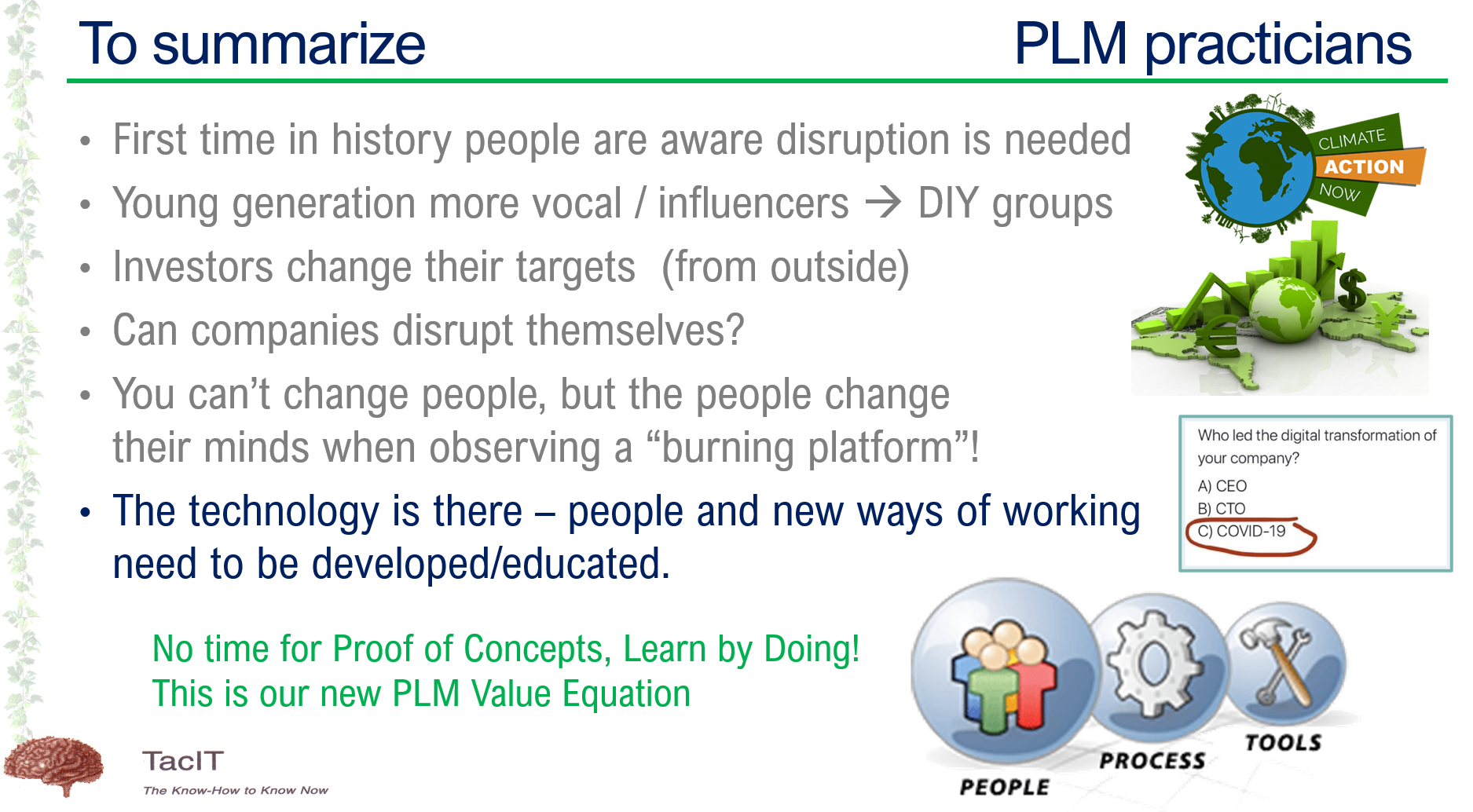
What is clear is that disruptive technologies and concepts, like Industry 4.0, Digital Thread and Digital Twin, can serve a purpose when implemented efficiently, ensuring the business becomes sustainable.
 Due to the lack of end-to-end experience, we need focus groups and conferences to share progress and lessons learned. And we do not need to hear the isolated vendor success stories here as a reference, as often they are siloed again and leading to proprietary environments.
You can see my full presentation on SlideShare: DISRUPTION – EXTINCTION or still EVOLUTION?
Building a profitable Digital T(win) business
Beatrice Gasser, Technical, Innovation, and Sustainable Development Director from the Egis group, gave an exciting presentation related to the vision and implementation of digital twins in the construction industry.

The Egis group both serves as a consultancy firm as well as an asset management organization. You can see a wide variety of activities on their website or have a look at their perspectives
Historically the construction industry has been lagging behind having low productivity due to fragmentation, risk aversion and recently, more and more due to the lack of digital talent. In addition, some of the construction companies make their money from claims inside of having a smooth and profitable business model.
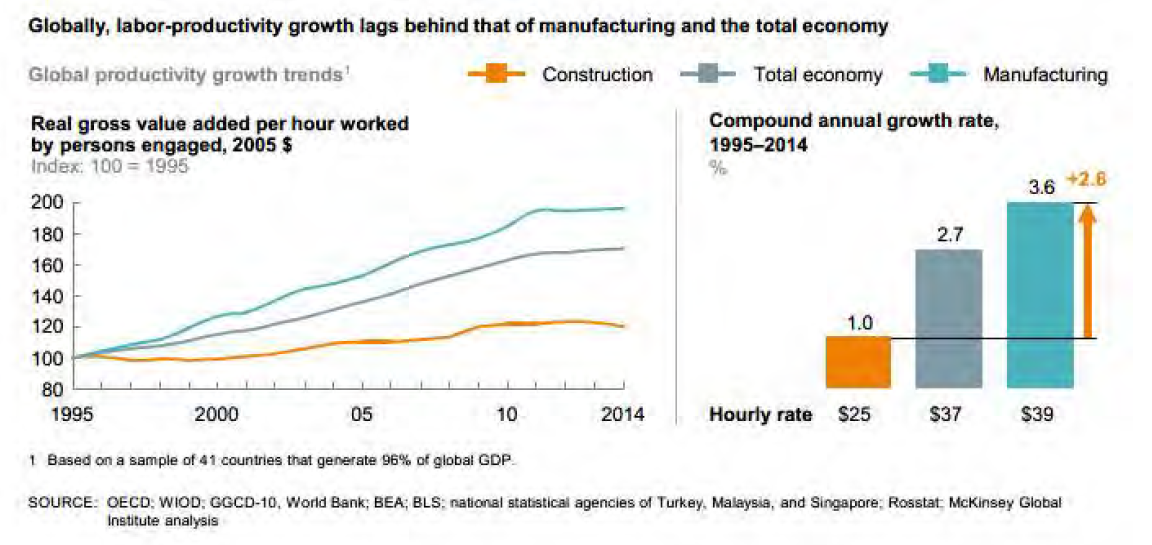
Without innovation in the construction industry, companies working the traditional way would lose market share and investor-focused attention, as we can see from the BCG diagram I discussed in my session.
The digital twin of construction is an ideal concept for the future. It can be built in the design phase to align all stakeholders, validate and integrate solutions and simulate the building operational scenarios at almost zero materials cost. Egis estimates that by using a digital twin during construction, the engineering and construction costs of a building can be reduced between 15 and 25 %
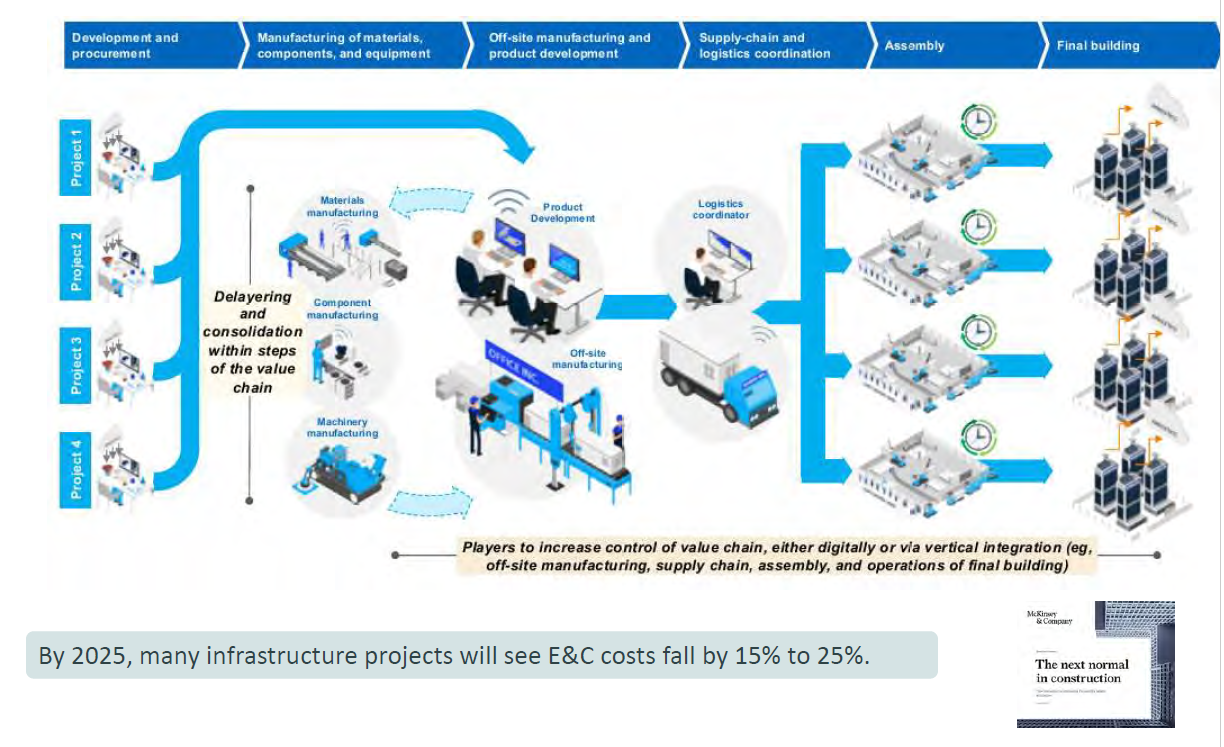
More importantly, the digital twin can also be used to first simulate operations and optimize energy consumption. The connected digital twin of an existing building can serve as a new common data environment for future building stakeholders. This could be the asset owner, service companies, and even the regulatory authorities needing to validate the building’s safety and environmental impact.
Beatrice ended with five principles essential to establish a digital twin, i.e
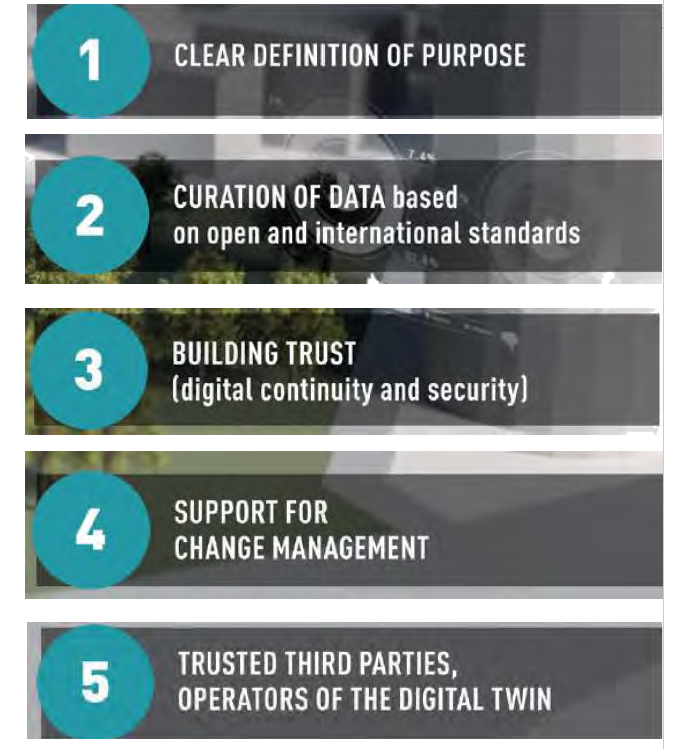 I think the construction industry has a vast potential to disrupt itself. Faster than the traditional manufacturing industries due to their current needs to work in a best-connected manner.
Next, there is almost no legacy data to deal with for these companies. Every new construction or building is a unique project on its own. The key differentiators will be experience and efficient ways of working.
It is about the belief, the guts and the skilled people that can make it work – all for a more efficient and sustainable future.
Leveraging PLM and Cloud Technology for Market Success
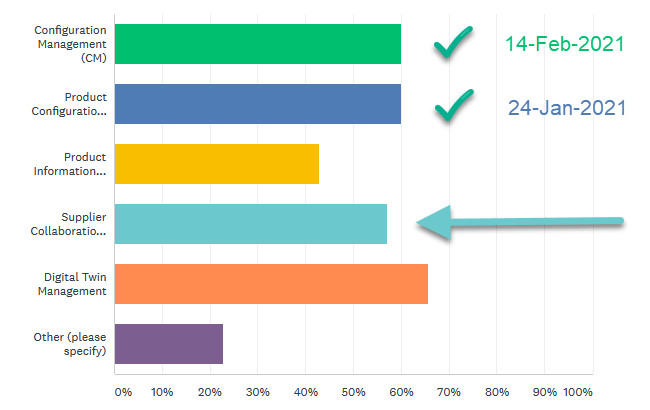
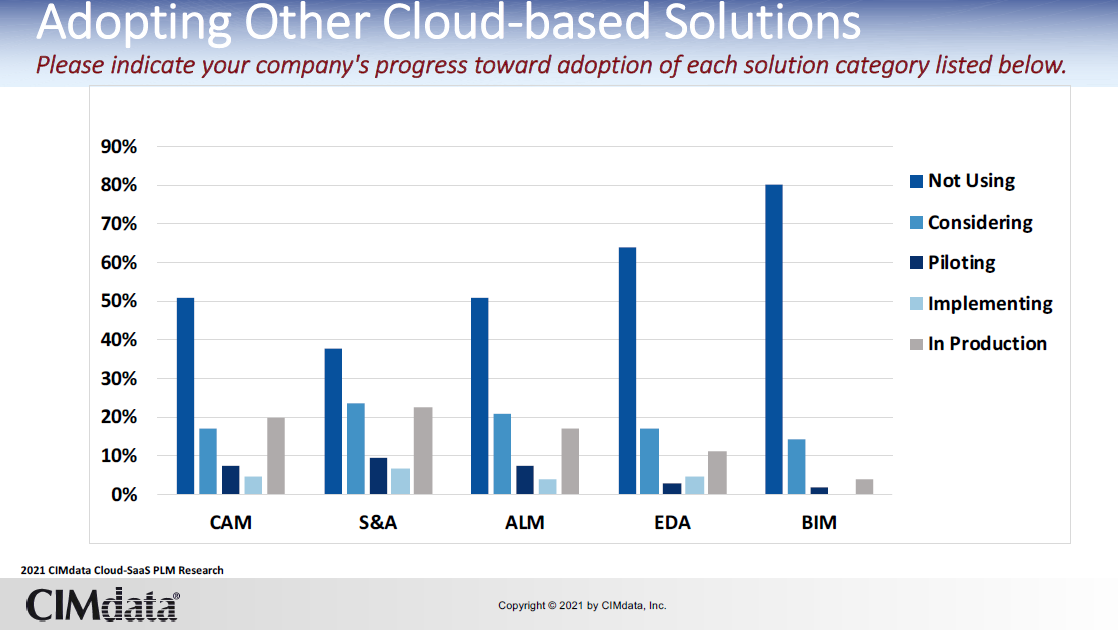 Stan Przybylinski, Vice President of CIMdata, reported their global survey related to the cloud, completed in early 2021. Also, Stan typified Industry 4.0 as a connected vision and cloud and digital thread as enablers to implementing this vision.
The companies interviewed showed a lot of goodwill to make progress – click on the image to see the details. CIMdata is also working with PLM Vendors to learn and describe better the areas of beneft. I remain curious about who comes with a realization and business case that is future-proof. This will define our new PLM Value Equation.
Conclusion
These were two exciting days with enough mentioning of disruptive technologies. Our challenge in the PLM domain will be to give them a purpose. A purpose is likely driven by external factors related to the need for a sustainable future. Efficiency and effectiveness must come from learning to work in connected environments (digital twin, digital thread, industry 4.0, Model-Based (Systems) Engineering.
Note: You might have seen the image below already – a nice link between sustainability and the mission to Mars

 This year, it was a two-day conference with approximately 200 attendees discussing how emerging technologies can disrupt the current PLM landscape and reshape the PLM Value Equation. During the first day of the conference, we focused on technology.

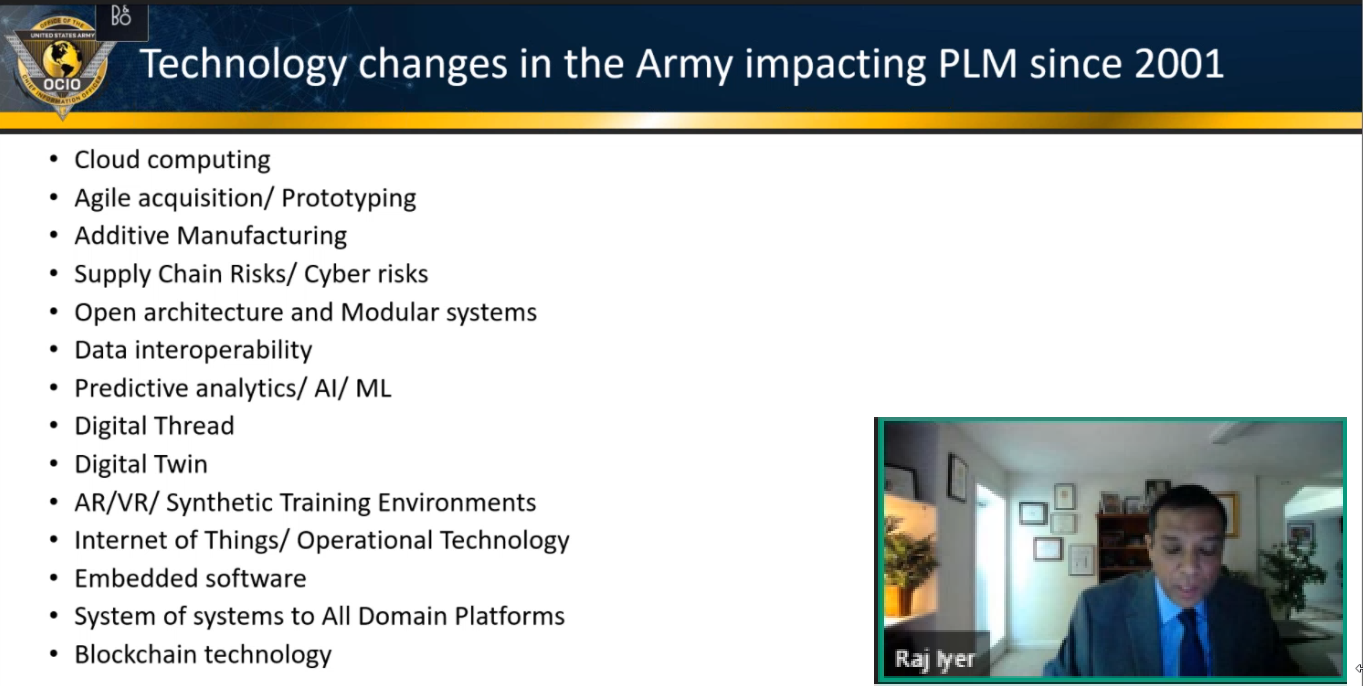

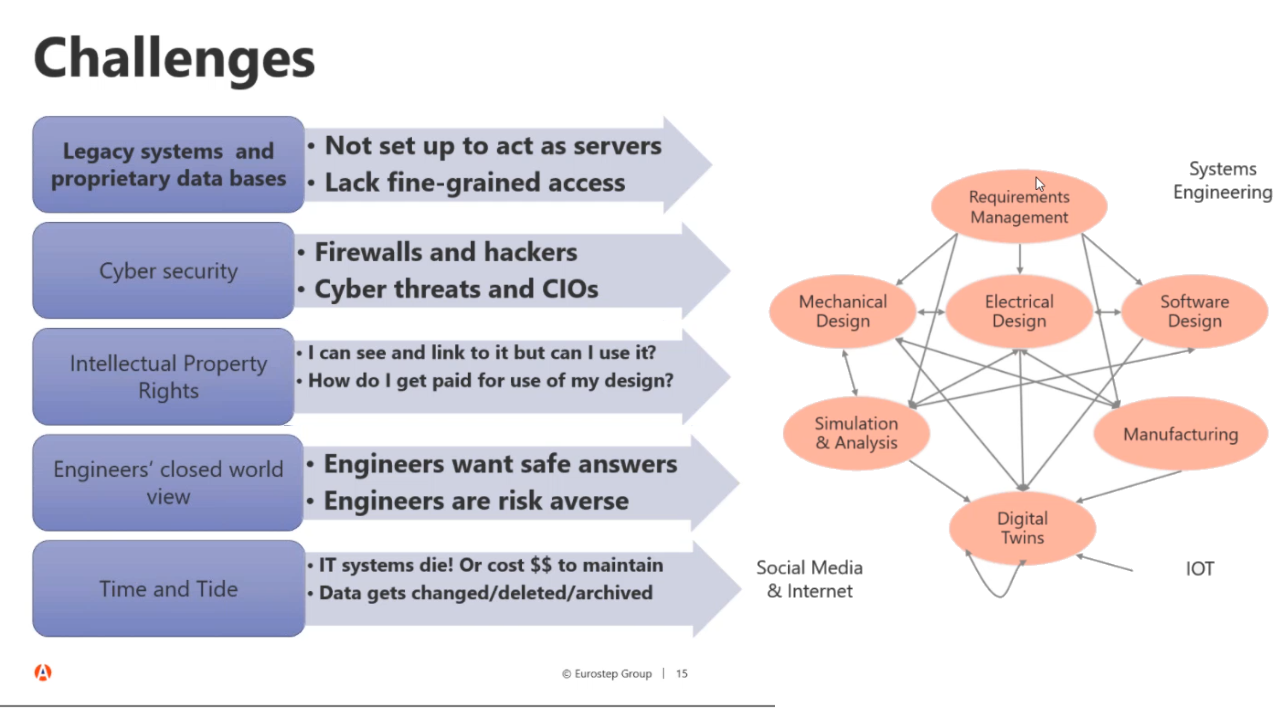
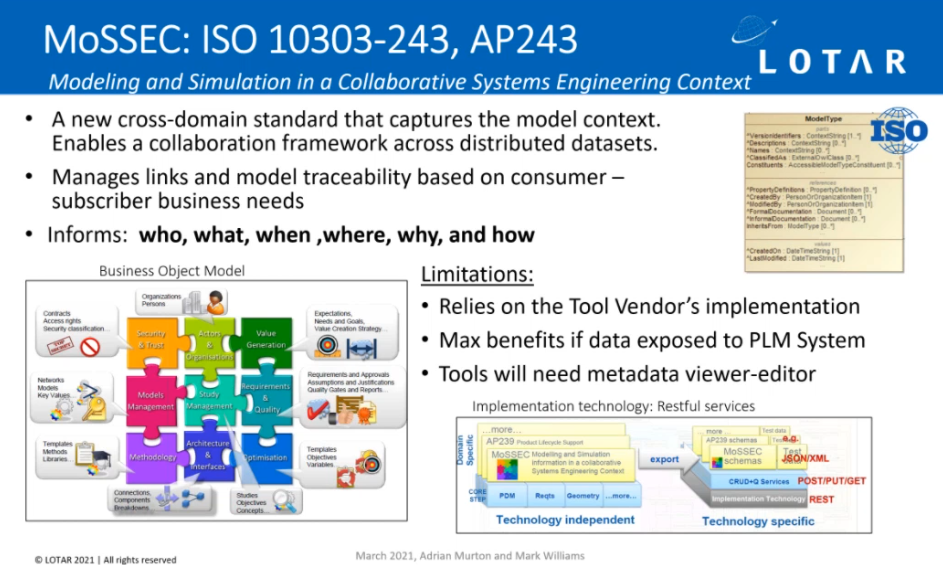
 This was the presentation I have been waiting for.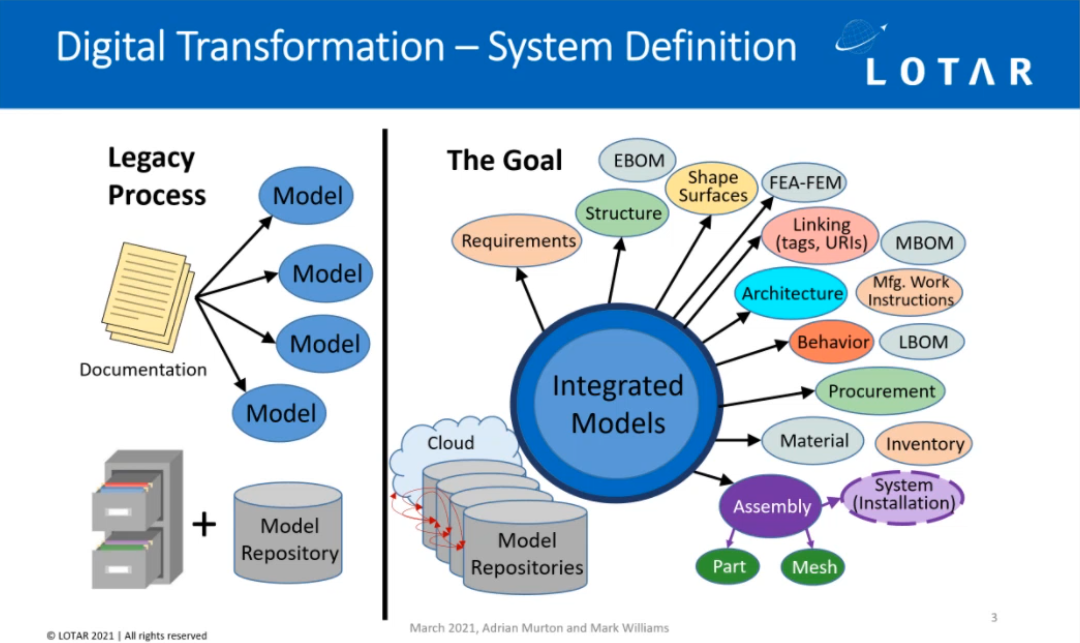
 Mark mentioned that 20 years ago, the IDC (

 My contribution will be on day 2, where I combine disruptive technology with the need to become really sustainable in our businesses.
 If you have read these posts, or if you have gone through this journey, you will realize that all steps were more or less done evolutionary. There were no disruptions. Affordable 3D CAD systems, new internet paradigms (interactive internet), global connectivity and mobile devices all introduced new capabilities for the mainstream. As described in these posts, the new capabilities sometimes create friction with old practices. Probably the most popular topics are the whole
  In the last five to ten years, a lot of new technology has come into our lives. The majority of these technologies are related to dealing with data. Digital transformation in the PLM domain means moving from a file-based/document-centric approach to a data-driven approach.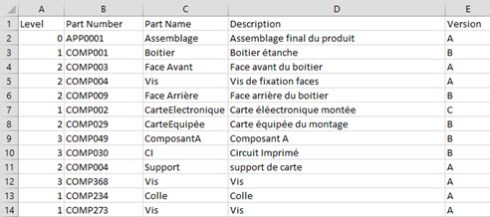
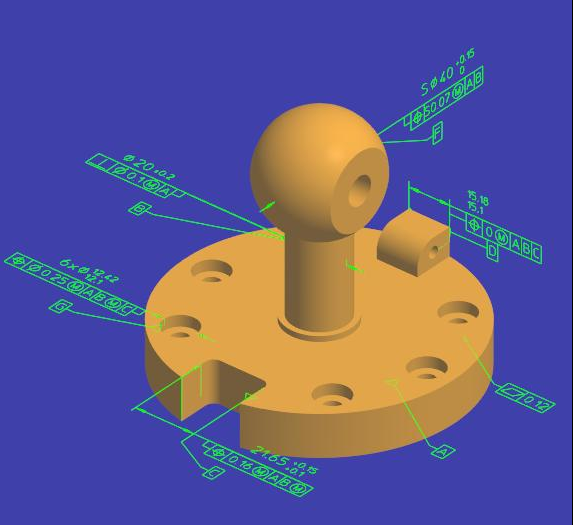
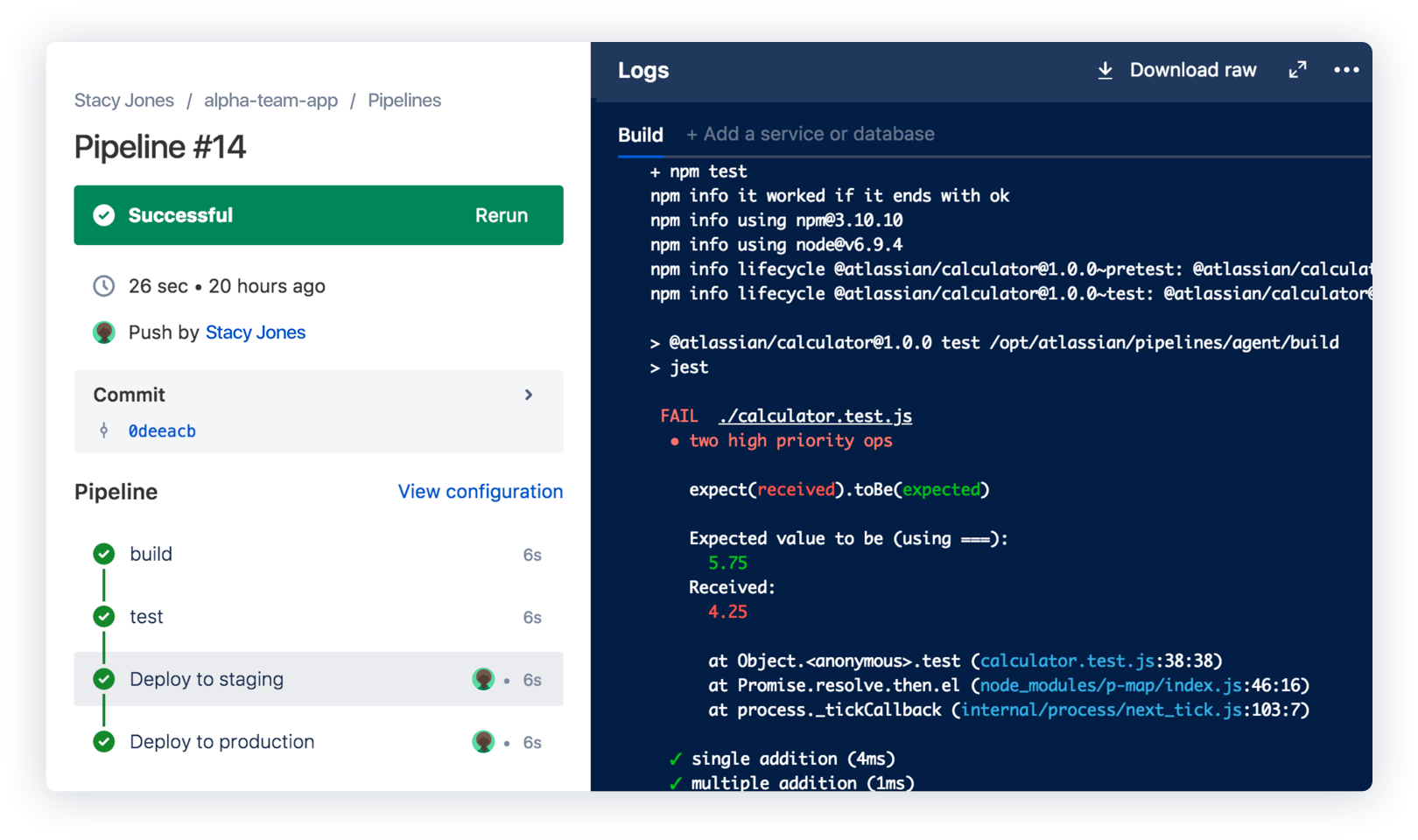 Most importantly, traditional PLM methodologies have been based on a mechanical design and release process. Meanwhile, modern products are systems where the majority of capabilities are defined by software. Software has an entirely different configuration and lifecycle approach which conflict with a mechanical approach, which is too rigid for software.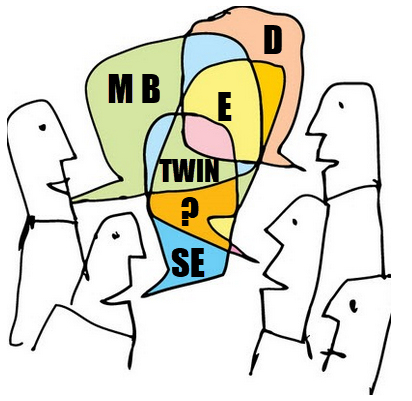

 Model-Based Systems Engineering (MBSE) in all its aspects needs to be discussed too. MBSE is crucial for defining complex products. Model-Based Systems Engineering is seen as a discipline to design products. Understanding data management related to MBSE will be the foundation for understanding data management in a Model-Based Enterprise. For example, how to deal with configuration management in the future?
 Regularly (young) individuals approach me looking for advice to start or boost their PLM career. One of the questions the
  Before going further on this topic, there is also the observation that many outspoken PLM experts are “old.” Meanwhile, all kinds of new disruptive technologies are comping up.

 General PLM conferences have been an excellent way to listen to other people’s experiences in the past. Depending on the type of conference, you would be able to narrow your learning scope.
 It is challenging to be interactive as a physical conference; it is mainly a conference to get inspired or guided in your thinking about new PLM technologies and potential disruption.
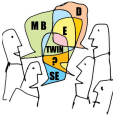 One of the best learnings comes from having honest discussions with other people who all have different backgrounds. To be part of such a discussion, you need to have at least some basic knowledge about the topic. This avoids social media-like discussions where millions of “experts” have an opinion behind the keyboard. (The


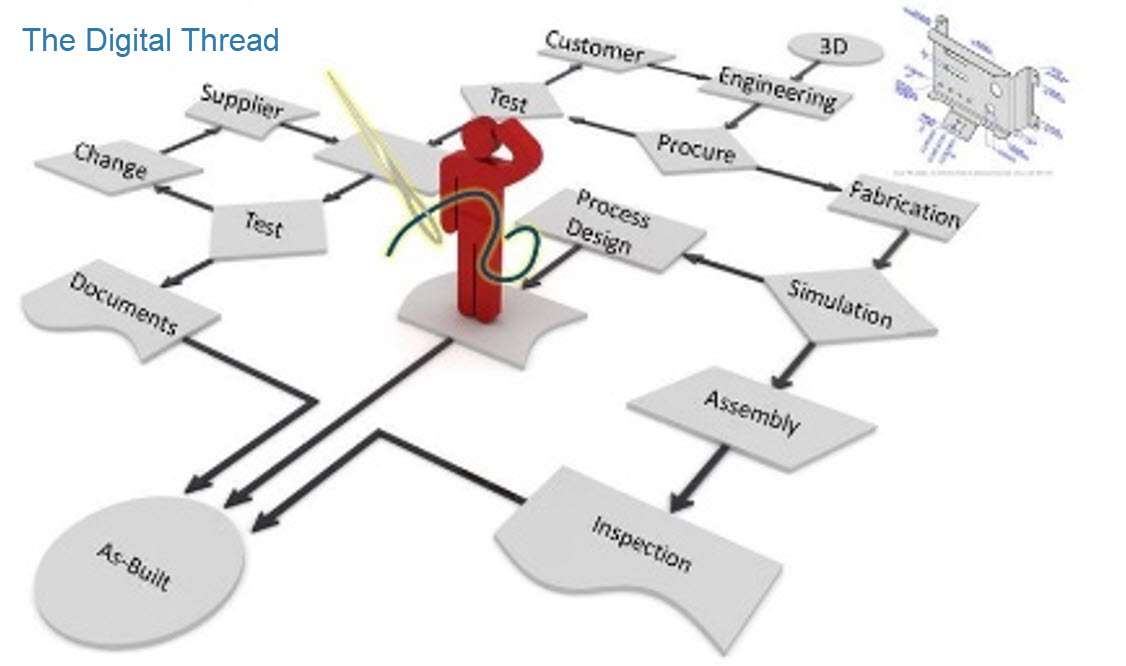
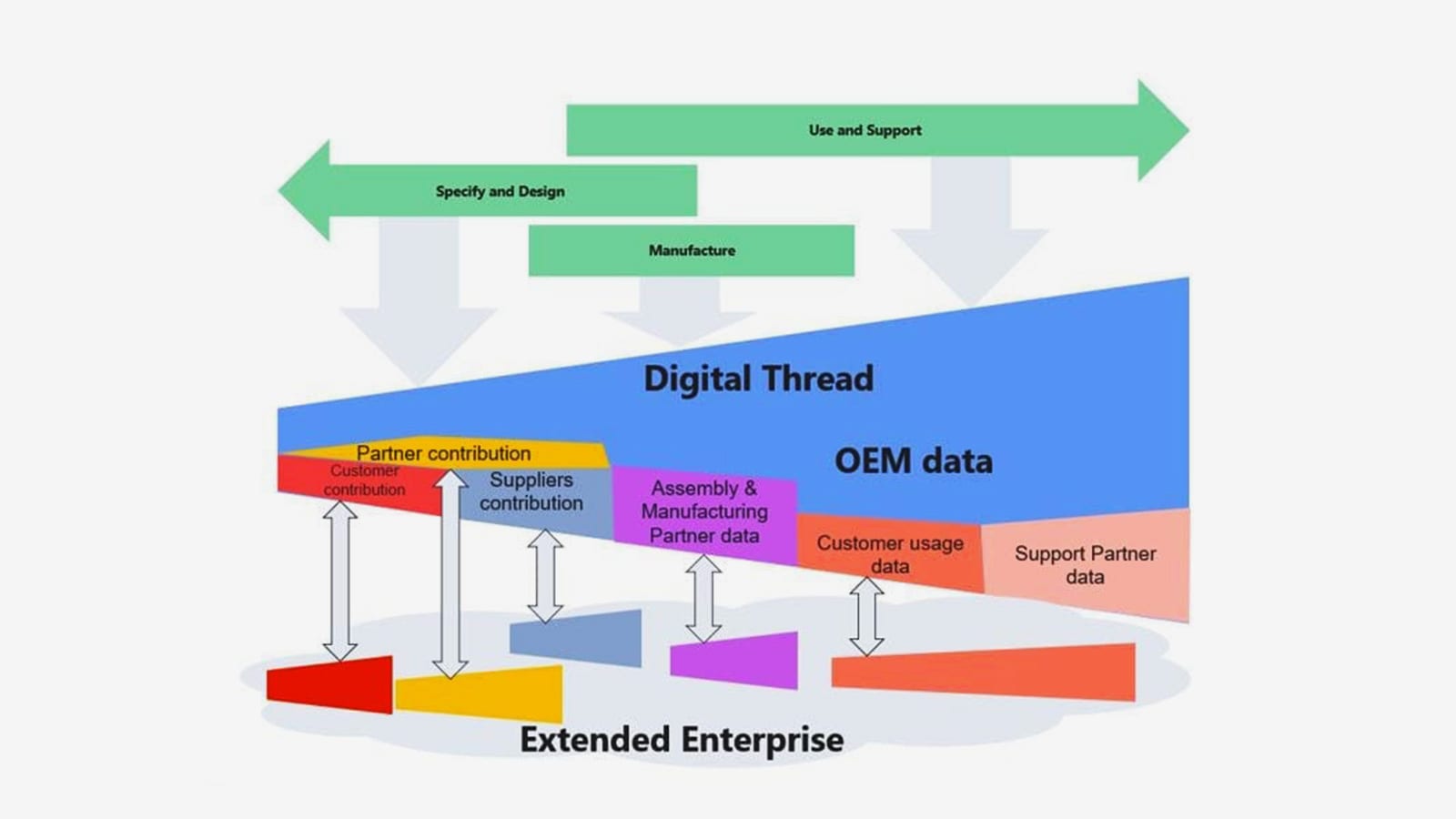
 Inside this video you see a slide from Marc Halpern (Gartner), depicting the digital thread during the last

 Let me start by putting the book in perspective. In today’s globalized business, competition among industrial companies has become increasingly challenging with rapidly evolving technology, quickly changing customer behavior, and accelerated product lifecycles. Many companies struggle with low profitability.
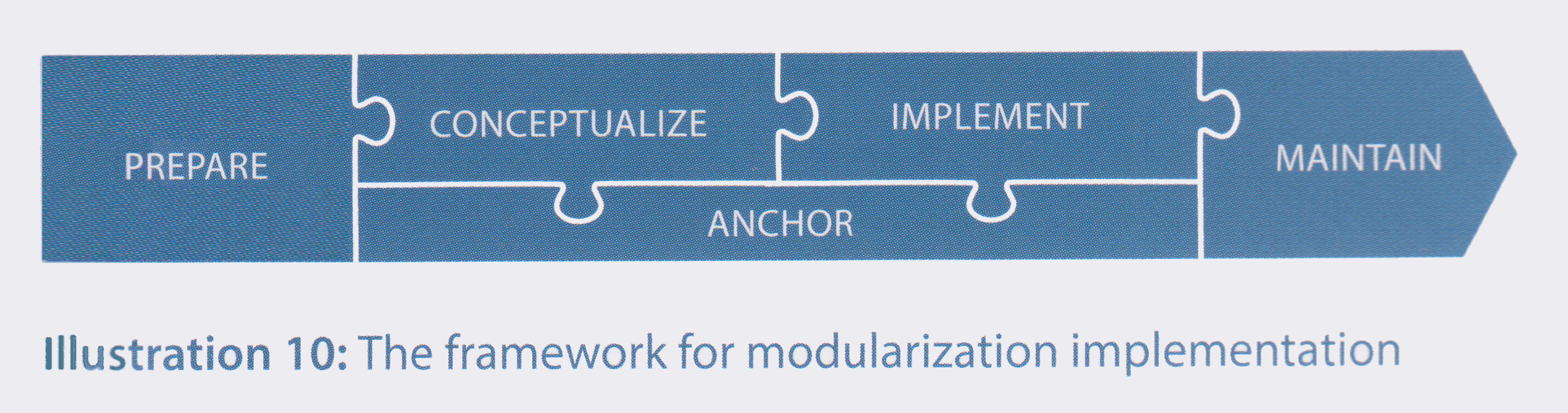
 The aim of modularization is to create a module system. It is a collection of pre-defined modules with standardized interfaces. From this, you can build products to cater to individual customer needs while keeping costs low. The main difference from traditional product development is that you develop a set of building blocks or modules rather than specific products.
 Many times, this means “thinking ahead” and preparing your products for more configuration and less engineering in the sales process, i.e., go from ETO to CTO.
 Companies can improve their ability and reduce the efforts to configure products to individual needs, i.e., customization. And when it comes to cost and efficiency improvements, high-volume companies can reduce product and operational costs.
 We recommend that the CTO or CEO owns the initiative as it requires horizontal coordination and agreement.

 To allow time for a proper discussion, we will invite a maximum of 4 guests. Therefore be fast to apply for this virtual meeting by sending an email to

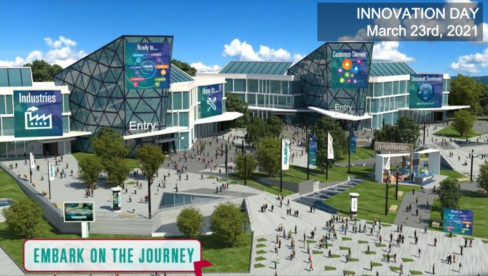
 I will not mention the individual interviews in this post, as I do not want to spoil the event. I talked with various startups (do they need PLM?) and established companies that started a PLM journey. I spoke with simulation experts (the future) and dimensional management experts (listen to these interviews to understand what it means). And ultimately, I interviewed a traditional porcelain family brand using 3D printing and 3D design, and at the other end, the German CIO of the year from 2020
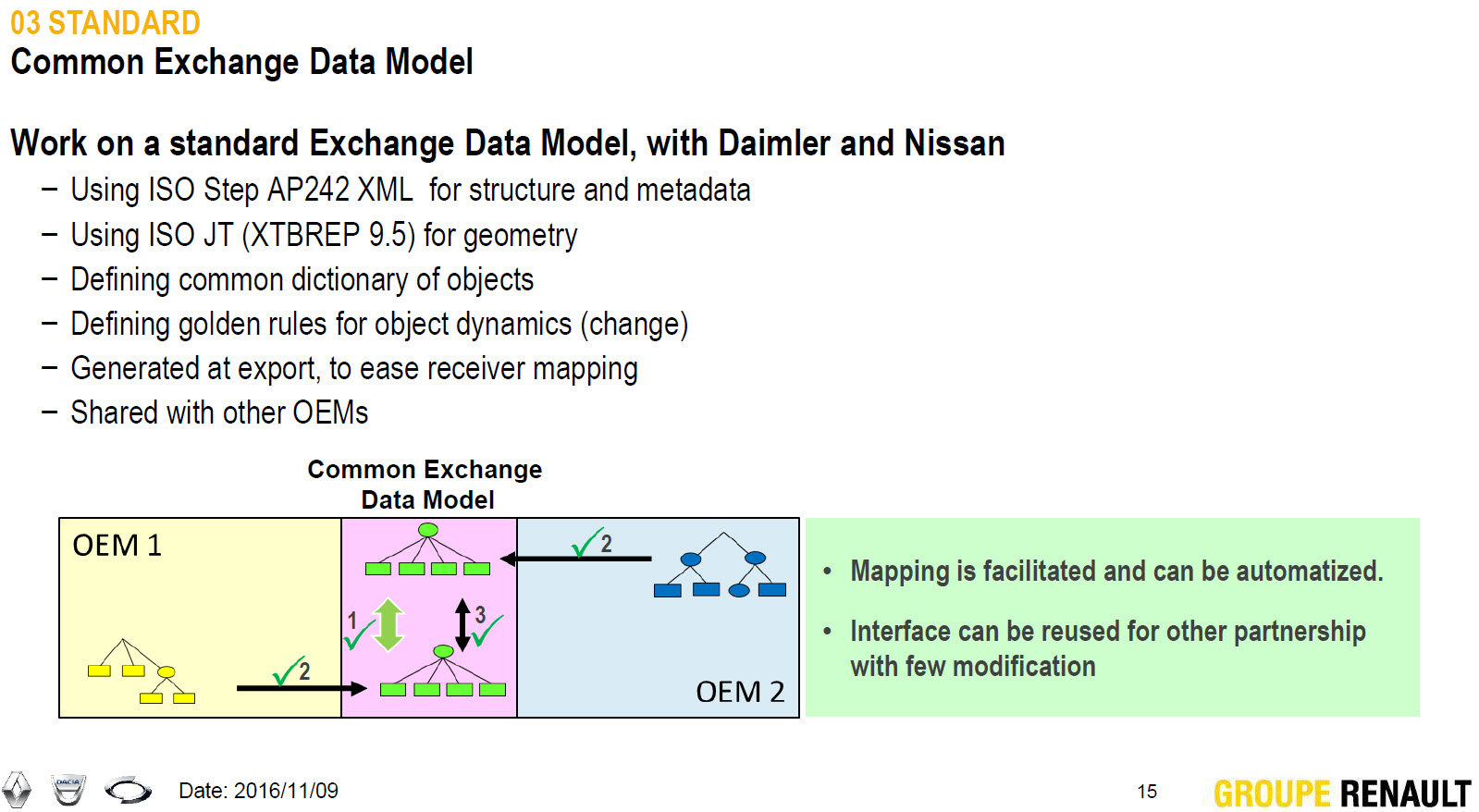
 Eurostep was founded in 1994 by several world-class experts on product data and information management. In the year 2000, we started developing ShareAspace. We took all the experience we had from working with collaboration in the extended enterprise, mixed it with our standards knowledge, and selected Microsoft as the technology for our software platform.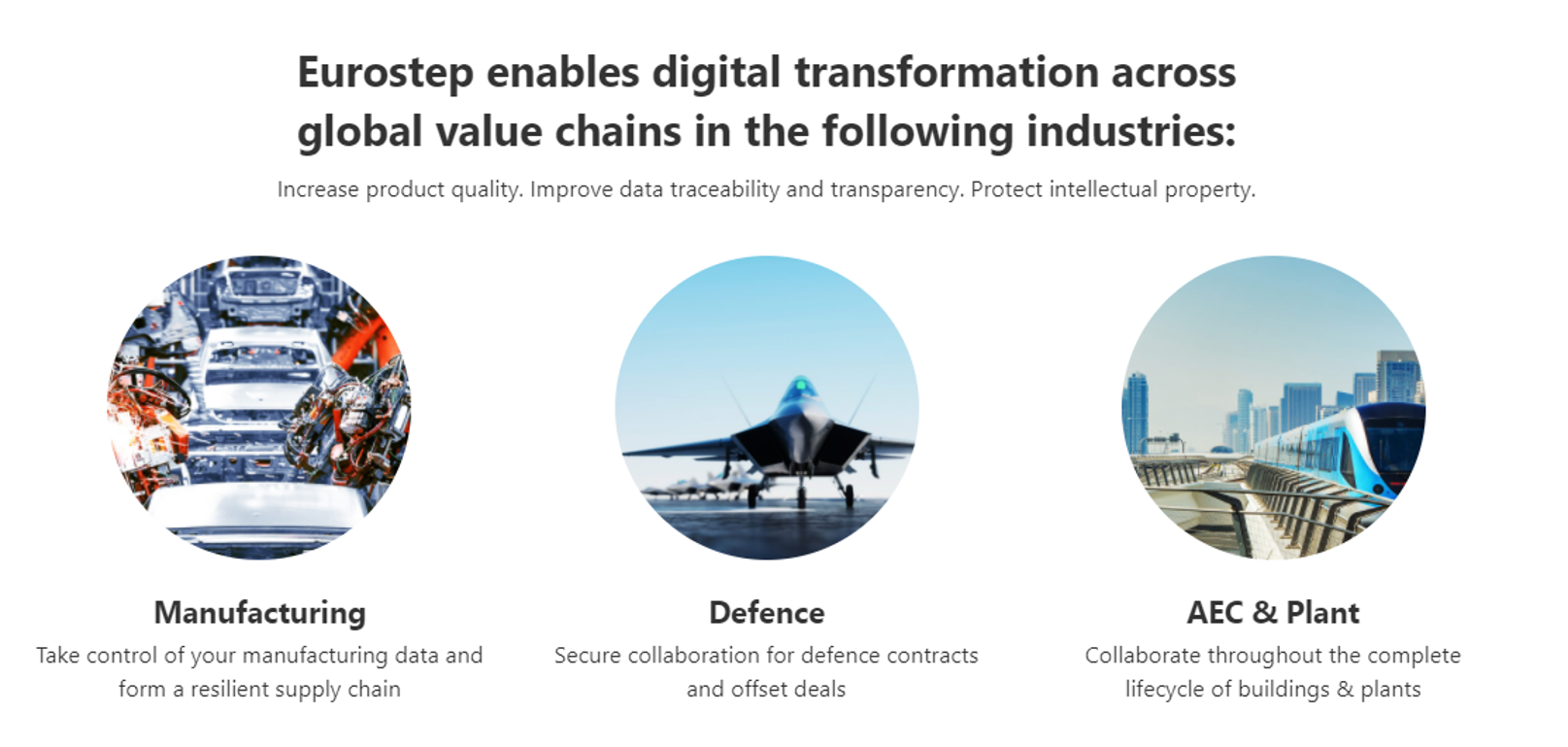
 ShareAspace is based on an information standard called PLCS (ISO 10300-239). This means we have a data model covering the complete life cycle of a product from requirements and conceptual design to an existing installed base. We have added things needed, such as consolidation and security. Our partnership with Microsoft has also resulted in ShareAspace being available in Azure as a service (our Design to Manufacturing software).
 This is about the time when you realize that you need similar control of the data you share with suppliers as you have in your internal systems. If not better.


 Jos Voskuil's Weblog
[…] (The following post from PLM Green Global Alliance cofounder Jos Voskuil first appeared in his European PLM-focused blog HERE.) […]
[…] recent discussions in the PLM ecosystem, including PSC Transition Technologies (EcoPLM), CIMPA PLM services (LCA), and the Design for…
Jos, all interesting and relevant. There are additional elements to be mentioned and Ontologies seem to be one of the…
Jos, as usual, you've provided a buffet of "food for thought". Where do you see AI being trained by a…
Hi Jos. Thanks for getting back to posting! Is is an interesting and ongoing struggle, federation vs one vendor approach.…