
You are currently browsing the category archive for the ‘PLCS’ category.
 This is the third and last post related to the PLM Roadmap / PDT Europe conference, held from 15-16 November in Paris. The first post reported more about “traditional” PLM engagements, whereas the second post focused on more data-driven and federated PLM. If you missed them, here they are:
Now, I want to conclude on what I would call, in my terminology, the connected digital thread. This topic was already addressed when I reported on the federated PLM story from NIO (Yousef Hooshmand) and SAAB Aeronautics (Erik Herzog).
The Need for a Governance Digital Thread
This time, my presentation was a memory refresher related to digital transformation in the PLM domain – moving from coordinated ways of working towards connected ways of working.
A typology that is also valid for the digital thread definition.
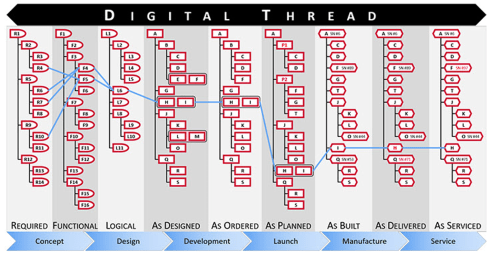
- A Coordinated Digital Thread is a digital thread that connects various artifacts in an enterprise. These relations are created and managed to support traceability and an impact analysis. The coordinated digital thread requires human interpretation to process the information. The image below from Aras is a perfect example of a coordinated digital thread.

- The Connected Digital Thread is the digital thread where the artifacts are datasets stored in a federated infrastructure of databases. A connected digital thread provides real-time access to data through applications or dashboards for users. The real-time access makes the connected digital thread a solution for real-time, multidisciplinary collaboration activities.
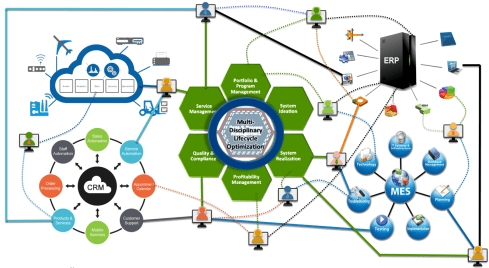

The image above illustrates the connected digital thread as an infrastructure on top of five potential business platforms, i.e., the IoT platform, the CRM platform, the ERP platform, the MES platform and ultimately, the Product Innovation Platform.
Note: These platforms are usually a collection of systems that logically work together efficiently.
The importance of the Connected Digital Thread
When looking at the benefits of the Connected Digital Thread, the most essential feature is that it allows people in an organization to have all relevant data and its context available for making changes, analysis and design choices.
Due to the rich context, people can work proactively and reduce the number of iterations and fixes later.
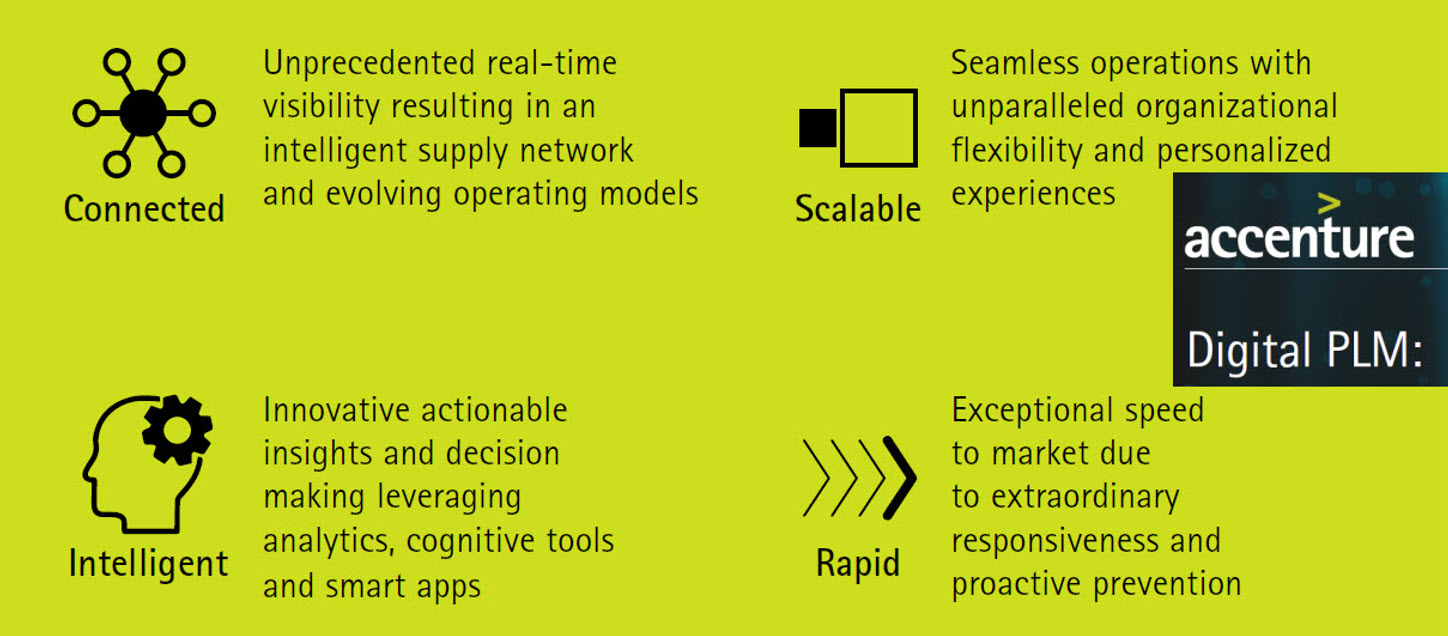
The above image from Accenture (2014) describing the business benefits can be divided into two categories:
- The top, Connected and Scalable describing capabilities
- The bottom, Intelligent and Rapid, describes the business impact
The connected digital thread for governance
 In my session, I gave examples of why companies must invest in the connected digital thread. If you are interested in the slides from the session you can download them here on SlideShare: The Need for a Governance Digital Thread
 First of all, as more and more companies need to provide ESG reporting related to the business, either by law or demanded by their customers, this is an area where data needs to be collected from various sources in the organization.
The PLM system will be one of the sources; other sources can be fragmented in an organization. Bringing them together manually in one report is a significant human effort, time-consuming and not supporting the business.
 By creating a connected digital thread between these sources, reporting becomes a push on the button, and the continuous availability of information will help companies assess and improve their products to reduce environmental and social risks.
According to a recent KPMG report, only a quarter of companies are ready for ESG Reporting Requirements.
 Sustaira, a company we reported in the PGGA, provides such an infrastructure based on Mendix, and during the conference, I shared a customer case with the audience. You can find more about Sustaira in our interview with them: PLM and Sustainability: talking with Sustaira.
The Connected Digital Thread and the Digital Product Passport
 One of the areas where the connected digital thread will become important is the implementation of the Digital Product Passport (DPP), which is an obligation coming from the European Green Deal, affecting all companies that want to sell their product to the European market in 2026 and beyond.
The DPP is based on the GS1 infrastructure, originating from the retail industry. Each product will have a unique ID (UID based on ISO/IEC 15459:2015), and this UID will provide digital access to product information, containing information about the product’s used materials, its environmental impact, and recycle/reuse–ability.
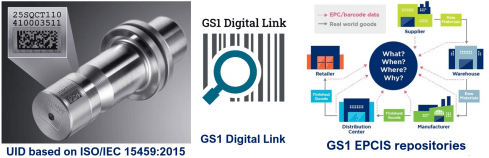
It will serve both for regulatory compliance and as an information source for consumers to make informed decisions about the products they buy. The DPP aims to stimulate and enforce a more circular economy.
 Interesting to note is that the infrastructure needed for the DPP is based on the GS1 infrastructure, where GS1 is a not-for-profit organization providing data services.
The Connected Digital Thread and Catena-X
 So far, I have discussed the connected digital thread as an internal infrastructure in a company. Also, the examples of the connected digital thread at NIO and Saab Aeronautics focused on internal interaction.
A new exciting trend is the potential rise of not-for-profit infrastructure for a particular industry. Where the GS1-based infrastructure is designed to provide visibility on sustainable targets and decisions, Catena-X is focusing on the automotive industry.
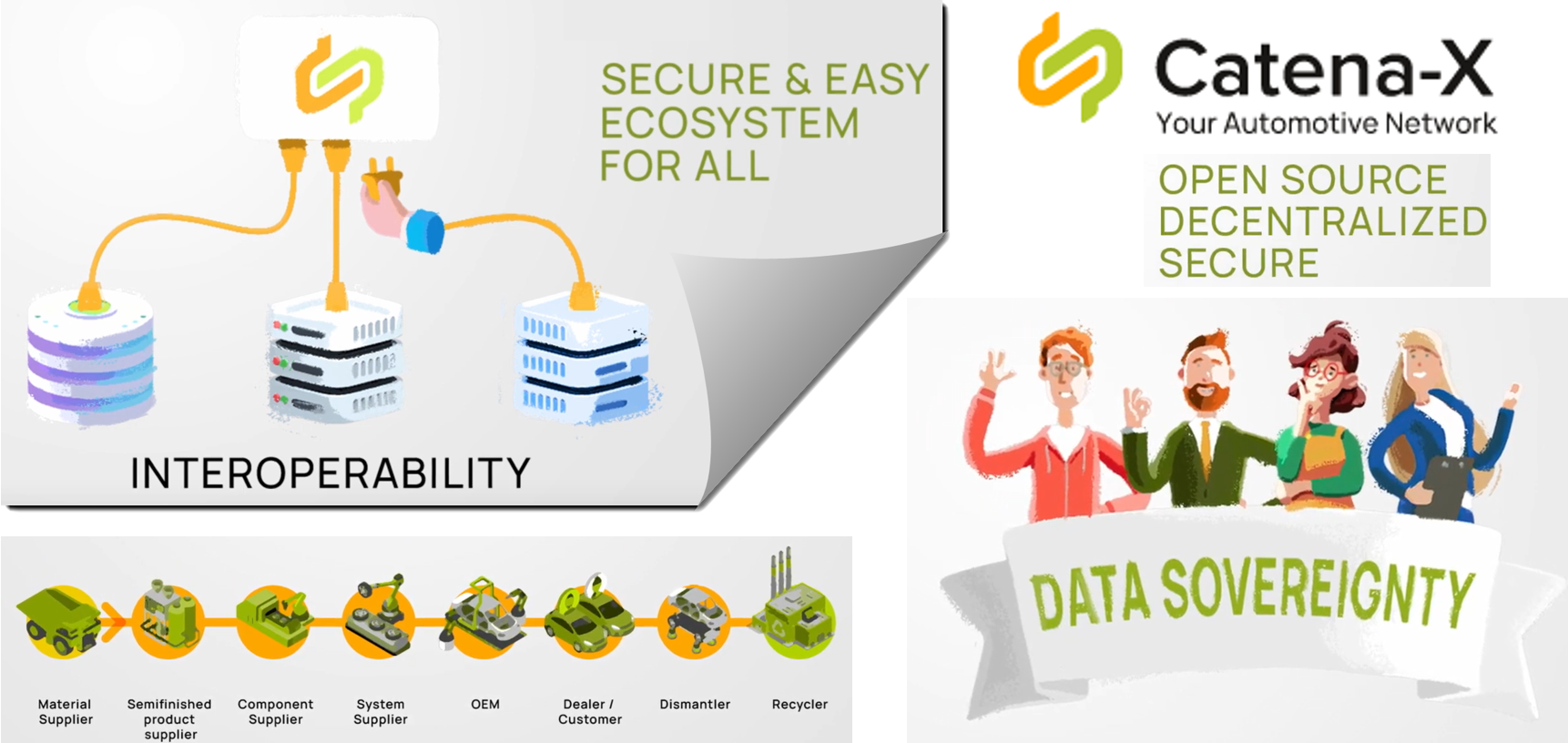
Catena-X is the establishment of a data-driven value chain for the German automotive industry and is now in the process of expanding to become a global network.
It is a significant building block in what I would call the connected or even adaptive enterprise, using a data-driven infrastructure to let information flow through the whole value chain.
It is one of the best examples of a Connected Digital Thread covering an end-to-end value chain.
 Although sustainability is mentioned in their vision statement, the main business drivers are increased efficiency, improved competitiveness, and cost reduction by removing the overhead and latency of such a network.
So Sustainability and Digitization go hand in hand.
Why a Digital Thread makes a lot of sense
 Following the inter-company digital thread story, Mattias Johansson‘s presentation was an excellent continuation of this concept. The full title of Mattias’ session was: Why a Digital Thread makes a lot of sense, Why It Goes Beyond Manufacturing, and Why It Should Be Standards-based.
Eurostep, recently acquired by BAE Systems, is known for its collaboration hub or information backbone, ShareAspace. The interesting trend here is switching from a traditional PLM infrastructure to an asset-centric one.
This approach makes a lot of sense for complex assets with a long lifecycle, as the development phase is usually done with a consortium of companies. Still, the owner/operator wants to maintain a digital twin of the asset – for maintenance and upgrades.
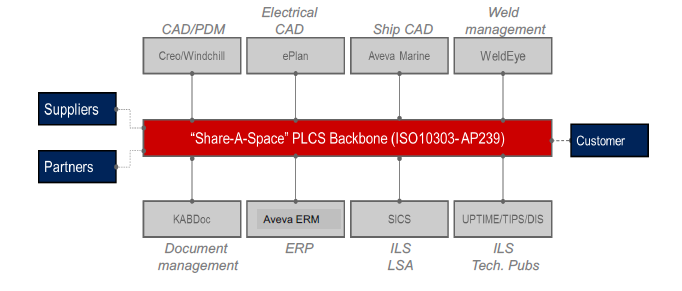
A standards-based backbone makes much sense in such an environment due to the various data formats. This setup also means we are looking at a Coordinated Digital Thread at this stage, not a Connected Digital Thread.
Mattias concluded with the question of who owns and who decides on the coordinated digital thread – a discussion also valid in the construction industry when discussing Building Information Management (BIM) and a Common Data Environment(CDE).
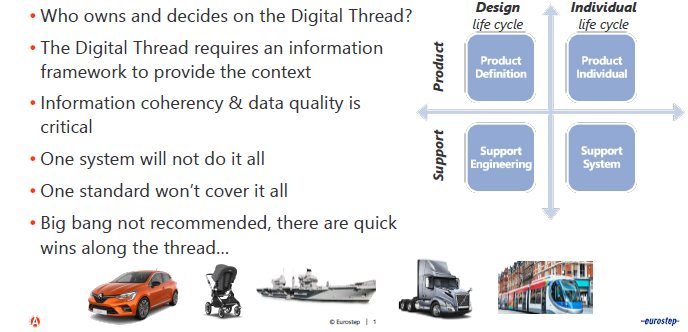
I believe software vendors can provide the Coordinated Digital Thread option when they can demonstrate and provide a positive business case for their solution. Still, it will be seen as an overhead to connect the dots.
For a Connected Digital Thread, I think it might be provided as an infrastructure like the World Wide Web (W3C) organization. Here, the business case is much easier to demonstrate as it is really a digital highway.
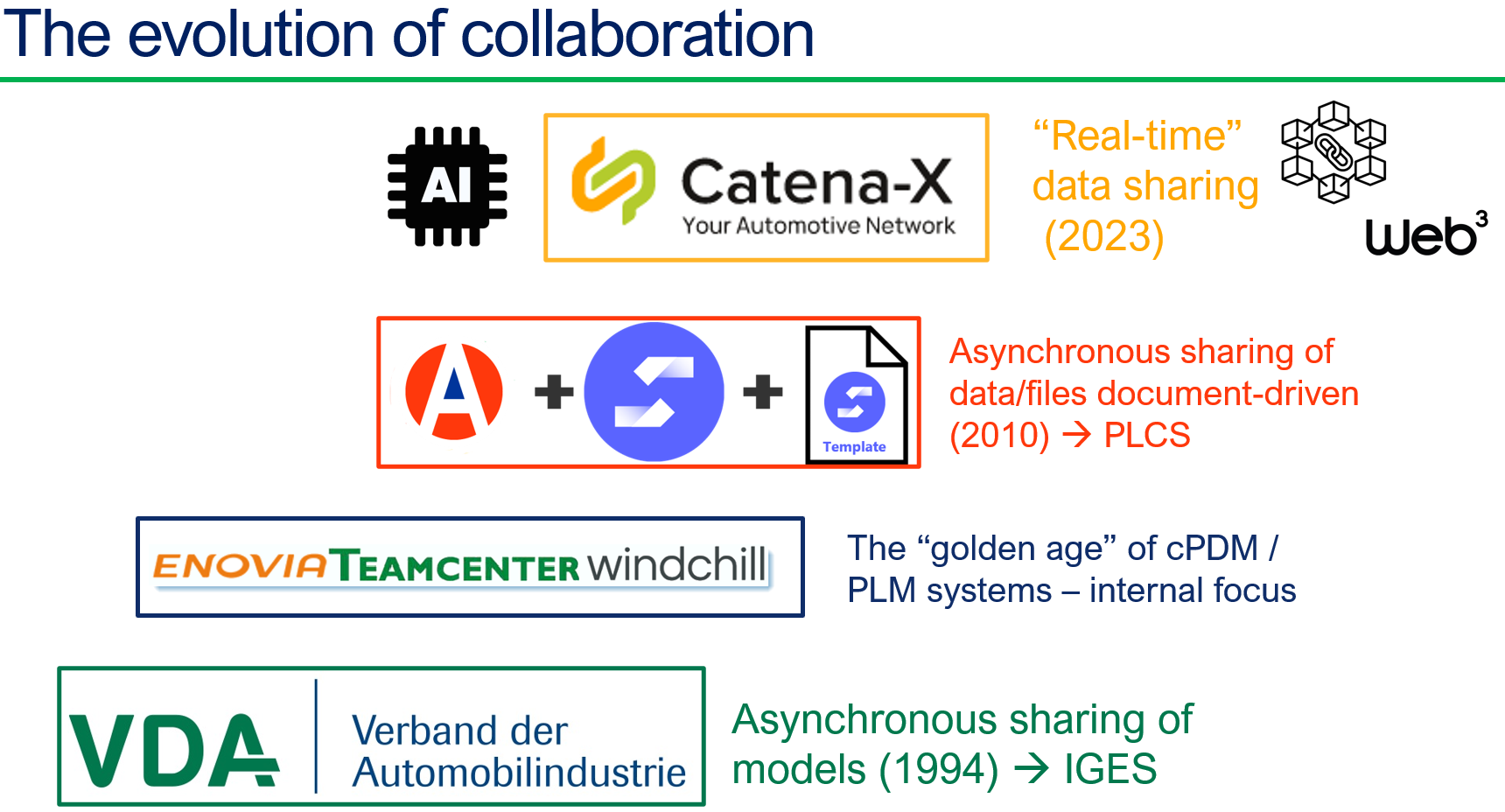
Such an infrastructure could be provided by not-for-profit organizations like GS1 (Digital Product Passport/Retail), Catena-X (Automotive) and others (Gaia-X).
 For sure, these networks will leverage blockchain concepts (affordable now) and data sovereignty concepts now developed for web3, and of course, an aspect of AI will reduce the complexity of maintaining such an environment.
AI
And then there was AI. During the conference, people spoke more about AI than Sustainability topics, illustrating that our audience is more interested in understanding the next hype instead of feeling the short-term need to address climate change and planet sustainability.
 David Henstock, Chief Data Scientist at BAE Systems Digital Intelligence, talked about turning AI into an Operational Reality, sharing some lessons & challenges from Defence. David mentioned that he was not an expert in PLM but shared various viewpoints on the usage (benefits & risks) of implementing AI in an organization.
 Erdal Tekin, Senior Chief Leader for Digital Transformation at Turkish Aerospace, talked about AI-powered collaboration. I am a bit skeptical on this topic as AI always comes with a flavor.
And we closed the conference with a roundtable discussion: AI, PLM and the Digital Thread: Why should we care about AI?
From the roundtable, I concluded that we are all convinced AI will have a significant impact in the upcoming years and are all in the early phases of the AI hype.
Will AI introduction go faster than digital transformation?
Conclusion
The conference gave me confidence that digital transformation in the PLM domain has reached the next level. Many sessions were related to collaboration concepts outside the traditional engineering domain – coordinated and connected digital threads.
The connected digital thread is the future, and as we saw it, it heralds the downfall of monolithic PLM. The change is needed for business efficiency AND compliance with more and more environmental regulations.
I am looking forward to seeing the pace of progress here next year.
Last week, I shared my first impressions from my favorite conference, in the post: The weekend after PLM Roadmap/PDT Europe 2023, where most impressions could be classified as traditional PLM and model-based.
There is nothing wrong with conventional PLM, as there is still much to do within this scope. A model-based approach for MBSE (Model-Based Systems Engineering) and MBD (Model-Based Definition) and efficient supplier collaboration are not topics you solve by implementing a new system.
 Ultimately, to have a business-sustainable PLM infrastructure, you need to structure your company internally and connect to the outside world with a focus on standards to avoid a vendor lock-in or a dead end.
In short, this is what I described so far in The weekend after ….part 1.
Now, let’s look at the relatively new topics for this audience.
Enabling the Marketing, Engineering & Manufacturing Digital Thread
 Cyril Bouillard, the PLM & CAD Tools Referent at the Mersen Electrical Protection (EP) business unit, shared his experience implementing an end-to-end digital backbone from marketing through engineering and manufacturing.
Cyril showed the benefits of a modern PLM infrastructure that is not CAD-centric and focused on engineering only. The advantages of this approach are a seamless integrated flow of PLM and PIM (Product Information Management).
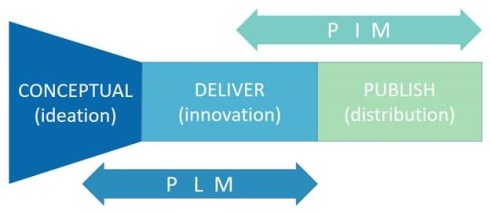
I wrote about this topic in 2019: PLM and PIM – the complementary value in a digital enterprise. Combining the concepts of PLM and PIM in an integrated, connected environment could also provide a serious benefit when collaborating with external parties.
 Another benefit Cyril demonstrated was the integration of RoHS compliance to the BOM as an integrated environment. In my session, I also addressed integrated RoHS compliance as a stepping stone to efficiency in future compliance needs.
Read more later or in this post: Material Compliance – as a stepping-stone towards Life Cycle Assessment (LCA)
Cyril concluded with some lessons learned.
Data quality is essential in such an environment, and there are significant time savings implementing the connected Digital Thread.
Meeting the Challenges of Sustainability in Critical Transport Infrastructures
 Etienne Pansart, head of digital engineering for construction at SYSTRA, explained how they address digital continuity with PLM throughout the built assets’ lifecycle.
Etienne’s story was related to the complexity of managing a railway infrastructure, which is a linear and vertical distribution at multiple scales; it needs to be predictable and under constant monitoring; it is a typical system of systems network, and on top of that, maintenance and operational conditions need to be continued up to date.
Regarding railway assets – a railway needs renewal every two years, bridges are designed to last a hundred years, and train stations should support everyday use.
When complaining about disturbances, you might have a little more respect now (depending on your country). However, on top of these challenges, Etienne also talked about the additional difficulties expected due to climate change: floods, fire, earth movements, and droughts, all of which will influence the availability of the rail infrastructure.
In that context, Etienne talked about the MINERVE project – see image below:
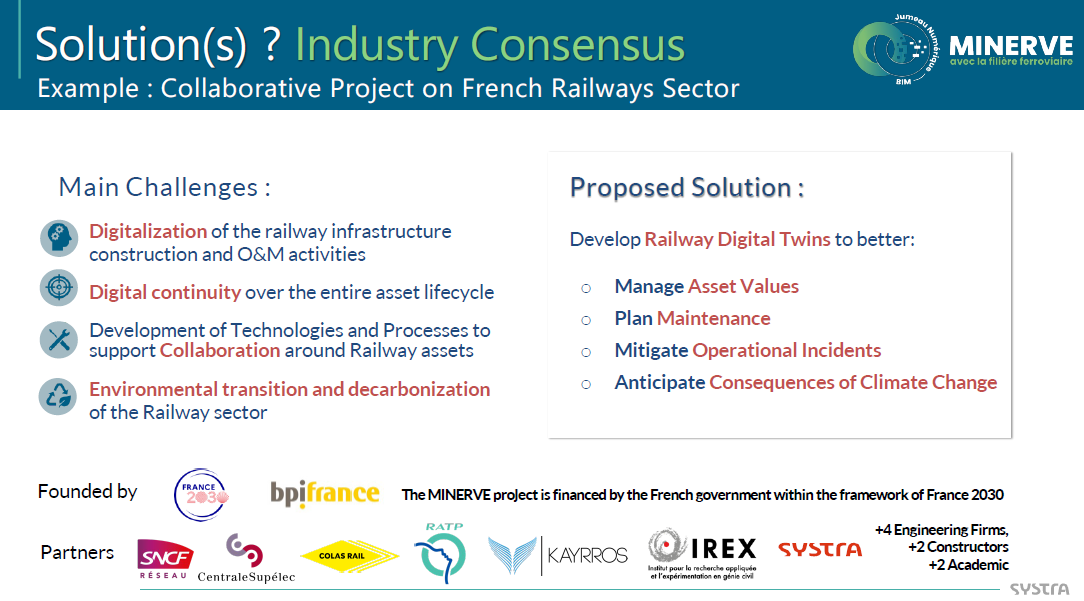
As you can see from the main challenges, there is an effort of digitalization for both the assets and a need to provide digital continuity over the entire asset lifecycle. This is not typically done in an environment with many different partners and suppliers delivering a part of the information.
Etienne explained in more detail how they aim to establish digital twins and MBSE practices to build and maintain a data-driven, model-based environment.
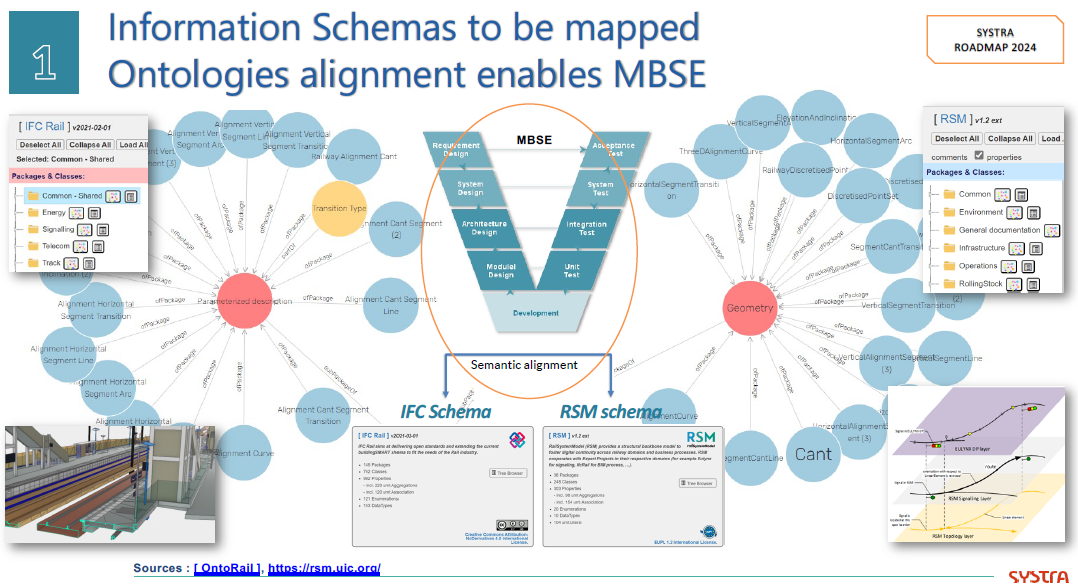
Having digital twins allows much more granular monitoring and making accurate design decisions, mainly related to sustainability, without the need to study the physical world.
His presentation was again a proof point that through digitalization and digital twins, the traditional worlds of Product Lifecycle Management and Asset Information Management become part of the same infrastructure.
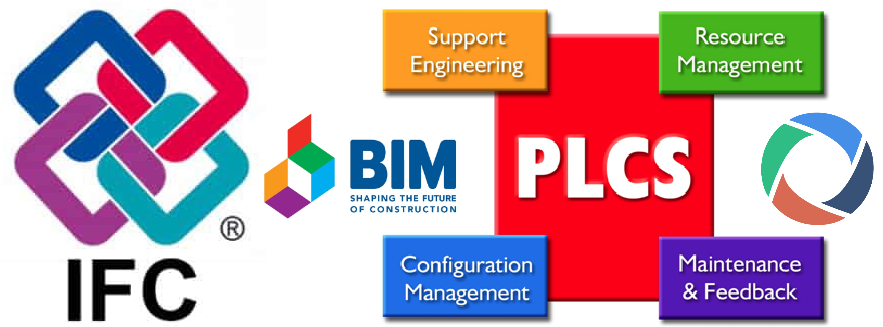 And it may be clear that in such a collaboration environment, standards are crucial to connect the various stakeholder’s data sources – Etienne mentioned ISO 16739 (IFC), IFC Rail, and ISO 19650 (BIM) as obvious standards but also ISO 10303 (PLCS) to support the digital thread leveraged by OSLC.
I am curious to learn more about the progress of such a challenging project – having worked with the high-speed railway project in the Netherlands in 1995 – no standards at that time (BIM did not exist) – mainly a location reference structure with documents. Nothing digital.
The connected Digital Thread
The theme of the conference was The Digital Thread in a Heterogeneous, Extended Enterprise Reality, and in the next section, I will zoom in on some of the inspiring sessions for the future, where collaboration or information sharing is all based on a connected Digital Thread – a term I will explain in more depth in my next blog post.
Transforming the PLM Landscape:
The Gateway to Business Transformation
 Yousef Hooshmand‘s presentation was the highlight of this conference for me.
Yousef is the PLM Architect and Lead for the Modernization of the PLM Landscape at NIO, and he has been active before in the IT-landscape transformation at Daimler, on which he published the paper: From a monolithic PLM landscape to a federated domain and data mesh.
 If you read my blog or follow Share PLM, you might seen the reference to Yousef’s work before, or recently, you can hear the full story at the Share PLM Podcast: Episode 6: Revolutionizing PLM: Insights.
It was the first time I met Yousef in 3D after several virtual meetings, and his passion for the topic made it hard to fit in the assigned 30 minutes.
There is so much to share on this topic, and part of it we already did before the conference in a half-day workshop related to Federated PLM (more on this in the following review).
First, Yousef started with the five steps of the business transformation at NIO, where long-term executive commitment is a must.
His statement: “If you don’t report directly to the board, your project is not important”, caused some discomfort in the audience.
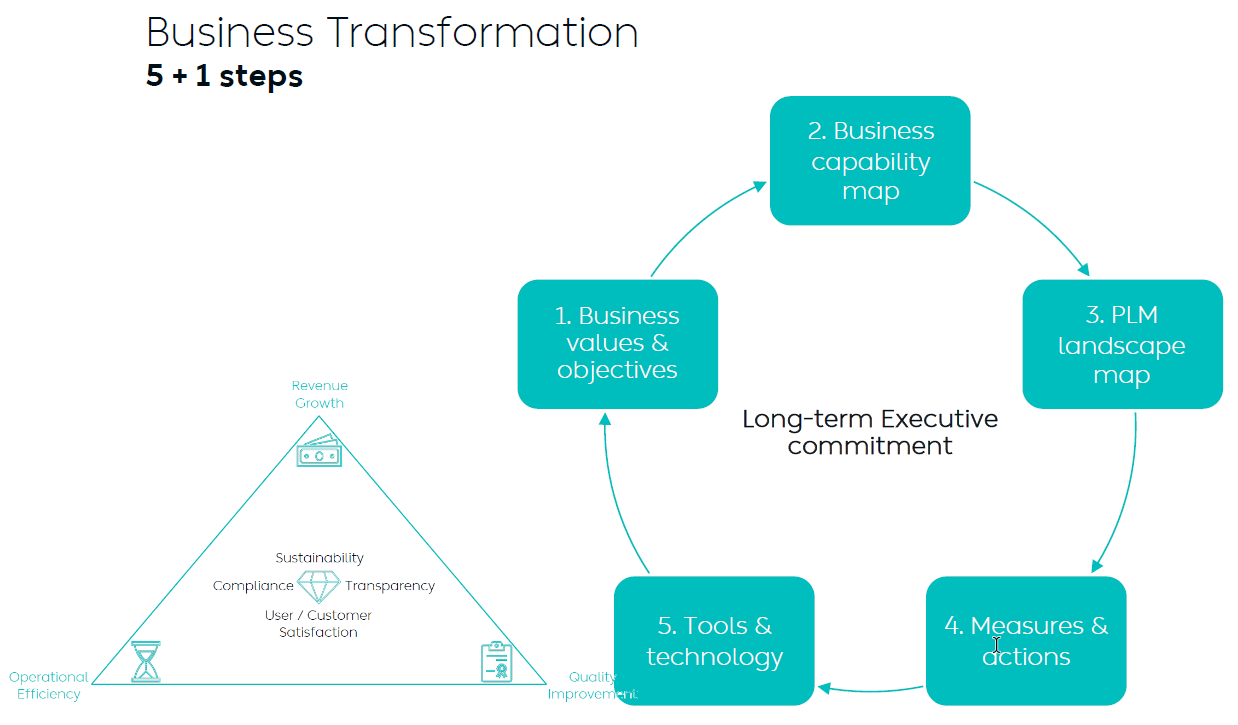
As the image shows, a business transformation should start with a systematic description and analysis of which business values and objectives should be targeted, where they fit in the business and IT landscape, what are the measures and how they can be tracked or assessed and ultimately, what we need as tools and technology.
In his paper From a Monolithic PLM Landscape to a Federated Domain and Data Mesh, Yousef described the targeted federated landscape in the image below.
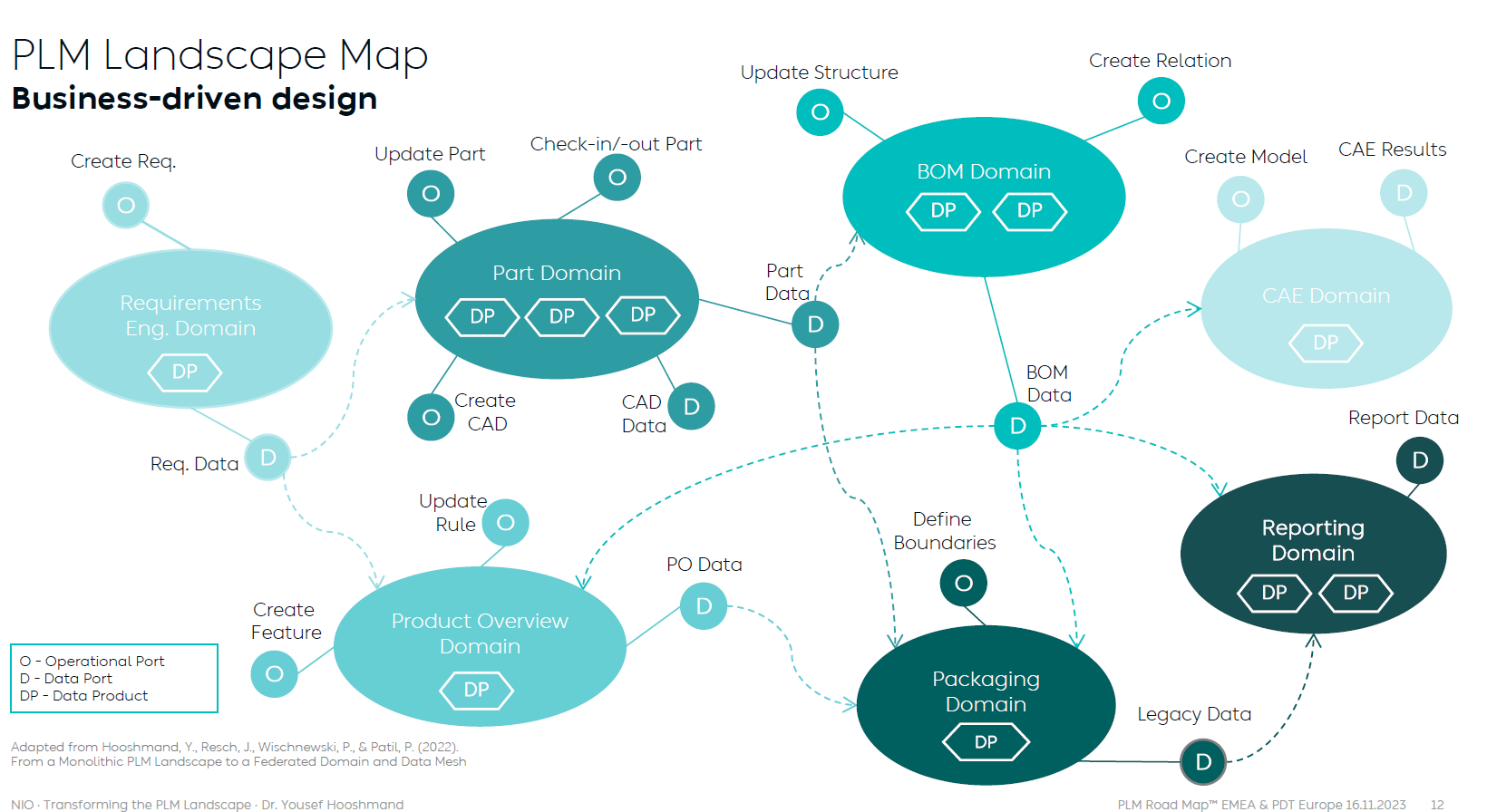
And now some vendors might say, we have all these domains in our product portfolio (or we have slides for that) – so buy our software, and you are good.
And here Yousef added his essential message, illustrated by the image below.

Start by delivering the best user-centric solutions (in an MVP manner – days/weeks – not months/years). Next, be data-centric in all your choices and ultimately build an environment ready for change. As Yousef mentioned: “Make sure you own the data – people and tools can leave!”
And to conclude reporting about his passionate plea for Federated PLM:
“Stop talking about the Single Source of Truth, start Thinking of the Nearest Source of Truth based on the Single Source of Change”.
Heliple-2 PLM Federation:
A Call for Action & Contributions
 A great follow-up on Yousef’s session was Erik Herzog‘s presentation about the final findings of the Heliple 2 project, where SAAB Aeronautics, together with Volvo, Eurostep, KTH, IBM and Lynxwork, are investigating a new way of federated PLM, by using an OSLC-based, heterogeneous linked product lifecycle environment.
Heliple stands for HEterogeneous LInked Product Lifecycle Environment
The image below, which I shared several times before, illustrates the mindset of the project.
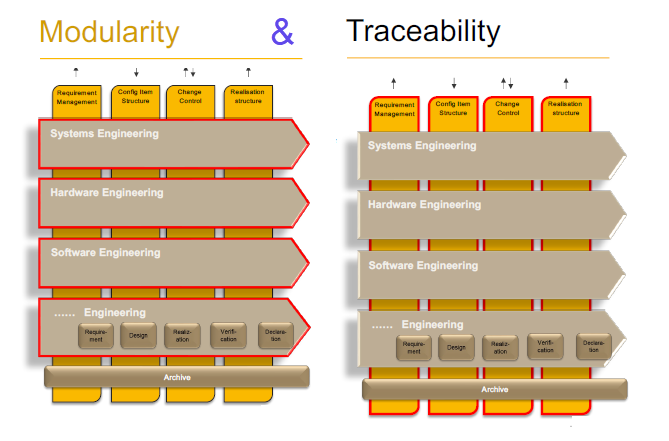
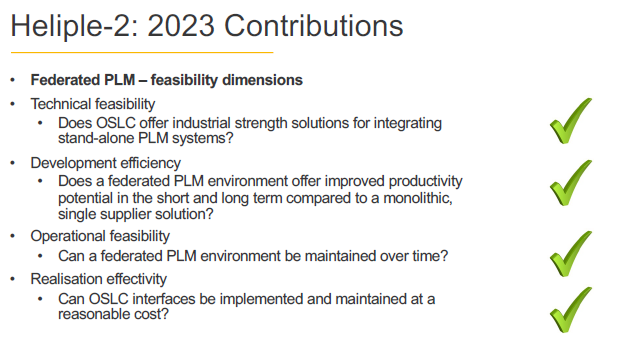
Last year, during the previous conference in Gothenburg, Erik introduced the concept of federated PLM – read more in my post: The week after PLM Roadmap / PDT Europe 2022, mentioning two open issues to be investigated: Operational feasibility (is it maintainable over time) and Realisation effectivity (is it affordable and maintainable at a reasonable cost)
As you can see from the slide below, the results were positive and encouraged SAAB to continue on this path.
One of the points to mention was that during this project, Lynxwork was used to speed up the development of the OSLC adapter, reducing costs, time and needed skills.
 After this successful effort, Erik and several others who joined us at the pre-conference workshop agreed that this initiative is valid to be tested, discussed and exposed outside Sweden.
Therefore, the Federated PLM Interest Group was launched to join people worldwide who want to contribute to this concept with their experiences and tools.
A first webinar from the group is already scheduled for December 12th at 4 PM CET – you can join and register here.
More to come
Given the length of this blog post, I want to stop here.
 Topics to share in the next post are related to my contribution at the conference The Need for a Governance Digital Thread, where I addressed the need for federated PLM capabilities with the upcoming regulations and practices related to sustainability, which require a connected Digital.
 I want to combine this post with the findings that Mattias Johansson, CEO of Eurostep, shared in his session: Why a Digital Thread makes a lot of sense, goes beyond manufacturing, and should be standards-based.
There are some interesting findings in these two presentations.
 And there was the introduction of AI at the conference, with some experts’ talks and thoughts. Perhaps at this stage, it is too high on Gartner’s hype cycle to go into details. It will surely be THE topic of discussion or interest you must have noticed.
The recent turmoil at OpenAI is an example of that. More to come for sure in the future.
Conclusion
The PLM Roadmap/PDT Europe conference was significant for me because I discovered that companies are working on concepts for a data-driven infrastructure for PLM and are (working on) implementing them. The end of monolithic PLM is visible, and companies need to learn to master data using ontologies, standards and connected digital threads.
 This week I attended the SCAF conference in Jonkoping. SCAF is an abbreviation of the Swedish CATIA User Group. First of all, I was happy to be there as it was a “physical” conference, having the opportunity to discuss topics with the attendees outside the presentation time slot.
It is crucial for me as I have no technical message. Instead, I am trying to make sense of the future through dialogues. What is sure is that the future will be based on new digital concepts, completely different from the traditional approach that we currently practice.
 My presentation, which you can find here on SlideShare, was again zooming in on the difference between a coordinated approach (current) and a connected approach (the future).
The presentation explains the concepts of datasets, which I discussed in my previous blog post. Now, I focussed on how this concept can be discovered in the Dassault Systemes 3DExperience platform, combined with the must-go path for all companies to more systems thinking and sustainable products.
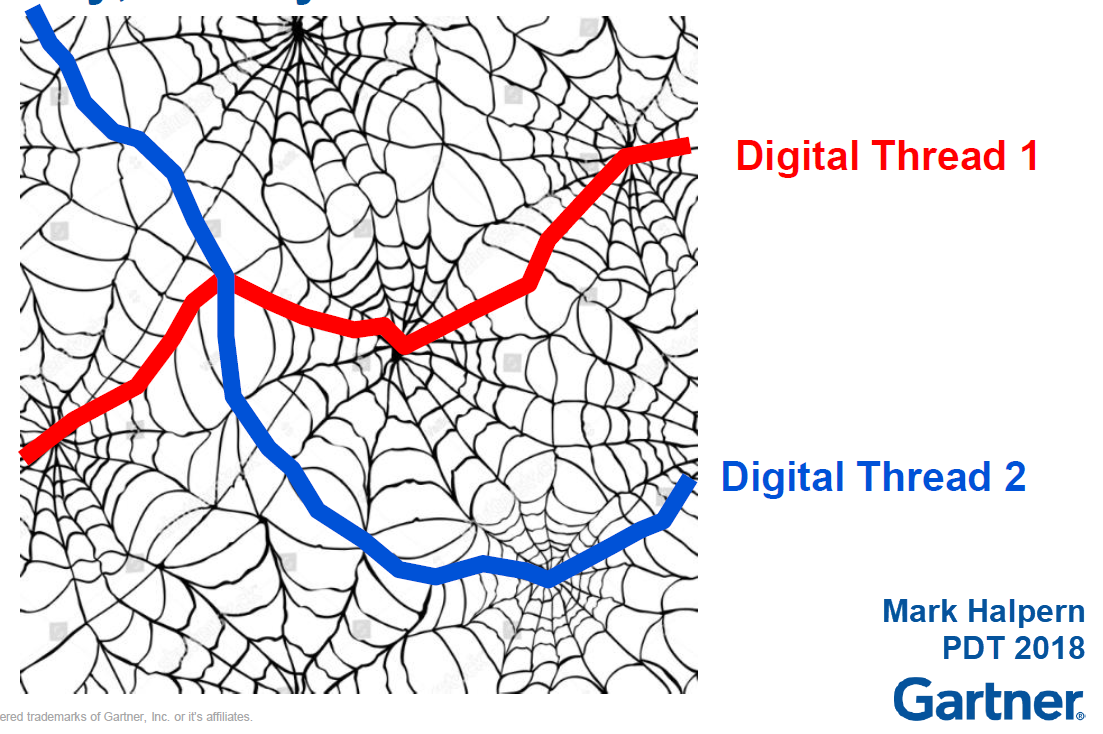 It was interesting to learn that the concept of connected datasets like the spider’s web in the image reflected the future concept for many of the attendees.
One of the demos during the conference illustrated that it is no longer about managing the product lifecycle through structures (EBOM/MBOM/SBOM).
Still, it is based on a collection of connected datasets – the path in the spider’s web.
It was interesting to talk with the present companies about their roadmap. How to become a digital enterprise is strongly influenced by their legacy culture and ways of working. Where to start to be connected is the main challenge for all.
 A final positive remark. The SCAF had renamed itself to SCAF (3DX), showing that even CATIA practices no longer can be considered as a niche – the future of business is to be connected.
Now back to the thread that I am following on the series The road to model-based. Perhaps I should change the title to “The road to connected datasets, using models”. The statement for this week to discuss is:
Data-driven means that you need to have an enterprise architecture, data governance and a master data management (MDM) approach. So far, the traditional PLM vendors have not been active in the MDM domain as they believe their proprietary data model is leading. Read also this interesting McKinsey article: How enterprise architects need to evolve to survive in a digital world
Reliable data
If you have been following my story related to PLM transition: From a connected to a coordinated infrastructure might have seen the image below:

The challenge of a connected enterprise is that you want to connect different datasets, defined in various platforms, to support any type of context. We called this a digital thread or perhaps even better framed a digital web.
 This is new for most organizations because each discipline has been working most of the time in its own silo. They are producing readable information in neutral files – pdf drawings/documents. In cases where a discipline needs to deliver datasets, like in a PDM-ERP integration, we see IT-energy levels rising as integrations are an IT thing, right?
Too much focus on IT
 In particular, SAP has always played the IT card (and is still playing it through their Siemens partnership). Historically, SAP claimed that all parts/items should be in their system. Thus, there was no need for a PDM interface, neglecting that the interface moment was now shifted to the designer in CAD.
And by using the name Material for what is considered a Part in the engineering world, they illustrated their lack of understanding of the actual engineering world.
There is more to “blame” to SAP when it comes to the PLM domain, or you can state PLM vendors did not yet understand what enterprise data means. Historically ERP systems were the first enterprise systems introduced in a company; they have been leading in a transactional “digital” world. The world of product development never has been a transactional process.
 SAP introduced the Master Data Management for their customers to manage data in heterogeneous environments. As you can imagine, the focus of SAP MDM was more on the transactional side of the product (also PIM) than on the engineering characteristics of a product.
I have no problem that each vendor wants to see their solution as the center of the world. This is expected behavior. However, when it comes to a single system approach, there is a considerable danger of vendor lock-in, a lack of freedom to optimize your business.
 In a modern digital enterprise (to be), the business processes and value streams should be driving the requirements for which systems to use. I was tempted to write “not the IT capabilities”; however, that would be a mistake. We need systems or platforms that are open and able to connect to other systems or platforms. The technology should be there, and more and more, we realize the future is based on connectivity between cloud solutions.
In one of my first posts (part 2), I referred to five potential platforms for a connected enterprise. Each platform will have its own data model based on its legacy design, allowing it to service its core users in an optimized environment.
 When it comes to interactions between two or more platforms, for example, between PLM and ERP, between PLM and IoT, but also between IoT and ERP or IoT and CRM, these interactions should first be based on identified business processes and value streams.
The need for Master Data Management
 Defining horizontal business processes and value streams independent of the existing IT systems is the biggest challenge in many enterprises. Historically, we have been thinking around a coordinated way of working, meaning people shifting pieces of information between systems – either as files or through interfaces.
In the digital enterprise, the flow should be leading based on the stakeholders involved. Once people agree on the ideal flow, the implementation process can start.
Which systems are involved, and where do we need a connection between the two systems. Is the relationship bidirectional, or is it a push?
 The interfaces need to be data-driven in a digital enterprise; we do not want human interference here, slowing down or modifying the flow. This is the moment Master Data Management and Data Governance comes in.
When exchanging data, we need to trust the data in its context, and we should be able to use the data in another context. But, unfortunately, trust is hard to gain.
I can share an example of trust when implementing a PDM system linked to a Microsoft-friendly ERP system. Both systems we able to have Excel as an interface medium – the Excel columns took care of the data mapping between these two systems.
 In the first year, engineers produced the Excel with BOM information and manufacturing engineering imported the Excel into their ERP system. After a year, the manufacturing engineers proposed to automatically upload the Excel as they discovered the exchange process did not need their attention anymore – they learned to trust the data.
How often have you seen similar cases in your company where we insist on a readable exchange format?
When you trust the process(es), you can trust the data. In a digital enterprise, you must assume that specific datasets are used or consumed in different systems. Therefore a single data mapping as in the Excel example won’t be sufficient
Master Data Management and standards?
 Some traditional standards, like the ISO 15926 or ISO 10303, have been designed to exchange process and engineering data – they are domain-specific. Therefore, they could simplify your master data management approach if your digitalization efforts are in that domain.
 To connect other types of data, it is hard to find a global standard that also encompasses different kinds of data or consumers. Think about the GS1 standard, which has more of a focus on the consumer-side of data management. When PLM meets PIM, this standard and Master Data Management will be relevant.
Therefore I want to point to these two articles in this context:
 How enterprise architects need to evolve to survive in a digital world focusing on the transition of a coordinated enterprise towards a connected enterprise from the IT point of view. And a recent LinkedIn post, Web Ontology Language as a common standard language for Engineering Networks? by Matthias Ahrens exploring the concepts I have been discussing in this post.
To me, it seems that standards are helpful when working in a coordinated environment. However, in a connected environment, we have to rely on master data management and data governance processes, potentially based on a clever IT infrastructure using graph databases to be able to connect anything meaningful and possibly artificial intelligence to provide quality monitoring.
Conclusion
Standards have great value in exchange processes, which happen in a coordinated business environment. To benefit from a connected business environment, we need an open and flexible IT infrastructure supported by algorithms (AI) to guarantee quality. Before installing the IT infrastructure, we should first have defined the value streams it should support.
What are your experiences with this transition?
 One of my favorite conferences is the PLM Road Map & PDT conference. Probably because in the pre-COVID days, it was the best PLM conference to network with peers focusing on PLM practices, standards, and sustainability topics. Now the conference is virtual, and hopefully, after the pandemic, we will meet again in the conference space to elaborate on our experiences further.
Last year’s fall conference was special because we had three days filled with a generic PLM update and several A&D (Aerospace & Defense) working groups updates, reporting their progress and findings. Sessions related to the Multiview BOM research, Global Collaboration, and several aspects of Model-Based practices: Model-Based Definition, Model-Based Engineering & Model-Based Systems engineering.
All topics that I will elaborate on soon. You can refresh your memory through these two links:
- The weekend after PLM Roadmap / PDT 2020 – part 1
- The next weekend after PLM Roadmap / PDT 2020 – part 2
 This year, it was a two-day conference with approximately 200 attendees discussing how emerging technologies can disrupt the current PLM landscape and reshape the PLM Value Equation. During the first day of the conference, we focused on technology.
On the second day, we looked in addition to the impact new technology has on people and organizations.
Today’s Emerging Trends & Disrupters
Peter Bilello, CIMdata’s President & CEO, kicked off the conference by providing CIMdata observations of the market. An increasing number of technology capabilities, like cloud, additive manufacturing, platforms, digital thread, and digital twin, all with the potential of realizing a connected vision. Meanwhile, companies evolve at their own pace, illustrating that the gap between the leaders and followers becomes bigger and bigger.
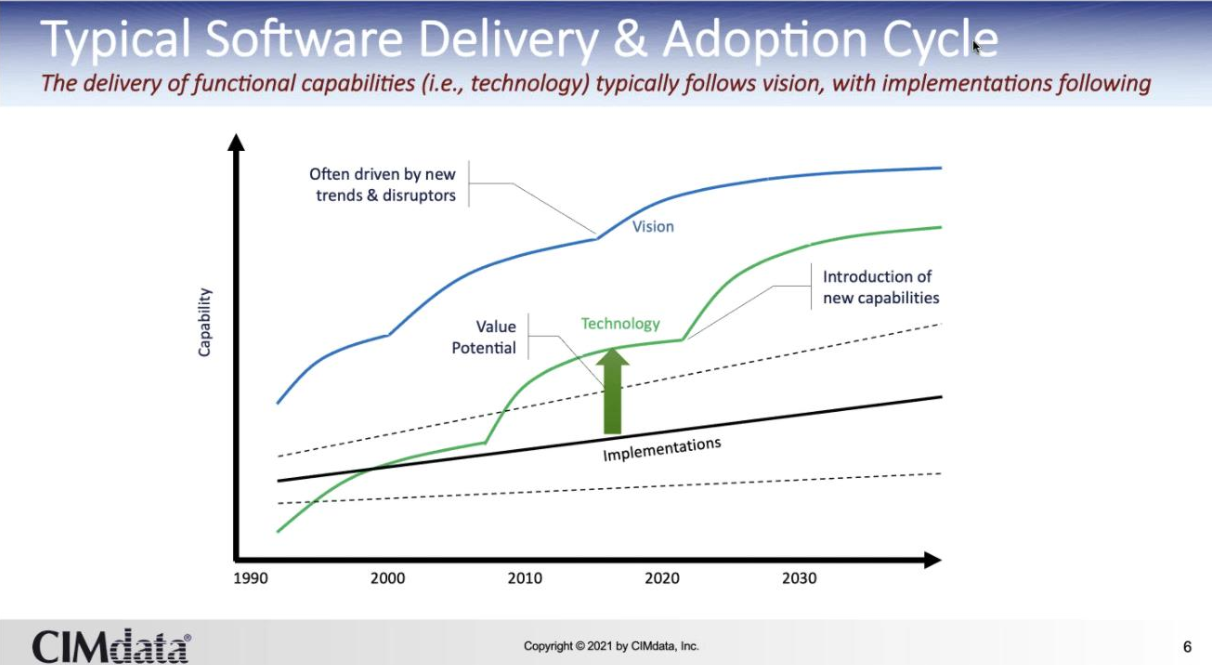
Where is your company? Can you afford to be a follower? Is your PLM ready for the future? Probably not, Peter states.
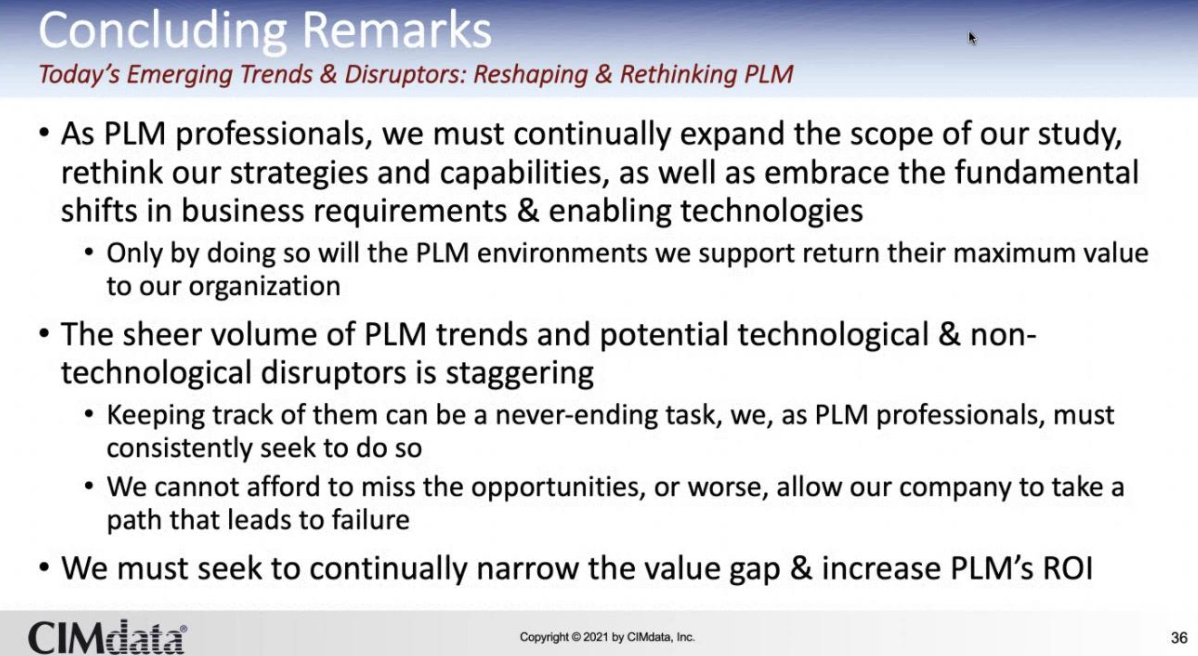
 Next, Peter walked us through some technology trends and their applicability for a future PLM, like topological data analytics (TDA), the Graph Database, Low-Code/No-Code platforms, Additive Manufacturing, DevOps, and Agile ways of working during product development. All capabilities should be related to new ways of working and updated individual skills.
I fully agreed with Peter’s final slide – we have to actively rethink and reshape PLM – not by calling it different but by learning, experimenting, and discussing in the field.
Digital Transformation Supporting Army Modernization
An interesting viewpoint related to modern PLM came from Dr. Raj Iyer, Chief Information Officer for IT Reform from the US Army. Rai walked us through some of the US Army’s challenges, and he gave us some fantastic statements to think about. Although an Army cannot be compared with a commercial business, its target remains to be always ahead of the competition and be aware of the competition.
Where we would say “data is the new oil”, Rai Iyer said: “Data is the ammunition of the future fight – as fights will more and more take place in cyberspace.”
The US Army is using a lot of modern technology – as the image below shows. The big difference here with regular businesses is that it is not about ROI but about winning fights.
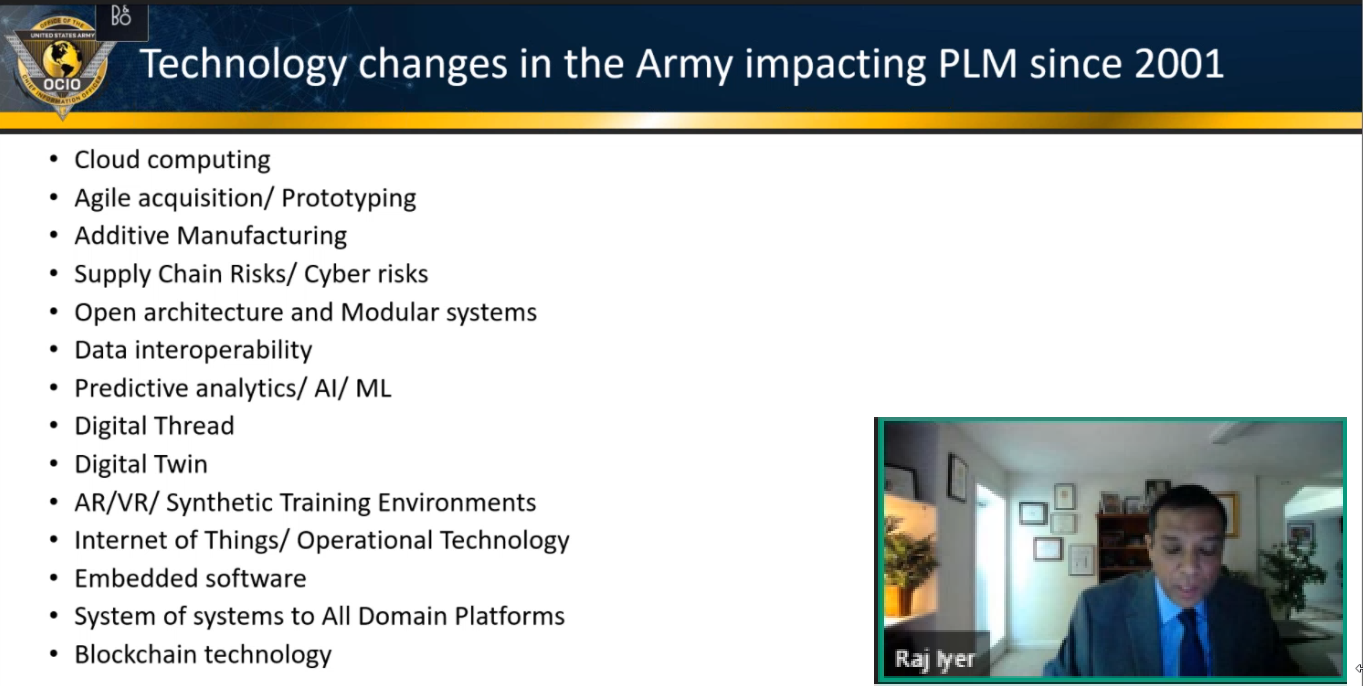
Also, for the US Army, the cloud becomes the platform of the future. Due to the wide range of assets, the US Army has to manage, the importance of product data standards is evident. – Rai mentioned their contribution and adherence to the ISO 10303 STEP standard crucial for interoperability. It was an exciting insight into the US Army’s current and future challenges. Their primary mission remains to stay ahead of the competition.
Joining up Engineering Data without losing the M in PLM
 Nigel Shaw’s (Eurostep) presentation was somehow philosophical but precisely to the point what is the current dilemma in the PLM domain. Through an analogy of the internet, explaining that we live in a world of HTTP(s) linking, we create new ways of connecting information. The link becomes an essential artifact in our information model.
Where it is apparent links are crucial for managing engineering data, Nigel pointed out some of the significant challenges of this approach, as you can see from his (compiled) image below.
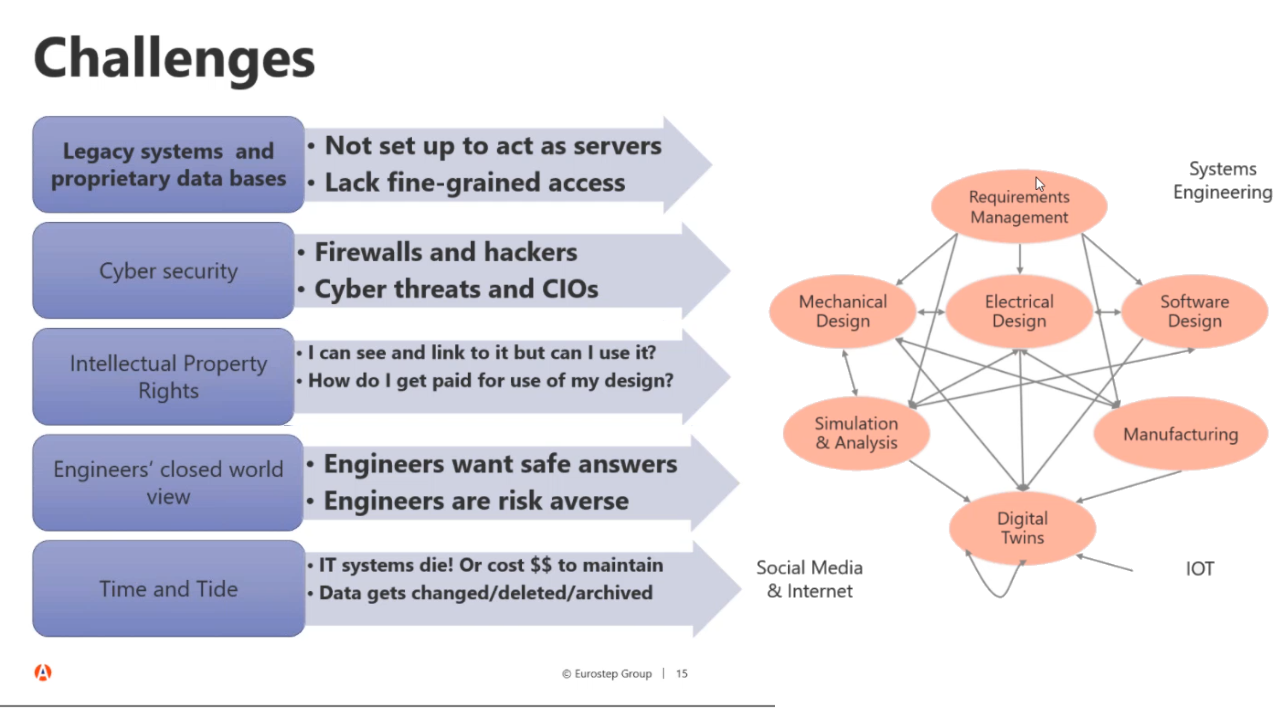
I will not discuss this topic further here as I am planning to come back to this topic when explaining the challenges of the future of PLM.
As Nigel said, they have a debate with one of their customers to replace the existing PLM tools or enhance the existing PLM tools. The challenge of moving from coordinated information towards connected data is a topic that we as a community should study.
Integration is about more than Model Format.
 This was the presentation I have been waiting for. Mark Williams from Boeing had built the story together with Adrian Burton from Airbus. Nigel Shaw, in the previous session, already pointed to the challenge of managing linked information. Mark elaborated further about the model-based approach for system definition.
All content was related to the understanding that we need a model-based information infrastructure for the future because storing information in documents (the coordinated approach) is no longer viable for complex systems. Mark ‘slide below says it all.
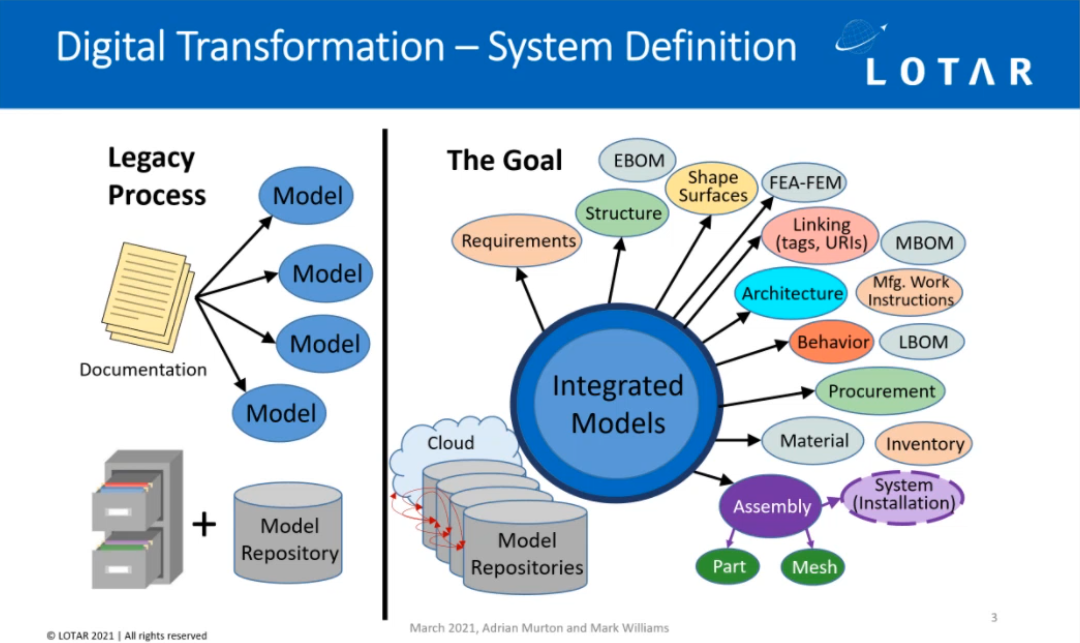
Mark stressed the importance of managing model information in context, and it has become a challenge.
 Mark mentioned that 20 years ago, the IDC (International Data Corporation) measured Boeing’s performance and estimated that each employee spent 2 ½ hours per day. In 2018, the IDC estimated that this number has grown to 30 % of the employee’s time and could go up to 50 % when adding the effort of reusing and duplicating data.
The consequence of this would be that a full-service enterprise, having engineering, manufacturing and services connected, probably loses 70 % of its information because they cannot find it—an impressive number asking for “clever” ways to find the correct information in context.
 It is not about just a full indexed search of the data, as some technology geeks might think. It is also about describing and standardizing metadata that describes the models. In that context, Mark walked through a list of existing standards, all with their pros and cons, ending up with the recommendation to use the ISO 10303-243 – MoSSEC standard.
MoSSEC standing for Modelling and Simulation information in a collaborative Systems Engineering Context to manage and connect the relationships between models.
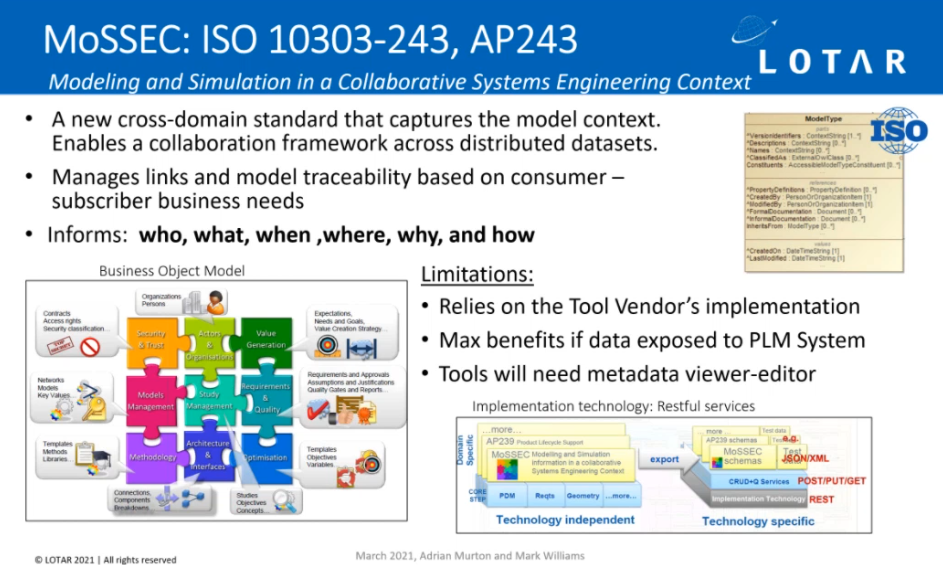
MoSSEC and its implication for future digital enterprises are interesting, considering the importance of a model-based future. I am curious how PLM Vendors and tools will support and enable the standard for future interoperability and collaboration.
Additive Manufacturing
– not as simple as paper printing – yet
Andreas Graichen from Siemens Energy closed the day, coming back to the new technologies’ topic: Additive Manufacturing or in common language 3D Printing. Andreas shared their Additive Manufacturing experiences, matching the famous Gartner Hype Cycle. His image shows that real work needs to be done to understand the technology and its use cases after the first excitement of the hype is over.
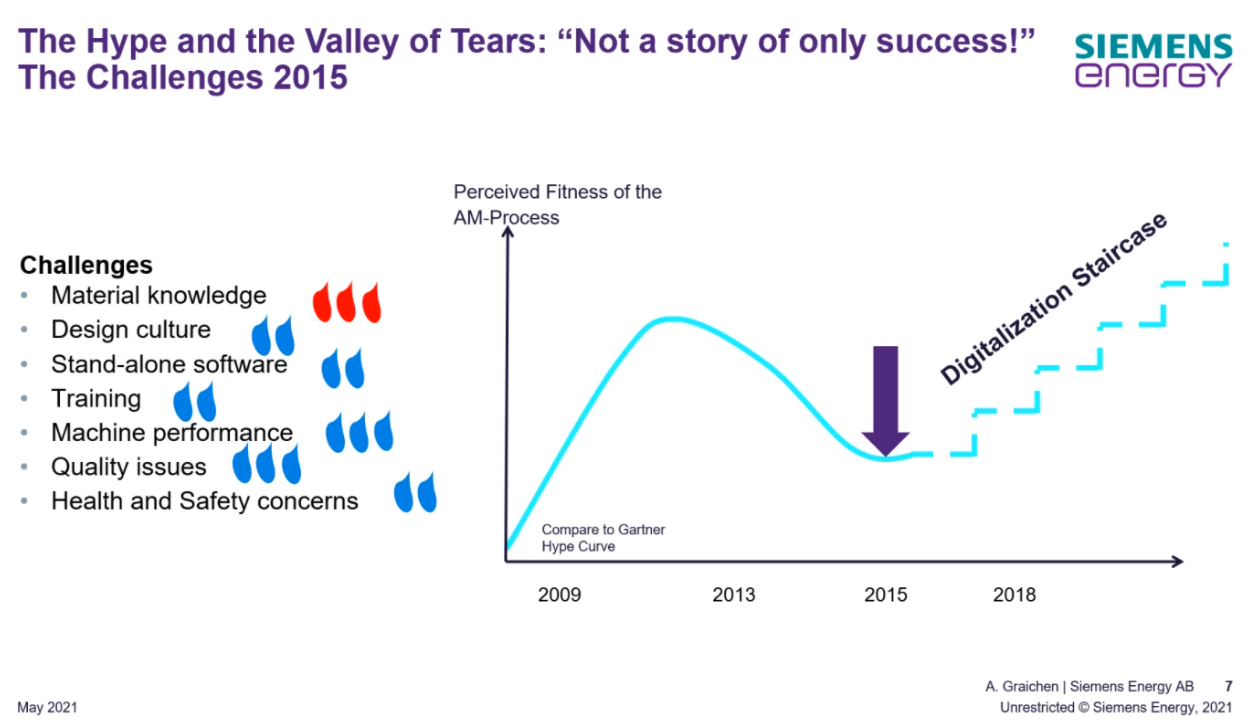
Material knowledge was one of the important topics to study when applying additive manufacturing. It is probably a new area for most companies to understand the material behaviors and properties in an Additive Manufacturing process.
The ultimate goal for Siemens Energy is to reach an “autonomous” workshop anywhere in the world where gas turbines could order their spare parts by themselves through digital warehouses. It is a grand vision, and Andreas confirmed that the scalability of Additive Manufacturing is still a challenge.
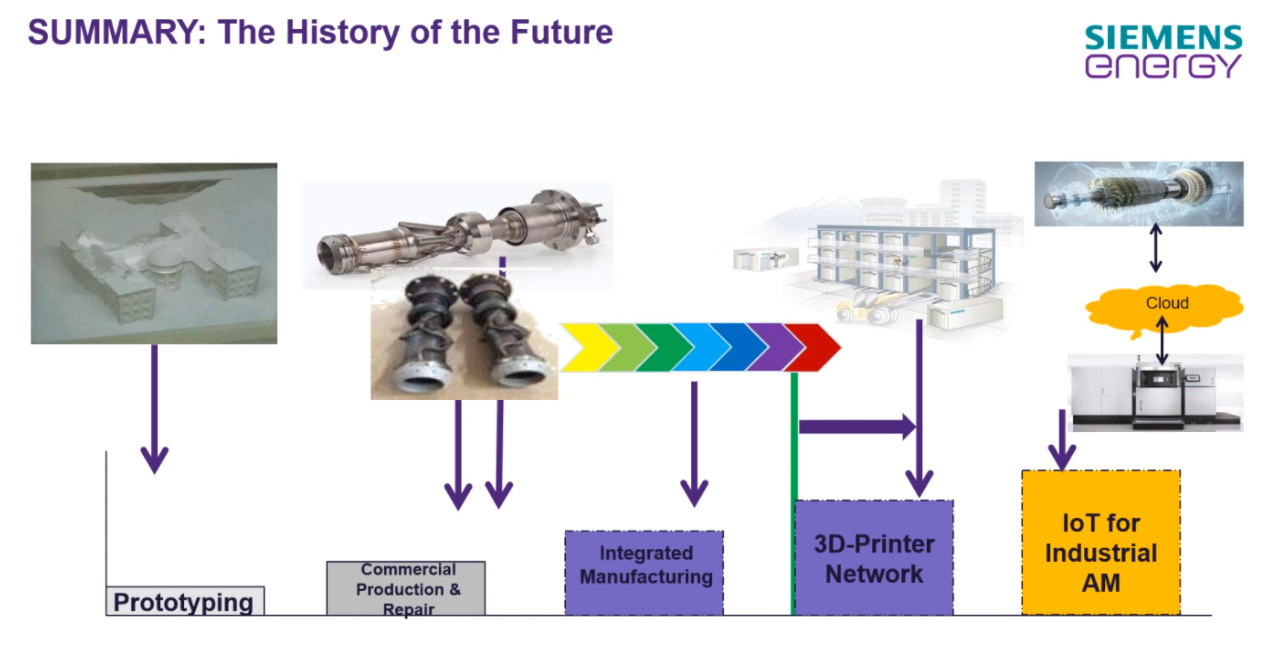
For rapid prototyping or small series of spare parts, Additive Manufacturing might be the right solution. The success of your Additive Manufacturing process depends a lot on how your company’s management has realistic expectations and the budget available to explore this direction.
Conclusion
Day 1 was enjoyable and educational, starting and ending with a focus on disruptive technologies. The middle part related to data the data management concepts needed for a digital enterprise were the most exciting topics to follow up in my opinion.
Next week I will follow up with reviewing day 2 and share my conclusions. The PLM Road Map & PDT Spring 2021 conference confirmed that there is work to do to understand the future (of PLM).
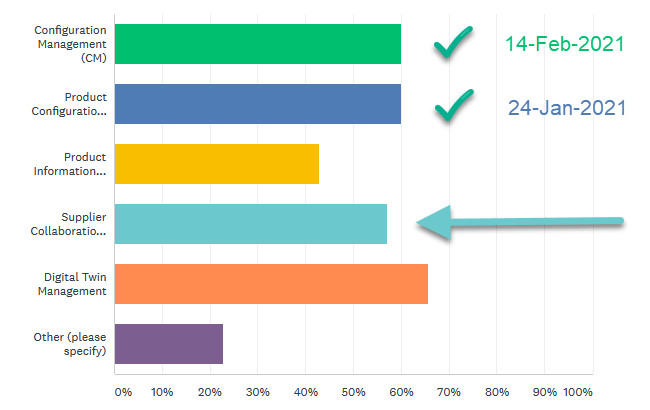
PLM and Complementary domains/practices
After “The PLM Doctor is IN #2,” now again a written post in the category of PLM and complementary practices/domains.
After PLM and Configuration Lifecycle ManagementCLM (January 2021) and PLM and Configuration Management CM (February 2021), now it is time to address the third interesting topic:
PLM and Supply Chain collaboration.
In this post, I am speaking with Magnus Färneland from Eurostep, a company well known in my PLM ecosystem, through their involvement in standards (STEP and PLCS), the PDT conferences, and their PLM collaboration hub, ShareAspace.
Supply Chain collaboration
The interaction between OEMs and their suppliers has been a topic of particular interest to me. As a warming-up, read my post after CIMdata/PDT Roadmap 2020: PLM and the Supply Chain. In this post, I briefly touched on the Eurostep approach – having a Supply Chain Collaboration Hub. Below an image from that post – in this case, the Collaboration Hub is positioned between two OEMs.
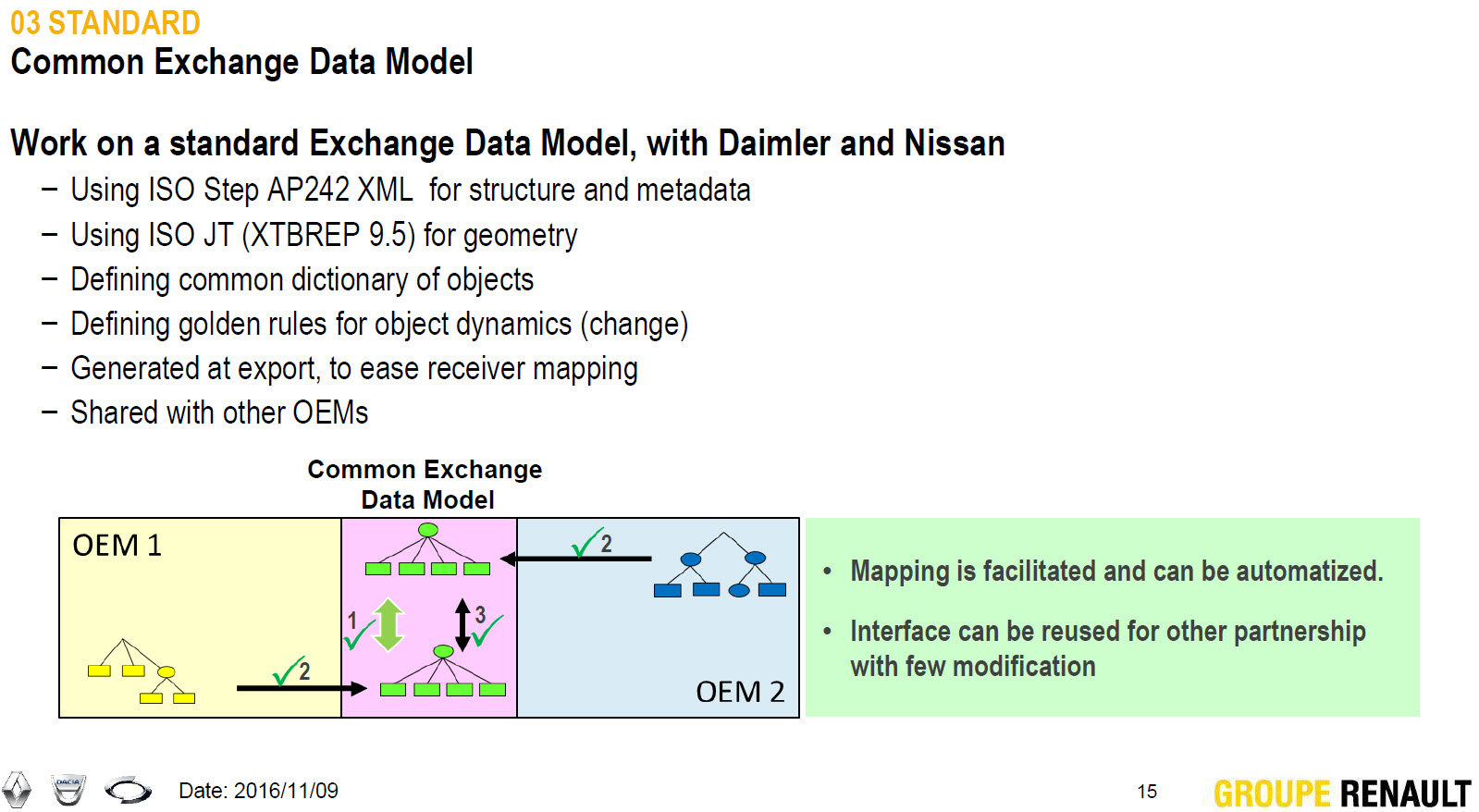
Slide: PDT Europe 2016 RENAULT PLM Challenges
Recently Eurostep shared a blog post in the same context: 3 Steps to remove data silos from your supply chain addressing the dreams of many companies: moving from disconnected information silos towards a logical flow of data. This topic is well suited for all companies in the digital transformation process with their supply chain. So, let us hear it from Eurostep.
Eurostep – the company / the mission
 First of all, can you give a short introduction to Eurostep as a company and the unique value you are offering to your clients?
 Eurostep was founded in 1994 by several world-class experts on product data and information management. In the year 2000, we started developing ShareAspace. We took all the experience we had from working with collaboration in the extended enterprise, mixed it with our standards knowledge, and selected Microsoft as the technology for our software platform.
We now offer ShareAspace as a solution for product information collaboration in all three industry verticals where we are active: Manufacturing, Defense and AEC & Plant.
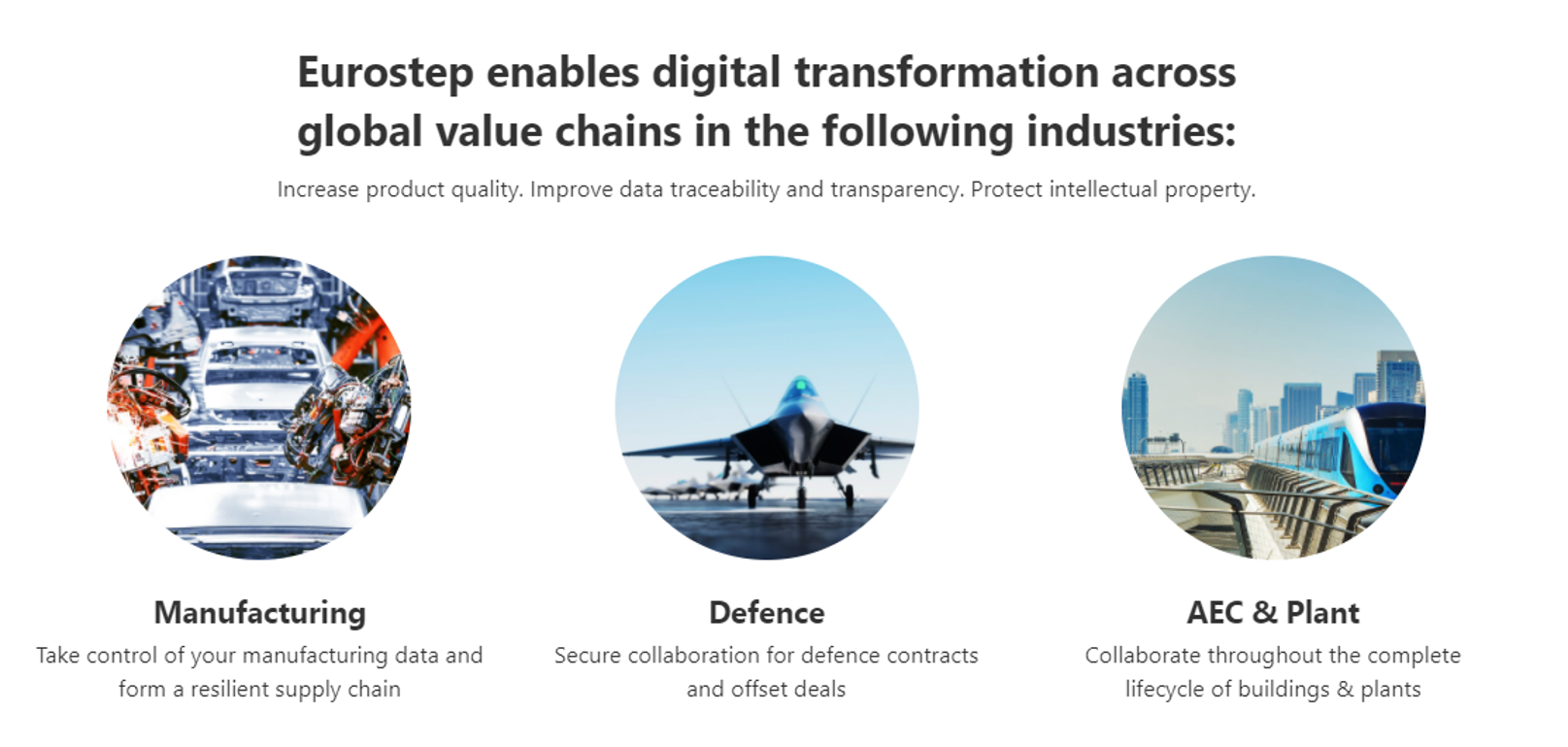
In the Manufacturing offering – the Supply Chain Collaboration Hub
 ShareAspace is based on an information standard called PLCS (ISO 10300-239). This means we have a data model covering the complete life cycle of a product from requirements and conceptual design to an existing installed base. We have added things needed, such as consolidation and security. Our partnership with Microsoft has also resulted in ShareAspace being available in Azure as a service (our Design to Manufacturing software).
Why a supply chain collaboration hub?
Currently, most suppliers work in a disconnected manner with their clients – sending files up and down or the need to work inside the OEM environment. What are the reasons to consider a supply chain collaboration hub or, as you call it, a product information collaboration solution?
The hub concept is not new per se. There are plenty of examples of file sharing hubs. Once you realize that sending files back and forth by email is a disaster for keeping control of your information being shared with suppliers, you would probably try out one of the available file-sharing alternatives.
However, after a while, you begin to realize that a file share can be quite time consuming to keep up to date. Files are being changed. Files are being removed! Some files are enormous, and you realize that you only need a fraction of what is in the file. References within one file to another file becomes corrupt because the other file is of a new version. Etc. Etc.
 This is about the time when you realize that you need similar control of the data you share with suppliers as you have in your internal systems. If not better.
A hub allows all partners to continue to use their internal tools and processes. It is also a more secure way of collaboration as the suppliers and partners are not let into the internal systems of the OEM.

Another significant side effect of this is that you only expose the data in the hub intended for external sharing and avoid sharing too much or exposing internal sensitive data.
A hub is also suitable for business flexibility as partners are not hardwired with the OEM. Partners can change, and IT systems in the value chain can change without impacting more than the single system’s connecting to the hub.
Should every company implement a supply chain collaboration hub?
Based on your experience, what types of companies should implement a supply chain collaboration hub and what are the expected benefits?
The large OEMs and 1st tier suppliers certainly benefit from this since they can incorporate hundreds, if not thousands, of suppliers. Sharing technical data across the supply chain from a dedicated hub will remove confusions, improve control of the shared data, and build trust with their partners.
With our cloud-based offering, we now also make it possible for at least mid-sized companies (like 200+ employees) to use ShareAspace. They may not have a well-adopted PLM system or the issues of communicating complex specifications originating from several internal sources. However still, they need to be professional in dealing with suppliers.
 The smallest client we have is a manufacturer of pool cleaners, a complex product with many suppliers. The company Weda [www.weda.se] has less than 10 employees, and they use ShareAspace as SaaS. With ShareAspace, they have improved their collaboration process with suppliers and cut costs and lowered inventory levels.
 ShareAspace can really scale big. It serves as a collaboration solution for the two new Aircraft carriers in the UK, the QUEEN ELIZABETH class. The aircraft carriers were built by a consortium that was closed in early 2020.
ShareAspace is being used to hold the design data and other documentation from the consortium to be available to the multiple organizations (both inside and outside of the Ministry of Defence) that need controlled access.
What is the dependency on standards?
I always associate Eurostep with the PLCS (ISO 10303-239) standard, providing an information model for “hardware” products along the lifecycle. How important is this standard for you in the context of your ShareAspace offering?
Should everyone adapt to this standard?
We have used PLCS to define the internal data schema in ShareAspace. This is an excellent starting point for capturing information from different systems and domains and still getting it to fit together. Why invent something new?
However, we can import data in most formats, and it does not have to be according to a standard. When connecting to Teamcenter, Windchill, Enovia, SAP, Oracle, Maximo etc., it is more often in a proprietary format than according to any standards.
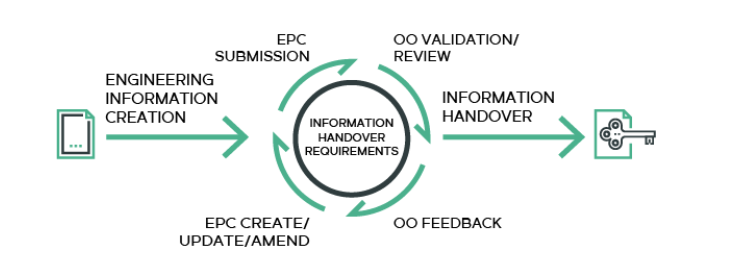
Capital Facilities Information HandOver Specification (CFHOS) exchange
On the other hand, in some industries like Defense, standards-based data exchange is required and put into contracts. Sometimes it prescribes PLCS. For the plant industry, it could be CFIHOS or ISO15926.
Supply Chain Collaboration and digital transformation
As stated at the beginning of this post, digital transformation is about connecting the information siloes through a digital thread. How important is this related to the supply chain?
Many companies have come a long way in improving their internal management of product data. But still, the exchange and sharing of data with the external world has considerable potential for improvement. Just look at the chaos everyone has experienced with emails, still used a lot, in finding the latest Word document or PowerPoint file. Imagine if you collaborate on a ship, a truck, a power plant, or a piece of complex infrastructure. FTP is not the answer, and for product data, Dropbox is not doing the trick.
A Digital Thread must support versions and changes in all directions, as changes are natural with reasonably advanced products. Much of the information created about or around a product is generated within the supply chain, like production parameters, test and inspection protocols, certifications, and more. Without an intelligent way of capturing this data, companies will continue to spend a fortune on administration trying to manage this manually.
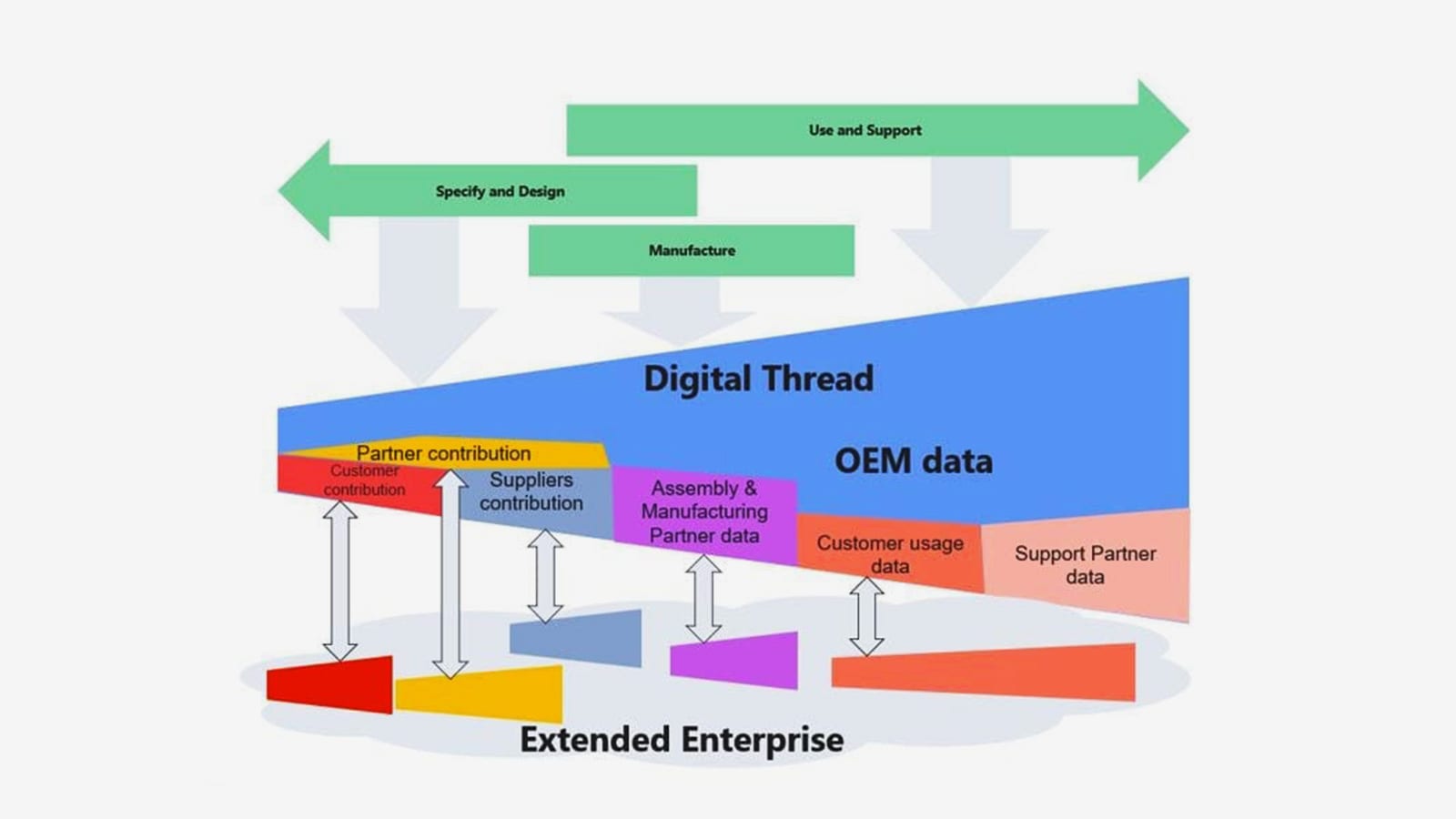
As the Digital Thread extends across the value chain, a useful sharing tool is needed to allow for configuration management across the complete chain – ShareAspace is designed for this. The great thing with PLCS is that it gives a standard model for the Digital Thread covering several Digital Twins. PLCS adds the life cycle component, which is essential, and there is no alternative. Therefore, we are welcome with ShareAspace and PLCS to add capabilities to snapshot standards like IFC etc., that are outside the STEP series of standards.
Learning more
We discussed that a supply chain collaboration hub can have specific value to a company. Where can readers learn more?
There is a lot of information available. Of course, on our Eurostep website, you will find information under the tab Resources or on the ShareAspace website under the tab News.
Other sources are:
What I have learned
- I am surprised to see that the type of Supplier Collaboration Platform delivered by Eurostep is not a booming market. Where Time to Market is significantly impacted by how companies work with their suppliers, most companies still rely on the exchange of data packages.
- The most advanced exchanges are using a model-based definition if relevant. Traditional PLM Vendors will not develop such platforms as the platform needs to be agnostic in both directions.
- Having a recommended data model based on PLCS or a custom-data model in case of a large OEM can provide such a collaboration hub. Relative easy to implement (as you do not change your own PLM) and relatively easy to scale (adding a new supplier is easy). For me, the supplier collaboration platform is a must in a modern, digital connected enterprise.
Conclusion
A lot of marketing money is spent on “Digital Thread” or “Digital Continuity”. If you are looking at the full value chain of product development and operational support, there are still many manual hand-over processes with suppliers. A supplier collaboration hub might be the missing piece of the puzzle to realize a real digital thread or continuity.
 Last week I shared the first impression from my favorite conference, the PLM Roadmap / PDT conference organized by CIMdata and Eurostep. You can read some of the highlights here: The weekend after PLM Roadmap / PDT 2019 Day 1.
Click on the logo to see what was the full agenda. In this post, I will focus on some of the highlights of day 2.
Chernobyl, The megaproject with the New Arch
 Christophe Portenseigne from the Bouygues Construction Group shared with us his personal story about this megaproject, called Novarka. 33 years ago, reactor #4 exploded and has been confined with an object shelter within six months in 1986. This was done with heroic speed, and it was anticipated that the shelter would only last for 20 – 30 years. You can read about this project here.
The Novarka project was about creating a shelter for Confinement of the radioactive dust and protection of the existing against external actions (wind, water, snow…) for the next 100 years!
And even necessary, the inside the arch would be a plant where people could work safely on the process of decommissioning the existing contaminated structures. You can read about the full project here at the Novarka website.
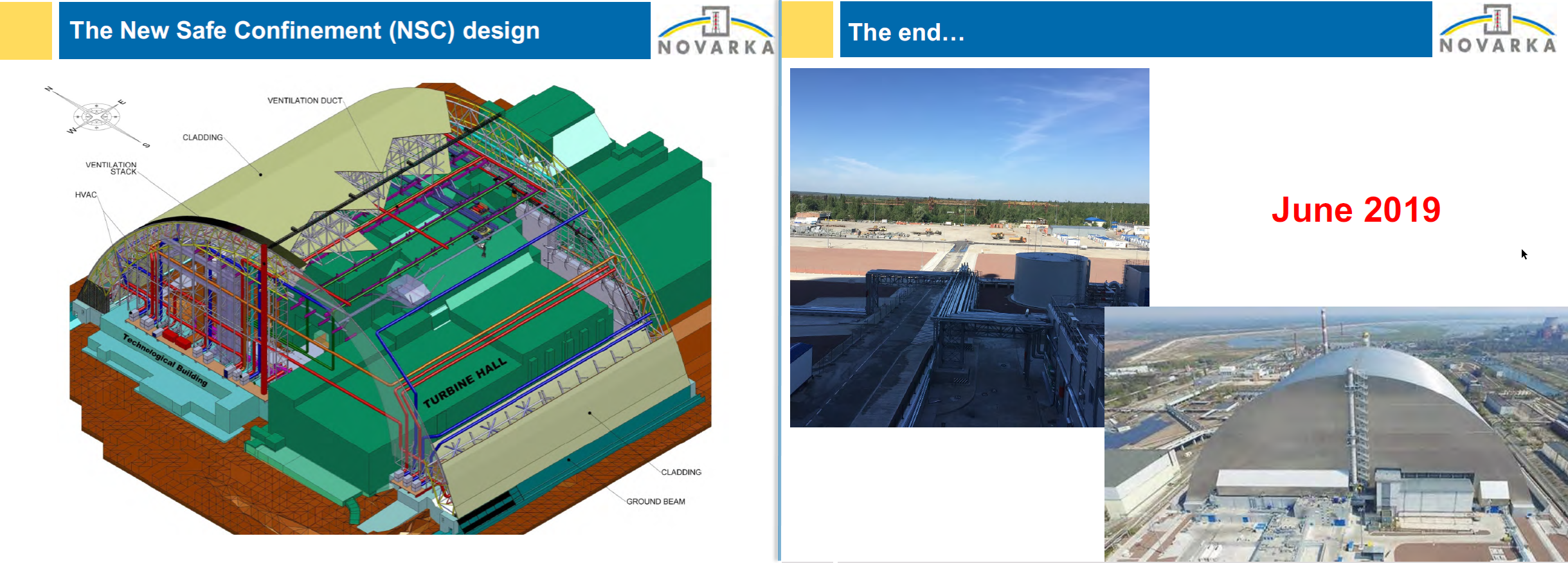
What impressed me the most the personal stories of Christophe taking us through some of the massive challenges that need to be solved with innovative thinking. High complexity, a vast number of requirements, many parties, stakeholders involved closed in June 2019. As Christophe mentioned, this was a project to be proud of as it creates a kind of optimism that no matter how big the challenges are, with human ingenuity and effort, we can solve them.
A Model Factory for the Efficient Development of High Performing Vehicles
Eric Landel, expert leader for Numerical Modeling and Simulation at Renault, gave us an interesting insight into an aspect of digitalization that has become very valuable, the connection between design and simulation to develop products, in this case, the Renault CLIO V, as much as possible in the virtual world. You need excellent simulation models to match future reality (and tests). The target of simulation was to get the highest safety test results in the Europe NCAP rating – 5 stars.
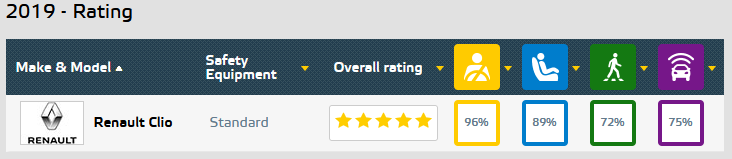
The Renault modeling factory implemented a digital loop (below) to ensure that at the end of the design/simulation, a robust design would exist. Eric mentioned that for the Clio, they did not build a prototype anymore. The first physical tests were done on cars coming from the plant. Despite the investment in simulation software, a considerable saving in crash part over cost before TGA (Tooling Go Ahead).
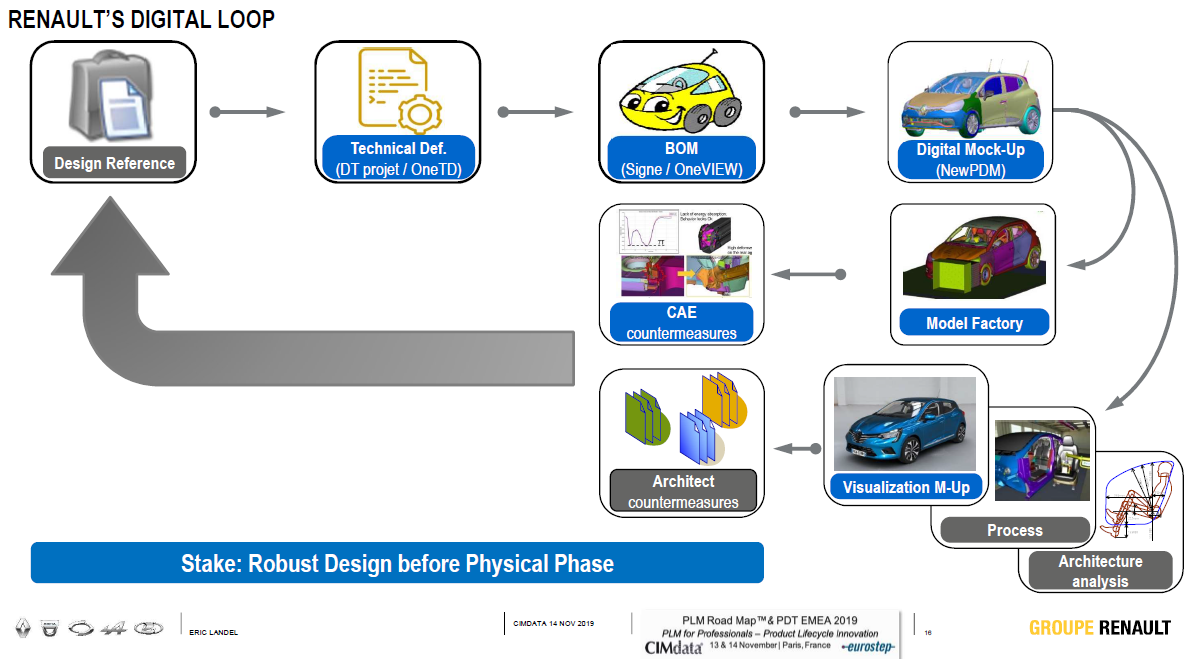
Combined with the savings, the process has been much faster than before. From 10 weeks for a simulation loop towards 4 weeks. The next target is to reduce this time to 1 week. A real example of digitization and a connected model-based approach.
From virtual prototype to hybrid twin
ESI – their sponsor session Evolving from Virtual Prototype Testing to Hybrid Twin: Challenges & Benefits was an excellent complementary session to the presentation from Renault
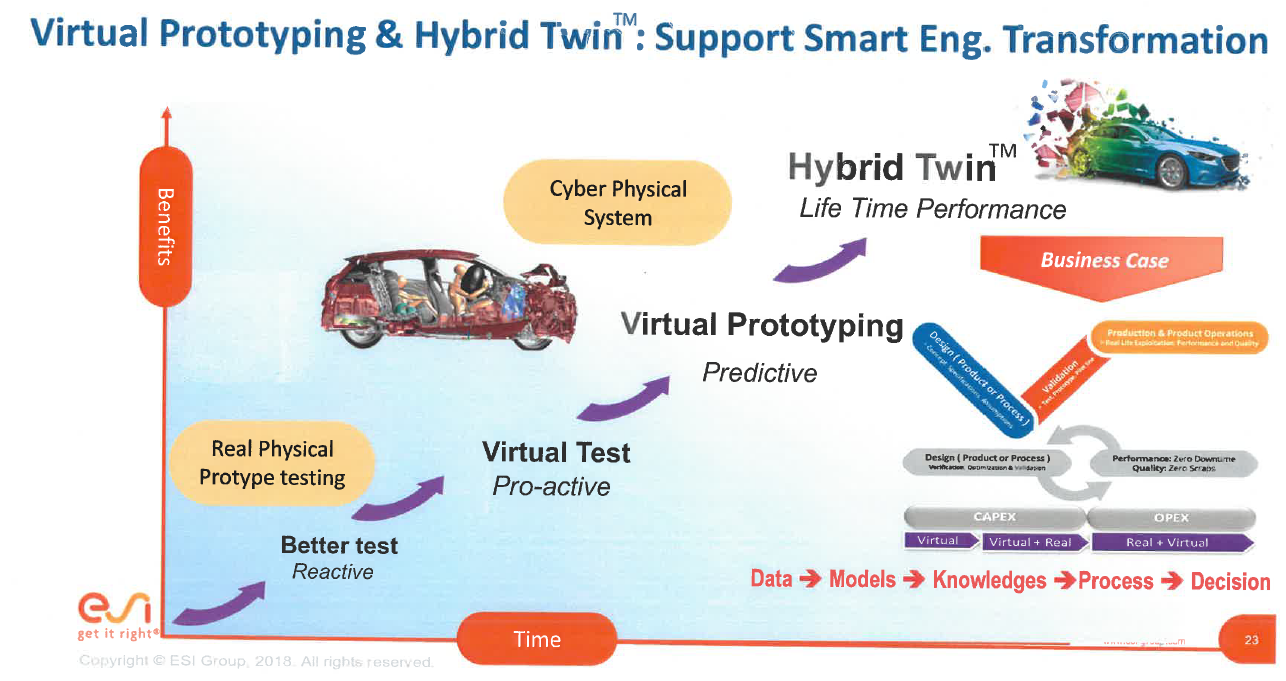
PLM, MBSE and Supply chain – challenges and opportunities
Nigel Shaw’s presentation was one of my favorite presentations, as Nigel addressed the same topics that I have been discussing in the past years. His focus was on collaboration between the OEM and supplier with the various aspects of requirements management, configuration management, simulation and the different speeds of PLM (focus on mechanical) and ALM (focus on software)
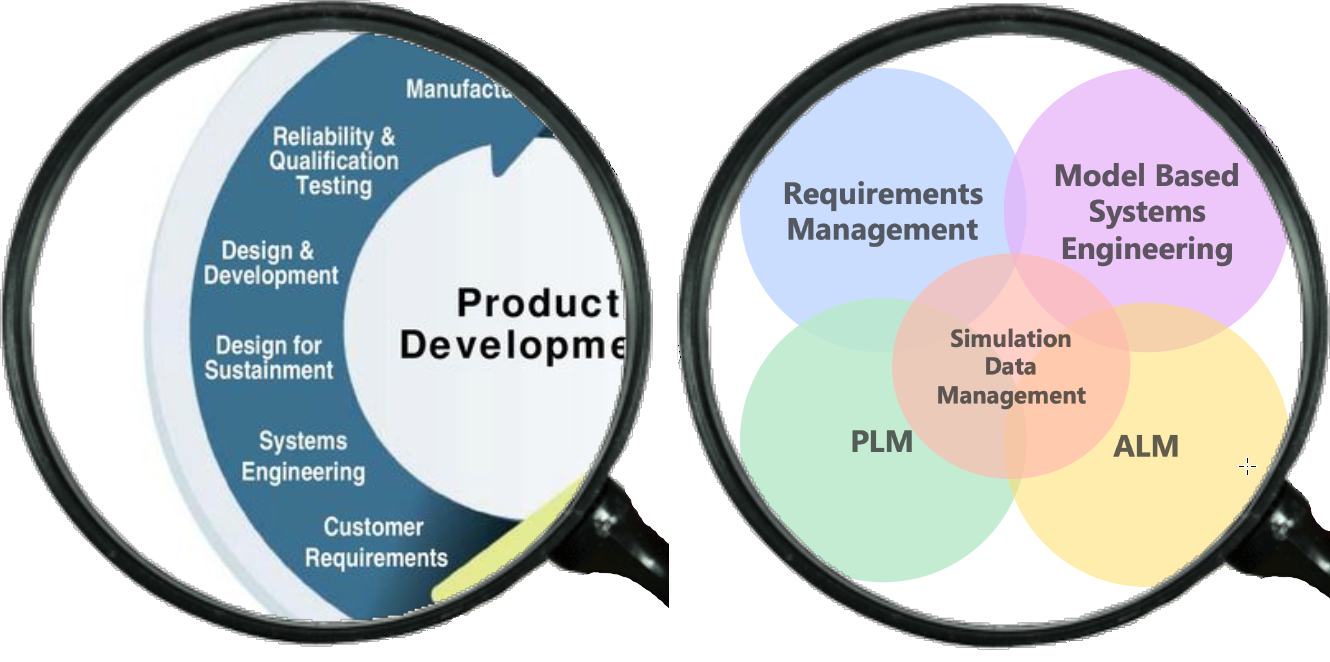
How can such activities work in a digitally-connected environment instead of a document-based approach? Nigel looked into the various aspects of existing standards in their domains and their future. There is a direction to MBE (Model-Based Everything) but still topics to consider. See below:
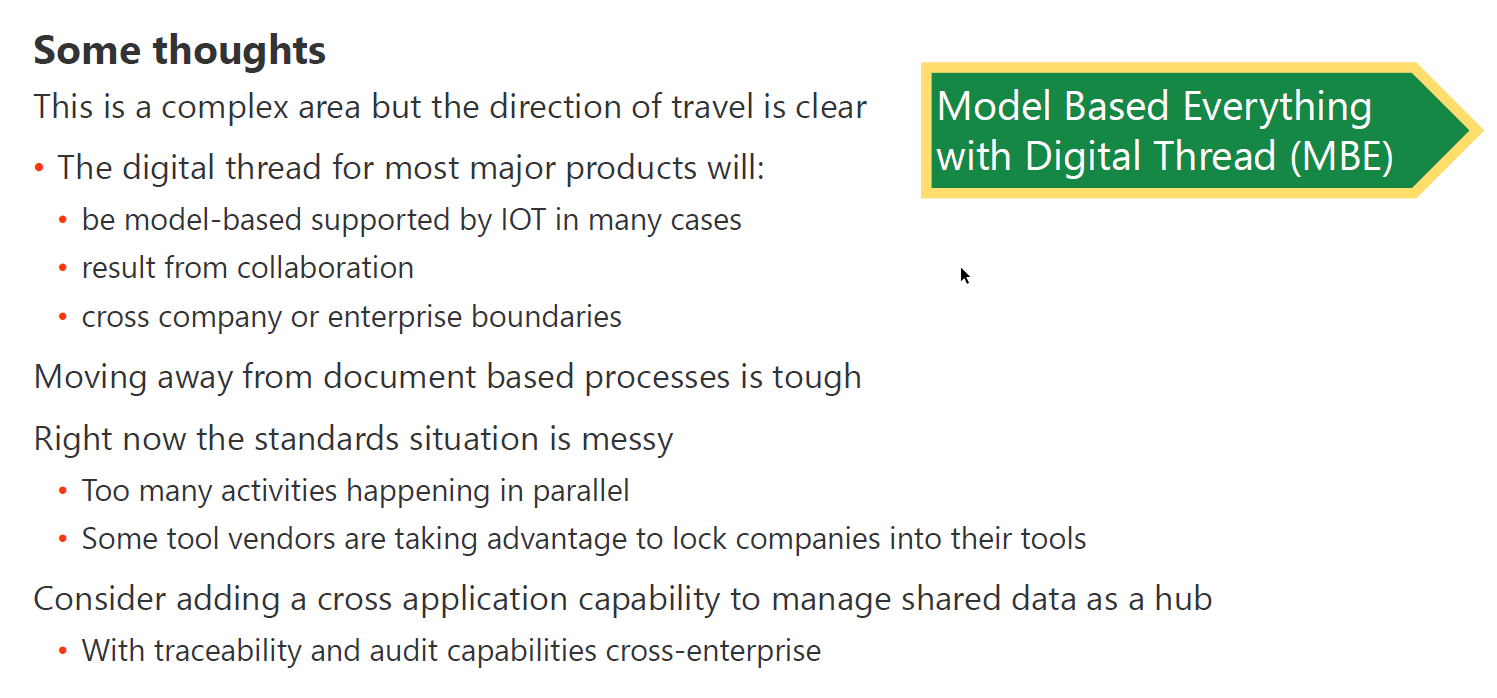
I agree with Nigel – the future is model-based – when will be the issue for the market leaders.
The ISO AP239 ed3 Project and the Through Life Cycle Interoperability Challenge
Yves Baudier from AFNET, a reference association in France regarding industry digitation, digital threads, and digital processes for Extended Enterprise/Supply chain. All about a digital future and Yves presentation was about the interoperability challenge, mentioning three of my favorite points to consider:
- Data becoming more and more a strategic asset – as digitalization of Industry and Services, new services enabled by data analytics
- All engineering domains (from concept design to system end of life) need to develop a data-centric approach (not only model-centric)– An opportunity for PLM to cover the full life-cycle
- Effectivity and efficiency of data interoperability through the life-cycle is now an essential industry requirement – e.g., “virtual product” and “digital twin” concepts
All the points are crucial for the domain of PLM.
In that context, Yves discussed the evolution of the ISO 10303-239 standard, also known as PLCS. The target with ISO AP239 ed3 is to become the standard for Aerospace and Defense for the full product lifecycle and through this convergence being able to push IT/PLM Vendors to comply – crucial for a digital enterprise

Time for the construction / civil industry
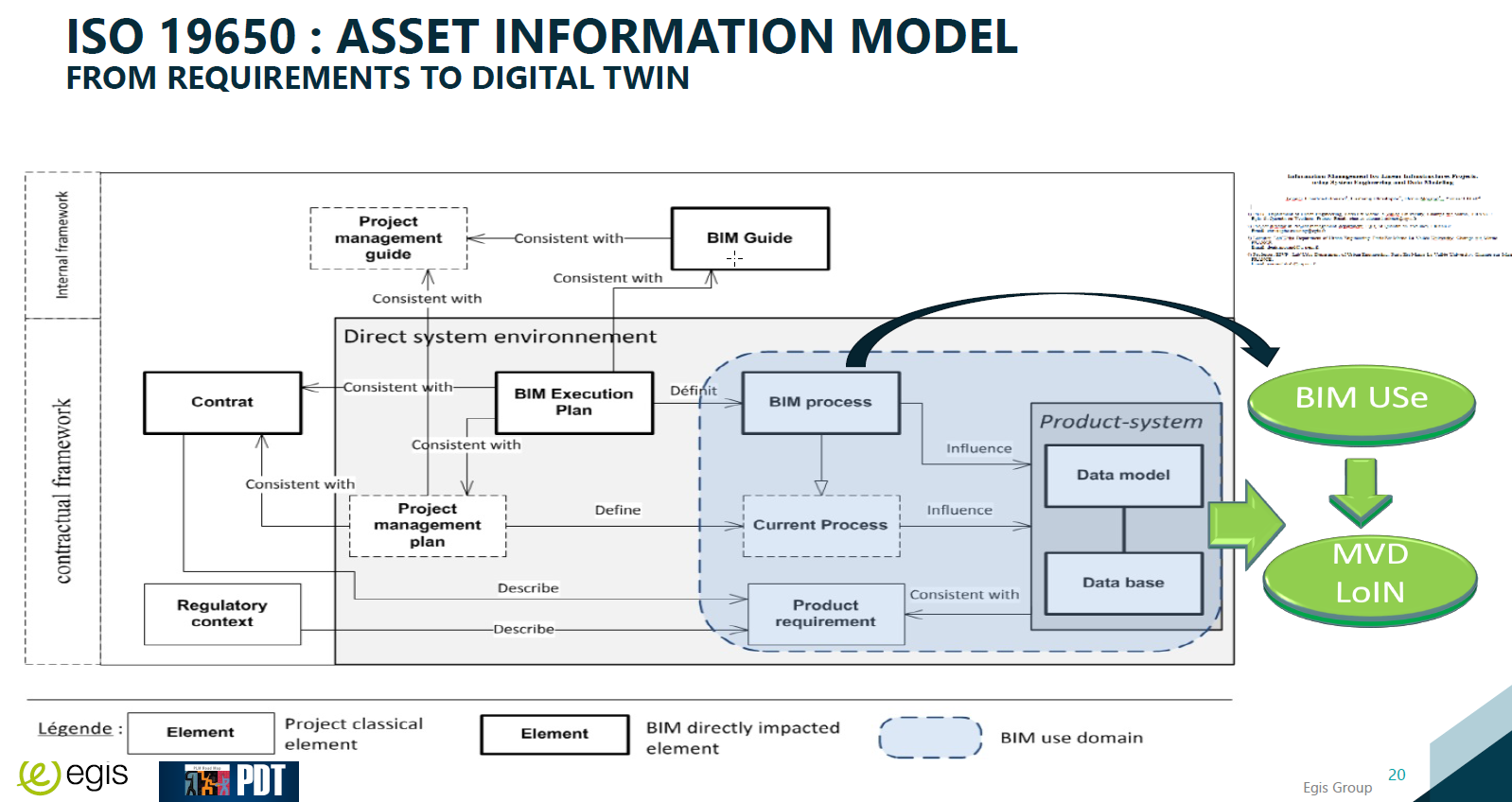
Christophe Castaing, director of digital engineering at Egis, shared with us their solution framework to manage large infrastructure projects by focusing on both the Asset Information (BIM-based) and the collaborative processes between the stakeholders, all based on standards. It was a broad and in-depth presentation – too much to share in a blog post. To conclude (see also Christophe’s slide below) in the construction industry more and more, there is the desire to have a digital twin of a given asset (building/construction), creating the need for standard information models.
Pierre Benning, IT director from Bouygues Public Works gave us an update on the MINnD project. MINnD standing for Modeling INteroperable INformation for sustainable INfrastructures in xD, a French research project dedicated to the deployment of BIM and digital engineering in the infrastructure sector. Where BIM has been starting from the construction industry, there is a need for a similar, digital modeling approach for civil infrastructure. In 2014 Christophe Castaing already reported the activities of the MINnD project – see The weekend after PDT 2014. Now Pierre was updating us on what are the activities for MINnD Season 2 – see below:

As you can see, again, the interest in digital twins for operations and maintenance. Perhaps here, the civil infrastructure industry will be faster than traditional industries because of its enormous value. BIM and GIS reconciliation is a precise topic as many civil infrastructures have a GIS aspect – Road/Train infrastructure for example. The third bullet is evident to me. With digitization and the integration of contractors and suppliers, BIM and PLM will be more-and-more conceptual alike. The big difference still at this moment: BIM has one standard framework where PLM-standards are still not in a consolidation stage.
Digital Transformation for PLM is not an evolution
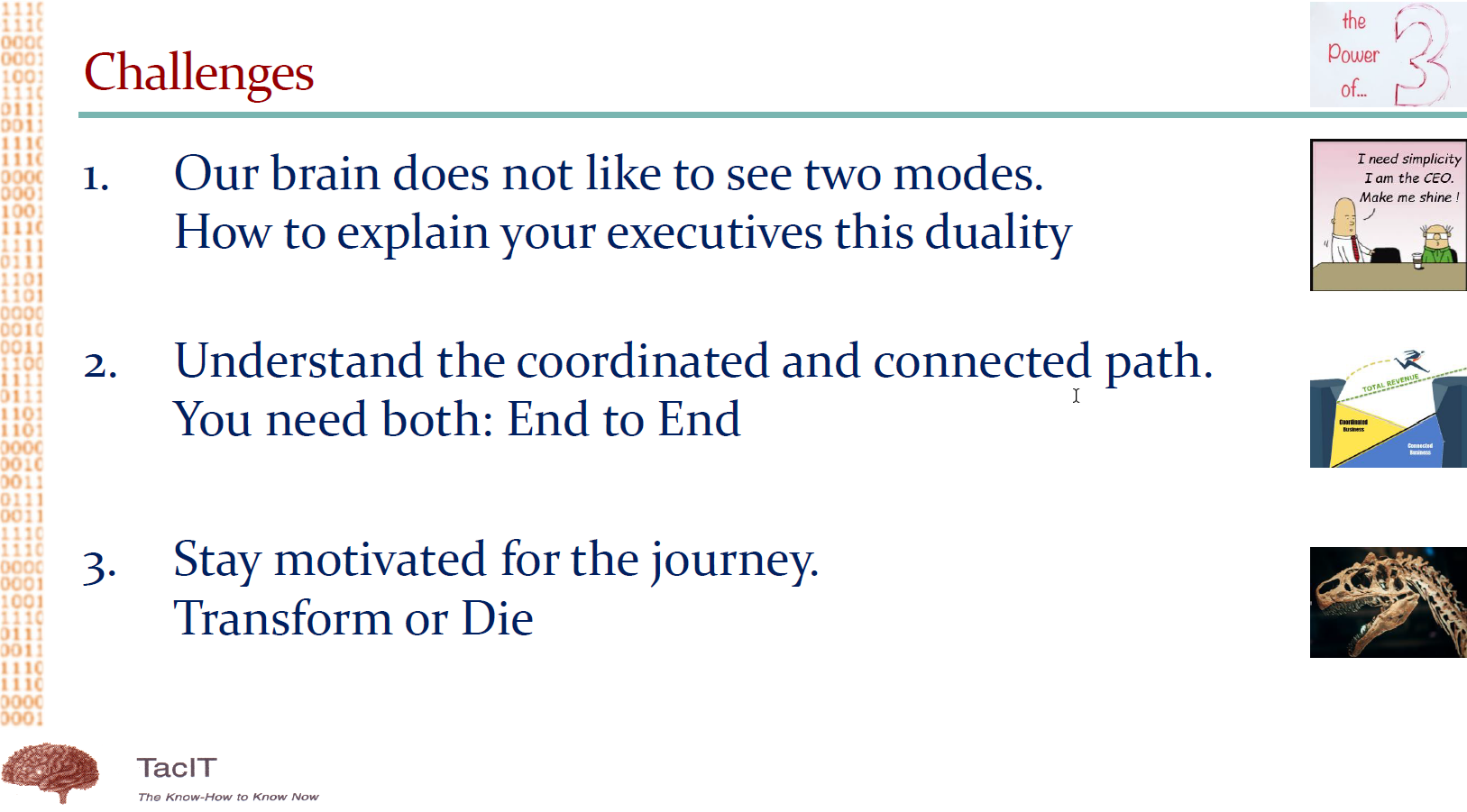 If you have been following my blog in the past two years, you may have noticed that I am exploring ways to solve the transition from traditional, coordinated PLM processes towards future, connected PLM. In this session, I shared with the audience that digital transformation is disruptive for PLM and requires thinking in two modes.
Thinking in two modes is not what people like, however, organizations can run in two modes. Also, I shared some examples from digital transformation stories that illustrate there was no transformation, either failure or smoke, and mirrors. You can download my presentation via SlideShare here.
Fireplace discussion: Bringing all the Trends Together, What’s next
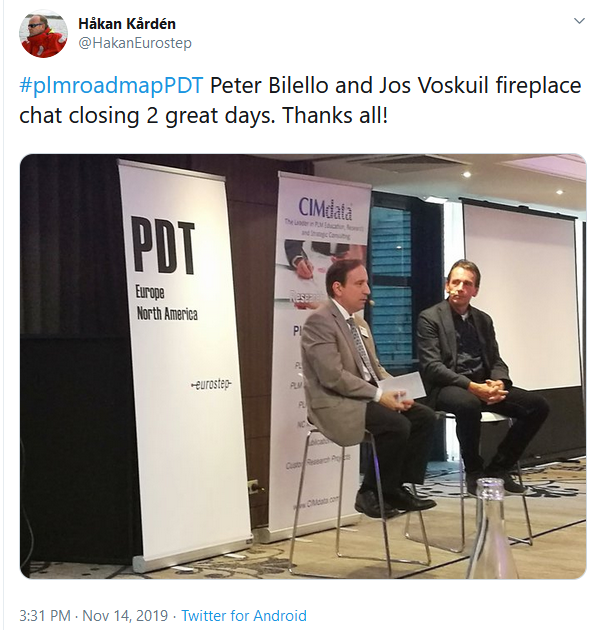
We closed the day and the conference with a fireplace chat moderated by Dr. Ken Versprille from CIMdata, where we discussed, among other things, the increasing complexity of products and products as a service. We have seen during the sessions from BAE Systems Maritime and Bouygues Construction Group that we can do complex projects, however, when there are competition and time to deliver pressure, we do not manage the project so much, we try to contain the potential risk. It was an interactive fireplace giving us enough thoughts for next year.
Conclusion
Nothing to add to Håkan Kårdén’s closing tweet – I hope to see you next year.
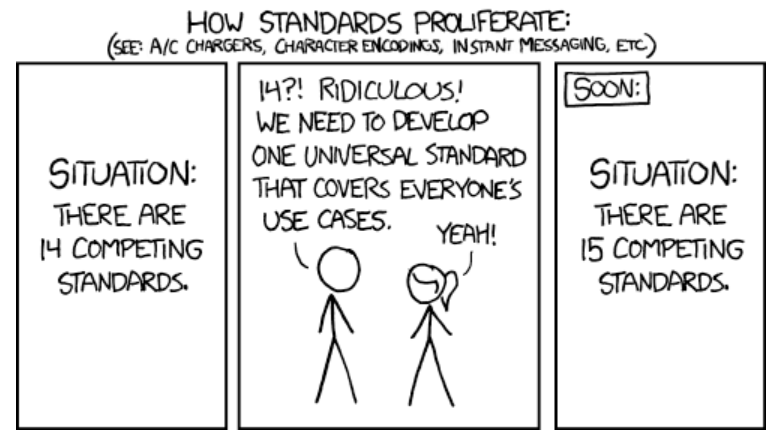
The usage of standards has been a recurring topic the past 10 months, probably came back to the surface at PI PLMx Chicago during the PLM Leaders panel discussion. If you want to refresh the debate, Oleg Shilovitsky posted an overview: What vendors are thinking about PLM standards – Aras, Dassault Systemes, Onshape, Oracle PLM, Propel PLM, SAP, Siemens PLM.
 It is clear for vendors when they would actively support standards they reduce their competitive advantage, after all, you are opening your systems to connect to other vendor solutions, reducing the chance to sell adjacent functionality. We call it vendor lock-in. If you think this approach only counts for PLM, I would suggest you open your Apple (iPhone) and think about vendor lock-in for a moment.
Vendors will only adhere to standards when pushed by their customers, and that is why we have a wide variety of standards in the engineering domain.
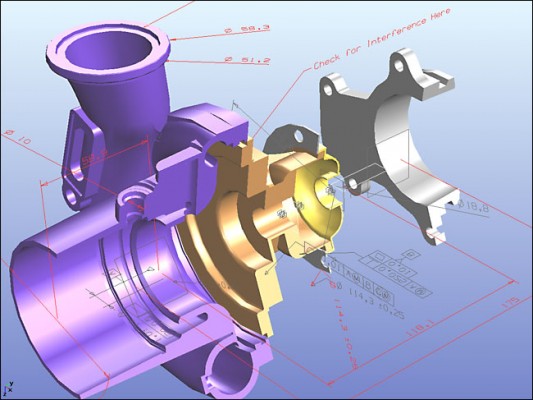 Take the example of JT as a standard viewing format, heavily pushed by Siemens for the German automotive industry to be able to work downstream with CATIA and NX models. There was a JT-version (v9.5) that reached ISO 1306 alignment, but after that, Siemens changed JT (v10) again to optimize their own exchange scenarios, and the standard was lost.
And as customers did not complain (too much), the divergence continued. So it clear vendors will not maintain standards out of charity as your business does not work for charity either (or do you ?). So I do not blame them is there is no push from their customers to maintain them.
What about standards?
The discussion related to standards flared up around the IpX ConX19 conference and a debate between Oleg & Hakan Kardan (EuroSTEP) where Hakan suggested that PLCS could be a standard data model for the digital thread – you can read Oleg’s view here: Do we need a standard like PLCS to build a digital thread.
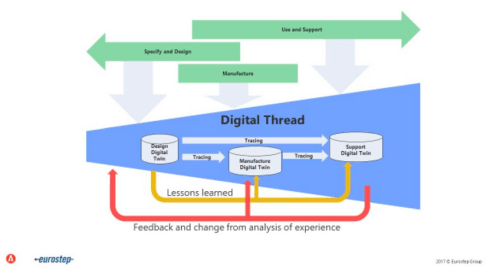
Oleg’s opening sentence made me immediately stop reading further as more and more I am tired of this type of framing if you want to do a serious discussion based on arguments. Such a statement is called framing and in particular in politics we see the bad examples of framing.
Standards are like toothbrushes, a good idea, but no one wants to use anyone else’s. The history of engineering and manufacturing software is full of stories about standards.
This opening sentence says all about the mindset related to standards – it is a one-liner – not a fact. It could have been a tweet in this society of experts.
Still later,I read the blog post and learned Oleg has no arguments to depreciate PLCS, however as he does not know the details, he will probably not use it. The main challenge of standards: you need to spend time to understand and adhere to them and agree on following them. Otherwise, you get the same diversion of JT again or similar examples.
 However, I might have been wrong in my conclusion as Oleg did some thinking on a Sunday and came with an excellent post: What would happen if PLM Vendors agree about data standards. Here Oleg is making the comparison with a standard in the digital world, established by Google, Microsoft, Yahoo, and Yandex : Schema.org: Evolution of Structured Data on the Web.
There is a need for semantic mapping and understanding in the day-to-day-world, and this understanding makes you realize the same is needed for PLM. That was one of the reasons why I wrote in the past (2015) a series of posts related to the importance of a PLM data model:
All these posts were aimed to help companies and implementers to make the right choices for an item-centric PLM implementation. At that time – 2015, item-centric was the current PLM best practice. I learned from my engagements in the past 15 years, in particular when you have a flexible modeling tool like SmarTeam or nowadays Aras, making the right data model decisions are crucial for future growth.
Who needs standards?
 First of all, as long as you stay in your controlled environment, you do not need standards. In particular, in the Aerospace and Automotive industry, the OEMs defined the software versions to be used, and the supply chain had to adhere to their chosen formats. Even this narrow definition was not complete enough as a 3D CAD model needed to be exported for simulation or manufacturing purposes. There was not a single vendor working on a single CAD model definition at that time. So the need for standards emerged as there was a need to exchange data.
Data exchange is the driving force behind standards.
In a second stage also neutral format data storage became an important point – how to save for 75 years an aircraft definition.
Oil & Gas / Building – Construction
These two industries both had the need for standards. The Oil & Gas industry relies on EPC (Engineering / Procurement / Construction) companies that build plants or platforms. Then the owner/operator takes over the operation and needs a hand-over of all the relevant information. However if this information would be delivered in the application-specific formats the EPC companies have used, the owner/operator would require various software environments and skills, just to have access to the data.
 Therefore if the data is delivered in a standard format (ISO 15926) and the exchange follows CFIHOS (Capital Facilities Information Hand Over Specification) this exchange can be done more automated between the EPC and Owner/Operator environment, leading to lower overall cost of delivering and maintaining the information combined with a higher quality. For that reason, the Oil & Gas industry has invested already for a long time in standards as their plants/platform have a long lifecycle.
And the same is happening in the construction industry. Initially Autodesk and Bentley were fighting to become the vendor-standard and ultimately the IFC-standard has taken a lot from the Autodesk-world, but has become a neutral standard for all parties involved in a construction project to share and exchange data. In particular for the construction industry, the cloud has been an accelerator for collaboration.
So standards are needed where companies/people exchange information
 For the same reason in most global companies, English became the standard language. If you needed to learn all the languages spoken in a worldwide organization, you would not have time for business. Therefore everyone making some effort to communicate in one standard language is the best way to operate.
And this is the same for a future data-driven environment – we cannot afford for every exchange to go to the native format from the receiver or source – common neutral (or winning) standards will ultimately also come up in the world of manufacturing data exchange and IoT.
Companies need to push
This is probably the blocking issue for standards. Developing standards, using standards require an effort without immediate ROI. So why not use vendor-formats/models and create custom point-to-point interface as we only need one or two interfaces? Companies delivering products with a long lifecycle know that the current data formats are not guaranteed for the future, so they push for standards (aerospace/defense/ oil & gas/construction/ infrastructure).

3D PDF Model
Other companies are looking for short term results, and standards are slowing them down. However as soon as they need to exchange data with their Eco-system (suppliers/ customers) an existing standard will make their business more scalable. The lack of standards is one of the inhibitors for Model-Based Definition or the Model-Based Enterprise – see also my post on this topic: Model-Based – Connecting Engineering and Manufacturing
 When we would imagine the Digital Enterprise of the future, information will be connected through data streams and models. In a digital enterprise file conversions and proprietary formats will impede the flow of data and create non-value added work. For example if we look to current “Digital Twin” concepts, the 3D-representation of the twin is recreated again instead of a neutral 3D-model continuity. This because companies currently work in a coordinated manner. In perhaps 10 years from now we will reach maturity of a model-based enterprise, which only can exist based on standards. If the standards are based on one dominating platform or based on a merger of standards will be the question.
 To discuss this question and how to bridge from the past to the future I am looking forward meeting you at the upcoming PLM Roadmap & PDT 2019 EMEA conference on 13-14 November in Paris, France. Download the program here: PLM for Professionals – Product Lifecycle Innovation
Conclusion
I believe PLM Standards will emerge when building and optimizing a digital enterprise. We need to keep on pushing and actively working for meaningful standards as they are crucial to avoid a lock-in of your data. Potentially creating dead-ends and massive inefficiencies. The future is about connected Eco-systems, and the leanest companies will survive. Standards do not need to be extraordinarily well-defined and can start from a high-level alignment as we saw from schema.org. Keep on investing and contributing to standards and related discussion to create a shared learning path.
Thanks Oleg Shilovitsky to keep the topic alive.
p.s. I had not time to read and process your PLM Data Commodizitation post
 A week ago I attended the joined CIMdata Roadmap and PDT Europe conference in Stuttgart as you can recall from last week’s post: The weekend after CIMdata Roadmap / PDT Europe 2018. As there was so much information to share, I had to split the report into two posts. This time the focus on the PDT Europe. In general, the PDT conferences have always been focusing on sharing experiences and developments related to standards. A topic you will not see at PLM Vendor conferences. Therefore, your chance to learn and take part if you believe in standards.
This year’s theme: Collaboration in the Engineering and Manufacturing Supply Chain – the Extended Digital Thread and Smart Manufacturing. Industry 4.0 plays a significant role here.
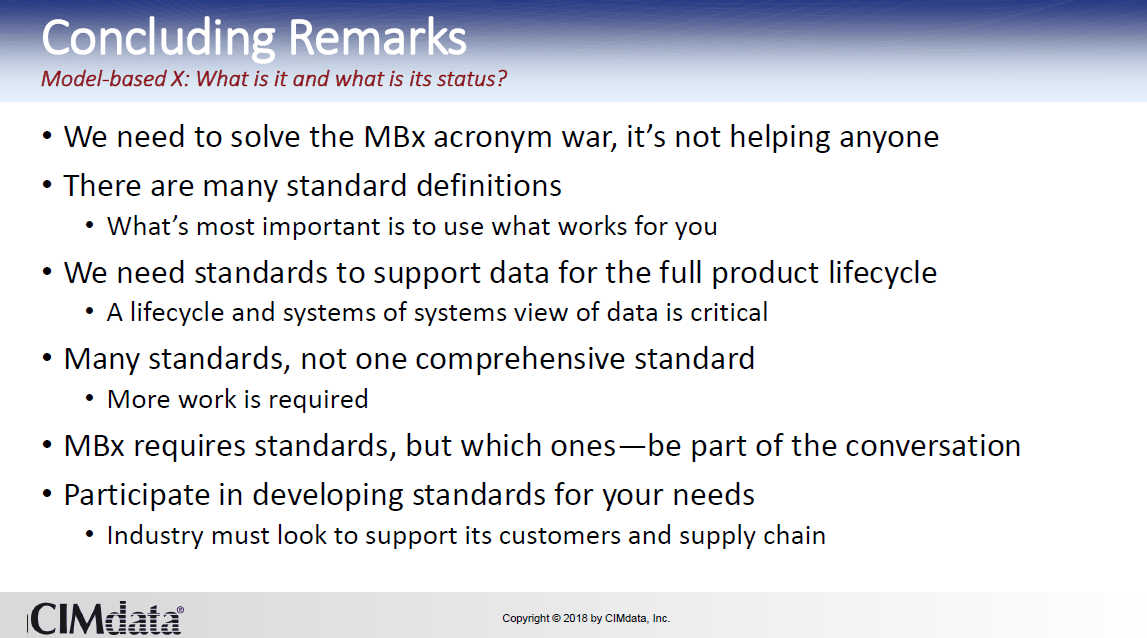
Model-based X: What is it and what is the status?
 I have seen Peter Bilello presenting this topic now several times, and every time there is a little more progress. The fact that there is still an acronym war illustrated that the various aspects of a model-based approach are not yet defined. Some critics will be stating that’s because we do not need model-based and it is only a vendor marketing trick again. Two comments here:
- If you want to implement an end-to-end model-based approach including your customers and supply chain, you cannot avoid standard. More will become clear when you read the rest of this post. Vendors will not promote standards as it reduces their capabilities to deliver unique So standards must come from the market, not from the marketing.
- In 2007 Carl Bass, at that time CEO at Autodesk made his statement: “There are only three customers in the world that have a PLM problem; Dassault, PTC, and There are no other companies that say I have a PLM problem”. Have a look here. PLM is understood by now and even by Autodesk. The statement illustrates that in the beginning the PLM target was not clear and people thought PLM was a system instead of a strategic approach. Model-based ways of working have to go through the same learning path, hopefully, faster.
Peter’s presentation was a good walk-through pointing out what exists, where we focus and that there is still working to be done. Not by vendors but by companies. Therefore I wholeheartedly agree with Peter’s closing remarks – no time to sit back and watch if you want to benefit from model-based approaches.
Smart Manufacturing
Kenny Swope, known from his presentations related to Boeing, now spoke to us as the Chair of the ISO/TC 184/SC 4 workgroup related to Industrial Data. To say it in decoded mode: Kenny is heading Sub-committee 4 with a focus on Industrial Data. SC4 is part of a more prominent theme: Automation Systems and integration identified by TC 184 all as part of the ISO framework. The scope:
Standardization of the content, meaning, structure, representation and quality management of the information required to define an engineered product and its characteristics at any required level of detail at any part of its lifecycle from conception through disposal, together with the interfaces required to deliver and collect the information necessary to support any business or technical process or service related to that engineered product during its lifecycle.
Perhaps boring to read if you think about all the demos you have seen at trade shows related to Smart Manufacturing. If you want these demos to become true in a vendor-independent environment, you will need to agree on a common framework of definitions to ensure future continuity beyond the demo. And here lies the business excitement, the real competitive advantages companies can have implementing Smart Manufacturing in a Scaleable, future-oriented way.
 One of the often heard statements is that standards are too slow or incomplete. Incomplete is not a problem when there is a need, the standard will follow. Compare it with language, we will always invent new words for new concepts.
Being slow might be the case in the past. Kenny showed the relative fast convergence from country-specific Smart Manufacturing standards into a joined ISO/IEC framework – all within three years. ISO and IEC have been teaming-up already to build Smart Manufacturing Reference models.
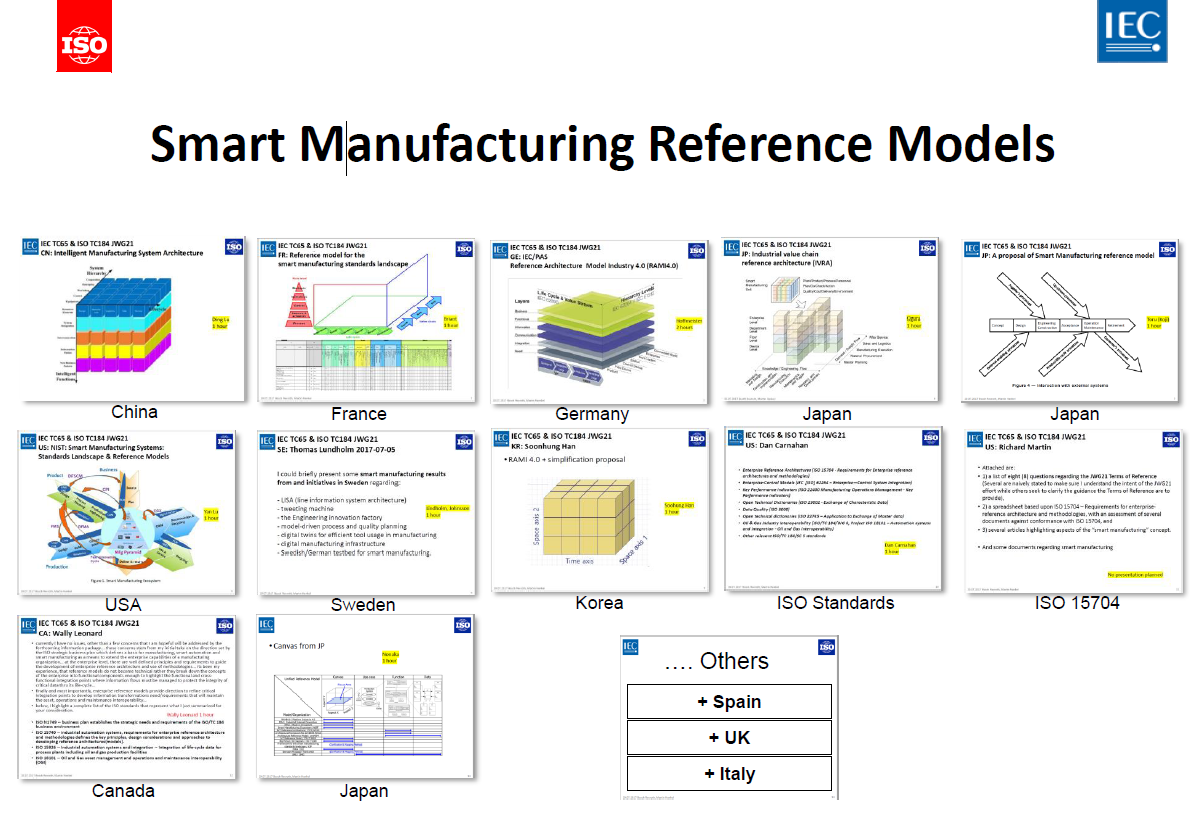
This is already a considerable effort, as the local reference models need to be studied and mapped to a common architecture. The target is to have a first Technical Specification for a joint standard final 2020 – quite fast!
 Meinolf Gröpper from the German VDMA presented what they are doing to support Smart Manufacturing / Industrie 4.0. The VDMA is a well-known engineering federation with 3200 member companies, 85 % of them are Small and Medium Enterprises – the power of the German economy.
The VDMA provides networking capabilities, readiness assessments for members to be the enabler for companies to transform. As Meinolf stated Industrie 4.0 is not about technology, it is about cross-border services and international cooperation. A strategy that every company has to develop and if possible implement at its own pace. Standards will accelerate the implementation of Industrie 4.0
The Smart Manufacturing session was concluded by Gunilla Sivard, Professor at KTH in Stockholm and Hampus Wranér, Consultant at Eurostep. They presented the work done on the DIgln project, targeting an infrastructure for Smart Manufacturing.
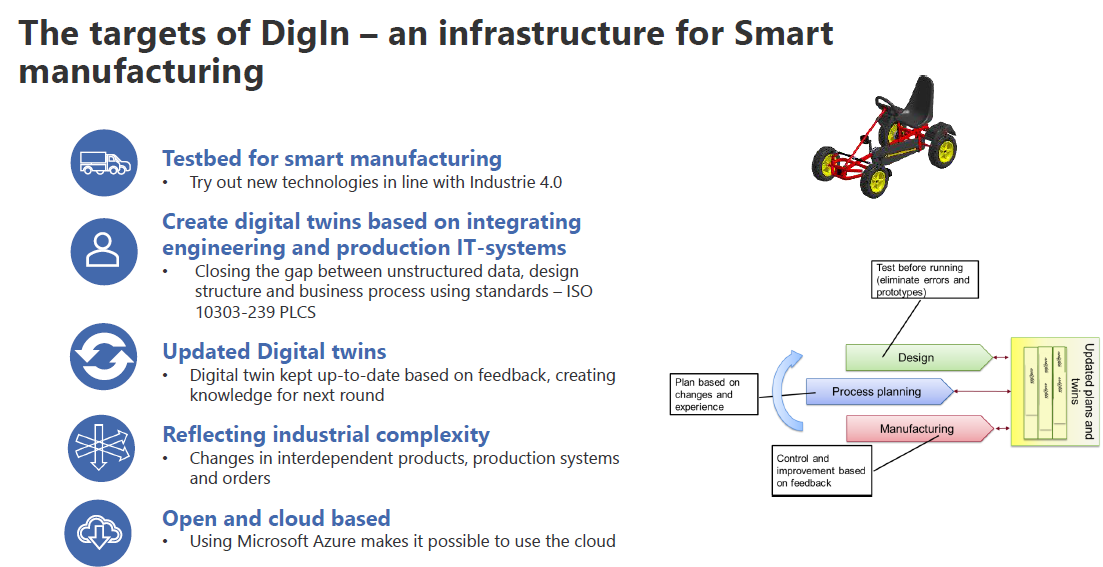
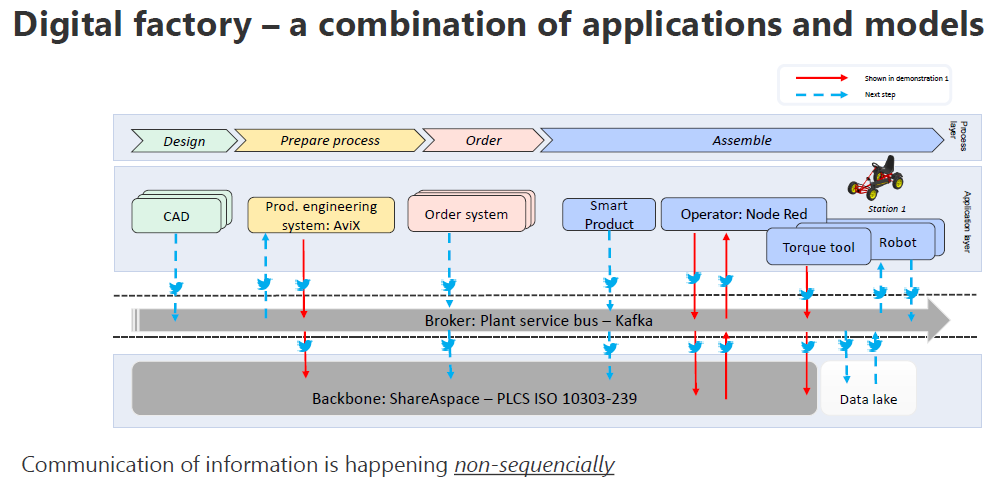
The presentation showed the implementation of the testbed using twittering bus communication and the ISO 10303-239 PLCS information standard as the persistent layer. The results were promising to further build capabilities on top of the infrastructure below:
 The conclusion from the Smart Manufacturing session was that emerging and available standards can accelerate the deployment.
Enabling digital continuity in the Factory of the Future
Alcibiades Gonzalez-Noval from Airbus shared challenges and the strategy for Airbus’s factory of the future based on digital continuity from the virtual world towards the physical world, connecting with PLM, ERP, and MOM. Concepts many companies are currently working on with various maturity stages.
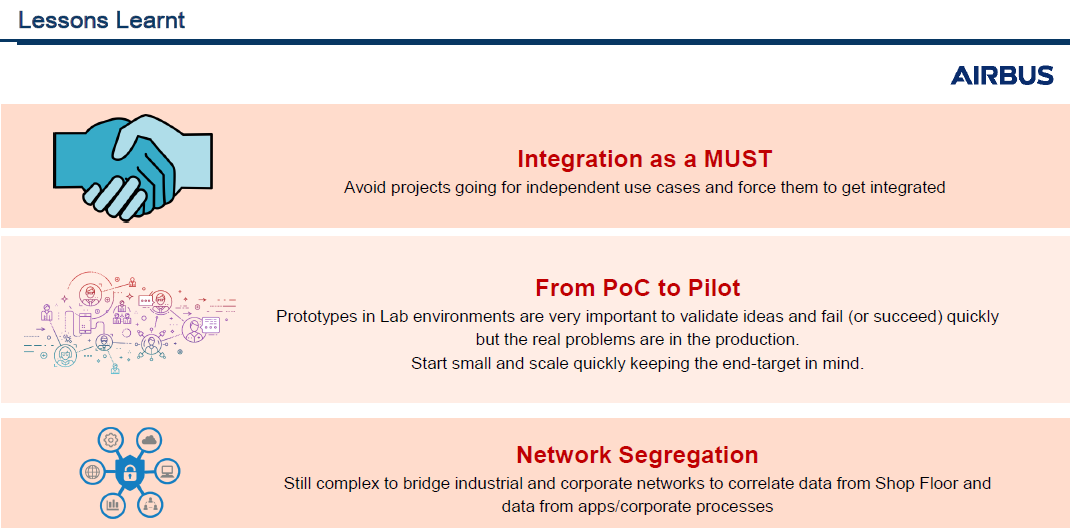 I agree with his lessons learned. We cannot think in silos anymore in a digital future – everything is connected. And please forget the PoC, to gain time start piloting and fail or succeed fast. Companies have lost years because of just doing PoCs and not going into action. The last point, networks segregation for sure is an issue, relevant for plant operations. I experienced this also in the past when promoting PLM concepts for (nuclear) owners/operators of plants. Network security is for sure an issue to resolve.
Cross-Discipline Lifecycle Collaboration Forum
Setting up the digital thread across engineering and the value chain.
Peter Gerber, Chairman of CDLC Forum and Data Exchange & Integration Leader at Schaefller and Pierre Bodin at Senior Manager Mews Partners, presented their findings related to the challenge of managing complex products (mechanical, electrical, software using system engineering methodology) to work properly at affordable cost in a real-time mode, multidisciplinary and coordination across the whole value chain. Something you might expect could be done when reviewing all PLM Vendor’s marketing materials, something you might expect hard to do when remembering Martin Eigner’s statement that 95 % of the companies have not solved mechatronics collaboration yet. (See: The weekend after CIMdata PLM Roadmap and PDT Europe)
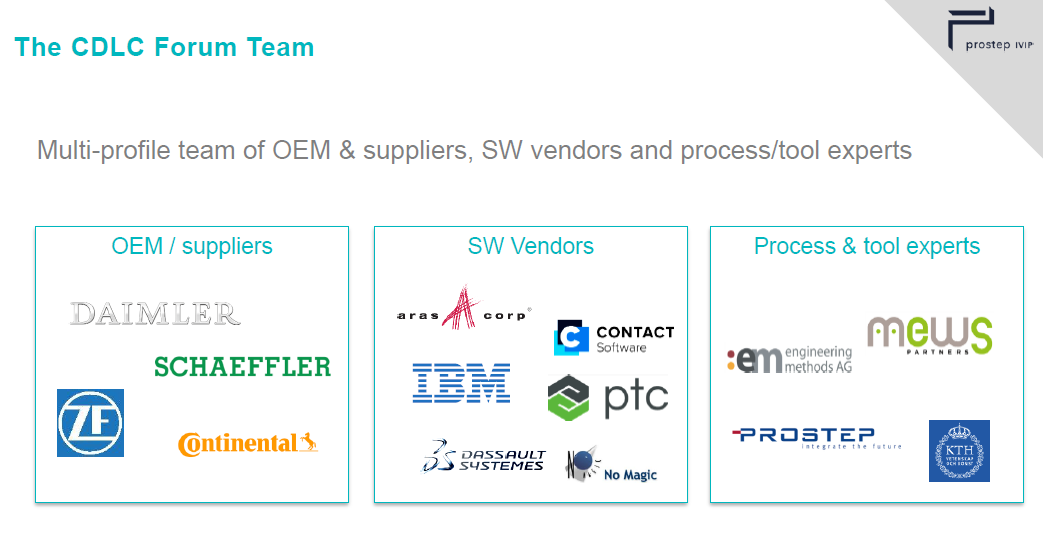
A demonstrator was defined, and various vendors participated in building a demonstrator based on their Out-Of-The-Box capabilities. The result showed that for all participants there were still gaps to resolve for full collaboration. A new version of the demonstrator is now planned for the middle of next year – curious to learn the results at that time. Multi-disciplinary collaboration is a (conceptual) pillar for future digital business – it needs to be possible.
A Digital Thread based on the PLCS standard.
 Nigel Shaw, Eurostep’s managing director in the UK, took us through his evolution of PLCS (Product Life Cycle Support) and extension of the ISO 10303 STEP standard. (STEP Standard for Exchange of Product data). Nigel mentioned how over all these years, millions (and a lot of brain power) have been invested in PLCS to where it is now.
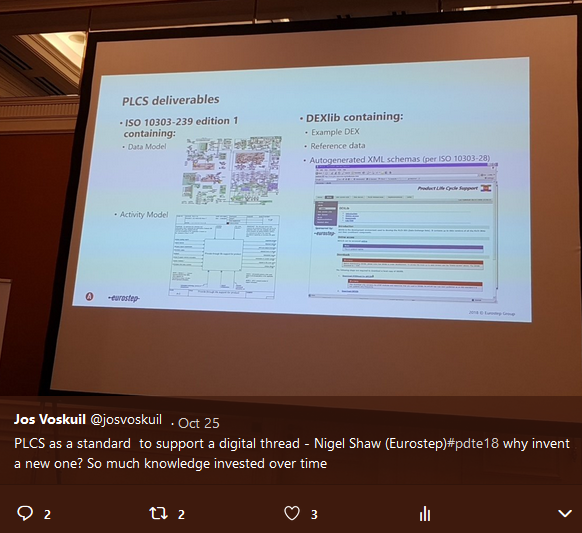 PLCS has been extremely useful as an interface standard for contracting, provide product data in a neutral way. As an example, last year the Swedish Defense organization (FMV) and France’s DGA made PLCS DEXs as part of the contractual conditions. It would be too costly to have all product data for all defense systems in proprietary vendor formats and this over the product lifecycle.
Those following the standards in the process industry will rely on ISO 15926 / CFIHOS as this standard’s dictionary, and data model is more geared to process data- and in particular the exchange of data from the various contractors with the owner/operator.
Coming back to PLCS and the Digital Twin – it is all about digital continuity of information. Otherwise, if we have to recreate information in every lifecycle stage of a product (design/manufacturing / operations), it will be too costly and not digital connected. This illustrates the growing needs for standards. I had nothing to add to Nigel’s conclusions:

It is interesting to note that product management has moved a long way over the last 10-20 years however as we include more and more into PLM, there are all the time new concepts to be solved. The cases we discuss today in our PLM communities were most of the time visions 10 years ago. Nowadays we want to include Model-Based Systems Engineering, 3D Modeling and simulation, electronics and software and even aftermarket, product support in true PLM. This was not the case 20 years ago. The people involved in the development of PLCS were for sure visionaries as product data connectivity along the whole lifecycle is needed and enabled by the standard.
Investing in Industry 4.0?
Hard Realities of the Grand Vision.
 Marc Halpern from Gartner is one of the regular speakers at the PDT conference. Unfortunate he could not be with us that day, however, through a labor-intensive connection (mobile phone close to the speaker and Nigel Shaw trying to stay in sync with the presented slides) we could hear Marc speak about what we wanted to achieve too – a digital continuity.
Marc restated the massive potential of Industrie 4.0 when it comes to scalability, agility, flexibility, and efficiency.
Although technologies are evolving rapidly, it is the existing legacy that inhibits fast adoption. A topic that was also central in my presentation. It is not just a change in technology, there is much more connected.
Marc recommends a changing role for IT, where they should focus more on business priorities and business leadership strategies. This as opposed to the classical role of the IT organization where IT needed to support the business, now they will be part of leading the business too.
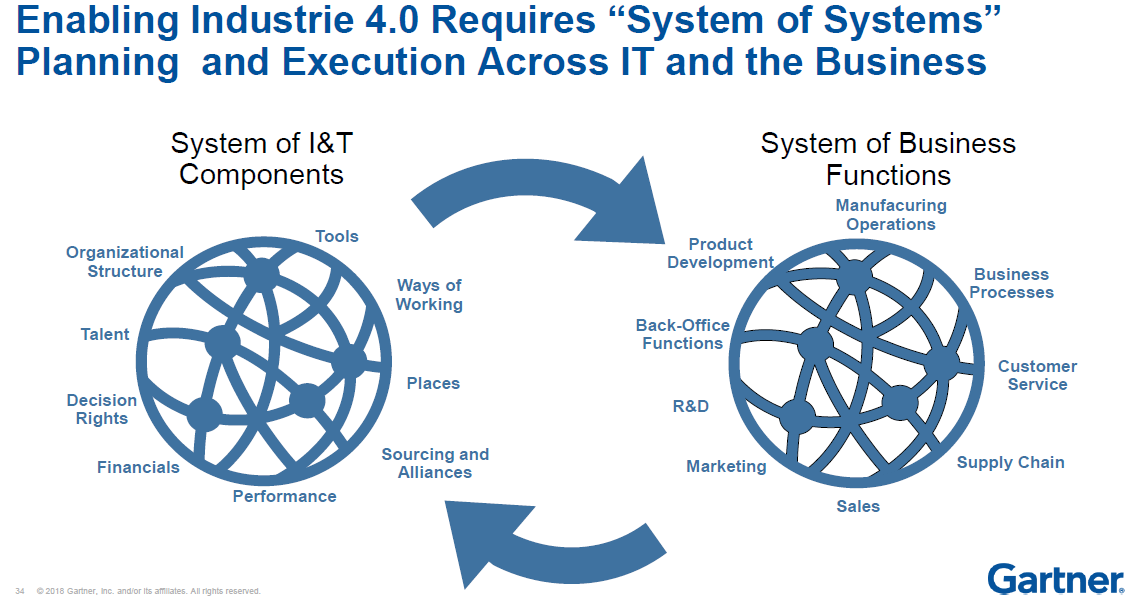 To orchestrate such an IT evolution, Marc recommends a “systems of systems” planning and execution across IT and Business. One of my recent blog posts: Moving to a model-based enterprise: The business (information) model can be seen in that context.
How to deal with the incompatible future?
I was happy to conclude the sessions with the topic that concerns me the most at this time. Companies in their current business are already struggling to get aligned and coordinated between disciplines and external stakeholders, the gap to be connected is vast as it requires a master data management approach, an enterprise data model and model-based ways of working. Read my posts from the past ½ year starting here, and you get the picture.

Note: This image is based on Marc Halpern’s (Gartner) Technology/Maturity diagram from PDT 2015
I concluded with explaining companies need to learn to work in two modes. One mode will be the traditional way of working which I call the coordinated approach and a growing focus on operating in a connected mode. You can see my full presentation here on SlideShare: How to deal with the incompatible future.
Conclusion
The conference was closed with a panel discussion where we shared our concerns related to the challenges companies face to change their traditional ways of working meanwhile entering a digital era. The positive points are there – baby steps – PLM is becoming understood, the significance of standards is becoming more clear. The need: a long-term vision.
This concludes my review of an excellent conference – I learned again a lot and I hope to see you next year too. Thanks again to CIMdata and Eurostep for organizing this event
 PDT Europe is over, and it was this year a surprising aligned conference, showing that ideas and concepts align more and more for modern PLM. Håkan Kårdén opened the conference mentioning the event was fully booked, about 160 attendees from over 19 countries. With a typical attendance of approx. 120 participants, this showed the theme of the conference: Continuous Transformation of PLM to support the Lifecycle Model-Based Enterprise was very attractive and real. You can find a history of tweets following the hashtag #pdte17
Setting the scene
 Peter Bilello from CIMdata kicked-off by bringing some structure related to the various Model-Based areas and Digital Thread. Peter started by mentioning that technology is the least important issue as organization culture, changing processing and adapting people skills are more critical factors for a successful adoption of modern PLM. Something that would repeatedly be confirmed by other speakers during the conference.
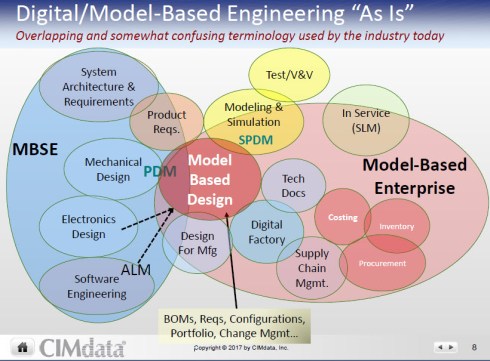
Peter presented a nice slide bringing the Model-Based terminology together on one page. Next, Peter took us through various digital threads in the different stages of the product lifecycle. Peter concluded with the message that we are still in a learning process redefining optimal processes for PLM, using Model-Based approaches and Digital Threads and thanks (or due) to digitalization these changes will be rapid. Ending with an overall conclusion that we should keep in mind:
It isn’t about what we call digitalization; It is about delivering value to customers and all other stakeholders of the enterprise
 Next Marc Halpern busted the Myth of Digital Twins (according to his session title) and looked into realistic planning them. I am not sure if Marc smashed some of the myths although it is sure Digital Twin is at the top of the hype cycle and we are all starting to look for practical implementations. A digital twin can have many appearances and depends on its usage. For sure it is not just a 3D Virtual model.
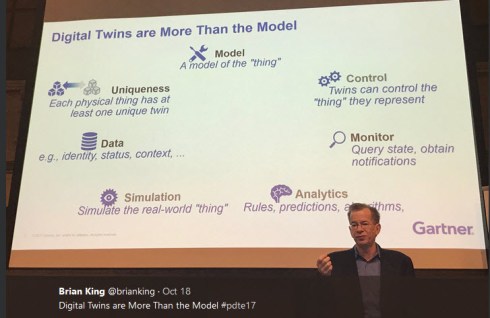
There are still many areas to consider when implementing a digital twin for your products. Depending on what and how you apply the connection between the virtual and the physical model, you have to consider where your vendor really is in maturity and avoid lock in on his approach. In particular, in these early stages, you are not sure which technology will last longer, and data ownership and confidentially will play an important role. And opposite to quick wins make sure your digital twin is open and use as much as possible open standards to stay open for the future, which also means keep aiming for working with multiple vendors.
Industry sessions
Next, we had industry-focused sessions related to a lifecycle Model-Based enterprise and later in the afternoon a session from Outotec with the title: Managing Installed Base to Unlock Service opportunities.
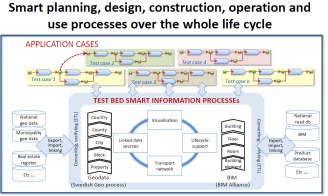 The first presentation from Väino Tarandi, professor in IT in Construction at KTH Sweden presented his findings related to BIM and GIS in the context of the lifecycle, a test bed where PLCS meets IFC. Interesting as I have been involved in BIM Level 3 discussions in the UK, which was already an operational challenge for stakeholders in the construction industry now extended with the concept of the lifecycle. So far these projects are at the academic level, and I am still waiting for companies to push and discover the full benefits of an integrated approach.
Concepts for the industrial approach could be learned from Outotec as you might understand later in this post. Of course the difference is that Outotec is aiming for data ownership along the lifecycle, where in case of the construction industries, each silo often is handled by a different contractor.
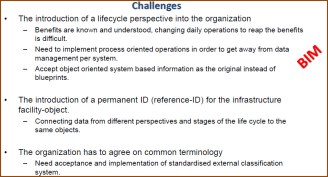
Fredrik Ekström from Swedish Transport Administration shared his challenges of managing assets for both road and railway transport – see image on the left. I have worked around this domain in the Netherlands, where asset management for infrastructure and asset management for the rail infrastructure are managed in two different organizations. I believe Fredrik (and similar organizations) could learn from the concepts in other industries. Again Outotec’s example is also about having relevant information to increase service capabilities, where the Swedish Transport Administration is aiming to have the right data for their services. When you look at the challenges reported by Fredrik, I assume he can find the answers in other industry concepts.
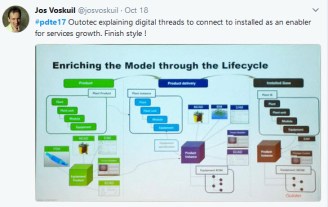 Outotec’s presentation related to managing installed base and unlock service opportunities explained by Sami Grönstrand and Helena Guiterrez was besides entertaining easy to digest content and well-paced. Without being academic, they explained somehow the challenges of a company with existing systems in place moving towards concepts of a digital twin and the related data management and quality issues. Their practical example illustrated that if you have a clear target, understanding better a customer specific environment to sell better services, can be achieved by rational thinking and doing, a typical Finish approach. This all including the “bi-modal approach” and people change management.
Future Automotive
Ivar Hammarstadt, Senior Analyst Technology Intelligence for Volvo Cars Corporation entertained us with a projection toward the future based on 160 years of automotive industry. Interesting as electrical did not seem to be the only way to go for a sustainable future depending on operational performance demands.
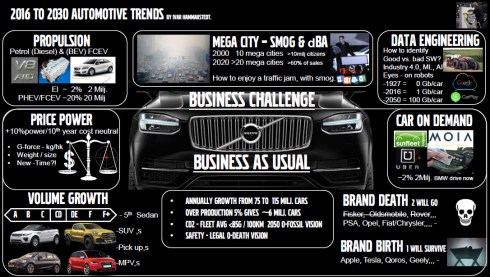
Next Jeanette Nilsson and Daniel Adin from Volvo Group Truck shared their findings related to an evaluation project for more than one year where they evaluated the major PLM Vendors (Dassault Systemes / PTC / Siemens) on their Out-of-the-box capabilities related to 3D product documentation and manufacturing.
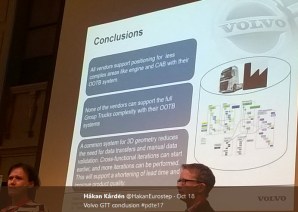
They concluded that none of the vendors were able to support the full Volvo Truck complexity in a OOTB matter. Also, it was a good awareness project for Volvo Trucks organization to understand that a common system for 3D geometry reduces the need for data transfers and manual data validation. Cross-functional iterations can start earlier, and more iterations can be performed. This will support a shortening of lead time and improve product quality. Personally, I believe this was a rather expensive approach to create awareness for such a conclusion, pushing PLM vendors in a competitive pre-sales position for so much detail.
Future Aerospace
Kenny Swope from Boeing talked us through the potential Boeing journey towards a Model-Based Enterprise. Boeing has always been challenging themselves and their partners to deliver environments close to what is possible. Look at the Boeing journey and you can see that already in 2005 they were aiming for an approach that most of current manufacturing enterprises cannot meet. And now they are planning their future state.
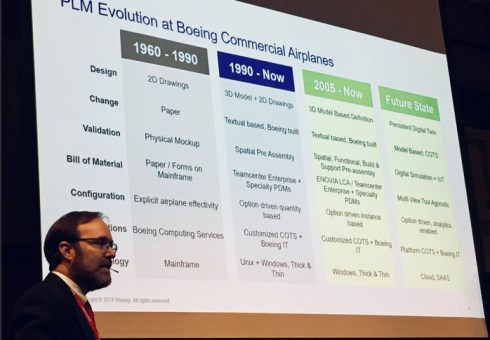
To approach the future state Boeing aims to align their business with a single architecture for all aspects of the company. Starting with collecting capabilities (over 400 in 6 levels) and defining value streams (strategic/operational) the next step is mapping the capabilities to the value streams. Part of the process would be to look at the components of a value stream if they could be fulfilled by a service. In this way you design your business for a service-oriented architecture, still independent from any system constraints. As Kenny states the aerospace and defense industry has a long history and therefore slow to change as its culture is rooted in the organization. It will be interesting to learn from Kenny next hear how much (mandatory) progress towards a model-based enterprise has been achieved and which values have been confirmed.
Gearing up for day 2
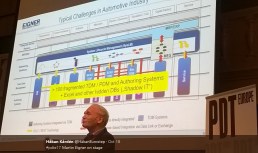 Martin Eigner took us in high-speed mode through his vision and experience working in a bi-modular approach with Aras to support legacy environments and a modern federated layer to support the complexity of a digital enterprise where the system architecture is leading. I will share more details on these concepts in my next post as during day 2 of PDT Europe both Marc Halpern and me were talking related to this topic, and I will combine it in a more extended story.
The last formal presentation for day one was from Nigel Shaw from Eurostep Ltd where he took us through the journey of challenges for a model-based enterprise. As there will not be a single model that defines all, it will be clear various models and derived models will exist for a product/system. Interesting was Nigel’s slide showing the multiple models disciplines can have from an airplane (1948). Similar to the famous “swing” cartoon, used to illustrate that every single view can be entirely different from the purpose of the product.
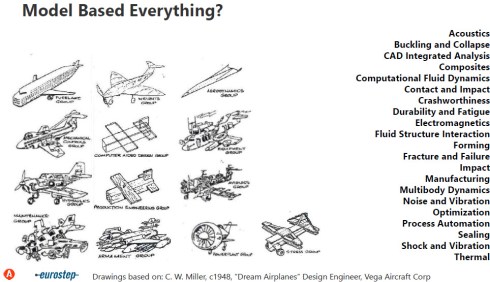
Next are these models consistent and still describing the same initial specified system. On top of that, even the usage of various modeling techniques and tools will lead to differences in the system. And the last challenge on top is managing the change over the system’s lifecycle. From here Nigel stepped into the need for digital threads to govern relations between the various views per discipline and lifecycle stage, not only for the physical and the virtual twin. When comparing the needs of a model-based enterprise through its lifecycle, Nigel concluded that using PLCS as a framework provides an excellent fit to manage such complexity.
Finally, after a panel discussion, which was more a collection of opinions as the target was not necessary to align in such a short time, it was time for the PDT dinner always an excellent way to share thoughts and verify them with your peers.
Conclusion
Day 1 was over before you knew it without any moment of boredom and so I hope is also this post. Next week I will close reviewing the PDT conference with some more details about my favorite topics.
 Two terms pass me every day: Digital Transformation appears in every business discussion, and IP Security, a topic also discussed in all parts of society. We realize it is easy to steal electronic data without being detected (immediately).
What is Digital Transformation?
Digital Transformation is reshaping business processes to enable new business models, create a closer relation with the market, and react faster while reducing the inefficiencies of collecting, converting and processing analog or disconnected information.
Digital Transformation became possible thanks to the lower costs of technology and global connectivity, allowing companies, devices, and customers to interact in almost real-time when they are connected to the internet.
 IoT (Internet of Things) and IIoT (Industrial Internet of Things) are terms closely related to Digital Transformation. Their focus is on creating connectivity with products (systems) in the field, providing a tighter relation with the customer and enabling new (upgrade) services to gain better performance. Every manufacturing company should be exploring IoT and IIoT possibilities now.
Digital Transformation is also happening in the back office of companies. The target is to create a digital data flow inside the company and with the outside stakeholders, e.g., customers, suppliers, authorities. The benefits are mainly improved efficiency, faster response and higher quality interaction with the outside world.
 The part of Digital Transformation that concerns me the most is the domain of PLM. As I have stated in earlier posts (Best Practices or Next Practices ? / What is Digital PLM ?), the need is to replace the classical document-driven product to market approach by a modern data-driven interaction of products and services.
I am continually surprised that companies with an excellent Digital Transformation profile on their websites have no clue about Digital Transformation in their product innovation domain. Marketing is faster than reality.
 I am happy to discuss this topic with many of my peers in the product innovation world @ PI Berlin 2017, three weeks from now. I am eagerly looking to look at how and why companies do not embrace the Digital Transformation sooner and faster. The theme of the conference, “Digital Transformation: From Hype to Value “ says it all. You can find the program here, and I will report about this conference the weekend after.
IP Security
The topic of IP protection has always been high on the agenda of manufacturing companies. Digital Transformation brings new challenges. Digital information will be stored somewhere on a server and probably through firewalls connected to the internet. Some industries have high-security policies, with separate networks for their operational environments. Still, many large enterprises are currently struggling with IP security policies as sharing data while protecting IP between various systems creates a lot of administration per system.
 Cloud solutions for sharing data are still a huge security risk. Where is the data stored and who else have access to it? Dropbox came in the news recently as “deleted” data came back after five years, “due to a bug.” Cloud data sharing cannot be trusted for real sensitive information.
Cloud providers always claim that their solutions are safer due to their strict safety procedures compared to the improvident behavior of employees. And, this is true. For example, a company I worked with had implemented Digital Rights Management (DRM) for internal sharing of their IP, making sure that users could only read information on the screen, and not store it locally if they had an issue with the server. “No problem”, one of the employees said, “I have here a copy of the documents on my USB-drive.”
 Cloud-based PLM systems are supposed to be safer. However, it still matters where the data is stored; security and hacking policies of countries vary. Assume your company´s IP is safe for hacking. Then the next question is “How about ownership of your data?”
Vendor lock-in and ownership of data are topics that always comes back at the PDT conferences (see my post on PDT2016). When a PLM cloud provider stores your product data in a proprietary data format, you will always be forced to have a costly data migration project when you decide to change from the provider.
Why not use standards for data storage? Hakan Kårdén triggered me on this topic again with his recent post: Data Is The New Oil So Make Sure You Ask For The Right Quality.
Conclusion:
Digital Transformation is happening everywhere but not always with the same pace and focus. New PLM practices still need to be implemented on a larger scale to become best practices. Digital information in the context of Intellectual Property creates extra challenges to be solved. Cloud providers do not offer yet solutions that are safe and avoiding vendor lock-in.
Be aware. To be continued…
Many thanks (again) to Dick Bourke for his editing suggestions
 Jos Voskuil's Weblog
Interesting reflection, Jos. In my experience, the situation you describe is very recognizable. At the company where I work, sustainability…
[…] (The following post from PLM Green Global Alliance cofounder Jos Voskuil first appeared in his European PLM-focused blog HERE.) […]
[…] recent discussions in the PLM ecosystem, including PSC Transition Technologies (EcoPLM), CIMPA PLM services (LCA), and the Design for…
Jos, all interesting and relevant. There are additional elements to be mentioned and Ontologies seem to be one of the…
Jos, as usual, you've provided a buffet of "food for thought". Where do you see AI being trained by a…