
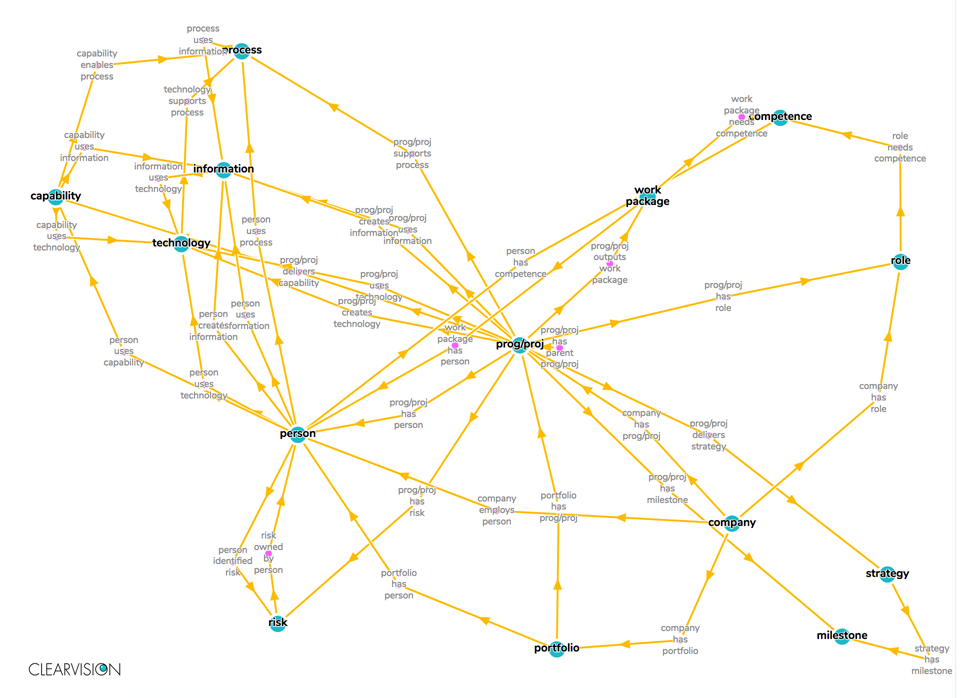
Ontology example: description of the business entities and their relationships
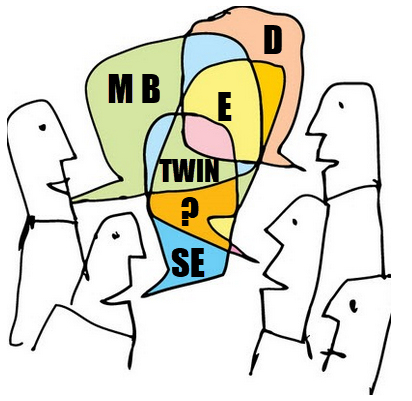 In my recent posts, I have talked a lot about the model-based enterprise and already after my first post: Model-Based – an introduction I got a lot of feedback where most of the audience was automatically associating the words Model-Based to a 3D CAD Model.
Trying to clarify this through my post: Why Model-Based – the 3D CAD Model stirred up the discussion even more leading into: Model- Based: The confusion.
A Digital Twin of the Organization
At that time, I briefly touched on business models and business processes that also need to be reshaped and build for a digital enterprise. Business modeling is necessary if you want to understand and streamline large enterprises, where nobody can overview the overall company. This approach is like systems engineering where we try to understand and simulate complex systems.
 With this post, I want to close on the Model-Based series and focus on the aspects of the business model. I was caught by this catchy article: How would you like a digital twin of your organization? which provides a nice introduction to this theme. Also, I met with Steve Dunnico, Creator and co-founder of Clearvision, a Swedish startup company focusing on modern ways of business modeling.
Introduction
Jos (VirtualDutchman): Steve can you give us an introduction to your company and the which parts of the model-based enterprise you are addressing with Clearvision?
 Steve (Clearvision): Clearvision started as a concept over two decades ago – modeling complex situations across multiple domains needed a simplistic approach to create a copy of the complete ecosystem. Along the way, technology advancements have opened up big-data to everyone, and now we have Clearvision as a modeling tool/SaaS that creates a digital business ecosystem that enables better visibility to deliver transformation.
As we all know, change is constant, so we must transition from the old silo projects and programs to a business world of continuous monitoring and transformation.
Clearvision enables this by connecting the disparate parts of an organization into a model linking people, competence, technology services, data flow, organization, and processes.
Complex inter-dependencies can be visualized, showing impact and opportunity to deliver corporate transformation goals in measured minimum viable transformation – many small changes, with measurable benefit, delivered frequently. This is what Clearvision enables!
Jos: What is your definition of business modeling?
 Steve: Business modeling historically, has long been the domain of financial experts – taking the “business model” of the company (such as production, sales, support) and looking at cost, profit, margins for opportunity and remodeling to suit. Now, with the availability of increased digital data about many dimensions of a business, it is possible to model more than the financials.
This is the business modeling that we (Clearvision) work with – connecting all the entities that define a business so that a change is connected to process, people, data, technology and other dimensions such as cost, time, quality. So if we change a part, all of the connected parts are checked for impact and benefit.
Jos: What are the benefits of business modeling?
 Steve: Connecting the disparate entities of a business opens up limitless opportunities to analyze “what is affected if I change this?”. This can be applied to simple static “as-is” gap analyses, to the more advanced studies needed to future forecast and move into predictive planning rather than reactive.
The benefits of using a digital model of the business ecosystem are applicable to the whole organization. The “C-suite” team get to see heat-maps for not only technology-project deliveries but can use workforce-culture maps to assess the company’s understanding and adoption of new ways of working and achievement of strategic goals. While at an operational level, teams can collaborate more effectively knowing which parts of the ecosystem help or hinder their deliveries and vice-versa.

Jos: Is business modeling applicable for any type or size of the company?
The complexity of business has driven us to silo our way of working, to simplify tasks to achieve our own goals, and it is larger organizations which can benefit from modeling their business ecosystems. On that basis, it is unlikely that a standalone small business would engage in its own digital ecosystem model. However, as a supplier to a larger organization, it can be beneficial for the larger organizations to model their smaller suppliers to ensure a holistic view of their ecosystem.
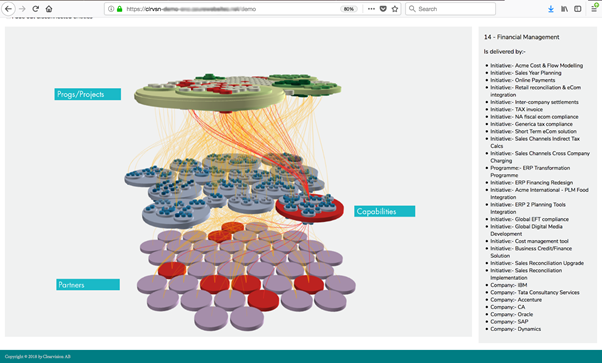
The core digital business ecosystem model delivers integrated views of dependencies, clashes, hot-spots to support transformation
Jos: How is business modeling related to digital transformation?
 Digital transformation is an often heard topic in large corporations, by implication we should take advantage of the digital data we generate and collect in our businesses and connect it, so we benefit from the whole not work in silos. Therefore, using a digital model of a business ecosystem will help identify areas of connectivity and collaboration that can deliver best benefit but through Minimum Viable Transformation, not a multi-year program with a big-bang output (which sometimes misses its goals…).
Today’s digital technology brings new capabilities to businesses and is driving competence changes in organizations and their partner companies. So another use of business modeling is to map competence of internal/external resources to the needed capabilities of digital transformation. Mapping competence rather than roles brings a better fit for resources to support transformation. Understanding which competencies we have and what the gaps are pr-requisite to plan and deliver transformation.
Jos: Then perhaps close with your Clearvision mission where you fit (uniquely)?
Having worked on early digital business ecosystem models in the late 90’s, we’ve cut our teeth on slow processing time, difficult to change data relationships and poor access to data, combined with a very silo’d work mentality. Clearvision is now positioned to help organizations realize that the value of the whole of their business is greater than the sum of their parts (silos) by enabling a holistic view of their business ecosystem that can be used to deliver measured transformation on a continual basis.
Jos: Thanks Steve for your contribution and with this completing the series of post related to a model-based enterprise with its various facets. I am aware this post the opinion from one company describing the importance of a model-based business in general. There are no commercial relations between the two of us and I recommend you to explore this topic further in case relevant for your situation.
Conclusion
Companies and their products are becoming more and more complex, most if it happening now, a lot more happening in the near future. In order to understand and manage this complexity models are needed to virtually define and analyze the real world without the high costs of making prototypes or changes in the real world. This applies for organizations, for systems, engineering and manufacturing coordination and finally in-field operating systems. They all can be described by – connected – models. This is the future of a model-based enterprise
Coming up next time: CIMdata PDM Roadmap Europe and PDT Europe. You can still register and meet a large group of people who care about the details of aspects of a digital enterprise

 Although people complain implementing PLM is complex, this type of implementation is relatively simple. The only added mental effort you are demanding from the PLM user is to work in a structured way and have a more controlled (rigid) way of working compared to a directory structure approach. For many people, this controlled way of working is already considered a limitation of their freedom. However, companies are not profitable because their employees are all artists working in full freedom. They become successful if they can deliver in some efficient way products with consistent quality. In a competitive, global market there is no room anymore for inefficient ways of working as labor costs are adding to the price.
 In the Digital Thread – coordinated approach we are not revolutionizing the way of working in an enterprise. In the coordinated approach, the PLM environment is connected with another overlay, combining data from various disciplines into an environment where the dependencies are traceable. This can be the Aras overlay approach (
 Working in a connected enterprise is extremely difficult, in particular for people educated in the old-fashioned ways of working. If you have learned to work with shared documents, like Google Docs or Office documents in sharing mode, you will understand the mental change you have to go through. Continuous sharing of the information instead of waiting until you feel your part is complete.
 Jan Bosch is coming from the software world, promoting the
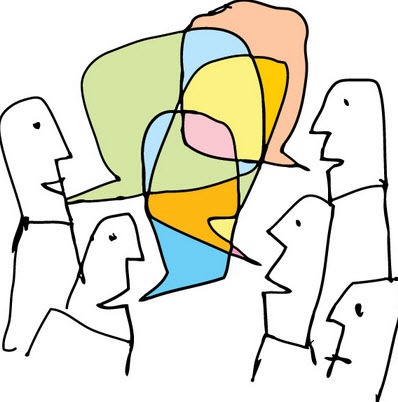
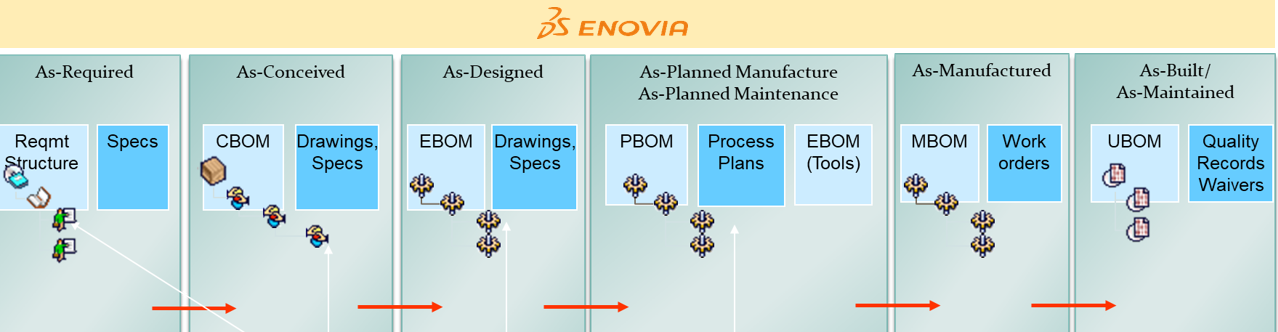

 The challenge of a coordinated approach is that there is no thorough consistency in checking if the data delivered is representing the real truth. Through serious review procedures, we do our best to make sure every deliverable has the required content and quality. As information inside these deliverables is not connected to the outside world, there will be discrepancies between reality and what has been stored. Still, we feel comfortable enough as an organization to pretend we know where the risks are. Until the costly impossible happens!
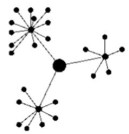 Connected data allows us to share combined sets of information that are relevant to a particular role. Real-time dashboarding is one of the benefits of such an infrastructure. There are still a lot of challenges with this approach. How do we know which information is valid in the context of other information? What are the rules that describe a valid product or project baseline at a particular time?


 Why the human brain? It is the foundation and motto of my company: The Know-How to Know Now.
 This week I had a meeting in the Netherlands with three Dutch peers all interested and involved in Model-Based Definition – either from the coaching point of view or the “victim” point of view. We compared MBD-challenges with
  We realized that human beings indeed are often the blocking reason why new ways of working cannot be introduced. Twenty-five years ago we had the discussion moving from 2D to 3D for design. Now due to the maturity of the solutions and the education of new engineers this is no longer an issue. Now we are in the next wave using the 3D Model as the base for manufacturing definition, and again a new mindset is needed.

 Oleg and I concluded that the traditional PLM status reports provided by consultancy firms are no longer is relevant. They focus on the big vendors, in a status-quo and most of them are 80 % the same on their core PLM capabilities. The challenge comes in how to select a PLM approach for your company.
 Oleg believes more in the bottom-up approach where new technology will enable users to work differently and empower themselves to improve their business (without calling it PLM). More or less concluding there is no need for a PLM consultant as the users will decide themselves about the value of the selected technology. In the context of Oleg’s position as
 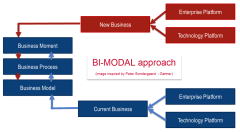 For a company it is extremely difficult to have two approaches in parallel as the first reaction is: “let’s convert the old data to the new environment”.
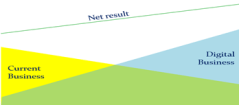 Like the bimodal approach the overlay approach creates the illusion that in the near future the old legacy PLM will disappear. I partly share that illusion when you consider the near future a period of 5 – 10+ years depending on the company’s active products. Faster is not realistic.
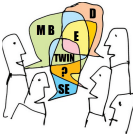 Most of my blogging time I spent on explaining the meaning behind a modern model-driven approach and its three main aspects: Model-Based Systems Engineering, Model-Based Definition and Digital Twins. As some of these aspects are still in the hype phase, it was interesting to see the two different opinions are popping up. On one side people claiming the world is still flat (2D), considering model-based approaches just another hype, caused by the vendors. There is apparently no need for digital continuity. If you look into the reactions from certain people, you might come to the conclusion it is impossible to have a dialogue, throwing opinions is not a discussion..
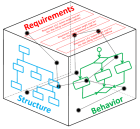 There is also another group, to which I am connected, that is quite active in learning and formalizing model-based approaches. This in order to move forward towards a digital enterprise where information is connected and flowing related to various models (behavior models, simulation models, software models, 3D Models, operational models, etc., etc.) . This group of people is discussing standards and how to use and enhance them. They discuss and analyze with arguments and share lessons learned. One of the best upcoming events in that context is the joined

 I spent a lot of time demystifying some of PLM-related themes. The challenge remains, like in the non-PLM world, that it is hard to get educated by blog posts as you might get over-informed by (vendor-related) posts all surfing somewhere on the hype curve. Do not look at the catchy title – investigate and take time to understand HOW things will this work for you or your company. There are enough people explaining WHAT they do, but HOW it fit in a current organization needs to be solved first. Therefore the above three themes.
 This is my concluding post related to the various aspects of the model-driven enterprise. We went through
  In the Digital Twin concept, it is more about a defining a system that should work in the field. How to combine various systems into a working solution and each of the systems has already a pre-defined set of behavioral / operational parameters, which could be 3D related but also performance related.
 Why aren’t we doing this already? It takes more skilled engineers instead of cheaper fixers downstream. The fact that we are used to fixing it later is also an inhibitor for change. Management needs to trust and understand the economic value instead of trying to reduce the number of engineers as they are expensive and hard to plan.
 In the construction industry, companies are discovering the power of BIM (Building Information Model) , introduced to enhance the efficiency and productivity of all stakeholders involved. Massive benefits can be achieved if the construction of the building and its future behavior and maintenance can be optimized virtually compared to fixing it in an expensive way in reality when issues pop up.
 Of course it requires new ways of working. Working with digital connected models is not what engineering learn during their education time – we have just started this journey. Therefore organizations should explore on a smaller scale how to create a full Digital Twin based on connected data – this is the ultimate base for the next purpose.
 When you are after the topic of a Digital Twin through the materials provided by the various software vendors, you see all kinds of previews what is possible. Augmented Reality, Virtual Reality and more. All these presentations show that clicking somewhere in a 3D Model Space relevant information pops-up. Where does this relevant information come from?
 How many companies have done this already? For sure not the companies that are already a long time in business as their current silos and legacy processes do not cater for digital continuity. By appointing a Chief Digital Officer, the journey might start, the biggest risk the Chief Digital Officer will be running another silo in the organization.
 Data collected from an individual twin or collection of twins can be analyzed to extract or discover failure opportunities. An R&D organization is interested in learning what is happening in the field with their products. These analyses lead to better and more competitive solutions.


 There are several reasons why the Digital Twin is overhyped. One of the reasons is that the Digital Twin is not necessarily considered as a PLM-related topic. Other vendors like SAP (
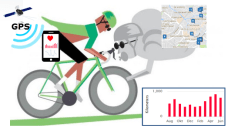 As a cyclist, I am active on platforms like
 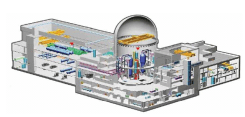 Another known digital twin story is related to plants in operation. In the past 10 years, I have advocated for Plant Lifecycle Management (
 Companies like GE and SAP focus a lot on the digital twin in relation to asset performance. Measuring the performance of assets, comparing their performance with other similar assets and based on performance characteristics the collector of the data can sell predictive maintenance analysis, performance optimization guidance and potentially other value offerings to their customers.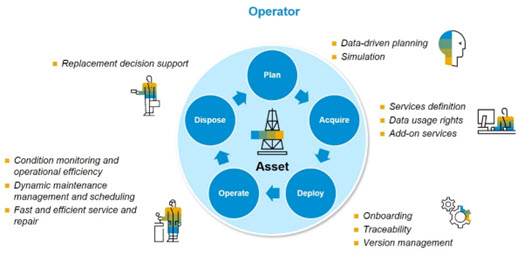
 Due to the fact that I already reach more than 1000 words, I will focus in my next post on the most relevant digital twin for PLM. Here, all disciplines come together. The 3D Mechanical model, the behavior models, the embedded and control software, (manufacturing simulation and more. This is to create an almost perfect virtual copy of a real product or system in the physical world. There, we will see that this is not as easy as concepts depend on accurate data and reliable models, which is not the case currently in most companies in their engineering environment.

 This presentation matched nicely with
  The presentations were followed by a (long) panel discussion. The common theme in both discussions is that companies need to educate and organize themselves to become educated for the future. New technologies, new ways of working need time and resources which small and medium enterprises often do not have. Therefore, universities, governments and interest groups are crucial.


 I hope to elaborate on experiences related to this bimodal or phased approach during the conference. If you or your company wants to contribute to this conference, please let the program committee know. There is already a good set of content planned. However, one or two inspiring presentations from the field are always welcome.




 This post is my two-hundredth blog post, and this week it is exactly ten years ago that I started blogging related to the topic of PLM.
 The past 5 years you will recognize a shift more to the people side of PLM (what does PLM mean / impact my daily life/my organization), what makes sense/ nonsense of the new hypes mainly about the potential and risks related to becoming a digital enterprise. I learned and discussed these themes mostly through larger enterprises, as usually, they cannot change that fast. Therefore they have to be on the lookout for threats and trends earlier.

 Jos Voskuil's Weblog
Hi Jos, Knowing your background in methodology and education, I wanted to share a longer article with you: “What is…
Interesting reflection, Jos. In my experience, the situation you describe is very recognizable. At the company where I work, sustainability…
[…] (The following post from PLM Green Global Alliance cofounder Jos Voskuil first appeared in his European PLM-focused blog HERE.) […]
[…] recent discussions in the PLM ecosystem, including PSC Transition Technologies (EcoPLM), CIMPA PLM services (LCA), and the Design for…
Jos, all interesting and relevant. There are additional elements to be mentioned and Ontologies seem to be one of the…