
 This is already my fourth post related to Model-Based concepts, which started with Model-Based – An Introduction. There are at least two more posts to come depending on your feedback. The amount of posts also illustrates that the topic is not easy to explain through blog posts with a target length of 500-1000 words.
This combined with the observation that model-based in the context of PLM is quickly associated with replacing 2D Drawings by 3D annotated CAD models, or a marketing synonym for the classical interaction between a PDM-system and a CAD-system, see Model-Based – The Confusion, there is a lot to share. I will come back to Model-Based Definition in an upcoming post. But now Model-Based Systems Engineering.
Systems Engineering
 When you need to define a complex product, that has to interact in various ways in a safe manner with the outside world, like an airplane or a car, systems engineering is the recommended approach to define the product. In 2004, when I spoke at a generic PLM conference about the possibilities to extend SmarTeam with a system engineering data model:
(a Requirements/Functional/Logical decomposition connecting to the Product- RFLP) most engineers considered this as extra work. Too complex was the feedback. A specification document was enough most of the time as the base for a product to develop. Perhaps at that time these engineers were right. At that time most of their products were purely mechanical and served a single purpose.
Now almost 15 years later products have become complex due to the combination of electronic and software. And by adding software and sensors, the product becomes a multi-purpose product, interacting with the outside world, a system.
 If you want to dive deeper into an unambiguous explanation of systems engineering, follow this link to the INCOSE website.
INCOSE (International Council On Systems Engineering) is a not-for-profit membership organization founded to develop and disseminate the interdisciplinary principles and practices that enable the realization of successful systems.
There are a few points that I want you to remember from systems engineering approach.
First of all, it is an iterative approach, where you start with a high-level concept defining which functions are needed to full-fill the high-level requirement.
Then, by choosing for certain solutions concepts, you will have trade-off studies during this phase to select the solution concept is defined. Which functions will be supported, what are the logical components needed for the solutions and what are the lower-level requirements for these components.
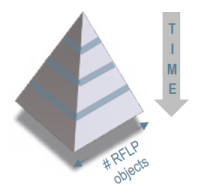 Trade-off studies eliminate alternatives and create the base for the final design which will be more and more detailed and specific over time. You need a functional and logical decomposition before jumping into the design phase for mechanical electrical and software components. Therefore, jumping from requirements directly into building a solution is not real systems engineering. You use this approach only if you already know the products solutions concept and logical components. Something perhaps possible when there is no involvement of electronics and software.
Model-Based Systems Engineering
So what’s the difference between Systems Engineering and Model-Based Systems Engineering ?
As the addition of model-based already indicates, the process of systems engineering will be driven by using domain models to exchange information between engineers instead of documents. And more recently these models are also linked to simulations to define the best trade-off and decide on lower-level requirements.
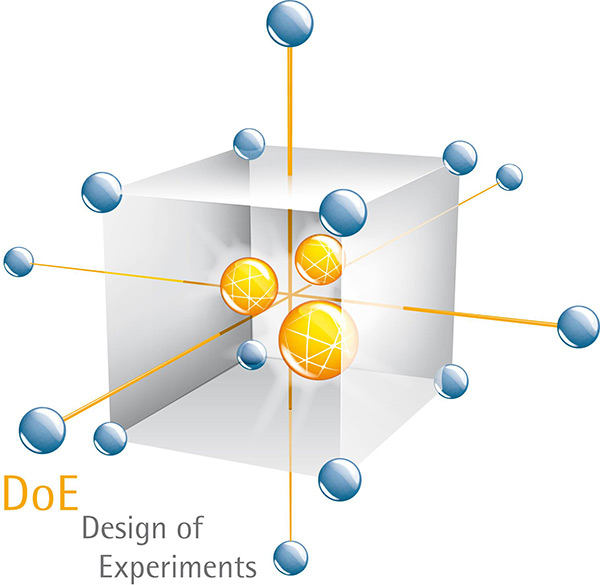
 In model-based systems engineering the most efficient way of working is to use parameters for requirements, logical and physical settings. Next decide on lower-level requirements and constraints the concept “Design of Experiments” is used, where the performance of a product is simulated by varying several design parameters. The results of a Design of Experiment assist the engineering teams to select the optimized solution, of course based on the model used.
Model-Based Systems Engineering and PLM
As I mentioned in the introduction systems engineering was often a disconnected discipline from engineering. Systems Engineering defines the boundaries for the engineering department. In a modern digital enterprise, the target is to offer data continuity where systems engineering is connected. Incremental innovation in particular thanks to software will require an environment where multidisciplinary teams can collaborate in the most efficient way together.

Slide from CIMdata: positioning of MBx approaches
The above image from CIMdata concludes my post on model-based related to systems engineering. As you can see MBSE is situated at the front-end of the product lifecycle, however we have to realize that the modern product lifecycle is no longer linear but iterative (you can read more here: From a linear world to fast and circular)
Conclusion
Model-Based Systems Engineering might have been considered as a discipline for the automotive and aerospace industry only. As products become more and more complex, thanks to IoT-based applications and software, companies should consider evaluating the value of model-based systems engineering for their products / systems
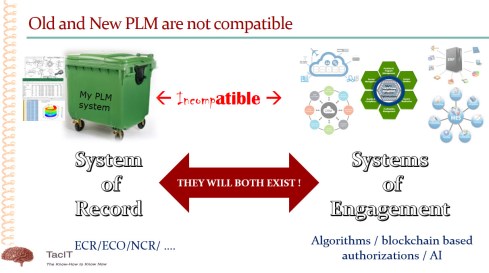
 In the domain of PLM, there is a bigger challenge as here we are suffering from the fact that the word “Model” immediately gets associated with a 3D Model. In addition to the 3D CAD Model, there is still a lot of useful legacy data that does not match with the concepts of a digital enterprise. I wrote and spoke about this topic a year ago. Among others at PI 2017 Berlin and you can check this presentation on SlideShare:
  My second post:
  Oleg’s post unleashed several reactions of people who shared his opinion (

 At the time 3D CAD was introduced for the mid-market, the main reason why 3D CAD was introduced was to provide a better understanding of the designed product. Visualization and creating cross-sections of the design became easy although the “old” generation of 2D draftsmen had to a challenge to transform their way of working. This lead often to 3D CAD models setup with the mindset to generate 2D Manufacturing drawings, not taking real benefits from the 3D CAD Model. Let’s first focus on Model-Based Definition.
 According to an eBook, sponsored by SolidWorks and published by Tech-Clarity: “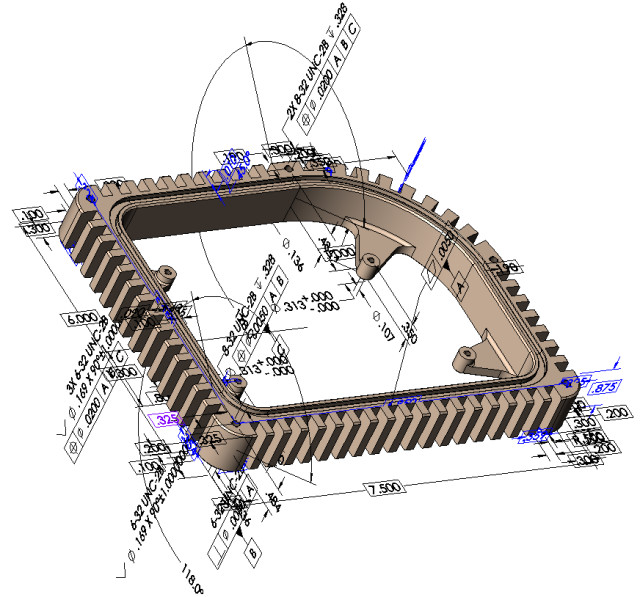
 A parametric model, combined with business rules can be accessed and controlled by other applications in a digital enterprise. In this way, without the intervention of individuals a set of product variants can be managed and not only from the design point of view. Geometry and manufacturing parameters are also connected and accessible. This is one of the concepts where Industry 4.0 is focusing on: intelligent and flexible manufacturing by exchanging parameters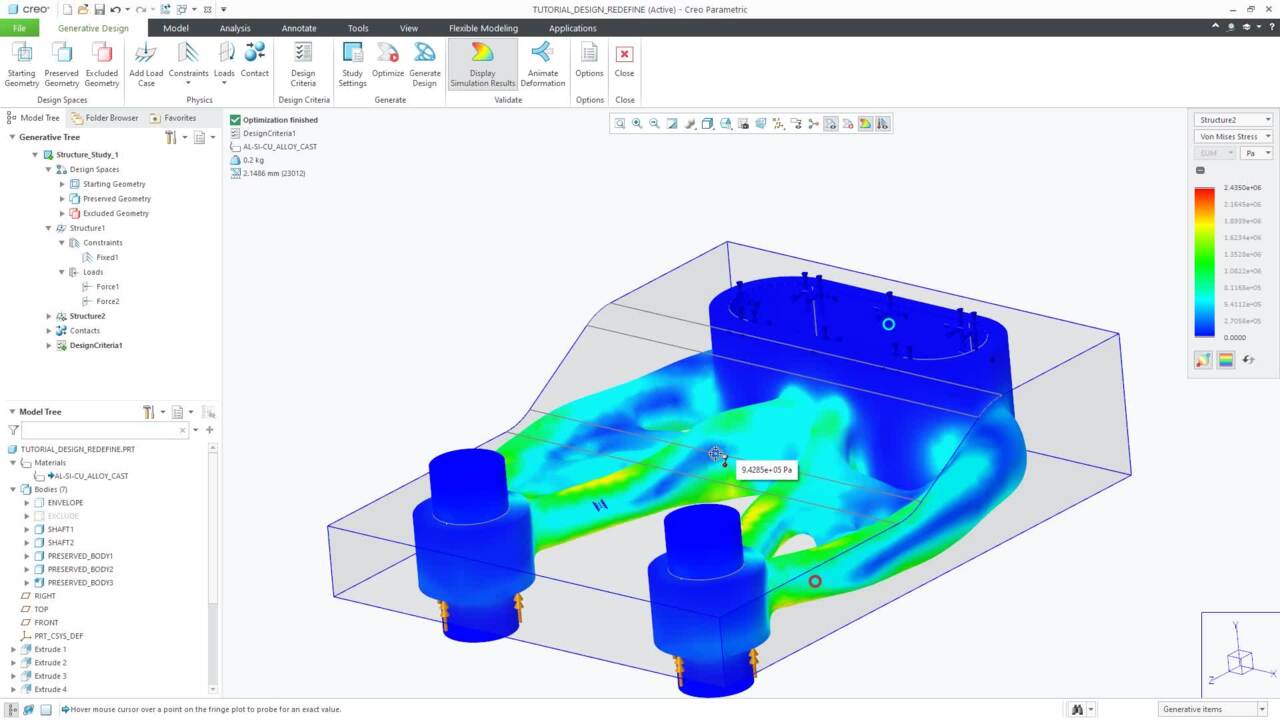
 This is however in big contrast with reality in the field. In February this year I moderated a focus group related to PLM and the Model-Based approach and the main conclusion from the audience was that everyone was looking at it, and only a few started practicing. Therefore, I promised to provide some step-by-step education related to model-based as like PLM we need to get a grip on what it means and how it impacts your company. As I am not an academic person, it will be a little bit like model-based for dummies, however as model-based in all aspects is not yet a wide-spread common practice, we are all learning.
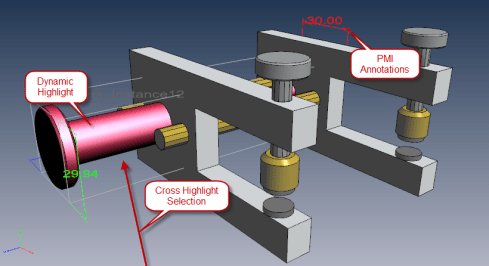
 Just designing a product in 3D and then generating 2D drawings for manufacturing is not really game-changing and bringing big benefits. 3D Models provide a better understanding of the product, mechanical simulations allow the engineer to discover clashes and/or conflicts and this approach will contribute to a better understanding of the form & fit of a product. Old generations of designers know how to read a 2D drawing and in their mind understand the 3D Model.
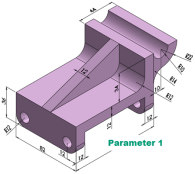 A model-based enterprise has to rely on data, so the 3D Model should rely on parameters that allow other applications to read them. These parameters can contribute to simulation analysis and product optimization or they can contribute to manufacturing. In both cases the parameters provide data continuity between the various disciplines, eliminating the need to create new representations in different formats. I will come back in a future post to the requirements for the 3D CAD model in the context of the model-based enterprise, where I will zoom in on Model-Based Definition and the concepts of Industry 4.0.
 The mathematical model of a product allows companies to analyze and optimize the behavior of a product. When companies design a product they often start from a conceptual model and by running simulations they can optimize the product and define low-level requirements within a range that optimizes the product performance. The relation between design and simulation in a virtual model is crucial to be as efficient as possible. In the current ways of working, often design and simulation are not integrated and therefore the amount of simulations is relative low, as time-to-market is the key driver to introduce a new product.
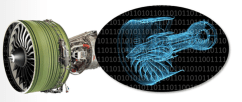 There is still a debate if the Digital Twin is part of PLM or should be connected to PLM. A digital twin can be based on a set of parameters that represent the product performance in the field. There is no need to have a 3D representation, despite the fact that many marketing videos always show a virtual image to visualize the twin.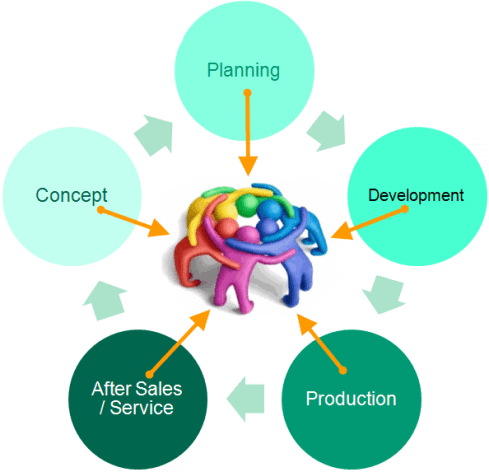
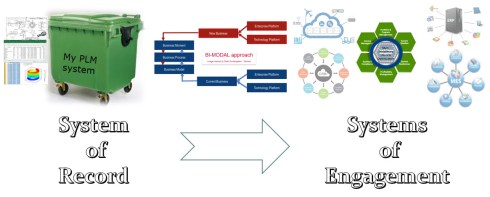
 For me “Keep process and organizational silos ….. “ is exactly the current state of classical PLM, where PLM concepts are implemented to provide data continuity within a siloed organization. When you can stay close to the existing processes the implementation becomes easier. Less business change needed and mainly a focus on efficiency gains by creating access to information.
 And if you know SAP, they go even further. Their mantra is that when using SAP PLM, you even do not need to integrate with ERP. You can still have long discussions with companies when it comes to PLM and ERP integrations. The main complexity is not the technical interface but the agreement who is responsible for which data sets during the product lifecycle. This should be clarified even before you start talking about a technical implementation. SAP claims that this effort is not needed in their environment, however they just shift the problem more towards the CAD-side. Engineers do not feel comfortable with SAP PLM when engineering is driving the success of the company. It is like the Swiss knife; every tool is there but do you want to use it for your daily work?
 In theory a company does not need to buy a PLM system. You could build your own PLM-system, based on existing infrastructure capabilities. CAD integrations might be trickier, however this you could solve by connecting to their native environments. For example, Microsoft presented at several PDT conferences an end-to-end PLM story based on Microsoft technology. Microsoft “talks PLM” during these conferences, but does not deliver a PLM-system – they deliver the technologies.
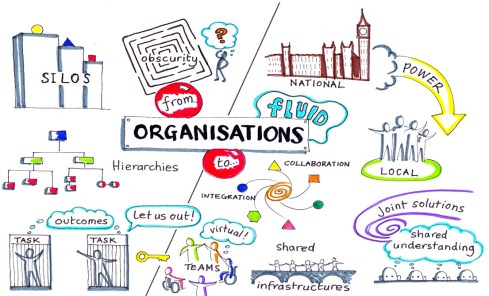 What is really needed for the 21st century is to break down the organizational silos as current ways of working are becoming less and less applicable to a modern enterprise. The usage of software has the major impact on how we can work in the future. Software does not follow the linear product process. Software comes with incremental deliveries all the time and yes the software requires still hardware to perform. Modern enterprises try to become agile, being able to react quickly to trends and innovation options to bring higher and different value to their customers. Related to product innovation this means that the linear, sequential go-to-market process is too slow, requires too much data manipulation by non-value added activities.
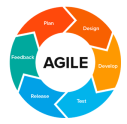 All leading companies in the industry are learning to work in a more agile mode with multidisciplinary teams that work like startups. Find an incremental benefit, rapidly develop test and interact with the market and deliver it. These teams require real-time data coming from all stakeholders, therefore the need for data continuity. But also the need for data quality as there is no time to validate data all the time – too expensive – too slow.
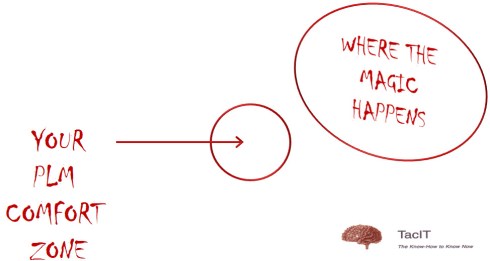
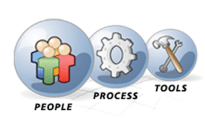 When talking with companies in the real world, they are not driven by technology – they are driven by processes. They do not like to break down the silos as it creates discomfort and the need for business transformation. And there is no clear answer at this moment. What is clear that leading companies invest in business change first before looking into the technology.

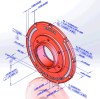 I consider Model-Based practices as one of the essential needs for future PLM as this approach reduces the amount of derived information related to a product/ system. And it provides a digital continuity. In the last PDT conference in Gothenburg, this topic was shared on a quite extensive matter. Have a read to freshen up your memory here: The weekend after PDT Europe –

 Susanne Lauda, Director, Global Advanced Manufacturing Technology, AGCO Corporation, provided an overview related to AGCO’s new PLM journey and how they were benefiting from a digital thread towards manufacturing. It felt like a smooth vendor demo as everything looked nice and reasonable. It was all about the WHAT. However, two points that brought the extra:
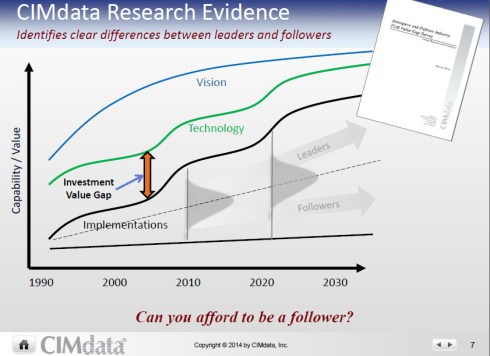
 Peter Bilello from CIMData in the closing keynote speech gave an excellent summary and overview of where and which capabilities fit in an enterprise architecture and the positioning of a product innovation platform. A blueprint that can be used for companies to grasp the holistic view before jumping into the details of the tools.
 Perhaps an ambiguous title this time as it can be interpreted in various ways. I think that all these interpretations are one of the most significant problems with PLM. Ambiguity everywhere. Its definition, its value and as you might have noticed from the past two blog posts the required skill-set for PLM consultants.
 In the past twenty years, companies have implemented PLM systems, where the primary focus was on the P (Product) only from Product Lifecycle Management. PLM systems have been implemented as an engineering tool, as an evolution of (Product Data Management).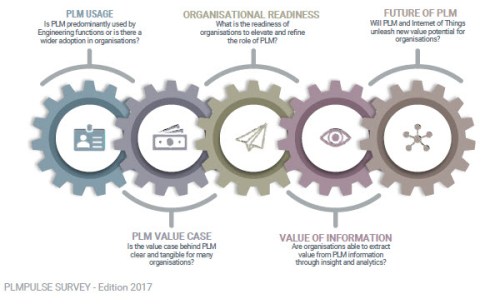
 During the upcoming PLMx 2018 Hamburg conference there will be a panel discussion where the survey results will be discussed. I am afraid that this debate will result again in a discussion where we will talk about the beauty and necessity of PLM and we wonder why PLM is not considered crucial for the enterprise.
 We agreed on the fact that traditional consultancy practices related to PLM ranking and selection processes are out of time. The Forester Wave publication was the cause of our discussion. For two reasons:
 Also, make a 5-10 years cost evaluation of your solution and take the risk of raising subscription fees into account. No vendor will drop the price unless forced by the outside world. The initial benefits will be paid back later because of the other business model.

 I believe we still need consultants to help companies to tell and coach them towards new ways of working related to the current digitization. Twenty years old concepts won’t work anymore. Consultants need a digital mindset and think holistic. Fitting technology and tools will be there in the future.
 In my earlier post;
  I agree with Oleg and Joe. PLM ranking does not make sense for companies to select a PLM solution. They are more an internal PLM show, useful for the organizing consultancy companies to conduct, but at the end, it is a discussion about who has the biggest and most effective button. Companies need to sell themselves and differentiate.
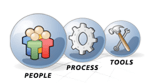
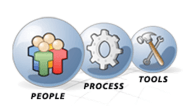 ses, a strategy is future-oriented and not about consolidating the current status quo. Therefore I believe a PLM implementation is always done in the context of a business transformation, which is most of the time not only related to PLM – it is about People, Processes and then the tools.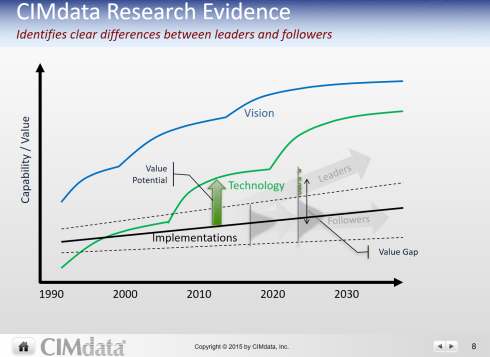
 Happy New Year to all of you. A new year comes traditionally with good intentions for the upcoming year. I would like to share my PLM intentions for this year with you and look forward to your opinion. I shared some of my 2017 thoughts in my earlier post:
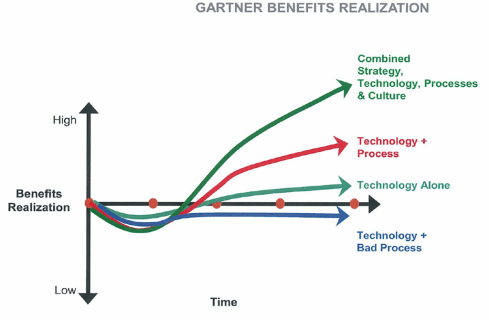
 To my understanding we are still in the early phases of discovering the ideal architecture and practices for a digital enterprise. PLM Vendors and technology companies show us the impressive potential as-if the future already exists already now. Have a reality check from Marc Halpern (Gartner) in this article on engineering.com –
  Although my curiosity is focused on future PLM, there is still a journey to go for companies that have just started with PLM. Before even thinking of a digital enterprise, there is first a need to understand and implement PLM as an infrastructure outside the engineering department.
 The most prominent challenge for most companies however is how to transform their existing business towards a modern digital business where new processes and business opportunities need to be implemented inside an existing enterprise. These new processes and business opportunities are not just simple extensions of the current activities, they need new ways of working like delivering incremental results through agile and multidisciplinary teams. And these ways of working combined with never-existing-before interactivity with the market and the customer.
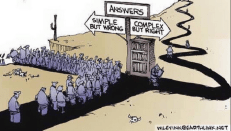 How to convince management that these changes are needed and do not happen without their firm support? It is easier to do nothing and push for small incremental changes. But will this be fast enough? Probably not as you can read from research done by strategic consultancy firms. There is a lot of valuable information available if you invest time in research. But spending time is a challenge for management.
 Jos Voskuil's Weblog
Hi Jos, Knowing your background in methodology and education, I wanted to share a longer article with you: “What is…
Interesting reflection, Jos. In my experience, the situation you describe is very recognizable. At the company where I work, sustainability…
[…] (The following post from PLM Green Global Alliance cofounder Jos Voskuil first appeared in his European PLM-focused blog HERE.) […]
[…] recent discussions in the PLM ecosystem, including PSC Transition Technologies (EcoPLM), CIMPA PLM services (LCA), and the Design for…
Jos, all interesting and relevant. There are additional elements to be mentioned and Ontologies seem to be one of the…