
 In the last weeks, I had several discussions related to sustainability. What can companies do to become sustainable and prove it? But, unfortunately, there is so much greenwashing at this moment.
Look at this post: 10 Companies and Corporations Called Out For Greenwashing.
 Therefore I thought about which practical steps a company should take to prepare for a sustainable future, as the change will not happen overnight. It reminds me of the path towards a digital, model-based enterprise (my other passion). In my post Why Model-Based definition is important for all, I mentioned that MBD (Model-Based Definition) could be considered the first stepping-stone toward a Model-Based enterprise.
 The analogy for Material Compliance came after an Aras seminar I watched a month ago. The webinar How PLM Paves the Way for Sustainability with Insensia (an Aras implementer) demonstrates how material compliance is the first step toward sustainable product development.
Let’s understand why
The first steps
 Companies that currently deliver solutions mostly only focus on economic gains. The projects or products they sell need to be profitable and competitive, which makes sense if you want a future.
And this would not have changed if the awareness of climate impact has not become apparent.
First, CFKs and hazardous materials lead to new regulations. Next global agreements to fight climate change – the Paris agreement and more to come – have led and will lead to regulations that will change how products will be developed. All companies will have to change their product development and delivery models when it becomes a global mandate.
 A required change is likely going to happen. In Europe, the Green Deal is making stable progress. However, what will happen in the US will be a mystery as even their supreme court becomes a political entity against sustainability (money first).
Still, compliance with regulations will be required if a company wants to operate in a global market.
What is Material Compliance?
 In 2002, the European Union published a directive to restrict hazardous substances in materials. The directive, known as RoHS (Restriction of Hazardous Substances), was mainly related to electronic components. In the first directive, six hazardous materials were restricted.
The most infamous are Cadmium(Cd), Lead(Pb), and Mercury (Hg). In 2006 all products on the EU market must pass RoHS compliance, and in 2011 was now connected the CE marking of products sold in the European market was.
 In 2015 four additional chemical substances were added, most softening PVC but also affecting the immune system. Meanwhile, other countries have introduced similar RoHS regulations; therefore, we can see it as a global restricting. Read more here: The RoHS guide.
Consumers buying RoHS-compliant products now can be assured that none of the threshold values of the substances is reached in the product. The challenge for the manufacturer is to go through each of the components of the MBOM. To understand if it contains one of the ten restricted substances and, if yes, in which quantity.
Therefore, they need to get that information from each relevant supplier a RoHS declaration.
 Besides RoHS, additional regulations protect the environment and the consumer. For example, REACH (Registration, Evaluation, Authorization and Restriction of Chemicals) compliance deals with the regulations created to improve the environment and protect human health. In addition, REACH addresses the risks associated with chemicals and promotes alternative methods for the hazard assessment of substances.
The compliance process in four steps
Material compliance is most of all the job of engineers. Therefore around 2005, some of my customers started to add RoHS support to their PLM environment.
Step 1
The image below shows the simple implementation – the PDF-from from the supplier was linked to the (M)BOM part.
 An employee had to manually add the substances into a table and ensure the threshold values were not reached. But, of course, there was already a selection of preferred manufacturer parts during the engineering phase. Therefore RoHS compliance was almost guaranteed when releasing the EBOM.
But this process could be done more cleverly.
Step 2
So the next step was that manufacturers started to extend their PLM data model with the additional attributes for RoHS compliance. Again, this could be done cleverly or extremely generic, adding the attributes to all parts.
 So now, when receiving the material declaration, a person just has to add the substance values to the part attributes. Then, through either standard functionality or customization, a compliance report could be generated for the (M)BOM. So this already saves some work.
Step 3
The next step was to provide direct access to these attributes to the supplier and push the supplier to do the work.
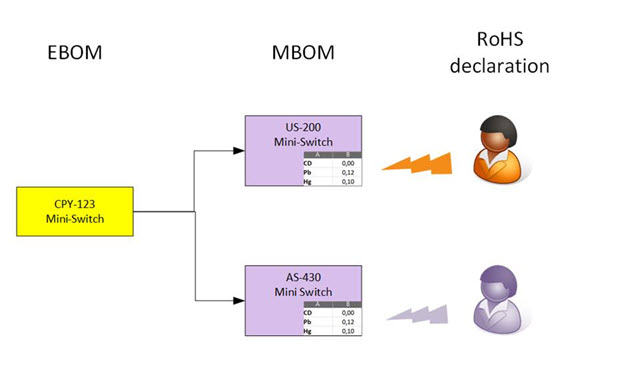 Now the overhead for the manufacturer has been reduced again. This is because only the supplier needs to do the job for his customer.
Step 4
In step 4, we see a real connected environment, where information is stored only once, referenced by manufacturers, and kept actual by the part suppliers.
 Who will host the RoHS databank? From some of my customer projects, I recall IHS as a data provider – it seems they are into this business when you look at their website HERE.
Where is your company at this moment?
Having seen the four stepping-stones leading towards efficient RoHS compliance, you see the challenge of moving from a document-driven approach to a data-driven approach.
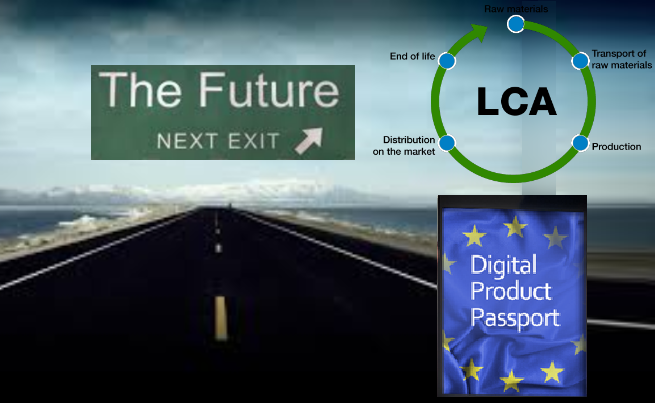 Now let’s look into the future. Concepts like Life Cycle Assessment (LCA) or a Digital Product Passport (DPP) will require a fully connected approach.
Where is your company at this moment – have you reached RoHS compliance step 3 or 4? A first step to learn and work connected and data-driven.
Life Cycle Assessment – the ultimate target
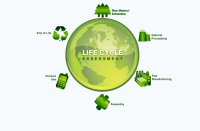
 A lifecycle assessment, or lifecycle analysis (two times LCA again), is a methodology to assess the environmental impact of a product (or solution) through its whole lifecycle. From materials sourcing, manufacturing, transportation, usage, service, and decommissioning. And by assessing, we mean a clear, verifiable, and shareable manner, not just guessing.
Traditional engineering education is not bringing these skills, although LCA is not new, as this 10-years old YouTube movie from Autodesk illustrates:
What is new is that due to global understanding, we are reaching the limits of what our planet can endure; we must act now. Upcoming international regulations will enforce life cycle analysis reporting for manufacturers or service providers. This will happen gradually.
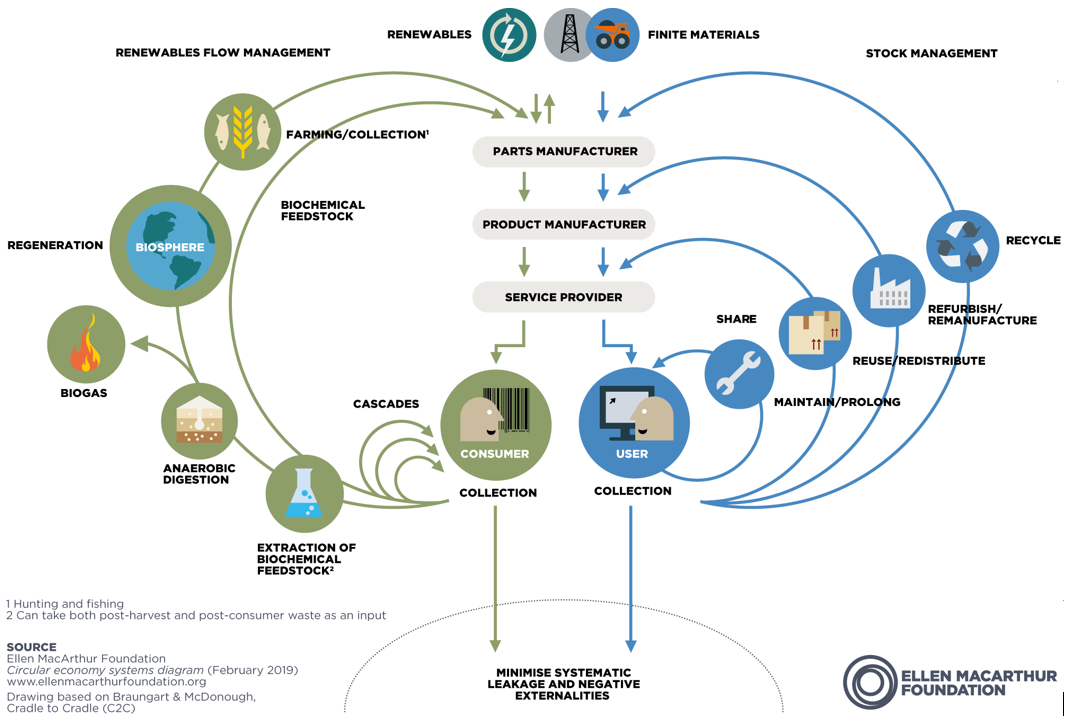 Meanwhile, we all should work on a circular economy, the major framework for a sustainable planet- click on the image on the left.
In my post, I wrote about these combined topics: SYSTEMS THINKING – a must-have skill in the 21st century.
Life Cycle Analysis – Digital Twin – Digitization
The big elephant in the room is that when we talk about introducing LCA in your company, it has a lot to do with the digitization of your company. Assessment data in a document can require too much human effort to maintain the data at the right quality. The costs are not affordable if your competitor is more efficient.
 When coming to the Analysis part, here, a model-based, data-driven infrastructure is the most efficient way to run virtual analysis, using digital twin concepts at each stage of the product lifecycle.
Virtual models for design, manufacturing and operations allow your company to make trade-off studies with low cost before committing to the physical world. 80 % of the environmental impact of a product comes from decisions in the virtual world.
Once you have your digital twins for each phase of the product lifecycle, you can benchmark your models with data reported from the physical world. All these interactions can be found in the beautiful Boeing diamond below, which I discussed before – Read A digital twin for everybody.

Conclusion
Efficient and sustainable life cycle assessment and analysis will come from connected information sources. The old document-driven paradigm is too costly and too slow to maintain. In particular, when the scope is not only a subset of your product, it is your full product and its full lifecycle with LCA. Another stepping stone towards the near future. Where are you?
Stepping-stone 1: From Model-Based Definition to an efficient Model-Based, Data-driven Enterprise
Stepping-stone 2: For RoHS compliance to an efficient and sustainable Model-Based, data-driven enterprise.

 month ago, I wrote:
  This is a perfect message for PLM vendors to justify their broad portfolio. However, as they do not focus so much on new methodologies and organizational change, their messages remain at the marketing level.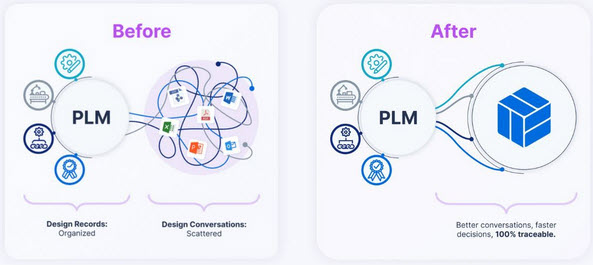
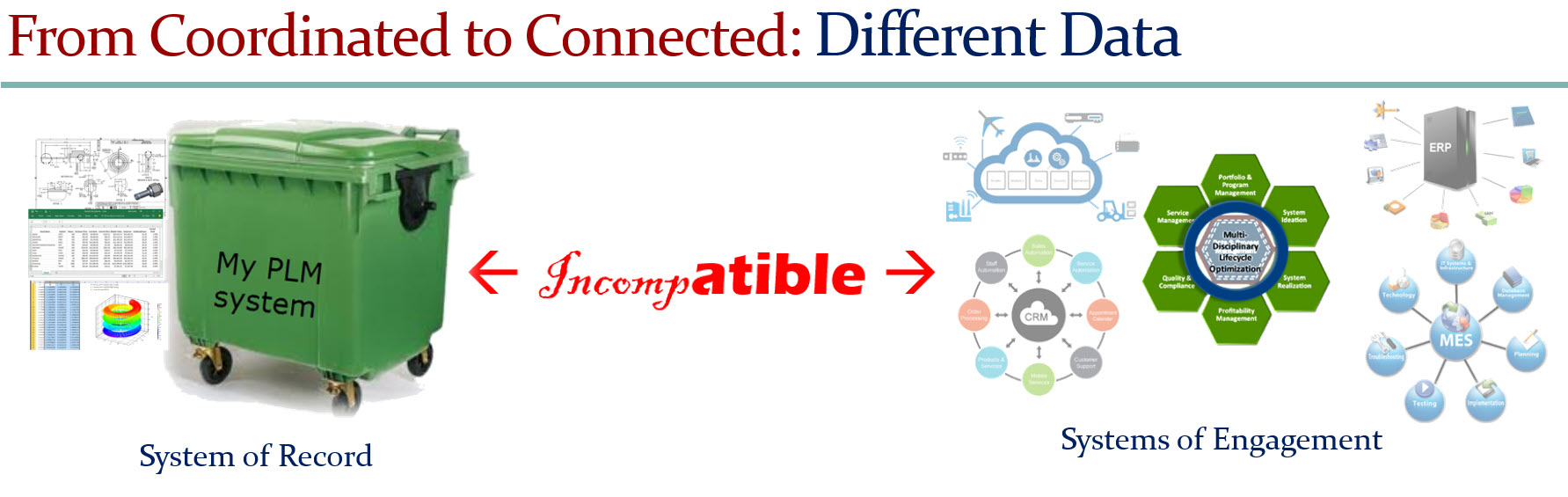
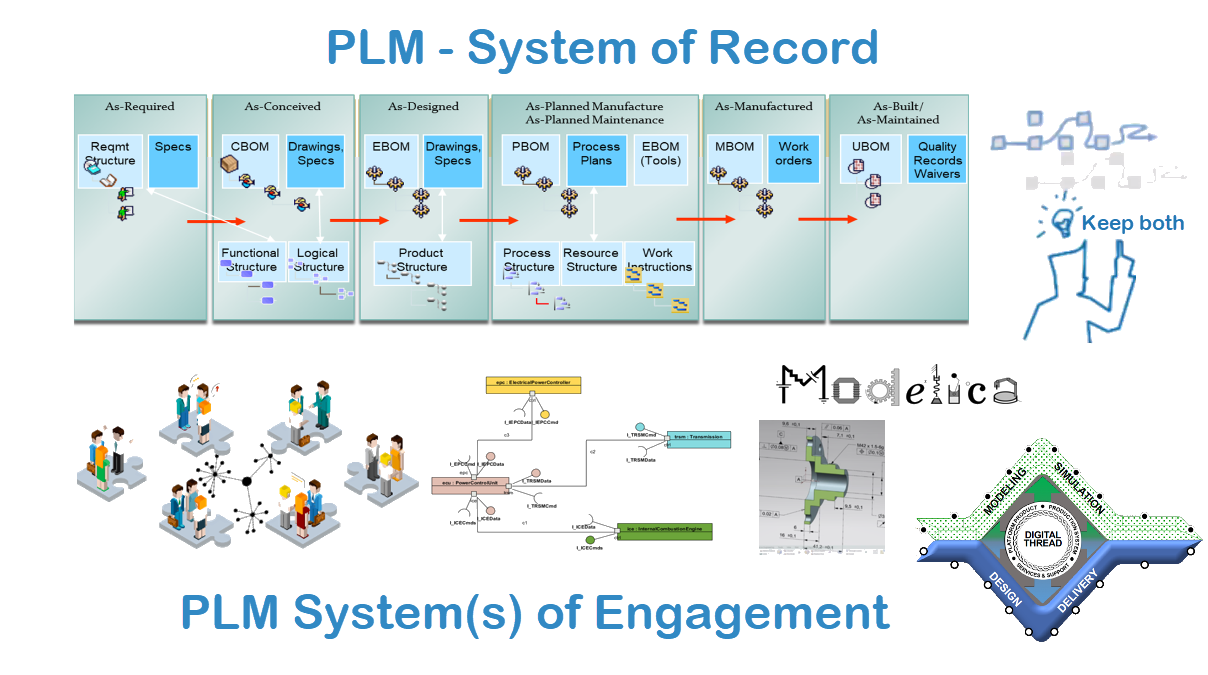
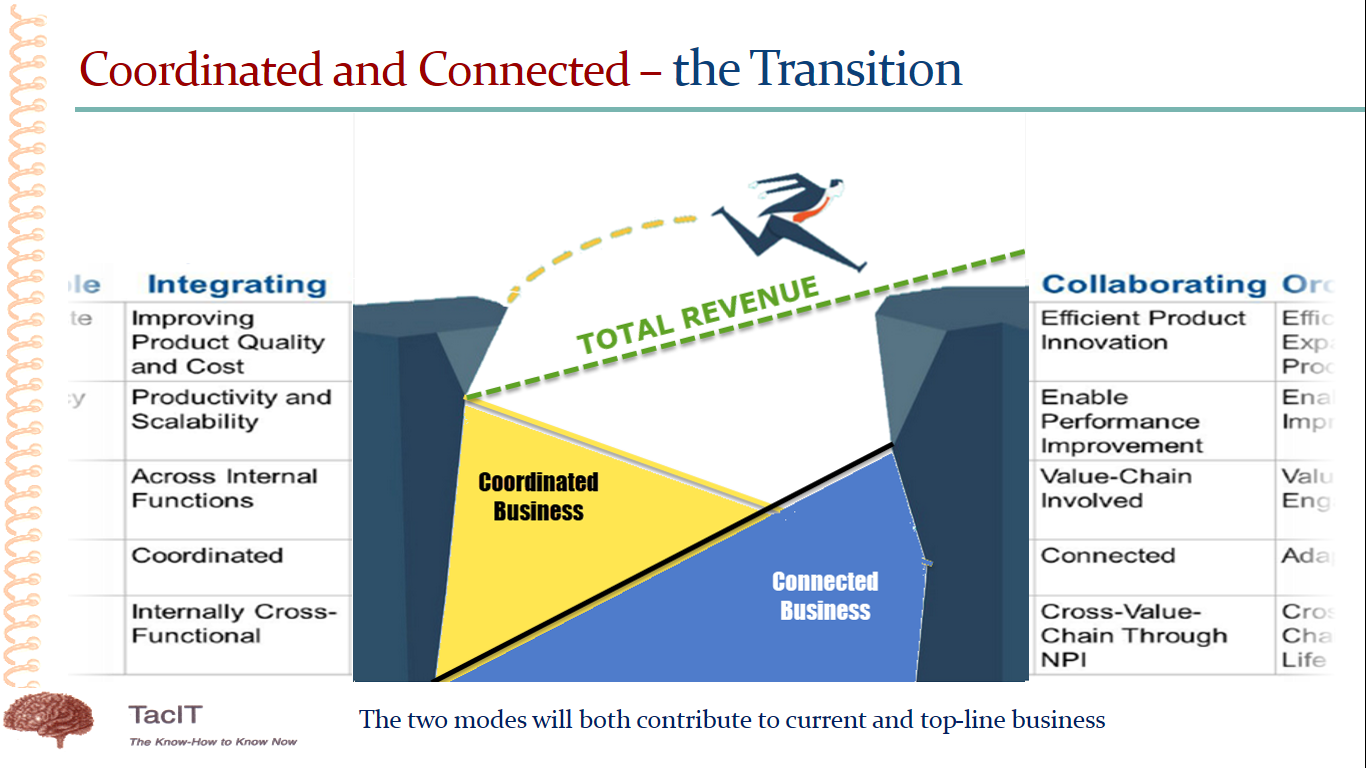
 For me, PLM has always been the System of Record for product information. In the coordinated manner, engineers were working in their own systems. At a certain moment in the process, they needed to publish shareable information, a document(e.g., PDF) or BOM-table (e.g., Excel). The PLM system would support New Product Introduction processes, Release and Change Processes and the PLM system would be the single point of reference for product data.
 Most of the time, engineers did not like PLM systems caused by integrations with their tools. Suddenly they were losing a lot of freedom due to check-in / check-out / naming conventions/attributes and more. Current PLM systems are good for a relatively stable product, but what happens when the product has a lot of parallel iterations (hardware & software, for example). How to deal with Work In Progress?

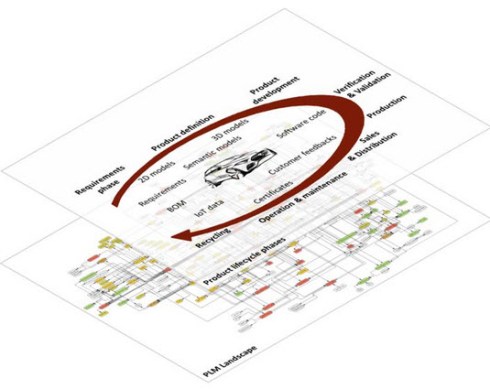
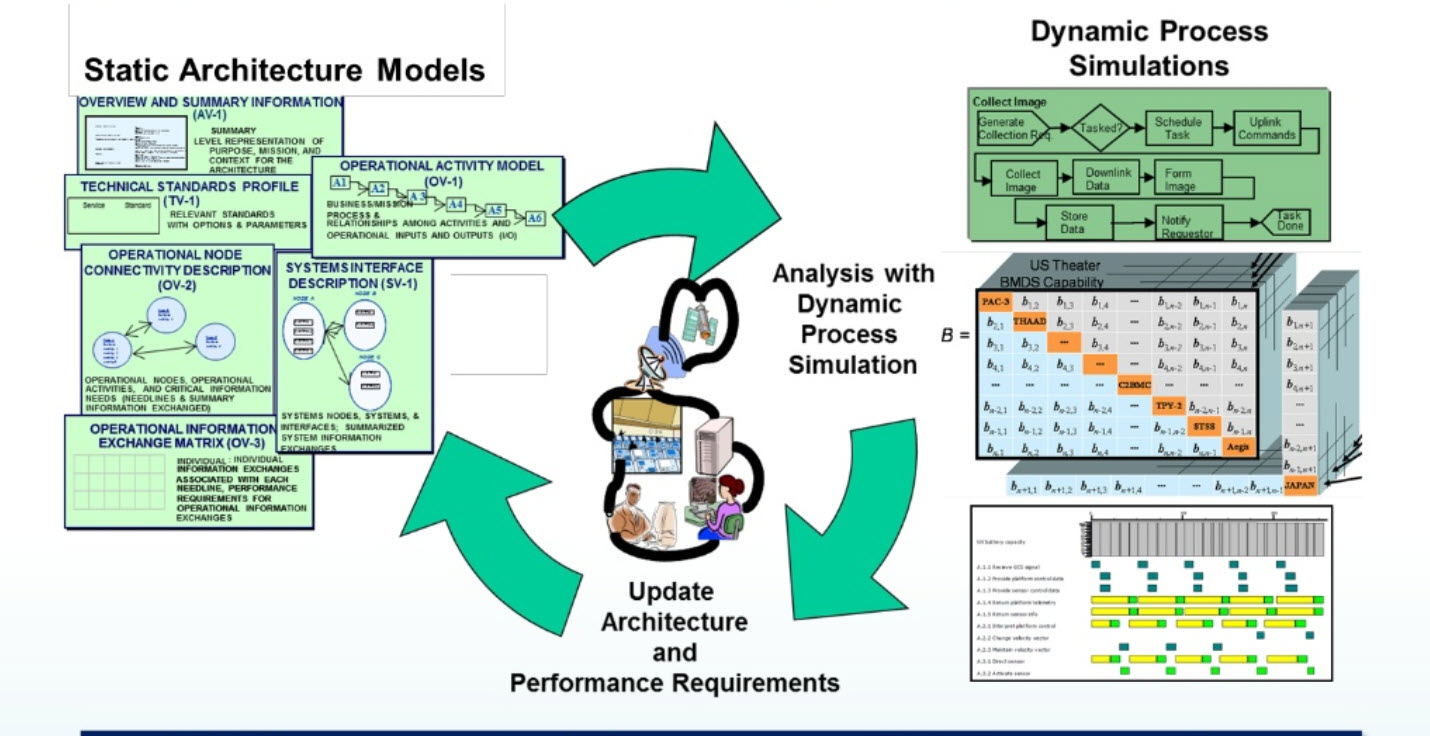

 In any phase of the product lifecycle, we can consider a digital twin, a virtual data-driven environment to analyze, define and optimize a product or a process. For example, we can have a digital twin for manufacturing, fulfilling the Industry 4.0 dreams.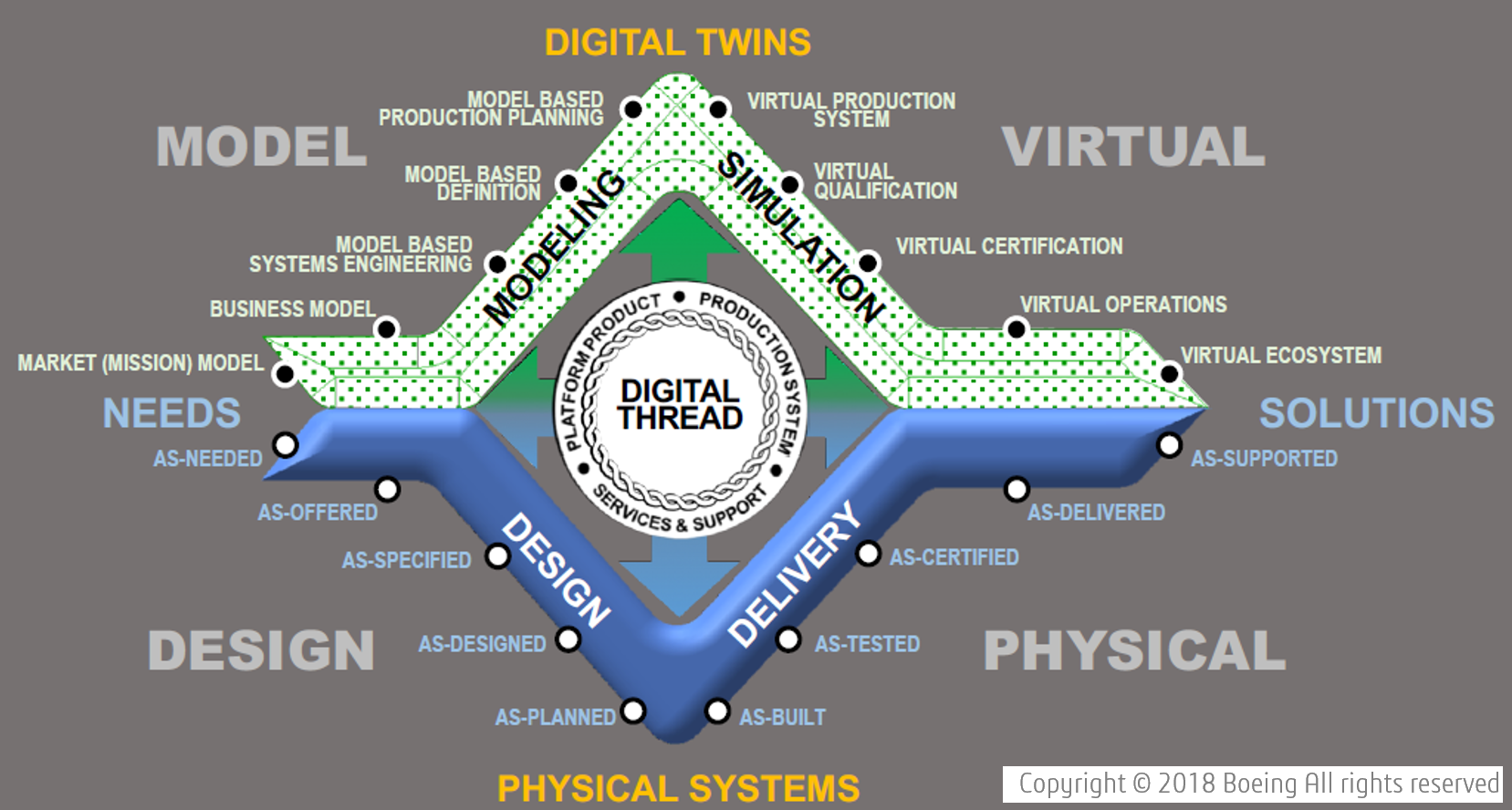
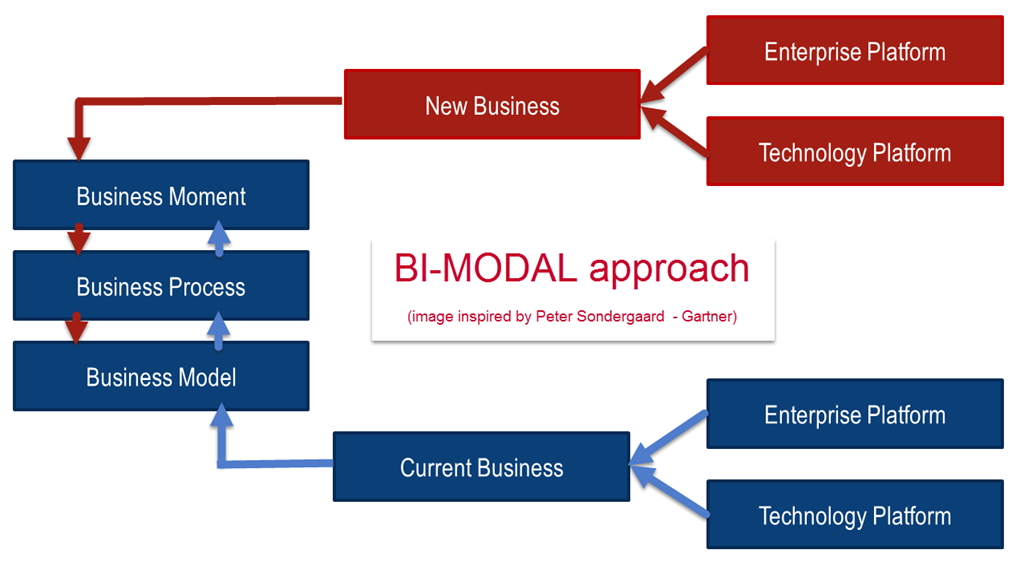
 So do not throw away your current System of Record. Instead, imagine which types of Systems of Engagement your company needs. Most Systems of Engagement might look like a siloed solution; however, remember they are designed for the real-time collaboration of a certain community – designers, engineers, operators, etc.



 There is no need to write a blog post related to the benefits of MBD. With some research, you find enough reasons. The most important benefits of MBD are:
 To master all these new ways is working, it is crucial for the management of manufacturing companies, both OEM and their suppliers, to initiate learning programs. Not as a Proof of Concept but as a real-life, growing activity.
 If you look at the success of MBD in Aerospace & Defense and Automotive, one of the main reasons was the push from the OEMs to align their suppliers. They even dictated CAD systems and versions to enable smooth and efficient collaboration.
 Besides the technical changes, MBD also had a business impact. Where the traditional 2D-Drawing was the contractual and leading information carrier, now the annotated 3D Model has to become the contractual agreement. This is much more complex than browsing through (paper) documents; now, you need an application to open up the content and select the right view(s) or datasets.
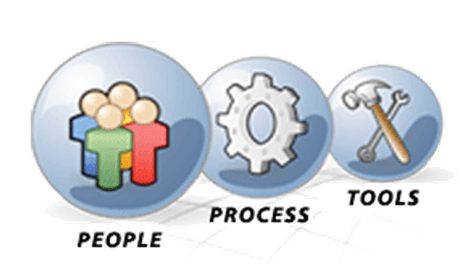 Similar to the introduction of mainstream CAD (AutoCAD in the eighties) and mainstream 3D CAD (Solidworks in the late nineties), it requires new processes, trained people, and matching tools.


 The future of a connected enterprise is even more complex. So I was excited to see and download
 Once and a while, the discussion pops up if, given the changes in technology and business scope, we still should talk about PLM.
  However, most people, particularly at the C-level, consider PLM as something complex, costly, and related to engineering. Partly this had to do with the early introduction of PLM, which was a little more advanced than PDM.
 In my posts, I talked about modern PLM. I described it as data-driven, often in relation to a model-based approach. And as a result of the data-driven approach, a digital PLM environment could be connected to processes outside the engineering domain. I wrote a series of posts related to the potential of such a new PLM infrastructure (

 This is where I position the digital twin. Modern PLM infrastructures are in real-time connected to the business. Still, PLM will have its system of record needs; however, the real value will come from the real-time collaboration.
 The traditional PLM consultant should transform into a business consultant, understanding technology. Historically this was the opposite, creating friction in companies.

 In March, we interviewed
  In my last blog post,
  Therefore we were happy to discuss last week with



 Let’s look at something companies might already practice,
  The regulation is currently still suffering in execution as most of the reporting and evaluation of chemicals is done manually. Suppliers report their chemicals in documents, and companies report the total of chemicals in their summary reports. Then, finally, authorities have to go through these reports.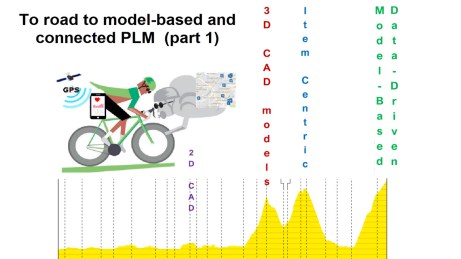
 The European Commission has published an action plan for the circular economy, one of the most important building blocks of the European Green Deal. One of the defined measures is the gradual introduction of a Digital Product Passport (DPP). As the quality of an LCA depends on the quality and trustworthy information about products and materials, the DPP is targeting to ensure circular economy metrics become reliable.
 Becoming data-driven and model-based, of course, is not the business driver. However, this change is needed to be able to perform Life Cycle Assessments and comply with current and future regulations by remaining competitive.
 Having lived in Israel – the nation where almost everyone is a startup – and working with startups afterward in the past 10 years, I always get inspired by these people’s energy in startup companies. They have a unique value proposition most of the time, and they want to be visible on the market as soon as possible.
 For example, the new “green” transportation hype. Many cities now have been flooded with “green” scooters and electric bikes to promote transportation as a service. The idea behind this concept is that citizens do not require to own polluting motorbikes or cars anymore, and transportation means will be shared. Therefore, the city will be cleaner and greener.
 Out of curiosity: Do you know or work in a startup that has started with a data-driven and model-based vision from scratch? Please add the name of this company in the comments, and let’s learn how they did it.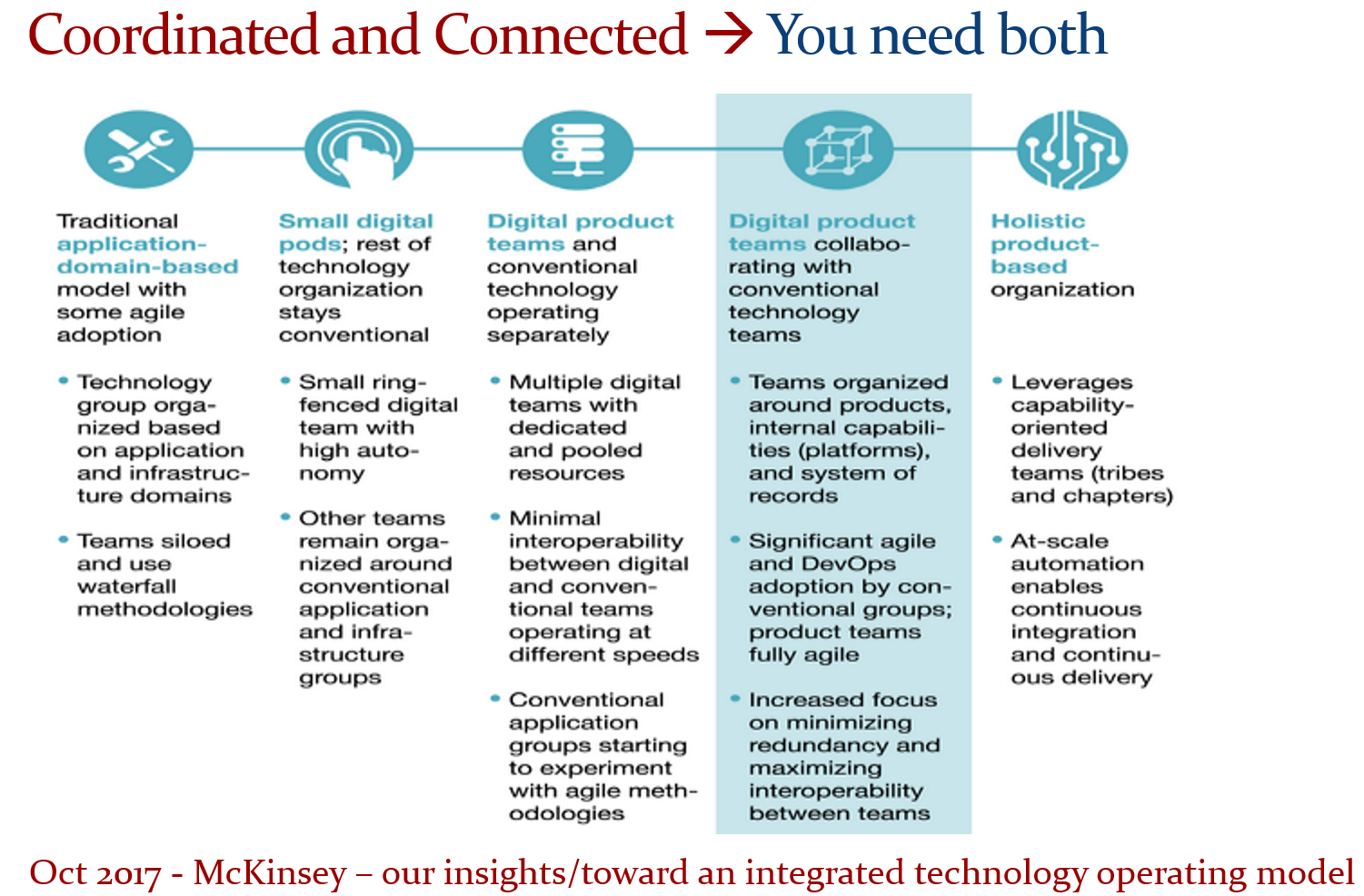
 Note: Before publishing this post, I read this interesting and complementary post from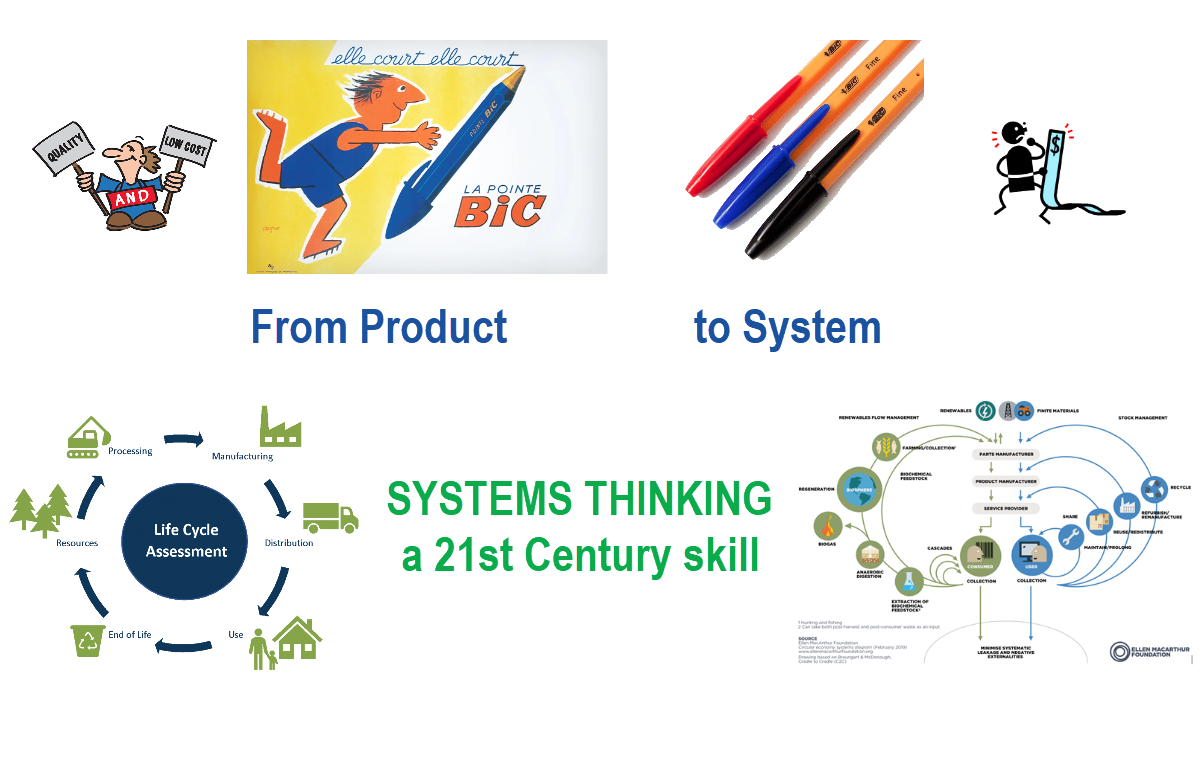



 The LinkedIn discussion related to
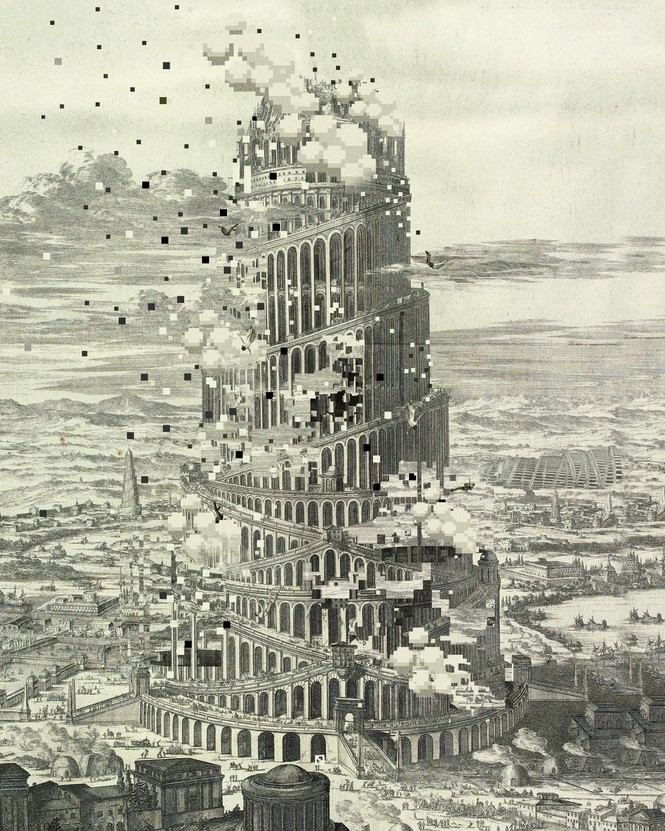

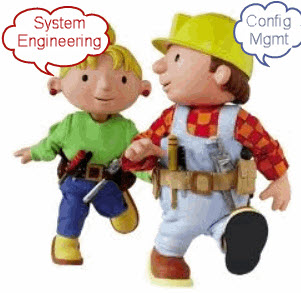
 What is a part? What is a material? What is a Workflow, and is it different from a Business Process? And also, for Configuration Management, you often see two definitions.
 With a more holistic view of the BIC pen, you might say: “What happens when children play with it?” And apparently, there were accidents with children stabbing themselves in the eye with the sharp cap.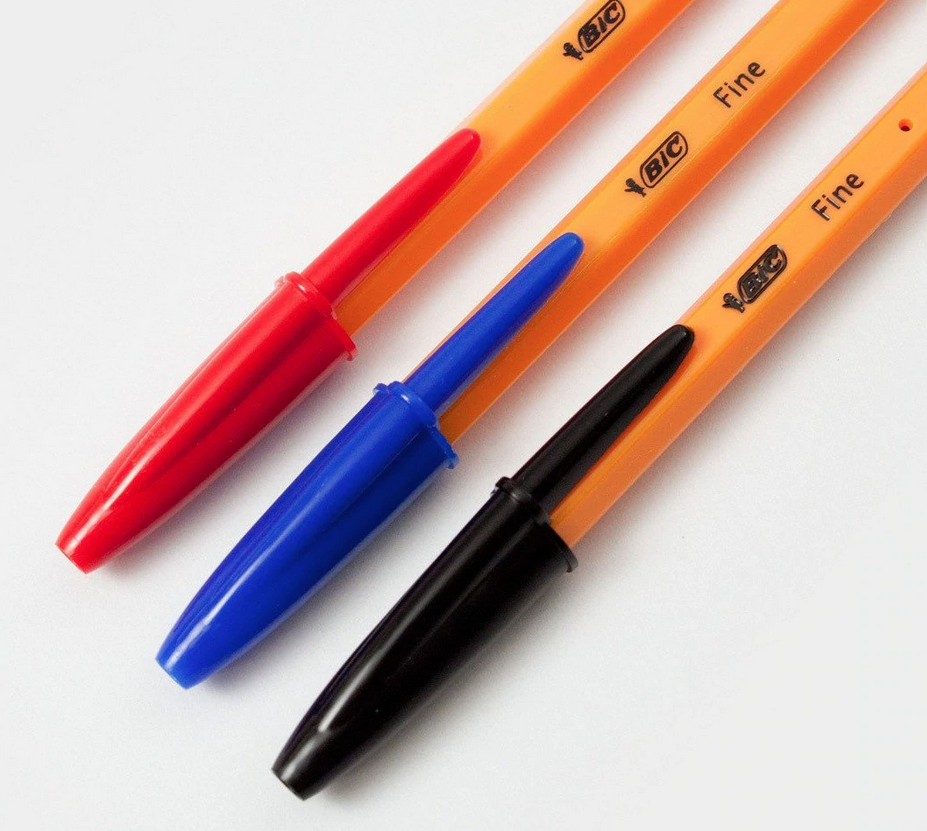


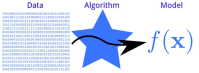 To manage complexity, we have always used models. The weather forecast is based on models, the profitability of a business is based on models, and the behavior of a product can be predicted and analyzed using models. This is Model-Based Systems Engineering MBSE), and I wrote a lot about the Model-Based approach last year. Read
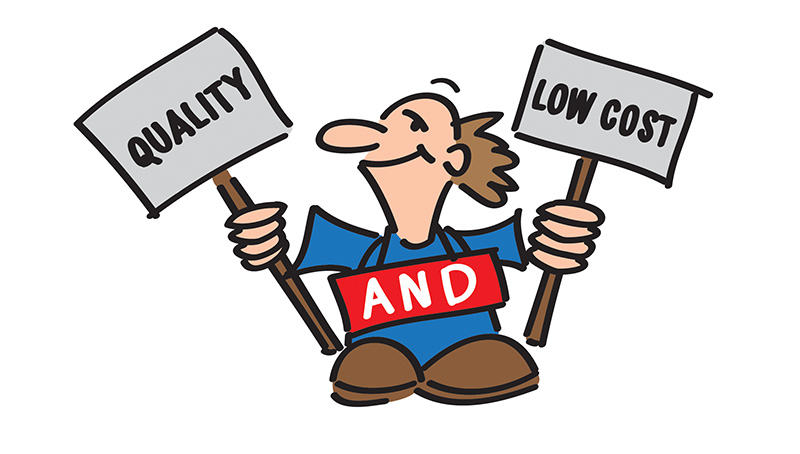
 If it is up to the OEM, it is only costs, quality and compliance. Suppose the supplier will select an alternative material that has less impact on the environment. For example, recycling or needing less energy (carbon emissions) is easier to produce. In that case, this option might be more expensive. It is up to the OEM to decide if they accept this higher cost price to be more sustainable with their products.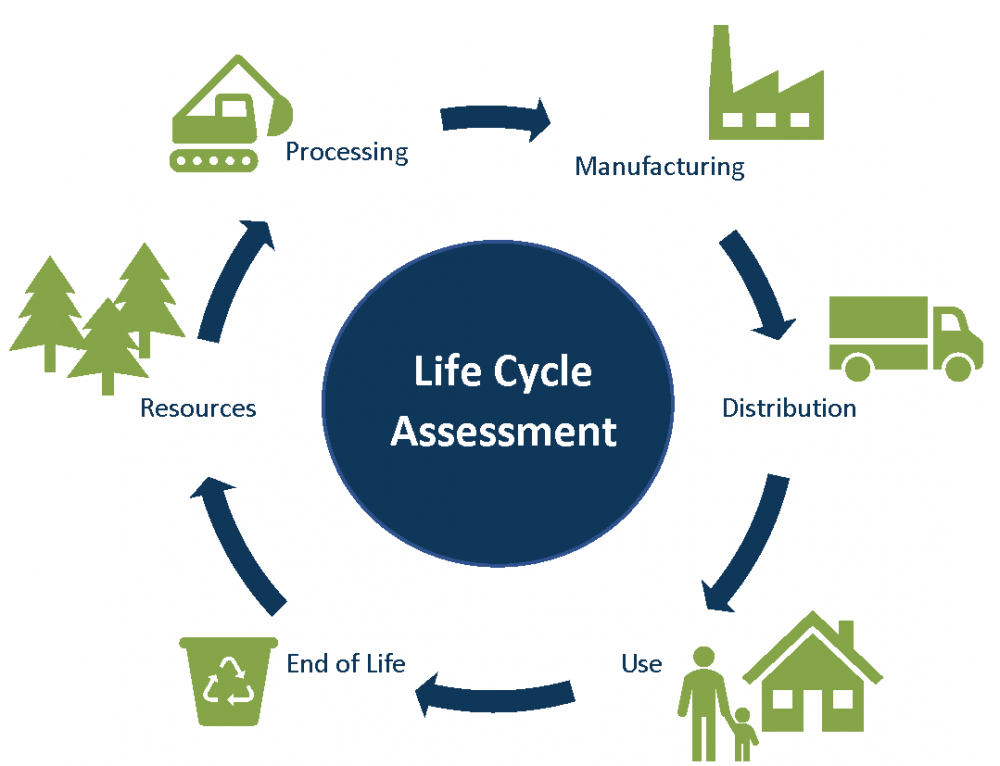
 Currently, we see this behavior with the rising energy prices. Unfortunately, people complain about the price instead of realizing the price has always been too low. Changing behavior (energy consumption) might be the best path for the future, but that is more difficult than complaining.
 War is a place where young people who don’t know each other, and don’t hate each other, kill each other, by the decision of old people who know each other, and hate each other, but don’t kill each other…”


 Autodesk was open to sharing its sustainability activities with us. So we spoke with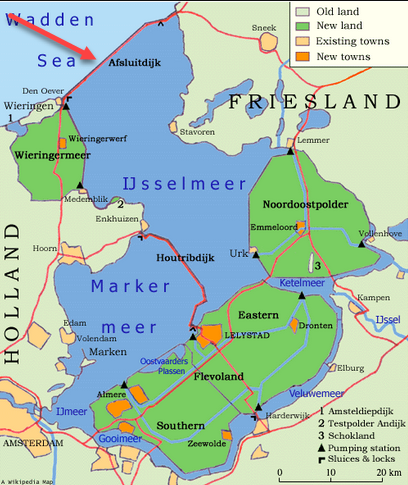
 Thanks to, or actually due to, the pandemic, climate disasters and the return of the US supporting the Paris Climate agreements, it became clear companies need to act. And preferably as soon as possible, which led to sustainability activities in many companies.
 Jos Voskuil's Weblog
Interesting reflection, Jos. In my experience, the situation you describe is very recognizable. At the company where I work, sustainability…
[…] (The following post from PLM Green Global Alliance cofounder Jos Voskuil first appeared in his European PLM-focused blog HERE.) […]
[…] recent discussions in the PLM ecosystem, including PSC Transition Technologies (EcoPLM), CIMPA PLM services (LCA), and the Design for…
Jos, all interesting and relevant. There are additional elements to be mentioned and Ontologies seem to be one of the…
Jos, as usual, you've provided a buffet of "food for thought". Where do you see AI being trained by a…