
 In this post, I will explain the story behind my presentation at PI PLMx London. You can read my review of the event here: “The weekend after ……” and you can find my slides on SlideShare: HERE.
For me, this presentation is a conclusion of a thought process and collection of built-up experiences in the past three to five years, related to the challenges digital transformation is creating for PLM and what makes it hard to go through compared to other enterprise business domains. So here we go:
Digital transformation or disruption?
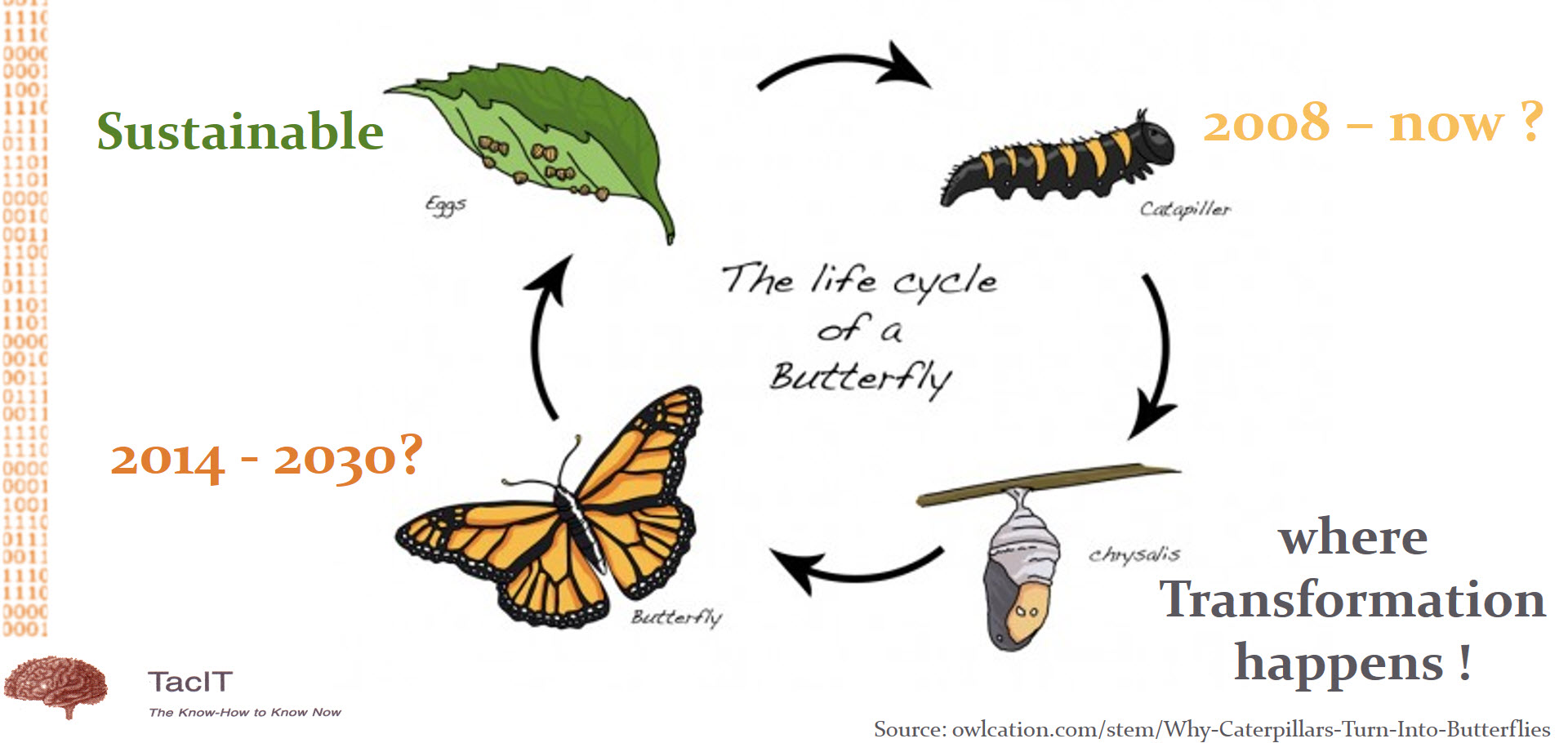
Slide 2 (top image) until 5 are dealing with the common challenges of business transformation. In nature, the transformation from a Caterpillar (old linear business) to a Butterfly (modern, agile, flexible) has the cocoon stage, where the transformation happens. In business unfortunate companies cannot afford a cocoon phase, it needs to be a parallel change.
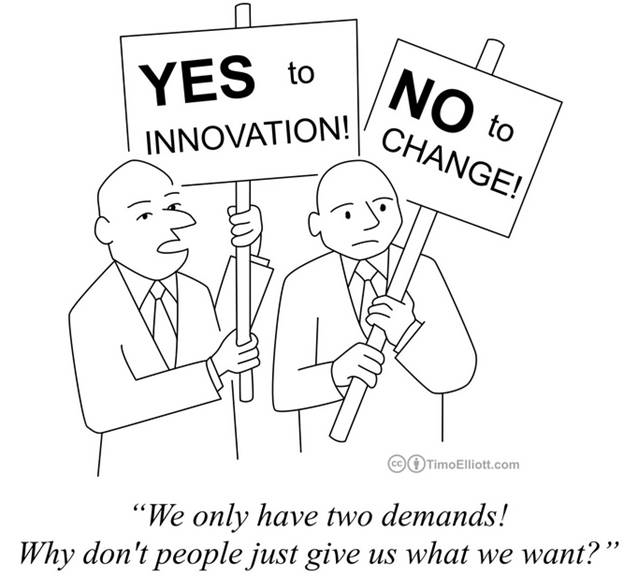 Human beings are not good at change (slide 3 & 4), and the risk is that a new technology or a new business model will disrupt your business if you are too confident – see examples from the past. The disruption theory introduced by Clayton Christensen in his book, the Innovators Dilemma is an excellent example of how this can happen. Some of my thoughts are in The Innovator’s dilemma and generation change (2015)
Although I know some PLM vendors consider themselves as disruptor, I give them no chance in the PLM domain. The main reason: The existing PLM systems are so closely tied to the data they manage, that switching from one PLM system to a more modern PLM system does not pay off. The data models are so diverse that it is better to stay with the existing environment.
What is clear for modern digital businesses is that if you could start from scratch or with almost no legacy you can move faster forward than the rest. But only if supported by a strong leadership , a(understandable) vision and relentless execution.
The impression of evolution
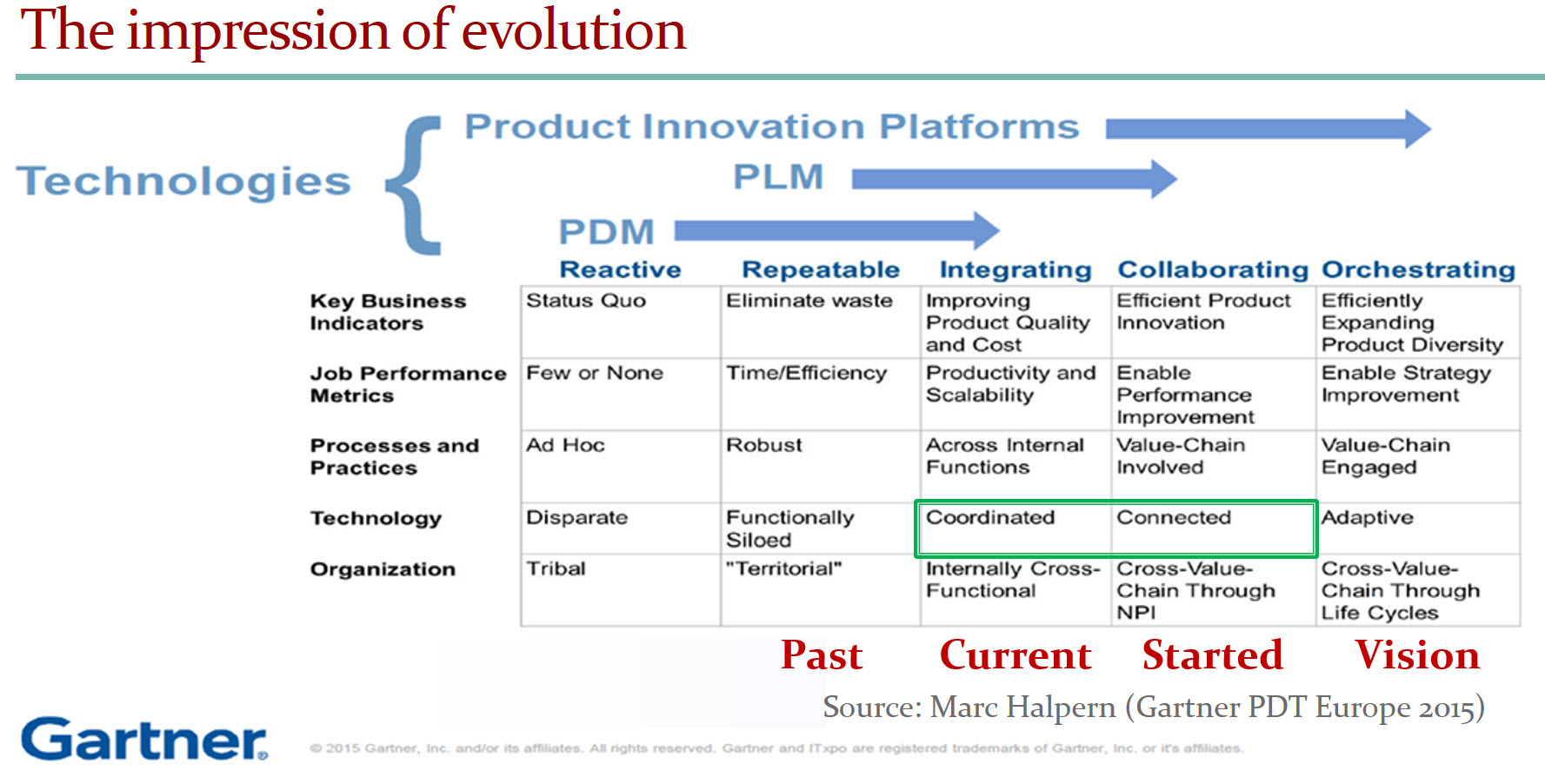
Marc Halpern’s slide presented at PDT 2015 is one of my favorite slides, as it maps business maturity to various characteristics of an organization, including the technologies used.
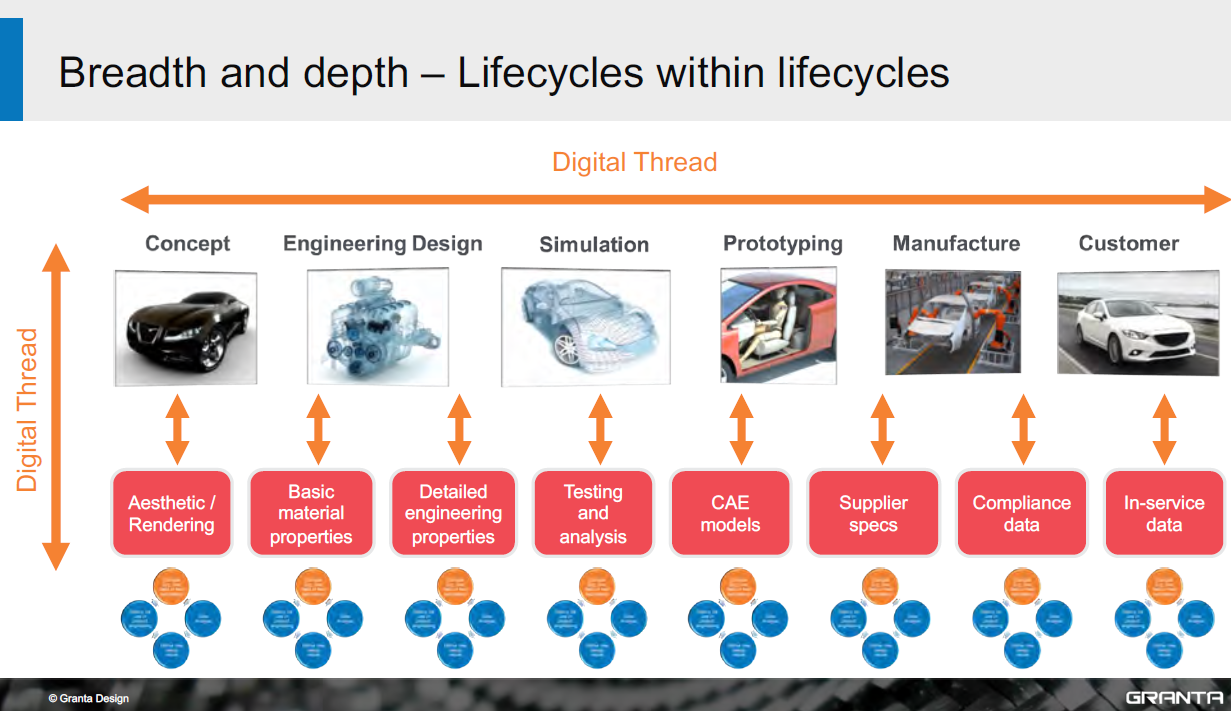
Slide 7 till 18 are zooming in on the terms Coordinated and Connected and the implications it has for data, people and business. I have written about Coordinated and Connected recently: Coordinated or Connected (2018)
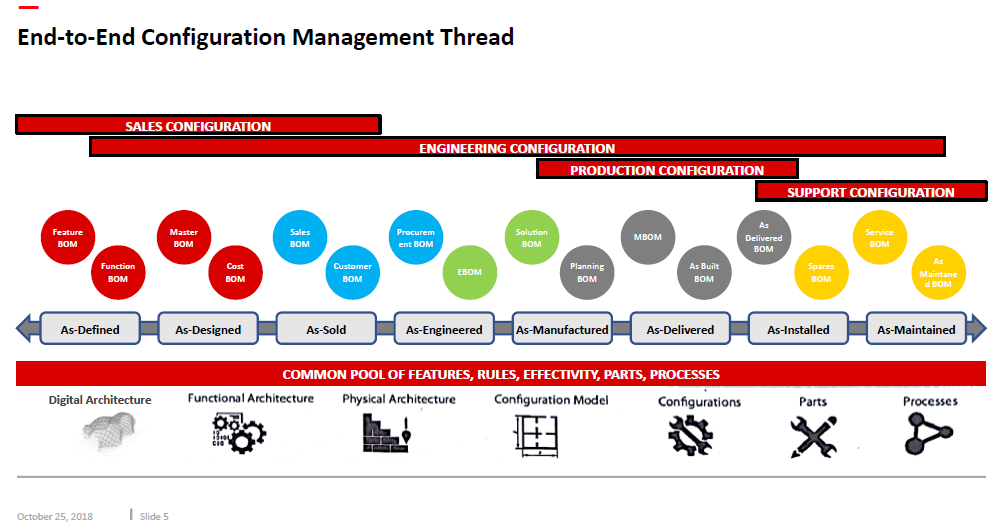
A coordinated approach: Delivering the right information at the right moment in the proper context is what current PLM implementations try to achieve. Allowing people to use their own tools/systems as long as they deliver at the right moment their information (documents/files) as part of the lifecycle/delivery process. Very linear and not too complicated to implement you would expect. However it is difficult ! Here we already see the challenge of just aligning a company to implement a horizontal flow of data. Usability of the PLM backbone and optimized silo thinking are the main inhibitors.
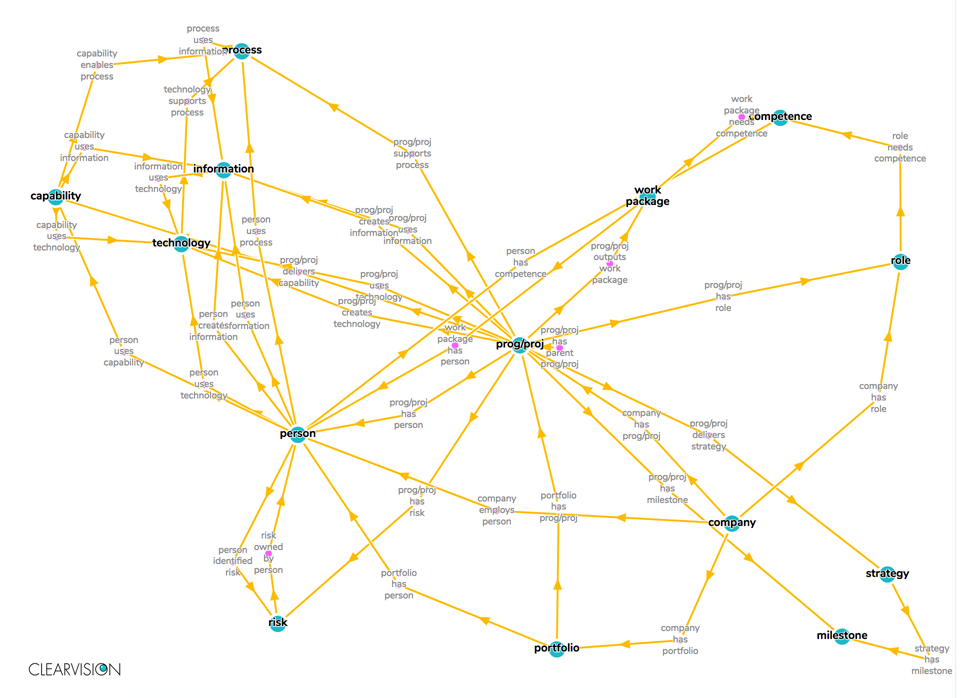
 In a connected approach: Providing actual information for anyone connected in any context the slide on the left shows the mental picture we need to have for a digital enterprise. Information coming from various platforms needs to be shareable and connected in real-time, leading, in particular for PLM, to a switch from document-based deliverables to models and parameters that are connected.
Slide 15 has examples of some models. A data-driven approach creates different responsibilities as it is not about ownership anymore but about accountability.
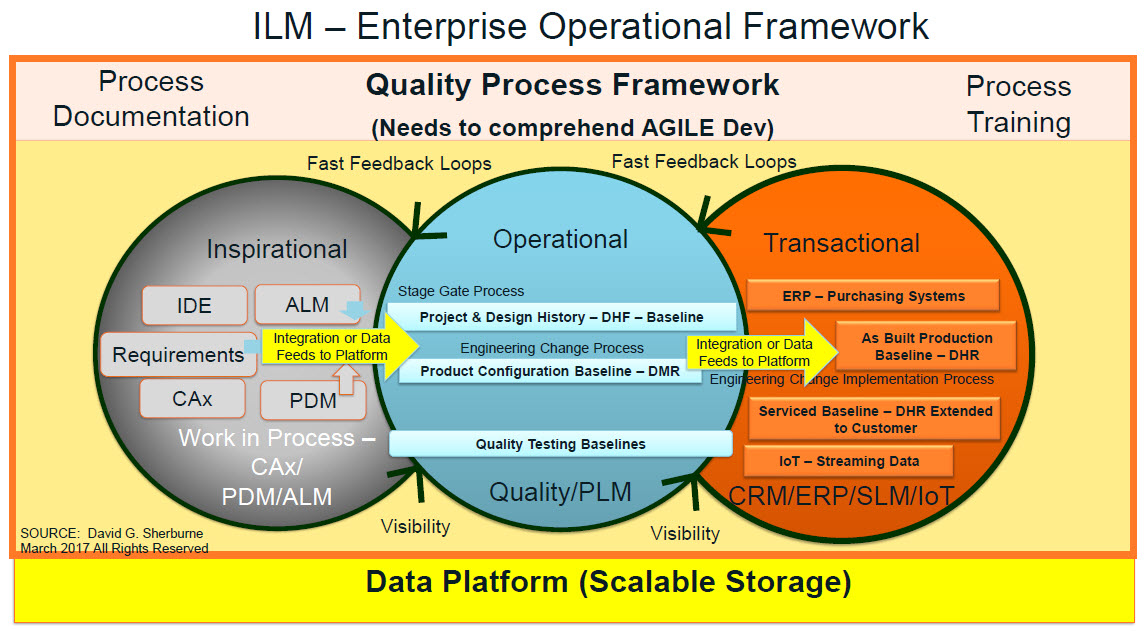
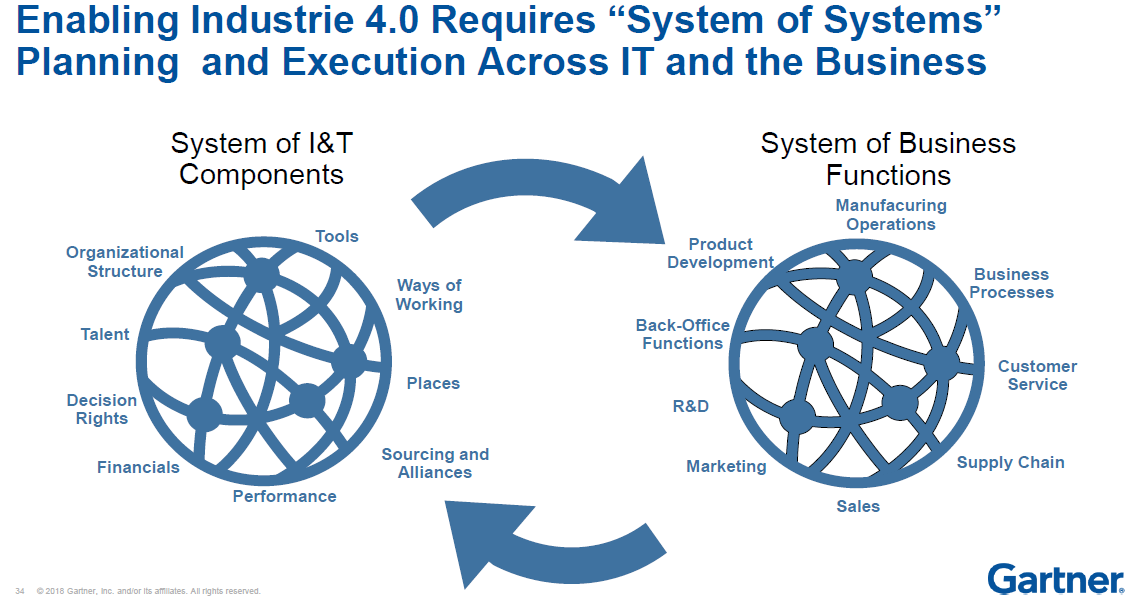
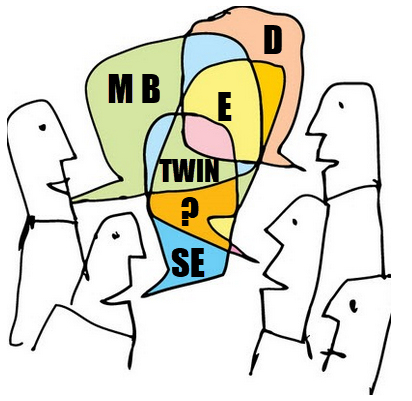
The image above gives my PLM-twisted vision of which are the five core platforms for an enterprise. The number FIVE is interesting as David Sherburne just published his Five Platforms that Enable Digital Transformation and in 2016 Gartner identified Five domains for the digital platform .- more IT-twisted ? But remember the purpose of digital transformation is: FIVE!
From Coordinated to Connected is Digital Transformation
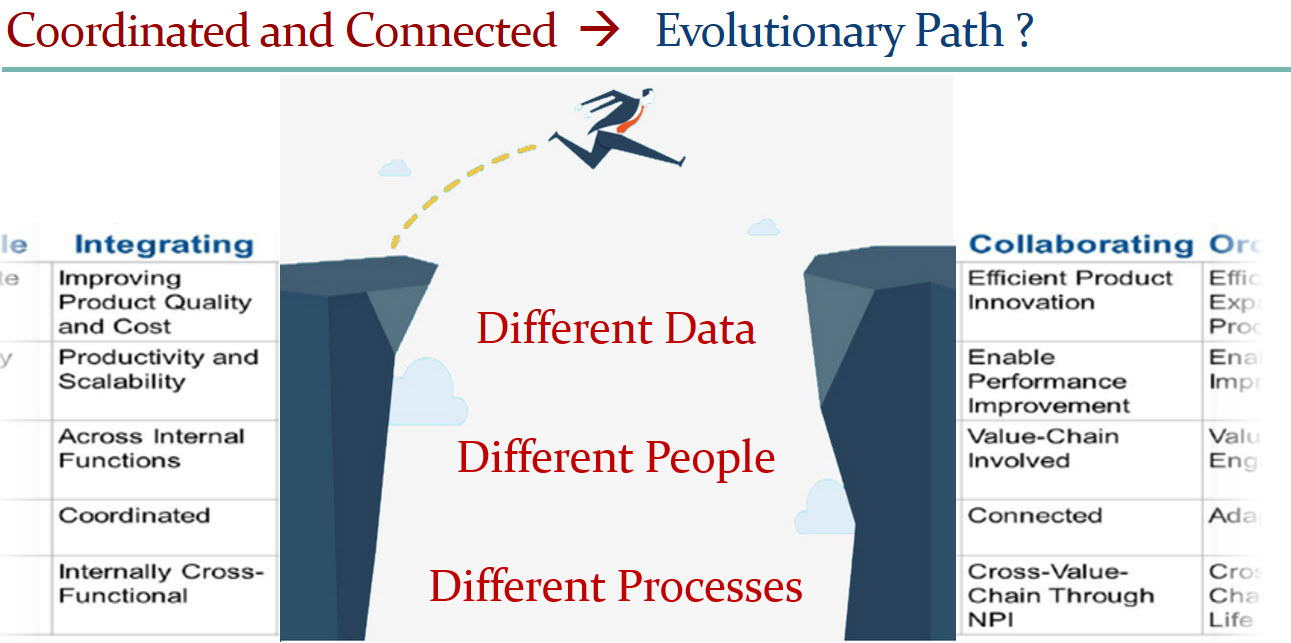 Slide 19 till 27 further elaborate on the fact that for PLM there is no evolutionary approach possible, going from a Coordinated technology towards a Connected technology.
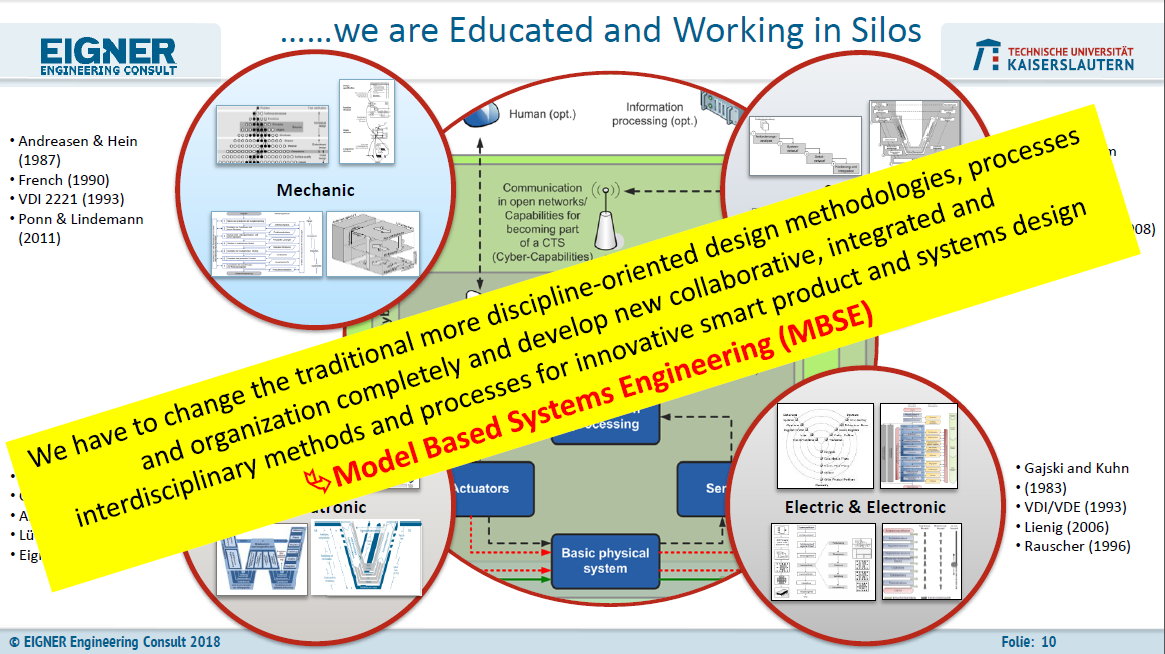
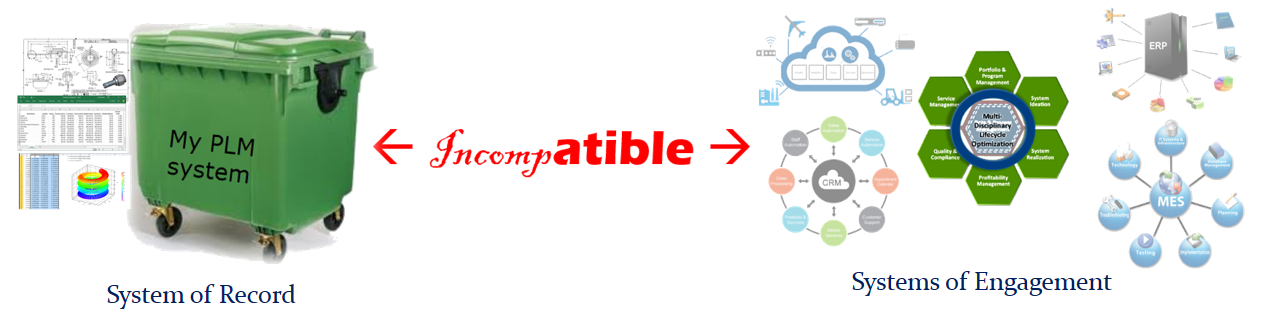
For three reasons: different type of data (document vs. database elements), different people (working in a connected environment requires modern digital skills) and different processes (the standard methods for mechanical-oriented PLM practices do not match processes needed to deliver systems (hardware & software) with an incremental delivery process).
Due to the incompatibility of the data, more and more companies discover that a single PLM-instance cannot support both modes – staying with your existing document-oriented PLM-system does not give the capabilities needed for a model-driven approach. Migrating the data from a traditional PLM-environment towards a modern data-driven environment does not bring any value. The majority of the coordinated data is not complete and with the right quality to use a data-driven environment. Note: in a data-driven environment you do not have people interpreting the data – the data should be correct for automation / algorithms.
The overlay approach, mentioned several times in various PLM-blogs, is an intermediate solution. It provides traceability and visibility between different data sources (PLM, ALM, ERP, SCM, …). However it does not make the information in these systems better accessible.
So the ultimate conclusion is: You need both approaches, and you need to learn to work in a hybrid environment !
What can various stakeholders do?
 For the management of your company, it is crucial they understand the full impact of digital transformation. It is not about a sexy customer website, a service platform or Virtual Reality/Augmented Reality case for the shop floor or services. When these capabilities are created disconnected from the source (PLM), they will deliver inconsistencies in the long-term. The new digital baby becomes another silo in the organization. Real digital transformation comes from an end-to-end vision and implementation. The result of this end-to-end vision will be the understanding that there is a duality in data, in particular for the PLM domain.
Besides the technicalities, when going through a digital transformation, it is crucial for the management to share their vision in a way it becomes a motivational story, a myth, for all employees. As Yuval Harari, writer of the book Sapiens, suggested, we (Home Sapiens) need an abstract story, a myth to align a larger group of people to achieve a common abstract goal. I discussed this topic in my posts: PLM as a myth? (2017) and PLM – measurable or a myth?
Finally, the beauty of new digital businesses is that they are connected and can be monitored in real-time. That implies you can check the results continuously and adjust – scale of fail!
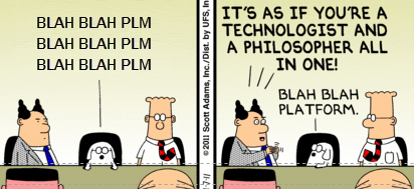 Consultants and strategists in a company should also take the responsibility, to educate the management and when advising on less transformational steps, like efficiency improvements: Make sure you learn and understand model-based approaches and push for data governance initiatives. This will at least narrow the gap between coordinated and connected environments.
This was about strategy – now about execution:
 For PLM vendors and implementers, understanding the incompatibility of data between current PLM practices – coordinated and connected – it will lead to different business models. Where traditionally the new PLM vendor started first with a rip-and-replace of the earlier environment – no added value – now it is about starting a new parallel environment. This implies no more big replacement deals, but more a long-term. strategic and parallel journey. For PLM vendors it is crucial that being able to offer to these modes in parallel will allow them to keep up their customer base and grow. If they would choose for coordinated or connected only it is for sure a competitor will work in parallel.
 For PLM users, an organization should understand that they are the most valuable resources, realizing these people cannot make a drastic change in their behavior. People will adapt within their capabilities but do not expect a person who grew up in the traditional ways of working (linear / analogue) to become a successful worker in the new mode (agile / digital). Their value lies in transferring their skills and coaching new employees but do not let them work in two modes. And when it comes to education: permanent education is crucial and should be scheduled – it is not about one or two trainings per year – if the perfect training would exist, why do students go to school for several years ? Why not give them the perfect PowerPoint twice a year?
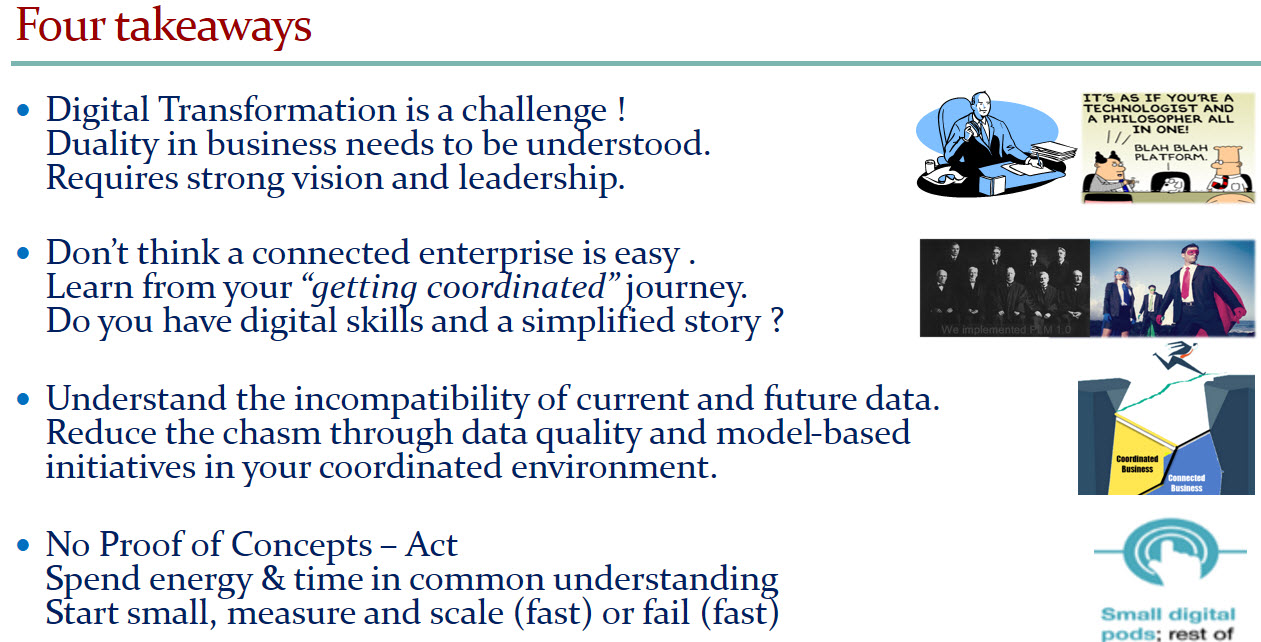
Conclusions
I believe after three years of blogging about this theme I have made my point. Let’s observe and learn from what is happening in the field – I remain curious and focused about proof points and new insights. This year I hope to share with you new ideas related to digital practices in all industries, of course all associated with the human side of what we once started to call PLM.
Note: Oleg Shilovitsky just published an interesting post this weekend: Why complexity is killing PLM and what are future trajectories and opportunities? Enough food for discussion. One point: The fact that consumers want simplicity does not mean PLM will become simple – working in the context of other information is the challenge – it is human behavior – team players are good in anticipating – big egos are not. To be continued…….





 Day 1 closed with an inspirational keynote; Lessons-Learnt from the Mountaineering Experience 8848 Meter above sea level – a mission to climb the highest mountain on each of the continents in 107 days – 9 hours – setting a new world record by

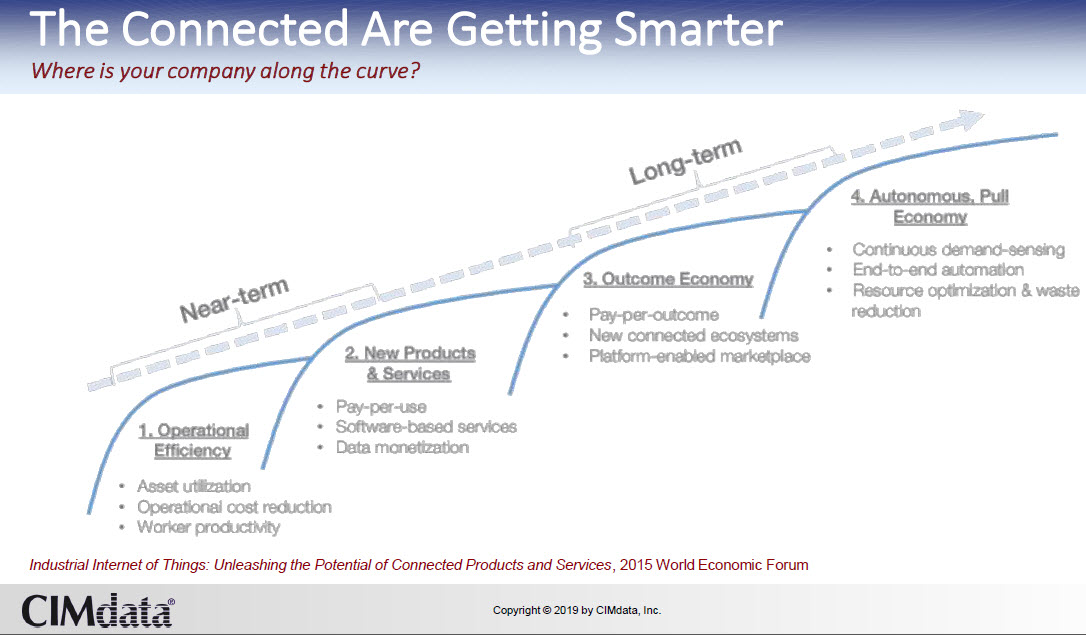

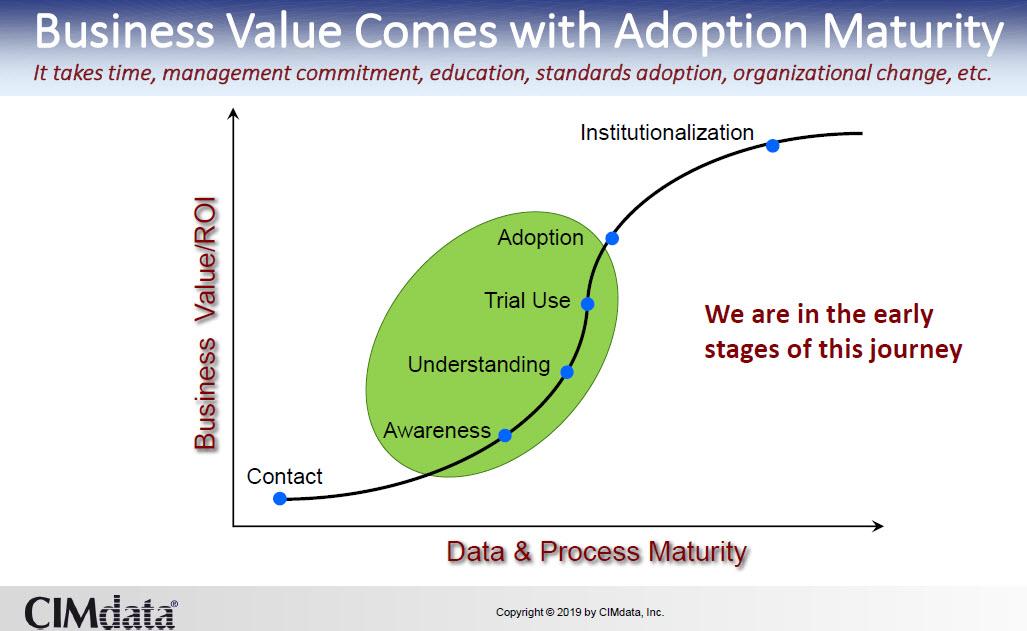


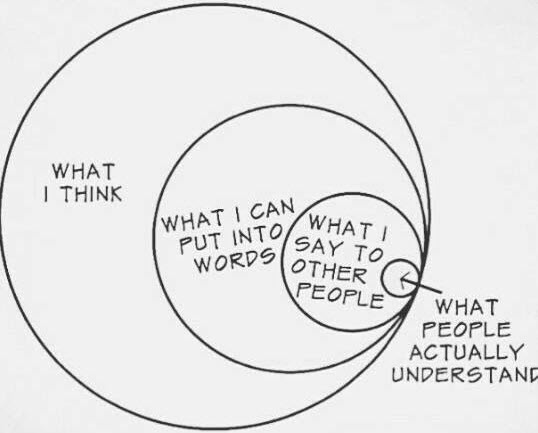

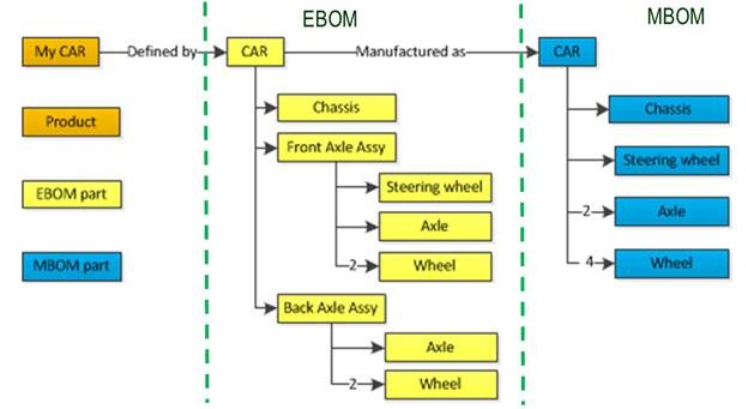






























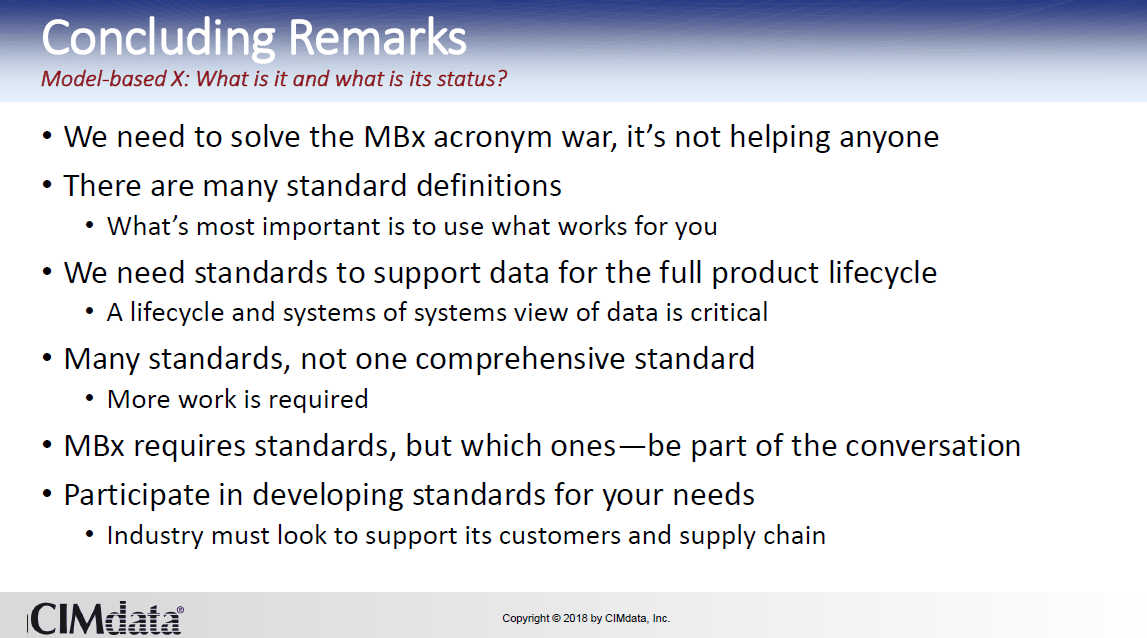
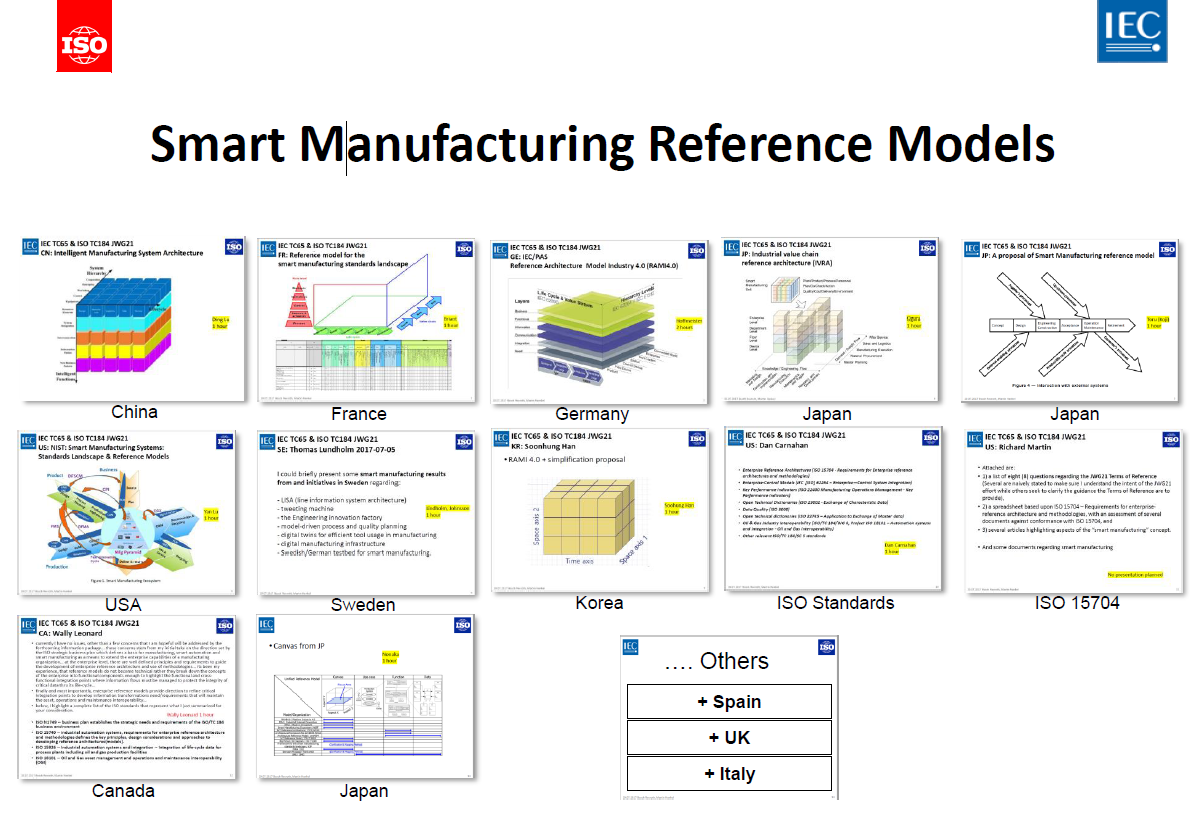

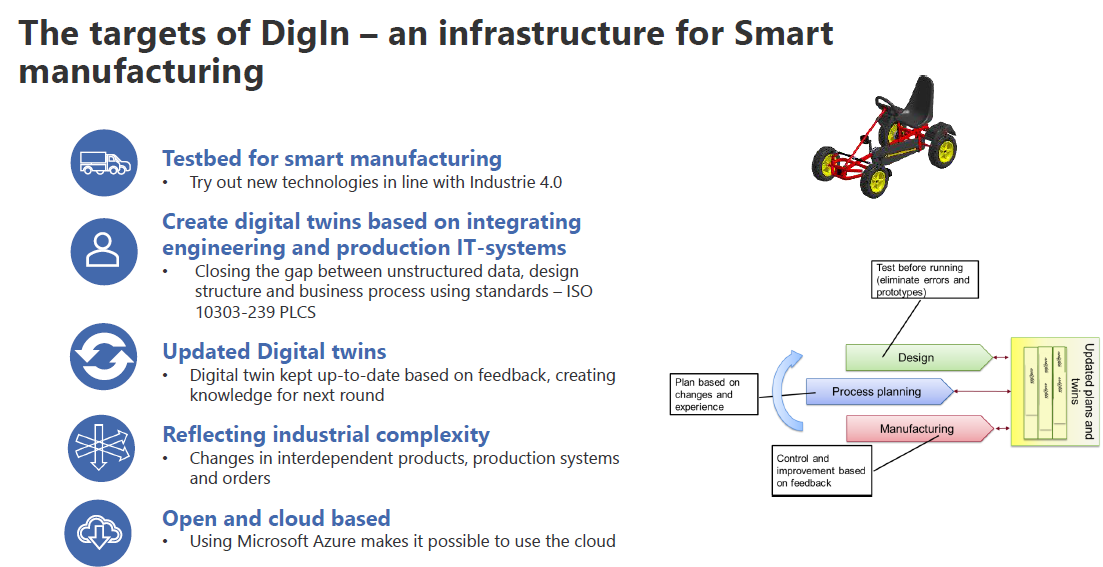
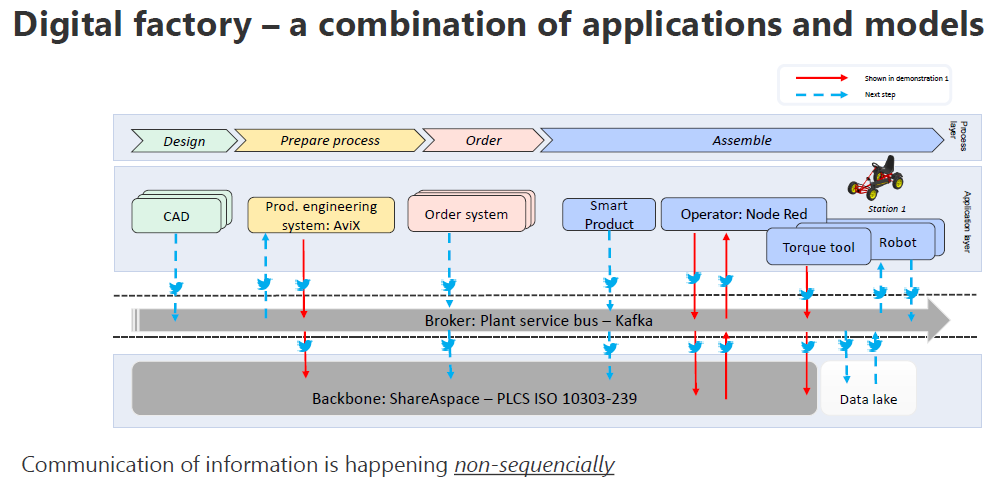
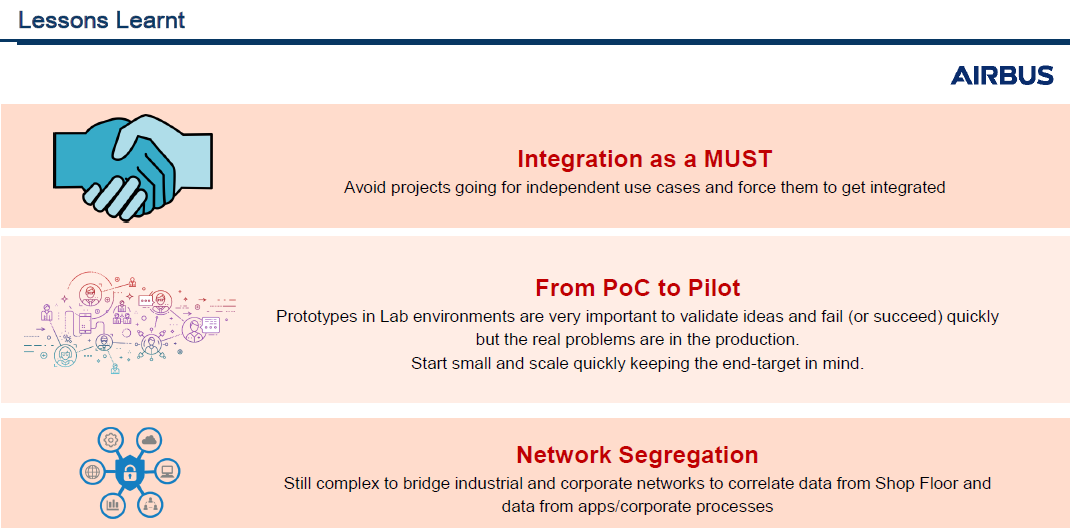

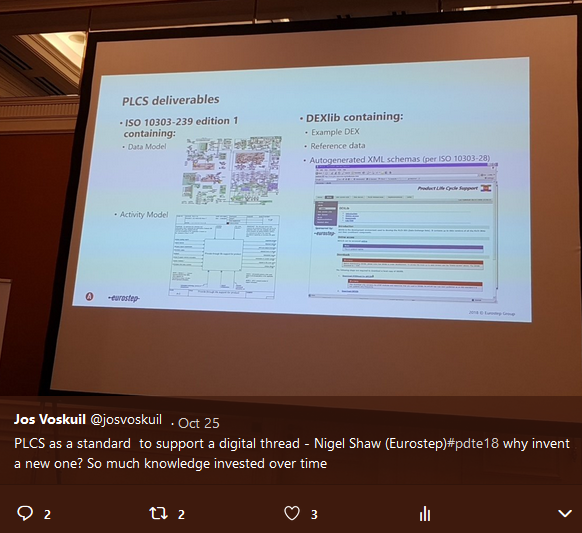



 Last week I attended the long-awaited joined conference from CIMdata and Eurostep in Stuttgart. As I mentioned in earlier blog posts. I like this conference because it is a relatively small conference with a focused audience related to a chosen theme.
 Instead of parallel sessions, all attendees follow the same tracks and after two days there is a common understanding for all. This time there were about 70 people discussing the themes:

 For me, the most interesting presentation of Day 1 was









 Jos Voskuil's Weblog
Interesting reflection, Jos. In my experience, the situation you describe is very recognizable. At the company where I work, sustainability…
[…] (The following post from PLM Green Global Alliance cofounder Jos Voskuil first appeared in his European PLM-focused blog HERE.) […]
[…] recent discussions in the PLM ecosystem, including PSC Transition Technologies (EcoPLM), CIMPA PLM services (LCA), and the Design for…
Jos, all interesting and relevant. There are additional elements to be mentioned and Ontologies seem to be one of the…
Jos, as usual, you've provided a buffet of "food for thought". Where do you see AI being trained by a…