
You are currently browsing the tag archive for the ‘Sustainability’ tag.
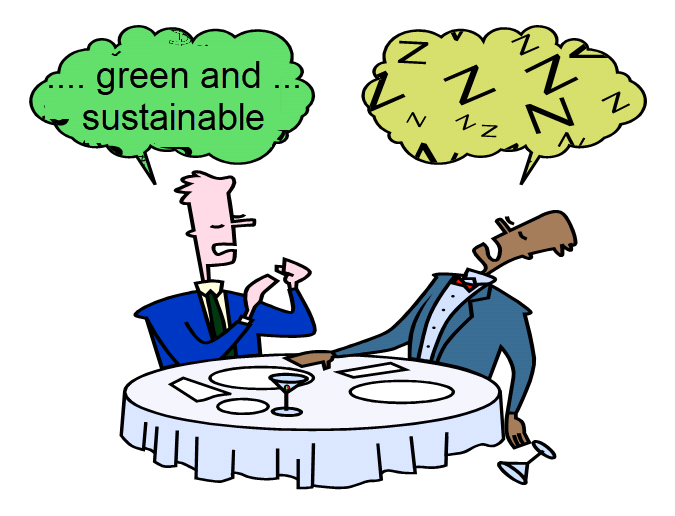 In recent months, I’ve noticed a decline in momentum around sustainability discussions, both in my professional network and personal life. With current global crises—like the Middle East conflict and the erosion of democratic institutions—dominating our attention, long-term topics like sustainability seem to have taken a back seat.
But don’t stop reading yet—there is good news, though we’ll start with the bad.
The Convenient Truth
 Human behavior is primarily emotional. A lesson valuable in the PLM domain and discussed during the Share PLM summit. As SharePLM notes in their change management approach, we rely on our “gator brain”—our limbic system – call it System 1 and System 2 or Thinking Fast and Slow. Faced with uncomfortable truths, we often seek out comforting alternatives.
The film Don’t Look Up humorously captures this tendency. It mirrors real-life responses to climate change: “CO₂ levels were high before, so it’s nothing new.” Yet the data tells a different story. For 800,000 years, CO₂ ranged between 170–300 ppm. Today’s level is ~420 ppm—an unprecedented spike in just 150 years as illustrated below.
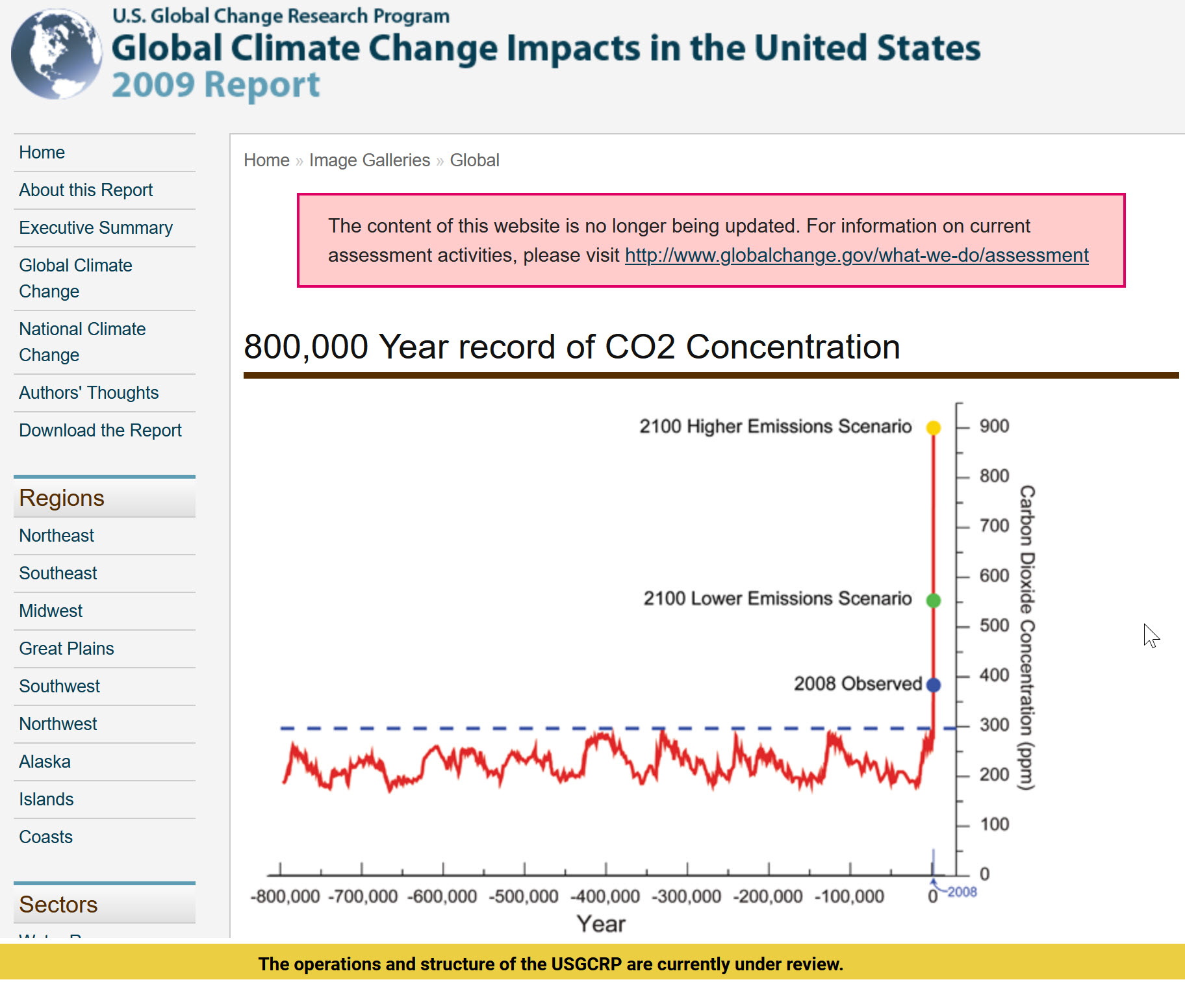
Frustratingly, some of this scientific data is no longer prominently published. The narrative has become inconvenient, particularly for the fossil fuel industry.
Persistent Myths
Then there is the pseudo-scientific claim that fossil fuels are infinite because the Earth’s core continually generates them. The Abiogenic Petroleum Origin theory is a fringe theory, sometimes revived from old Soviet science, and lacks credible evidence. See image below
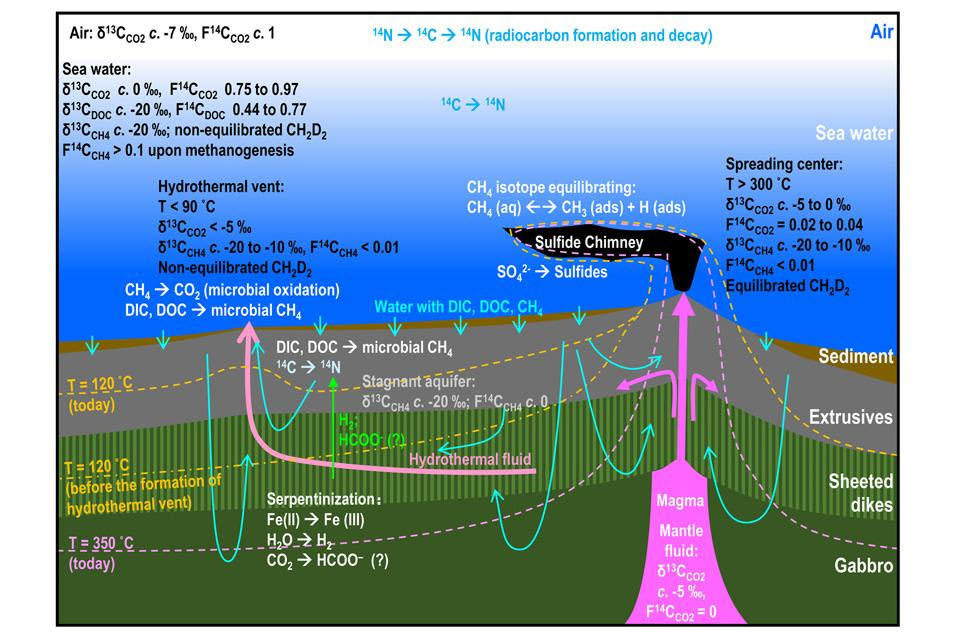
Oil remains a finite, biologically sourced resource. Yet such myths persist, often supported by overly complex jargon designed to impress rather than inform.
The Dissonance of Daily Life
A young couple casually mentioned flying to the Canary Islands for a weekend at a recent birthday party. When someone objected on climate grounds, they simply replied, “But the climate is so nice there!”

“Great climate on the Canary Islands”
This reflects a common divide among young people—some are deeply concerned about the climate, while many prioritize enjoying life now. And that’s understandable. The sustainability transition is hard because it challenges our comfort, habits, and current economic models.
The Cost of Transition
 Companies now face regulatory pressure such as CSRD (Corporate Sustainability Reporting Directive), DPP (Digital Product Passport), ESG, and more, especially when selling in or to the European market. These shifts aren’t usually driven by passion but by obligation. Transitioning to sustainable business models comes at a cost—learning curves and overheads that don’t align with most corporations’ short-term, profit-driven strategies.
However, we have also seen how long-term visions can be crushed by shareholder demands:
- Xerox (1970s–1980s) pioneered GUI, the mouse, and Ethernet, but failed to commercialize them. Apple and Microsoft reaped the benefits instead.
- General Electric under Jeff Immelt tried to pivot to renewables and tech-driven industries. Shareholders, frustrated by slow returns, dismantled many initiatives.
-
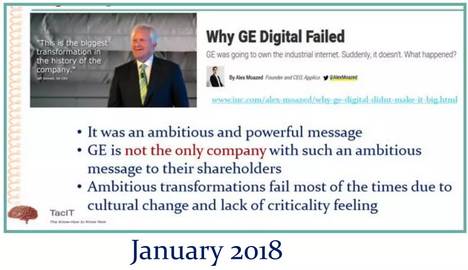
My presentation at the 2019 PLM Roadmap / PDT Europe conference – click on the image to get access through SlideShare.
- Despite ambitious sustainability goals, Siemens faced similar investor pressure, leading to spin-offs like Siemens Energy and Gamesa.
The lesson?
Transforming a business sustainably requires vision, compelling leadership, and patience—qualities often at odds with quarterly profit expectations. I explored these tensions again in my presentation at the PLM Roadmap/PDT Europe 2024 conference, read more here: Model-Based: The Digital Twin.
 I noticed discomfort in smaller, closed-company sessions, some attendees said, “We’re far from that vision. ”
My response: “That’s okay. Sustainability is a generational journey, but it must start now”.
Signs of Hope
Now for the good news. In our recent PGGA (PLM Green Global Alliance) meeting, we asked: “Are we tired?” Surprisingly, the mood was optimistic.
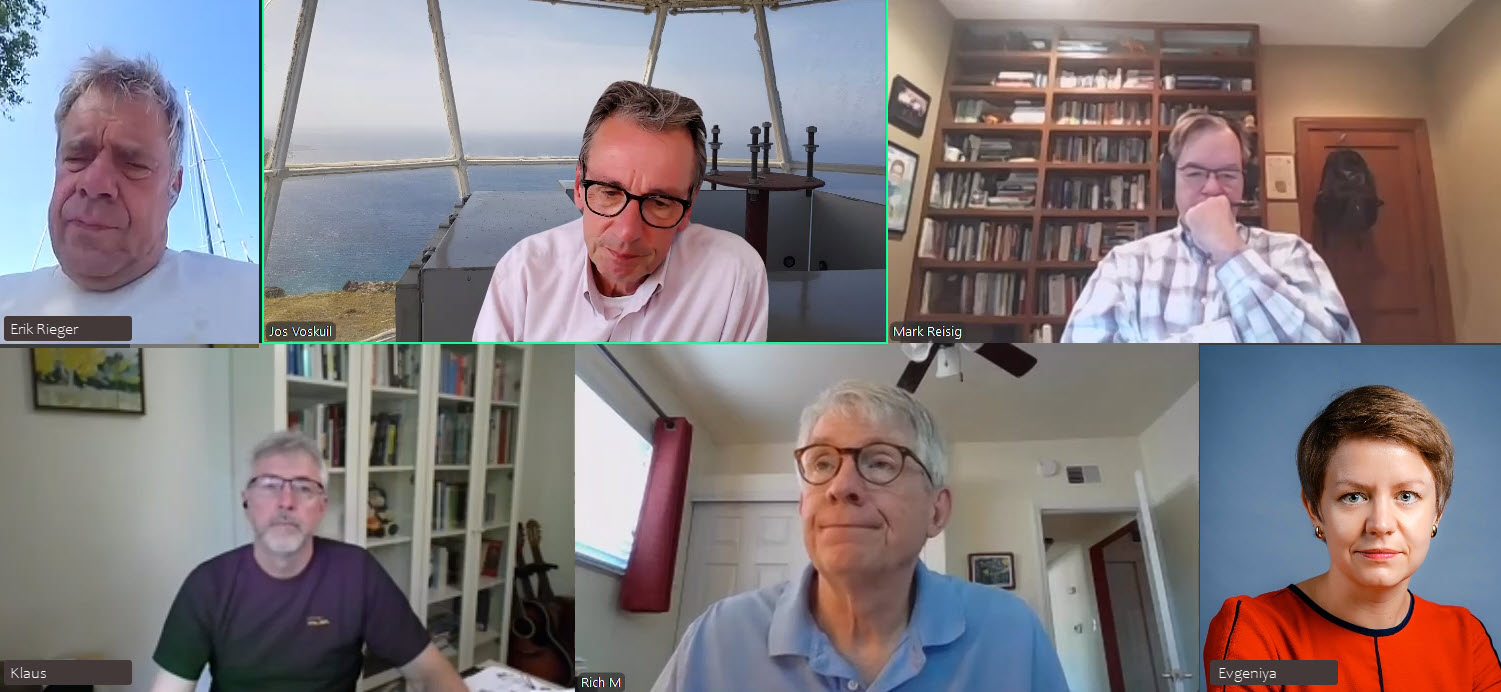
Our PGGA core team meeting on June 20th
Yes, some companies are downscaling their green initiatives or engaging in superficial greenwashing. But other developments give hope:
- China is now the global leader in clean energy investments, responsible for ~37% of the world’s total. In 2023 alone, it installed over 216 GW of solar PV—more than the rest of the world combined—and leads in wind power too. With over 1,400 GW of renewable capacity, China demonstrates that a centralized strategy can overcome investor hesitation.
- Long-term-focused companies like Iberdrola (Spain), Ørsted (Denmark), Tesla (US), BYD, and CATL (China) continue to invest heavily in EVs and batteries—critical to our shared future.
A Call to Engineers: Design for Sustainability
We may be small at the PLM Green Global Alliance, but we’re committed to educating and supporting the Product Lifecycle Management (PLM) community on sustainability.
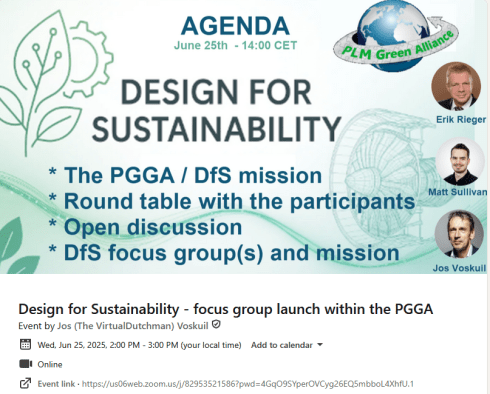
That’s why I’m excited to announce the launch of our Design for Sustainability initiative on June 25th.
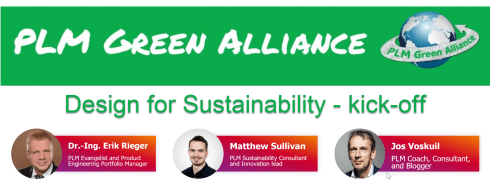
Led by Eric Rieger and Matthew Sullivan, this initiative will bring together engineers to collaborate and explore sustainable design practices. Whether or not you can attend live, we encourage everyone to engage with the recording afterward.
Conclusion
Sustainability might not dominate headlines today. In fact, there’s a rising tide of misinformation, offering people a “convenient truth” that avoids hard choices. But our work remains urgent. Building a livable planet for future generations requires long-term vision and commitment, even when it is difficult or unpopular.
So, are you tired—or ready to shape the future?
In my business ecosystem, I have seen a lot of discussions about technical and architectural topics since last year that are closely connected to the topic of artificial intelligence. We are discussing architectures and solutions that will make our business extremely effective. The discussion is mostly software vendor-driven as vendors usually do not have to deal with the legacy, and they can imagine focusing on the ultimate result.
Legacy (people, skills, processes and data) is the mean inhibitor for fast forward in such situations, as I wrote in my previous post: Data, Processes and AI.
However, there are also less visible discussions about business efficiency – methodology and business models – and future sustainability.
 These discussions are more challenging to follow as you need a broader and long-term vision, as implementing solutions/changes takes much longer than buying tools.
This time, I want to revisit the discussion on modularity and the need for business efficiency and sustainability.
Modularity – what is it?
 Modularity is a design principle that breaks a system into smaller, independent, and interchangeable components, or modules, that function together as a whole. Each module performs a specific task and can be developed, tested, and maintained separately, improving flexibility and scalability.
Modularity is a best practice in software development. Although modular thinking takes a higher initial effort, the advantages are enormous for reuse, flexibility, optimization, or adding new functionality. And as software code has no material cost or scrap, modular software solutions excel in delivery and maintenance.
 In the hardware world, this is different. Often, companies have a history of delivering a specific (hardware) solution, and the product has been improved by adding features and options where the top products remain the company’s flagships.
Modularity enables easy upgrades and replacements in hardware and engineering, reducing costs and complexity. As I work mainly with manufacturing companies in my network, I will focus on modularity in the hardware world.
Modularity – the business goal
How often have you heard that a business aims to transition from Engineering to Order (ETO) to Configure/Build to Order (BTO) or Assemble to Order (ATO)? Companies often believe that the starting point of implementing a PLM system is enough, as it will help identify commonalities in product variations, therefore leading to more modular products.
 The primary targeted business benefits often include reduced R&D time and cost but also reduced risk due to component reuse and reuse of experience. However, the ultimate goal for CTO/ATO companies is to minimize R&D involvement in their sales and delivery process.
More options can be offered to potential customers without spending more time on engineering.
 Four years ago, I discussed modularity with Björn Eriksson and Daniel Strandhammar, who wrote “The Modular Way” during the COVID-19 pandemic. I liked the book because it is excellent for understanding the broader scope of modularity along with marketing, sales, and long-term strategy. Each business type has its modularity benefits.
I had a follow-up discussion with panelists active in modularization and later with Daniel Strandhammar about the book’s content in this blog post: PLM and Modularity.
Next, I got involved with the North European Modularity Network (NEM) group, a group of Scandinavian companies that share modularization experiences and build common knowledge.
 Historically, modularization has been a popular topic in North Europe, and meanwhile, the group is expanding beyond Scandinavia. Participants in the group focus on education-sharing strategies rather than tools.
The 2023 biannual meeting I attended hosted by Vestas in Ringkobing was an eye-opener for me.
We should work more integrated, not only on the topic of Modularity and PLM but also on a third important topic: Sustainability in the context of the Circular Economy.
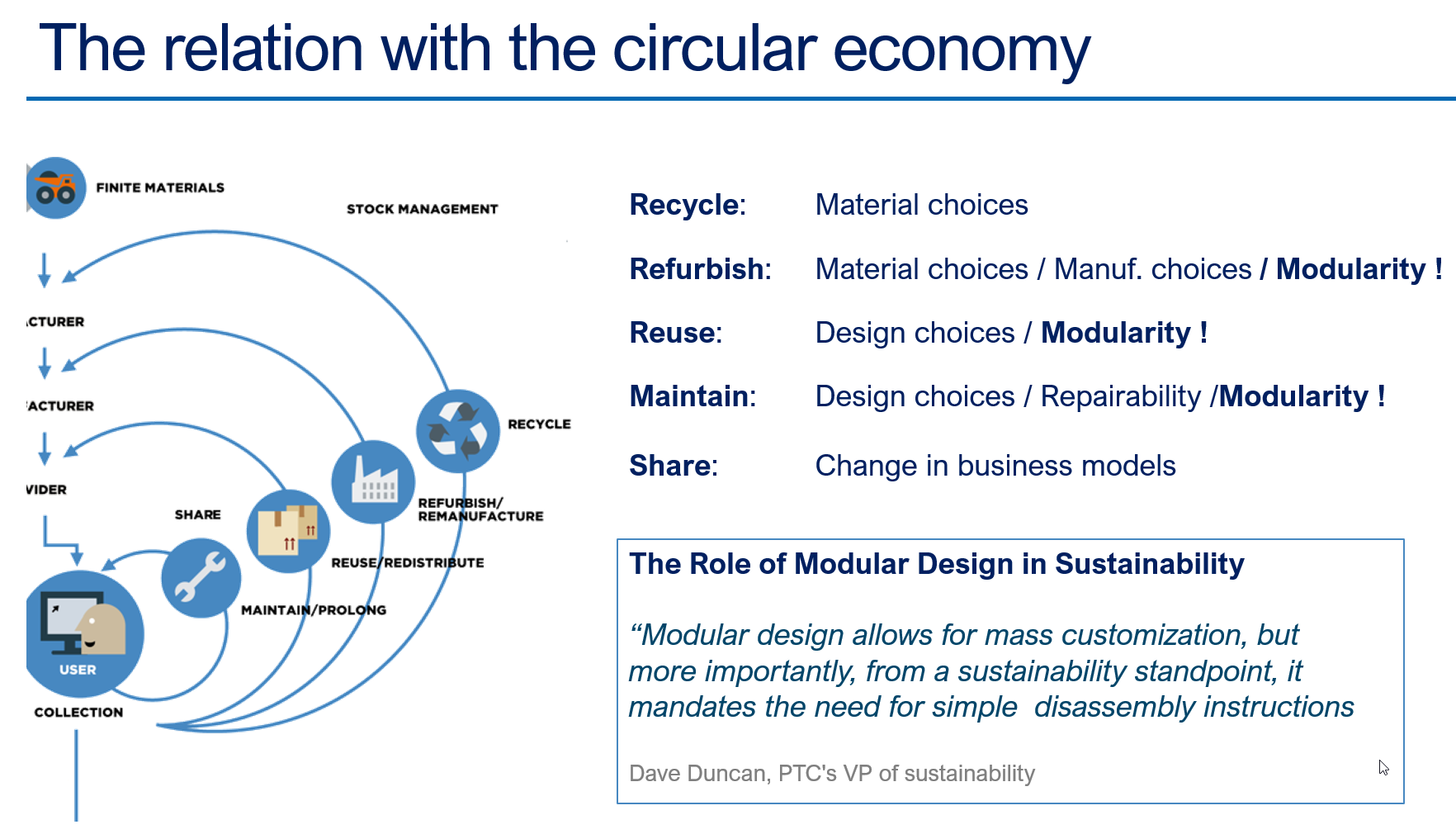
You can review my impression of the event and presentation in my post: “The week after North European Modularity (NEM)“
 That post concludes that Modularity, like PLM, is a strategy rather than an R&D mission. Integrating modularity topics into PLM conferences or Circular Economy events would facilitate mutual learning and collaboration.
Modularity and Sustainability
 The PLM Green Global Alliance started in 2020 initially had few members. However, after significant natural disasters and the announcement of regulations related to the European Green Deal, sustainability became a management priority. Greenwashing was no longer sufficient.
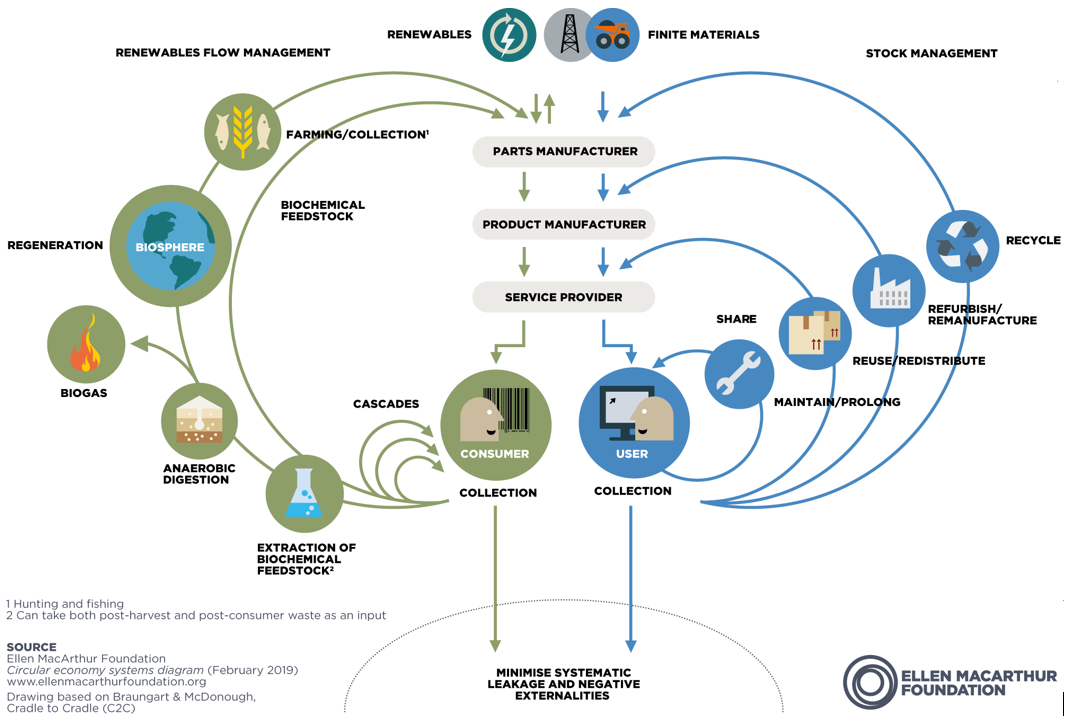
One key topic discussed in the PLM Green Global Alliance is the circular economy moderated by CIMPA PLM services. The circular economy is crucial as our current consumption of Earth’s resources is unsustainable.
The well-known butterfly diagram from the Ellen MacArthur Foundation below, illustrates the higher complexity of a circular economy, both for the renewables (left) and the hardware (right)
In a circular economy, modularity is essential. The SHARE loop focuses on a Product Service Model, where companies provide services based on products used by different users. This approach requires a new business model, customer experience, and durable hardware. After Black Friday last year, I wrote about this transition: The Product Service System and a Circular Economy.
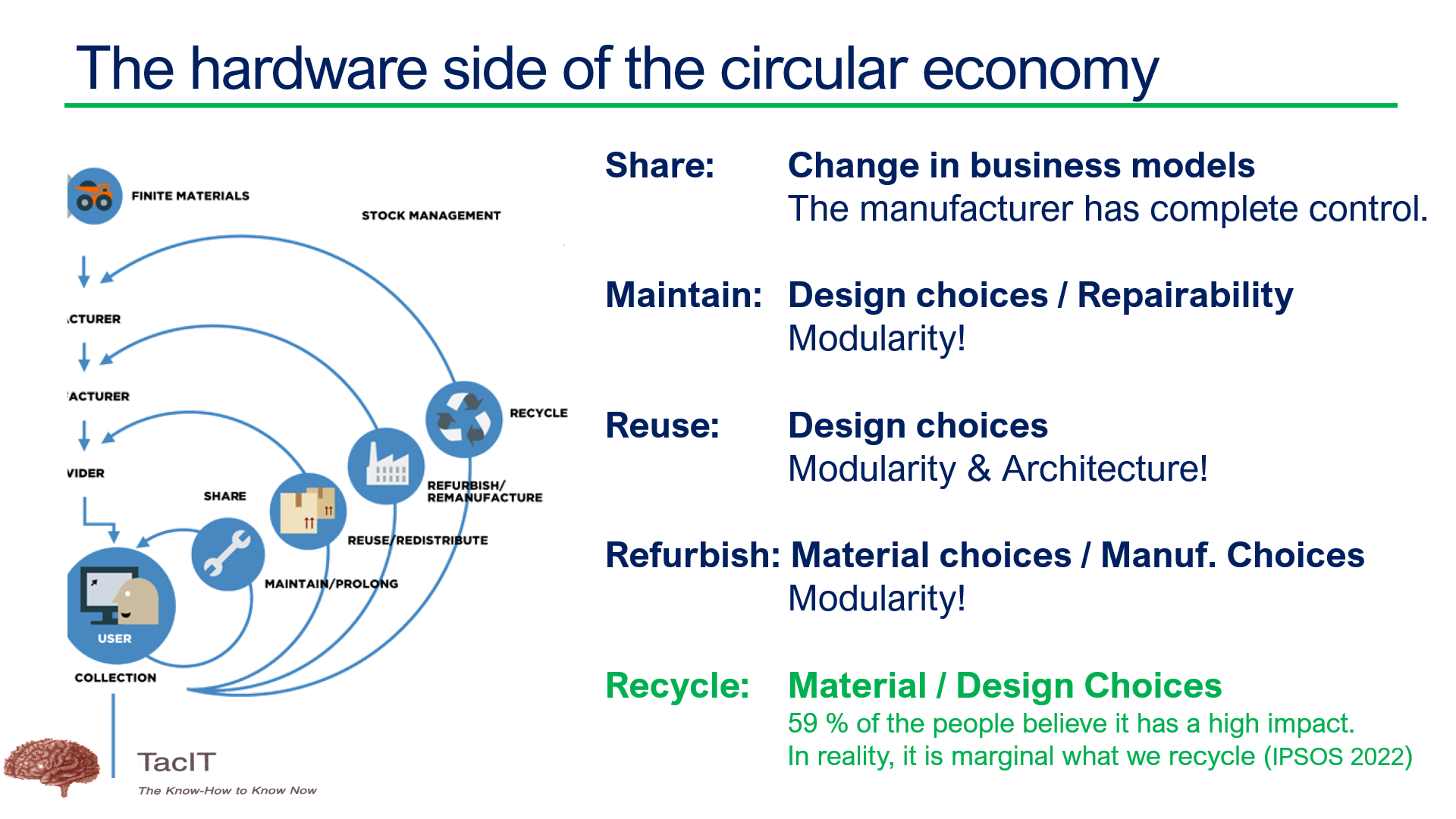
Modularity is vital in the MAINTAIN/PROLONG loop. Modular products can be upgraded without replacing the entire product, and modules are easier to repair. An example is Fairphone from the Netherlands, where users can repair and upgrade their smartphones, contributing to sustainability.
In the REUSE/REMANUFACTURE loop, modularity allows for reusing hardware parts when electronics or software components are upgraded. This approach reduces waste and supports sustainability.
The REFURBISH/REMANUFACTURE loop also benefits from modularity, though to a lesser extent. This loop helps preserve scarce materials, such as batteries, reducing the need for resource extraction from places like the moon, Mars, or Greenland.
A call for action
 If you reached this point of the article, my question is now to reflect on your business or company. Modularity is, for many companies, a dream (or vision) and will become, for most companies, a must to provide a sustainable business.
Modularity does not depend on PLM technology, as famous companies like Scania, Electrolux and Vestas have shown (in my reference network).
Where is your company and its business offerings?
 IMPORTANT:
If you aim to implement modularity to support the concepts of the Circular Economy, make sure you do it in a data-driven, model-based environment – here, technology counts.
Conclusion
Don’t miss the focus on the potential relevance of modularity for your company. Modularity improves business and sustainability, AND it touches all enterprise stakeholders. Technology alone will not save the business. Your thoughts?
Do you want to learn more about implementing PLM at an ETO space company?
Listen to our latest podcast: OHB’s Digital Evolution: Transforming Aerospace PLM with Lucía Núñez Núñez
 In my general 2025 outlook for PLM, My 2025 focus, I mentioned Sustainability at the end, as I believe it is a topic on its own, worth an entire blog post.
After our 2025 PLM Global Green Alliance core team kick-off last week, I felt the importance of sharing our thoughts, observations, and personal thoughts/focus.
 The PGGA core team consists of Rich McFall – Climate Change, Klaus Brettschneider Life Cycle Assessment, Mark Reisig Sustainability and Green Energy, Evgeniya Burimskaya Circular Economy, Erik Reiger Design for Sustainability and me Talking about Sustainability.
Some interesting observations:
- Evgenia mentioned that in job interviews for CIMPA, it is motivating to see that new employees want to contribute to sustainability activities and the education of companies. Sustainability is part of their WHY (I will come back to that later)
- We have more and more PGGA members from Asia, while percentage of US members is declining. Where the US has the loudest voice against human-caused climate change and Sustainability, there are a lot of hidden and positive success stories from Asia, and we are looking for spokespeople from that region.
Regulations
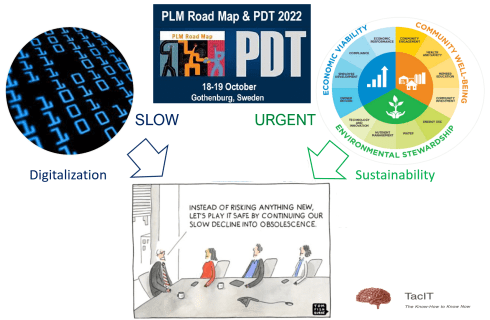
In many lectures, I explained that digitization in PLM was going slow because this is a complex topic for many companies, and current business performance might be challenging but not too bad. So why would we go on an unknown and potentially risky transformation journey?
 Due to sustainability regulations, digital transformation has gotten a push in the right direction. GHG (Greenhouse Gas) reporting, ESG (Environmental Social Governance) reporting, CSRD (Corporate Sustainability Reporting Directive), and the DPP (Digital Product Passport) have all created the need for companies to create digital threads for information that historically did not exist or was locked in documents.
 Therefore, it is interesting to read Oleg Shilovitsky’ s blog, Reimagining PLM for 2025: Key Strategic Trends, in which he also sees the importance of Sustainability and the Circular Economy.
Quoting Oleg:
Sustainability cannot be ignored and, therefore I expect more interest to environmental considerations in PLM strategies. Companies are incorporating sustainability metrics into product design and lifecycle assessment, aligning with Industry 5.0 and Engineering 5.0 principles. It is impossible without digital thread and data connectivity and, therefore will continue to support business strategies.
 The challenge of regulations is that they limit someone’s freedom. Regulations are there to create an equal playing field for all and ensure society makes progress. Be it traffic regulations, business regulations or environmental regulations. The challenge is not to over-regulate and create a Kafkaesque society. Whereas if you are alone in the world or are the only important person in the world, you do not need regulations as you do not care.
Now the challenge comes of how we deal with regulations.
The WHY!
 I have learned to always look at the WHY. Why are companies doing business in a certain manner, why are people behaving in a certain manner even against common logic?
There is the difference between the long-term WHY (strategy) and the short-term WHY(emotion). For most individuals the short-term WHY prevails, for companies and governments the long term WHY should lead their decisions.
Unfortunately short term decisions (money, food, comfort, legacy habits) get a higher priority by humans instead of long term goals (transformations and transitions).
 Daniel Kahneman, Nobel prize winner writing about this in his book Thinking Fast and Slow. We see this dilemma, fast based on gut-feeling or slow based on a real analysis in companies, we see it in our society .
- How many companies have a 10-years sustainable strategy and consistent roadmap?
- How many countries have a 10-years sustainable strategy and consistent roadmap?
Jan Bosch also mentioned the importance of the WHY in his Digital Reflection #15: Why do you get out of bed in the morning? Did you ask yourself this question?
Sustainability, like digitization in PLM, requires a behavioral change. From traditional linear coordinated ways of working we need to learn to work in a more complex and advanced environment with real-time data. Luckily if the data is accurate AI will help us to manage the complexity.
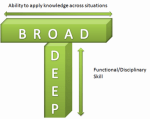 Still it is a transformational change in the way you work and this is a challenge for an existing workforce. They reached their status by being an expert in a certain discipline, by mastering specific skills. Now the needed expertise is changing (from Expert to T-shape) and new skills are needed. Are you able to acquire those new skills or do you give up and complain about the future?
The same challenges happen related to sustainability. Our current (western) habits are draining the planet and only behavioral changes can stop or reduce the damage. Most of us are aware that the planet is limited in resources and we need an energy transition in the long term. But are you able to learn those new behaviors or do you give up and hold on to the good old past?
 Note: It’s important to understand that individual actions are not the primary cause of the climate crisis, nor can they alone resolve it. This idea is often promoted by industries. The bigger question is whether our societies can change—consider where financial resources are being allocated.
Sustainability and Systems Thinking
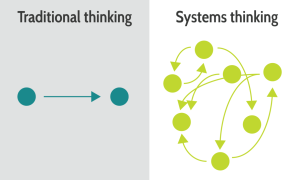 We cannot just produce product or consume like crazy if we care about future generations. It is not longer only about the money, it is about next generations and the environment – if you care. This complexity pushes us toward Systems Thinking – many topics are connected – addressing a single topic does not solve the rest.
I wrote two posts in 2022 about Systems Thinking t: SYSTEMS THINKING – a must-have skill in the 21st century and as a follow-up based on interactions Systems Thinking: a second thought. The challenge with Systems Thinking is that the solution is not black or white and requires brain power.
Sustainability and Political Leadership
With what is happening currently in our societies you can see that sustainability is strongly connected to its country’s political system. The bad news for long term issues democracy is probably the worst. Let me share some observations.
Europe
 Historically Europe has been a stable democracy since the second world war and the European Union has been able to establish quite a unified voice step by step. Of course the European Union was heavily influenced by the Automotive and Agricultural lobby. Still the European Green Deal was established with great consensus in the middle instead of focusing on the extremes. A multi-party parliament guarantees a balanced outcome. However type of democracy is still very sensitive for influences from lobbyist and external forces.
There are so many Dunning-Kruger experts roaring down the common sense debates – mainly in democratic countries. It would be great if people started from the WHY. WHY is someone acting – is it a short-term gain/fear to loose or is there a long-term strategy.
As long as Europe can maintain its consensus culture there is hope for the long-term.
US
 The US has been leading the world in polarization. With two major parties fighting always for the 51 % majority vote, there is no place for consensus. The winner takes it all. And although we call it a democracy, you need to have a lot of money to be elected and money is the driving power behind the elections. The WHY in most cases in the US is about short term money making, although I found an interesting point related to Elon Musk.
 In his 2022 interview he shares his vision that the future is in solar energy and batteries with nuclear needed for the transition. Also he is no fan of longevity – quote from the video (5:30)
Most people don’t change their mind, they just die. And if they don’t die we will be stuck with old ideas and society won’t advance.
It is a great example of “If you cannot beat them – join them” and then use them to fund your missions. A narcistic president becomes your helper to achieve your long-term strategy.
Saudi Arabia
 Here we are not talking about a democracy anymore and they might seem the biggest enemy for the climate. However they have a long-term strategy. While keeping the world addicted to fossil fuels, they invest heavily in solar and hydrogen and once the western world understands the energy transition is needed, they are far ahead in experience and remain a main energy supplier.
China
 With 1.4 billion inhabitants and not a democracy either, China has a different mission. Initially as the manufacturing hub for the planet they needed huge amount of energy and therefore they are listed as the most polluting country in the world.
However their energy transition towards solar, water, wind and even nuclear goes so much faster than committed in the Paris agreements, as China has a long-term strategy to be energy independent and to be the major supplier in the energy transition. The long-term WHY is clear.
Russia
 It is a pity to mention Russia as with their war-economy and reliance on fossil fuels, they are on a path towards oblivion. Even if they would win a few other wars, innovation is gone and fossil is ending. It will be a blessing for humanity. I hope they will find a new long-term strategy.
Conclusion
PLM and Sustainability are important for the long-term, despite the throw-back you might see on the short term due to politics and lobbies. In addition we need courage to keep on focusing on the long-term as our journey has just started.
Feel free to share your thoughts with compassion and respect for other opinions.

 First, I wish you all a prosperous 2025 and hope you will take the time to digest information beyond headlines.
Taking time to digest information is my number one principle now, which means you will see fewer blog posts from my side and potentially more podcast recordings.
My theme for 2025 : “It is all about people, data,
a sustainable business and a smooth digital transformation”.
Fewer blog posts
Fewer blog posts, as although AI might be a blessing for content writers, it becomes as exciting as Wikipedia pages. Here, I think differently than Oleg Shilovitsky, whose posts brought innovative thoughts to our PLM community – “Just my thoughts”.
 Now Oleg endorses AI, as you can read in his post: PLM in 2025: A new chapter of blogging transformation. I asked ChatGPT to summarize my post in 50 words, and this is the answer I got – it saves you reading the rest:
The author’s 2025 focus emphasizes digesting information deeply, reducing blog posts, and increasing podcast recordings exploring real-life PLM applications. They stress balancing people and data-centric strategies, sustainable digital transformation, AI’s transformative role, and forward-looking concepts like Fusion Strategy. Success requires prioritizing business needs, people, and accurate data to harness AI’s potential.
Summarizing blog posts with AI saves you time. Thinking about AI-generated content, I understand that when you work in marketing, you want to create visibility for your brand or offer.
Do we need a blogging transformation? I am used to browsing through marketing content and then looking for the reality beyond it – facts and figures. Now it will be harder to discover innovative thoughts in this AI-generated domain.
Am I old fashioned? Time will tell.
More podcast recordings
 As I wrote in a recent post, “PLM in real life and Gen AI“, I believe we can learn much from exploring real-life examples. You can always find the theory somewhere and many of the articles make sense and address common points. Some random examples:
- Top 4 Reasons Why PLM Implementations Fail
- 13 Common PLM Implementation Problems And How to Avoid Them
- 10 steps to a Successful PLM implementation
- 11 Essential Product Lifecycle Management Best Practices for Success
 Similar recommendations exist for topics like ERP, MES, CRM or Digital Transformation (one of the most hyped terms).
They all describe WHAT to do or not to do. The challenge however is: HOW to apply this knowledge in your unique environment, considering people, skills, politics and culture.
With the focus on the HOW, I worked with Helena Gutierrez last year on the Share PLM podcast series 2. In this series, we interviewed successful individuals from various organizations to explore HOW they approached PLM within their companies. Our goal was to gain insights from their experiences, particularly those moments when things didn’t go as planned, as these are often the most valuable learning opportunities.
 I am excited to announce that the podcast will continue this year with Series 3! Joining me this season will be Beatriz Gonzales, Share PLM’s co-founder and new CEO. For Series 3, we’ve decided to broaden the scope of our interviews. In addition to featuring professionals working within companies, we’ll also speak with external experts, such as coaches and implementation partners, who support organizations in their PLM journey.
Our goal is to uncover not only best practices from these experts but also insights into emerging “next practices.”
Stay tuned for series 3!
#datacentric or #peoplecentric ?
 The title of the paragraph covers topics from the previous paragraphs and it was also the theme from a recent post shared through LinkedIn from Lionel Grealou: Driving Transformation: Data or People First?
We all agree here that it is not either one or the other, and as the discussion related to the post further clarifies, it is about a business strategy that leads to both of these aspects.
This is the challenge with strategies. A strategy can be excellent – on paper – the success comes from the execution.
This discussion reminds me of the lecture Yousef Hooshmand gave at the PLM platform in the Netherlands last year – two of his images that could cover the whole debate:
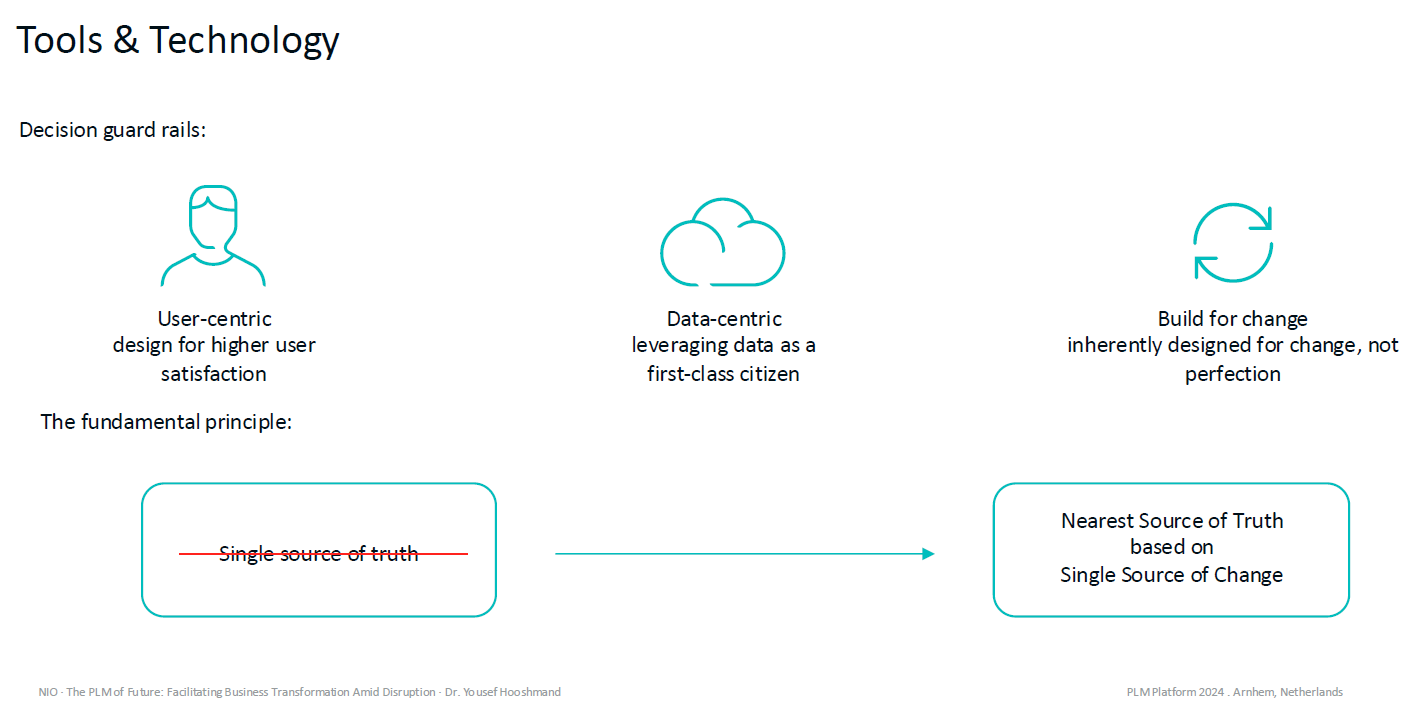
Whatever you implement starts from the user experience, giving the data-centric approach the highest priority and designing the solution for change, meaning avoiding embedded hard-coded ways of working.
 While companies strive to standardize processes to provide efficiency and traceability, the processes should be reconfigurable or adaptable when needed, reconfigured on reliable data sources.
Jan Bosch shared this last thought too in his Digital Reflection #5: Cog in the Machine. My favorite quote from this refection
“However, in a world where change is accelerating, we need to organize ourselves in ways that make it easy to incorporate change and not ulcer-inducing hard. How do we get there?”
Of course, before we reach tools and technology, the other image Yousef Hooshmand shared below gives a guiding principle that I believe everyone should follow in their context.

It starts with having a C-level long-term commitment when you want to perform a business transformation, and then, in an MVP approach, you start from the business, which will ultimately lead you to the tools and technologies.
 The challenge seen in this discussion is that:
most manufacturing companies are still too focused on investing in what they are good at now and do not explore the future enough.
This behavior is why Industry 4.0 is still far from being implemented, and the current German manufacturing industry is in a crisis.
It requires an organization that understands the big picture and has a (fusion) strategy.
Fusion Strategy ?
 Is the Fusion Strategy the next step, as Steef Klein often mentions in our PLM discussions? The Fusion Strategy, introduced by world-renowned innovation guru Vijay Govindarajan (The Three Box Solution) and digital strategy expert Venkat Venkatraman (Fusion Strategy), offers a roadmap that will help industrial companies combine what they do best – creating physical products – with what digital technology companies do best – capturing and analyzing data through algorithms and AI.
 It is a topic I want to explore this year and see how to connect it to companies in my ecosystem. It is an unknown phenomenon as most of them struggle with a data-driven foundation and skills and focus on the right AI applications.
The End of SaaS?
 A potential interesting trend als related to AI I want to clarify further is the modern enterprise architecture . Over the past two years, we have seen a growing understanding that we should not think in systems connected through interfaces but towards a digitally connected infrastructure where APIs, low-code platforms or standardized interfaces will be responsible for real-time collaboration.
I wrote about these concepts in my PLM Roadmap / PDT Europe review. Look at the section: R-evolutionizing PLM and ERP and Heliple. At that time, I shared the picture below, which illustrates the digital enterprise.
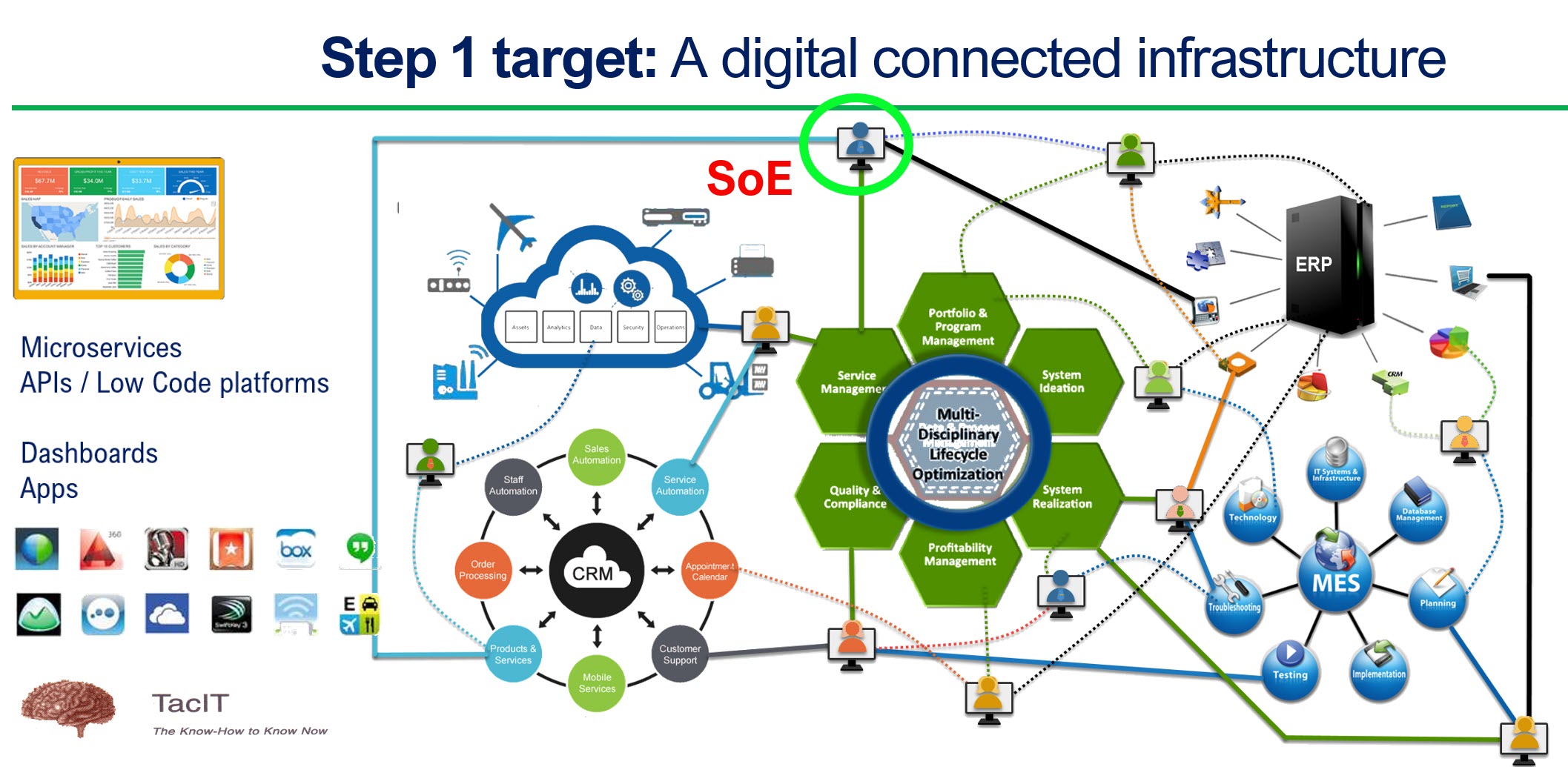
The five depicted platforms in the image ( IIoT, CRM, PLM, ERP, MES) are not necessarily a single system. They can be an ecosystem of applications and services providing capabilities in that domain. In modern ways of thinking, each platform could be built upon a SaaS portfolio, ensuring optimal and scalable collaboration based on the company’s needs.
Implementing such an enterprise based on a combination of SaaS offerings might be a strategy for companies to eliminate IT overhead.
However, known forward-thinking experts like Vijay Govindarajan and Venkat Venkatraman with their Fusion Strategy. Also, Satya Nadella, CEO of Microsoft, imagines instead of connected platforms a future with an AI layer taking care of the context of the information – the Microsoft Copilot message. Some of his statements:
This transformation is poised to disrupt traditional tools and workflows, paving the way for a new generation of applications.
The business logic is all going to these AI agents. They’re not going to discriminate between what the backend is — they’ll update multiple databases, and all the logic will be in the AI tier.
Software as a Business Weapon?
Interesting thoughts to follow and to combine with this Forbes article, The End Of The SaaS Era: Rethinking Software’s Role In Business by Josipa Majic Predin. She introduces the New Paradigm: Software as a Business Weapon.
Quote:
Instead of focusing solely on selling software subscriptions, innovative companies are using software to enhance and transform existing businesses. The goal is to leverage technology to make certain businesses significantly more valuable, efficient, and competitive.
This approach involves developing software that can improve the operations of “real world” businesses by 20-30% or more. By creating such powerful tools, technology companies can position themselves to acquire or partner with the businesses they’ve enhanced, thereby capturing a larger share of the value they’ve created.
It is interesting to see these thoughts popping up, usually 10 to 20 years ahead before companies adopt them. However, I believe with AI’s unleashed power, this is where we should be active and learn. It is an exciting area where terms like eBOM or mBOM sound hackneyed.
Sustainability?
As a PLM Green Global Alliance member, I will continue to explore topics related to PLM and how they can serve Sustainability. They are connected as the image from the 2022 PLM Roadmap/PDT Europe indicates:
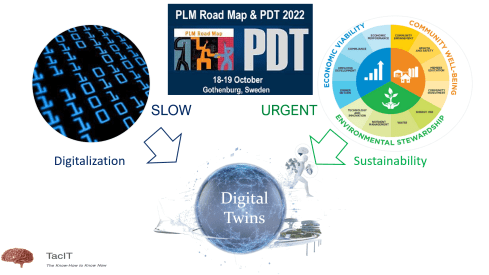
I will keep on focusing on separate areas within my PGGA network.
Conclusion
I believe 2025 will be the year to focus on understanding the practical applications of AI. Amid the hype and noise, there lies significant potential to re-imagine our PLM landscape and vision. However, success begins with prioritizing the business, empowering people, and ensuring accurate data.
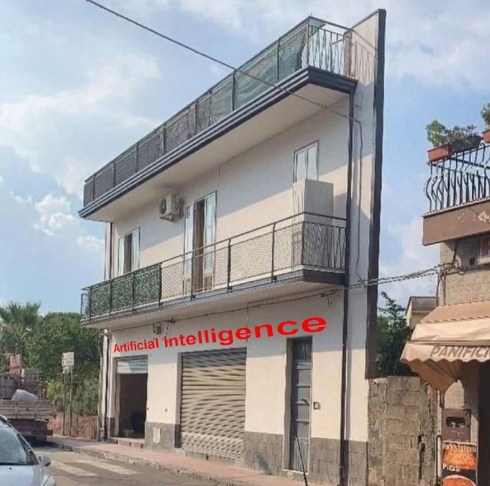
Most times in this PLM and Sustainability series, Klaus Brettschneider and Jos Voskuil from the PLM Green Global Alliance core team speak with PLM related vendors or service partners.
This year we have been speaking with Transition Technologies PSC, Configit, aPriori, Makersite and the PLM Vendors PTC, Siemens and SAP.
Where the first group of companies provided complementary software offerings to support sustainability – “the fourth dimension”– the PLM vendors focused more on the solutions within their portfolio.
This time we spoke with , CIMPA PLM services, a company supporting their customers with PLM and Sustainability challenges, offering an end-to-end support.
What makes them special is that they are also core partner of the PLM Global Green Alliance, where they moderate the Circular Economy theme – read their introduction here: PLM and Circular Economy.
CIMPA PLM services
 We spoke with Pierre DAVID and Mahdi BESBES from CIMPA PLM services. Pierre is an environmental engineer and Mahdi is a consulting manager focusing on parts/components traceability in the context of sustainability and a circular economy. Many of the activities described by Pierre and Mahdi were related to the aerospace industry.
We had an enjoyable and in-depth discussion of sustainability, as the aerospace industry is well-advanced in traceability during the upstream design processes. Good digital traceability is an excellent foundation to extend for sustainability purposes.
CSRD, LCA, DPP, AI and more
A bunch of abbreviations you will have to learn. We went through the need for a data-driven PLM infrastructure to support sustainability initiatives, like Life Cycle Assessments and more. We zoomed in on the current Corporate Sustainability Reporting Directive(CSRD) highlighting the challenges with the CSRD guidelines and how to connect the strategy (why we do the CSRD) to its execution (providing reports and KPIs that make sense to individuals).
In addition, we discussed the importance of using the proper methodology and databases for lifecycle assessments. Looking forward, we discussed the potential of AI and the value of the Digital Product Passport for products in service.
Enjoy the 37 minutes discussion and you are always welcome to comment or start a discussion with us.
What we learned
- Sustainability initiatives are quite mature in the aerospace industry and thanks to its nature of traceability, this industry is leading in methodology and best practices.
- The various challenges with the CSRD directive – standardization, strategy and execution.
- The importance of the right databases when performing lifecycle analysis.
- CIMPA is working on how AI can be used for assessing environmental impacts and the value of the Digital Product Passport for products in service to extend its traceability
Want to learn more?
Here are some links related to the topics discussed in our meeting:
- CIMPA’s theme page on the PLM Green website: PLM and Circular Economy
- CIMPA’s commitments towards A sustainable, human and guiding approach
- Sopra Steria, CIMPA’s parent company: INSIDE #8 magazine
Conclusion
The discussion was insightful, given the advanced environment in which CIMPA consultants operate compared to other manufacturing industries. Our dialogue offered valuable lessons in the aerospace industry, that others can draw on to advance and better understand their sustainability initiatives
 This year, I will celebrate 25 years since I started my company, TacIT, to focus on knowledge management. However, quickly, I was back in the domain of engineering data management, which became a broader topic, which we now call PLM.
Looking back, there have been significant changes in these 25 years, from systems to strategy, for documents to data, from linear to iterative. However, in this post, I want to look at my 2024 observations to see where we can progress. This brings me to the first observation.
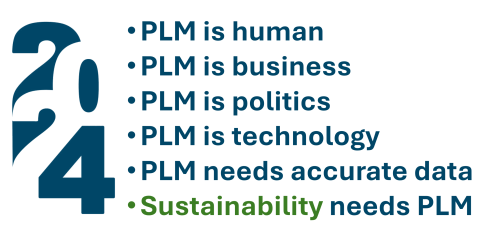
PLM is human
Despite many academic and marketing arguments describing WHAT and WHY companies need specific business or software capabilities, there is, above all, the need for people to be personally inspired and connected. We want to belong to a successful group of people, teams and companies because we are humans, not resources.
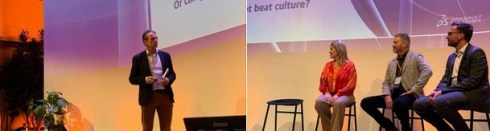
It is all about people, which was also the title of my session during the March 2024 3DEXPERIENCE User Conference in Eindhoven (NL). I led a panel discussion on the importance of people with Dr. Cara Antoine, Daniel Schöpf, and Florens Wolters, each of whom actively led transformational initiatives within their companies.
 Through Dr. Cara Antoine, e at Capgemini and a key voice for women in tech, I learned about her book Make It Personal. The book inspired me and motivated me to continue using a human-centric approach. Give this book to your leadership and read it yourself. It is practical, easy to read, and encouraging
Recently, in my post “PLM in real life and Gen AI“, I shared insights related to PLM blogs and Gen AI – original content is becoming increasingly the same, and the human touch is disappearing, while generating more and longer blogs.
 I propose keeping Gen AI-generated text for the boring part of PLM and exploring the human side of PLM engagements in blogs. What does this mean? In the post, I also shared the highlights of the Series 2 podcast I did together with Helena Gutierrez from Share PLM. Every recording had its unique human touch and knowledge.
We are now in full preparation for Series 3—let us know who your hero is and who should be our guest in 2025!
PLM is business
One of the most significant changes I noticed in my PLM-related projects was that many of the activities connected the PLM activities to the company’s business objectives. Not surprisingly, it was mostly a bottom-up activity, explaining to the upper management that a modern, data-driven PLM strategy is crucial to achieving business or sustainability goals.
I wrote two long posts about these experiences. The first one,” PLM – business first,” zooms in on the changing mindset that PLM is not an engineering system anymore but part of a digital infrastructure that supports companies in achieving their business goals. The image below from Dr. Yousef Hooshmand is one of my favorites in this context. The 5 + 1 steps, where the extra step is crucial: Long Executive Commitment.
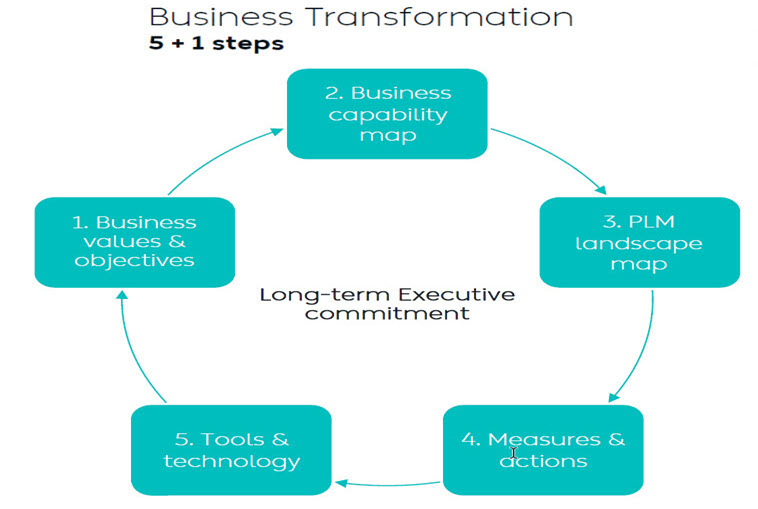
So, to get an executive commitment, you need to explain and address business challenges.
Executive commitment and participation can be achieved through a Benefits Dependency Network approach, as illustrated in this webinar I did with the Heliple-2 team, where we were justifying the business needs for Federated PLM. More about the Federated PLM part in the next paragraph.

Another point to consider is that when the PLM team is part of the IT organization (the costs side), they have a big challenge in leading or even participating in business discussions. In this context, read (again) Jan Bosch’s post: Structure Eats Strategy.
 The second post, more recent, summarized the experiences I had with several customer engagements. The title says it all: “Don’t use the P**-word! – 5 lessons learned“, with an overlap in content with the first post.
Conclusion: A successful PLM strategy starts with the business and needs storytelling to align all stakeholders with a shared vision or goal.
PLM is technology
This year has seen the maturation of PLM technology concepts. We are moving away from a monolithic PLM system and exploring federated and connected infrastructures, preferably a mix of Systems of Record (the old PLMs/ERPs) and Systems of Engagement (the new ways of domain collaboration). The Heliple project manifests such an approach, where the vertical layers are Systems of Record, and the horizontal modules could be Systems of Engagement.
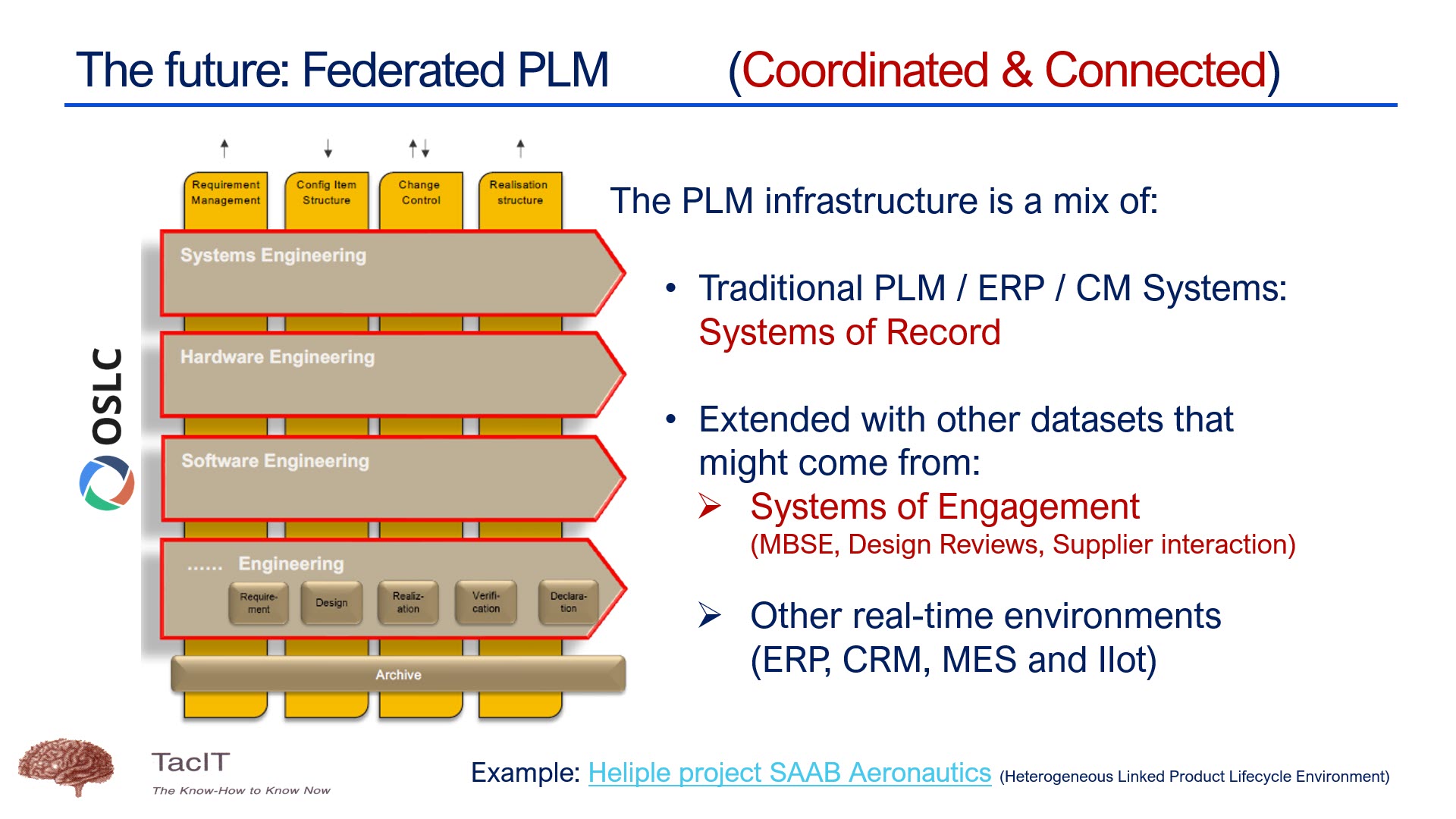
I had several discussions with typical System of Engagement vendors, like Colab (“Where traditional PLM fails”) and Partful (“Connected Digital Thread for Lower and Mid-market OEMs“), but I also had broader discussions during the PLM Roadmap PDT Europe conference – see: R-evolutionizing PLM and ERP and Heliple.
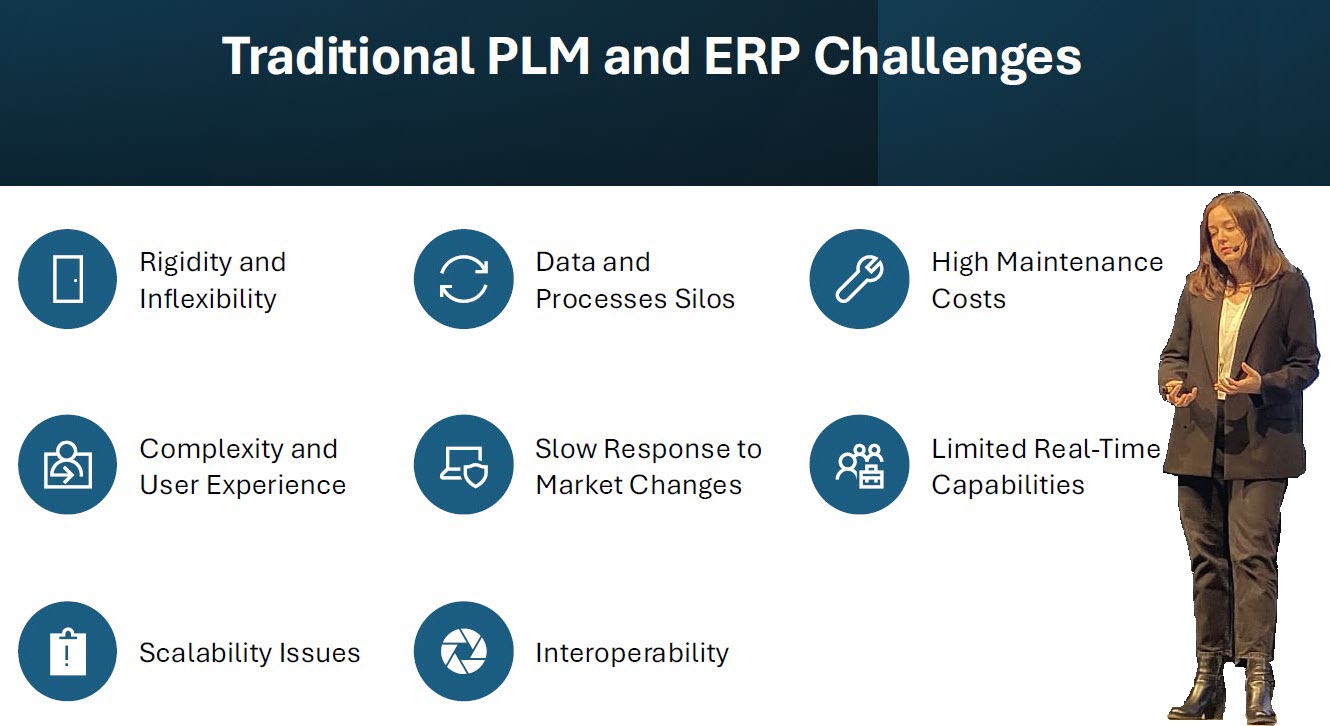
 I also follow Dr. Jorg Fischer, who lectures about digital transformation concepts in the manufacturing business domain. Unfortunately, for a broader audience, Jörg published a lot in German, and typically, his references for PLM and ERP are based on SAP and Teamcenter. His blog posts are always interesting to follow – have a look at his recent blog in English: 7 keys to solve PLM & ERP.
 Of course, Oleg Shilovitsky’s impressive and continuous flow of posts related to modern PLM concepts is amazing—just browse through his Beyond PLM home page to read about the actual topics happening in his PLM ecosystem or for example, read about modern technology concepts in this recent OpenBOM article.
Conceptually, we are making progress. As a commonality, all future concepts focus on data, not so much on managing documents—and here comes the focus on data.
PLM needs accurate data
In a data-driven environment, apps or systems will use a collection of datasets to provide a user with a working environment, either a dashboard or an interactive real-time environment. Below is my AI (Artist Impression) of a digital enterprise.
Of course, it seems logical; the data must be accurate as you no longer have control over access to the data in a data-driven environment. You can be accountable for the data; others can consume the data you created without checking its accuracy by your guidance.
Therefore, data governance and an excellent enterprise architecture are crucial to support the new paradigm:
The nearest source of truth supported by a single source of change
Quote: Yousef Hoohmand
Forget the Single Source of Truth idea, a previous century paradigm.
With data comes Artificial intelligence and algorithms that can play an essential role in your business, providing solutions or insights that support decision-making.
In 2024, most of us have been exploring the benefits of ChatGPT and Generative AI. You can describe examples of where AI could assist in every aspect of the product lifecycle. I saw great examples from Eaton, Ocado, and others at the PLM Roadmap/PDT Europe conference.
See my review here: A long week after the PLM Roadmap / PDT Europe conference.
Still, before benefiting from AI in your organization, it remains essential that the AI runs on top of accurate data.
Sustainability needs (digital) PLM
This paragraph is the only reverse dependency towards PLM and probably the one that is less in people’s minds, perhaps because PLM is already complex enough. In 2024, with the PLM Green Global Alliance, we had good conversations with PLM-related software vendors or service partners (aPriori, Configit, Makersite, PTC, SAP, Siemens and Transition Technologies PSC) where we discussed their solutions and how they are used in the field by companies.
We discovered here that most activities are driven by regulations, like ESG reporting, the new CSRD directive for Europe and the implementation of the Digital Product Passport. What is clear from all these activities is that companies need to have a data-driven PLM infrastructure to connect product data to environmental impacts, like carbon emissions equivalents.
Besides complying with regulations, I have been discussing the topic of Product-As-A-Service, or the Product Service System, this year, with excellent feedback from Dave Duncan. You can find a link to his speech: Improving Product Sustainability – PTC with PGGA.
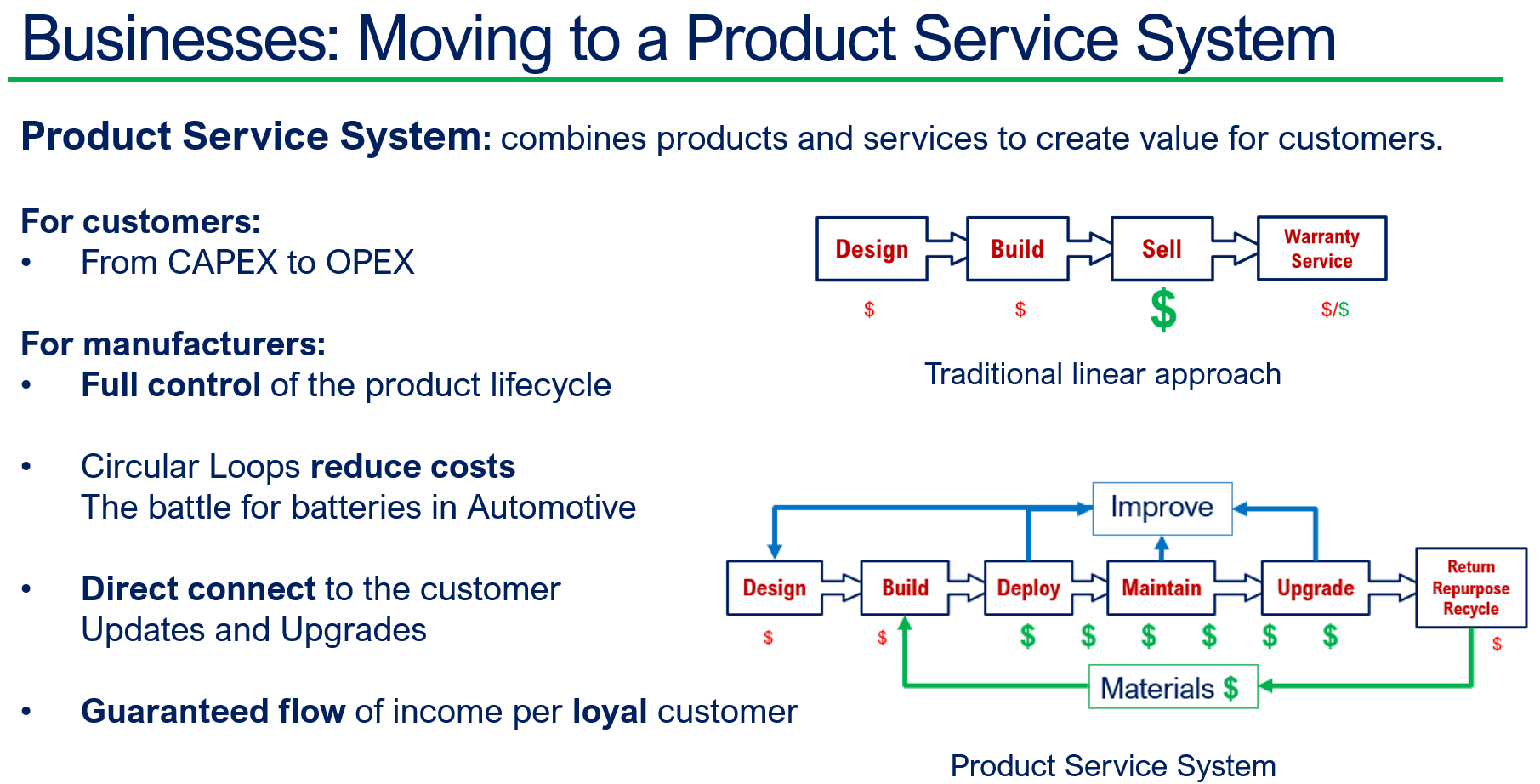
Also, during the PLM Roadmap / PDT Europe conference, I discussed this topic, explaining that achieving a circular economy is a long-term vision, and the starting point is to establish a connected infrastructure within your organizations and with your customers/users in the field.
 Sustainability should be on everyone’s agenda. From the interactions on LinkedIn, you can see that we prefer to discuss terms like PDM/PLM or eBOM/mBOM in the PLM domain. Very few connect PLM to sustainability.
Sustainability is a long-term mission; however, as we have seen from long-term missions, they can be overwhelmed by the day’s madness and short-term needs.
PLM is Politics
You might not expect this paragraph in my log, as most PLM discussions are about the WHAT and the WHY of a PLM solution or infrastructure. However, the most challenging part of PLM is the HOW, and this is the area that I am still focused on.
In the early days of mediating mainly in SmarTeam implementations, it became clear that the technology was not the issue. A crisis was often due to a lack of (technical) skills or methodology and misplaced expectations.
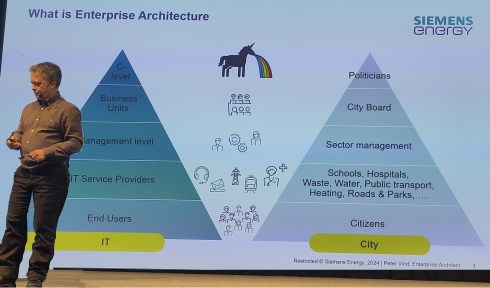
Unicorns & HIPPOs in an enterprise (Peter Vind)
When the way out became clear, politics often started. Sometimes, there was the HIPPO (HIghest Paid Person’s Opinion) in the company, as Peter Vind explained, or there was the blame game, which I described in my 2019 “The PLM blame game post”.
What makes it even more difficult is that people’s opinions in PLM discussions are often influenced by their friendly relations or history with a particular vendor or implementer from the past, which troubles a proper solution path.
These aspects are challenging to discuss, and nobody wants to discuss them openly. A company (and a country) must promote curiosity instead of adhering to mainstream thinking and working methods. In our latest Share PLM podcast, Brian Berger, a VP at Metso, mentions the importance of diversity within an organization.
“It is a constant element of working in a global business, and the importance cannot be overstated.”
This observation should make us think again when we want to simplify everything and dim the colors.
Conclusion
Initially, I thought this would be a shorter post, but again, it became a long read – therefore, perhaps ideal when closing 2024 and looking forward to activities and focus for 2025. Use this time to read books and educate yourself beyond the social media posts (even my blogs are limited 😉)
In addition, I noticed the build-up of this post was unconsciously influenced by Martijn Dullaart‘s series of messages titled “Configuration Management is ……”. Thanks, Martijn, for your continuous contributions to our joint passion – a digital enterprise where PLM and CM flawlessly interact based on methodology and accurate data.
 Congratulations if you have shown you can resist the psychological and emotional pressure and did not purchase anything in the context of Black Friday. However, we must not forget that another big part of the world cannot afford this behavior, as they do not have the means to do so – ultimate Black Friday might be their dream and a fast track to more enormous challenges.
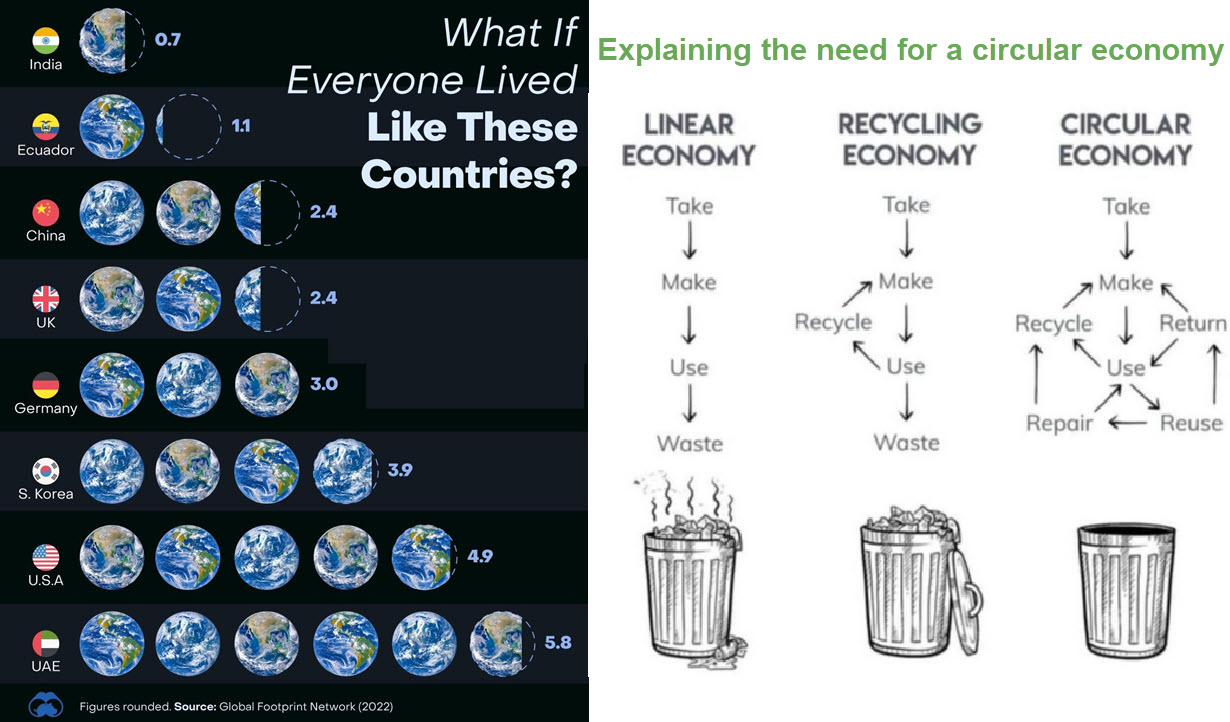
The difference between our societies, all living on the same planet, is illustrated in the image below, illustrating the unfairness of this situation
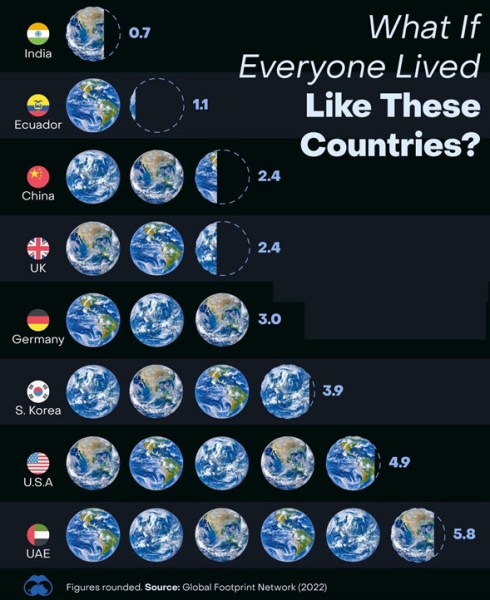
What the image also shows is a warning that we all have to act, as step by step, we will reach planet boundaries for resources.
 Or we need more planets, and I understand a brilliant guy is already working on it. Let’s go to Mars and enjoy life there.
For those generations staying on this planet, there is only one option: we need to change our economy of unlimited growth and reconsider how we use our natural resources.
The circular economy?
You are probably familiar with the butterfly diagram from the Ellen MacArthur Foundation, where we see the linear process: Take-Make-Use-Waste in the middle.
This approach should be replaced by more advanced regeneration loops on the left side and the five R’s on the right: Reduce, Repair, Reuse, Refurbish and Recycle as the ultimate goal is the minimum leakage of Earth resources.
Closely related to the Circular Economy concept is the complementary Cradle-To-Cradle design approach. In this case, while designing our products, we also consider the end of life of a product as the start for other products to be created based on the materials used.
The CE butterfly diagram’s right side is where product design plays a significant role and where we, as a PLM community, should be active. Each loop has its own characteristics, and the SHARE loop is the one I focused on during the recent PLM Roadmap / PDT Europe conference in Gothenburg.
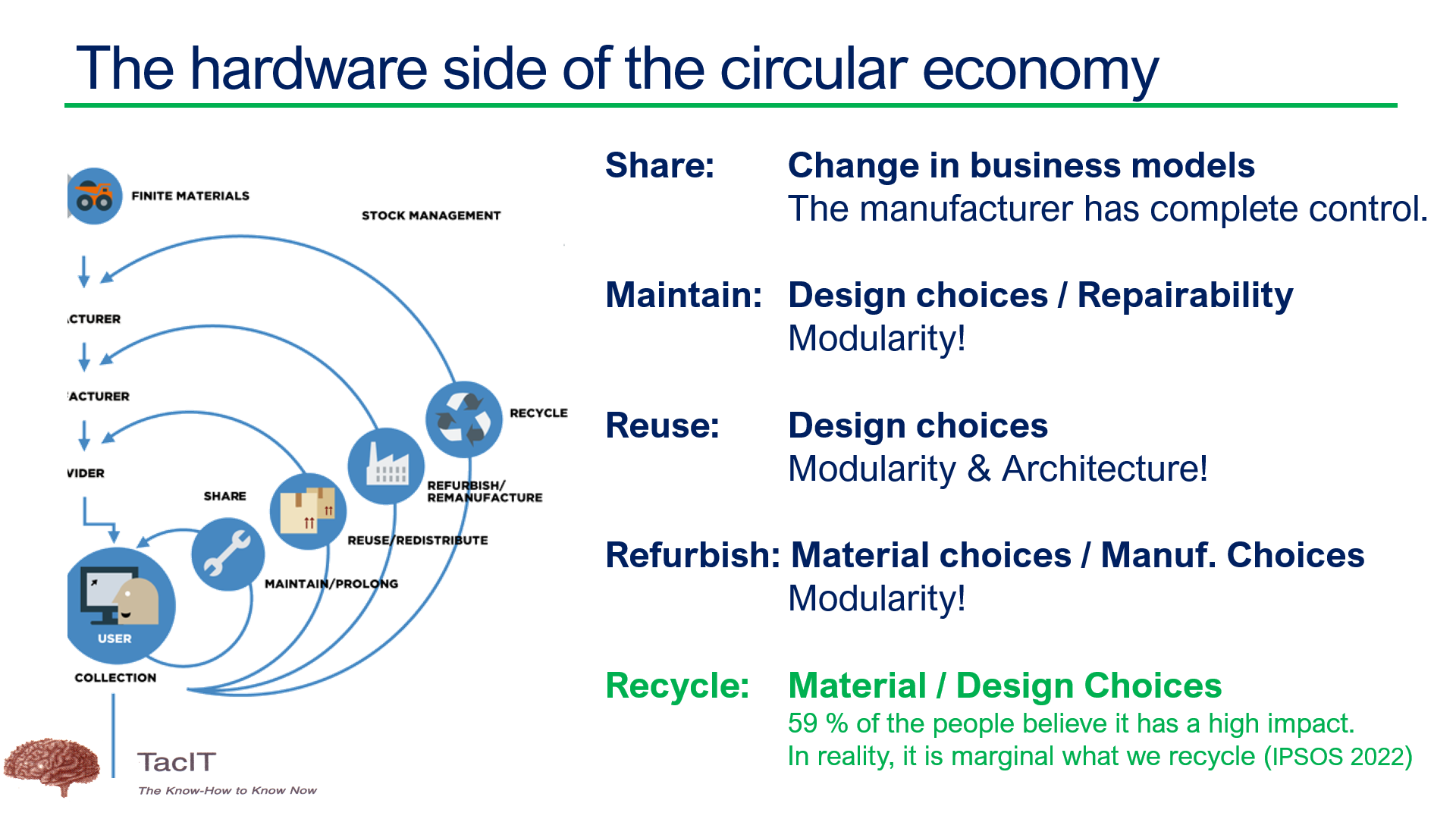
As you can see, the Maintain, Reuse, Refurbish and Recycle loops depend on product design strategies, in particular, modularity and, of course, depending on material choices.
 It is important to note that the recycle loop is the most overestimated loop, where we might contribute to recycling (glass, paper, plastic) in our daily lives; however, other materials, like composites often with embedded electronics, have a much more significant impact.
Watch the funny meme in this post: “We did everything we could– we brought our own bags.”
 The title of my presentation was: Products as a Service – The Ultimate Sustainable Economy?
You can find my presentation on SlideShare here.
Let’s focus on the remainder of the presentation’s topic: Product As A Service.
The Product Service System
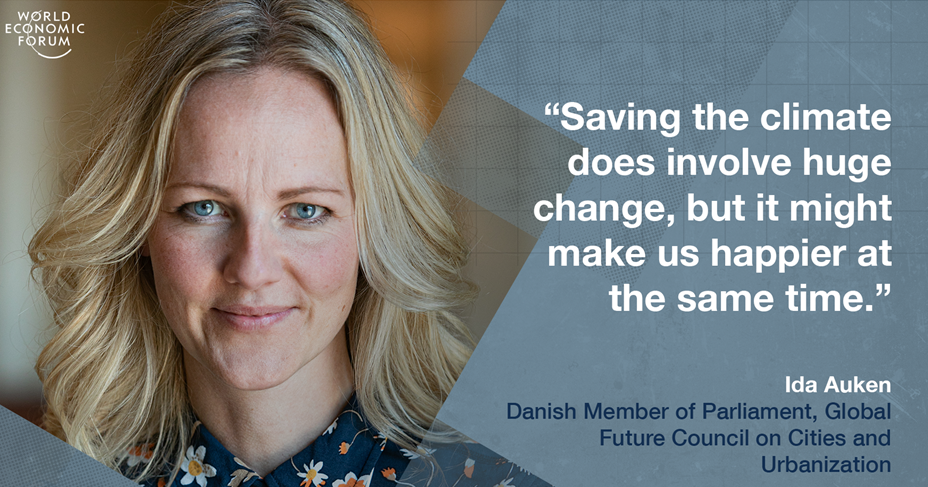 Where Product As A Service might be the ultimate dream for an almost wasteless society, Ida Auken, a Danish member of the parliament, gave a thought-provoking lecture in that context at the 2016 World Economic Forum. Her lecture was summarized afterward as
“In the future, you will own nothing and be happy.”
A theme also picked up by conspiracy thinkers during the COVID pandemic, claiming “they” are making us economic slaves and consumers. With Black Friday in mind, I do not think there is a conspiracy; it is the opposite.
Closer to implementing everywhere Product as a Service for our whole economy, we might be going into Product Service Systems.
As the image shows, a product service system is a combination of providing a product with related services to create value for the customer.
In the ultimate format, the manufacturer owns the products and provides the services, keeping full control of the performance and materials during the product lifecycle. The benefits for the customer are that they pay only for the usage of the product and, therefore, do not need to invest upfront in the solution (CAPEX), but they only pay when using the solution (OPEX).
 A great example of this concept is Spotify or other streaming services. You do not pay for the disc/box anymore; you pay for the usage, and the model is a win-win for consumers (many titles) and producers (massive reach).
Although the Product Service System will probably reach consumers later, the most significant potential is currently in the B2B business model, e.g., transportation as a service and special equipment usage as a service. Examples are popping up in various industries.
 My presentation focused on three steps that manufacturing companies need to consider now and in the future when moving to a Product Service System.
Step 1: Get (digital) connected to your Product and customer
A foundational step companies must take is to create a digital infrastructure to support all stakeholders in the product service offering. Currently, many companies have a siloed approach where each discipline Marketing/Sales, R&D, Engineering, Manufacturing and Sales will have their own systems.
Digital Transformation in the PLM domain is needed here – where are you on this level?
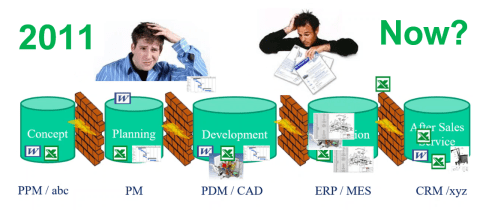
But it is not only the technical silos that impede the end-to-end visibility of information. If there are no business targets to create and maintain the end-to-end information sharing, you can not expect it to happen.
Therefore, companies should invest in the digitalization of their ways of working, implementing an end-to-end digital thread AND changing their linear New Product Development process into a customer-driven DevOp approach. The PTC image below shows the way to imagine a end-to-end connected environment
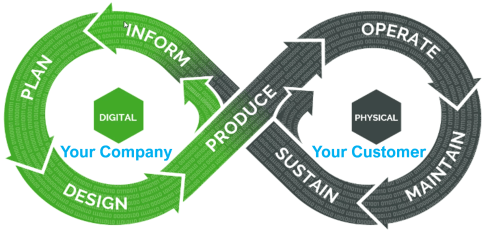
In a Product Service System, the customer is the solution user, and the solution provider is responsible for the uptime and improvement of the solution over time.
 As an upcoming bonus and a must, companies need to use AI to run their Product Service System as it will improve customer knowledge and trends. Don’t forget that AI (and Digital Twins) runs best on reliable data.
Step 2 From Product to Experience
A Product Service System is not business as usual by providing products with some additional services. Besides concepts such as Digital Thread and Digital Twins of the solution, there is also the need to change the company’s business model.
In the old way, customers buy the product; in the Product Service System, the customer becomes a user. We should align the company and business to become user-centric and keep the user inspired by the experience of the Product Service System.
In this context, there are two interesting articles to read:
- Jan Bosch: From Agile to Radical: Business Model
- Chris Seiler: How to escape the vicious circle in times of transformation?
The change in business model means that companies should think about a circular customer journey.
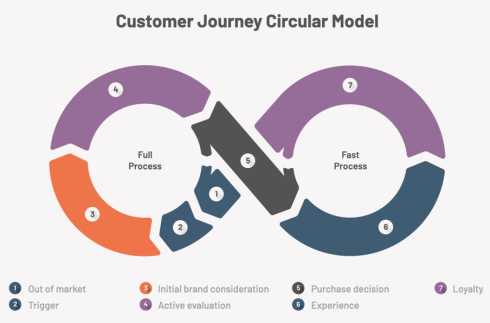
As the company will remain the product owner, it is crucial to understand what happens when the customers stop using the service or how to ensure maintenance and upgrades.
In addition, to keep the customer satisfied, it remains vital to discover the customer KPIs and how additional services could potentially improve the relationship. Again, AI can help find relationships that are not yet digitally established.
 Step 2: From product to experience can already significantly impact organizations. The traditional salesperson’s role will disappear and be replaced by excellence in marketing, services and product management.
This will not happen quickly as, besides the vision, there needs to be an evolutionary path to the new business model.
Therefore, companies must analyze their portfolio and start experimenting with a small product, converting it into a product service system. Starting simple allows companies to learn and be prepared for scaling up.
A Product Service System also influences a company’s cash flow as revenue streams will change.
 When scaling up slowly, the company might be able to finance this transition themselves. Another option, already happening, is for a third party to finance the Product Service System – think about car leasing, power by the hour, or some industrial equipment vendors.
Step 3 Towards a doughnut economy?
The last step is probably a giant step or even a journey. An economic mindset shift is needed from the ever-growing linear economy towards an economy flourishing for everyone within economic, environmental and social boundaries.
Unlimited growth is the biggest misconception on a planet reaching its borders. Either we need more planets, or we need to adjust our society.
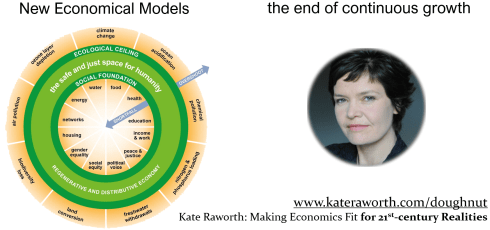
In that context, I read the book “The Doughnut Economy” by Kate Raworth, a recognized thought leader who explains how a future economic model can flourish, including a circular economy, and you will be happy.
 But we must abandon the old business models and habits – there will be a lot of resistance to change before people are forced to change. This change can take generations as the outside world will not change without a reason, and the established ones will fight for their privileges.
It is a logical process where people and boundaries will learn to find a new balance. Will it be in a Doughnut Economy, or did we overlook some bright other concepts?
Conclusion
The week after Black Friday and hopefully the month after all the Christmas presents, it is time to formulate your good intentions for 2025. As humans, we should consume less; as companies, we should direct our future to a sustainable future by exploring the potential of the Product Service System and beyond.

I am sharing another follow-up interview about PLM and Sustainability with a software vendor or implementer. Last year, in November 2023, Klaus Brettschneider and Jos Voskuil from the PLM Green Global Alliance core team spoke with Transition Technologies PSC about their GreenPLM offering and their first experiences in the field.
As we noticed with most first interviews, sustainability was a topic of discussion in the PLM domain, but it was still in the early discovery phases for all of us.
 Last week, we spoke again with Erik Rieger and Rafał Witkowski, both working for Transition Technologies PSC, a global IT solution integrator in the PLM world known for their PTC implementation services. The exciting part of this discussion is that system integrators are usually more directly connected to their customers in the field and, therefore, can be the source of understanding of what is happening.
ecoPLM and more
Where Erik is a and he is a long term PLM expert and Rafal is the PLM Practice Lead for Industrial Sustainability. In the interview below they shared their experiences with a first implementation pilot in the field, the value of their _ecoPLM offering in the context of the broader PTC portfolio. And of course we discussed topics closely related to these points and put them into a broader context of sustainably.
Enjoy the 34 minutes discussion and you are always welcome to comment or start a discussion with us.
The slides shown in this presentation and some more can be downloaded HERE.
What I learned
- The GreenPLM offering has changed its name into ecoPLM as TT PSC customers are focusing on developing sustainable products, with currently supporting designer to understand the carbon footprint of their products.
- They are actually in a MVP approach with a Tier 1 automotive supplier to validate and improve their solution and more customers are adding Design for Sustainability to their objective, besides Time to Market, Quality and Cost.
- Erik will provide a keynote speech at the Green PLM conference on November 14th in Berlin – The conference is targeting a German speaking audience although the papers are in English. You can still register and find more info here
- TT PSC is one of the partners completing the PTC sustainability offering and working close with their product management.
- A customer quote: “Sustainability makes PLM sexy again”
Want to learn more?
Here are some links related to the topics discussed in our meeting:
- YouTube: ecoPLM: your roadmap for eco-friendly product development
- ecoPLM – a sustainable product development website
- YouTube: Win the Net-Zero Race with PLM (and PTC)
Conclusions
We are making great progress in the support to design and deliver more sustainable products – sustainability goes beyond marketing as Rafal Witkowski mentioned – the journey has started. What do you see in your company?
Next week – week 46 – more news from Day 2 from the #plmroadmappdt conference
 This is a guest post from one of our active members of the PLM Green Global Alliance, Roger L. Franz.
Roger is supporting industry inquiries on regulated substances, sustainable product design and life cycle management, including carbon footprint.
He is a recognized authority on supply chain reporting for compliance with worldwide regulations. Roger brings decades of experience with engineering tools and enterprise IT systems.
Introduction.
More than just unsightly “plastic pollution,” the volume of consumer plastics and lack of closed-loop recovery have created a significant micro- and nano-plastics problem. These invisible plastic particles are found around the world, including in animal and human tissues.
For several reasons, including a much smaller volume of plastic used in electrotechnical products compared to consumer plastics and the generally longer life of hardware compared to the rapid turnover of consumer goods and packaging, the microplastics problem is not typically tagged as a major electronics problem- or at least not yet. Now is the time to be proactive.
 The United Nations Environment Programme has posted summaries of recent discussions on using life cycle assessment (LCA) to address the global problem of plastic pollution. These Life Cycle Initiative areas relate to plastic products, chemicals of concern in plastic products, and plastic product design. The documents are about possible approaches to managing plastics with recommendations but are not detailed prescriptions, methods, or regulations.
While the studies did not specifically mention electrotechnical products, this industry will need to accelerate focus on engineering design tools and engineering plastics choices to avoid significantly adding on to the consumer plastic product problems.
Within the UNEP product design discussion, the section on “General considerations on possible approaches to product design, focusing on recyclability and reusability” included the following important point, which bears repeating: Product design approaches should include eco-design and circularity principles.
Product design approaches should include
eco-design and circularity principles.
But what does this mean? In the following discussion, we hope to break these approaches down into more tangible design choices. Even within the electrotechnical product category, there are many product variations, so no claim is made here to cover all of them.
Options for lower carbon footprint plastics already exist to some extent. Except for packaging, electronic components and products are typically made with engineering resins rather than the common consumer plastic “recycling arrow” types. Alternative types of lower carbon footprint engineering resins may be available to use rather than others with higher carbon footprints.
Many plastic manufacturers are currently conducting LCA to quantify the cradle-to-gate carbon footprint of their materials. Different polymer types have inherent differences in carbon footprint due to their different monomeric starting materials and manufacturing processes.
 For many plastics, these flows are detailed by Plastics Europe. Polycarbonate, ABS, and several Polyamides, for example, are included. What is missing in these publicly available sources, as well as LCA inventory databases themselves, are many other engineering plastics; for example, while consumer PET is widely modeled, PBT (Polybutylene terephthalate) is not. These are just some of the data gaps that need to be resolved.
More sustainable feedstock is a good option since a given end polymer may be made from different monomeric chemicals, so the more sustainable plastic performs exactly like its classic version because it is the same. One of the growing alternatives includes feedstocks based on renewable, bio-based sources.
 These need some evaluation, again using LCA, to ensure they are free of downsides like increased water use, eutrophication, and chemical pollution due to the use of herbicides, pesticides, fertilizers, and so on. Marketing claims of being a “green material” will need backup data! For guidelines on acceptable environmental benefits claims, refer to the US FTC Green Guides.
Reducing the amount of plastic by design is not only a good practice for sustainability, it also saves money. Some designs using parts with enough material to be modeled using generative design may be able to reduce the amount of material while reducing material usage and weight. Reducing factory scrap from injection molding processes leaving sprues in runners and use of captive regrind are other good options.
Choosing manufacturers using renewable fuels– and even benefits like reduction of water use during processing- is another area of choice for sustainability. Local sourcing is also a way to reduce the overall carbon footprint of a material by reducing the contribution of transportation.
Identify large plastic parts. Historical guidelines on eco-design have actually been around for years.
 One good example is the ECMA 341 Standard, “Environmental Design Considerations for ICT & CE Products (4th Edition / December 2010), which says, “All plastic parts weighing 25 g or more and with a flat area of 200 mm2 or more are marked with the type of polymer, copolymer, polymer blends or alloys in conformance with ISO 11469.” This practice enables the identification of plastic types of large parts, while in practice, the ability to sort becomes less useful when a variety of goods are mixed in a production recycling facility. Success here depends either on manual sorting or more sophisticated methods like infrared spectroscopy to be effective. Some equipment recyclers have such capability.
Keep it clean. More useful guidance from ECMA 341 is to avoid the following: non-recyclable composites; coatings and surface finishes on plastic parts; adhesive-backed stickers or foams on plastic parts; if stickers are required, they should be separable; and metal inserts in plastic parts unless easily removable with common tools. These are common sense from a clean recycling stream perspective and should not be difficult to implement.
Closing the end-of-life loop. Recycling is imperfect, and as far as this author has seen, is rarely in place for engineering plastics.
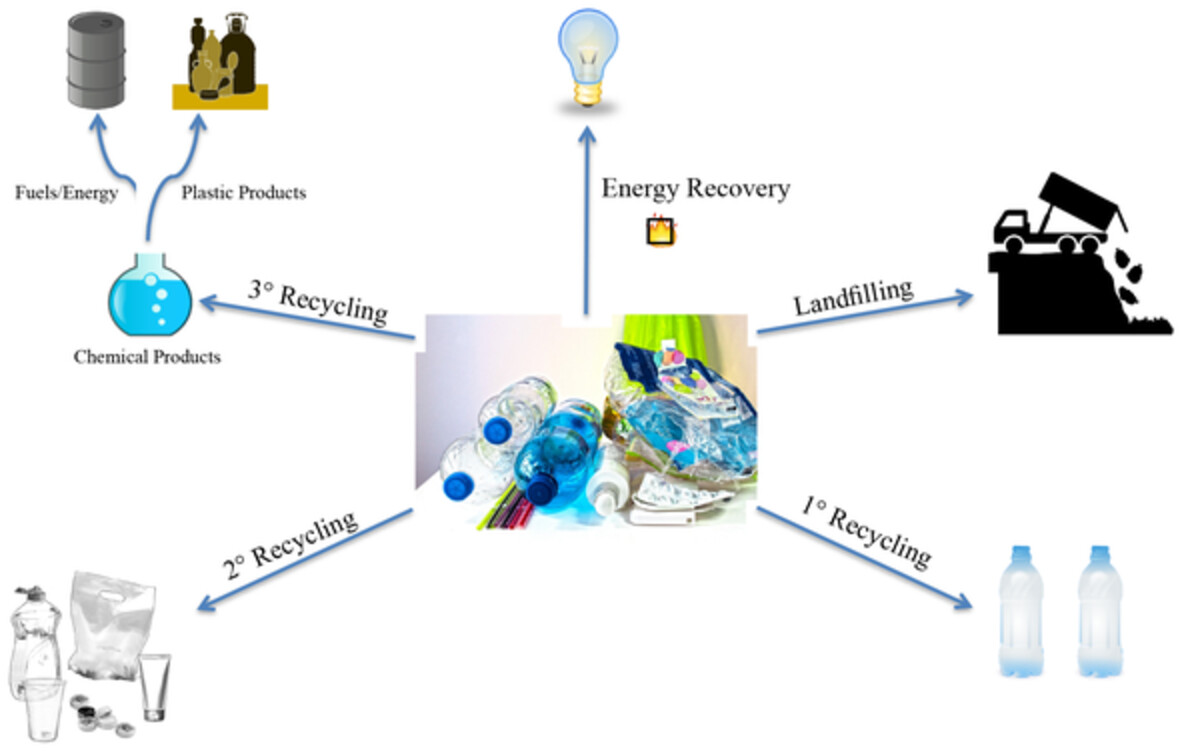 Processes under development to decompose plastics back to new monomer feedstocks, called chemical recycling or tertiary recycling. This approach is achieving some success with a limited number of materials, mostly for high-volume consumer plastics rather than engineering types.
LCA is needed to validate that achieving plastic circularity this way with the necessary processing energy and chemicals will have a net environmental benefit. The obvious problem with all approaches is that plastics were never designed for the environment in the first place.
Selecting More Sustainable Additives is another area where product engineers have some choices. There are thousands of possible additives used in plastic, usually specified for a given grade and end application. These include flame retardants, processing aids, fillers, colorants, ultraviolet stabilizers, plasticizers for flexibility, and so on and on. While these choices are primarily the responsibility of the resin manufacturer, pressure from regulators and industry demand can influence the use of more sustainable additives.
Whenever possible, new products should avoid regulated substances by design, which may include Substances of Very High Concern (SVHC) as defined by the European Chemicals Agency (ECHA) and, more recently, polyfluorinated substances called PFAS. This is easier said than done but definitely belongs on the checklist of ecodesign considerations.
Besides plastics? While the present discussion is about plastics, choices of using altogether different materials may be possible in some cases.
 High-volume hardware is probably unable to use alternative materials like wood, glass, bamboo, etc. Historically, though, until the rise of both solid-state and plastic technology in the 1950s, radios and televisions featured wooden cases and consoles. Miniaturization in the solid-state era brought in mostly plastic housings. One recent example that the author worked on was an audio teleconferencing system that featured either oak or walnut to blend with the executive conference room.
While the intent was not specifically to avoid using plastic, it is an interesting example to think outside the plastic box. Wood avoids many of the issues with plastics, but of course, the plastics in the circuitry content remain to be addressed.
Other large household electrical/electronic goods are likely to use recyclable steel and/or stainless steel cabinets. And if you consider an automobile to be an electronic product, these metals come into play in high volume in automobile shredder residue. Using metal rather than plastic housings may be possible for some products; for example, aluminum may be used for personal communications and IT devices, bringing a tradeoff between initial cost and the potential advantage of aluminum being more highly recyclable for use in new equipment than any plastic.
Only LCA can quantify the tradeoffs. We should also mention toys, which increasingly incorporate some electronics and use colored plastics extensively.
New material technology. One of the many emerging material technologies is Engineered Wood. The cited research hardly suggests that a wood-based material could be a drop-in, for example, injection molded thermoplastics, but the possibility is most intriguing. However, just having a material of natural origins is not automatically a panacea for replacing plastics. Quite the contrary, significant cautions remain; for example,
“Chemical and thermal modifications are usually applied to adapt the wood structure and impart necessary functionalities. Most of these treatments use substantial amounts of chemicals, energy, and water. They also innocently incorporate unwanted chemically bonded structures into the wood and generate a large amount of waste products which are harmful to the environment. This brings a dilemma where an entirely sustainable and green material is converted to a non-environmentally friendly material”
(El Akban et. al, Green Chemistry, 2021).
For now, the point is that reconsidering classical synthetic polymers in the light of more natural and renewable materials may have an interesting future.
Modularity. The ease of disassembly into “modules” is often listed as an eco-design practice that improves circularity, but the present author is skeptical about providing practical details. More specific guidance requires each manufacturer to know how its products can be disassembled at their end of life and where such disassembly would lead in terms of reuse, remanufacturing, or material recovery. In the context of plastics, a large plastic housing that can be easily disassembled into a single clean material is more likely to be sent to a recycler rather than reused as a “module” in other products.
It is unfortunate that software tools to make early design choices for disassembly began to be developed 25 years ago but have gone by the wayside since. The author had personal experience with such a “Green Design Advisor” tool that modeled a product assembly from its raw materials and showed how disassembly into environmentally and economically viable recovery fractions could be optimized.
One example that is probably still true today is that an epoxy circuit board and its components would be a “module” to be submitted to size a reduction, separation, and metal recovery process. Such a tool could also model the choice of a plastic housing vs. a metal alloy and the impacts of circular recovery of the material choices. Disassembly modeling tools for product designers is an area that needs significant development now, while software using artificial intelligence (AI) claims to be the answer. We shall see.
In conclusion, it must be recognized that most plastics were never designed for the environment in the first place. While there is currently no 100% perfect alternative, engineers do have options to improve the life cycle sustainability of tomorrow’s products.
- Select lower PCF plastics and avoid regulated additives.
- Reduce the amount of plastics if possible and keep larger parts free of different materials.
- Consider materials other than plastics.
- Be aware of new developments in both sources of plastic and end-of-life options.
Roger L. Franz / RogerLFranz@gmail.com – Sept. 2024
We, the PLM Green Global Alliance, started our first interviews with PLM-related software vendors two years ago, in 2022, with the initial PLM vendors followed by additional software vendors and implementers who focus on Sustainability.
The list is getting longer, and for some of them, we are now in the second round, learning what has happened in the field with their customers.
You can always read about these interviews on our PLM Green Global Alliance website or subscribe to the YouTube channel: @PLM_Global_Green_Alliance where we share the interview recordings.
 This time, we spoke with Henrik Hulgaard from Configit. I spoke earlier with Henrik about Configuration Lifecycle Management – you can read our discussion here. Now, we talked about the relationship between Configit and Sustainability.
Configit
 Configit is not a typical PLM or reporting software provider. They flourish on top of an existing (data-driven) infrastructure in order to provide consistency between all aspects of product design, manufacturing and usage.
In their words:
“We build configuration solutions for manufacturing companies to master the challenges of getting configurable products and services to market faster and selling, manufacturing, and servicing them more effectively.”
We discussed how this is beneficial in the context of Sustainability with Henrik Hulgaard, their VP of Product Management.
Enjoy the 35-minute discussion below:
The slides shown during the interview, combined with additional company information, can be found HERE.
What we have learned
- Using Configit connected to your configurable products allows you to select the best performance for Sustainability if this is your motivation. It will enable companies to design and deliver configurable products where, in the end, in practice, the customer decides on the optimum configuration, fitting their purpose and ambition.
- Configurations and Modularity, which are building blocks of the circular economy, go hand in hand and cannot be considered standalone options.
- Even AI has entered the domain of configuration lifecycle management – we are in the early stages of learning more.
Want to learn more?
- The slide deck related to this interview
- The whitepaper: Sustainability transformation in manufacturing
- The Configit blog section
Conclusion
As a company, there are many ways to provide more sustainable products to your customers, such as by design and by customer choice. With Configit, companies can provide the most sustainable options for their manufacturing process or later support their customers to select the most sustainable options.
 Jos Voskuil's Weblog
Interesting reflection, Jos. In my experience, the situation you describe is very recognizable. At the company where I work, sustainability…
[…] (The following post from PLM Green Global Alliance cofounder Jos Voskuil first appeared in his European PLM-focused blog HERE.) […]
[…] recent discussions in the PLM ecosystem, including PSC Transition Technologies (EcoPLM), CIMPA PLM services (LCA), and the Design for…
Jos, all interesting and relevant. There are additional elements to be mentioned and Ontologies seem to be one of the…
Jos, as usual, you've provided a buffet of "food for thought". Where do you see AI being trained by a…