
You are currently browsing the category archive for the ‘Artificial Intelligence’ category.
 Back on track after a side step (see: I am back), I restarted my PLM activities, and WOW, was I lucky with the first conference on my list: CONTACT Open World 2026 in Bonn.
Melanie Stadtler invited me as a guest (thanks, Melanie 🙏), and for the first time I connected in depth with CONTACT Software, their partners and customers.
 I knew CONTACT Software from a few brief interactions, but now I could experience their full ecosystem. As CONTACT Software has historically been active in the DACH region, our paths rarely crossed – most of my activities were elsewhere in Europe.
 So my key question was: Who is CONTACT Software, and where would I position them in an SAP/Teamcenter-dominated market?
Around 650 people attended this year’s biannual event. The World Conference Center Bonn, along the Rhine, was a great venue for sessions, networking and evening entertainment.
The conference theme was Industrial AI – from top floor to shop floor.
 Before the event, there was a great warm-up party with dinner and a variety show. Beyond the impressive show, it was a great first chance to network and catch up with peers. And then the event started.
Industrial AI — from Top Floor to Shop Floor
 Maximilian Zachries, Chief Operating Officer (COO) at CONTACT software, kicked off day 1 sharing CONTACT’s ambition and strategy to grow, with a repackaging of their solution – the CONTACT elements as the image below shows.
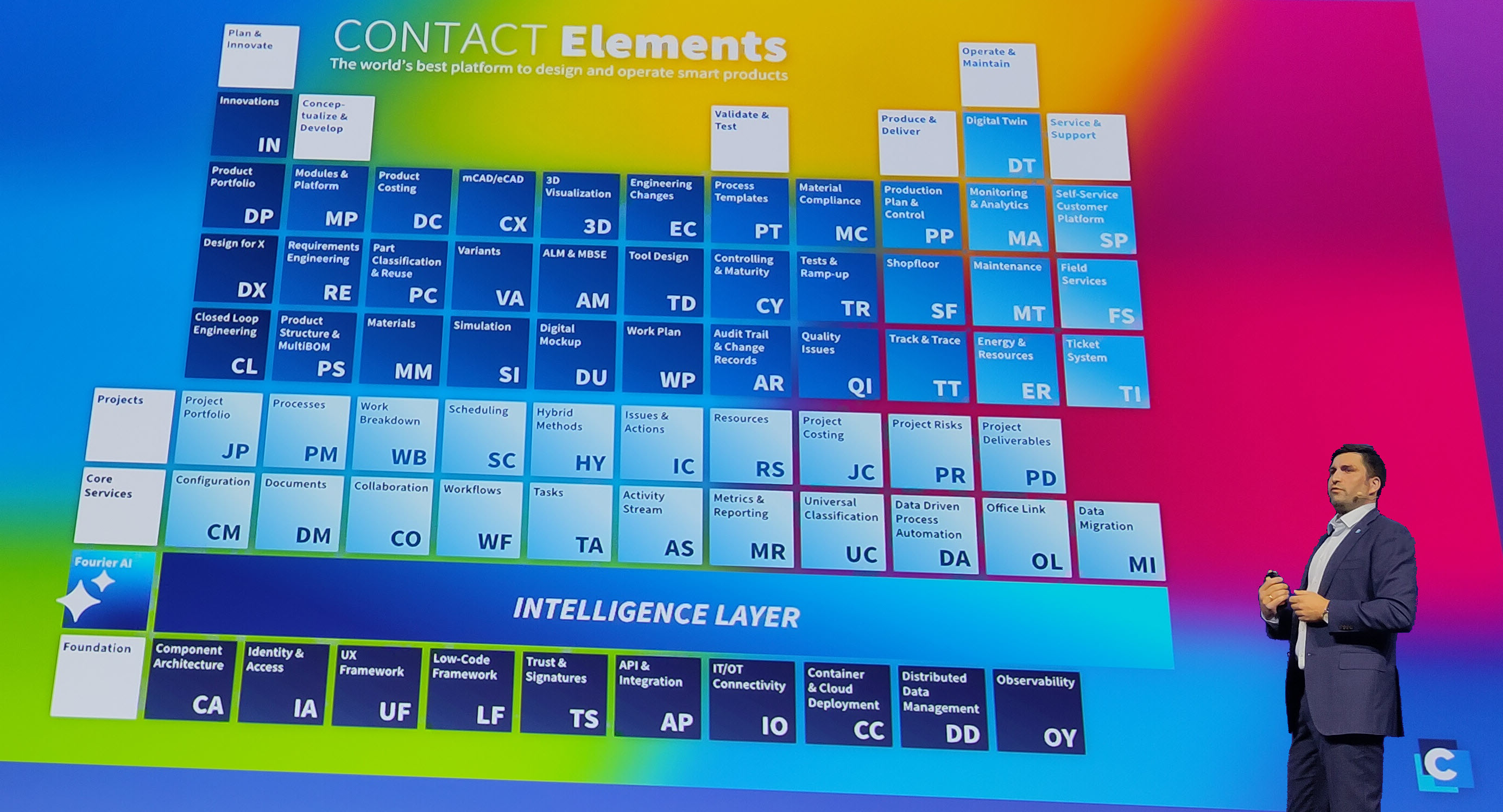
In the domain of PLM, I would position CONTACT software as a platform with a few foundational layers and op top of that customers can implement Elements, functional, pre-configured blocks on the platform or connect to other systems in the enterprise architecture.
Maximilian Zachries showed the unification of CIM database, Office, Project and IoT into a single collaboration platform based on Elements – coordinated PLM in my terminology.
Openness is a key driver for CONTACT software, so connectivity is crucial.
The image also shows the intelligence layer, named Fourier, which CONTACT has released and includes Elements related to its AI capabilities.

Initially focused on enhancing functionality within the platform and, in upcoming releases, also adding support for MCP connectivity, agentic AI, AI coding and even the option to bring your own model (BYOM)
The mood of the session was much more down-to-earth and factual than at other conferences I used to go to. The understated German culture was evident in this session and in other sessions too, which was a relief for me as a VirtualDutchman.
CONTACT’s intention to grow is also visible in its recent acquisitions and partnerships, including a significant investment in team neusta SE.
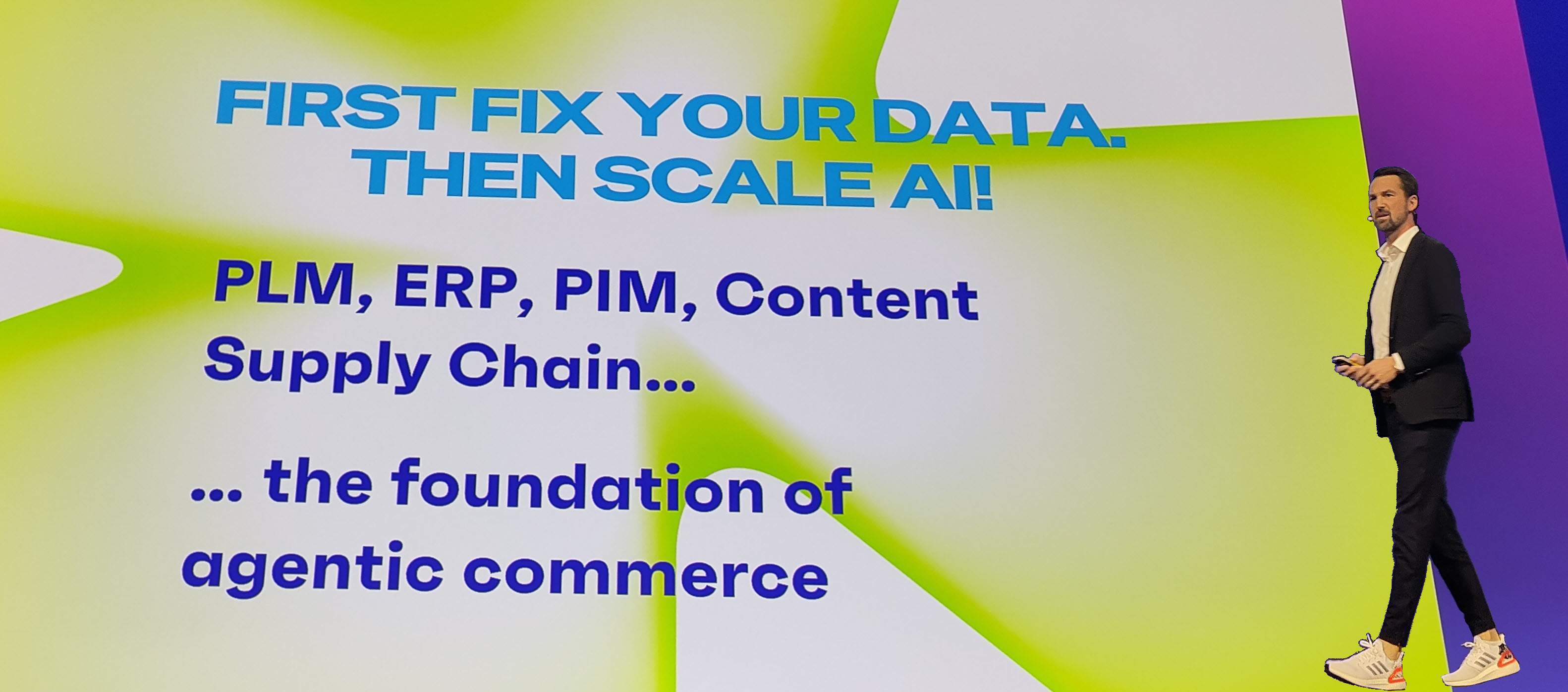
You snooze, you lose.
 Markus Dietrich (CEO, team neusta) then illustrated the complementary value they bring: modern front-end development, data-driven capabilities and dashboards on top of the CONTACT platform – the modern connected PLM in my terminology.
The trend, as Markus stated, is from components to systems, and in the long run from selling products to delivering products as a service.
Driven by economic survival, it is crucial for a sustainable, circular economy.
Companies should start exploring data-driven capabilities now – AI only performs reliably when the underlying data is correct and in the right context.
 Hence the title: you snooze, you lose.
From Product Truth to Possible Futures – AI and the future of lifecycle management
 Frank Patz-Brockmann, Chief Product Officer at CONTACT Software, gave an interesting presentation, discussing AI’s impact on PLM—particularly in engineering.
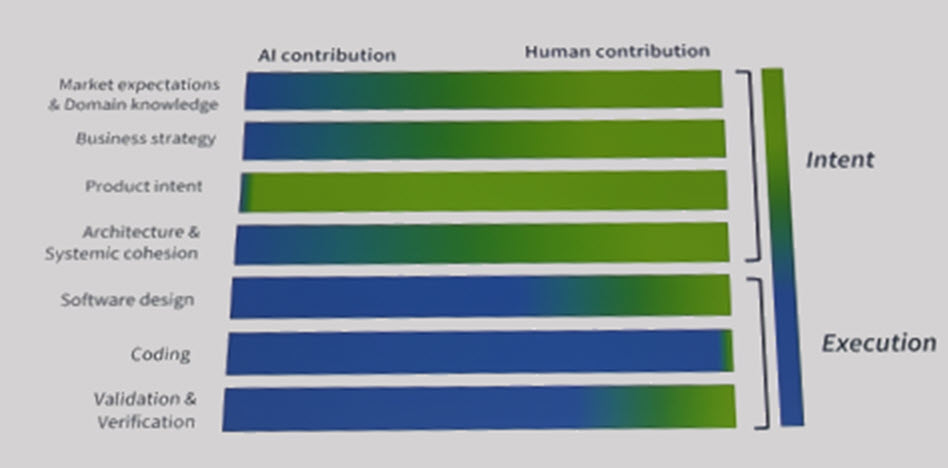
We already see what AI does in software development. And as the image below illustrates, the real human value is in dealing with the intent—the WHY behind what we do.
Of course, we should not forget that software changes are relatively cheap. A code change typically doesn’t affect the stock in the warehouse or your selected and approved suppliers, as it would in a mechanical world—one reason manufacturers push as many product features as possible into software.
Still, as Frank mentioned, creating engineering artifacts today is expensive and requires specific skills. As AI advances, authoring tools will likely become capabilities of the engineering system, while humans will still be needed to decide intent—the broader context AI cannot address through its trained models.

His ultimate conclusion: in the long run, traditional PLM systems built as the “Single Source of Truth” will be replaced or superseded by a collection of federated data sources, accessed and managed by AI agents. A statement that is supported by many of my forward-looking peers in the PLM community.
From systems to platforms to knowledge infrastructures.
After the guided tours—an excellent way to get a quick impression of sponsors grouped around a theme—it was time for the afternoon sessions.
From Connected R&D to Intelligent R&D: Apollo Tyres’ Digital Transformation Journey
 I listened with great interest to Hizmy Hassen, Chief Digital Officer at Apollo Tyres. Having worked with tyre companies before, and having a soft Dutch spot for their Vredestein brand, much of his story felt familiar.
What caught my attention even more was their “New House strategy” as shown below:

Too often, I have seen companies start their transformation from their pains and wishes, wrapped in a project based on the known As-Is situation. External consultants like this approach too—it lets them sell interviews and reporting while getting paid to learn the company. It is the traditional business model, and I understand it.
 However, I believe in a different approach: define the desired To-Be status from the company’s business strategy for the coming years, then derive the enterprise processes and the underlying data model needed to get there.
From there, you define the journey.
Instead of looking back and fixing what went wrong—an inherently negative mindset—the company looks forward, fostering a positive, aligned attitude when everyone is informed and on board.
 Of course, Organizational Change Management becomes crucial here, as systems, the organization, and even business models can and must change.
I saw exactly this mindset in Hizmy’s New House strategy.
One of his best examples: introducing AI/automation as the natural way of working with data in a context where data is available. And as his concluding slide showed, this forward-looking approach is already delivering its first wins.

Success Under Extreme Conditions – What Enables Innovation Under Pressure
 During the afternoon sessions, attendees chose from various tracks, and we concluded the day with an inspiring keynote from Jutta Kleinschmidt, a famous race car driver (Dakar), physicist and author, who shared how to succeed in an unpredictable environment.

After a great networking evening on board the Ocean Diva, sailing on the Rhine, we started Day 2 with an interesting opening session: the CONTACT software product management team shared their plans and roadmap.
Roadmap CONTACT Elements: opening the next chapter
 What surprised me first was the roadmap’s level of detail. Most vendors talk about roadmaps but rarely share specifics or commit to capabilities before a release is actually available. Here, I saw the opposite.
Some random thoughts I noted down:
- CONTACT Elements is primarily a platform of connected capabilities. It provides a foundation through its Elements, and customization remains possible. I did not hear any Out-Of-The-Box messaging.
- The focus on delivering 3D Search capabilities surprised me somewhat, as I have seen this capability in typical PLM systems before. I also assumed there would be vendor-independent solutions in the market to connect to. Apparently not.
- The roadmap suggests the current mindset is still to deliver more and more standard, traditional PLM capabilities. This makes it harder to distinguish between being a platform and being a PLM system.
- Combining ALM and MBSE into a single Element suggests that the full complexity of managing systems—hardware and software—through a model-based approach is not yet fully developed. Both ALM and MBSE could be domains on their own, with many elements.
 Of course, these are first impressions, and as I am not a CONTACT software insider, I am eager to learn more.
In the afternoon, there were more thematic sessions. I want to highlight one close to my heart:
Circular by Design – Anchoring Sustainability in Product Strategy
 Comparing the agendas of the 2022 and 2024 editions with this year’s, I noticed sustainability has become less prominent — less hype, fewer dedicated topics. Understandable, as we’re overwhelmed by other immediate global challenges, despite the extreme climate warnings we’re facing.
That’s why I was glad to attend this session. In Europe, we see fewer specialized sustainability discussions; however, more and more companies are being forced to anchor sustainability in their product strategy—mainly due to regulations and, hopefully soon, genuine business benefits and customer demands.
Sebastian Weber gave a great overview of the industry’s current state and CONTACT Software’s approach, where other speakers shared their detailed sustainability experiences (this blog space is too short to mention everything. 🙄 I had much more to tell and digest, but I already passed my 1500-word deadline.)
 As a core team member of the PLM Green Global Alliance (PGGA), I am happy to announce we’ll publish a dedicated interview with Sebastian on our PGGA channel in mid-October. There, we will definitely dive deeper into CONTACT software’s contribution to sustainability.
Conclusion
The CONTACT Open World conference was an eye-opener for me for several reasons. First, it was a warm, open community where I could discuss the typical challenges a medium-sized enterprise faces. Next, the clarity of the presentations and discussions helped me better understand where to position and recommend CONTACT software in the PLM domain as an exploration every potential customer should do.
CONTACT software is currently a niche player, but an interesting company that’s willing to expand. Keep them on your radar.

Next big event to meet
 In nearly twenty years of coaching PLM implementations, I’ve noticed something striking: these projects often mirror politics—not just in complexity, but in the blame game that follows when things go wrong.
When something goes wrong, people rarely see it as an opportunity to solve the issue together. They look for someone to blame instead.
That happens in politics and in Product Lifecycle Management. I wrote about it in 2019, The PLM Blame Game—and most of those observations still hold—although the emphasis has shifted.
But what if the real issue isn’t the system or the technology? What if it’s the human connections—or lack thereof—that determine success?
Political systems/ PLM approaches
In democracies, everyone debates priorities, but progress is slow. Stakeholders defend their own interests, consultants favor preferred solutions, and vendors promise the moon. Long-term plans such as digital transformation often stall.
The result is familiar: each leadership change resets ambitions, leaving users with mixed messages and less commitment – sounds familiar in PLM?.

From: Communication charts around the world
Then there are the autocracies, where a single dominant view determines the path. Usually, that view comes not from the CEO but from the CFO or CIO. These leaders often have a limited understanding of product lifecycle management and instead rely on trusted networks.
That is why some companies choose SAP because “all enterprises run on SAP” or Teamcenter because “everyone in automotive uses Teamcenter.” Strategic consultants reinforce the same pattern with their own preferred solutions.
The result: Surface-level alignment, but resistance beneath the surface—another familiar PLM scenario.

From: Communication charts around the world – 2014 China
In smaller companies, a populist version often appears. Without a strong strategic layer, the loudest voices from vendors and implementers shape the company’s view. That is the riskiest setup because vision and strategy are effectively outsourced. Early in my career, I often heard:
“You know solution XYZ, so tell us what to do.”
The result is predictable: no one in the company feels a true sense of ownership of the business outcome – the type of situations I have been mediating the most.

Of course, the analogy is imperfect. Countries usually lack competition, so citizens cannot simply switch. Still, it is a useful way to frame what happens in PLM.
They – not us – are the problem!
 In the past, debates focused on who was to blame for project problems, often blaming the stakeholder who was not at the table.
Vendors and implementers blamed customers, vendors and customers blamed implementers, and implementers blamed vendors. My role in PLM mediations was to get everyone into the same room.
 But one issue always remained:
Blaming the customer is difficult when the customer is assumed to be right – They are paying the bill and not always with pleasure.
Why 70 % of PLM implementations fail – or not?
 For decades, we have heard horror stories about failed PLM implementations, each supposedly explained by one simple cause.
Depending on who tells the story, the culprit is the software, the company culture, poor user involvement, or unrealistic ambitions without a budget or understanding.
But the truth is more nuanced: many of these implementations did not actually fail completely.
People react strongly to the word failure because no one wants to be associated with it.

Yet, in software, ‘failing fast’ is often celebrated—it’s a way to adapt early. PLM is slowly catching on, with the rise of Minimum Viable Product (MVP) approaches. Instead of waiting for a ‘perfect’ big-bang rollout, companies now start with a working foundation and iterate as needs emerge.”
 That only works if the company owns its vision and strategy. An MVP approach also demands end-to-end stakeholder involvement, because everyone contributes to the solution. At the same time, our limbic brain works against us: it pushes us to protect what we know and react strongly to change.
That reaction shows up in PLM projects too. The loudest critics get the most attention, which makes it easy to conclude a program failed—even when it is working for most people who have adapted to the change.
And now, a new trend has emerged:
PLM systems are failing!
Now, a new claim is gaining traction: PLM systems themselves are failing. With the rise of AI, traditional vendors are being blamed for failing to provide the right infrastructure or opportunities for AI-enabled capabilities.

After years of success built on legacy platforms, vendors now face growing pressure from opinion leaders calling for change.
 Martin Eigner has made this point in several posts:
- Why We’re “Optimizing” Problems We Created Ourselves
- 50 % failure rate is not an accident
- My vision for the next 5 years
 Oleg Shilovitsky has made similar arguments:
- Did We Solve PLM, or Just Learn How to Describe It?
- Who can replace the big three PLM and why that may be the wrong question in the Age of AI?
- Is Product Memory Just a New Name for PLM?
 Prof. Dr. Jörg W. Fischer wrote:
- Will we ever solve PLM? We did, but AI has taken over.
- Digitalization has failed to deliver on its central promise! Why?
 Doug Macdonald wrote about the shortcomings of Legacy PLM, which most companies imagine/practice:
- The shortcomings of Legacy PLM
- Could you manage the development of a toothbrush in a Legacy PLM system
I agree with much of this critique, for sure, if you still consider PLM a system rather than a product lifecycle management strategy implemented through a federated infrastructure of systems.
 The posts I referred to highlight real problems from the past and suggest that new insights and AI might help us build better businesses. The question is whether that promise will be fulfilled.
Creating the human thread
 AI could help businesses break through organizational silos by pulling together information across functions.
That would make concepts such as the digital thread and digital twin easier to implement without relying on dedicated interfaces.
This shift creates both opportunity and risk.
If AI reduces the need for siloed optimization, traditional middle-management roles will change. The key question is whether companies are willing to rethink their structures or stay constrained by Conway’s Law.
It could also make many methodology debates less important.

Today, we as consultants often promote methodologies shaped by our own experience or vendor narratives. The long-running eBOM–mBOM debate is a good example. Across industries and platforms, the answer is often more straightforward than the discussion suggests.
As AI absorbs more collective knowledge, the role of PLM experts and consultants will shift. At the Share PLM Summit in Jerez, we discussed what should come next: a stronger focus on human connection.
 That is why I use the term human thread: the network of relationships that connects people across the business. Michael Finochario (Fino) touches on the same shift in his post on the changing balance between humans and technology, in his review of my session in Jerez.
Others are moving in the same direction. This week, Helene Älander shared a post that makes a similar point.
Helene’s post and the related discussion suggest a growing belief that transformation depends less on technology alone and more on human connection and motivation inside the company.
A quote from Helene’s post, and I recommend reading the full post and thread.
One lesson has stayed with me ever since:
Transformation rarely fails because of technology. It slows down when the distance between executive ambition and middle-management reality becomes too large.
For now, I call this the need for the human thread. A successful transformation starts with an end-to-end human connection across the business, with people treating that connection as a shared priority.
Because people are intrinsically motivated by a human connection.
The human thread requires a new approach, new forms of workshops and learning sessions where leaders, managers, and employees work together on the desired business flow.
Helene Älander points in this direction, and Share PLM supports it through initiatives such as Share The Nest.
Also this year at the Share PLM Summit in Jerez, Andreas Wank described how Pepperl+Fuchs made a breakthrough by bringing people together. As Fino in his review post quoted:
No one on the team wanted to make a decision because every decision affected someone else. So they put 30 people in one room for a week and forced them to make decisions. Not perfect decisions. Working hypotheses. That was a critical insight: In PLM, waiting for perfect certainty kills momentum.
The year before, at the 2025 Share PLM Summit, Andrea Järvrén already shared a similar lesson, describing how Tetra Pak used design sprints to advance its PLM work by prioritizing human interaction.
It is an unstoppable trend – the human thread popping up in more and more conversations.
Conclusion
The time for blaming systems, technology, and methodology should fade into the background. Companies need to focus on building business flow through the human thread—the human connections that drive commitment, motivation, and change.
So, here is the question: Are we ready to stop blaming systems and start building the human thread? Or will we keep repeating the same patterns, just with fancier technology?

 It has been quiet at the beginning of this year, with presentations and interviews from the PLM Green Global Alliance, mainly due to several activities from the core PGGA team in the background.
Rich McFall stepped back, and with him, the management of the PGGA website.
Sabine and Klaus Brettschneider have meanwhile migrated the website to a new environment with a more modern look and feel, complemented by a redesign of our logo by our partner CIMPA PLM Services. Sabine’s expertise in e-commerce and digital user experience played a key role in shaping the new platform, while Klaus contributed his experience in sustainability and PLM.
As a group of volunteers, we are proud of the result and continue to work to improve it where needed, while encouraging our members to make active contributions.
 Have a look at the website plmgreenalliance.com and give us your feedback (and support).
Back to the interviews
 Despite political headwinds, businesses have been implementing more sustainability initiatives, and we were curious to hear from PLM vendors and implementers about what they are currently observing and offering to the field.
You can always read about these interviews on our PLM Green Global Alliance website or subscribe to our YouTube channel, @PLM_Global_Green_Alliance, where we share interview recordings.
This time, Klaus Brettschneider, our LCA moderator, and Jos Voskuil spoke with Eduardo Salva from Siemens Digital Industries Software, who was recommended to us as the expert on the global Teamcenter product portfolio, particularly the Sustainability Lifecycle Assessment environment.
Siemens Digital Industries
 We don’t think Siemens Digital Industries needs an introduction in the world of PLM; with its broad portfolio, you might miss some of its sustainability initiatives and offerings.
Therefore, we were happy to speak to Eduardo Silva about his personal passion and his professional activities within Siemens Digital Industries related to Sustainability.
Enjoy the 36-minute discussion here:
What we have learned
- Siemens enterprise-wide commitment to Sustainability under the “DEGREE” framework, a holistic sustainability program with measurable KPIs across ethics, governance, and environmental impact, targeting full implementation by 2030. Siemens Impact 2025
- Sustainability at the engineer’s desktop: AI-Driven Sustainability solution within Teamcenter, through a partnership with Makersite, supporting “one-click” LCA calculations. The result: Automated ISO-compliant LCAs/PEFs/EPDs built by engineers to assess eco-design decisions early in the design phase (“shifting left”).
- Sustainability is no longer optional: it is regulation-driven. Under ESPR, the Digital Product Passport (DPP) will require manufacturers to provide verified, lifecycle-based product data (including carbon footprint), forcing OEMs—especially in automotive and batteries—to pass these reporting requirements down to their suppliers
- Sustainable engineering is shifting from document-based reporting to structured product data. Regulations today require standardized lifecycle data, creating the foundation for advanced analytics, digital twins, and AI-driven optimization. Platforms like Catena-X are emerging to enable secure data exchange across the value chain
Want to learn more?
- Product Announcement: Siemens’ AI-powered Lifecycle Assessment software | Siemens
- Product Page: Teamcenter – develop sustainable products | Siemens
- Blog: Transform your competitive edge with Teamcenter Sustainability Lifecycle Assessment – Teamcenter
Conclusion
The conversation with Siemens Digital Industries shows that sustainability in PLM is moving from ambition to execution, if you recall our earlier interviews. Now LCA must become part of everyday engineering work, supported by structured product data, automation, and collaboration across the value chain.
With regulations such as ESPR and the Digital Product Passport accelerating the need for reliable lifecycle information, companies that embed sustainability early in design will be better prepared for compliance while also creating opportunities for innovation, transparency, and competitive advantage.
 Those who follow my blog know that whenever I visit an event, I push myself to write a review the weekend after to share the experience. However, this time after the conference, I have been exploring further the Andalusian culture, making me realize that this is exactly what makes the conference different and stand out.
Where traditional conferences are often in cold high-tech places, efficiently to reach, making it for attendees an event in their comfort zone, the Share PLM Summit is held in a grand bodega in the unhurried scenery of Jerez de la Frontera.

An experience best described by Helena Alander in her recent post: “I have never taken the time to invest in myself.” – Read the post, she shares a great reflection.
As the focus of Share PLM is to focus on human-centric transformations, there is much more focus on the human experiences of people implementing transformations in their companies.
The human focus translates into a diverse audience and one big common theme for all, instead of a traditional industry or technology focus.
With more than a hundred attendees, the conference felt like a big family gathering where you can easily connect and learn from everyone. I believe this type of conference will be the future in the age of AI.

The many sponsors that joined the conference were also a part of the success. Without their support and human-centric messages, it would be hard to make this event sustainable 😉
If you want to read an impression of each session, Michael Finocchareo made a great effort to share the highlights of each session – you can find all his excellent reviews here: Share PLM Summit – Fino Summary Post Index.
And now some of my personal highlights from the conference!
The Role of People in Transformation Programs: Experience LEAN
 An interesting learning experience was the session from Javier Sánchez, who is a plant manager at Kerry in Spain, about the implementation of LEAN at several plants in Spain.
Where initially we might think that PLM and plant operations are two different worlds, Javier was able to take us on the journey of implementing a LEAN program for the Spanish plants. There was so much communality to PLM implementations when dealing with behavioural change and the uncertainty of people.
Change can only happen when people in the organisation understand and trust what is going to happen and that they are part of a change for their benefit.
TRUST is the word that I noted down, and to build trust, you can see how Javier shared the org chart of the Kerry Sevilla plant – upside down – people at the top and the manager at the bottom to support everyone.

This image above really illustrates that you have a people-first approach.
Javier further elaborated on the difference of such an approach and how an organization can be fully engaged, as the picture below illustrates.

 And after a successful implementation, Javier also warned about the rebound effect.
Where initially the excitement and energy come from the new situation, companies might slowly fall back into the traditional, as over time people have and bring their habits, the pyramid falls over as the image to the left illustrates and Javier shared several potential causes for such a rebound.
Important to see C-level change as #1 point, a point I have seen popping up in many PLM implementations too. After starting with a great vision, new people at the C-level come in questioning the vision (and strategy).

Note: GENBA is a term coming from LEAN, and is also relevant to PLM. It refers to the location where value is created—such as a factory floor, construction site, sales floor, or any workplace where the core work happens.
The concept emphasizes the importance of direct observation and engagement at the source of the action, rather than relying on reports or second-hand information.
It is a key principle in lean manufacturing and continuous improvement methodologies, encouraging leaders to “go to the GENBA” to understand problems and opportunities firsthand.
Combined with his great storytelling skills, Javier took us on an interesting story, very relevant for a human-centric approach and showing that we can learn from other disciplines.
Adapting PLM implementation strategy in evolving organizational realities
 Susanna Mäentausta, also a guest in our Share PLM season 2 podcast with that time the title The ROI of Digitalization: A Deep Dive into Business Value gave an interesting lecture about her experiences with the PLM implementation at her current company, Novartis.
She excels in keeping her focus on both PLM business value and strategies to achieve this.
I knew Susanna from her earlier presentation at the Product Innovation 2019 conference in London. Here she stood out because of her strategic and tactical approach to implementing PLM – at that time at Kemira – where she was able to get PLM business benefits to be discussed at the C-level – it was more than a technical story.
You can read my observations from that time here: The weekend after PI PLMx London 2019
In her session this time, she explained all the challenges that she had to address at her current employer. It was not such a nice, linear step-by-step approach as presented by Andreas Wank earlier that day, talking about his implementation challenges at Pepperl & Fuchs.
Susanna’s tactics were all about securing the progress of the PLM project – design for change and awareness in the organisation. Javier Sanchez mentioned that the change at the C-level had a serious impact on the roadmap, as did both Susanna and Andreas. It remains a continuous point of attention when you want to guarantee a long-term outcome.
The image below says it all:

Susanne ended with some tactics:
- Design for non-removable anchor points that keep the PLM vision connected even when priorities shift.
- Define the non-negotiable cornerstone for the future: process & design frameworks and necessary authorities.
Her final recommendation was also interesting – the core team should have a clear long-term understanding of the future and work in an entrepreneurial mindset, meanwhile shielding execution from organizational politics.
Don’t get involved in politics – a recommendation that I also often shared, as politics is so much about emotions and subjective arguments, it’s better to work around it in silence.
The Human Advantage: Working and Leading in the Age of AI

Helena Gutierrez, well known as one of the founders of Share PLM and her AI-related newsletter, shared her positive view on how AI, in one way, destroyed Share PLM’s actual business practices, as a lot of material development now could be done with the help of AI in hours, compared to days of actual design work.
Companies won’t pay anymore for weeks of development of specific materials, she also pointed to the need for human skills in the future.
 I think we agree on the fact that with AI, we will need people who can bridge and work with agentic AI to achieve unmet benefits for organisations. These people will have a special role; they are there for their human skills, combining emotion and logic, potentially a highly rewarding job, however, in smaller quantities than current knowledge workers in companies.
In my session Are Humans Still Resources?, I shared a pessimistic viewpoint and an optimistic end.
The pessimistic part is based on the fact that we humans run on our old biological hardware, the limbic brain, which urges us to save energy (think fast) and may lead to cognitive surrender. This situation might push companies to invest even more in AI and consider humans as a difficult resource to handle – are we back in the early days of the industrial revolution?

The optimistic side, which was also mentioned by others, and we see it happen, is that thanks to AI, the entrepreneur has a much easier life. A lot of the supporting activities for an entrepreneur can now be done using AI agents – the image below from this post by Dr.Sam Zolfagharian says it all:

For sure, the discussion will go on between the optimists and the realists (pessimists in disguise)
Scaling human capabilities
 I am closing this impression with a train of thought that I can’t get out of my head. We can scale tools and resources with AI, leaving only a space for people with a combination of specific human skills – not only deep thinking, but also emotional and empathic roles, like healthcare providers, coaches and entertainers.
These roles are hard to scale – you become a coach by learning from experiences, and AI will not have an “experience transfer function.” How will business scale in the future, as we also see that junior roles in an organisation disappear due to AI?

The topic was also discussed in the interesting AI panel discussion – image above – with a mix of participants. It was a balanced discussion between tech, vision and reality and one of the highlights was the response from Susanna to a question from the audience:
“I don’t know.”
Have you ever seen someone honestly say this in a panel discussion? And what would AI respond? Great to see the human presence.
Where will humans build their experience and skills to think? I wrote about this already in March and have not yet answered: PLM, AI, and the Risk of Cognitive Surrender: A Call to Stay Sharp!
How to stay sharp in an AI-dominated world?
Conclusion
The Share PLM summit demonstrated again that a human-centric approach related to product lifecycle management has many benefits, as these shared experiences and outcomes from the discussions are directly applicable. Big kudos to the Share PLM team that dared to invest in such an event last year and exceeded expectations this year.
For those who want to learn more, join us at the upcoming event, Putting People in PLM: A Share PLM Summit Recap! and get excited.
For those who are interested in a lifetime, full-time job, watch this excellent short movie below:
 Let me start with a confession: as a kid, I was a classic nerd, drawn to soccer and exact sciences. Math and physics weren’t just subjects—they were my playground.
During my education to become a teacher in Physics and Mathematics, I discovered something even more captivating: programming. It started with my first Apple IIe, where I tackled the challenge of programming with limited memory using machine language, analogue/digital interfaces, Pascal, and C.
Later, I turned to Visual Basic and C++, writing programs to simulate math scenarios, automate AutoCAD tasks, and later develop solutions on top of SmarTeam.
It was not just work—it was how I relaxed – structuring my thinking – would we call it now Vibe coding?
 The upside of this experience? Technical and physical concepts never intimidated me – they helped me to see the bigger picture. I was wired to think deeply, patiently, and persistently—skills that have stayed with me ever since.
The switch to human
But then I got involved in training and mediating in PLM implementations, where I discovered that technical skills were needed; however, more important were understanding human behavior (not software), communication and PLM methodology skills.
Many implementations at that time stalled because everyone started with great enthusiasm until the results failed to materialize. The solution was not as expected, too unstable or not possible. And from the point of view of the users, it is too complex and frustrating for them. You can read one of my experiences from that time: Where is my ROI. Mister Voskuil

One of those many interesting discussions
But the budget was often finished, and the enthusiasm was gone. One of my favorite quotes at that time was:
“You never get a second first impression.”
indicating that from the start, you need to anticipate user acceptance, don’t think of a big bang approach and start with understanding and agreeing on the big picture before diving into the details.
How many of you have been in this situation?
Although the majority of people in the PLM community agree that human behavior can make or break a PLM implementation, the majority of discussions and focus are most of the time targeting tools and technologies.

#12 – digital skills related to the transformation
 Organizational Change Management is often considered too soft to address, particularly in so-called result-driven organizations. Shut up and do the work!
Recently, some PLM software vendors mentioned OCM as an important activity, sometimes even provided by them. Their business model is to sell as many software licenses as possible, and therefore, they promise best-case scenarios and coverage of business scenarios.
Would you buy your PLM software from a company that says:
“Our software is great; however, you also need to address a business change program.”
Or would you buy from“We are a market leader in your business, and thousands of users are currently working happily with our software.”
 I believe, with the experience as a PLM coach, that every PLM implementation should be a people and business discussion first – preferably sponsored at C-level – before jumping on the solutions.
The challenge of this approach is that a human-centric approach depends on people, often hard to scale, as it is a people business, not a software tools business.
Digital Transformation is failing
 While preparing for the upcoming Share PLM summit in Jerez on May 19-20, I was looking back at why real digital transformation in the PLM domain is still failing – we keep on working mostly in a linear document-driven operating model.
My opinion at this moment: For existing organizations, the move from coordinated to coordinated and connected is too complex for humans.
Despite a great white paper from McKinsey on how organisations could move away from a linear, often document-driven organisation to an organisation working in multidisciplinary product teams, there is no real progress in most organisations.

Changing the organizational structure appears to be so difficult, and this relates to Conway’s Law, which states that systems reflect the organizational structure, presenting a challenge in determining where to start.
Not starting means not failing. And failing is the worst thing you can do at the C-level.
And now there is “product memory.”
 Is the “product memory” based on an agentic AI layer and an underlying ontology, the next big thing after the connected digital enterprise? Initially formulated by Benedict Smith and later translated to a more PLM-specific scope by Martin Eigner and Oleg Shilovitsky, we are trying to combine the (boring) systems of record data with all the reasoning and decision-making – that’s where the knowledge is sitting.

You can follow the thought experiments when reading the True Intelligence newsletters from the start.
A theme that came up also in other “the future of PLM” discussions was that traditional PLM only stores the results of a development and delivery process, but the reasoning is missing.
In my opinion, Colab Software was one of the first complementary to PLM startups, with a focus on capturing the discussions and decisions during a design review, as the older image below shows – also, Colab Software is now much more advanced with an AI-supported infrastructure.

Still, the image shows the value; the reasoning that was captured from the communication between different stakeholders in the product development process during design reviews.
More in the traditional PLM domain, Martin and Oleg started developing the tconcept of an agentic AI enterprise driven by a graph-based layer on top of existing enterprise systems as Martin’s image illustrates below.

Where Oleg stays (for me) more in the traditional PLM enterprise world:
e.g., his post Product Memory Architecture: How PLM Loses Engineering Knowledge and What Comes Next,
Martin zoomed in on his day-to-day customer base in Germany when writing
this post: The Actual Concept of Product Memory based on a Digital Thread with a vision for the upcoming 5 years.
In addition, less PLM-focused but very data-driven, Jan Bosch wrote a complementary post on his blog related to
the agentic AI approach: From Copilot to Colleague – the rise of agentic AI.
An interesting quote from this post, valid for us all:
Agent systems require investment in data architecture, workflow mapping, governance frameworks and operational monitoring. Those investments compound. The organization that has deployed agents across its revenue cycle, supply chain and finance operations simultaneously develops deep operational expertise in running agentic systems, which is itself a form of competitive advantage.
And while finalizing this post, there was an interesting discussion related to product memory at The Future of PLM: Introducing Product Memory organized by Fino, also known as Michael Finocchiaro
As a “techie,” I was able to enjoy and follow the discussion about a future infrastructure related to product knowledge. The term “product memory” seems a little overhyped, as if information that is not directly accessible through agents is a cause of failure. The big elephant in the room is where and how to start.
Enjoy the dialogue here:
What about a product memory trauma?
In the past, when discussing knowledge graphs, I already posed the question:
“How can knowledge graphs unlearn?”
 In the techie world, there was always a hypothetical response for this question, but will it happen in a product memory environment where not everything is 100 percent exact and correct? Patrick Hillberg, one of the few PLM teachers, can educate you all about seemingly small mistakes with a big impact.
During the product memory discussion, I heard a statement that only validated data is allowed to be part of the memory.
Has anyone thought about the utopia of this statement?
The ambitious statement that product memory would lead to a single source of truth is, for me, also a utopia. 100 percent correct data does not exist, nor will 100 percent accurate decisions exist. It will be the most likely truth for the moment.
 Now compare this with the human brain; when a serious accident happens, the person involved might have trauma from that. Then you need a psychiatrist to fix the trauma, meaning create other memory constructs – rewiring the brain.
While seeing this interesting dialogue with Rob Ferrone (the original Product Data PLuMber) about how Quick Release became a significant consultancy firm with the pragmatic focus on making the data flow (old image below), I had a new thought.

With Rob’s entrepreneurial skills, he might be able to start a new company soon, fixing product memory traumas – as data-governance becomes a commodity.
Will the product data plumber become the first product memory shrink?
Conclusion
We are experiencing a fast-moving convergence on future PLM concepts, where the image from Martin Eigner nicely represents such a possible architecture based on “product memory”. The challenge I see is whether we would be able to implement such an architecture to be reliable and supported by humans. Because humans still have their old hardware, the limbic brain, that will try to escape from the perfect world with a single source of truth – they like their truth
This was 2025 – this year, same atmosphere, more experienced & bigger and more to discuss.
 Last week I listened to a Dutch podcast that gave me an unexpected inspiration. The podcast “Zo Simpel is het Niet” (“It is not that simple “in English) is a podcast with a focus on economic topics and trends, not at all about PLM, sometimes a little about the effects of digital transformation and AI is more and more mentioned.
The episode I listened to was about the decline of literacy in the Netherlands. The conclusion is based on research discussed from the PISA test from the OECD. Learn more about the OECD and PISA test here on this Wiki page.
I asked Notebook LM to make an English slide deck from the podcast – You can download the deck HERE.
The conclusion: We are in a free fall in the Netherlands (image below) and likely in other countries too, because we are reading less, writing less, and consequently thinking less deeply.

Social media was identified as one of the root causes. Short-form content, the endless scroll, the dopamine loop of likes and shares — it is all rewiring how we process information – short-term, quick results without building deeper skills.
 And then the connection between social media and the drop in literacy and science skills hit me. We are doing the same thing at the moment with AI!
Third Way of Thinking
 In my posts, I sometimes refer to Daniel Kahneman’s book and his research: Thinking Fast and Slow, as this is for me a foundational theory for understanding human behavior.
Kahneman describes our brain as a combination of System 1, which is the fast, intuitive brain (low energy), and System 2, which is the slow, deliberative one (burns energy). As humans, we avoid using energy when thinking, although nowadays, outside our brains, we are hooked to fossil energy 😉.
Next, I read a research from Steven Shaw and Gideon Nave, from The Wharton School of the University of Pennsylvania, that indicated that AI is going to have an additional impact on our behavior as humanity.
Their paper Thinking—Fast, Slow, and Artificial: How AI is Reshaping Human Reasoning and the Rise of Cognitive Surrender introduces System 3 as artificial cognition. External, automated, data-driven reasoning that lives not in your brain but in the cloud.

 Their central finding is something they call “cognitive surrender” – access to AI made people more confident, regardless of whether the AI was right or wrong. An enforcement of the Dunning-Kruger effect?
The most vulnerable are people with higher trust in AI, lower need for cognition, and lower fluid intelligence, who showed the greatest cognitive surrender. The least critical thinkers delegate most, and then feel most certain about the result.
Benedict Smith, my True Intelligence friend, pointed to the same pattern in his post: When the Graph talks back. Read it and think!

Both their conclusions made me even more worried, combined with the results of the Dutch literacy developments – are we all racing downhill?
 I believe our brain is a muscle. Like any muscle, it needs resistance to stay strong. You do not become a better cyclist by riding an eBike everywhere — the motor does the work, and your legs lose the real strength needed when you are without your bike. The same applies to cognitive effort.
We Have Been Here Before
 It is not the first time a transformative technology arrived with enormous promise and created a deeply unequal outcome. The Industrial Revolution reduced most workers to resources while a few became extraordinarily wealthy.
John D. Rockefeller (oil & railroad industries), Andrew Carnegie (steel industry), J.P. Morgan (financing the new industries) and Cornelius Vanderbilt (shipping and railroads) as examples.
These industry leaders did not care so much about humans, and it took roughly a hundred years — and the rise of labour unions — to begin correcting that imbalance.
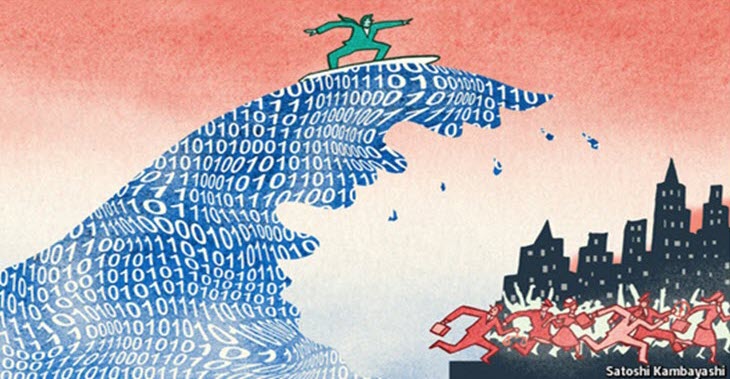 The AI revolution is moving much faster! And if history teaches us anything, it is that working more efficiently with new tools does not automatically raise your value. The more companies invest in AI solutions, the more pressure there will be to develop your individual skills.
Efficiency without insight is a commodity.
My friend Helena Guitierrez wrote this weekend this supporting post: Preparing for AI Adoption
What does it mean for Product Lifecycle Management?
Purposefully, I wrote Product Lifecycle Management to focus on the strategy, and not an all-around capable PLM system, as PLM systems have never quite delivered on their original promise.
 The PLM vendors benefited from selling the dream, the consultants benefited from its complexity and the users, initially engineers and later more stakeholders in the product lifecycle, often suffered under rigid processes and complex systems. As the systems were designed to store information. User-friendlyness was not a priority.
Will AI, being layered on top of PLM and other enterprise systems, be the solution for these underperforming systems?
Oleg Shilovitsky believes in that, as you can read in his recent post: PLM’s OpenClaw Moment: How AI Agents Will Break Closed Systems

The risk is that we repeat the same pattern. AI will be positioned as the solution to problems actually caused by poor implementation and insufficient investment in the human side of change.
 There is an interesting discussion ongoing about the future of PLM infrastructures, well described recently by Rainer Mewaldt in his post: What would a 𝗣𝗟𝗠 𝘀𝘆𝘀𝘁𝗲𝗺 look like if it were 𝗱𝗲𝘀𝗶𝗴𝗻𝗲𝗱 𝗳𝗼𝗿 𝗔𝗜 𝗳𝗿𝗼𝗺 𝘁𝗵𝗲 𝗴𝗿𝗼𝘂𝗻𝗱 𝘂𝗽?
The principles are there, like 10 years ago, before AI became hyped, when we discussed digital transformation as moving from a coordinated infrastructure to a coordinated and connected infrastructure, with a mix of Systems of Record and Systems of Engagement.
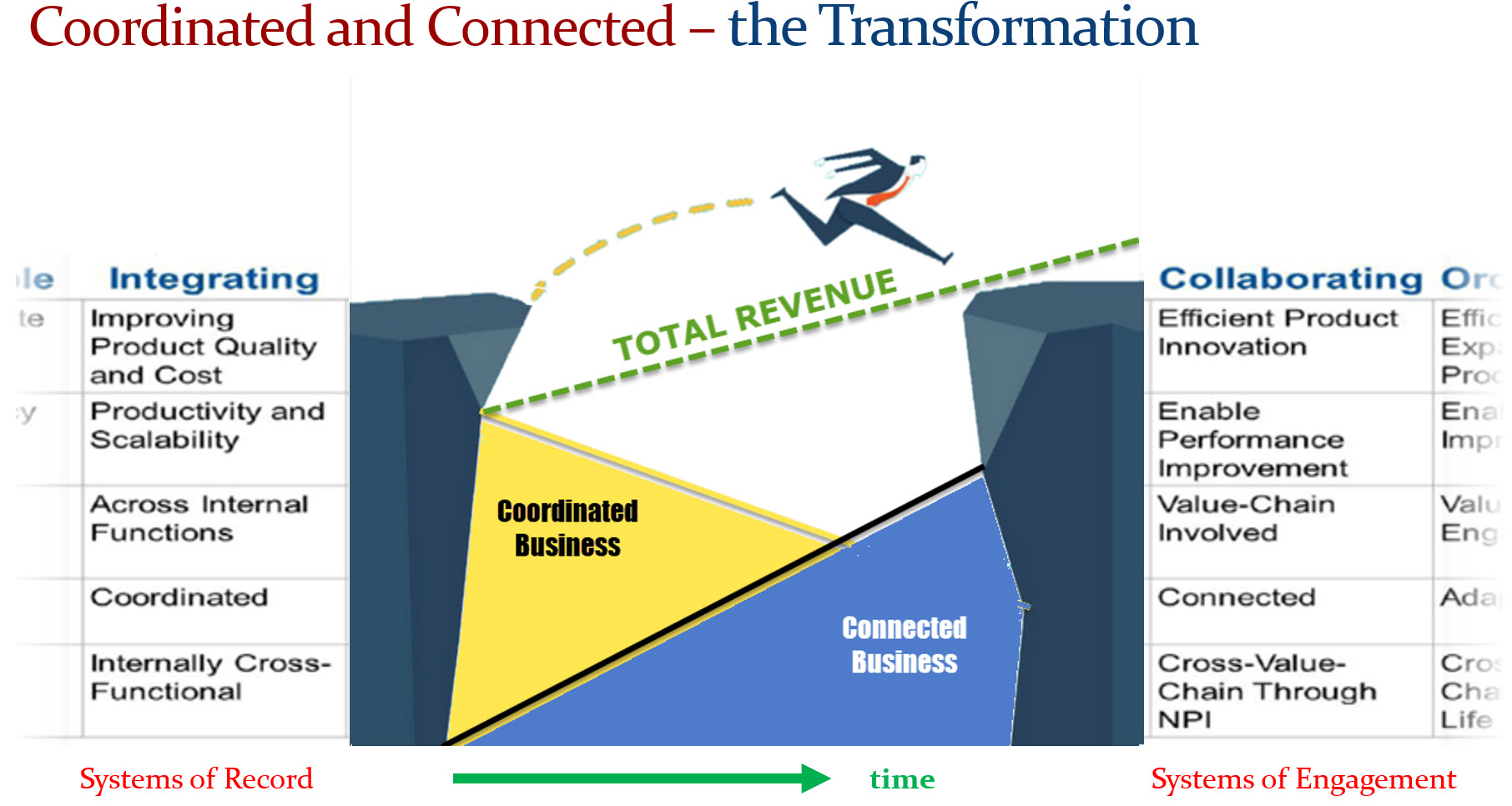
I have not seen much progress with the customers I have been working with in the past five to ten years. The change did not seriously happen due to the need for new ways of working, different people skills and organizational change.
Will it happen now with the AI-wave? A question Ilan Madjar also asked this weekend.
What should we – companies and individuals – actually do?
As an approach, the research from Wharton suggests that using rewards (incentives) and providing feedback can help people stay mentally engaged and avoid disengaging or losing motivation.
In other words, these strategies can combat the tendency to mentally “check out” or stop trying.
When participants were rewarded for accuracy and received immediate feedback, their override rates on faulty AI roughly doubled.
This observation means we should design AI-assisted workflows so that people remain accountable for outcomes and receive clear feedback when AI-assisted decisions go wrong. Work to do for startups and existing PLM vendors to develop the best combination of agents and content.
BUT: do not let the AI absorb the accountability while the human takes the credit – System 3!
Companies are in an uncomfortable situation. Before AI became the focus for improving businesses, the most heard statement was:
“Our employees are our assets – they create the value of our company,”
And this is one of the reasons that HR departments exist. Although not all HR departments are there for the employees – their role is to balance the HUMAN RESOURCES in a company – we are still talking about resources.
With AI, the new statement might be
“Our AI-supported employees are our assets, where part of the asset value comes from the AI tools used”.
This raises the question of who will remain as the AI-supported employee. We already see that entry-level jobs in any type of business get replaced by AI, creating stress on the job market. This, combined with the observed reduced mastery of deep-skills in math, reading and science, as described in the PISA research earlier shared in this post, puts a generation at risk.
Like the winners of the Industrial Revolution, the winners of the AI revolution do not care about humans – they care about profits.
 As individuals, we need to keep on training our brain-muscles without AI where the muscle matters. As the Dutch podcast mentioned: write your first draft before asking Claude to improve it, think through a problem before asking ChatGPT to solve it, and read a book of 100 pages.
In PLM, judgment and contextual reasoning are the core of what people need to do. You should protect the practice of doing that work yourself. Use AI to accelerate and refine, not to replace the effort that builds competence.
Invest in yourself to remain independent. Read broadly — actually read, not skim AI summaries. The people who will remain valuable in an AI-saturated world are not the ones who prompt best, but the ones who can evaluate, challenge, and contextualise what AI produces.

And with that, I want to come back to the post from Helena Guitierrez that I mentioned before, where she focused on what we can do as individuals.
 Helena is one of the founders of Share PLM, a company with the purpose: BUILDING A HUMAN-CENTERED DIGITAL FUTURE, as is written on their website. We both believe that in order to enjoy the AI revolution, we have to invest in ourselves. The above image illustrates steps to take- click on the image for the full post.
Talking about the human-centered digital future, have a look at the agenda of the upcoming Share PLM Summit on 19-20 May in Jerez de la Frontera (Spain) – our sessions and discussions will, of course, be based on PLM and AI experiences, with the focus on what it means for humans – it will not be a technology conference.

Conclusion
The Wharton researchers close with a question worth “What happens when our judgments are shaped by minds not our own?” Their answer so far: we become more confident, less accurate when the AI is wrong, and largely unaware of the difference – a big risk.
The challenge is not artificial intelligence. The challenge is whether we will remain genuinely intelligent in the presence of it – take care of yourself!
What do you think? I am looking forward to your comments and feedback.
Recently, I have been reading some interesting posts beyond all the technical discussions related to PLM and AI. Is PLM becoming obsolete? Are we heading to a new type of infrastructure based on MCP agents? Are these agents an example of new ways of collaboration?
Collaboration – it pops up everywhere!

Here is a quote from the article that triggered me:
The 𝐧𝐮𝐦𝐛𝐞𝐫 𝐨𝐧𝐞 𝐫𝐞𝐚𝐬𝐨𝐧 organizations deploy MBSE is not simulation or architecture development. It is 𝐞𝐧𝐡𝐚𝐧𝐜𝐞𝐝 𝐜𝐨𝐥𝐥𝐚𝐛𝐨𝐫𝐚𝐭𝐢𝐨𝐧 𝐚𝐧𝐝 𝐜𝐨𝐦𝐦𝐮𝐧𝐢𝐜𝐚𝐭𝐢𝐨𝐧 — at 67%. But here is the uncomfortable part.
Only 24% reported actually achieving collaboration as a business outcome. That is a 43-point gap between intent and result. Traceability is even worse — 48% deploy MBSE for it, 9% say they have realized it.
What if the problem is not that MBSE fails to deliver collaboration — but that most organizations 𝐧𝐞𝐯𝐞𝐫 𝐝𝐞𝐟𝐢𝐧𝐞 𝐰𝐡𝐚𝐭 𝐛𝐞𝐭𝐭𝐞𝐫 𝐜𝐨𝐥𝐥𝐚𝐛𝐨𝐫𝐚𝐭𝐢𝐨𝐧 𝐥𝐨𝐨𝐤𝐬 𝐥𝐢𝐤𝐞 in measurable terms?
Chad Jackson’s article aligns with many other discussions I had with companies related to PLM (and MBSE) – itinspired me to focus this time on collaboration.
How do we measure collaboration?
 My 2015 blog post has the same title: How do you measure collaboration? The post was written at a time when PLM collaboration had to compete with ERP execution stories. Often, engineering collaboration was considered an inefficient process to be fixed in the future, according to some ERP vendors.
 ERP always had a strong voice at the management level—boxes on an org chart, reporting lines, clear ownership and KPIs flowing upward. You could see how the company was performing.
From the management side, accountability flows downward. The architecture of the organization mirrors the architecture of the product, and the architecture of the product mirrors the architecture of the organization.
We have known this for decades; it is Conway’s Law. Yet we are still surprised when silos emerge exactly where we designed them.
The Management Dilemma
 In many of my engagements, the company’s management often struggles to understand the value of collaboration because there is no direct line between collaboration and immediate performance. Revenue can be measured. Cycle times can be measured. Defects can be measured. Even employee turnover can be measured.
But collaboration? What is the KPI?
It is a fair question. If something cannot be quantified, it becomes subjective and depends on gut feelings. And if it cannot be tied directly to quarterly results, it often becomes optional.
 The problem is not that collaboration has no impact on performance – look at the introduction of email in companies. Did your company make a business case for that?
Still, it improved collaboration a lot, and sometimes it became a burden with all the CC-messages and epistles exchanged.
Collaboration has an impact, deeply and systematically. But its impact is indirect, delayed, and distributed. It reduces friction, can improve shared understanding and prevent expensive rework.
 The return on investment on collaboration is real, but it does not show up as a clean, linear metric.
For a hierarchical and linearly structured organization, horizontal collaboration is often hard to “sell.”
Back to Conway’s Law
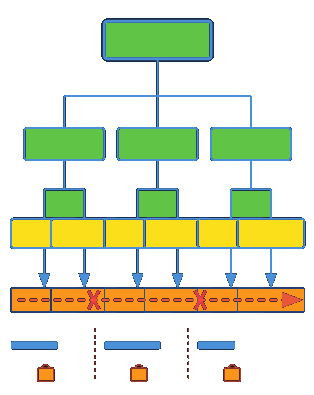 Organizational structure shapes communication patterns. Communication patterns shape systems.
If your organization is vertical, your product will be vertical. If your incentives are local, your decisions will be local. If your teams are isolated, your solutions will be fragmented.
You cannot expect horizontal behavior from a vertically optimized structure without friction.
Disconnected collaboration initiatives fail because they try to overlay horizontal tools on top of vertical incentives.
Attempts like a new collaboration platform or using shared workspace technology to incentivize collaboration are examples of this approach.
But the underlying structure remains untouched. People are still measured on local performance. Budgets are still allocated per department. Promotions still reward vertical success.
First question to ask in your company: Who is responsible for your PLM/collaboration infrastructure for non-transactional information?
Most likely, it is in the IT or Engineering silo, rarely on a higher organizational level.
And then we are surprised when collaboration stalls?
The Myth of the Tool
Whenever collaboration becomes a pain, people look for IT tools as a cure.
 “We need better platforms.”
“We need integrated systems.”
and now:
“We need AI – the AI agents will do the collaboration for us.”
Tools matter, but they are amplifiers. They amplify existing behavior. They do not create it. While finalizing this article, I saw this post from Dr. Sebastian Wernicke coming in, containing this quote:
Agents are software. Maturity is culture. And culture, inconveniently, doesn’t come with an install package.
If trust is low, a collaboration platform becomes a battlefield. If incentives are misaligned, shared dashboards become weapons. If fear dominates, transparency becomes a threat.
Collaboration is not a software problem. It is a human problem. Which brings us to something that is rarely discussed in boardrooms: the intrinsic motivation of its employees.
The Limbic Brain Is Always There
Beneath the rational layer of strategy and planning sits something older: the limbic system. The part of us that cares about belonging, safety, recognition, autonomy, and purpose.
Collaboration thrives when the limbic brain’s needs are met. It collapses when they are threatened.
- If people feel unsafe, they protect information!
- If they feel undervalued, they withdraw effort!
- If they feel controlled, they resist alignment!
You cannot mandate collaboration if the emotional system of the organization is defensive.
The question is not “How do we force collaboration?”
The question is “How do we create conditions where collaboration feels natural?”
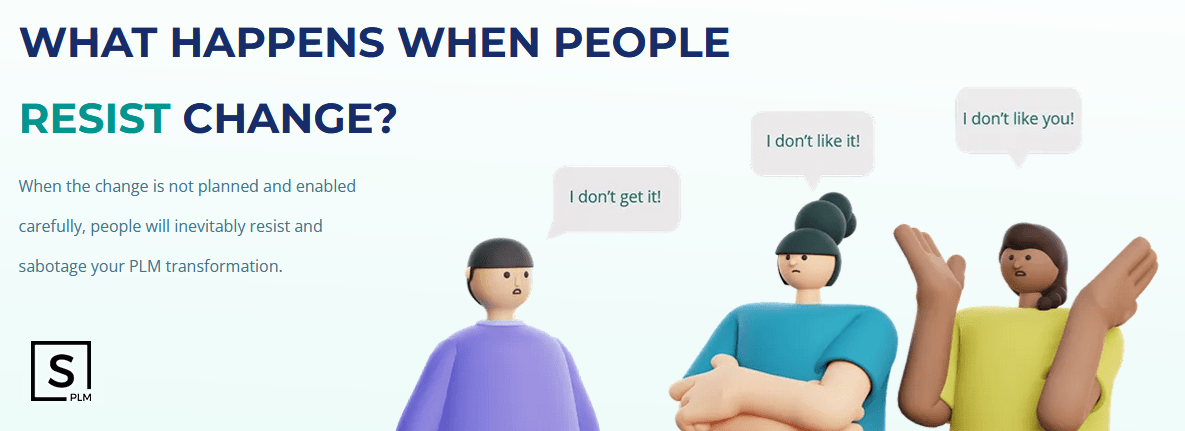
And that requires leaders to connect to the human, not just to the role or an artificial intelligence solution. They should be inspired by this iconic image from Share PLM:
Besides a difficult-to-quantify ROI, there is another reason why collaboration struggles to gain executive traction: it rarely creates immediate success.
It prevents future failure, and we humans in general do not prioritize prevention, thinking of our environmental, financial and potential even health behavior. Where prevention has the lowest cost, most of the time, fixing the damage lies in our nature.
 For companies, it is easier to celebrate the hero who fixes a late-stage integration disaster than the quiet team that prevented it months earlier through cross-functional dialogue.
For me, the firefighters are the biggest challenge to successfully implementing a PLM infrastructure. The image to the left comes from a 2014 presentation when discussing potential resistance to a successful PLM implementation.
In vertical systems, firefighting is visible. Prevention is silent and therefore collaboration activities feel like a cost center rather than a strategic lever.
Where to Push, Where to Invest?
 If you cannot directly measure collaboration, where should you push? Not in tools alone, slogans or one-off workshops. Invest in shared experiences.
When people meet outside their vertical silos, something subtle shifts. They see faces instead of functions. They understand constraints instead of assuming incompetence. They replace narratives with conversations.
 Note: shared experiences are not the same as planned online webmeetings that became popular during and after COVID. They have a rigid regime of collaboration enforcement, back-to-back in many companies, most of the time lacking the typical “coffee machine” experiences.
Also, when looking at events where people share experiences, there is a difference between a traditional vertical PLM/CM/IT/ERP conference where specialists focus on one discipline and on the other side, a human-centric conference, where humans share their experiences in an organization.
The Share PLM Summit in May last year was an eye-opener for me. Starting from the human perspective brought a lot of energy and willingness to discuss various insights – collaboration at its best.
Events, summits, workshops—when done well—create human connection. They remind participants that behind every deliverable sits a person trying to do meaningful work.
The focus on the human perspective is not soft. It is strategic because collaboration is not primarily about information exchange. It is about relationship quality and trust.
The Real Question
 The question is not whether collaboration is valuable. The question is whether we are willing to adjust our vertical incentives to make it possible.
Because collaboration is not free, it requires time. It requires emotional energy. It requires psychological safety. It sometimes requires giving up local control for global benefit.
In systems terms, it requires shifting from local optimization to whole-system optimization.
That is uncomfortable.
But if our products are complex, interconnected, and rapidly evolving—as most are today—then vertical thinking alone is no longer sufficient. The world has become horizontal, even if our org charts have not.
And perhaps the real challenge is not how to measure collaboration, but how to design organizations where collaboration is no longer something we need to sell at all. An article from McKinsey might inspire you here for this transition – for me, it did: Toward an integrated technology operating model.
Beyond AI
While everyone talks and writes about AI, I do not believe AI will solve the collaboration issue. For sure, AI collaboration with agents will increase personal and organizational effectiveness, but it never touches our limbic brain, the irreplaceable part that makes us typical humans and unique.
There will always be a need for that, unless we become numb and addicted to the AI environments. There are various studies popping up on how AI “untrains” our brain muscles, reduces patience and deep thinking. Finding a new human balance is crucial.
Conclusion
Triggered by Chad Jackson’s post about MBSE and collaboration, I took the time to deep-dive into the aspects of collaboration in the PLM domain. How do you manage collaboration?
Come and share your experiences at the upcoming Share PLM 2026 summit from 19-20 May in Jerez. The title of my keynote: Are Humans Still Resources? Agentic AI and the Future of Work and PLM.

 December is the last month when daylight is getting shorter in the Netherlands, and with the end of the year approaching, this is the time to reflect on 2025.
For me, it has been an interesting year, and I hope it has been similar for you. I started 2025 with this post: My 2025 focus, sharing the topics that would drive my primary intentions—a quick walk through some of these topics and what to reflect on what I have learned.
Fewer blog posts
 It was already clear that AI-generated content was going to drown the blogging space. The result: Original content became less and less visible, and a self-reinforcing amount of general messages reduced further excitement.
As I have no commercial drive to be visible, I will continue to write posts only when relevant to personal situations or ideas, with the intention of being shared and discussed with the readers of my posts – approximate 26 / year.
 Therefore, if you are still interested in content that has not been generated with AI, I recommend subscribing to my blog and interacting directly with me through the comments, either on LinkedIn or via a direct message.
More podcast recordings
 Together with the Share PLM podcast team, Beatriz Gonzales and Maria Morris, we enjoyed talking with a large variety of people active in PLM, all having their personal stories related to PLM to share—each episode ending with an experience to share and a desired takeaway for the listeners. We did it with great pleasure and learned from each episode.
You can find all the recordings from 2025 (Season 3) here.
In Season 4, we want to add the C-level perspective to our PLM and People podcast discussions.
#DataCentric or #PeopleCentric ?
 It was PeopleCentric first at the beginning of the year, with the Share PLM Summit in Jerez and DataCentric in the second half of the year, with activities connected to the PLM Roadmap/PDT Europe conference in Paris.
In case you missed the excitement and lessons learned, here they are:
- The weekend after the Share PLM Summit 2025
- A week after Shaping the Future of PLM – No time to lose!
- A very long week after PLM Roadmap / PDT Europe 2025
Both topics will become even more critical due to the impact of AI tools on our day-to-day work.
Sustainability?
 Already an uncomfortable term for some of us at the beginning of 2025, it has become one of the best-kept secrets of 2025. Where traditional countries and companies revert to their short-term bad habits – optimize shareholders value, there are also forward-looking enterprises that are actively rephrasing their sustainable strategies as risk mitigation strategies with the awareness that adaptation is inevitable. Better start early than too late – not a typical human strategy.

In case you are interested, I recommend you read and listen to:
And now it is time to discuss AI.
 With all the investments and marketing related to AI, it is unavoidable to neglect it. For sure, it is a hype, but I believe that we are into something revolutionary for society, like the impact of the industrial revolution on our society 150 years ago.
However, there are also the same symptoms of the .com-hype 25 years ago.
 Who are going to be the winners? Currently, the hardware, datacenter and energy providers, not the AI-solution providers. But this can change.
Let’s look into some of the potential benefits.
Individual efficiency?
 Many of the current AI tools allow individuals to perform better at first sight. Suddenly, someone who could not write understandable (email) messages, draw images or create structured presentations now has a better connection with others—the question to ask is whether these improved efficiencies will also result in business benefits for an organization.
 Looking back at the introduction of email with Lotus Notes, for example, email repositories became information siloes and did not really improve the intellectual behavior of people.
Later, Microsoft took over the dominant role as the office software provider with enhanced search and storage capabilities, but still, most of the individual knowledge remained hidden or inaccurate as it missed the proper context.
 As a result of this, some companies tried to reduce the usage of individual emails and work more and more in communities with a specific context. Also, due to COVID and improved connectivity, this led to the success of Teams. And now with Copilot embedded in the Microsoft suite, I am curious to learn what companies perceive as measurable business benefits.
The chatbot?
 For many companies, the chatbot is a way to reduce the number of people active in customer relations, either sales or services. I believe that, combined with the usage of LLMs, an improvement in customer service can be achieved. Or at least the perception, as so far I do not recall any interaction with a chatbot to be specific enough to solve my problem.
The risks with AI?
 Now I may sound like a boomer who started focusing on knowledge management 25 years ago – exploring tacit knowledge.
Tacit knowledge is the knowledge a real expert has by combining different areas of expertise and understanding what makes sense.
Could tacit knowledge be replaced by an external model that gives you all the (correct?) answers?
In verifiable situations, we know when the model is hallucinating – but what if the scope is beyond our understanding? Would we still rely on AI, and could AI be manipulated in ways that we lose touch with the real facts?
Already, the first research papers are coming out warning of reduced human cognitive performance, e.g., this paper: Beware of Metacognitive Laziness: Effects of Generative Artificial Intelligence on Learning, Motivation, Processes, and Performance.
Combined with laziness (a typical human behavior – system 1), these results made me think of a statement made by Sean Illing:
“People love the truth, but they hate facts.”
A statement highly relevant to what we see happening now with social media – we do not think or research deep enough anymore, we select the facts that we like and consider them our truth.
What happens in our PLM domain?
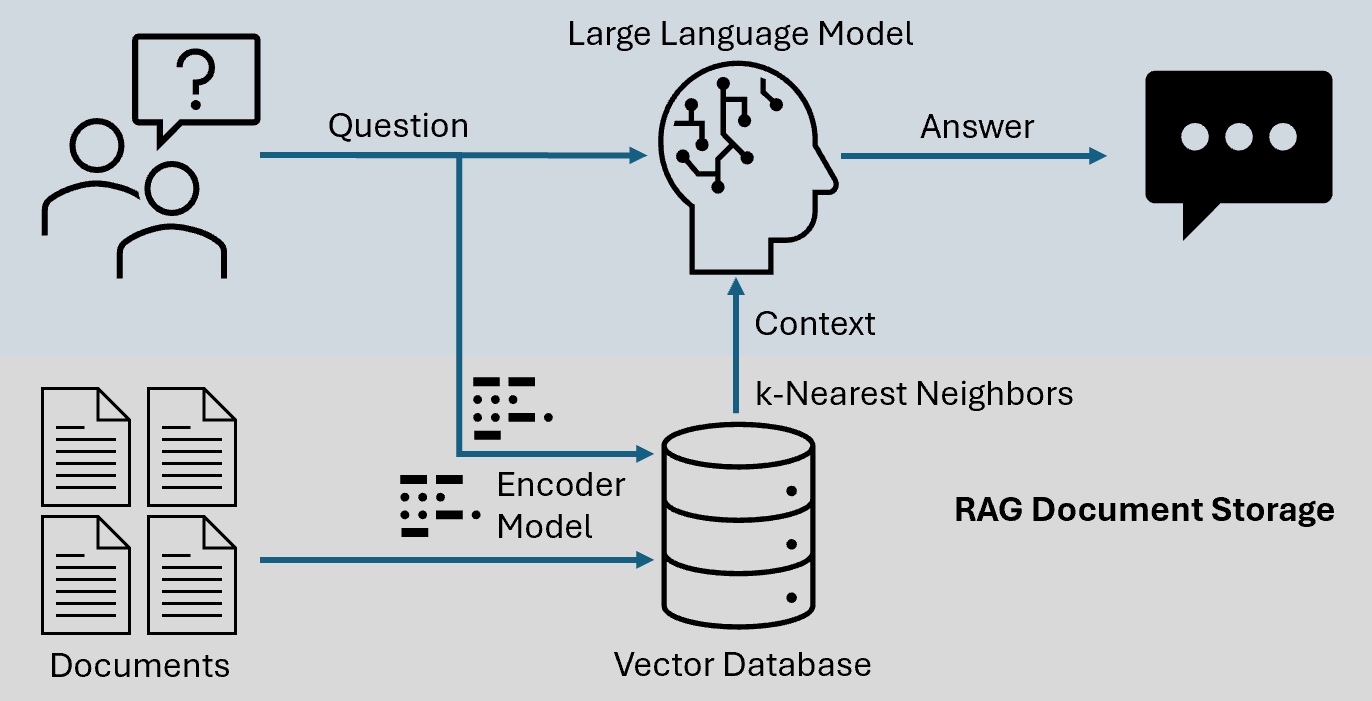 In the PLM domain, companies are indeed reluctant to use LLMs directly, where some of them use RAG (Retrieval-Augmented Generation) to feed the LLM with a relevant context.
Still, the answers require human interpretation, as you cannot avoid hallucinations in your product lifecycle management processes.
As long as the results are based on inconsistent data sources that lack the relevant context, the answers are of low quality.

Meanwhile, every vendor in the PLM space is now offering AI-agents, most of the time within their own portfolio space. The ultimate dream is polygot agents (who are buying them / who are developing them) that can work together and create a new type of agility beyond traditional workflows. An interesting article in this context comes from Oleg Shilovitsky: Why Does PLM Need Task Re-Engineering Before It Can Have AI?
Still, these potential “quick” fixes create a risk for companies in the long term. Buying AI tools does not fix the foundation that is based on legacy.

In particular, related to the Shape the Future of PLM – Together workshop in Paris on Nov 4th, the consensus was that companies need to invest in understanding and implementing domain-specific ontologies and semantic models to provide a data-driven infrastructure that allows AI to make accurate decisions or valid recommendations.
You can read the summary of the event and recommendations here: Accelerating the Future of PLM & ALM on the ArrowHead’s website.
You can also read this post from Ole Olesen-Bagneux: Why will 2026 be the year of the ontologist?
 Although the topics in the workshop might look “too advanced” for your company, they are crucial to transform into a long-term, sustainable, data-driven, model-based, and AI-supported enterprise.
Somewhere, you have to cross the chasm from documents to data in context.
Being busy is not an excuse, as you can also read in Thomas Nys’s LinkedIn post: Your Engineers spend 40 % of their time maintaining yesterday’s shortcuts. And you’re wondering why your AI initiative isn’t moving faster. I loved the image.
Human Resources?
The AI revolution will have an impact on society, and it is up to us individuals how well we adapt.
 Remember, the first 50 – 100 years of the Industrial Revolution made only a few people extremely rich. James Watt, the Rothschild family, Andrew Carnegie, John D. Rockefeller, Cornelius Vanderbilt, J.P. Morgan, Alfred Krupp and the Schneider family became so rich due to ownership of factories and machinery, the control of raw materials (coal, iron, oil), the use of new technology (steam power, mechanization) combined with access to cheap labor and weak labor laws and limited competition early on.
Most humans moved into urbanized areas to become nothing but cheap resources, even children. And remember, many of us are still human resources!
A new conspiracy?
 In 2016, Ida Auken’s lecture at the WEF created traction during COVID among people who believed in conspiracies. Her story focused on a more circular economy with respect for the Earth’s resources. The story was framed into the message:
“In the future, you will own nothing and be happy.”
The conspiracy theorist believed all their possessions would be taken away by the elite in the long term.
I want to conclude with a new message for these conspiracy theorists active on X or other discussion fora:
“In the future, you will know nothing, and you won’t be aware enough to care.”
Conclusion
2026 is going to be an interesting year, where we cannot allow ourselves to sit still and watch what is happening. Active participation is more challenging but also more rewarding than being a consumer. In May 2026, I hope to meet some of you at the Share PLM Summit in Jerez and share the human side, followed by the PDM Roadmap/PDT Europe conference in Q4 in Gothenburg, where we will catch up on the technical and data side.
I am wishing you all a wise and happy/healthy 2026


 Last week, I wrote about the first day of the crowded PLM Roadmap/PDT Europe conference.
You can still read my post here in case you missed it: A very long week after PLM Roadmap / PDT Europe 2025
 My conclusion from that post was that day 1 was a challenging day if you are a newbie in the domain of PLM and data-driven practices. We discussed and learned about relevant standards that support a digital enterprise, as well as the need for ontologies and semantic models to give data meaning and serve as a foundation for potential AI tools and use cases.
This post will focus on the other aspects of product lifecycle management – the evolving methodologies and the human side.
 Note: I try to avoid the abbreviation PLM, as many of us in the field associate PLM with a system, where, for me, the system is more of an IT solution, where the strategy and practices are best named as product lifecycle management.

And as a reminder, I used the image above in other conversations. Every company does product lifecycle management; only the number of people, their processes, or their tools might differ. As Peter Billelo mentioned in his opening speech, the products are why the company exists.
Unlocking Efficiency with Model-Based Definition
 Day 2 started energetically with Dennys Gomes‘ keynote, which introduced model-based definition (MBD) at Vestas, a world-leading OEM for wind turbines.
Personally, I consider MBD as one of the stepping stones to learning and mastering a model-based enterprise, although do not be confused by the term “model”. In MBD, we use the 3D CAD model as the source to manage and support a data-driven connection among engineering, manufacturing, and suppliers. The business benefits are clear, as reported by companies that follow this approach.
However, it also involves changes in technology, methodology, skills, and even contractual relations.
Dennys started sharing the analysis they conducted on the amount of information in current manufacturing drawings. The image below shows that only the green marker information was used, so the time and effort spent creating the drawings were wasted.

It was an opportunity to explore model-based definition, and the team ran several pilots to learn how to handle MBD, improve their skills, methodologies, and tool usage. As mentioned before, it is a profound change to move from coordinated to connected ways of working; it does not happen by simply installing a new tool.

The image above shows the learning phases and the ultimate benefits accomplished. Besides moving to a model-based definition of the information, Dennys mentioned they used the opportunity to simplify and automate the generation of the information.
Vestas is on a clear path, and it is interesting to see their ambition in the MBD roadmap below.

An inspirational story, hopefully motivating other companies to make this first step to a model-based enterprise. Perhaps difficult at the beginning from the people’s perspective, but as a business, it is a profitable and required direction.
Bridging The Gap Between IT and Business
 It was a great pleasure to listen again to Peter Vind from Siemens Energy, who first explained to the audience how to position the role of an enterprise architect in a company compared to society. He mentioned he has to deal with the unicorns at the C-level, who, like politicians in a city, sometimes have the most “innovative” ideas – can they be realized?
To answer these questions, Peter is referring to the Business Capability Model (BCM) he uses as an Enterprise Architect.
Business Capabilities define ‘what’ a company needs to do to execute its strategy, are structured into logical clusters, and should be the foundation for the enterprise, on which both IT and business can come to a common approach.

The detailed image above is worth studying if you are interested in the levels and the mappings of the capabilities. The BCM approach was beneficial when the company became disconnected from Siemens AG, enabling it to rationalize its application portfolio.
Next, Peter zoomed in on some of the examples of how a BCM and structured application portfolio management can help to rationalize the AI hype/demand – where is it applicable, where does AI have impact – and as he illustrated, it is not that simple. With the BCM, you have a base for further analysis.

Other future-relevant topics he shared included how to address the introduction of the digital product passport and how the BCM methodology supports the shift in business models toward a modern “Power-as-a-Service” model.
 He concludes that having a Business Capability Model gives you a stable foundation for managing your enterprise architecture now and into the future. The BCM complements other methodologies that connect business strategy to (IT) execution. See also my 2024 post: Don’t use the P** word! – 5 lessons learned.
Holistic PLM in Action.
 or companies struggling with their digital transformation in the PLM domain, Andreas Wank, Head of Smart Innovation at Pepperl+Fuchs SE, shared his journey so far. All the essential aspects of such a transformation were mentioned. Pepperl+Fuchs has a portfolio of approximately 15,000 products that combine hardware and software.
It started with the WHY. With such a massive portfolio, business innovation is under pressure without a PLM infrastructure. Too many changes, fragmented data, no single source of truth, and siloed ways of working lead to much rework, errors, and iterations that keep the company busy while missing the global value drivers.
Next, the journey!

The above image is an excellent way to communicate the why, what, and how to a broader audience. All the main messages are in the image, which helps people align with them.
The first phase of the project, creating digital continuity, is also an excellent example of digital transformation in traditional document-driven enterprises. From files to data align with the From Coordinated To Connected theme.

Next, the focus was to describe these new ways of working with all stakeholders involved before starting the selection and implementation of PLM tools. This approach is so crucial, as one of my big lessons learned from the past is: “Never start a PLM implementation in R&D.”
If you start in R&D, the priority shifts away from the easy flow of data between all stakeholders; it becomes an R&D System that others will have to live with.
You never get a second, first impression!
Pepperl+Fuchs spends a long time validating its PLM selection – something you might only see in privately owned companies that are not driven by shareholder demands, but take the time to prepare and understand their next move.
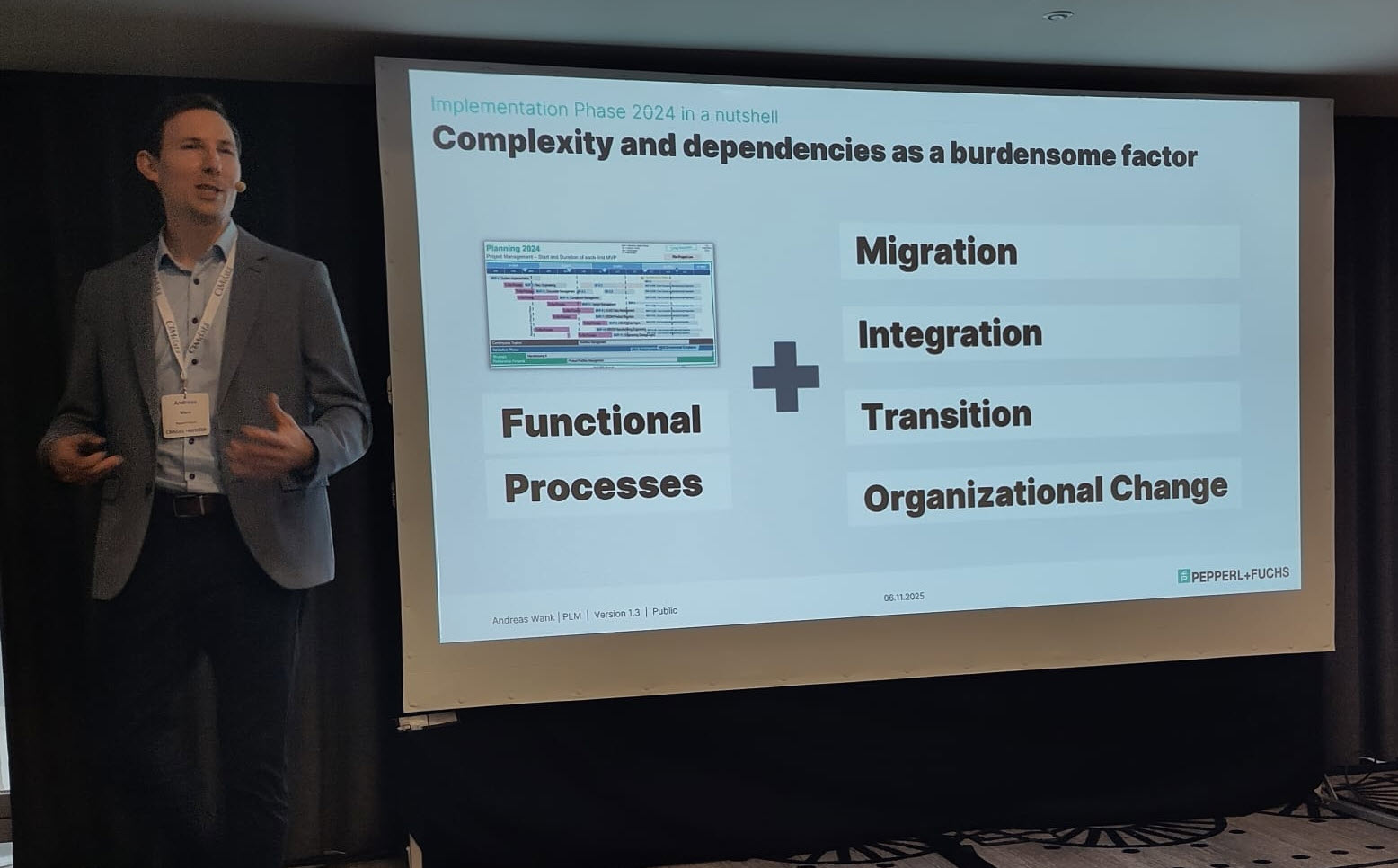
As Andreas also explained, it is not only about the functional processes. As the image shows, migration (often the elephant in the room) and integration with the other enterprise systems also need to be considered. And all of this is combined with managing the transition and the necessary organizational change.
Andreas shared some best practices illustrating the focus on the transition and human aspects. They have implemented a regular survey to measure the PLM mood in the company. And when the mood went radical down on Sept 24, from 4.1 to 2.8 on a scale of 1 to 5, it was time to act.
They used one week at a separate location, where 30 of his colleagues worked on the reported issues in one room, leading to 70 decisions that week. And the result was measurable, as shown in the image below.

 Andreas’s story was such a perfect fit for the discussions we have in the Share PLM podcast series that we asked him to tell it in more detail, also for those who have missed it. Subscribe and stay tuned for the podcast, coming soon.
Trust, Small Changes, and Transformation.
 Ashwath Sooriyanarayanan and Sofia Lindgren, both active at the corporate level in the PLM domain at Assa Abloy, came with an interesting story about their PLM lessons learned.
To understand their story, it is essential to comprehend Assa Abloy as a special company, as the image below explains. With over 1000 sites, 200 production facilities, and, last year, on average every two weeks, a new acquisition, it is hard to standardize the company, driven by a corporate organization.

However, this was precisely what Assa Abloy has been trying to do over the past few years. Working towards a single PLM system, with generic processes for all, spending a lot of time integrating and migrating data from the different entities became a mission impossible.
To increase user acceptance, they fell into the trap of customizing the system ever more to meet many user demands. A dead end, as many other companies have probably experienced similarly.
And then they came with a strategic shift. Instead of holding on to the past and the money invested in technology, they shifted to the human side.

The PLM group became a trusted organisation supporting the individual entities. Instead of telling them what to do (Top-Down), they talked with the local business and provided standardized PLM knowledge and capabilities where needed (Bottom-Up).
This “modular” approach made the PLM group the trusted partner of the individual business. A unique approach, making us realize that the human aspect remains part of implementing PLM

Humans cannot be transformed
 Given the length of this blog post, I will not spend too much text on my closing presentation at the conference. After a technical start on DAY 1, we gradually moved to broader, human-related topics in the latter part.
You can find my presentation here on SlideShare as usual, and perhaps the best summary from my session was given in this post from Paul Comis. Enjoy his conclusion.
Conclusion
Two and a half intensive days in Paris again at the PLM Roadmap / PDT Europe conference, where some of the crucial aspects of PLM were shared in detail. The value of the conference lies in the stories and discussions with the participants. Only slides do not provide enough education. You need to be curious and active to discover the best perspective.

For those celebrating: Wishing you a wonderful Thanksgiving!
For those of you following my blog over the years, there is, every time after the PLM Roadmap PDT Europe conference, one or two blog posts, where the first starts with “The weekend after ….”
 This time, November has been a hectic week for me, with first this engaging workshop “Shape the future of PLM – together” – you can read about it in my blog post or the latest post from Arrowhead fPVN, the sponsor of the workshop.
 Last week, I celebrated with the core team from the PLM Green Global Alliance our 5th anniversary, during which we discussed sustainability in action. The term sustainability is currently under the radar, but if you want to learn what is happening, read this post with a link to the webinar recording.
 Last week, I was also active at the PTC/User Benelux conference, where I had many interesting discussions about PTC’s strategy and portfolio. A big and well-organized event in the town where I grew up in the world of teaching and data management.
And now it is time for the PLM roadmap / PDT conference review
The conference
The conference is my favorite technical conference 😉 for learning what is happening in the field. Over the years, we have seen reports from the Aerospace & Defense PLM Action Groups, which systematically work on various themes related to a digital enterprise. The usage of standards, MBSE, Supplier Collaboration, Digital Thread & Digital Twin are all topics discussed.
This time, the conference was sold out with 150+ attendees, just fitting in the conference space, and the two-day program started with a challenging day 1 of advanced topics, and on day 2 we saw more company experiences.
 Combined with the traditional dinner in the middle, it was again a great networking event to charge the brain. We still need the brain besides AI. Some of the highlights of day 1 in this post.
PLM’s Integral Role in Digital Transformation
 As usual, Peter Bilello, CIMdata’s President & CEO, kicked off the conference, and his message has not changed over the years. PLM should be understood as a strategic, enterprise-wide approach that manages intellectual assets and connects the entire product lifecycle.
I like the image below explaining the WHY behind product lifecycle management.
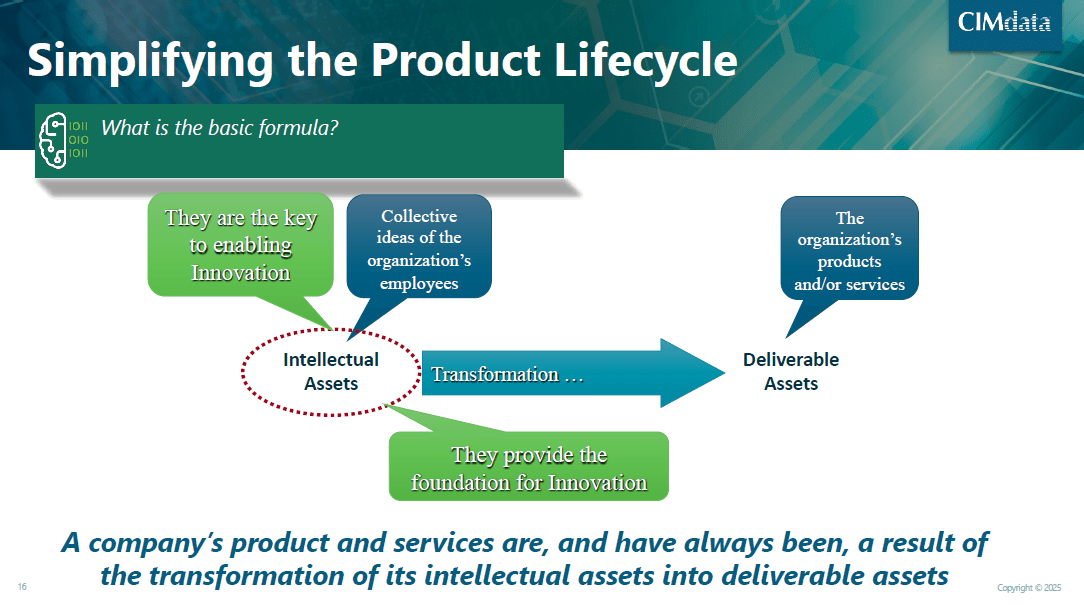
It enables end-to-end digitalization, supports digital threads and twins, and provides the backbone for data governance, analytics, AI, and skills transformation.
Peter walked us briefly through CIMdata’s Critical Dozen (a YouTube recording is available here), all of which are relevant to the scope of digital transformation. Without strong PLM foundations and governance, digital transformation efforts will fail.
The Digital Thread as the Foundation of the Omniverse
 Prof. Dr.-Ing. Martin Eigner, well known for his lifetime passion and vision in product lifecycle management (PDM and PLM tools & methodology), shared insights from his 40-year journey, highlighting the growing complexity and ever-increasing fragmentation of customer solution landscapes.

In his current eco-system, ERP (read SAP) is playing a significant role as an execution platform, complemented by PDM or ECTR capabilities. Few of his customers go for the broad PLM systems, and therefore, he stresses the importance of the so-called Extended Digital Thread.

Prof Eigner describes the EDT more precisely as an overlaying infrastructure implemented by a graph database that serves as a performant knowledge graph of the enterprise.
The EDT serves as the foundation for AI-driven applications, supporting impact analysis, change management, and natural-language interaction with product data. The presentation also provides a detailed view of Digital Twin concepts, ranging from component to system and process twins, and demonstrates how twins enhance predictive maintenance, sustainability, and process optimization.

Combined with the NVIDIA Omniverse as the next step toward immersive, real-time collaboration and simulation, enabling virtual factories and physics-accurate visualization. The outlook emphasizes that combining EDT, Digital Twin, AI, and Omniverse moves the industry closer to the original PLM vision: a unified, consistent Single Source of Truth 😮that boosts innovation, efficiency, and ROI.
For me, hearing and reading the term Single Source of Truth still creates discomfort with reality and humanity, so we still have something to discuss.
Semantic Digital Thread for Enhanced Systems Engineering in a Federated PLM Landscape
 Dr. Yousef Hooshmand‘s presentation was a great continuation of the Extended Digital Thread theme discussed by Dr. Martin Eigner. Where the core of Martin’s EDT is based on traceability between artifacts and processes throughout the lifecycle, Yousef introduced a (for me) totally new concept: starting with managing and structuring the data to manage the knowledge, rather than starting from the models and tools to understand the knowledge.
It is a fundamentally different approach to addressing the same problem of complexity. During our pre-conference workshop “Shape the future of PLM – together,” I already got a bit familiar with this approach, and Yousef’s recently released paper provides all the details.
All the relevant information can be found in his recent LinkedIn post here.

In his presentation during the conference, Yousef illustrated the value and applicability of the Semantic Digital Thread approach by presenting it in an automotive use case: Impact Analysis and Cost Estimation (image above)
To understand the Semantic Digital Thread, it is essential to understand the Semantic Data Model and its building blocks or layers, as illustrated in the image below:
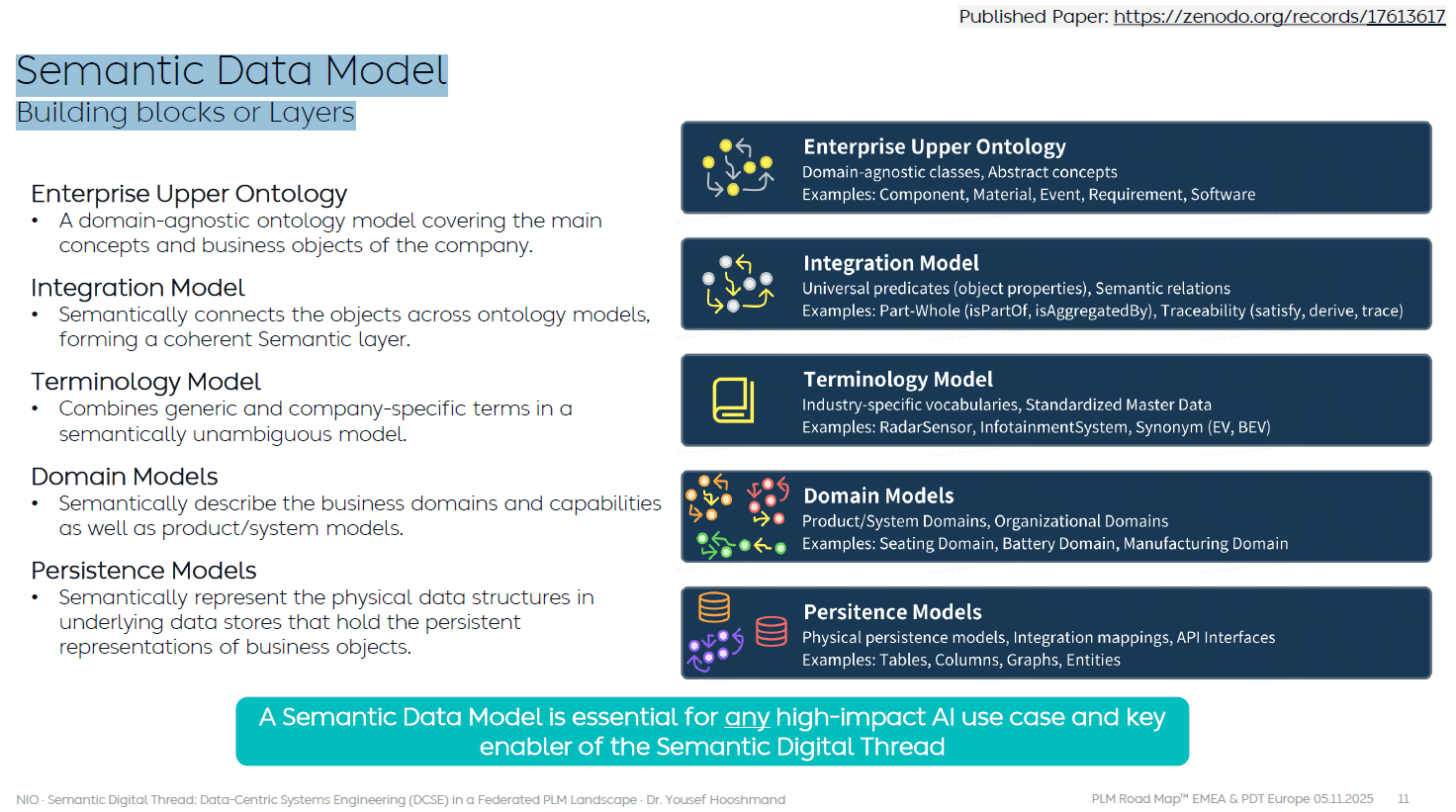
In addition, such an infrastructure is ideal for AI applications and avoids vendor- or tool lock-in, providing a significant long-term advantage.
I am sure it will take time for us to digest the content if you are entering the domain of a data-driven enterprise (the connected approach) instead of a document-driven enterprise (the coordinated approach).
 However, as many of the other presentations on day 1 also stated: “data without context is worthless – then they become just bits and bytes.” For advanced and future scenarios, you cannot avoid working with ontologies, semantic models and graph databases.
Where is your company on the path to becoming more data-driven?

Note: I just saw this post and the image above, which emphasizes the importance of the relationship between ontologies and the application of AI agents.
Evaluation of SysML v2 for use in Collaborative MBSE between OEMs and Suppliers
 It was interesting to hear Chris Watkins’ speech, which presented the findings from the AD PLM Action Group MBSE Collaboration Working Group on digital collaboration based on SysML v2.
The topic they research is that currently there are no common methods and standards for exchanging digital model-based requirements and architecture deliverables for the design, procurement, and acceptance of aerospace systems equipment across the industry.
The action group explored the value of SysML v2 for data-driven collaboration between OEMs and suppliers, particularly in the early concept phases.
Chris started with a brief explanation of what SysXML v2 is – image below:
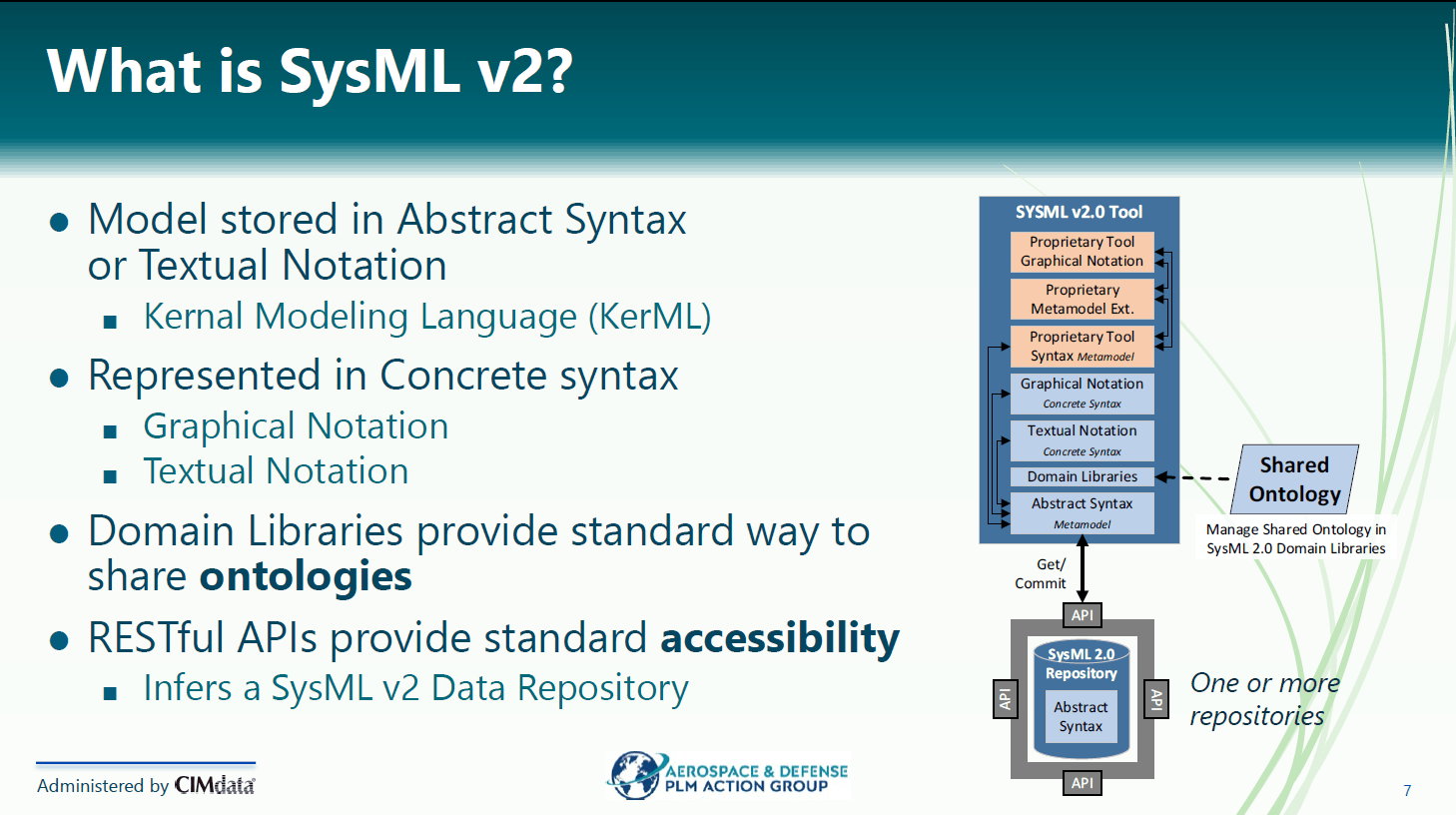
As the image illustrates, SysML v2-ready tools allow people to work in their proprietary interfaces while sharing results in common, defined structures and ontologies.
When analyzing various collaboration scenarios, one of the main challenges remained managing changes, the required ontologies, and working in a shared IT environment.
👉You can read the full report here: AD PAG reports: Model-Based Systems Engineering.
An interesting point of discussion here is that, in the report, participants note that, despite calling out significant gaps and concerns, a substantial majority of the industry indicated that their MBSE solution provider is a good partner. At the same time, only a small minority expressed a negative view.
Would Data-Centric Systems Engineering change the discussion? See table 1 below from Yousef’s paper:

An illustration that there was enough food for discussion during the conference.
PLM Interoperability and the Untapped Value of 40 Years in Standardization
In the context of collaboration, two sessions fit together perfectly.
 First, Kenny Swope from Boeing. Kenny is a longtime Boeing engineering leader and global industrial-data standards expert who oversees enterprise interoperability efforts, chairs ISO/TC 184/SC 4, and mentors youth in technology through 4-H and FIRST programs.

Kenny shared that over the past 40+ years, the understanding and value of this approach have become increasingly apparent, especially as organizations move toward a digital enterprise. In a digital enterprise, these standards are needed for efficient interoperability between various stakeholders. And the next session was an example of this.
Unlocking Enterprise Knowledge
 Fredrik Anthonisen, the CTO of the POSC Caesar Association (PCA), started his story about the potential value of efficient standard use.
According to a Siemens report, “The true costs of downtime” a $1,4 trillion is lost to unplanned downtime.
The root cause is that, most of the time, the information needed to support the MRO activity is inaccessible or incomplete.
Making data available using standards can provide part of the answer, but static documents and slow consensus processes can’t keep up with the pace of change.
Therefore, PCA established the PCA enterprise reference data cloud, where all stakeholders in enterprise collaboration can relate their data to digital exposed standards, as the left side of the image shows.
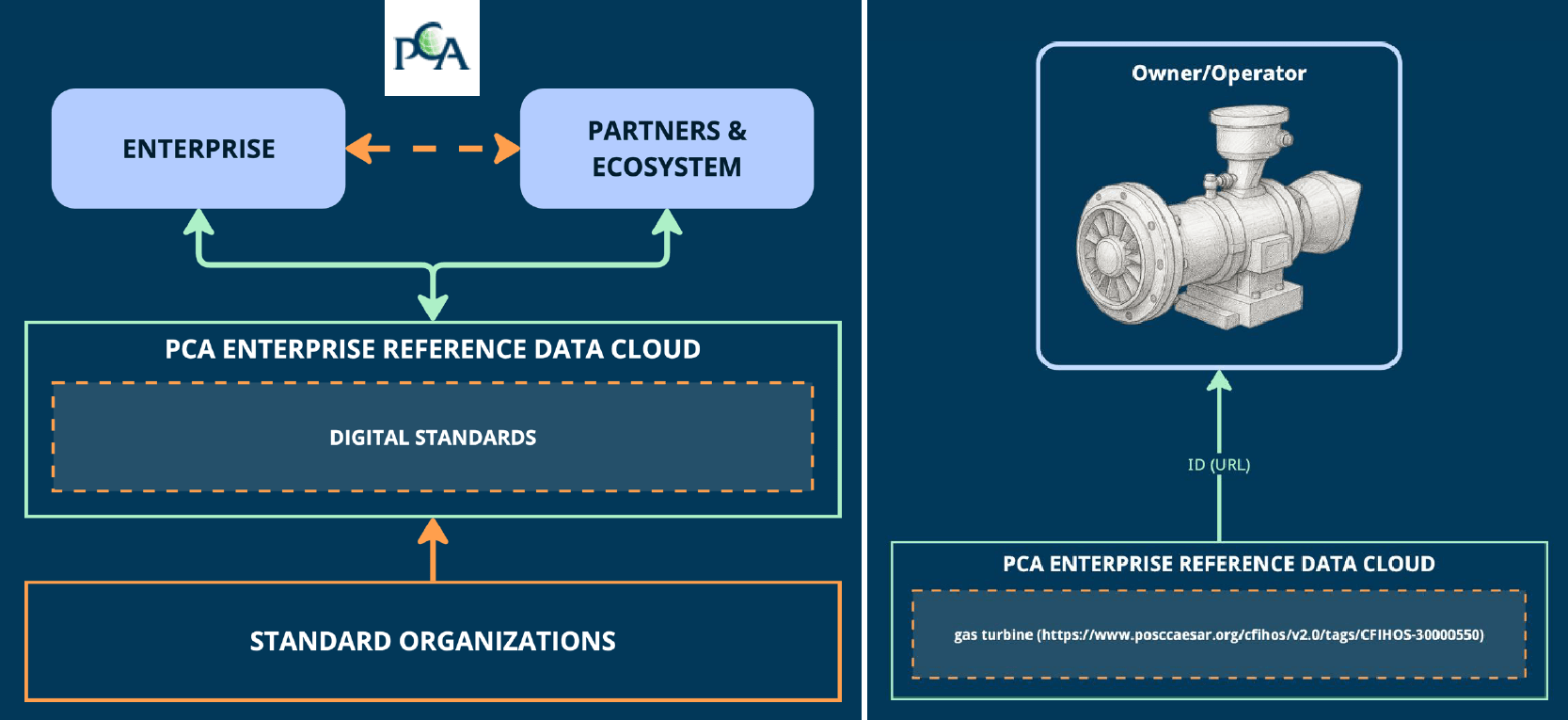
Fredrik shared a use case (on the right side of the image) as an example. Also, he mentioned that the process for defining and making the digital reference data available to participants is ongoing. The reference data needs to become the trusted resource for the participants to monetize the benefits.
Summary
Day 1 had many more interesting and advanced concepts related to standards and the potential usage of AI.
 Jean-Charles Leclerc, Head of Innovation & Standards at TotalEnergies, in his session, “Bringing Meaning Back To Data,” elaborated on the need to provide data in the context of the domain for which it is intended, rather than “indexed” LLM data.
Very much aligned with Yousef’s statement that there is a need to apply semantic technologies, and especially ontologies, to turn the data into knowledge.
More details can also be found in the “Shape the future of PLM – together” post, where Jean-Charles was one of the leading voices.
 The panel discussion at the end of day 1 was free of people jumping on the hype. Yes, benefits are envisioned across the product lifecycle management domain, but to be valuable, the foundation needs to be more structured than it has been in the past.
“Reliable AI comes from a foundation that supports knowledge in its domain context.”
Conclusion
For the casual user, day 1 was tough – digital transformation in the product lifecycle domain requires skills that might not yet exist in smaller organizations. Understanding the need for ontologies (generic/domain-specific) and semantic models is essential to benefit from what AI can bring – a challenging and enjoyable journey to follow!
I think that it doesn't take a lot of imagination today to at least create some non-vendor-specific tooling. Build it…
Effective collaboration in product lifecycle management can help teams connect different functions and reduce gaps between development stages. I find…
Hi Jos, Knowing your background in methodology and education, I wanted to share a longer article with you: “What is…
Interesting reflection, Jos. In my experience, the situation you describe is very recognizable. At the company where I work, sustainability…
[…] (The following post from PLM Green Global Alliance cofounder Jos Voskuil first appeared in his European PLM-focused blog HERE.) […]