

During my holiday I have read some interesting books. Some for the beauty of imagination and some to enrich my understanding of the human brain.
 Why the human brain? It is the foundation and motto of my company: The Know-How to Know Now.
In 2012 I wrote a post: Our brain blocks PLM acceptance followed by a post in 2014 PLM is doomed, unless …… both based on observations and inspired by the following books (must read if you are interested in more than just PLM practices and technology):
- The Innovator’s Dilemma by Clayton Christensen
- On Intelligence by Jeff Hawkins
- Thinking, Fast and Slow by Daniel Kahneman
In 2014, Digital Transformation was not so clear. We talked about disruptors, but disruption happened outside our PLM comfort zone.
Now six years later disruption or significant change in the way we develop and deliver solutions to the market has become visible in the majority of companies. To stay competitive or meaningful in a global market with changing customer demands, old ways of working no longer bring enough revenue to sustain. The impact of software as part of the solution has significantly changed the complexity and lifecycle(s) of solutions on the market.
Most of my earlier posts in the past two years are related to these challenges.
What is blocking Model-Based Definition?
 This week I had a meeting in the Netherlands with three Dutch peers all interested and involved in Model-Based Definition – either from the coaching point of view or the “victim” point of view. We compared MBD-challenges with Joe Brouwer’s AID (Associated Information Documents) approach and found a lot of commonalities.
No matter which method you use it is about specifying unambiguously how a product should be manufactured – this is a skill and craftsmanship and not a technology. We agreed that a model-based approach where information (PMI) is stored as intelligent data elements in a Technical Data Package (TPD) will be crucial for multidisciplinary usage of a 3D Model and its associated information.
If we would store the information again as dumb text in a view, it will need human rework leading to potential parallel information out of sync, therefore creating communication and quality issues. Unfortunate as it was a short meeting, the intention is to follow-up this discussion in the Netherlands to a broader audience. I believe this is what everyone interested in learning and understanding the needs and benefits of a model-based approach (unavoidable) should do. Get connected around the table and share/discuss.
 We realized that human beings indeed are often the blocking reason why new ways of working cannot be introduced. Twenty-five years ago we had the discussion moving from 2D to 3D for design. Now due to the maturity of the solutions and the education of new engineers this is no longer an issue. Now we are in the next wave using the 3D Model as the base for manufacturing definition, and again a new mindset is needed.
There are a few challenges here:
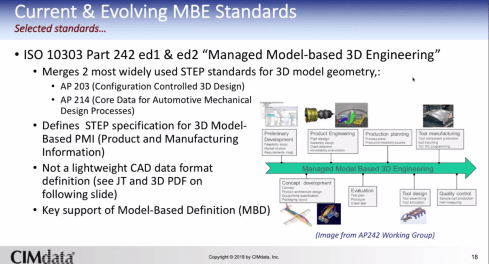
- MBD is still in progress – standards like AP242 still needs enhancements
- There is a lack of visibility on real reference stories to motivate others.
(Vendor-driven stories often are too good to be true or too narrow in scope) - There is no education for (modern) business processes related to product development and manufacturing. Engineers with new skills are dropped in organizations with traditional processes and silo thinking.
Educate, or our brain will block the future!
 The above points need to be addressed, and here the human brain comes again into the picture. Our unconscious, reptile brain is continuously busy to spend a least amount of energy as described in Thinking, Fast and Slow. Currently, I am reading the Idiot Brain: What Your Head Is Really Up To by Dean Burnett, another book confirming that our brain is not a logical engine making wise decisions
And then there is the Dunning-Kruger effect, explaining that the people with the lowest skills often have the most outspoken opinion and not even aware of this flaw. We see this phenomenon in particular now in social media where people push their opinion as if they are facts.
So how can we learn new model-based approaches and here I mean all the model-based aspects I have discussed recently, i.e., Model-Based Systems Engineering, Model-Based Definition/ Model-Based Enterprise and the Digital Twin? We cannot learn it from a book, as we are entering a new era.
First, you might want to understand there is a need for new ways of working related to complex products. If you have time, listen to Xin Guo Zhang’s opening keynote with the title: Co-Evolution of Complex Aeronautical Systems & Complex SE. It takes 30 minutes so force yourself to think slow and comprehend the message related to the needed paradigm shift for systems engineering towards model-based systems engineering
Also, we have to believe that model-based is the future. If not, we will find for every issue on our path a reason not to work toward the ultimate goal.
You can see this in the comments of my earlier post on LinkedIn, where Sami Grönstrand writes:
I warmly welcome the initiative to “clean up” these concepts (It is time to clean up our model-based problem and above all, await to see live examples of transformations — even partial — coupled with reasonable business value identification.
There are two kinds of amazing places: those you have first to see before you can believe they exist.
And then those kinds that you have to believe in first before you can see them…
 And here I think we need to simplify en enhance the Model-Based myth as according to Yuval Harari in his book Sapiens, the power of the human race came from creating myths to align people to have long-term, forward-looking changes accepted by our reptile brain. We are designed to believe in myths. Therefore, the need for a Model-based myth.In my post PLM as a myth? from 2017, I discussed this topic in more detail.
Conclusion
There are so many proof points that our human brain is not as reliable as we think it is. Knowing less about these effects makes it even harder to make progress towards a digital future. This post with all its embedded links can keep your brain active for a few hours. Try it, avoid to think fast and avoid assuming you know it all. Your thoughts?
Learning & Discussing more?
Still time to register for CIMdata PLM Roadmap and PDT Europe
 Oleg and I concluded that the traditional PLM status reports provided by consultancy firms are no longer is relevant. They focus on the big vendors, in a status-quo and most of them are 80 % the same on their core PLM capabilities. The challenge comes in how to select a PLM approach for your company.
 Oleg believes more in the bottom-up approach where new technology will enable users to work differently and empower themselves to improve their business (without calling it PLM). More or less concluding there is no need for a PLM consultant as the users will decide themselves about the value of the selected technology. In the context of Oleg’s position as
 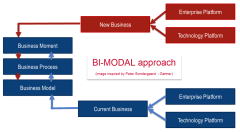 For a company it is extremely difficult to have two approaches in parallel as the first reaction is: “let’s convert the old data to the new environment”.
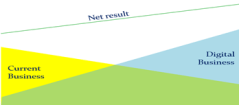 Like the bimodal approach the overlay approach creates the illusion that in the near future the old legacy PLM will disappear. I partly share that illusion when you consider the near future a period of 5 – 10+ years depending on the company’s active products. Faster is not realistic.
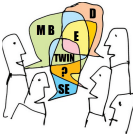 Most of my blogging time I spent on explaining the meaning behind a modern model-driven approach and its three main aspects: Model-Based Systems Engineering, Model-Based Definition and Digital Twins. As some of these aspects are still in the hype phase, it was interesting to see the two different opinions are popping up. On one side people claiming the world is still flat (2D), considering model-based approaches just another hype, caused by the vendors. There is apparently no need for digital continuity. If you look into the reactions from certain people, you might come to the conclusion it is impossible to have a dialogue, throwing opinions is not a discussion..
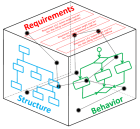 There is also another group, to which I am connected, that is quite active in learning and formalizing model-based approaches. This in order to move forward towards a digital enterprise where information is connected and flowing related to various models (behavior models, simulation models, software models, 3D Models, operational models, etc., etc.) . This group of people is discussing standards and how to use and enhance them. They discuss and analyze with arguments and share lessons learned. One of the best upcoming events in that context is the joined

 I spent a lot of time demystifying some of PLM-related themes. The challenge remains, like in the non-PLM world, that it is hard to get educated by blog posts as you might get over-informed by (vendor-related) posts all surfing somewhere on the hype curve. Do not look at the catchy title – investigate and take time to understand HOW things will this work for you or your company. There are enough people explaining WHAT they do, but HOW it fit in a current organization needs to be solved first. Therefore the above three themes.
 This is my concluding post related to the various aspects of the model-driven enterprise. We went through
  In the Digital Twin concept, it is more about a defining a system that should work in the field. How to combine various systems into a working solution and each of the systems has already a pre-defined set of behavioral / operational parameters, which could be 3D related but also performance related.
 Why aren’t we doing this already? It takes more skilled engineers instead of cheaper fixers downstream. The fact that we are used to fixing it later is also an inhibitor for change. Management needs to trust and understand the economic value instead of trying to reduce the number of engineers as they are expensive and hard to plan.
 In the construction industry, companies are discovering the power of BIM (Building Information Model) , introduced to enhance the efficiency and productivity of all stakeholders involved. Massive benefits can be achieved if the construction of the building and its future behavior and maintenance can be optimized virtually compared to fixing it in an expensive way in reality when issues pop up.
 Of course it requires new ways of working. Working with digital connected models is not what engineering learn during their education time – we have just started this journey. Therefore organizations should explore on a smaller scale how to create a full Digital Twin based on connected data – this is the ultimate base for the next purpose.
 When you are after the topic of a Digital Twin through the materials provided by the various software vendors, you see all kinds of previews what is possible. Augmented Reality, Virtual Reality and more. All these presentations show that clicking somewhere in a 3D Model Space relevant information pops-up. Where does this relevant information come from?
 How many companies have done this already? For sure not the companies that are already a long time in business as their current silos and legacy processes do not cater for digital continuity. By appointing a Chief Digital Officer, the journey might start, the biggest risk the Chief Digital Officer will be running another silo in the organization.
 Data collected from an individual twin or collection of twins can be analyzed to extract or discover failure opportunities. An R&D organization is interested in learning what is happening in the field with their products. These analyses lead to better and more competitive solutions.


 There are several reasons why the Digital Twin is overhyped. One of the reasons is that the Digital Twin is not necessarily considered as a PLM-related topic. Other vendors like SAP (
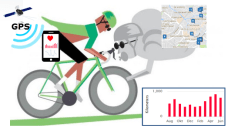 As a cyclist, I am active on platforms like
 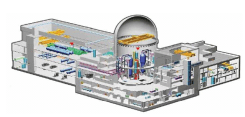 Another known digital twin story is related to plants in operation. In the past 10 years, I have advocated for Plant Lifecycle Management (
 Companies like GE and SAP focus a lot on the digital twin in relation to asset performance. Measuring the performance of assets, comparing their performance with other similar assets and based on performance characteristics the collector of the data can sell predictive maintenance analysis, performance optimization guidance and potentially other value offerings to their customers.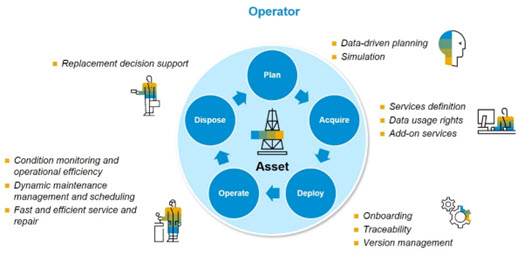
 Due to the fact that I already reach more than 1000 words, I will focus in my next post on the most relevant digital twin for PLM. Here, all disciplines come together. The 3D Mechanical model, the behavior models, the embedded and control software, (manufacturing simulation and more. This is to create an almost perfect virtual copy of a real product or system in the physical world. There, we will see that this is not as easy as concepts depend on accurate data and reliable models, which is not the case currently in most companies in their engineering environment.

 This presentation matched nicely with
  The presentations were followed by a (long) panel discussion. The common theme in both discussions is that companies need to educate and organize themselves to become educated for the future. New technologies, new ways of working need time and resources which small and medium enterprises often do not have. Therefore, universities, governments and interest groups are crucial.


 I hope to elaborate on experiences related to this bimodal or phased approach during the conference. If you or your company wants to contribute to this conference, please let the program committee know. There is already a good set of content planned. However, one or two inspiring presentations from the field are always welcome.



 This post is my two-hundredth blog post, and this week it is exactly ten years ago that I started blogging related to the topic of PLM.
 The past 5 years you will recognize a shift more to the people side of PLM (what does PLM mean / impact my daily life/my organization), what makes sense/ nonsense of the new hypes mainly about the potential and risks related to becoming a digital enterprise. I learned and discussed these themes mostly through larger enterprises, as usually, they cannot change that fast. Therefore they have to be on the lookout for threats and trends earlier.

 When you need to define a complex product, that has to interact in various ways in a safe manner with the outside world, like an airplane or a car, systems engineering is the recommended approach to define the product. In 2004, when I spoke at a generic PLM conference about the possibilities to extend SmarTeam with a system engineering data model:
 If you want to dive deeper into an unambiguous explanation of systems engineering, follow
 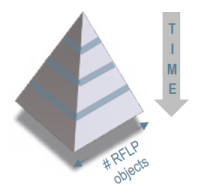 Trade-off studies eliminate alternatives and create the base for the final design which will be more and more detailed and specific over time. You need a functional and logical decomposition before jumping into the design phase for mechanical electrical and software components. Therefore, jumping from requirements directly into building a solution is not real systems engineering. You use this approach only if you already know the products solutions concept and logical components. Something perhaps possible when there is no involvement of electronics and software.
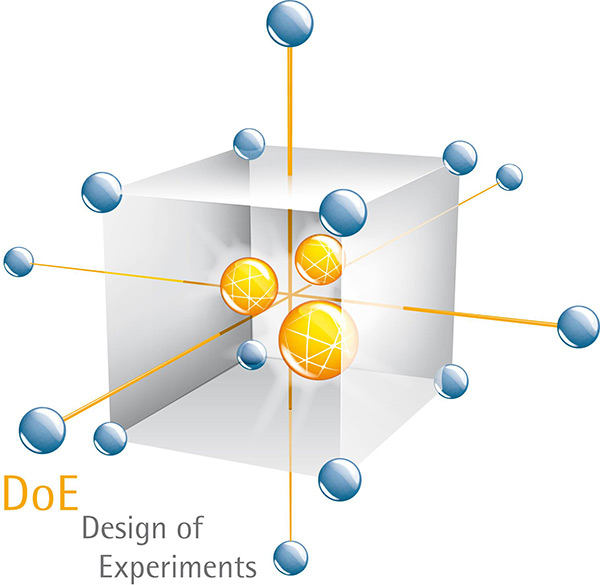
 In model-based systems engineering the most efficient way of working is to use parameters for requirements, logical and physical settings. Next decide on lower-level requirements and constraints the concept “Design of Experiments” is used, where the performance of a product is simulated by varying several design parameters. The results of a Design of Experiment assist the engineering teams to select the optimized solution, of course based on the model used.
 In the domain of PLM, there is a bigger challenge as here we are suffering from the fact that the word “Model” immediately gets associated with a 3D Model. In addition to the 3D CAD Model, there is still a lot of useful legacy data that does not match with the concepts of a digital enterprise. I wrote and spoke about this topic a year ago. Among others at PI 2017 Berlin and you can check this presentation on SlideShare:
  My second post:
  Oleg’s post unleashed several reactions of people who shared his opinion (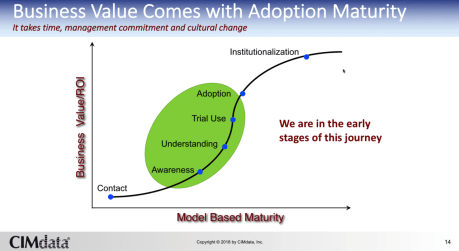

 At the time 3D CAD was introduced for the mid-market, the main reason why 3D CAD was introduced was to provide a better understanding of the designed product. Visualization and creating cross-sections of the design became easy although the “old” generation of 2D draftsmen had to a challenge to transform their way of working. This lead often to 3D CAD models setup with the mindset to generate 2D Manufacturing drawings, not taking real benefits from the 3D CAD Model. Let’s first focus on Model-Based Definition.
 According to an eBook, sponsored by SolidWorks and published by Tech-Clarity: “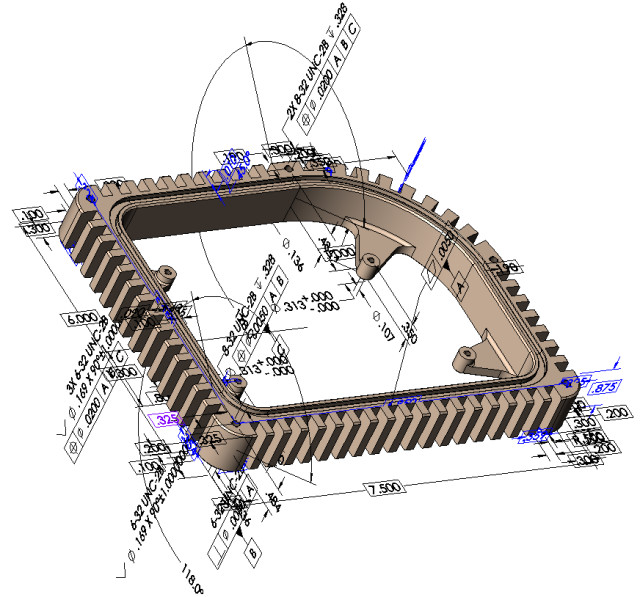
 A parametric model, combined with business rules can be accessed and controlled by other applications in a digital enterprise. In this way, without the intervention of individuals a set of product variants can be managed and not only from the design point of view. Geometry and manufacturing parameters are also connected and accessible. This is one of the concepts where Industry 4.0 is focusing on: intelligent and flexible manufacturing by exchanging parameters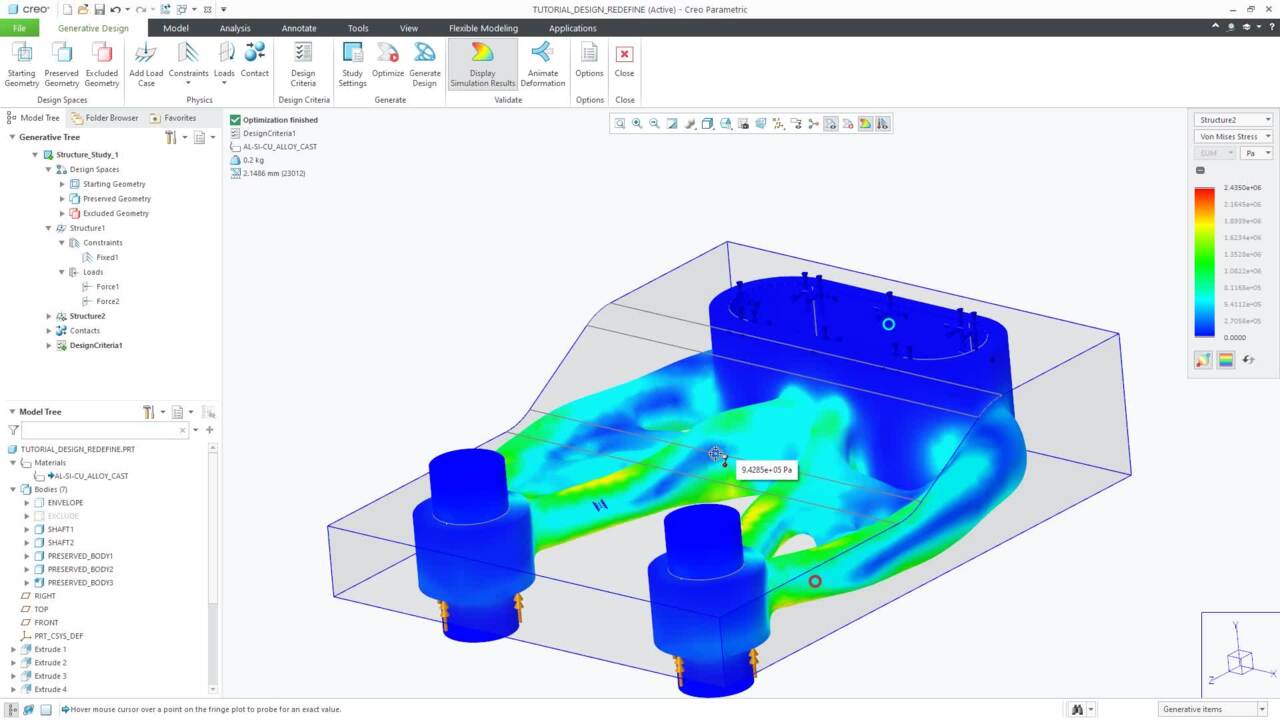
 Jos Voskuil's Weblog
[…] (The following post from PLM Green Global Alliance cofounder Jos Voskuil first appeared in his European PLM-focused blog HERE.) […]
[…] recent discussions in the PLM ecosystem, including PSC Transition Technologies (EcoPLM), CIMPA PLM services (LCA), and the Design for…
Jos, all interesting and relevant. There are additional elements to be mentioned and Ontologies seem to be one of the…
Jos, as usual, you've provided a buffet of "food for thought". Where do you see AI being trained by a…
Hi Jos. Thanks for getting back to posting! Is is an interesting and ongoing struggle, federation vs one vendor approach.…