
 As I am preparing my presentation for the upcoming PDT Europe 2017 conference in Gothenburg, I was reading relevant experiences to a data-driven approach. During PDT Europe conference we will share and discuss the continuous transformation of PLM to support the Lifecycle Model-Based Enterprise.
One of the direct benefits is that a model-based enterprise allows information to be shared without the need to have documents to be converted to a particular format, therefore saving costs for resources and bringing unprecedented speed for information availability, like what we are used having in a modern digital society.
For me, a modern digital enterprise relies on data coming from different platforms/systems and the data needs to be managed in such a manner that it can serve as a foundation for any type of app based on federated data.
This statement implies some constraints. It means that data coming from various platforms or systems must be accessible through APIs / Microservices or interfaces in an almost real-time manner. See my post Microservices, APIs, Platforms and PLM Services. Also, the data needs to be reliable and understandable for machine interpretation. Understandable data can lead to insights and predictive analysis. Reliable and understandable data allows algorithms to execute on the data.
 Classical ECO/ECR processes can become highly automated when the data is reliable, and the company’s strategy is captured in rules. In a data-driven environment, there will be much more granular data that requires some kind of approval status. We cannot do this manually anymore as it would kill the company, too expensive and too slow. Therefore, the need for algorithms.
What is understandable data?
I tried to avoid as long as possible academic language, but now we have to be more precise as we enter the domain of master data management. I was triggered by this recent post from Gartner: Gartner Reveals the 2017 Hype Cycle for Data Management. There are many topics in the hype cycle, and it was interesting to see Master Data Management is starting to be taken seriously after going through inflated expectations and disillusionment.

This was interesting as two years ago we had a one-day workshop preceding PDT Europe 2015, focusing on Master Data Management in the context of PLM. The attendees at that workshop coming from various companies agreed that there was no real MDM for the engineering/manufacturing side of the business. MDM was more or less hijacked by SAP and other ERP-driven organizations.
Looking back, it is clear to me why in the PLM space MDM was not a real topic at that time. We were still too much focusing and are again too much focusing on information stored in files and documents. The only area touched by MDM was the BOM, and Part definitions as these objects also touch the ERP- and After Sales- domain.
Actually, there are various MDM concepts, and I found an excellent presentation from Christopher Bradley explaining the different architectures on SlideShare: How to identify the correct Master Data subject areas & tooling for your MDM initiative. In particular, I liked the slide below as it comes close to my experience in the process industry

Here we see two MDM architectures, the one of the left driven from ERP. The one on the right could be based on the ISO-15926 standard as the process industry has worked for over 25 years to define a global exchange standard and data dictionary. The process industry was able to reach such a maturity level due to the need to support assets for many years across the lifecycle and the relatively stable environment. Other sectors are less standardized or so much depending on new concepts that it would be hard to have an industry-specific master.
PLM as an Application Specific Master?
 If you would currently start with an MDM initiative in your company and look for providers of MDM solution, you will discover that their values are based on technology capabilities, bringing data together from different enterprise systems in a way the customer thinks it should be organized. More a toolkit approach instead of an industry approach. And in cases, there is an industry approach it is sporadic that this approach is related to manufacturing companies. Remember my observation from 2015: manufacturing companies do not have MDM activities related to engineering/manufacturing because it is too complicated, too diverse, too many documents instead of data.
Now with modern digital PLM, there is a need for MDM to support the full digital enterprise. Therefore, when you combine the previous observations with a recent post on Engineering.com from Tom Gill: PLM Initiatives Take On Master Data Transformation I started to come to a new hypotheses:
For companies with a model-based approach that has no MDM in place, the implementation of their Product Innovation Platform (modern PLM) should be based on the industry-specific data definition for this industry.
Tom Gill explains in his post the business benefits and values of using the PLM as the source for an MDM approach. In particular, in modern PLM environments, the PLM data model is not only based on the BOM. PLM now encompasses the full lifecycle of a product instead of initially more an engineering view. Modern PLM systems, or as CIMdata calls them Product Innovation Platforms, manage a complex data model, based on a model-driven approach. These entities are used across the whole lifecycle and therefore could be the best start for an industry-specific MDM approach. Now only the industries have to follow….
 Once data is able to flow, there will be another discussion: Who is responsible for which attributes. Bjørn Fidjeland from plmPartner recently wrote: Who owns what data when …? The content of his post is relevant, I only would change the title: Who is responsible for what data when as I believe in a modern digital enterprise there is no ownership anymore – it is about sharing and responsibilities
Conclusion
Where MDM in the past did not really focus on engineering data due to the classical document-driven approach, now in modern PLM implementations, the Master Data Model might be based on the industry-specific data elements, managed and controlled coming from the PLM data model
Do you follow my thoughts / agree ?
 At this moment there are two approaches to implement PLM. The most common practice is item-centric and model-centric will be potentially the best practice for the future. Perhaps your company still using a method from the previous century called drawing-centric. In that case, you should read this post with even more attention as there are opportunities to improve.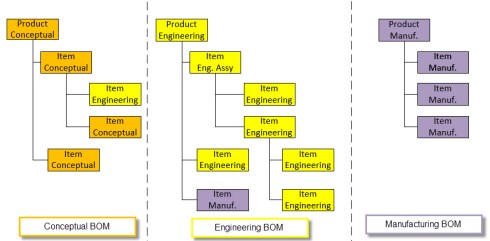
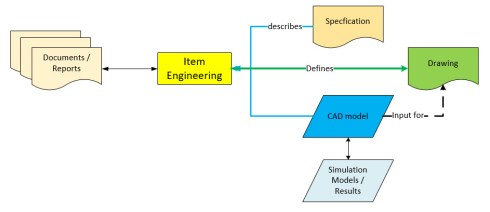
 However, in the beginning, the model can be still a functional or logical model. In particular, for complex products, model-based systems engineering might be the base for defining the solution. Actually, when we talk about products that interact with the outside world through software, we tend to call them systems. This explains that model-based systems engineering is getting more and more a recommended approach to make sure the product works as expected, fulfills all the needs for the product and creates a foundation for incremental innovation without starting from scratch.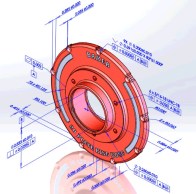
 Once we are able to control this collection of managed data concepts of digital twin or even virtual twin can be exploited linking data to a single instance in the field.
 During my summer holidays, I read some fantastic books to relax the brain.
  Further down the book, Tom becomes a little grumpy and starts to complain about the Internet, Google and even about Wikipedia. These information resources provide so often fake or skin-deep information, which is not scientifically proven by experts. It reminded me of a conference that I attended in the early nineties of the previous century. An engineering society had organized this conference to discuss the issue that finite element analysis became more and more available to laymen. The affordable simulation software would be used by non-trained engineers, and they would make the wrong decisions. Constructions would fall down, machines would fail. Looking back now, we can see the liberation of finite element analysis leads to more usage of simulation technology providing better products and when really needed experts are still involved.
 However, what is a PLM expert? Recently I wrote a post sharing the observation that a lot of PLM product – or IT-focused discussions miss the point of education (see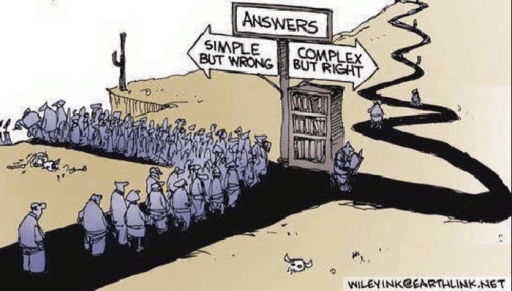
 July and August are the months that privileged people go on holiday. Depending on where you live and work it can be a long weekend or a long month. I plan to give my PLM twisted brain a break for two weeks. I am not sure if it will happen as Greek beaches always have inspired for philosophers. What do you think about “PLM on the beach”?
 I believe we all get immune for the term “Digital Transformation” (11.400.000 hits on Google today). I have talked about digital transformation in the context many times too. Change is happening. The classic ways of working were based on documents, a container of information, captured on paper (very classical) or captured in a file (still current).
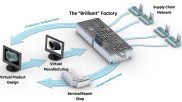 What we have learned from innovative companies is that a data-driven approach, where more granular information is stored uniquely as data objects instead of document containers bring huge benefits. Information objects can be shared where relevant along the product lifecycle and without the overhead of people creating and converting documents, the stakeholders become empowered as they can retrieve all information objects they desire (if allowed). We call this the digital thread.

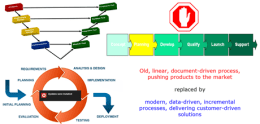 Companies are learning now how to manage the dependencies between these two domains, as consistency of requirements and features of the products is required. Due to the fast pace of software changes, it is almost impossible to connect everything to the PLM product definition. PLM Vendors are working on concepts to connect PLM and ALM through different approaches. Other companies might believe that their software process is crucial and that the mechanical product becomes a commodity. Could you build a product innovation platform starting from the software platform which some of the old industry giants believe?
 Does history repeat itself even in the PLM domain? The last week I have read various blog posts related to PLM and Small and Medium Enterprises (SME). A good summary of these thoughts can be found in Oleg Shilovitsky’s post:
  In 2006, Oleg and I worked @ SmarTeam where we defined and built a “Core PLM” solution, targeting mid-market companies. This core PLM solution called the SmarTeam Engineering Express (SNE) contained both pre-configured CAD-integrations as well as BOM practices (EBOM-MBOM). Combined with documented best practices, pre-configured methodology, and workflows this environment could be implemented relatively quick (if the implementer did not want to earn extra money on services ).
 Interesting enough SmarTeam’s enterprise customers requested the same capabilities. It makes you realize there is no unique difference in PLM for mid-market companies and large enterprises. I believe the major difference is due to education, the company’s culture and where the PLM decision is made. Let’s explore
 These new hires are normally not educated on standard PLM concepts like ECR, ECO, Configuration Management, PLM-ERP best practices (EBOM/MBOM). For an engineering study, these practices/processes are not considered as critical as it is about collaboration and not about skills. The PLM capabilities engineering students learn are the basic functionalities they need master when working with their (CAD) tools.
 Of course, you can educate yourself on PLM. CIMdata is well-known for its training program, John Stark and others can educate you on PLM. Have a look at this interesting new startup
 Large enterprises usually have staff with a strategic task to work on standardized and optimized processes for the future. These people will discover and have time to be educated on the values of PLM, supported by strategic advisors that know the value of PLM. In these companies, the decisions made for PLM are top-down decisions. Usability, functions/features and costs are usually crucial for bottom-u


 Tthe change from moving from a document-driven approach towards a data-driven approach to collect and store information is not the main concept behind a digital transformation. The data-driven approach is an enabler to connect directly to the customer and change the current business model from delivering products into a business model delivering services or even more advanced delivering experiences. Services and experiences create a closer relation to the customer, more loyalty, but also the challenge that you need to connect to the customer in such a way that the customer sees value. Otherwise, the customer will switch to another service or experience. The
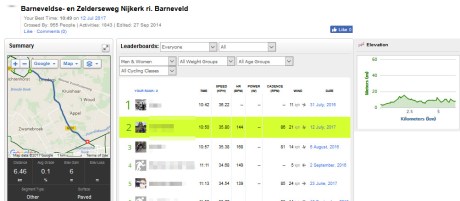
  However, a year ago the problems started to become more frequent. I started to send log files illustrating where the error occurred. Still, the Garmin response was the same: “Please reset the device and update to the latest software.”
 For me, the interaction with Garmin illustrates that the company internally is not yet digital transformed. The service desk probably has KPIs (Key Performance Indicators) related to their response time and problem resolution time. Although I can debate the response time, it is clear that the problem resolution approach: Update to the latest software and if this does not work swap to a new device is not increasing the knowledge from Garmin as a company what their customers are experiencing.
 A must for a digital enterprise is to dive into customer issues and to connect them back to R&D, both for the hardware part and software part. Something a modern product manager would do. If a company is not able to understand the multidisciplinary dependencies and solve issues from the field (with some effort), they will keep on making the same mistakes again with new product launches and lose customers who are looking for a better experience.
 Last week I published a dialogue I had with Flip van der Linden, a fellow Dutchman and millennial, eager to get a grip on current PLM. You can read the initial post here:
 You are right, the main challenge for future PLM experts is to explain and support more agile processes, mainly because software has become a major part of the solution. The classical, linear product delivery approach does not match the agile, iterative approach for software deliveries. The ECR/ECO process has been established to control hardware changes, in particular because there was a big impact on the costs. Software changes are extremely cheap and possible fast, leading to different change procedures. The future of PLM is about managing these two layers (hardware/software) together in an agile way. The solution for this approach is that people have to work in multi-disciplinary teams with direct (social) collaboration and to be efficient this collaboration should be done in a digital way.
 I believe the ideal archetype does not exist yet. We are all learning, and we see examples from existing companies and startups pitching their story for a future enterprise. Some vendors sell a solution based on their own product innovation platform, others on existing platforms and many new vendors are addressing a piece of the puzzle, to be connected through APIs or Microservices. I wrote about these challenges in
 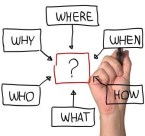 (Flip) But then given point 2: ‘Model-based enterprise transformations,’ in my view, a key effort for a successful PLM expert would also be to embed this change mgt. as a business process in the actual Enterprise Architecture. So he/she would need to understand and work out a ‘business-ontology’ (Dietz, 2006) or similar construct which facilitates at least a. business processes, b. Change (mgt.) processes, c. emerging (Mfg.) technologies, d. Data structures- and flows, e. implementation trajectory and sourcing.
  Only this question could be a next future blog post. Yes, it is crucial to define a business ontology to support the modern flow of information through an enterprise. Products become systems, depending on direct feedback from the market. Only this last sentence already requires a redefinition of change processes, responsibilities. Next, the change towards data-granularity introduces new ways of automation, which we will address in the upcoming years. Initiatives like Industry 4.0 / Smart Manufacturing / IIoT all contribute to that. And then there is the need to communicate around a model instead of following the old documents path. Read more about it in
  (Flip) Where to draw the PLM line in a digital enterprise? I personally think this barrier will vanish as Product Lifecycle Management (as a paradigm, not necessarily as a software) will provide companies with continuity, profitability and competitive advantage in the early 21st century. The PLM monolith might remain, but supported by an array of micro services inside and outside the company (next to IoT, hopefully also external data sets).
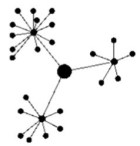 I believe there is no need to draw a PLM line. As Peter’s article:




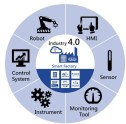

 However, all companies are discovering the modern digital enterprise, and here nothing is permanent and most likely nothing with remain stable. You will see companies making data available from various systems through APIs (Application Program Interface). In the past the meaning of API was directly tied to one system, now it is a wider concept, read for example
  Five years ago there was an interesting debate on engineering.com following upon a discussion between Jim Brown and Chad Jackson with the theme:
  On the other side, PLM-platforms can be found from the classical PLM vendors, Dassault Systemes, Siemens PLM and PTC have their platforms coming from the classical PLM world, all with some different variations in focus. Aras and Autodesk do not rely necessary on the classical engineering environments and position themselves as a new, modern PLM.
 Looking forward to your point of view !




 Jos Voskuil's Weblog
Hi Jos, Knowing your background in methodology and education, I wanted to share a longer article with you: “What is…
Interesting reflection, Jos. In my experience, the situation you describe is very recognizable. At the company where I work, sustainability…
[…] (The following post from PLM Green Global Alliance cofounder Jos Voskuil first appeared in his European PLM-focused blog HERE.) […]
[…] recent discussions in the PLM ecosystem, including PSC Transition Technologies (EcoPLM), CIMPA PLM services (LCA), and the Design for…
Jos, all interesting and relevant. There are additional elements to be mentioned and Ontologies seem to be one of the…