
You are currently browsing the tag archive for the ‘Strategy’ tag.
 In my general 2025 outlook for PLM, My 2025 focus, I mentioned Sustainability at the end, as I believe it is a topic on its own, worth an entire blog post.
After our 2025 PLM Global Green Alliance core team kick-off last week, I felt the importance of sharing our thoughts, observations, and personal thoughts/focus.
 The PGGA core team consists of Rich McFall – Climate Change, Klaus Brettschneider Life Cycle Assessment, Mark Reisig Sustainability and Green Energy, Evgeniya Burimskaya Circular Economy, Erik Reiger Design for Sustainability and me Talking about Sustainability.
Some interesting observations:
- Evgenia mentioned that in job interviews for CIMPA, it is motivating to see that new employees want to contribute to sustainability activities and the education of companies. Sustainability is part of their WHY (I will come back to that later)
- We have more and more PGGA members from Asia, while percentage of US members is declining. Where the US has the loudest voice against human-caused climate change and Sustainability, there are a lot of hidden and positive success stories from Asia, and we are looking for spokespeople from that region.
Regulations
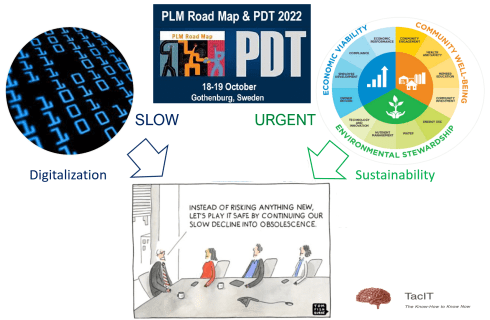
In many lectures, I explained that digitization in PLM was going slow because this is a complex topic for many companies, and current business performance might be challenging but not too bad. So why would we go on an unknown and potentially risky transformation journey?
 Due to sustainability regulations, digital transformation has gotten a push in the right direction. GHG (Greenhouse Gas) reporting, ESG (Environmental Social Governance) reporting, CSRD (Corporate Sustainability Reporting Directive), and the DPP (Digital Product Passport) have all created the need for companies to create digital threads for information that historically did not exist or was locked in documents.
 Therefore, it is interesting to read Oleg Shilovitsky’ s blog, Reimagining PLM for 2025: Key Strategic Trends, in which he also sees the importance of Sustainability and the Circular Economy.
Quoting Oleg:
Sustainability cannot be ignored and, therefore I expect more interest to environmental considerations in PLM strategies. Companies are incorporating sustainability metrics into product design and lifecycle assessment, aligning with Industry 5.0 and Engineering 5.0 principles. It is impossible without digital thread and data connectivity and, therefore will continue to support business strategies.
 The challenge of regulations is that they limit someone’s freedom. Regulations are there to create an equal playing field for all and ensure society makes progress. Be it traffic regulations, business regulations or environmental regulations. The challenge is not to over-regulate and create a Kafkaesque society. Whereas if you are alone in the world or are the only important person in the world, you do not need regulations as you do not care.
Now the challenge comes of how we deal with regulations.
The WHY!
 I have learned to always look at the WHY. Why are companies doing business in a certain manner, why are people behaving in a certain manner even against common logic?
There is the difference between the long-term WHY (strategy) and the short-term WHY(emotion). For most individuals the short-term WHY prevails, for companies and governments the long term WHY should lead their decisions.
Unfortunately short term decisions (money, food, comfort, legacy habits) get a higher priority by humans instead of long term goals (transformations and transitions).
 Daniel Kahneman, Nobel prize winner writing about this in his book Thinking Fast and Slow. We see this dilemma, fast based on gut-feeling or slow based on a real analysis in companies, we see it in our society .
- How many companies have a 10-years sustainable strategy and consistent roadmap?
- How many countries have a 10-years sustainable strategy and consistent roadmap?
Jan Bosch also mentioned the importance of the WHY in his Digital Reflection #15: Why do you get out of bed in the morning? Did you ask yourself this question?
Sustainability, like digitization in PLM, requires a behavioral change. From traditional linear coordinated ways of working we need to learn to work in a more complex and advanced environment with real-time data. Luckily if the data is accurate AI will help us to manage the complexity.
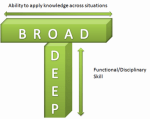 Still it is a transformational change in the way you work and this is a challenge for an existing workforce. They reached their status by being an expert in a certain discipline, by mastering specific skills. Now the needed expertise is changing (from Expert to T-shape) and new skills are needed. Are you able to acquire those new skills or do you give up and complain about the future?
The same challenges happen related to sustainability. Our current (western) habits are draining the planet and only behavioral changes can stop or reduce the damage. Most of us are aware that the planet is limited in resources and we need an energy transition in the long term. But are you able to learn those new behaviors or do you give up and hold on to the good old past?
 Note: It’s important to understand that individual actions are not the primary cause of the climate crisis, nor can they alone resolve it. This idea is often promoted by industries. The bigger question is whether our societies can change—consider where financial resources are being allocated.
Sustainability and Systems Thinking
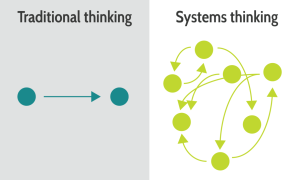 We cannot just produce product or consume like crazy if we care about future generations. It is not longer only about the money, it is about next generations and the environment – if you care. This complexity pushes us toward Systems Thinking – many topics are connected – addressing a single topic does not solve the rest.
I wrote two posts in 2022 about Systems Thinking t: SYSTEMS THINKING – a must-have skill in the 21st century and as a follow-up based on interactions Systems Thinking: a second thought. The challenge with Systems Thinking is that the solution is not black or white and requires brain power.
Sustainability and Political Leadership
With what is happening currently in our societies you can see that sustainability is strongly connected to its country’s political system. The bad news for long term issues democracy is probably the worst. Let me share some observations.
Europe
 Historically Europe has been a stable democracy since the second world war and the European Union has been able to establish quite a unified voice step by step. Of course the European Union was heavily influenced by the Automotive and Agricultural lobby. Still the European Green Deal was established with great consensus in the middle instead of focusing on the extremes. A multi-party parliament guarantees a balanced outcome. However type of democracy is still very sensitive for influences from lobbyist and external forces.
There are so many Dunning-Kruger experts roaring down the common sense debates – mainly in democratic countries. It would be great if people started from the WHY. WHY is someone acting – is it a short-term gain/fear to loose or is there a long-term strategy.
As long as Europe can maintain its consensus culture there is hope for the long-term.
US
 The US has been leading the world in polarization. With two major parties fighting always for the 51 % majority vote, there is no place for consensus. The winner takes it all. And although we call it a democracy, you need to have a lot of money to be elected and money is the driving power behind the elections. The WHY in most cases in the US is about short term money making, although I found an interesting point related to Elon Musk.
 In his 2022 interview he shares his vision that the future is in solar energy and batteries with nuclear needed for the transition. Also he is no fan of longevity – quote from the video (5:30)
Most people don’t change their mind, they just die. And if they don’t die we will be stuck with old ideas and society won’t advance.
It is a great example of “If you cannot beat them – join them” and then use them to fund your missions. A narcistic president becomes your helper to achieve your long-term strategy.
Saudi Arabia
 Here we are not talking about a democracy anymore and they might seem the biggest enemy for the climate. However they have a long-term strategy. While keeping the world addicted to fossil fuels, they invest heavily in solar and hydrogen and once the western world understands the energy transition is needed, they are far ahead in experience and remain a main energy supplier.
China
 With 1.4 billion inhabitants and not a democracy either, China has a different mission. Initially as the manufacturing hub for the planet they needed huge amount of energy and therefore they are listed as the most polluting country in the world.
However their energy transition towards solar, water, wind and even nuclear goes so much faster than committed in the Paris agreements, as China has a long-term strategy to be energy independent and to be the major supplier in the energy transition. The long-term WHY is clear.
Russia
 It is a pity to mention Russia as with their war-economy and reliance on fossil fuels, they are on a path towards oblivion. Even if they would win a few other wars, innovation is gone and fossil is ending. It will be a blessing for humanity. I hope they will find a new long-term strategy.
Conclusion
PLM and Sustainability are important for the long-term, despite the throw-back you might see on the short term due to politics and lobbies. In addition we need courage to keep on focusing on the long-term as our journey has just started.
Feel free to share your thoughts with compassion and respect for other opinions.

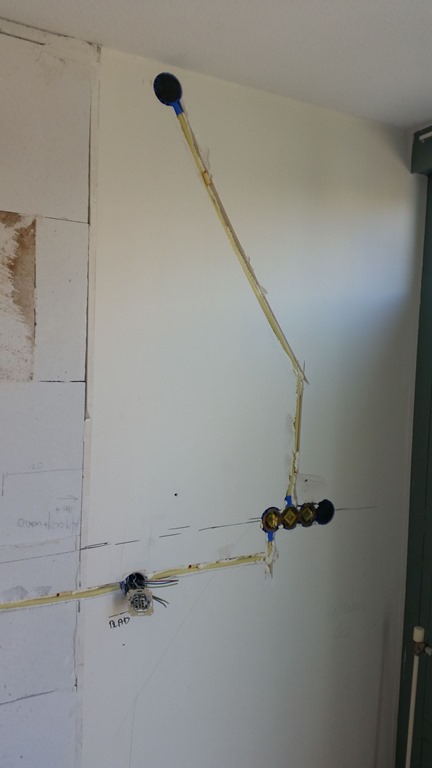 Finally, I have time to share my PLM experiences with you in this blog. The past months have been very busy as I moved to a new house, and I wanted to do and control a lot of activities myself. Restructuring your house in an agile way is not easy. Luckily there was a vision how the house should look like. Otherwise, the “agile” approach would be an approach of too many fixes. Costly and probably typical for many old construction projects.
Finally, I realized the beauty of IKEA´s modular design and experienced the variety of high-quality products from BLUM (an impressive company in Austria I worked with)
In parallel, I have been involved in some PLM discussions where in all cases the connection with the real C-level was an issue. And believe it or not, my blog buddy Oleg Shilovitsky just published a post: Hard to sell PLM? Because nobody gives a SH*T about PLM software. Oleg is really starting from the basics explaining you do not sell PLM; you sell a business outcome. And in larger enterprises I believe you sell at this time the ability to do a business transformation as business is becoming digital, with the customer in the center. And this is the challenge I want to discuss in this post
The value of PLM at the C-level
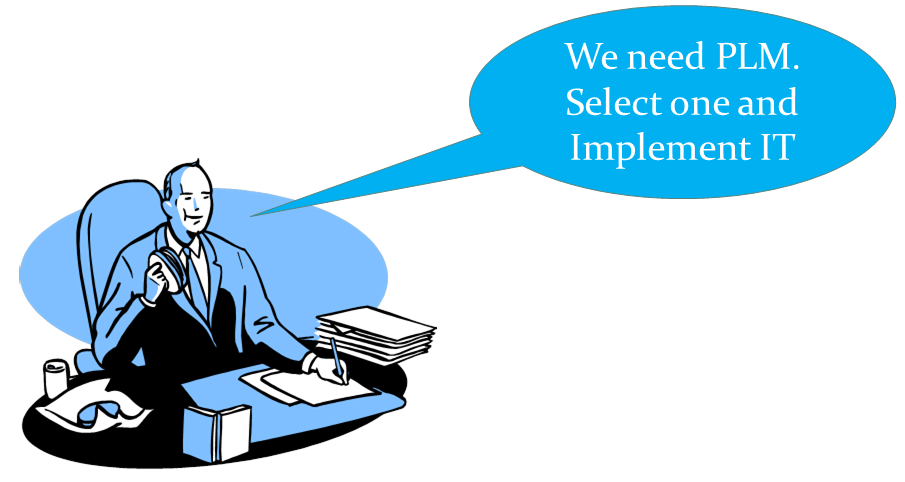 Believe it or not, it is easier to implement PLM (in general) instead of explaining a CEO why a company needs modern PLM. A nice one-liner to close this post, however, let me explain what I mean by this statement and perhaps show the reasons why PLM does not seem to be attractive so much at the C-level. I do not want to offend any particular PLM company, Consultancy firm or implementor, therefore, allow me to stay on a neutral level.
The C-level time challenge
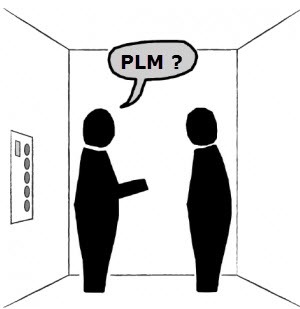 First, let´s imagine the situation at C-level. Recently I heard an excellent anecdote about people at C-level. When they were kids, the were probably the brightest and able to process and digest a lot of information, making their (school) careers a success. When later arriving in a business environment, they were probably the ones that could make a difference in their job and for that reason climbed the career ladder fast to reach a C-level position. Then arriving at that level, they become too busy to dive really deep into the details.
Everyone around them communicates in “elevator speeches” and information to read must me extremely condensed and easy to understand. As if people at C-level have no brains and should be informed like small kids.
I have seen groups of people working weeks on preparing the messages for the CEO. Every word is twisted hundred times – would he or she understand it? I believe the best people at C-level have brains, and they would understand the importance of PLM when someone explains it. However, it requires time if it does not come from your comfort zone.
Who explains the strategic value of PLM
There are a lot of strategic advisory companies who have access to the board room, and we can divide them into two groups. The ones that focus on strategy independent of any particular solution and the ones that concentrate on a strategy, guaranteeing their implementation teams are ready to deploy the solution. Let´s analyze both options and their advice:
Independent of a particular solution
 When a company is looking for help from a strategic consultancy firm, you know upfront part of the answer. As every consultancy firm has a preferred sweet spot, based on their principal consultant(s). As a PLM consultant, I probably imagine the best PLM approach for your company, not being expert in financials or demagogic trends. If the advisory company has a background in accountancy, they will focus their advice on financials. If the company has a background in IT, they will focus their information on an infrastructure concept saving so much money.
A modern digital enterprise is now the trend, where digital allows the company to connect and interact with the customer and therefore react faster to market needs or opportunities. IoT is one of the big buzz words here. Some companies grasp the concept of being customer centric (the future) and adapt their delivery model to that, not realizing the entire organization including their product definition process should be changing too. You cannot push products to the market in the old linear way, while meanwhile expecting modern agile work processes.
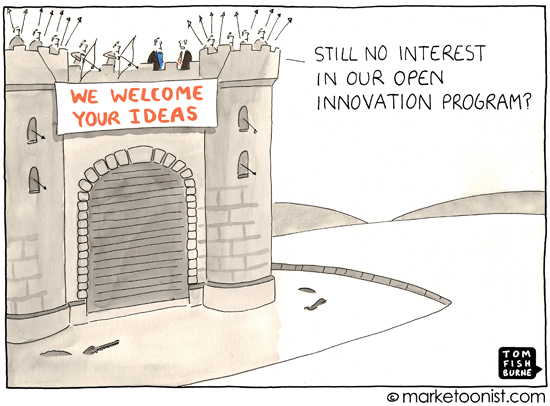
 Most of the independent strategic consultants will not push for a broader scope as it is out of their comfort zone. Think for a moment. Who are the best strategic advisors that can talk about the product definition process, the delivery process and products in operation and service? I would be happy if you give me their names in the comments with proof points.
Related to a particular solution
 When you connect with a strategic advisory company, which an extensive practice in XXX or YYY, you can be sure the result will be strategic advice containing XXX or YYY. The best approach with ZZZ will not come on the table, as consultancy firms will not have the intention to investigate in that direction for your company. They will tell you: “With XXX we have successfully transformed (many) other companies like yours, so choose this path with the lowest risk.
And this is the part what concerns me the most at this time. Business is changing rapidly and therefore PLM should be changing too. If not that would be a strange situation? Read about the PLM Identity crisis here and here.
The solution is at C-level (conclusion)
I believe the at the end the future of your company will be dependent on your DNA, your CEO and the C-level supporting the CEO. Consultancy firms can only share their opinion from their point of view and with their understanding in mind.
If you have a risk-averse management, you might be at risk.
Doing nothing or following the majority will not bring more competitive advantage.
The awareness that business is global and changing rapidly should be on every company’s agenda.
Change is always an opportunity to get better; still no outsider can recommend you what is the best. Take control and leadership. For me, it is clear that the product development and delivery process should be a part of this strategy. Call it PLM or something different. I do not care. But do not focus on efficiency and ROI, focus on being able to be different from the majority. Apple makes mobile phones; Nespresso makes coffee, etc.
Think and use extreme high elevators to talk with your C-level!
Your thoughts?
 Some weeks ago PLMJEN asked me my opinion on Peter Schroer´s post and invitation to an ARAS webinar called: Change Management: One Size Will Never Fit All. Change Management is actually a compelling topic, and I realized I had never written a dedicated post to such an essential topic. The introduction from Peter was excellent:
Change management is the toughest thing inside of PLM. It’s also the most important.
For the rest, the post elaborated further into software capabilities and the value of having templates processes for various industry practices. I share that opinion when talking to companies that are starting to establish their processes. It is extremely rare that an existing company will change its processes towards more standard processes delivered by the PLM system when implementing a new system. The rule of thumb is People, Processes and Tools. This all is nicely explained by Stephen Porter in his latest blog post Beware the quick fix successful plm deployment strategies. As I was not able to attend the webinar, here are my more general thoughts related to change management and why it is essential for PLM.
Change Management has always been there
It is not that PLM has invented change management. Before companies started to use ERP and PDM systems, every company had to deal with managing changes. At that time, their business was mostly local and compared with today slow. “Time to market” was more a “Time to Region” issue. Engineering and Manufacturing were operating from the same location. Change management was a personal responsibility supported by (paper) documents and individuals. Only with the growing complexity of products, growing and global customer demands and increasing regulatory constraints it became impossible to manage change in an unstructured manner.
Survival of the fittest change organization
 I have worked with several companies where change management was a running Excel business. Running can be interpreted in two ways. The current operation could not stop and step back and look into an improvement cycle, and a lot of people were running to collect, check and validate information in order to make change estimates and make decisions based on the collected data.
When a lot of people are running, it means your business is at risk. A lot of people means costs for data (re)search and handling are higher than the competition if this can be done automatically. Also in countries of low labor costs, a lot of people running becomes a threat at a certain moment. In addition, running people can make mistakes or provide insufficient information, which leads to the wrong decisions.
Wrong decisions can be costly. Your product may become too expensive; your project may delay significant as information was based on conflicting information between disciplines or suppliers. Additional iterations to fix these issues lead to a longer time to market. Late discoveries can lead to severe high costs. For certain, when the product has been released to the market the cost might be tremendous.
 From the other side if making changes becomes difficult because the data has to be collected from various sources through human intervention, organizations might try to avoid making changes.
Somehow this is also an indirect death penalty. The future is for companies that are able to react quickly at any time and implement changes.
The analogy is with a commercial aircraft and a fighter plane. Let’s take the Airbus 380 in mind and a modern fighter jet the Joint Strike Fighter (JSF). The Airbus 380 brings you comfortable from A to B as long as A and B are well prepared places to land. The flight is comfortable as the plane is extremely stable. It is a well planned trip with an aversion to change of the trajectory.
The JSF airplane by definition is an unstable plane. It is only by its computer steering control that the plane behaves stable in the air. The built-in instability makes it possible to react as quickly as possible to unforeseen situations, preferable faster than the competition. This is a solution designed for change.
Based on your business you all should admire the JSF concept and try to understand where it is needed in your organization.
Why is change management integrated in PLM so important?
If we consider where changes appear the most, it is evident in the early lifecycle of the product most of the changes occur. And as long as they are in the virtual world with uncommitted costs to the product they are relative cheap. To my surprise many engineering companies and engineering departments work only with change management outside their own environment. Historically because outside their environment connected to prototyping or production costs of change are the highest. And our existing ERP system has an Engineering Change process – so let’s use that.
 Meanwhile, engineering is used to work with the best so far information. At any moment, every discipline stores their data in a central repository. This could be a directory structure or PDM systems. Everyone is looking to the latest data. Files are overwritten with the latest versions. Data in the PDM system shows the latest version to all users. Hallelujah
And this is the place where it goes wrong. A mechanical engineer has overlooked a requirement in the specification that has been changed. Yes, the latest version of the 20 page document is there. An electrical engineer has defined a new control system for the engine, but has not noticed that the operating parameters of the motor have been changed. Typical examples where a best so far environments creates the visibility, but the individual user cannot understand the impact of a change anymore (especially when additional sites perform the engineering work)
Here comes the value of change management in PLM. Change Management in PLM can be light weighted in the early design phases, providing checks on changes (baselines) and notifications to disciplines involved. Approval processes are more agreements to changes to implement and their impact on all disciplines.
 PLM supports the product definition through the whole product lifecycle, change management at each stage can have its particular behavior. In the early stages a focus on notifications and visibility of change, later checking the impact based on the maturity of the various disciplines and finally when running into production and materials commitment towards a strict and organized change mechanism. It is only in a PLM system where the gradual flow can be supported seamless
Change Management and ERP
As mentioned before, most manufacturing companies have implemented change management in ERP as the costs of change are the highest when the product capabilities are committed. However, the ERP system is not the place to explore and iterate for further improved solutions. The ERP system can be the trigger for a change process based on production issues. However the full implementation of the change requires a change in the product definition, the area where PLM is strong.
NOTE: on purpose I am not mentioning a change in the engineering definition as in some cases the engineering definition might remain the same, but only the manufacturing process or materials need to be adapted. PLM supports iterations, not an ERP execution matter.
Change Management and Configuration Management
 So far we have been discussing how the manufacturing system would be able to offer products based on the right engineering definition. As each specific product might not have an individual definition checked at any time, there is the need for configuration management (CM). Proper implemented configuration management assures there is a consistent relationship between how the product is specified and defined and the way it is produced. Read a refined and precise explanation on wiki
In one of my following posts I will focus on configuration management practices and why PLM systems and Configuration Management are like a Siamese twins
Conclusion:
Storing your data in a (PLM) system has only value if you are able to keep the actual status of the information and its context. Only then a person can make the right decisions immediately and with the right accuracy. The more systems or manual data handling, the less completive your company will be. Integrated and lean change management means survival !
 Jos Voskuil's Weblog
Interesting reflection, Jos. In my experience, the situation you describe is very recognizable. At the company where I work, sustainability…
[…] (The following post from PLM Green Global Alliance cofounder Jos Voskuil first appeared in his European PLM-focused blog HERE.) […]
[…] recent discussions in the PLM ecosystem, including PSC Transition Technologies (EcoPLM), CIMPA PLM services (LCA), and the Design for…
Jos, all interesting and relevant. There are additional elements to be mentioned and Ontologies seem to be one of the…
Jos, as usual, you've provided a buffet of "food for thought". Where do you see AI being trained by a…