
You are currently browsing the tag archive for the ‘learning PLM’ tag.
 Another year passed, and as usual, I took the time to look back. I always feel that things are going so much slower than expected. But that’s reality – there is always friction, and in particular, in the PLM domain, there is so much legacy we cannot leave behind.
It is better to plan what we can do in 2024 to be prepared for the next steps or, if lucky, even implement the next steps in progress.
In this post, I will discuss four significant areas of attention (AI – DATA – PEOPLE – SUSTAINABILITY) in an alphabetic order, not prioritized.
Here are some initial thoughts. In the upcoming weeks I will elaborate further on them and look forward to your input.

AI (Artificial Intelligence)
 Where would I be without talking about AI?
When you look at the image below, the Gartner Hype Cycle for AI in 2023, you see the potential coming on the left, with Generative AI at the peak.
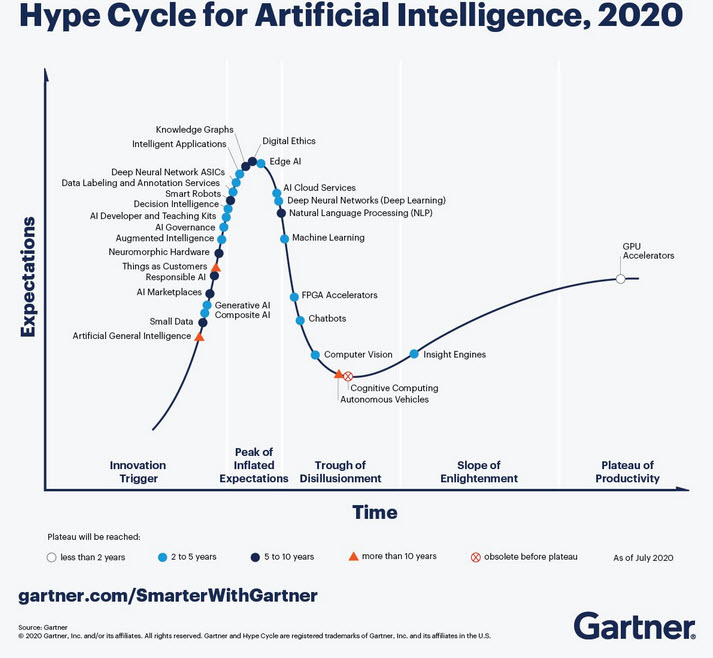
Part of the hype comes from the availability of generative AI tools in the public domain, allowing everyone to play with them or use them. Some barriers are gone, but what does it mean? Many AI tools can make our lives easier, and there is for sure no threat if our job does not depend on standard practices.
AI and People
 When I was teaching physics in high school, it was during the introduction of the pocket calculator, which replaced the slide rule.You need to be skilled to uyse the slide rule, now there was a device that gave immediate answers. Was this bad for the pupils?
If you do not know a slide rule, it was en example of new technology replacing old tools, providing more time for other details. Click on the image or read more about the slide rule here on Wiki.
 Or today you would ask the question about the slide rule to ChatGPT? Does generative AI mean the end of Wikipedia? Or does generative AI need the common knowledge of sites like Wikipedia?
AI can empower people in legacy environments, when working with disconnected systems. AI will be a threat for to people and companies that rely on people and processes to bring information together without adding value. These activities will disappear soon and you must consider using this innovative approach.
 During the recent holiday period, there was an interesting discussion about why companies are reluctant to change and implement better solution concepts. Initially launched by Alex Bruskin here on LinkedIn , the debate spilled over into the topic of TECHNICAL DEBT , well addressed here by Lionel Grealou.
 Both articles and the related discussion in the comments are recommended to follow and learn.
AI and Sustainability
 Similar to the introduction of Bitcoin using blockchain technology, some people are warning about the vast energy consumption required for training and interaction with Large Language Models (LLM), as Sasha Luccioni explains in her interesting TED talk when addressing sustainability.
She proposes that tech companies should be more transparent on this topic, the size and the type of the LLM matters, as the indicative picture below illustrates.

Carbon Emissions of LLMs compared
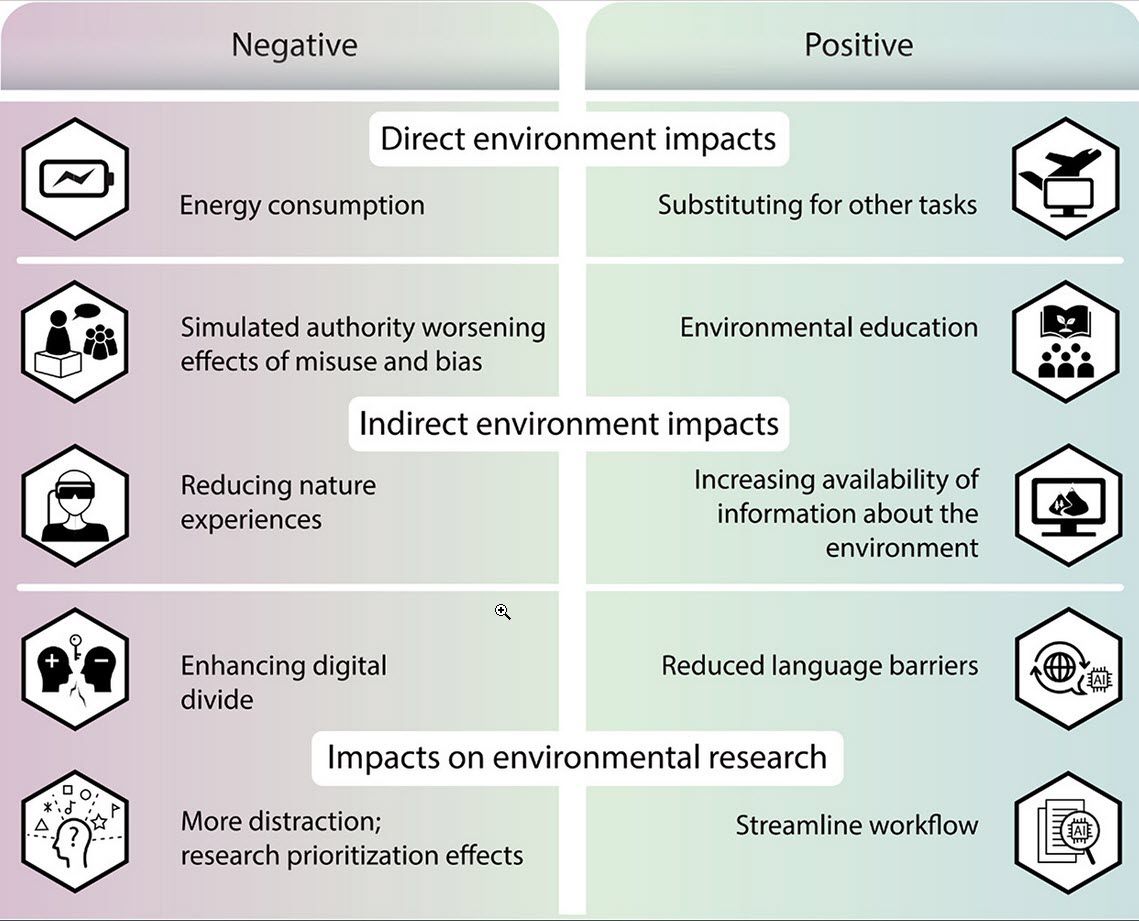
In addition, I found an interesting article discussing the pros and cons of AI related to Sustainability. The image below from the article Risks and Benefits of Large Language Models for the Environment illustrates nicely that we must start discussing and balancing these topics.
To conclude, in discussing AI related to sustainability, I see the significant advantage of using generative AI for ESG reporting.
ESG reporting is currently a very fragmented activity for organizations, based on (marketing) people’s goodwill and currently these reports are not always be evidence-based.
Data
 The transformation from a coordinated, document-driven enterprise towards a hybrid coordinated/connected enterprise using a data-driven approach became increasingly visible in 2023. I expect this transformation to grow faster in 2024 – the momentum is here.
 We saw last year that the discussions related to Federated PLM nicely converged at the PLM Roadmap / PDT Europe conference in Paris. I shared most of the topics in this post: The week after PLM Roadmap / PDT Europe 2023. In addition, there is now the Heliple Federated PLM LinkedIn group with regular discussions planned.
In addition, if you read here Jan Bosch’s reflection on 2023, he mentions (quote):
… 2023 was the year where many of the companies in the center became serious about the use of data. Whether it is historical analysis, high-frequency data collection during R&D, A/B testing or data pipelines, I notice a remarkable shift from a focus on software to a focus on data. The notion of data as a product, for now predominantly for internal use, is increasingly strong in the companies we work with
 I am a big fan of Jan’s posting; coming from the software world, he describes the same issues that we have in the PLM world, except he does not carry the hardware legacy that much and, therefore, acts faster than us in the PLM world.
An interesting illustration of the slow pace to a data-driven environment is the revival of the PLM and ERP integration discussion. Prof. Jörg Fischer and Martin Eigner contributed to the broader debate of a modern enterprise infrastructure, not based on systems (PLM, ERP, MES, ….) but more on the flow of data through the lifecycle and an organization.

It is a great restart of the debate, showing we should care more about data semantics and the flow of information.
The articles: The Future of PLM & ERP: Bridging the Gap. An Epic Battle of Opinions! and Is part master in PLM and ERP equal or not) combined with the comments to these posts, are a must read to follow this change towards a more connected flow of information.
While writing this post, Andreas Lindenthal expanded the discussion with his post: PLM and Configuration Management Best Practices: Part Traceability and Revisions. Again thanks to data-driven approaches, there is an extending support for the entire product lifecycle. Product Lifecycle Management, Configuration Management and AIM (Asset Information Management) have come together.
PLM and CM are more and more overlapping as I discussed some time ago with Martijn Dullaart, Maxime Gravel and Lisa Fenwick in the The future of Configuration Management. This topic will be “hot”in 2024.
People
 From the people’s perspective towards AI, DATA and SUSTAINABILITY, there is a noticeable divide between generations. Of course, for the sake of the article, I am generalizing, assuming most people do not like to change their habits or want to reprogram themselves.
Unfortunate, we have to adapt our skills as our environment is changing. Most of my generation was brought up with the single source of truth idea, documented and supported by science papers.
In my terminology, information processing takes place in our head by combining all the information we learned or collected through documents/books/newspapers – the coordinated approach.
 For people living in this mindset, AI can become a significant threat, as their brain is no longer needed to make a judgment, and they are not used to differentiate between facts and fake news as they were never trained to do so
The same is valid for practices like the model-based approach, working data-centric, or considering sustainability. It is not in the DNA of the older generations and, therefore, hard to change.
The older generation is mostly part of an organization’s higher management, so we are returning to the technical debt discussion.

Later generations that grew up as digital natives are used to almost real-time interaction, and when applied consistently in a digital enterprise, people will benefit from the information available to them in a rich context – in my terminology – the connected approach.
 AI is a blessing for people living in this mindset as they do not need to use old-fashioned methods to acquire information.
“Let ChatGPT write my essay.”
However, their challenge could be what I would call “processing time”. Because data is available, it does not necessarily mean it is the correct information. For that reason it remains important to spend time digesting the impact of information you are reading – don’t click “Like”based on the tittle, read the full article and then decide.
meaning you only become experienced if you learn from failures.
Sustainability
 Unfortunately, sustainability is not only the last topic in alphabetic order, as when you look at the image below, you see that discussions related to sustainability are in a slight decline at C-level at the moment.

I share this observation in my engagements when discussing sustainability with the companies I interact with.
 The PLM software and services providers are all on a trajectory of providing tools and an infrastructure to support a transition to a more circular economy and better traceability of materials and carbon emissions.
In the PLM Global Green Alliance, we talked with Aras, Autodesk, Dassault Systems, PTC, SAP, Sustaira, TTPSC(Green PLM) and more to come in 2024. The solution offerings in the PLM domain are available to start, now the people and processes.
For sure, AI tools will help companies to get a better understanding of their sustainability efforts. As mentioned before AI could help companies in understanding their environmental impact and build more accurate ESG reports.
Next, being DATA-driven will be crucial. As discussed during the latest PLM Roadmap/PDT Europe conference: The Need for a Governance Digital Thread.

And regarding PEOPLE, the good news is that younger generations want to take care of their future. They are in a position to choose the company to work for or influence companies by their consumer behavior. Unfortunately, climate disasters will remind us continuously in the upcoming decades that we are in a critical phase.
With the PLM Global Green Alliance, we strive to bring people together with a PLM mindset, sharing news and information on how to move forward to a sustainable future.
Mark Reisig (CIMdata – moderator for Sustainability & Energy) and Patrice Quencez (CIMPA – moderator for the Circular Economy) joined the PGGA last year and you will experience their inputs this year.
Conclusion
As you can see from this long post, there is so much to learn. The topics described are all actual, and each topic requires education, experience (success & failures) combined with understanding of the technology concepts. Make sure you consider all of them, as focusing on a single topic will not make move faster forward – they are all related. Please share your experiences this year—Happy New Year of Learning.
 For a year, we are now used to virtual events. PI PLMx 2020 in London was my last real event where I met people. When rereading my post about this event (the weekend after PI PLMx), I wrote that it was not a technology festival. Many presentations were about business change and how to engage people in an organization.
The networking discussions during the event and evenings were the most valuable parts of the conference.
And then came COVID-19. ☹
 Shortly after, in April 2020, I participated in the TECHNIA Innovation Forum, which was the first virtual conference with a setup like a conference. A main stage, with live sessions, virtual booths, and many prerecorded sessions related to various PLM topics.
You can read my experience related to the conference in two posts: the weekend after PLMIF and My four picks from PLMIF. A lot of content available for 30 days. However, I was missing the social interaction, the people.
 My favourite conference for 2020 was the CIMdata PLM Roadmap / PDT Fall 2020 conference in November. The PLM Roadmap/PDT conferences are not conferences for a novice audience; you have to be skilled in the domain of PLM most of the time with a strong presence from Aerospace and Defense companies.
The Fall 2020 theme: “Digital Thread—the PLM Professionals’ Path to Delivering Innovation, Efficiency, and Quality” might sound like a marketing term.
We hear so many times the words Digital Thread and Digital Twin. However, this conference was with speakers, active practitioners, from the field. I wrote about this conference in two posts: The weekend after PLM Roadmap / PDT 2020 – Part 1 and Part 2. I enjoyed the conference; however, I was missing social interaction.
The Digital Twin
Beyond the marketing hype, there is still a lot to learn and discuss from each other. First of all, it is not about realizing a digital twin; a business need should be the driver to investigate the possibility of a digital twin.
 I am preparing a longer blog post on this topic to share learnings from people in the field. For example, in November 2020, I participated in the Netherlands in a Digital Twin Conference, focusing on real-life cases.
Companies shared their vision and successes. It was clear that we are all learning to solve pieces of the big puzzle; there are small successes. However, without marketing language, this type of event becomes extremely helpful for further discussion and follow-up.
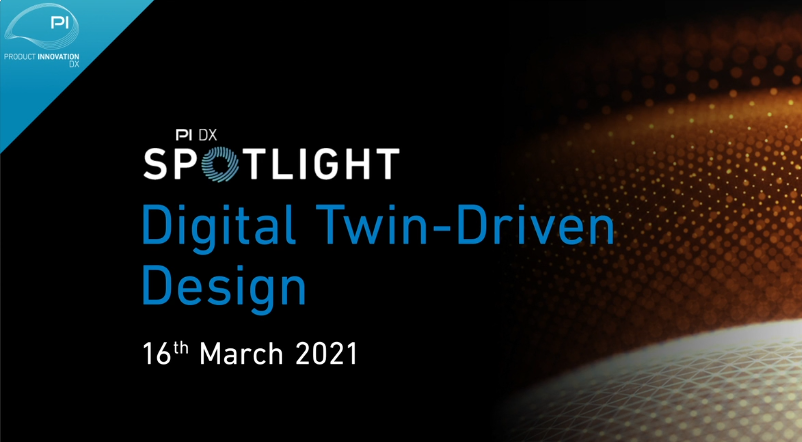 Recently, I enjoyed the panel discussions during the PI DX Spotlight session: Digital Twin-Driven Design. The PI DX Spotlight sessions are a collection of deep dives in various themes – have a look for the upcoming schedule here.
In the Digital Twin-Driven Design session, I enjoyed the session: What does a Digital Twin mean to your Business and Defining Requirements?
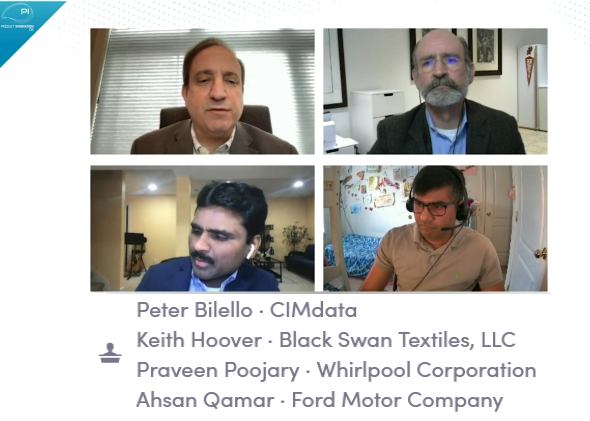 The discussion was moderated by Peter Bilello, with three interesting panellists with different industrial backgrounds. (Click on the image for the details). I have to re-watch some of the Spotlight sessions (the beauty of a virtual event) to see how they fit in the planned Digital Twin post.
The Cenit/Keonys Innovation day
On March 23rd (this Tuesday), Cenit & Keonys launch their virtual Innovation Day, another event that, before COVID-19, would have been a real people event. I am mentioning this event in particular, as I was allowed to interview fifteen of their customers about their day-to-day work, PLM-related plans, and activities.
All these interviews have been recorded and processed in such a manner that within 5 to 8 minutes, you get an understanding of what people are doing.
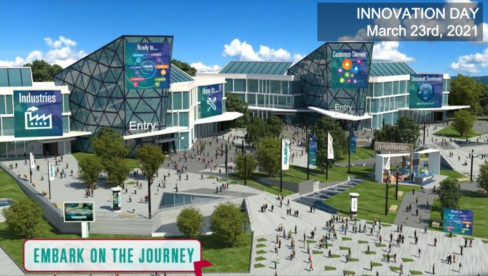
To prepare for these interviews, I spoke with each of them before the interview. I wanted to understand the passion for their work and where our interests overlap.
 I will not mention the individual interviews in this post, as I do not want to spoil the event. I talked with various startups (do they need PLM?) and established companies that started a PLM journey. I spoke with simulation experts (the future) and dimensional management experts (listen to these interviews to understand what it means). And ultimately, I interviewed a traditional porcelain family brand using 3D printing and 3D design, and at the other end, the German CIO of the year from 2020
(if you Google a little, you will easily find the companies involved here)
The most common topics discussed were:
- What was the business value of your PLM-related activity?
- Did COVID-19 impact your business?
- What about a cloud-based solution, and how do people align?
- If relevant, what are your experiences with a Model-Based Definition?
- What about sustainability?
I hope you will take the opportunity to register and watch these interviews as, for me, they were an excellent opportunity to be in touch with the reality in the field. As always, we keep on learning.
The Modular Way

Modularity is a popular topic in many board meetings. How often have you heard: “We want to move from Engineering To Order to more Configure To Order”? Or another related incentive: “We need to be cleverer with our product offering and reduced the number of different parts”.
Next, the company buys a product that supports modularity, and management believes the work has been done. Of course, not. Modularity requires a thoughtful strategy.
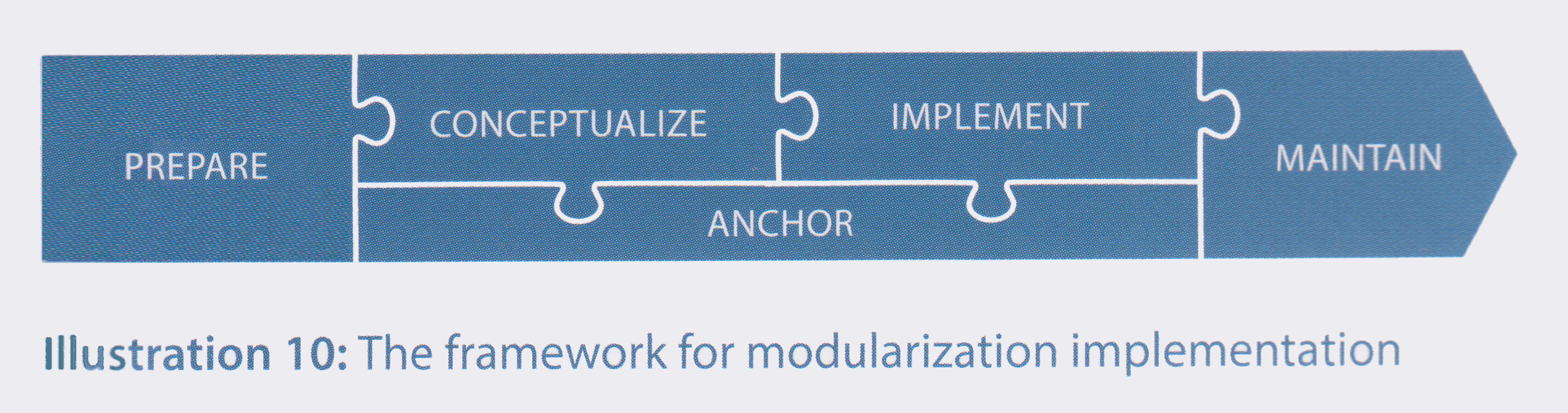
Illustration from the book: The Modular Way
The book can be a catalyst for such companies that want to invest in modularity but do not know where and how to start. The book is not written academically. It is more a story taking you along the steps needed to define, implement, and maintain modularity. Every step has been illustrated by actual cases and their business motivation and achieved benefits where possible. I plan to come back with Bjorn and Daniel in a dedicated post related to PLM and Modularity.
Conclusion
Virtual Events are probably part of our new future. A significant advantage is the global reach of such events. Everyone can join from anywhere connected around the world. Besides the larger events, I look forward to discovering more small and targeted discussion events like PI DX Spotlights. The main challenge for all – keep it interactive and social.
Let us know your favourite virtual event !!
 For those living in the Northern Hemisphere: This week, we had the shortest day, or if you like the dark, the longest night. This period has always been a moment of reflection. What have we done this year?
Rob Ferrone (Quick Release), the Santa on the left (the leftist), and Jos Voskuil (TacIT), the Santa on the right (the rightist), share in a dialogue their highlights from 2020
Wishing you all a great moment of reflection and a smooth path into a Corona-proof future.
It will be different; let’s make it better.
 This time it is again about learning. Last week, I read John Stark’s book: Products2019: A project to map and blueprint the flow and management of products across the product lifecycle: Ideation; Definition; Realisation; Support of Use; Retirement and Recycling. John, a well-known PLM consultant and writer of academic books related to PLM, wrote this book during his lockdown due to the COVID-19 virus. The challenge with PLM (books) is that it is, in a way boring from the outside. Remember my post: How come PLM and CM are boring? (reprise) ?
This time John wrapped the “boring” part into a story related to Jane from Somerset, who, as part of her MBA studies, is performing a research project for Josef Mayer Maschinenfabrik. The project is to describe for the newly appointed CEO what happens with the company’s products all along the lifecycle.

A story with a cliffhanger:
What happened to Newt from Cleveland?
Seven years in seven weeks
 Poor Jane, in seven weeks, she is interviewing people on three sites. Two sites in Germany and one in France, and she is doing over a hundred interviews on her own. I realized that thanks to relation to SmarTeam at that time, it took me probably seven years to get in front of all these stakeholders in a company.
I had much more fun most of the time as you can see below. My engagements were teamwork, where you had some additional social relief after work. Jane works even at the weekends.
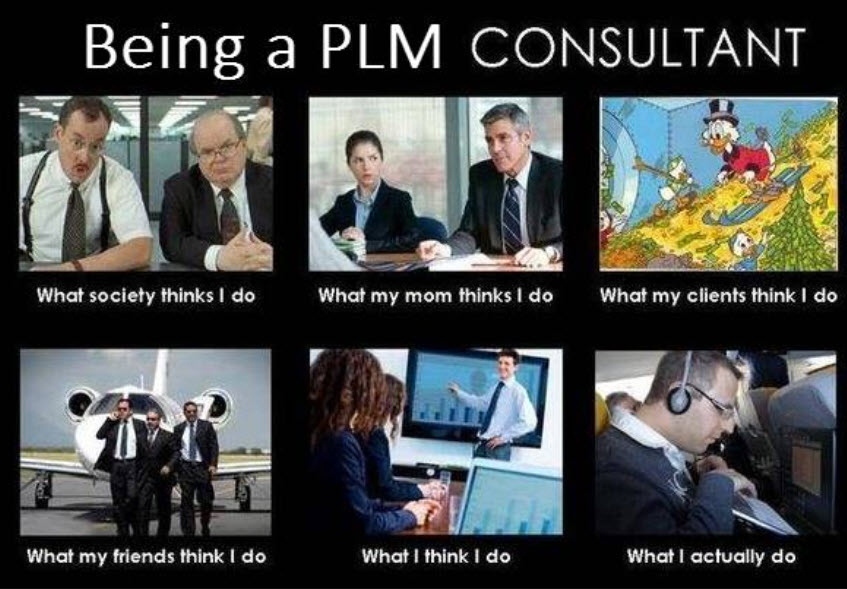
 However, there are also many similarities. Her daily rhythm during working days. Gasthaus Adler reflects many of the typical guesthouses that I have visited. People staying there with a laptop were signs of the new world. Like Jane, I enjoyed the weissbier and noticed that sometimes overhearing other guests is not good for their company’s reputation. A lot of personal and human experiences are wrapped into the storyline.
Spoiler: Tarzan meets Jane!
Cultural differences
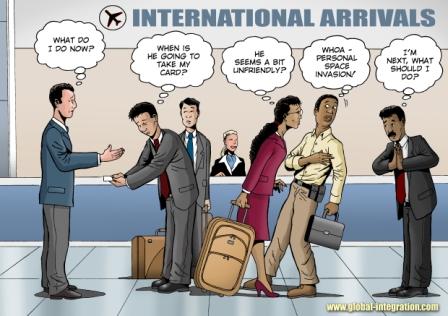 The book also illustrates the cultural difference between countries (Germany/France/US) nicely and even between regions (North & South). Just check the breakfast at your location to see it.
Although most of the people interviewed by Jane contributed to her research, she also meets that either for personal or political reasons, do not cooperate.
Having worked worldwide, including in Asian countries, I learned that understanding people and culture is crucial for successful PLM engagements.
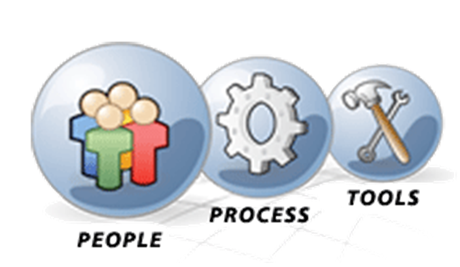 John did an excellent job of merging cultural and human behavior in the book. I am sure we share many similar experiences, as both this book and my blog posts, do not mention particular tools. It is about the people and the processes.
Topics to learn
 You will learn that 3D CAD is not the most important topic, as perhaps many traditional vendor-related PDM consultants might think.
Portfolio Management is a topic well addressed. In my opinion, to be addressed in every PLM roadmap, as here, the business goals get connected to the products.
New Product Introduction, a stage-gate governance process, and the importance of Modularity are also topics that pop up in several cases.
The need for innovation, Industry 4.0 and AI (Artificial Intelligene) buzz, the world of software development and the “War for Talent” can all be found in the book.
 And I was happy that even product Master Data Management was addressed. In my opinion, not enough companies realize that a data-driven future requires data quality and data governance. I wrote about this topic last year: PLM and PIM – the complementary value in a digital enterprise.
There are fantastic technology terms, like APIs, microservices, Low Code platforms. They all rely on reliable and sharable data.
What’s next
Products2019 is written as the starting point for a sequel. In this book, you quickly learn all the aspects of a linear product lifecycle, as the image below shows

I see an opportunity for Products2020 (or later). What is the roadmap for a company in the future?
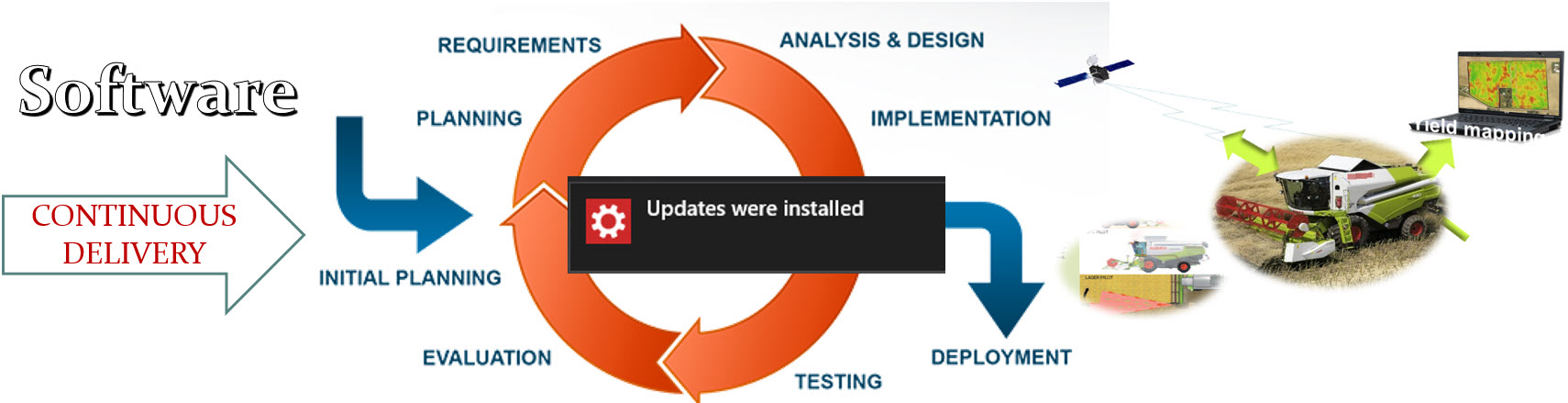
 How to deal with more data-driven, more agile in their go-to-market strategy, as software, will be more and more defining the product’s capabilities?
How to come from a linear siloed approach towards a horizontal flow of information, market-driven and agile?
Perhaps we will learn what happened with Newt from Cleveland?
Meanwhile, we have to keep on learning to build the future.
 My learning continues this week with PI DX USA 2020. Usually, a conference I would not attend as traveling to the USA would have too much impact on my budget and time. Now I can hopefully learn and get inspired – you can do the same! Feel free to apply for a free registration if you are a qualified end-user – check here.
And there is more to learn, already mentioned in my previous post:
- November 4th, the DigitalTwin Conference in the Netherlands – a one day conference in the Central European Timezone – mainly virtual, there will be a small local audience
- November 17-18-19, the CIMdata PLM Road Map & PDT Fall 2020 conference – entirely virtual with short Q&A sessions, targeting both the European as American timezone.
Conclusion
John Stark wrote a great book to understand what is currently in most people’s heads in mid-size manufacturing companies. If you are relatively new to PLM, or if you have only been active in PDM, read it – it is affordable! With my series Learning from the past, I also shared twenty years of experience, more a quick walkthrough, and a more specialized view on some of the aspects of PLM. Keep on learning!
 Jos Voskuil's Weblog
Interesting reflection, Jos. In my experience, the situation you describe is very recognizable. At the company where I work, sustainability…
[…] (The following post from PLM Green Global Alliance cofounder Jos Voskuil first appeared in his European PLM-focused blog HERE.) […]
[…] recent discussions in the PLM ecosystem, including PSC Transition Technologies (EcoPLM), CIMPA PLM services (LCA), and the Design for…
Jos, all interesting and relevant. There are additional elements to be mentioned and Ontologies seem to be one of the…
Jos, as usual, you've provided a buffet of "food for thought". Where do you see AI being trained by a…