
You are currently browsing the tag archive for the ‘LCA’ tag.
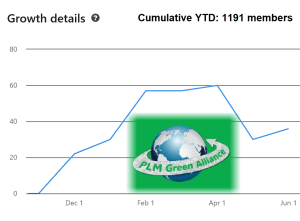 I am happy to see that the number of members of our PLM Green Global Alliance on LinkedIn has been growing fast recently.
Early this year, we reached 1000 members; now, as of this post, we have almost 1200 members in our LinkedIn group—a growth of 20 % in less than half a year!
Each member of the #plmgreen alliance has a unique story and reason for joining.
 I’m genuinely interested in learning more about your motivation. To kick off this conversation, I am sharing my journey, and I am eager to hear your thoughts, comments, and suggestions.
Being aware this is again a long read, but I encourage you to read the article till the end.
Reading a 1500-word post was a 20th-century skill that helped people understand things with their nuances.
Let’s not lose this skill in the 21st century!
How it all started
 Rich McFall reached out to me in late 2019, seeking individuals who shared our vision of establishing a platform for discussion and collaboration on green PLM. He was drawn to my 2015 blog post, ‘PLM and Global Warming,’ which I wrote six months before the famous Paris Agreement.
In my 2015 blog post, I drew a parallel between the slow response to digital transformation in the PLM domain and our collective inaction against climate change.
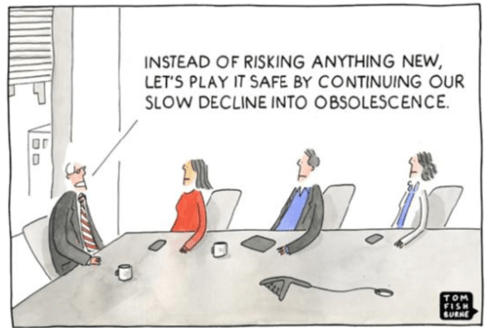
Despite the growing awareness of human-caused greenhouse gas emissions, there needed to be more urgency. This post was a call to action, not just for digital transformation in the PLM domain, but for our planet’s future. The cartoon below illustrates this mindset:
Both Rich and I felt that, when possible, we should use our energy and PLM-related skills to bring together a community of people who would take Climate Change and Sustainability seriously.
 Rich’s focus was primarily on Climate Change and Greenhouse Gas emissions. – a hot topic in the US, where my passion and interest were related to Sustainability and the Circular Economy – two overlapping topics with a different impact, both parts of the UN Sustainable Development Goals (SDG) as formulated and adopted by all United Nations Member States in 2015.
“Climate change creates fear and polarization, whereas the Circular Economy is more of a long-term concept, more complex to grasp, or implement, however crucial for the future of the planet.”
The start in 2020
 When we started in early 2020, a few people were interested in contributing to the alliance—their names are at the bottom of this post. After several internal Zoom meetings, we decided to focus on different Green areas.
The themes are available here: PLM Green Themes, i.e., Sustainability, the Circular Economy, Climate Change, Green Energy and Life Cycle Assessment.
 In the beginning, the alliance was a small group of enthusiastic people supported by approximately 100 members in our LinkedIn group. As an organization of volunteers, we struggled with allocating time and resources to get the needed attention. In 2020, climate change and Sustainability were still niche topics in the PLM domain, and our audience was still small.
Our interactive medium was the LinkedIn group, where comments and likes were easily shared. Our PLM Green Global Alliance website would be the place where we consolidate information—a challenging approach for us with limited skills and budget.
Starting the interviews in 2022
In 2022, we started interviewing PLM-related software vendors. Together with Klaus Brettschneider and, more recently, Mark Reisig, we were happy to discover what the major players in our PLM ecosystem were doing regarding Sustainability.
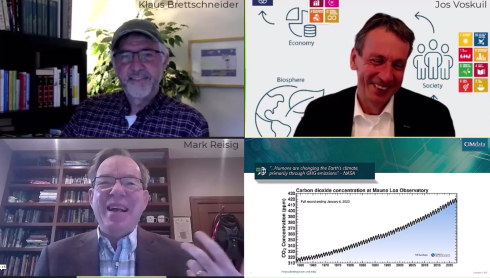
We spoke with SAP (Feb 2022 – Circular Economy), Autodesk (March 2020 – empowering engineers), Dassault Systemes (May 2022 – company targets & Virtual Twin), Sustaira (Sept 2022 – Connecting the dots – ESG reporting) and Aras (Oct 2022 – the need for a digital thread)
2023 – A year of transition
Besides the software vendors, consultancy firms started to address the need for more sustainable product development and understanding of what to do, and we spoke with CIMdata (April 2023 – the importance of sustainable business models) and Transition Technologies PSC (October 2023 – their GreenPLM offering on top of the PTC PLM suite)
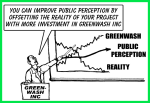 However, as a PLM Green Global Alliance, we discovered that more and more companies were considering moving away from greenwashing and toward implementing actual measures, some of them driven by upcoming regulations and country initiatives.
It was also a significant year for the PLM Green Global Alliance, as besides receiving increasingly encouraging messages, both CIMdata and CIMPA joined the alliance as moderators.
 CIMdata, well known for its PLM consultancy and market analysis, started an additional consultancy practice related to PLM and Sustainability.
Mark Reisig, their lead consultant, joined us on the themes of Sustainability and Energy, also given his previous work career in that field.
 CIMPA, a European PLM consultancy services company with roots in the aerospace industry, decided to support the alliance on the theme of the circular economy. Patrice Quencez and his team lead and moderate this activity.
Green in 2024 – what can we do?
Fear or Optimism? Fast and Slow!
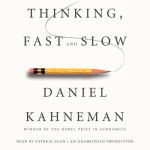 One of the negative characteristics of the human mind is that we only want to act if it is indispensable. The brain’s evolutionary characteristic is to use the maximum amount of energy when there is a dangerous situation that forces us to act.
There is enough proof for this theory, and it is the main reason why we continue bad habits. The best book to recommend is Thinking Fast and Slow by Daniel Kahneman.
Ask yourself:
- Should you study for the whole year or just before the exams?
- Would you start smoking knowing it is likely killing you in the long term?
- Would you save money for later, as then you might need it?
- Would you spend hours/days mastering a topic, or would you be an expert on social media with some easy facts and statistics?
- Would you act against climate change and overconsumption, knowing the reasons?
All the above questions illustrate that the majority of us (me too – there are no saints anymore) think fast, and media and marketing organizations know our weaknesses.
 The result: we only get attention when there is a message of fear
An explanation of why good news channels have no subscribers, whereas bad/fake news and polarising messages create an emotion to act.
In our PLM Green Alliance Group, Rich started with a monthly news digest related to Climate change. In the beginning, it felt like only bad news and the climate changes and disasters were showing us the urgency to handle. Read the last Climate Change Chronicles here.
Bad news and fear might paralyze people. You might think the topic is too big for me to handle; therefore, let’s do nothing. Do you remember the diagram below?
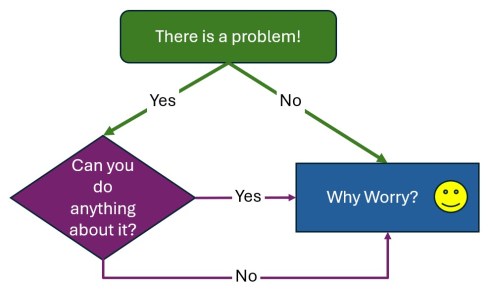
Fortunately, many people believe that something needs to be done.
 A recent UNDP survey shows that 80 percent of people globally want more decisive government climate action. Read the news here, and if you are interested in how your country compares to the rest of the world, check it here.
The good news is that the majority supports measures; the bad news is that the minority is the most vocal and influential by having the means and motives not to change the current status quo. And they have been organizing themselves for years.
Therefore, there is some optimism – we need to organize!
Looking back, particularly over the last 1½ years, there are reasons for optimism. Progress might not go as fast as desired, but if you are open to action and your newsfeed algorithm is also switched to positive, you will find encouraging messages.
For example, follow Assaad Razouk; his posts are often encouraging – not creating rage.
Read the monthly ESG Newsletters published by Vincent de la Mar from Sustaira and discover the positive trend. You can find his latest May newsletter here as an example: Sustainability & ESG Insights May ’24: Biden’s carbon market plans & how to get back on track to Paris Targets.
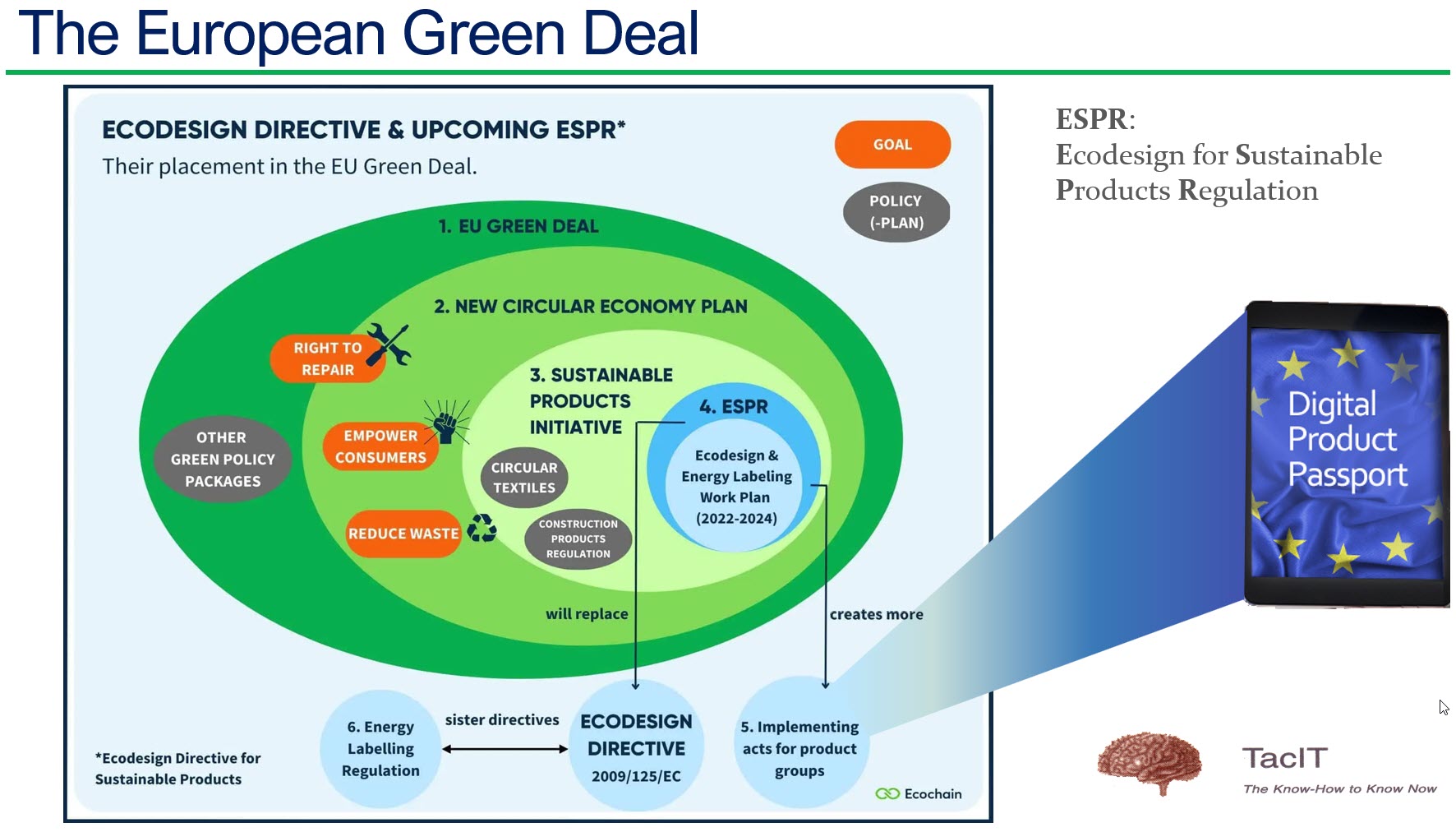
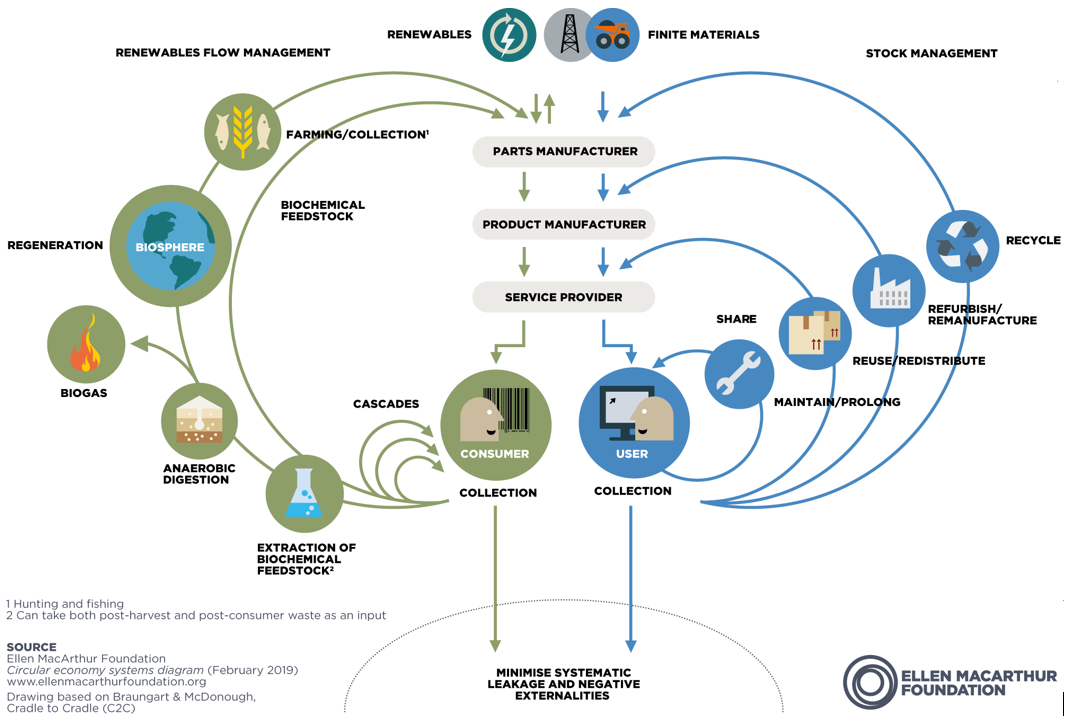
Following the progress within Europe – after the European Green Deal with all its aspects, recently, the Nature Restoration Law was signed, pushing companies to use more generative resources. The Nature Restoration Law and the European Green Deal are regulations pushing for a more circular economy as both the left side (regenerative) and right side (hardware) of the famous butterfly are addressed.
Conclusion
We are making progress, and I hope this post makes you realize that you need to worry about climate change and the Sustainability of our planet. My passion, and the passion of all the people listed below, is to support a movement and not to be silent.
Now, I am asking you to share your story. Which topics do we need to address first? Can you share examples or facts that illustrate—that with 1200 members, we should not be part of the silent majority but become a respected voice?
We’d like to express our exceptional gratitude to all those who supported us or are still supporting us at any stage of our PLM Green Global Alliance. Feel motivated to join this group of the non-silent majority.
In an alfabetical order: Xavier Adam, Zoe Bezpalko, Tom Boudeville, Klaus Brettschneider, Nina Dar, Stephane Declee, Dave Duncan, Stephan Fester, Bjorn Fidjeland, Ryan Flavelle, Matthias Fohrer, Roger L. Franz, Lionel Grealou, Jon den Hartog, Patrick Hilberg, Yousef Hooshmand, Hannes Lindfred, Ilan Madjar, Vincent de la Mar, James Norman, Rich McFall, Frank Popielas, Patrice Quencez, Mark Reisig, Audrey Reyniers, Erik Rieger, Ryan Rochelle, Mark Rushton, Neil D’Souza, Jonathan Thery, Oleg Shilovitsky, Florence Verzelen, Darren West ,Patrick Willemsen, Rafał Witkowski, Morgan Zimmermann.
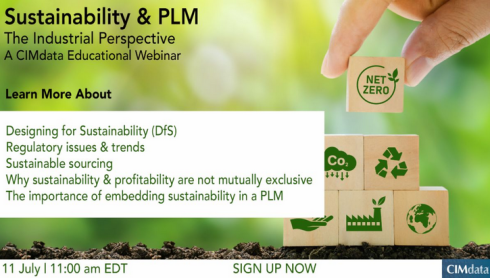
 During May and June, I wrote a guest chapter for the next edition of John Stark’s book Product Lifecycle Management (Volume 2): The Devil is in the Details.
The book is considered a standard in the academic world when studying aspects of PLM.
Looking into the table of contents through the above link, it shows that understanding PLM in its full scope is broad. I wrote about it recently: PLM is Complex (and we have to accept it?), and Roger Tempest and others are still fighting to get the job as PLM Professional recognized Associate Yourself With Professional PLM.
 To make the scope broader, John invited me to write a chapter about PLM and Sustainability, which is an actual topic in many organizations. As sustainability is my dedicated topic in the PLM Global Green Alliance (PGGA) core team, I was happy to accept this challenge.
This activity is challenging because writing a chapter on a current topic might make it outdated soon. For the same reason, I never wanted to write a PLM book as I wrote in my 2014 post: Did you notice PLM is changing?
 The book, with the additional chapter, will be available later this year. I want to share with you in this post the topics I addressed in this chapter. Perhaps relevant for your organization or personal interests. Also, I am looking forward to learning if I missed any topics.
Introduction
The chapter starts with defining the context. PLM is considered a strategy supported by a connected IT infrastructure, and for the definition of sustainability, I refer to the relevant SDGs as described on our PGGA theme page: PLM and Sustainability

Next, I discuss two major concepts indissoluble connected with sustainability.
The Circular Economy
On a planet with limited resources and still a growing consumption of raw materials, we need to follow the concepts of the circular economy in our businesses and lives. The circular economy section addresses mainly the hardware side of the butterfly as, here, PLM practices have the most significant impact.
The circular economy requires collaboration among various stakeholders, including businesses, governments and consumers. It involves rethinking production processes and establishing new consumption patterns. Policies and regulations will push for circular economy patterns, as seen in the following paragraphs.
Systems Thinking
A significant change in bringing products to the market will be the need to change how we look at our development processes. Historically, many of these processes were linear and only focused on time to market, cost and quality. Now, we have to look into other dimensions, like environmental impact, usage and impact on the planet. As I wrote in the past Systems Thinking – a must-have skill in the 21st century?
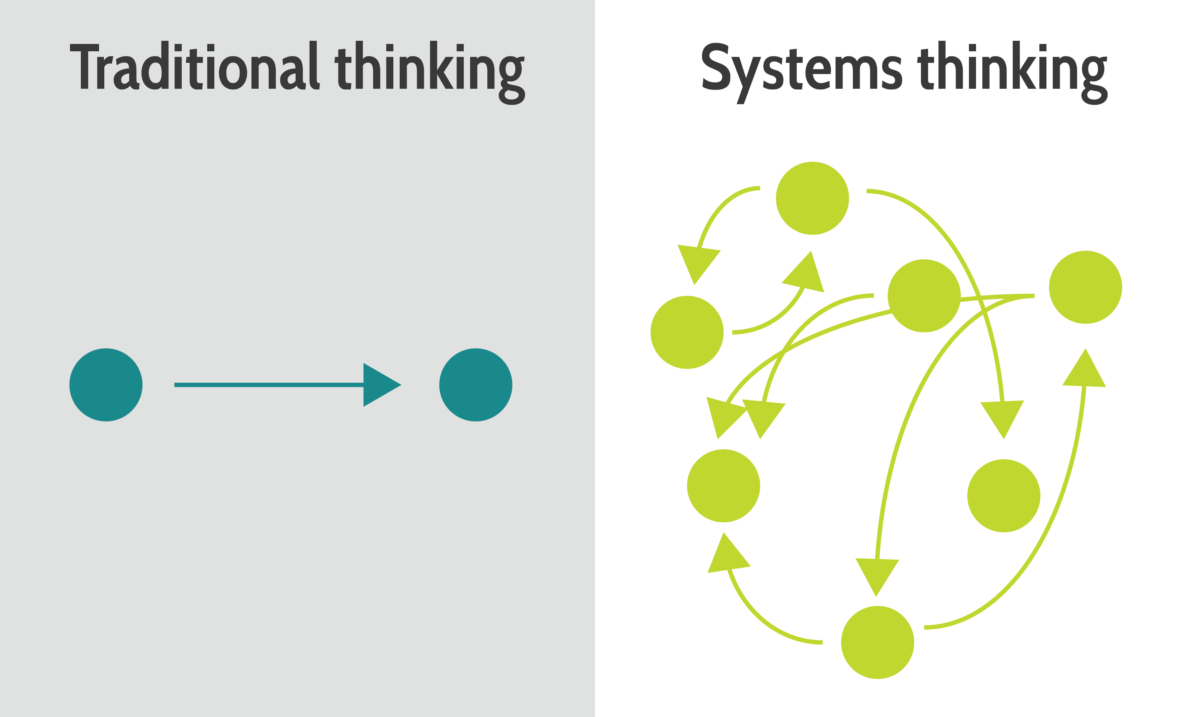
Systems Thinking is a cognitive approach that emphasizes understanding complex problems by considering interconnections, feedback loops, and emergent properties. It provides a holistic perspective and explores multiple viewpoints.
Systems Thinking guides problem-solving and decision-making and requires you to treat a solution with a mindset of a system interacting with other systems.
Regulations
More sustainable products and services will be driven primarily by existing and upcoming regulations. In this section, I refer to the success of the CFC (ChloroFluorCarbon) emission reduction, leading to slowly fixing the hole in the Ozon layer. Current regulations like WEEE, RoHS and REACH are already relevant for many companies, and compliance with these regulations is a good exercise for more stringent regulations related to Carbon emissions and upcoming related to the Digital Product Passport.
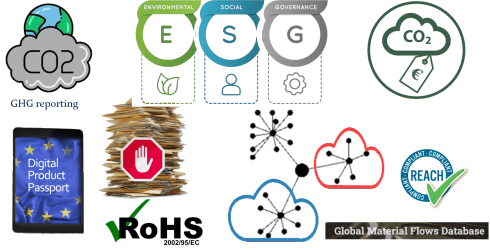
Making regulatory compliance a part of the concept phase ensures no late changes are needed to become compliant, saving time and costs. In addition, making regulatory compliance as much as possible with a data-driven approach reduces the overhead required to prove regulatory compliance. Both topics are part of a PLM strategy.
 In this context, see Lionel Grealou’s article 5 Brand Value Benefits at the Intersection of Sustainability and Product Compliance. The article has also been shared in our PGGA LinkedIn group.
Business
On the business side, the Greenhouse Gas Protocol is explained. How companies will have to report their Scope 1 and Scope 2 emissions and, ultimately, Scope 3 – see the image below for the details.
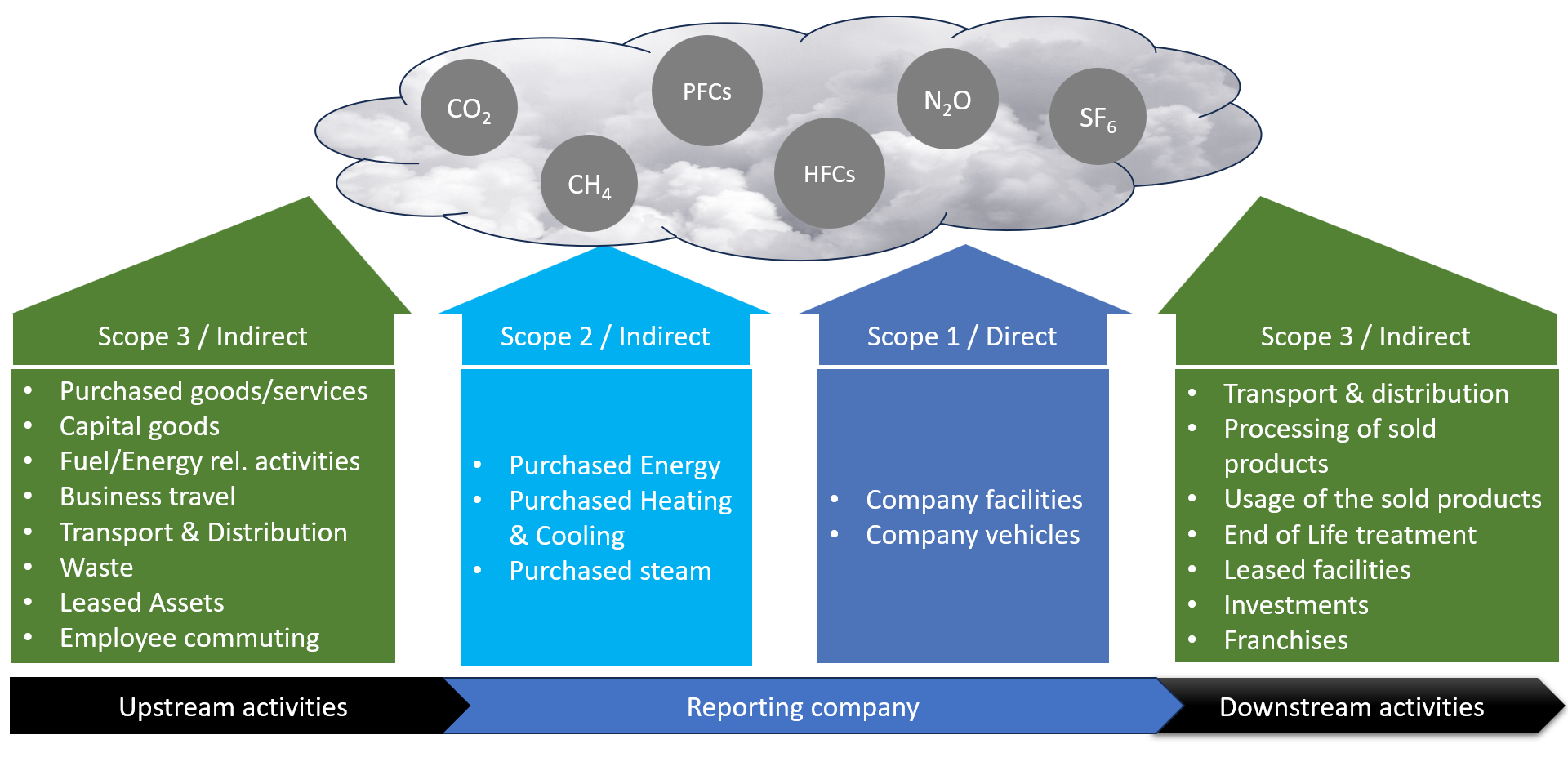
GHG reporting will support companies, investors and consumers to decide where to prioritize and put their money.
Ultimately, companies have to be profitable to survive in their business. The ESG framework is relevant in this context as it will allow investors to put their money not only based on short-term gains (as expected) but also on Environmental or Social parameters. There are a lot of discussions related to the ESG framework, as you might have read in Vincent de la Mar’s monthly newsletter, Sustainability & ESG Insights, which is also published in our PGGA group – a link below..

Besides ESG guidelines, there is also the drive by governments and consumers to push for a Product as a Service economy. Instead of owning products, consumers would pay for the usage of these products.
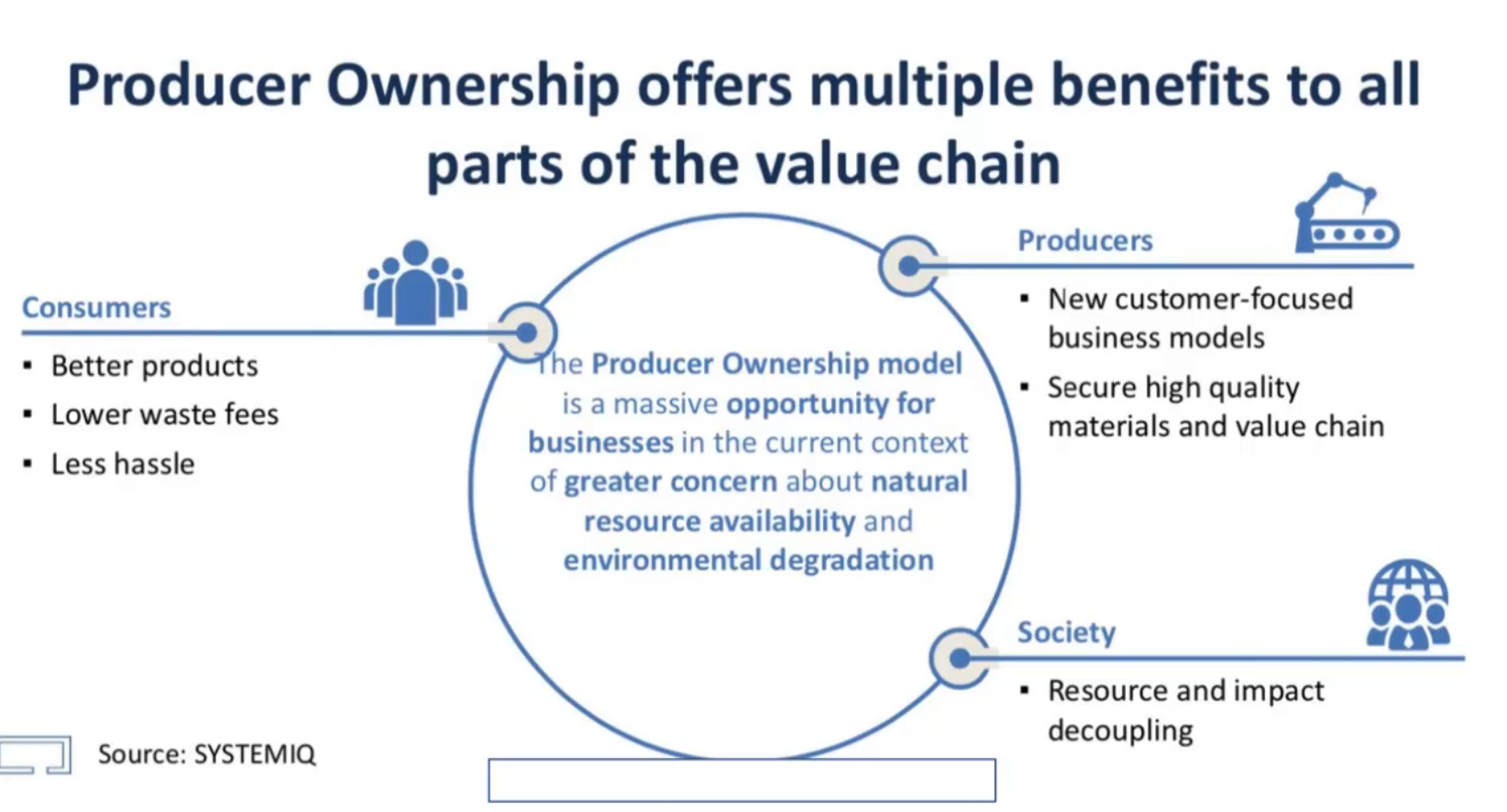
The concept is not new when considering lease cars, EV scooters, or streaming services like Spotify and Netflix. In the CIMdata PLM Roadmap/PDT Fall 2021 conference, we heard Kenn Webster explaining: In the future, you will own nothing & you will be happy.
Changing the business to a Product as a Service is not something done overnight. It requires repairable, upgradeable products. And business related, it requires a connected ecosystem of all stakeholders – the manufacturer, the finance company, and the operating entities.
Digital Transformation
All the subjects discussed before require real-time reporting and analysis combined with data access to compliance-related databases. More in the section related to Life Cycle Assessment. As I discussed last year in several conferences, a sustainability initiative starts with data-driven and model-based approaches during the concept phase, but when manufacturing and operating (connected) products in the field. You can read the entire story here: Sustainability and Data-Driven PLM – the Perfect Storm.

Life Cycle Analysis
Special attention is given in this chapter to Life Cycle Analysis, which seems to be a popular topic among PLM vendors. Here, they can provide tools to make a lifecycle assessment, and you can read an impression of these tools in a guest blog from Roger L. Franz titled PLM Tools to Design for Sustainability – PLM Green Global Alliance.
However, Lifecycle Analysis is not as simple. Looking at the ISO 14040 framework, which describes – having the right goals and scope in mind, allows you to do an LCA where the Product Category Rules (PCS) will enable companies to compare their products with others.
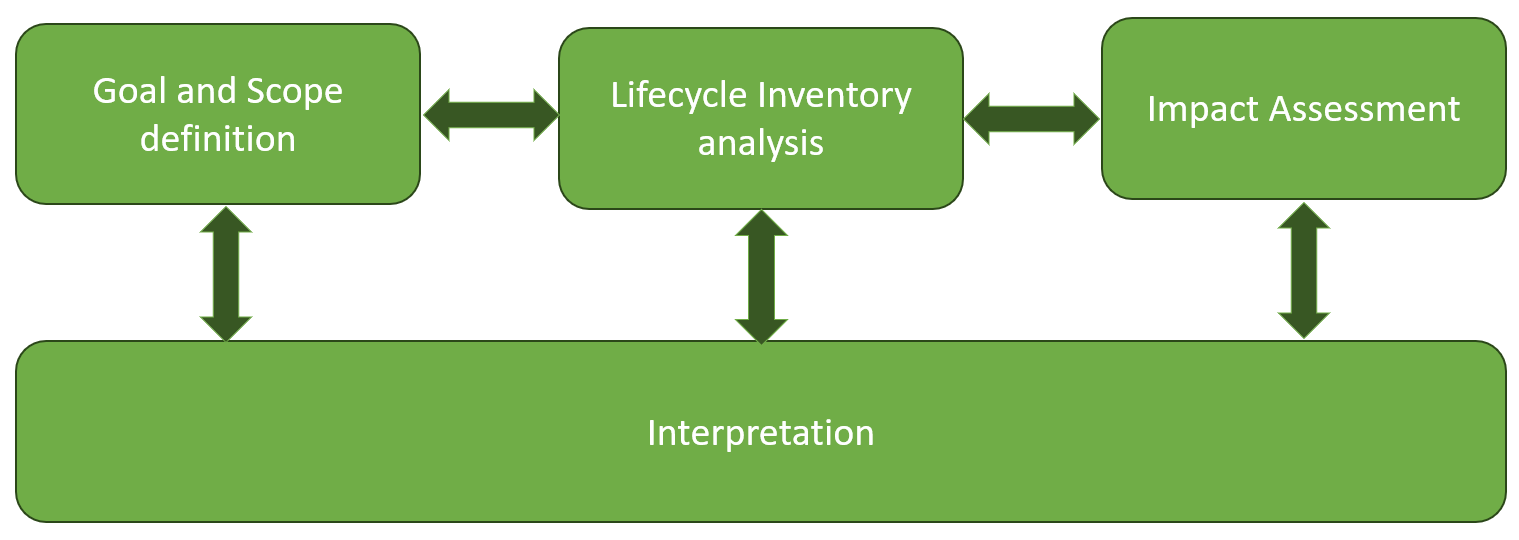
PCRs include the description of the product category, the goal of the LCA, functional units, system boundaries, cut-off criteria, allocation rules, impact categories, information on the use phase, units, calculation procedures, requirements for data quality, and other information on the lifecycle Inventory Phase.
So be aware there is more to do than installing a tool.
Digital Twin
 This section describes the importance of implementing a digital twin for the design phase, allowing companies to develop, test and analyze their products and services first virtually. Trade-off studies on virtual products are much cheaper, and when they are done in a data-driven, model-based environment, it will be the most efficient environment. In my terminology, setting up such a collaboration environment might be considered a System of Engagement.
The second crucial digital twin mentioned is the digital twin from a product in operation where performance can be monitored and usage can be optimized for a minimal environmental impact. Suppose a company is able to create a feedback loop between its products in the field and its product innovation platform. In that case, it can benchmark its design models and update the product behavior for better performance.

The manufacturing digital twin is also discussed in the context of environmental impact, as choosing the right processes and resources can significantly affect scope 3 emissions.
The chapter finishes with the story of a fictive company, WePack, where we can follow the impact and implementations of the topics described in this chapter.
Conclusion
As I described in the introduction, the topic of PLM and Sustainability is relatively new and constantly evolving. What do you think? Did I miss any dimensions?
Feel free to contribute to our PLM Global Green Alliance LinkedIn group.
Looking forward to meet you here
 In the last weeks, I had several discussions related to sustainability. What can companies do to become sustainable and prove it? But, unfortunately, there is so much greenwashing at this moment.
Look at this post: 10 Companies and Corporations Called Out For Greenwashing.
 Therefore I thought about which practical steps a company should take to prepare for a sustainable future, as the change will not happen overnight. It reminds me of the path towards a digital, model-based enterprise (my other passion). In my post Why Model-Based definition is important for all, I mentioned that MBD (Model-Based Definition) could be considered the first stepping-stone toward a Model-Based enterprise.
 The analogy for Material Compliance came after an Aras seminar I watched a month ago. The webinar How PLM Paves the Way for Sustainability with Insensia (an Aras implementer) demonstrates how material compliance is the first step toward sustainable product development.
Let’s understand why
The first steps
 Companies that currently deliver solutions mostly only focus on economic gains. The projects or products they sell need to be profitable and competitive, which makes sense if you want a future.
And this would not have changed if the awareness of climate impact has not become apparent.
First, CFKs and hazardous materials lead to new regulations. Next global agreements to fight climate change – the Paris agreement and more to come – have led and will lead to regulations that will change how products will be developed. All companies will have to change their product development and delivery models when it becomes a global mandate.
 A required change is likely going to happen. In Europe, the Green Deal is making stable progress. However, what will happen in the US will be a mystery as even their supreme court becomes a political entity against sustainability (money first).
Still, compliance with regulations will be required if a company wants to operate in a global market.
What is Material Compliance?
 In 2002, the European Union published a directive to restrict hazardous substances in materials. The directive, known as RoHS (Restriction of Hazardous Substances), was mainly related to electronic components. In the first directive, six hazardous materials were restricted.
The most infamous are Cadmium(Cd), Lead(Pb), and Mercury (Hg). In 2006 all products on the EU market must pass RoHS compliance, and in 2011 was now connected the CE marking of products sold in the European market was.
 In 2015 four additional chemical substances were added, most softening PVC but also affecting the immune system. Meanwhile, other countries have introduced similar RoHS regulations; therefore, we can see it as a global restricting. Read more here: The RoHS guide.
Consumers buying RoHS-compliant products now can be assured that none of the threshold values of the substances is reached in the product. The challenge for the manufacturer is to go through each of the components of the MBOM. To understand if it contains one of the ten restricted substances and, if yes, in which quantity.
Therefore, they need to get that information from each relevant supplier a RoHS declaration.
 Besides RoHS, additional regulations protect the environment and the consumer. For example, REACH (Registration, Evaluation, Authorization and Restriction of Chemicals) compliance deals with the regulations created to improve the environment and protect human health. In addition, REACH addresses the risks associated with chemicals and promotes alternative methods for the hazard assessment of substances.
The compliance process in four steps
Material compliance is most of all the job of engineers. Therefore around 2005, some of my customers started to add RoHS support to their PLM environment.
Step 1
The image below shows the simple implementation – the PDF-from from the supplier was linked to the (M)BOM part.
 An employee had to manually add the substances into a table and ensure the threshold values were not reached. But, of course, there was already a selection of preferred manufacturer parts during the engineering phase. Therefore RoHS compliance was almost guaranteed when releasing the EBOM.
But this process could be done more cleverly.
Step 2
So the next step was that manufacturers started to extend their PLM data model with the additional attributes for RoHS compliance. Again, this could be done cleverly or extremely generic, adding the attributes to all parts.
 So now, when receiving the material declaration, a person just has to add the substance values to the part attributes. Then, through either standard functionality or customization, a compliance report could be generated for the (M)BOM. So this already saves some work.
Step 3
The next step was to provide direct access to these attributes to the supplier and push the supplier to do the work.
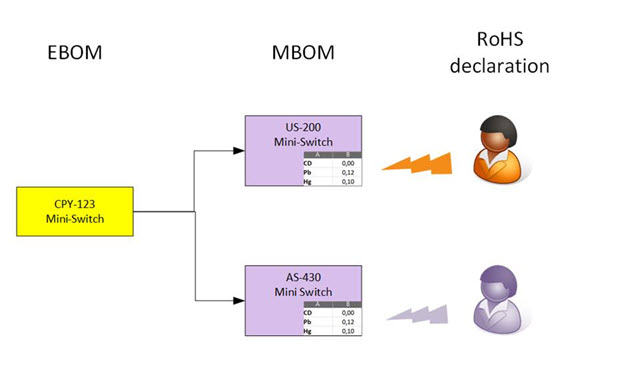 Now the overhead for the manufacturer has been reduced again. This is because only the supplier needs to do the job for his customer.
Step 4
In step 4, we see a real connected environment, where information is stored only once, referenced by manufacturers, and kept actual by the part suppliers.
 Who will host the RoHS databank? From some of my customer projects, I recall IHS as a data provider – it seems they are into this business when you look at their website HERE.
Where is your company at this moment?
Having seen the four stepping-stones leading towards efficient RoHS compliance, you see the challenge of moving from a document-driven approach to a data-driven approach.
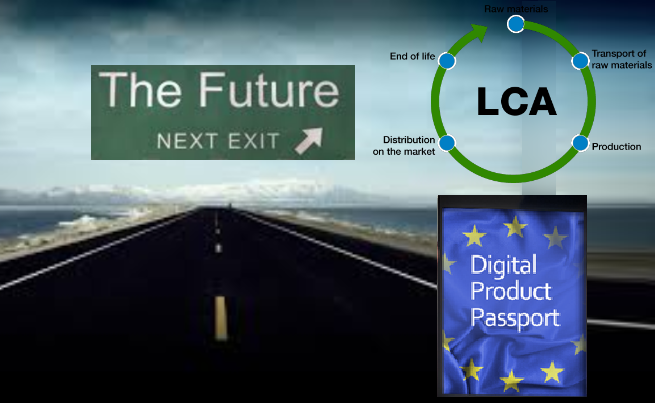 Now let’s look into the future. Concepts like Life Cycle Assessment (LCA) or a Digital Product Passport (DPP) will require a fully connected approach.
Where is your company at this moment – have you reached RoHS compliance step 3 or 4? A first step to learn and work connected and data-driven.
Life Cycle Assessment – the ultimate target
 A lifecycle assessment, or lifecycle analysis (two times LCA again), is a methodology to assess the environmental impact of a product (or solution) through its whole lifecycle. From materials sourcing, manufacturing, transportation, usage, service, and decommissioning. And by assessing, we mean a clear, verifiable, and shareable manner, not just guessing.
Traditional engineering education is not bringing these skills, although LCA is not new, as this 10-years old YouTube movie from Autodesk illustrates:
What is new is that due to global understanding, we are reaching the limits of what our planet can endure; we must act now. Upcoming international regulations will enforce life cycle analysis reporting for manufacturers or service providers. This will happen gradually.
Meanwhile, we all should work on a circular economy, the major framework for a sustainable planet- click on the image on the left.
In my post, I wrote about these combined topics: SYSTEMS THINKING – a must-have skill in the 21st century.
Life Cycle Analysis – Digital Twin – Digitization
The big elephant in the room is that when we talk about introducing LCA in your company, it has a lot to do with the digitization of your company. Assessment data in a document can require too much human effort to maintain the data at the right quality. The costs are not affordable if your competitor is more efficient.
When coming to the Analysis part, here, a model-based, data-driven infrastructure is the most efficient way to run virtual analysis, using digital twin concepts at each stage of the product lifecycle.
Virtual models for design, manufacturing and operations allow your company to make trade-off studies with low cost before committing to the physical world. 80 % of the environmental impact of a product comes from decisions in the virtual world.
Once you have your digital twins for each phase of the product lifecycle, you can benchmark your models with data reported from the physical world. All these interactions can be found in the beautiful Boeing diamond below, which I discussed before – Read A digital twin for everybody.

Conclusion
Efficient and sustainable life cycle assessment and analysis will come from connected information sources. The old document-driven paradigm is too costly and too slow to maintain. In particular, when the scope is not only a subset of your product, it is your full product and its full lifecycle with LCA. Another stepping stone towards the near future. Where are you?
Stepping-stone 1: From Model-Based Definition to an efficient Model-Based, Data-driven Enterprise
Stepping-stone 2: For RoHS compliance to an efficient and sustainable Model-Based, data-driven enterprise.
 Jos Voskuil's Weblog
Interesting reflection, Jos. In my experience, the situation you describe is very recognizable. At the company where I work, sustainability…
[…] (The following post from PLM Green Global Alliance cofounder Jos Voskuil first appeared in his European PLM-focused blog HERE.) […]
[…] recent discussions in the PLM ecosystem, including PSC Transition Technologies (EcoPLM), CIMPA PLM services (LCA), and the Design for…
Jos, all interesting and relevant. There are additional elements to be mentioned and Ontologies seem to be one of the…
Jos, as usual, you've provided a buffet of "food for thought". Where do you see AI being trained by a…