
You are currently browsing the category archive for the ‘Innovation’ category.
 In the past months, I have talked and working with various companies about the topic of Asset Lifecycle Management (ALM) based on a PLM system. Conceptual it is a very strong concept and so far only a few companies have implemented this approach, as PLM systems have not been used so much outside the classical engineering world.
Why using a PLM system ?
To use a PLM system for managing all asset related information ( asset parameters, inventory, documents, locations, lifecycle status) in a single system assures the owner / operator that a ‘single version of the truth’ starts to exist. See also one of my older posts about ALM to understand the details.
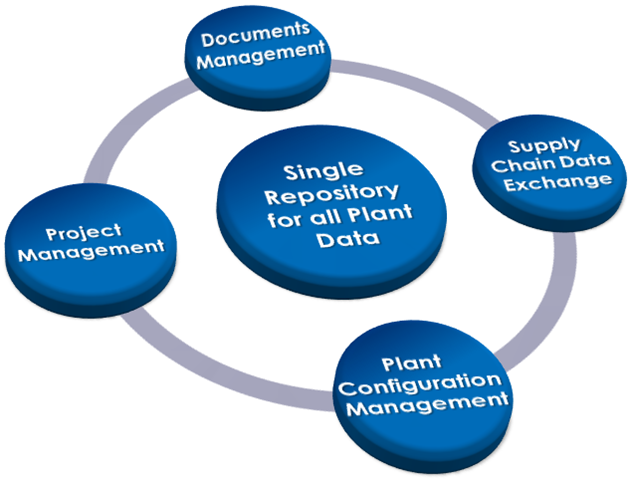 The beauty lies in the fact that this single version of the truth concept combines the world of as-built for operators and the world of as-defined / as-planned for preparing changes. Instead of individual silos the ALM system provides all information, of course filtered in such a way that a user only sees information related to the user’s role in the system.
The challenge for PLM vendors is to keep the implementation simple as PLM initially in its core industries was managing the complexity. Now the target is to keep it extremely simple and easy to used for the various user roles, meanwhile trying to stay away from heavy customizations to deliver the best Return on Investment.
Having a single version of the truth provides the company with a lot of benefits to enhance operations. Imagine you find information and from its status you know immediately if it is the latest version and if other versions exists. In the current owner / operator world often information is stored and duplicated in many different systems, and finding the information in one system does not mean that this is the right information. I am sure the upcoming event from IDC Manufacturing Insights will also contribute to these findings
It is clear that historically this situation has been created due to the non-intelligent interaction with the EPC contractors building or changing the plant. The EPC contractors use intelligent engineering software, like AVEVA , Bentley, Autodesk and others, but still during hand-over we provide dumb documents, paper based, tiff, PDF or some vendor specific formats which will become unreadable in the upcoming years. For long-term data security often considered the only way, as neutral standards like ISO-15926 still require additional vision and knowledge from the owner/operator to implement it.
Now back to the discussions…
In many discussions with potential customers the discussion often went into the same direction:
“How to get the management exited and motivated to invest into this vision ? The concept is excellent but applying it to our organization would lead to extra work and costs without immediate visibility of the benefits !”
This is an argument I partly discussed in one of my previous posts: PLM, CM and ALM not sexy. And this seems to be the major issue in western Europe and the US. Business is monitored and measured for the short term, maximum with a plan for the next 4 – 5 years. Nobody is rewarded for a long-term vision and when something severe happens, the current person in power will be to blame or to excuse himself.
 As a Dutch inhabitant, I am still proud of what our former Dutch government decided and did in the after the flooding in 1953. The Dutch invested a lot of money and brain power into securing inhabitants behind the coast line in a project called the Delta Works. This was an example of vision instead of share holder value. After the project has been finished in the eighties there was no risk for a severe flooding anymore and the lessons learned from that time, brought the Dutch the knowledge to support other nations at risk for flooding. I am happy that in 1953 the government was not in the mood to optimize their bonus ( an unknown word at that time)
Back to Asset Lifecycle Management ….
Using a PLM system for asset lifecycle management provides the economical benefits by less errors during execution (working on the right information), less human involvement in understanding the information ( lower labor costs) and lower total cost of ownership (less systems to maintain and connect by IT).
But these benefits are in no relation with risk containment. What happens if something goes really wrong ?
If you you are a nuclear plant owner, you are in global trouble. A chemical plant owner or oil company can be in regional trouble, but they also will suffer from the damage done to their brand name globally. Other types of plant owners might come away with less, depending on the damage they potential ‘embank’
The emerging visionaries
 For that reason, it is enlightening to see that some companies in Asia think different. There the management understands that they have the opportunity to build their future in a more clever way. Instead of copying the old way EPC contractors and plant owners work together, they start from a single version of the truth concept, pushing their contractors to work more integrated and clever with them. Instead of becoming boiling frogs, they are avoiding to fall into the same trap of many owners / operators in European and US based companies: “Why change the way we work, it does not seem to be so bad”
It requires a vision for the long term, something that will lead to extra benefits in the long term future: more efficient management of their assets, including risk containment and therefore being more competitive. If European and US-based companies want to be dominating in this industry they will need to show their vision too ..
Tomorrow I am attending the European Chemical Manufacturing Masters conference in Berlin, where I hope to learn and discuss this vision with the participants. I will keep you updated if i found the vision …..

 This week I was happy to participate in the PLM INNOVATION 2011 conference in London. It was an energizer, which compared to some other PLM conferences, makes the difference. The key of the success, to my opinion was that there was no vendor dominance. And that participants were mainly discussing around their PLM implementation experiences not about products.
Additional as each of the sessions were approximate 30 minutes long, it forced the speakers to focus on their main highlights, instead of going into details. Between the sessions there was significant time to network or to setup prescheduled meetings with other participants. This formula made it for me an energizing event as every half hour you moved into a next experience.
In parallel, I enjoyed and experienced the power of the modern media. Lead by Oleg, a kind of parallel conference took place on Twitter around the hash tag #plminnovation2011. There I met, and communicated with people in the conference (and outside) and felt sorry I was not equipped with all the modern media (iPhone/Pad type equipment) to interact more intensive during these days.
Now some short comments/interpretations on the sessions I was able to attend
Peter Bilello, president of Cimdata opened the conference in the way we are used from Cimdata, explaining the areas and values of PLM, the statistics around markets, major vendors and positive trends for the near future. Interesting was the discussion around the positioning of PLM and ERP functionality and the coverage of these functionalities between PLM and ERP vendors.
Jean-Yves Mondon, EADS’ head of PLM Harmonization (Phenix program) , illustrated by extracts of an interview with their CEO Louis Gallois, how EADS relies on PLM as critical for their business and wants to set standards for PLM in order to have the most efficient interoperability of tools and processes coming from multiple vendors
 Due to my own session and some one-to-one sessions, I missed a few parallel sessions in the morning and attended Oleg Shilovitsky’s session around the future of engineering software. Oleg discussed several trends and one of the trends I also see as imminent, it the fact that the PLM world is changing from databases towards networks. It is not about capturing all data inside one single system, but to be able to find the right information through a network of information carriers.
This suits also very well with the new generation of workers (generation-Y) who also learned to live in this type of environments and collect information through their social networks.
The panel discussion with 3 questions for panelist could have been a little better in case the panelist would have had the time to prepare some answers, although some of the improvisations were good. I guess the audience choose Graham McCall’s response on the question: “What will be the Next Biggest Disappointment” as the best. He mentioned the next ‘big world-changing’ product launch from a PLM vendor.
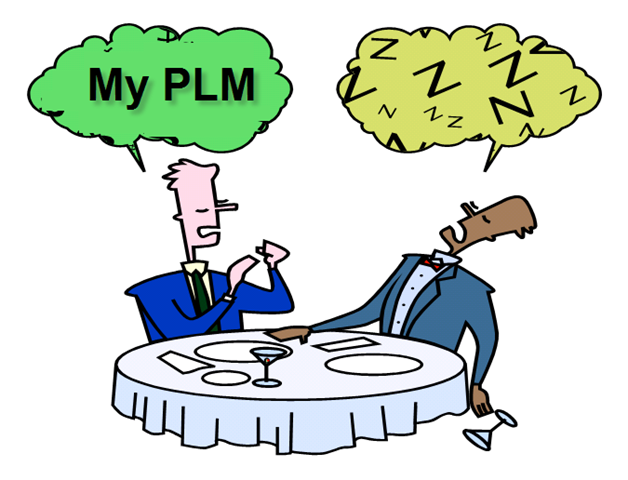 Then I followed the afternoon session from Infor, called Intelligent PLM for Manufacturing. The problem with this session I had (and I have this often with vendor sessions) was that Venkat Rajaj did exactly wrong what most vendors do wrong. They create their own niche definition – Product Lifecycle Intelligence (is there no intelligence in PLM) , being the third software company (where are they on Cimdata’s charts) and further a lot of details on product functions and features. Although the presentation was smooth and well presented, the content did not stick.
 A delight that day was the session from Dr. Harminder Singh, associate fellow at Warwick Business School, about managing the cultural change of PLM. Harminder does not come from the world of software or PLM and his outsider information and looks, created a particular atmosphere for those who were in the audience and consider cultural change as an important part of PLM. Here we had a session inspired by a theme not by product or concept. I was happy to have a longer discussion with Harminder that day as I also believe PLM has to do with culture change – it is not only technology and management push as we would say. Looking forward to follow up here.
The next day we started with an excellent session from Nick Sale from TaTa Technologies. Beside a Nano in the lobby of the conference he presented all the innovation and rationalization related to the Nano car and one of his messages was that we should not underestimate the power of innovation coming from India. An excellent sponsor presentation as the focus was on the content.
In the parallel track I was impressed how Philips Healthcare implemented their PLMD architecture with three layers.  Gert-Jan Laurenssen explained they have an authoring layer, where they do global collaboration within one discipline. A PDM layer where they manage the interdisciplinary collaboration, which of course in the case of Healthcare is a mix of mechanical, electrical and software. And above these two layers they connect to the layer of transactional systems, that need the product definition data. Impressive was their implementation speed for sure due to some of the guidelines Gert-Jan gave – see Oleg’s picture from his slide here. Unfortunate I did not have the time to discuss deeper with Gert-Jan as I am curious about the culture change and the amount of resources they have in this project. Interesting observation was that the project was driven by IT-managers and Engineering managers, confirming the trend that PLM more and more becomes business focussed instead of IT-focused.
Peter Thorne from Cambashi brought in his session called Trends and Maximizing PLM investments an interesting visual historical review on engineering software investments using Google Earth as the presentation layer. Impressing to see the trends visualized this way and scary the way Europe is not really a major area of investment and growth.
Keith Connolly explained in his session how S&C Electric integrated their PLM environment with ERP. Everything sounded so easy and rational but as I know the guys from S&C for a longer time, I know it is a result of having a clear vision and working for many years towards implementing this vision.
 Leon Lauritsen from Minerva gave a presentation around Open Source PLM and he did an excellent job around explaining where Open Source PLM could/should become attractive. Unfortunate his presentation quickly went into the direction of Open Source PLM equals Aras and he continued with a demo of Aras capabilities. I would have preferred to have a longer presentations around the Open Source PLM business model instead of spending time on looking at a product.
I believe Aras has a huge potential, for sure in the mid-market and perhaps beyond, but I keep coming back on my experiences I also have with SmarTeam: An open and easy to install PLM system with a lot of features is a risk in the hand of IT-people with no focus on business. Without proper vision and guiding (coming from ????? ) it will become again an IT-project, for cheaper to the outside world (as internal investments often are not so clear), but achieving the real PLM goals depends on how you implement.
 After lunch we really reached to the speed of light with David Widgren, who gave us the insight of data management at CERN. Their problematic, somehow a single ‘product’ – the accelerators and all its equipment plus a long lifecycle (20 years development before operational), surviving all technologies and data formats requires them to think all time on pragmatic data storage and migration. In parallel as the consumers of data are not familiar with the complexity of IT-systems they build lots of specific interfaces for specific roles to provide the relevant information in a single environment. Knowing a lot of European funds are going there, David is a good ambassador for the CERN, explaining in a comic manner he is working at the coolest place on Earth.
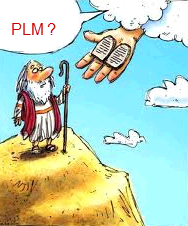 Last session I could attend was Roger Tempest around Data Management. Roger is a co-founder of the PLMIG (PLM Interest group) and they strive for openness, standards and interoperability for PLM systems. I was disappointed by this session as I was not able to connect to the content. Roger was presenting his axioms as it seemed. I had the feeling he would come down the stage with his 10 commandments. I would be interested to understand where these definitions came from. Is it a common understanding or it it just again another set of definitions coming from another direction and what is the value or message for existing customers using particular PLM software.
I missed the closing keynote session from John Unsworth from Bentley. I learned later this was also an interesting session but cannot comment it.
My conclusion:
An inspiring event, both due to its organization and agenda and thanks to the attendees who made a real PLM centric event. Cannot wait for 2012
 The past month I have been very busy in a specific area where PLM is not yet as understood. Where PLM is a ‘must have’ for companies developing and manufacturing products, in the world of Asset Development and Asset Management not many companies are yet aware of the benefits PLM can bring. I wrote about it in one of my previous posts . I will share some of my experiences here and I must thank Stephen Porter for mentioning my blog in his review (and pushing me to write today – even during the soccer championships in South Africa.
PLM benefits for Owner / Operators
I had discussions with a few owner/operators in the past week and as they all came from different industries (nuclear power generation / gas distribution / chemical processing), the details might differ but the values a PLM system can bring is for all of them the same.
When talking to Owner/Operators there are a few standard situations you observe:
- The usage of a transactional system (MRO / ERP /SCADA) which is managing the operational and financial activities as job scheduling and purchasing. Main dominant players in this area are Maximo and SAP. Most Owner / Operators believe that this is the only main system they need.This looks very similar to what we see in the typical manufacturing companies. They all have an ERP system, and specially in the mid-market these companies are not looking for another major IT-system.
The problem with only the transactional system as the core system for the company is that there is no natural storage for product or process information that can change (the Intellectual Property of the company). Transactional systems use pointers to actual product or process information that they require. But where do they store other and historical information ?
- The challenge to manage in parallel data for maintenance, rework and innovation projects. As the transactional system provides data for the operational environment, these companies are used to copy out data to their project environment avoiding not released project data can be seen in the operational environment. Another situation in relation to the engineering projects is that the owner / operator usually outsources the engineering work to EPC contractors and only coordinates the activities taking ownership of the data only after the new installation is under operation
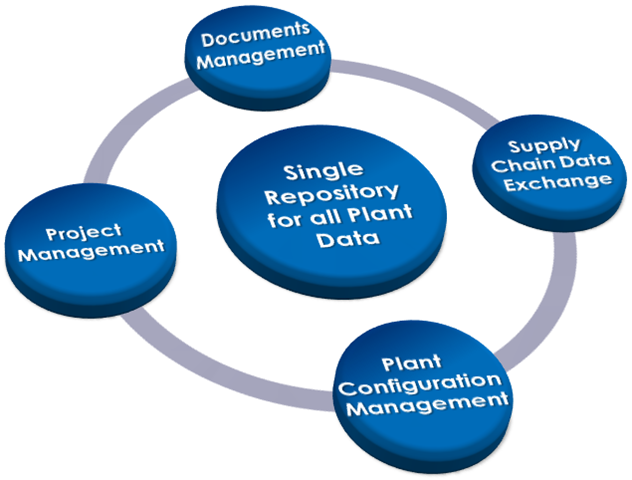
 The two owner / operators I met in the past month were in two different stages. The first one had already many years of experience in maintaining the plant operational and there they understood that the SAP PM module could not help them managing all required plant information around scheduled maintenance projects. Having already four different document management systems in place, the biggest challenge remained to coordinate the different baselines for the various projects scheduled for the annual maintenance. At the end they developed the concept where the PLM system is the owner of all plant related information, based on an Asset Structure in PLM and the PLM system ‘pushes’ the right information to SAP when the changes become operational.
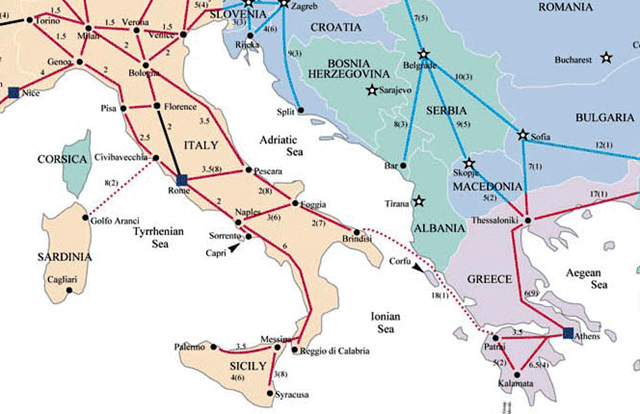 The other owner / operator was in the early stage. They were planning to have a process to become operational. Their understanding is that they need only one system that provides them all the time the actual information and if needed also all the history and approvals of each of the components. For sure the actual information needs to be managed in a transactional system (SCADA) and for sure the SCADA vendor will say they can manage all information in their system. The pity for this owner / operator is that once they need historical data, or need to manage complex maintenance projects, they have lost the opportunity to do it right from the beginning.
 Of course there is also a significant difference between the two owner operators.. The first owner / operator is situated in the Nordics, where the cost of labor is high. This means investing in IT-solutions to assure people are working with the right information brings a much faster ROI as compared to the owner / operator from South Europe. Sometime the labor cost can be one-third or less in comparison to the Nordic countries.
The owner/operator in the South Europe will initially not focus on efficiency and reducing labor costs. Due to the economical crisis unemployment is also high, so working with less people – improving by investments in IT are also not a popular measure.
But for all owner/operators a main consideration should be to remain competitive also over 10 – 20 years. Short term strategy is not good for this type of companies
Conclusion so far:
PLM concepts are bringing competitive benefits for Owner/Operator, despite the fact that they do not develop products. The value is based on bringing a single version of the truth (no island systems) and working in a single environment for the as-built and the to-be environment, without data conversions or transitions
next post I will talk about Asset Development and the PLM benefits

Like many people, the meditation of the dark Christmas days and the various 2009 reviews give you a push to look back and reflect. What happened and what did not happen in 2009?
And what might happen in 2010?
Here my thoughts related to:
ERP-related PLM vendors
Here I think mainly about Oracle and SAP. They have already identified PLM as an important component for a full enterprise solution. They are further pushing their one-shop-stop approach . Where Oracle’s offering is based on a set of acquired and to-be-integrated systems, SAP has been extending their offering by more focus on their own development.
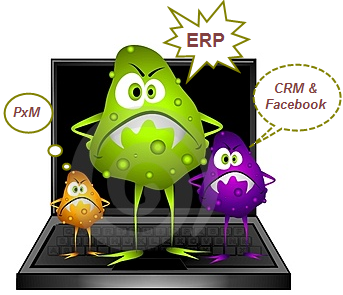 If you are one of those companies that require PLM, and believe all software should come from one vendor (beside Microsoft), it is hard to decide.
As there might be real PLM knowledge in the Oracle organization as an effect of the acquisitions, but is it easily accessible for you? Is it reflected in the company’s strategy ?
With SAP I am even more in doubt; here you might find more people with ERP blood having learned the PLM talk. Maybe for that reason, I saw mostly Oracle as a PLM option in my environment and very few SAP opportunities for real PLM.
I assume in 2010 Oracle will push stronger and SAP try harder.
CAD-related PLM vendors
In this group you find as the major players PTC, Siemens and Dassault Systems. Autodesk could be there too, but they refuse to do PLM and remain focused around design collaboration. All these PLM vendors are striving to get the PLM message towards the mid-market. They have solutions for the enterprise, but to my feeling, most of the enterprises in the traditional well-know PLM markets, like Automotive and Aerospace, are in a kind of stand-still due to economical and upcoming environmental crisis.
It is sure business will not be as usual anymore, but where will the sustainable future go? Here I believe answers will come from innovation and small mid-market companies. The bigger enterprises need time to react so before we see new PLM activities in this area it will take time.
 Therefore all PLM vendors move in directions outside engineering, like apparel, life sciences, and consumer packaged goods. These industries do not rely on the 3D CAD, but still can benefit from the key building blocks of PLM, like lifecycle management, program and portfolio management and quality/compliancy management. The challenge I believe for the PLM vendors is: Will these CAD-focused organizations be able to learn and adapt other industries fast enough? Where does 3D fit – although Dassault has a unique vision here.
For the mid-market, the PLM vendors offer more OOTB (Out Of The Box) solutions, mostly based on limited capabilities or more common available Microsoft components like SharePoint and SQL Server. This is not so strange as according to my observation, most smaller mid-market companies have not really made or understood the difference internally between document management and product data management, including Bill Of Materials not to be managed in Excel.
I assume 2010 the CAD related PLM vendors initially will focus on the bigger enterprises and new industries, the smaller mid-market companies require a different approach
PLM-only vendors
This is an area which I expect to disappear in the future, although this is also the area where interesting developments start to happen. We see open source PLM software coming up with Aras leading and we see companies coming up with PLM on-demand software, Arena as the first company to sell this concept.

The fact that the traditional PLM-only vendors disappeared in this area (Eigner bought by Agile, Agile bought by Oracle, MatrixOne bought by Dassault Systems) indicates that the classical way of selling PLM-only was not profitable enough.
Either PLM needs to be integrated in companywide business processes (which I believe), or there will be PLM-only vendors that find a business model to stay alive.
Here I hope to see more clarity in 2010
Smaller mid-market companies
 What I have seen in the past year is, that despite the economical crisis, PLM investments by these companies remained active. Maybe not in purchasing much more licenses or implementing new PLM features. Main investments here were around optimizing or slightly extending the PLM base. Maybe because there was time to sit still and analyze what could be changed, or maybe it was planned but due to work pressure, it was never executed. Anyway there was a lot of activity in this area not less than in 2008.
An interesting challenge for these mid-market companies will be to remain attractive for the new generation. They are not used to the classical ways of structured work as most of the current workforce is used to.
Social networking, social PLM, I have seen the thoughts, discussions and benefits, still trying to see where it will become reality.
2010 is another chance.
Sustainability and going green
 This is an area where I am a little disappointed and this is perhaps not justified. I would expect with the lessons learned around energy and the upcoming shortage of natural resources, companies would take the crisis as a reason to change.
To my observation most of the companies I have seen are still trying to continue as usual, hoping that the traditional growth will come back. The climate conference in Copenhagen also showed that, we as human beings, do not feel pressured enough to adapt, by nature we are optimists (or boiling frogs).
Still there are interesting developments – I assume in the next few years we will see innovation coming – probably first from smaller companies as they have the flexibility to react. During the European Customer Conference in Paris, I heard Bernard Charles talking about the concept of a Bill Of Energy (The energy needed to create, maintain and demolish a product) As PLM consultants we already have a hard time explaining to our customers the various views on a BOM, still I like the concept, as a Bill Of Energy makes products comparable.
2010 the acceptance of Bill Of Energy
Here I want to conclude my post for this year. Thank you all for reading and sharing your thoughts and comments with this community. My ultimate conclusion for 2009 is, that is was a good PLM year for the mid-market, better as expected but the changes are going slow. Too slow – we will see next year.
 This week I was reading a management article completely unrelated to PLM, but very applicable for PLM. The article stated that one of the basics of capitalism is innovation through crisis. Never let a crisis pass by without using it for your benefits was the message.
As we are currently in the middle of the economical downturn (according to the optimists or pessimists – we still have to figure out who is right), this is the moment for the management to decide. Do we try to sit still till it does not hurt anymore , or are we making strategic changes that will for sure demolish some holy houses but from the other hand will create a more lean and stronger organization after the change ?
Examples of IBM and GM were given from the nineties. IBM made the change from a hardware company towards a software company, where GM kept on doing the same with even bigger SUVs’. We know the results…….
Does it prove anything ?
For sure there are many companies that haven’t survived the nineties as they were not successful in their transformation, although they really tried. So where is the relation to PLM ?
 I believe that the problem of implementing PLM, and specially in mid-market companies is the fact that there is no ambition for change when things are going relatively well. In one of my old posts I referred to the story of the boiling frog.
This happens when an organization is slipping down slowly and it is hard for the management to change and define and sell internally another strategy. Jobs and people are kept in place as long as affordable and only natural evolvement (an aging workforce) or mergers are drivers for a change.
Now with this crisis it is different. Everyone realizes (or should realize) that going on the same manner with the same people is not good for survival (unless you are in one of the few industries that benefit from the crisis – apparently the fast food industry I read)
 In times of a crisis, first of all the management is challenged to come with a survival plan and in most cases this time they can get support from their employees as there is always the threat of lay offs if people are not creative or flexible for change. Secondly, employees will be also more flexible to save their jobs and the company (usually in this order)
Therefore this is the ideal moment to implement PLM in phased approach. For a successful PLM implementation you need employees, who are open minded to change the way they work, plus you need internal resources that have time to work with the implementer to fine tune the PLM system.
This moment exists now and by implementing PLM in a phased approach, each phase will bring ROI, perhaps even before the end of the crisis as you can start with the low hanging fruits and start to collect the benefits.
In parallel there is the discussion around free open source software or dumping software for free by some PLM providers in order to stay in the market. I think here as a customer you should always realize that every company, also software providers, need to survive the crisis and will look for income in another way – services / maintenance / additional software.
So my conclusion this time:
I never realized that both capitalism and PLM were striving for innovation. They have a crisis in common – For capitalism it is a must to push innovation for PLM it is an enabler for innovation
 The past few weeks I have been busy in an area which I believe is crucial for understanding PLM. I had meetings, web meetings with prospects, with implementers and existing customers – of course all in the mid-market. And the generalized key question on the table was: “

Yes, we understand document management, and yes, CAD management is understandable to us, but why do you need to work with the BOM further down the product lifecycle, as this is ERP, isn’t it ?
I realized several topics play a role here:
- Mid-market companies usually do not think top-down in their approach. As an example: they will not look at their whole organization’s business processes and then try to map all the activities cross departments, cross suppliers, etc. Usually they are looking per department to optimize the way they are working.
Classical enterprise PLM implementations are designed to go top-down. Describe the as-is situation, describe the the to-be situation and then transform the company to meet the to-be situation. Decisions are pushed to the people in the company as the to-be situation seems to be clear. Many of the classical PLM implementers still believe in this approach – and the risk / challenge is always that the to-be situation was not well understood, or that at the time we reach the to-be situation the environment of the company has changed and another to-be is needed. - Mid-market companies understand a central storage for documents brings a lot of benefits. Most companies realize that all this departmental archives of documents and files create too much overhead and a higher quality risk. Finding the absolute right file for a certain product release might be a quest and of course each of the departments claims that their solution fits exactly their needs. This is what I believe the main driver behind the success of SharePoint. As Microsoft Office is used as a common document authoring tool among all departments, why not use the Office Document Management tool as our common backbone ? PLM and ERP vendors might say we also manage documents, but usually these documents are managed in a structured manner – related to revisions of a product or to a product order. Usually an infrastructure to manage unstructured documents does not exist in ERP systems.
- Mid-market companies do not understand the value of managing the BOM outside ERP. As I mentioned, everyone understands documents, but items seem to be the domain of an ERP system. Understandable as ERP was often the first IT-system implemented. As mid-market companies usually do not have a holistic view, items will remain to be managed there (“as we invested so much in the first implementation the management will say – no other source for items !!!”)
And here i believe is the crucial go-no/go point for a PLM implementation. Once the company starts to understand that the definition of items is not done in the ERP system, but is a result of the work done in the engineering department, only then the value of managing the BOM outside ERP become apparent. And here is the catch 22, we already manage our documents in environments without items (BOM’s) (SharePoint / CAD Documents management) – so no place for PLM ?
So what to do as a mid-market company ?
 It is hard to understand the full picture (because of the above points), can you trust the selling PLM partner ?(we have been promised easy implementations in the past with other IT-systems too) and at the end you do not believe the value PLM can bring (as you cannot imagine and digest the impact of PLM to your company)
And just when thinking about this – three articles came to my attention as they all address this topic, somehow from a different perspective:
- An upcoming white paper written by TechClarity on ENOVIA SmarTeam Express solutions
- A blog post written by Jim Brown (TechClarity) on the TeamCenter Express solution
- A blog post written by Oleg Shilovitsky (PLMtwine): PLM action plan for dummies
The first two posts deal with a packaged approach for mid-market companies, allowing them to implement PLM faster and with a faster ROI. As Jim (and many others are stating – in an economical down turn you cannot focus on efficiency only (the ERP slogan). It is innovation – better and more customer oriented and attractive products – brings much higher revenue as compared to doing more of the same more efficient.
Oleg focuses on the steps to implement PLM and I agree with most of the statements there. It needs to be gradual and implementing the business processes comes as the last phase.
There is one difference I see in my approach compared to what Jim and Oleg are writing. Both believe that PLM brings value (and i support this statement 100 % based on experiences with customers I have worked).
However the missing point to be addressed is the lack of understanding (and often also trust) of companies talking with a PLM vendor and committing to PLM. I tried to explain these points in the above 3 statements. As long as those points are not addressed, each stepped approach will lead to the question: “When are we really going to do PLM instead of CAD Document management or enhanced ERP ? “
My experiences with guiding successful PLM implementations are the following:
- Start with basic document management and CAD data management. It aligns with the understanding of companies that a centralized and secure repository for documents brings ROI. This step introduces to the company that a company wide approach of data management brings value (and ROI). Some basic processes might be introduced here already- basic document approval as required by all quality systems.
- Once basic CAD and Document Management are introduced, the company will realize that it is missing ‘place holders’ to hook the information. If you work in a document management system only, the system implementer will say: Use projects to collect your product data and use folders to collect your item related data. A PLM vendor would say; Now you are ready to introduce Items in your system, as they are the logical place holders for information. Here PLM starts to be introduced.
- Once understood that the item is a needed place holder to manage development data, the understanding for managing items in a structure becomes clear. Here we introduce the EBOM and as Items also contain logistical data, this is the first point to start connecting PLM and ERP to work with a shared ‘place holder’ but with different focus on characteristics.
- Once the Engineering BOM is understood, the discussion starts around the MBOM. Who is responsible for defining how a product is manufactured ? PLM believes this is part of their duty, ERP vendors will say, we own the item historically ,so we manage the MBOM. As a 100 % PLM believer, I think it should be in PLM as it is not part of the execution but part of the product definition (See the post I wrote on this topic: Where is the MBOM).
At the end the defined MBOM can be pushed to ERP once required. - Once you are able to manage and centralize all data related to product development and definition, a company becomes ready to guarantee the quality and flow of the data, by implementing company wide engineering change and development processes. Much in line with Oleg’s PLM action plan.
I have supported implementations of the above approach in several mid-market companies and key success factors were:
- the company understanding PLM brings benefits but also understands it will take a time to realize this vision.
Management vision and support were always there. - a PLM system that allows you to start simple with centralizing documents and keeping things understandable but also allows you to scale up to a PDM system and finally supporting the whole PLM vision once accepted and understood .
Think Top-Down – Implement Bottom-Up - an implementer who understands that in the mid-market a push of concepts will bring rejections from the end-users, and where listening to the end-users only, it will result in an unguided system. The implementation partner needs to say No at the right time and to push for Yes when needed.
The implementer is 50 % of the success !
 Conclusion: A management vision, a scalable PLM system and an experienced implementation partner are needed to bring the innovation to survive in the long term – document management and ERP alone will not bring this unique value. The phased approach allows a company with digestible steps to grow to their ‘to-be’ situation – as building trust and understanding is still required in the mid-market of PLM
See also: ENOVIA SmarTeam Express
 I am writing this post as i come across this question on a regular base, and as a response on a recent post from Jim Brown. I addressed this topic already in previous posts in the past, for your convenience i have put all relevant links I considered at the bottom of this post.
I believe the question is hard to answers if asked this way. It all depends on where is your point of gravity. You can divide the PLM providers in different groups.
- PLM vendors with a focus pure on PLM – their major business is in providing the majority of the PLM related tasks, independent of a certain CAD or ERP package, but interfaces usually through a generic approach with these applications. Matrix One (now integrated in Dassault’s ENOVIA offering), Aras (Open Source), Arena (On-line) are examples of this type of PLM providers.
- PLM vendors coming from their CAD environment, initially manage their 3D CAD data and extending these capabilities to other authoring tools. ENOVIA VPLM and SmarTeam (main CAD system managed CATIA) are Dassault’s solutions, Siemens UGS (main CAD system managed NX) and PTC (main CAD system managed Pro/E) are examples of this type of providers
- ERP vendors who extended their offering with PLM functionality – either by developing PLM functionality themselves (SAP) or by acquisitions of PLM functionality (Oracle / BaaN)
- and there is still a vendor that does not do PLM, but calls it digital prototyping
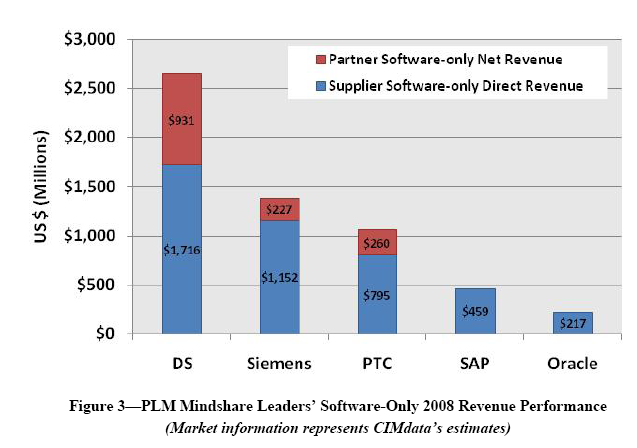
As each of these PLM providers has their customers and market share – interesting to read is CIMDATA’s overview of the PLM market. What you see there is that it is hard for the independent PLM vendors to be ranked in the top 5. Also the biggest independent PLM vendor in the past, Matrix One, had a hard time to compete against the CAD or ERP based vendors. Why ??
I believe because the major reason lies in the fact that companies want to keep their IT-infrastructure as simple as possible. Buying a PLM system from the current major CAD vendor or from the current major ERP vendor keeps their situation manageable. Why deal with a third vendor that has to integrate with their CAD and ERP software ?
This would lead to a statement that there are only two type of major PLM providers: CAD based or ERP based. And here I am back to the initial question: Can ERP vendors provide PLM ?
Here I believe there is a major difference in the approach of PLM. Yes, both types of companies can provide PLM functionality but they offer it in a different way. It is like Ferrari and Volkswagen provide cars, but are they addressing the same audience ?
 Some years ago I had a conversation with a SAP country manager about PLM. It was in the time that SAP did not recognize PLM yet as a business approach required in addition to ERP. He told me that SAP was managing all the company’s data and processes and that it was just a matter of time before also companies would recognize that engineers working with their CAD systems are nothing else but resources in the whole process. “Designers believe they are artists and cannot be managed but we will show them we can” . Here you see the focus is not on creating the environment for innovation or new products, but on managing existing processes as efficient in a certain way.
To generalize ERP vendors talk PLM but practice efficiency and neglect the fact that innovation and creativity are not manageable (sorry for the generalization but it make things more clear)
CAD based PLM vendors focus a lot on the product creation process. Supporting companies to design and develop new products, mainly in the virtual world. They do not try to manage the development process like a production process but work with mile stones to assure progress and managing quality and risk (NPI – new product introduction). Only when the product definition is mature and complete it will be handed over to ERP to produce the products where needed. Did you ever wonder why CAD based PLM vendors do not expand into ERP ?
And here lies the the difference I believe. If you choose for a CAD based PLM vendor, your company is focusing on innovation, creating new products, when you choose for an ERP based PLM system you will focus on efficiency and process management. Ask the ERP vendor to which level PLM is integrated in their company – is there a person responsible for PLM in the top management ? Technically you can integrate a full portfolio of products, but understanding and making PLM a part of the strategy is the decisive question for the future.
Conclusion
Yes, ERP vendors can provide PLM functionality and as a company you should decide where is your business focus.
If your focus on efficiency and not on innovation ERP providers can offer a total solution.
If your company focuses on new and better products, I believe that your focus should be on CAD based PLM vendors as they offer the best environment for innovation support and capturing design knowledge.
And be critical – as before you know the front falls off
PLM and ERP previous posts:
 I am writing this week’s post on my way to a customer to finalize an implementation and in parallel describing the Return On Investment of this project. But before that, I would like to have a short note about my previous post ‘Free PLM software does not help companies“.
The reason I wrote this post was because I wanted to assure that companies do not believe that ROI for implementing PLM is based on the software costs. PLM implementations are a combination of software, business skills and the company culture. Specially in the current economical situation, I wanted to make clear that these factors are not overlooked. Also I did not want to say Open Source PLM is bad, I made my points on the messaging, however in functionality and usage I do not see a big difference between other types of PLM systems. I got some interesting comments on this post and I advise all of you, who have read the post to go through the comments to get a broader perspective. Once I have had some more opportunity to investigate this area deeper, I will come with a more in-depth post on this topic.
To PLM or Not To PLM
But now back to: To PLM or Not To PLM, where I wrote in a first post on this topic that before judging the costs and ROI of PLM, we should start analyzing our current processes and situation and use this as a baseline to guesstimate the PLM benefits.
The first PLM phase to analyze is the concept phase, where new ideas are picked up (or not). Actually this is the phase where we define the future of the company. The economical recession in a way forces companies to rethink their strategy and fortunately all of the competition is in a similar position. downturn means less activities, the company might be in the position to allocate time to address these analysis for PLM ROI. Instead of making people redundant, use these people to work on a new and optimized product strategy.
 Existential questions to ask yourself as a company
The basic questions to ask about the concept phase:
- Do we know where our products are currently in their lifecycle ?
Measure: quantity, sales trends, margin
Analyze: is our portfolio healthy ? - How do customer rate our products ?
Measure: market share, market awareness, customer satisfaction, quality, field issues
Analyze: will customers keep on buying from us ? - Where are we different from the competition ?
Measure: where do we win/ where do we loose and compare per quarter ?
Analyze: how can we improve the success ratio ? - In case of bidding
Measure: how many bids do we handle per quarter and with which effort
Analyze: What is the win percentage and how to influence this ? - Who are our customers ?
Measure: does the 80-20 rule apply – does 80 % of the revenue come from 20 % of the customers ?
Analyze: What is the trend specially in relation to the current market situation - Where does innovation come from ?
Measure: the amount of new ideas, the source (people, customers) and the ones that reach it to the portfolio
Analyze: Do we have a guarantee for innovation ?
Additional questions to be asked due to current financial and global situation: 
- How do we strive for climate neutral products – sustainable development ?
Measure: the amount of energy used to build the products but also to recycle and what remains
Analyze: How can we change our products and production process ? - How do we capture our company’s IP due to the aging workforce in most of the countries
Measure: How many people with the specific knowledge will retire in 5 – 10 years ?
Analyze: Where and how can I assure this knowledge remains in the company ?
For many of the above questions you might say that you know how to conduct your business as you are doing most of these activities and even more. However the question you should ask yourself also is: How long does it take to answer these questions and to react on these trends ?
Because all the above topics are positively influenced by PLM – here it the PLM ROI !
 Project and Portfolio Management, company wide workflow process allow the company to measure, to run analysis and to have information within hours (or worse case in days), where in a company where every department and discipline has their own environment, the effort to collect this information becomes huge and not natural. And as it will take a lot of time to collect the information, people tend to react on their guts or intuition, which might be wrong if you are among the wrong people or if the world changes in a way never seen before.
Additional capturing product and process knowledge allows companies to contain their IP. And just to make this point clear: Product knowledge is not only CAD and Bills of Materials. It is all collected information: issues during design, during production, coming from field services, best practices used and more. The challenge anyway for every PLM system is to provide an environment, user-friendly enough for all users, to start managing their total product IP in a single environment.
Conclusion
PLM as a total approach brings a lot of value and control in the concept phase, the phase where the company’s future is merely defined. And it is obvious that the future should be green and sustainable. Use the current downturn to shape the future – the questions in this post and your analysis should be the base.
 Jos Voskuil's Weblog
Interesting reflection, Jos. In my experience, the situation you describe is very recognizable. At the company where I work, sustainability…
[…] (The following post from PLM Green Global Alliance cofounder Jos Voskuil first appeared in his European PLM-focused blog HERE.) […]
[…] recent discussions in the PLM ecosystem, including PSC Transition Technologies (EcoPLM), CIMPA PLM services (LCA), and the Design for…
Jos, all interesting and relevant. There are additional elements to be mentioned and Ontologies seem to be one of the…
Jos, as usual, you've provided a buffet of "food for thought". Where do you see AI being trained by a…