
 This time a little provocative title, which I hope will give some feedback from those who claim PLM brings INNOVATION. In one of my earlier posts, I talked about PLM – what is the target and also acted as an advocate for innovation.
Now after hearing PLM and INNOVATION mentioned the past two weeks everywhere as a logical combination, I started to question myself is this is just marketing ?
In this post I will act as the advocate of the devil.
Two weeks ago I attended the PLM Innovation congress, where first of all these two words were accepted by the audience as obvious linked together PLM INNOVATION. I participated in three sessions where INNOVATION was the topic. Charles Gagnon from Hydro Quebec talked about open innovation, but mentioned Hydro Quebec did not use any tool to manage INNOVATION so also not PLM. Peter Fassbender talked about the innovative approach to connect to the outside world using crowd sourcing and social media, but again no mentioning about PLM. Finally Christian Verstraete held an appeal for INNOVATION, urging everyone to think outside the box (did he mean outside the PLM box? Anyway no mentioning of PLM contribution)
Autodesk´s CEO Carl Bass talked about The New Rules of INNOVATION at TEDx and in the first part of his speech he is making the same statement that I would make related to PLM – see video:
Some quotes from his speech:
“Innovation is fundamentally not a corporate phenomena. Innovation involves taking risks and involves breaking the rules. And companies aren’t particularly good at that. In fact let´s say that it is just the opposite: companies are good in making rules and minimizing risk”
and quoting the author of The Innovator´s Dilemma Clayton Christensen:
“The lack of innovation is not the failure of companies but rather the result of prudent and sound management”
Autodesk
A week later Autodesk PLM 360 is launched. Again a PLM system that is bringing rules and structure, but apparently so far not affecting INNOVATION as we can see in one of the videos that came with the launch.
Unfortunate the above video is only a teaser to get to the Autodesk Facebook page where, if you like them, you will be rewarded with access. A modern way of marketing: Only if you like us, we will tell you what we like.
Sanjeev Pal believes PLM is a business strategy that helps companies to reach their INNOVATION goals. Tom Grant starts with: “INNOVATION is really the word to focus on. At the heart of PLM is INNOVATION”. Later he states that probably one of the problems in PLM is the M (the Management part) that misleads the mind shifting in the wrong direction (against user acceptance and involvement’) and he prefers to call it more enablement instead of management. Somehow the conclusion is that PLM supports INNOVATION by bringing products faster to market. Does this mean PLM is the vehicle of bringing new innovations to the market ? Instead of creating a platform for INNOVATION?
STATS: Autodesk PLM + Innovation: 199.000 hits on Google
Once you have struggled like me to find the roundtable discussion and its content, let´s look at other PLM vendors in alphabetical order:
Aras
Aras INNOVATOR– the word INNOVATOR it is already in the name but when you read more clearly what is stated at the Aras website, you see the word INNOVATOR is more targeting themselves (the software / the delivery model) instead of customer oriented INNOVATION. There the message is more about streamlining and connecting people and businesses (efficiency / collaboration). So not much INNOVATION here related to PLM is my conclusion
STATS: Aras + Innovation: 11.200.000 hits on Google
Dassault Systèmes
When looking for Dassault Systèmes and INNOVATION I found an interesting statement on their website.
Dassault Systems launched its Passion for Innovation program in 2005. The program is based on a simple guiding principle: it is often the case that outstanding ideas do not come to fruition due to lack of appropriate resources. At Dassault Systèmes, all employees are free to install CATIA on their workstation. The idea of the program is to provide this opportunity to everyone
Is INNOVATION a result of the CAD tool ? not related to PLM ? I am sure there must a better story – but where is it ? There is a lot of talk about innovation, but related to PLM ?
STATS: Dassault Systèmes+ Innovation 1.340.000 hits on Google
Oracle Agile PLM
Oracle Agile PLM has a clear statement how they support INNOVATION:
Accelerate innovation through ideation management and collaboration, product portfolio management and analytics, data consolidation and cleansing, and a rich enterprise product record
I am not sure from this statement if we know the source wrote it. Marketing or a serious attempt to describe how Agile supports INNOVATION. I would love to learn a refined statement here that I understand.
STATS: Oracle PLM + Innovation: 150.000 hits on Google
PTC
PTC does not give a direct association with INNOVATION. When I searched for PTC and INNOVATION the first suggestion was: Did you mean HTC INNOVATION ?
Also when searching the PTC website, INNOVATION was hard to find. Interesting I noticed that the first main tab on the left was Discover our software capabilities. I was expecting that PTC like most PLM vendors would start from the business and not from the products.
STATS: PTC + Innovation 3.450.000 hits on Google
SAP PLM
On the SAP PLM website I found a tab called Innovation Management and here SAP PLM gave a clear explanation which practices contribute to INNOVATION Management. SAP mentions here:
- Strategy and planning
- Managing innovative ideas
- Program and project management
- Portfolio management
As I expected SAP will not hint in any direction towards CAD tools and their focus is mainly on the management side. I would love to learn the part of managing innovative ideas as this is the challenging part. Ideas and management ?
STATS: SAP PLM + Innovation 131.000 hits on Google
Siemens PLM
On the Siemens PLM website you have to search for INNOVATION and when you do a search, you are mainly directed to blog articles, The word-cloud next to the blog did not show the word INNOVATION in bold, showing it is not a common used word. Digging deeper, I found a blog post related to an Innovation Leadership Summit, which suggests again there is a relation between PLM and INNOVATION. The closest match I found here was:
The HBR survey found that enterprises rely on PLM and IT to manage all this complexity, including new sustainability and regulatory requirements. PLM solutions track the ideation process, monitor progress, identify laggard projects, and facilitate collaboration. Leading organizations leverage PLM to improve new product development processes and outcomes
That´s all. So my conclusion here is that also Siemens PLM not naturally connects PLM and Innovation.
STATS: Siemens PLM + Innovation 901.000 hits on Google
Common rumors
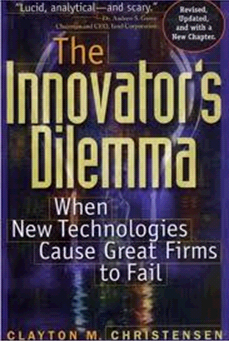
Without mentioning names, I hear stories from PLM implementations (or should I call it extended PDM implementations) that have created such a massive lock-in on the current state of the company, that changing the processes or innovating is almost a mission impossible. Exact what Clayton Christensen mentions in his Innovator´s Dilemma.
So having played the devil´s advocate role, I hope I made my statement that there is no real relation between PLM and INNOVATION despite it seems these two words are mentioned together as if they are linked.
Call for action
Therefore I challenge all vendors and companies that have a proven relation between PLM and INNOVATION to come to this debate and make their statement.
Where are the mythbusters that will crack the statement:
PLM has nothing to do with INNOVATION?
Looking forward to your responses.






 Graeme Hackland





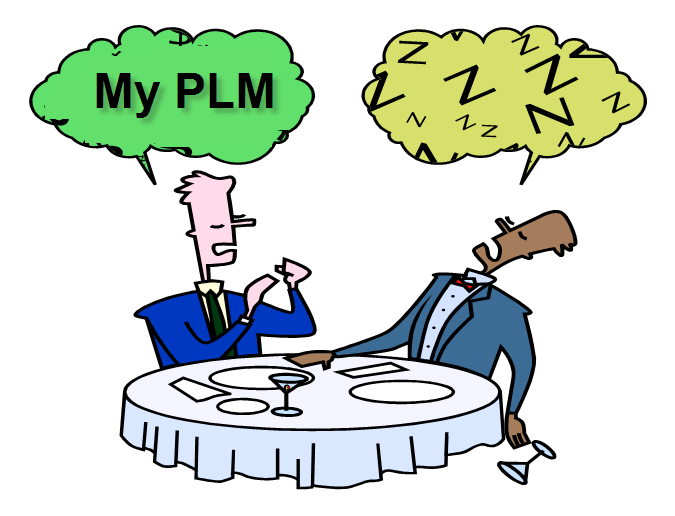

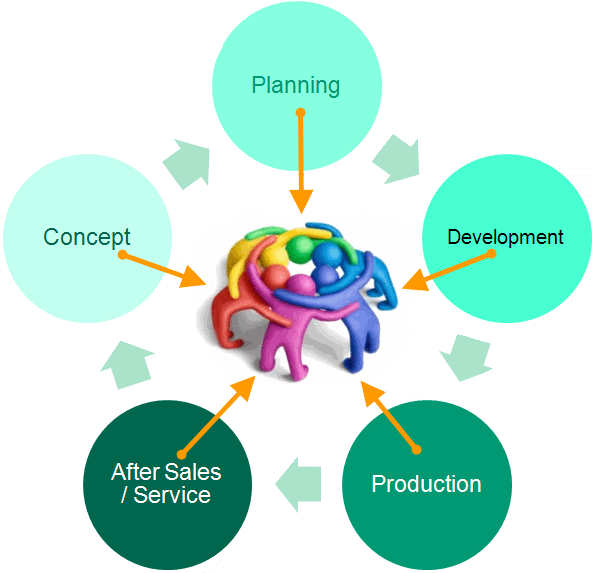






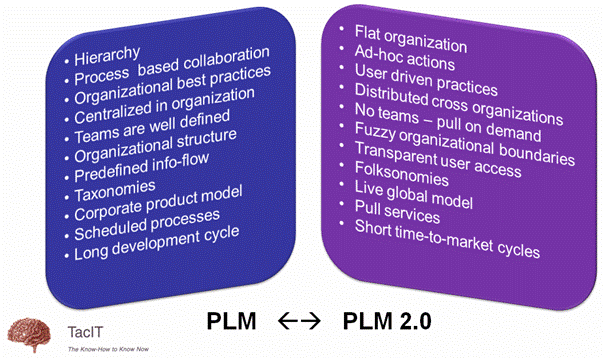

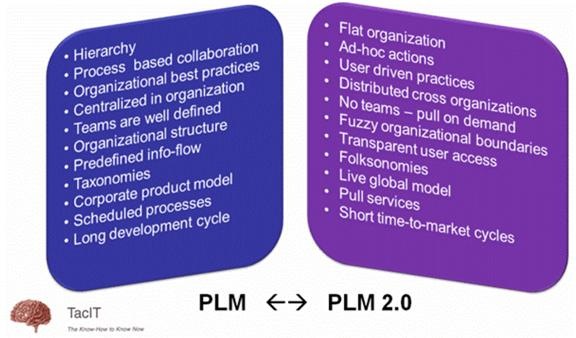
 A huge investment has been done to structure and classify data with all its complexity. And now, new trends are coming up (PLM 2.0) and the question comes how to embrace this. The management and the thought leaders on the old PLM implementation are probably still in the company and they are reluctant to a big change, based on their previous experience and investment.
 If you look at enterprises that have been investing in PLM at later stage you will see a different focus. I call them modern because usually this type of industry does not exist as long as the classical industries. Here I think about the high-tech industry and new emerging industries like CPG and apparel, which do not have the classical CAD focus. Their investments in PLM technologies were in different areas. As their products and technology becomes much faster obsolete, the focus is on innovation, being first to market and being customer centric.
 So it is not necessary to have one overall PLM system. This makes the implementation more flexible and it also enables modern PLM concepts to be introduced in an earlier phase, like crowd-sourcing, consumer communities and more. Here the speed of adoption is very much depending on the management of these companies and the way they feel comfortable with these new concepts. But as it is also in their veins due to their products, there is hope they will adopt (or are already using it)
 The last type of company in this overview is the mid-market company. For me a mid-market company is a company that does not have a company-wide strategic department and a huge IT-environment to support company wide-systems. Mid-market companies have the same challenges as enterprise, they also operate more and more on a global base with design and manufacturing dislocated. However they solve their issues per department one by one. Prioritized where the pain is felt the most. This often leads to a seemingly fragmented approach, but it does not push for a big change in working methodology company-wide. Less change management to do for the management. Excel as a common interface, or sometimes the magic word XML and all is connected.
 Still not efficient using the concept of sharing product data through the whole product lifecycle. And here I see the opportunity for PLM 2.0 concepts to be implemented much faster. Mid-market companies exist and flourish due to their flexibility. Concepts like communities, cloud based collaboration tools are much easier to implement for them, once the company endorses them. One department starts and without a big IT-investment another department can join the cloud based solution. Sharing data (a must for PLM) becomes a logical choice as it is the next tool available. And I believe Autodesk is aiming at that direction and others (existing and new comers) might come in from here – online solutions that connect the enterprise data in a clever manner (don’t forget search based applications – see for an interesting discussion:




























 Jos Voskuil's Weblog
Hi Jos, Knowing your background in methodology and education, I wanted to share a longer article with you: “What is…
Interesting reflection, Jos. In my experience, the situation you describe is very recognizable. At the company where I work, sustainability…
[…] (The following post from PLM Green Global Alliance cofounder Jos Voskuil first appeared in his European PLM-focused blog HERE.) […]
[…] recent discussions in the PLM ecosystem, including PSC Transition Technologies (EcoPLM), CIMPA PLM services (LCA), and the Design for…
Jos, all interesting and relevant. There are additional elements to be mentioned and Ontologies seem to be one of the…