
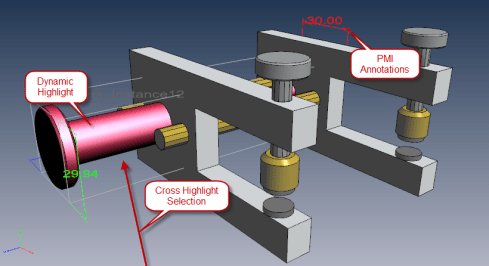
 The recent years I have been mentioning several times addressing the term model-based in the context of a modern, digital enterprise. Posts like: Digital PLM requires a model-based enterprise (Sept 2016) or Item-Centric or Model-Centric (Sept 2017) describe some of the aspects of a model-based approach. And if you follow the PLM vendors in their marketing messages, everyone seems to be looking for a model-based environment.
 This is however in big contrast with reality in the field. In February this year I moderated a focus group related to PLM and the Model-Based approach and the main conclusion from the audience was that everyone was looking at it, and only a few started practicing. Therefore, I promised to provide some step-by-step education related to model-based as like PLM we need to get a grip on what it means and how it impacts your company. As I am not an academic person, it will be a little bit like model-based for dummies, however as model-based in all aspects is not yet a wide-spread common practice, we are all learning.
What is a Model?
The word Model has various meanings and this is often the first confusion when people speak about Model-Based. The two main interpretations in the context of PLM are:
- A Model represents a 3D CAD Model – a virtual definition of a physical product
- A Model represents a scientific / mathematical model
And although these are the two main interpretations there are more aspects to look at model-based in the context of a digital enterprise. Let’s explore the 3D CAD Model first
The role of the 3D CAD Model in a digital enterprise
 Just designing a product in 3D and then generating 2D drawings for manufacturing is not really game-changing and bringing big benefits. 3D Models provide a better understanding of the product, mechanical simulations allow the engineer to discover clashes and/or conflicts and this approach will contribute to a better understanding of the form & fit of a product. Old generations of designers know how to read a 2D drawing and in their mind understand the 3D Model.
Modern generations of designers are no longer trained to start from 2D, so their way of thinking is related 3D modeling. Unfortunate businesses, in particular when acting in Eco-systems with suppliers, still rely on the 2D definition as the legal document. The 3D Model has brought some quality improvements and these benefits already justify most of the companies to design in 3D, still it is not the revolution a model-based enterprise can bring.
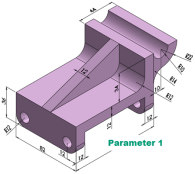 A model-based enterprise has to rely on data, so the 3D Model should rely on parameters that allow other applications to read them. These parameters can contribute to simulation analysis and product optimization or they can contribute to manufacturing. In both cases the parameters provide data continuity between the various disciplines, eliminating the need to create new representations in different formats. I will come back in a future post to the requirements for the 3D CAD model in the context of the model-based enterprise, where I will zoom in on Model-Based Definition and the concepts of Industry 4.0.
The role of mathematical models in a digital enterprise
 The mathematical model of a product allows companies to analyze and optimize the behavior of a product. When companies design a product they often start from a conceptual model and by running simulations they can optimize the product and define low-level requirements within a range that optimizes the product performance. The relation between design and simulation in a virtual model is crucial to be as efficient as possible. In the current ways of working, often design and simulation are not integrated and therefore the amount of simulations is relative low, as time-to-market is the key driver to introduce a new product.
In a digital enterprise, design and simulations are linked through parameters, allowing companies to iterate and select the optimal solution for the market quickly. This part is closely related to model-based systems engineering (MBSE) , where the focus is on defining complex systems. In the context of MBSE I will also zoom in on the relation between hardware and software, which at the end will deliver the desired functionality for the customer. Again in this part we will zoom in on the importance of having a parameter model, to ensure digital continuity.
Digital Twin
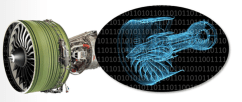 There is still a debate if the Digital Twin is part of PLM or should be connected to PLM. A digital twin can be based on a set of parameters that represent the product performance in the field. There is no need to have a 3D representation, despite the fact that many marketing videos always show a virtual image to visualize the twin.
Depending on the business desire, there can be various digital twins for the same products in the field, all depending on the parameters that you want to monitor. Again it is about passing parameters, in this case from the field back to R&D and these parameters should be passed in a digital manner. In a future post I will zoom in on the targets and benefits of the digital twin.
Conclusion
There are various aspects to consider related to “model-based”. The common thread for each of the aspects is related to PARAMETERS. The more you can work with parameters to connect the various usages of a product/system, the closer you are related to the digital enterprise. The real advantages of a digital enterprise are speed (information available in real-time), end-to-end visibility (as data is not locked in files / closed systems).
PARAMETERS the objects to create digital continuity
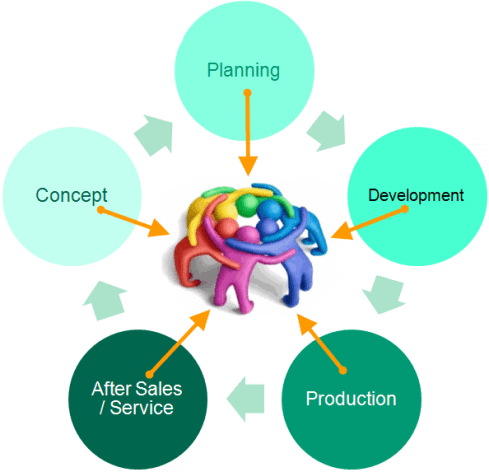
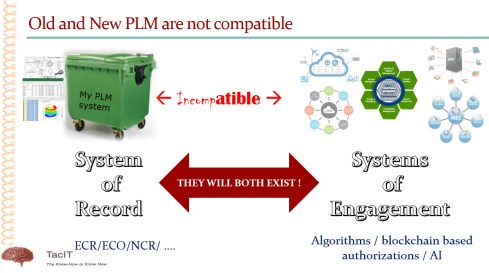
 For me “Keep process and organizational silos ….. “ is exactly the current state of classical PLM, where PLM concepts are implemented to provide data continuity within a siloed organization. When you can stay close to the existing processes the implementation becomes easier. Less business change needed and mainly a focus on efficiency gains by creating access to information.
 And if you know SAP, they go even further. Their mantra is that when using SAP PLM, you even do not need to integrate with ERP. You can still have long discussions with companies when it comes to PLM and ERP integrations. The main complexity is not the technical interface but the agreement who is responsible for which data sets during the product lifecycle. This should be clarified even before you start talking about a technical implementation. SAP claims that this effort is not needed in their environment, however they just shift the problem more towards the CAD-side. Engineers do not feel comfortable with SAP PLM when engineering is driving the success of the company. It is like the Swiss knife; every tool is there but do you want to use it for your daily work?
 In theory a company does not need to buy a PLM system. You could build your own PLM-system, based on existing infrastructure capabilities. CAD integrations might be trickier, however this you could solve by connecting to their native environments. For example, Microsoft presented at several PDT conferences an end-to-end PLM story based on Microsoft technology. Microsoft “talks PLM” during these conferences, but does not deliver a PLM-system – they deliver the technologies.
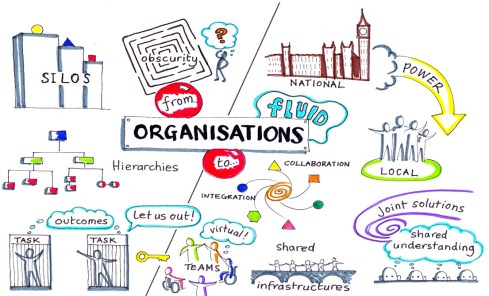 What is really needed for the 21st century is to break down the organizational silos as current ways of working are becoming less and less applicable to a modern enterprise. The usage of software has the major impact on how we can work in the future. Software does not follow the linear product process. Software comes with incremental deliveries all the time and yes the software requires still hardware to perform. Modern enterprises try to become agile, being able to react quickly to trends and innovation options to bring higher and different value to their customers. Related to product innovation this means that the linear, sequential go-to-market process is too slow, requires too much data manipulation by non-value added activities.
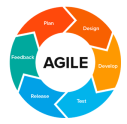 All leading companies in the industry are learning to work in a more agile mode with multidisciplinary teams that work like startups. Find an incremental benefit, rapidly develop test and interact with the market and deliver it. These teams require real-time data coming from all stakeholders, therefore the need for data continuity. But also the need for data quality as there is no time to validate data all the time – too expensive – too slow.
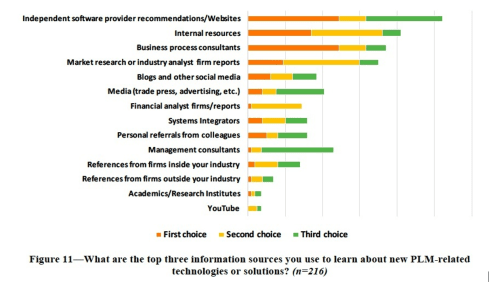
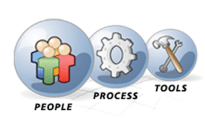 When talking with companies in the real world, they are not driven by technology – they are driven by processes. They do not like to break down the silos as it creates discomfort and the need for business transformation. And there is no clear answer at this moment. What is clear that leading companies invest in business change first before looking into the technology.

 I consider Model-Based practices as one of the essential needs for future PLM as this approach reduces the amount of derived information related to a product/ system. And it provides a digital continuity. In the last PDT conference in Gothenburg this topic was shared on a quit extensive matter. Have a read to fresh-up your memory here: The weekend after PDT Europe –

 Susanne Lauda, Director, Global Advanced Manufacturing Technology, AGCO Corporation provided an overview related to AGCO’s new PLM journey and how they were benefiting from a digital thread towards manufacturing. It felt like a smooth vendor demo as everything looked nice and reasonable. It was all about the WHAT. However two points that brought the extra:
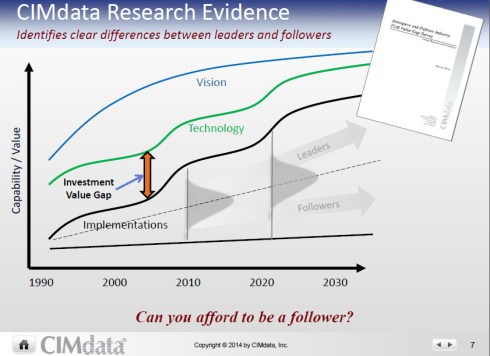
 Peter Bilello from CIMData in the closing keynote speech gave an excellent summary and overview of where and which capabilities fit in an enterprise architecture and the positioning of a product innovation platform. A blueprint that can be used for companies to grasp the holistic view before jumping into the details of the tools.
 Perhaps an ambiguous title this time as it can be interpreted in various ways. I think that all these interpretations are one of the most significant problems with PLM. Ambiguity everywhere. Its definition, its value and as you might have noticed from the past two blog posts the required skill-set for PLM consultants.
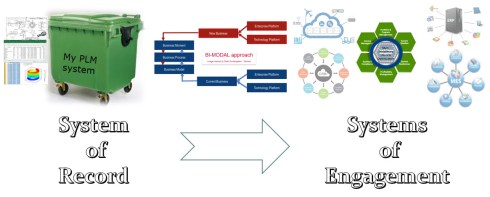
 In the past twenty years, companies have implemented PLM systems, where the primary focus was on the P (Product) only from Product Lifecycle Management. PLM systems have been implemented as an engineering tool, as an evolution of (Product Data Management).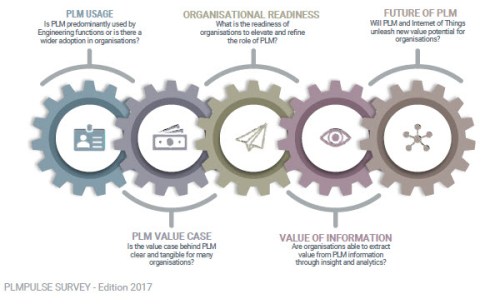
 During the upcoming PLMx 2018 Hamburg conference there will be a panel discussion where the survey results will be discussed. I am afraid that this debate will result again in a discussion where we will talk about the beauty and necessity of PLM and we wonder why PLM is not considered crucial for the enterprise.
 We agreed on the fact that traditional consultancy practices related to PLM ranking and selection processes are out of time. The Forester Wave publication was the cause of our discussion. For two reasons:
 Also, make a 5-10 years cost evaluation of your solution and take the risk of raising subscription fees into account. No vendor will drop the price unless forced by the outside world. The initial benefits will be paid back later because of the other business model.
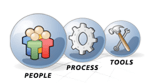 I believe we still need consultants to help companies to tell and coach them towards new ways of working related to the current digitization. Twenty years old concepts won’t work anymore. Consultants need a digital mindset and think holistic. Fitting technology and tools will be there in the future.
 In my earlier post;
  I agree with Oleg and Joe. PLM ranking does not make sense for companies to select a PLM solution. They are more an internal PLM show, useful for the organizing consultancy companies to conduct, but at the end, it is a discussion about who has the biggest and most effective button. Companies need to sell themselves and differentiate.
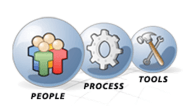 ses, a strategy is future-oriented and not about consolidating the current status quo. Therefore I believe a PLM implementation is always done in the context of a business transformation, which is most of the time not only related to PLM – it is about People, Processes and then the tools.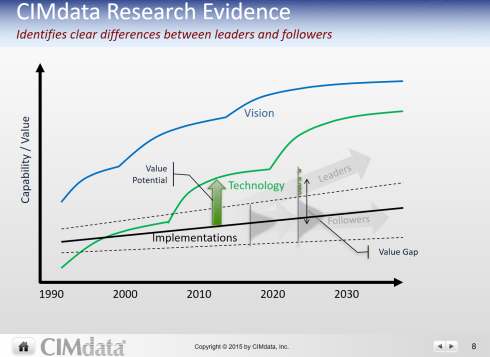
 Happy New Year to all of you. A new year comes traditionally with good intentions for the upcoming year. I would like to share my PLM intentions for this year with you and look forward to your opinion. I shared some of my 2017 thoughts in my earlier post:
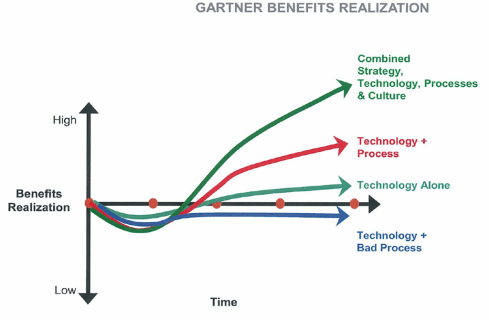
 To my understanding we are still in the early phases of discovering the ideal architecture and practices for a digital enterprise. PLM Vendors and technology companies show us the impressive potential as-if the future already exists already now. Have a reality check from Marc Halpern (Gartner) in this article on engineering.com –
  Although my curiosity is focused on future PLM, there is still a journey to go for companies that have just started with PLM. Before even thinking of a digital enterprise, there is first a need to understand and implement PLM as an infrastructure outside the engineering department.
 The most prominent challenge for most companies however is how to transform their existing business towards a modern digital business where new processes and business opportunities need to be implemented inside an existing enterprise. These new processes and business opportunities are not just simple extensions of the current activities, they need new ways of working like delivering incremental results through agile and multidisciplinary teams. And these ways of working combined with never-existing-before interactivity with the market and the customer.
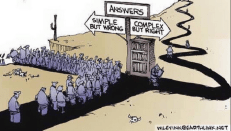 How to convince management that these changes are needed and do not happen without their firm support? It is easier to do nothing and push for small incremental changes. But will this be fast enough? Probably not as you can read from research done by strategic consultancy firms. There is a lot of valuable information available if you invest time in research. But spending time is a challenge for management.

 This mindset is also applicable to manufacturing companies. Where in the past companies were trying to optimize and standardize their processes driven by efficiency and predictability, now due to the dynamics of a globally connected world, businesses need to become extremely flexible however still reliable and profitable.
 Digital transformation is one of the buzz words pointing to the transition process. Companies need to go through a change to become flexible for the future and deliver products or solutions for the individual customer. Currently companies invest in digital transformation, most of the time in areas that bring direct visibility to the outside world or their own management, not necessarily delivering profitable results as a recent article from McKinsey illustrated:
 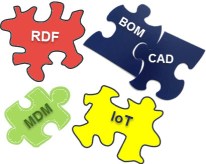 Software vendors in various domains are all contributing to support a modern digital product innovation management future. But where to start? Is it the product innovation platform? Is it about federated solutions? Model-Based? Graph-databases? There are even people who want to define the future of PLM. We can keep throwing pieces of the puzzle on the table, but all these pieces will not lead to a single solved puzzle. There will be different approaches based on your industry and your customers. Therefore, continuous learning and investing time to understand the digital future is crucial. This year’s PDT Europe conference was an excellent event to learn and discuss the themes around a model-based lifecycle enterprise. You can read my reviews here: The weekend after PDT Europe 2017

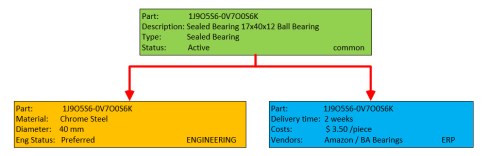
 Of course if you are aiming for a full digital enterprise, and I think you should, do not waste time fixing the past. In some situations, I learned that an external consultant recommended the company to rename their old meaningful part numbers to the new non-intelligent part numbering scheme. There are two mistakes here. Renumbering is too costly, as all referenced information should be updated. And secondly as long as the old part numbers have a unique ID for the enterprise, there is no need to change. The connectivity of information should not depend on how the unique ID is formatted.

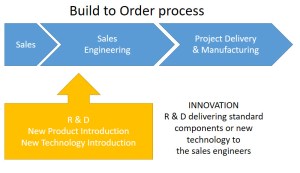 Approximate four years ago new concepts related to digitalization for PLM became more evident. How could a digital continuity connect the various disciplines around the product lifecycle and therefore provide end-to-end visibility and traceability? When speaking of end-to-end visibility most of the time companies talked about the way they designed and delivered products, visibility of what is happening stopped most of the time after manufacturing. The diagram to the left, showing a typical Build To Order organization illustrates the classical way of thinking. There is an R&D team working on Innovation, typically a few engineers and most of the engineers are working in Sales Engineering and Manufacturing Preparation to define and deliver a customer specific order. In theory, once delivered none of the engineers will be further involved, and it is up to the Service Department to react to what is happening in the field.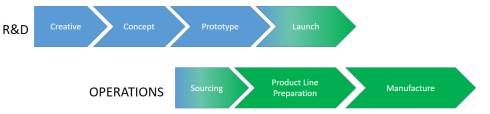
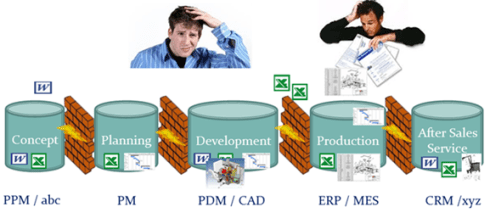
 Modern business is about having customer or market involvement in the whole lifecycle of the product. And as products become more and more a combination of hardware and software, it is the software that allows the manufacturer to provide incremental innovation to their products. However, to innovate in a manner that is matching or even exceeding customer demands, information from the outside world needs to travel as fast as possible through an organization. In case this is done in isolated systems and documents, the journey will be cumbersome and too slow to allow a company to act fast enough. Here digitization comes in, making information directly available as data elements instead of documents with their own file formats and systems to author them. The ultimate dream is a digital enterprise where date “flows”, advocated already by some manufacturing companies for several years.
 Jos Voskuil's Weblog
[…] (The following post from PLM Green Global Alliance cofounder Jos Voskuil first appeared in his European PLM-focused blog HERE.) […]
[…] recent discussions in the PLM ecosystem, including PSC Transition Technologies (EcoPLM), CIMPA PLM services (LCA), and the Design for…
Jos, all interesting and relevant. There are additional elements to be mentioned and Ontologies seem to be one of the…
Jos, as usual, you've provided a buffet of "food for thought". Where do you see AI being trained by a…
Hi Jos. Thanks for getting back to posting! Is is an interesting and ongoing struggle, federation vs one vendor approach.…