
You are currently browsing Jos Voskuil’s articles.
![clip_image002[4]](https://virtualdutchman.com/wp-content/uploads/2013/02/clip_image0024.jpg "clip_image002[4]") Last week I attended the Product Innovation Conference in Berlin, an event that revitalized the discussions and information exchange around PLM.
Last week I attended the Product Innovation Conference in Berlin, an event that revitalized the discussions and information exchange around PLM.
I have been blogging about this event since it started in London 2011, the year after in Munich and Atlanta and now in Berlin. The event has grown in size, both for the amount of speakers and participants. There were many parallel sessions per interest stream, and for that reason I cannot give a full overview of the event as I did in my previous blog posts.
This time I will describe only my personal highlights, being aware there was much more to learn. A nice service to the more than 350 attendees is that they will be able to see all sessions online soon as they were all recorded.
Some of my personal highlights
The first keynote speaker was Steve Wozniak and for me one of the guys that changed my professional life. The Apple IIe was my first personal affordable computer to explore a new world of automation, the peeks and pokes, the analog/digital converter, programming and application software, like Visicalc. I somehow feel the same excitement with 3D printing. How is this going to affect our future life?
![clip_image004[4]](https://virtualdutchman.com/wp-content/uploads/2013/02/clip_image0044.jpg "clip_image004[4]") The Apple IIe was an innovation and Steve Wozniak led us through the successes and failures he experienced within Apple. Steve´s presentation was a clear motivation for all of us to think different, to have your goals in mind. Do not focus on the common sense or be part of the organization. There will be failure but also success if you are clear about your goals. Engineers should follow their creativity and be original, instead of copying books. Creativity and Innovation are like humor (some have it and some will never have it). It was a good inspiring start for the two days, and these themes came back several times.
The Apple IIe was an innovation and Steve Wozniak led us through the successes and failures he experienced within Apple. Steve´s presentation was a clear motivation for all of us to think different, to have your goals in mind. Do not focus on the common sense or be part of the organization. There will be failure but also success if you are clear about your goals. Engineers should follow their creativity and be original, instead of copying books. Creativity and Innovation are like humor (some have it and some will never have it). It was a good inspiring start for the two days, and these themes came back several times.
During the rest of the day, I learned about The Human Factor and Managing Cultural Change by Dagmar Heinrich, which can lead to damaged bike or car.
Stan Przybylinski provided interesting statistics and insights about investments in discrete manufacturing related software around the world (US, Japan, Germany, India, China) demonstrating there is still an enormous gap between the traditional economies in the west and the emerging countries.
![clip_image006[4]](https://virtualdutchman.com/wp-content/uploads/2013/02/clip_image0064.jpg "clip_image006[4]") An excellent presentation was given by Caterpillar – Beth Hinchee representing the PLM / business side, John Berg representing the IT/Infrastructure side, combined with Accenture Rüdiger Stern – Innovation and Product Development Lead.
An excellent presentation was given by Caterpillar – Beth Hinchee representing the PLM / business side, John Berg representing the IT/Infrastructure side, combined with Accenture Rüdiger Stern – Innovation and Product Development Lead.
Their presentation was a blueprint how large PLM implementations should be executed, and it was a confirmation of what I am preaching.
 As a PLM implementation is always about changing the way a company works, you need to make sure you have a strong involvement from both business and IT. Without a third party that brings in the best practices, the coaching and moderation between the two disciplines it often fails due to different viewpoints and a different focus. The role of the consultancy partner is to be the glue, the motivator and source of bringing outside experience from other implementations into the discussion. As normally a company might have experience with one or two PLM implementations, a consultancy firm should be able to bring in much more experiences from all their customer engagements.
In the afternoon Michael Grieves, author of Virtually Perfect: Driving Innovative and Lean Products through Product Lifecycle Management talked about the value of innovating starting from virtual products, and how they contribute to faster mature, better validated products, benefitting from a lower overall investment for innovation. He also stated it is more important to focus on practices instead of standardized processes inside PLM. ![clip_image008[4]](https://virtualdutchman.com/wp-content/uploads/2013/02/clip_image0084.jpg "clip_image008[4]")
This matched perfectly with my presentation; Innovation loves PLM, explaining the huge value that PLM brings for Innovation in relation to the company’s culture and approach towards open innovation.
The two closing keynotes sessions from the afternoon were interesting. Peter Bilello from CIMdata talked about The Future of PLM: Enabling Radical Collaboration. For me the first time I saw such a change from CIMdata, now looking forward to the upcoming generation instead of presenting more common, consolidated PLM wisdom. My blog buddy Oleg wrote about it in more detail in his recent blog post: Product Development as we have known it is dying.
The last session of the day was from Marc Chapman: Designing the World Land Speed Record. It was inspiring for all of us, demonstrating the beauty and challenges of engineering when trying to break the world land speed record. See more at bloodhoundssc.com. Not so much PLM related, but full of challenges and a need for innovative approaches.
And after a network session with drinks and a short night
![clip_image010[4]](https://virtualdutchman.com/wp-content/uploads/2013/02/clip_image0104.jpg "clip_image010[4]") The next day started with an inspiring speech, please pay extra attention to this topic. Massoud Hassani, born in Afghanistan, is striving for awareness of the global land-mine problem through his innovative decommissioning device Mine Kafon. Traditional mine discovery and detonation programs are expensive. Affected countries and the UN are not spending significant money to solve the problem as an exploding mine is no longer world news (unless it is a famous person).
The next day started with an inspiring speech, please pay extra attention to this topic. Massoud Hassani, born in Afghanistan, is striving for awareness of the global land-mine problem through his innovative decommissioning device Mine Kafon. Traditional mine discovery and detonation programs are expensive. Affected countries and the UN are not spending significant money to solve the problem as an exploding mine is no longer world news (unless it is a famous person).
Still people get injured or killed by these mines – forgotten victims. Have a look at Massoud´s project on kickstarter.com and get inspired where you can contribute. Massoud’s initial design was based on his childhood experiences, knowledge gained at the design academy and now looking for engineering support to optimize his extreme low cost, but innovative solution.
Some other sessions from the second day: The lessons learned from previous failed PLM projects by Andritz: When Things Go Wrong: How to Put Them Right. They decided not to follow the common approach that many companies try to make: one size (type of PLM) fits all, learning from their failed PLM project now rolling out several PDM systems.
![clip_image012[4]](https://virtualdutchman.com/wp-content/uploads/2013/02/clip_image0124.jpg "clip_image012[4]") This presentation somehow has a connection to what Marc Halpern from Gartner mentioned. One of my favorite opening statements he made about PLM upgrades was:
This presentation somehow has a connection to what Marc Halpern from Gartner mentioned. One of my favorite opening statements he made about PLM upgrades was:
“Upgrading your PLM system, is like rewiring the house with the electricity on”.
As Gartner’s focus is more on the IT-side of the business, he explained that current PLM implementations cannot be maintained in the long term future as they become too expensive and complex to maintain. He mentioned the risk when selecting one provider for PLM, you would suffer probably from being locked-in by the vendor. This made me think what about if you would implement SAP PLM ? The SAP message is clear: one single platform for PLM and Execution!
The counter approach from this vendor lock-in is the approach to work towards open standards. Here, I attended the session EUROSTEP: Achieving business benefits by using PLM standards such as STEP and PLCS.
Currently I am involved in several projects where standardization of data for the long term and efficient data exchange between various systems is important. It is somehow a battle against all odds. Standardization is making small steps forward, but it requires companies to have a long-term vision and most of the time they chose for the short-term proprietary data formats from their software vendors. As time and less complexity is money – the problem will come later for the next generation of managers and software.
Of course this always has to be considered in the context of the dynamics of your industry – the longevity of data plays an important role.
![clip_image014[4]](https://virtualdutchman.com/wp-content/uploads/2013/02/clip_image0144.jpg "clip_image014[4]") Second last keynote speaker of the day was Prof. Martin Eigner, a long term visionary and icon when it comes to PLM. Prof. Eigner provoked the audience again that almost no company actually has implemented PLM.
Second last keynote speaker of the day was Prof. Martin Eigner, a long term visionary and icon when it comes to PLM. Prof. Eigner provoked the audience again that almost no company actually has implemented PLM.
Most companies are stuck with a form of PDM combined with complex customizations. They do not keep it simple – PLM is for Product Development and definition and ERP is only for execution. Companies tend to invest in their expensive ERP systems which have less impact on the future business as PLM and Innovation have.
Companies should invest much more in the design process as here it is where almost 70 % of the costs are defined and innovative products are born. To innovate better we should add Model Based engineering which includes the steps of systems engineering into the design process. Mr. Eigner was talking about a new term for PLM: sysLM. His speech was consistent and logical for all of us. But why do companies not adopt this vision?
I will come back to that in my conclusion.
![clip_image016[4]](https://virtualdutchman.com/wp-content/uploads/2013/02/clip_image0164.jpg "clip_image016[4]") The last keynote speech was from Doug McCuistion, program manager from the NASA Curiosity Mars Exploration mission. Doug guided us through all the challenges the mission went through. He shared with us the reasons for the mission, the complexity and challenges of the landing procedure and the upcoming discoveries expected. It was the last session of the congress and I feel sorry for those who had to leave earlier for their travels as it was the most inspiring session of the congress. Going for the almost impossible and such a contrast to the “boring” world of PLM.
The last keynote speech was from Doug McCuistion, program manager from the NASA Curiosity Mars Exploration mission. Doug guided us through all the challenges the mission went through. He shared with us the reasons for the mission, the complexity and challenges of the landing procedure and the upcoming discoveries expected. It was the last session of the congress and I feel sorry for those who had to leave earlier for their travels as it was the most inspiring session of the congress. Going for the almost impossible and such a contrast to the “boring” world of PLM.
And here comes the link between NASA´s Curiosity project and Prof Eigner´s PLM presentation.
The Curiosity project is a challenge, not on this planet, it is on the edge of what is possible and has no competition (or it must be budget cuts by the government). For most other companies, the challenge lies on this earth, and they want to stay ahead of the competition. Here it is about being able to fund your innovation and assure future funding by introducing innovative products to the market that generate enough margin to invest in the future. PLM presentations seem to be “boring” as the business value is not clear for the management (the do not attend PLM conferences), they get more enthusiastic from short-term financial figures.
![clip_image018[4]](https://virtualdutchman.com/wp-content/uploads/2013/02/clip_image0184.jpg "clip_image018[4]")
One of the (younger) attendees told me that it was impressive to see so many PLM icons at this conference, but where is the new generation of PLM to-be icons ?
Fixing this disconnect is probably related to the magic we need to find to bring Innovation and PLM to the next generations.
Who starts ???
My conclusions:
- The conference has become a “must” for companies looking for experiences related to PLM. Why and how PLM contributes to your business
- Companies are looking for their second PLM implementation trail. Learning from their previous mistakes they learned it is not an IT-only project, business should be leading, cloud becomes an option.
- The awareness of a new upcoming generation of workers. Everyone is aware of it, still at PLM conferences we are waiting for the first thought leaders of this generation to speak.
- Excitement comes from innovations that seem to be unachievable. Some go extremely fast, some detonate mines and some go to Mars, the rest has to be achieved in a competitive and global market.
Innovation loves PLM.
 PLM is a popular discussion topic in various blogs, LinkedIn discussion groups, PLM Vendor web sites and for the upcoming Product Innovation congress in Berlin. I look forward to the event to meet and discuss with attendees their experience and struggle to improve their businesses using PLM.
From the other side talking about pure PLM becomes boring. Sometimes it looks like PLM is a monotheistic topic:
- “What is the right definition of PLM ?” (I will give you the right one)
- “We are the leading PLM vendor” (and they all are)
- A PLM system should be using technology XYZ (etc, etc)
Some meetings with customers in the past three weeks and two different blog posts I read recently made me aware of this ambiguity between boring and fun.
PLM dictating Business is boring
Oleg Shilovitsky´s sequence of posts (and comments) starting with A single bill of materials in 6 steps was an example of the boring part. (Sorry Oleg, as you publish so many posts, there are many that I like and some I can use as an example). When reading the BOM-related posts, I noticed they are a typical example of an IT- or Academic view on PLM, in particular on the BOM topic.
 Will these posts help you after reading them ? Do they apply to your business ? Or do you feel more confused as a prolific PLM blogger makes you aware of all the different options and makes you think you should use a single bill of materials ?
I learned from my customers and coaching and mediating hundreds of PLM implementations, that the single BOM discussion is one of the most confusing and complex topics. And for sure if you address it from the IT-perspective
The customer might say:
“Our BOM is already in ERP – so if it is a single BOM you know where it is – goodbye !”.
A different approach is to start looking for the optimal process for this customer, addressing the bottlenecks and pains they currently face. It will be no surprise that PLM best practices and technology are often the building blocks for the considered solution. If it will be a single BOM or a collection of structures evolving through time, this depends on the situation, not on the ultimate PLM system.
Business dictating PLM is fun
Therefore I was happy to read Stephen Porter´s opinion and comments in: The PLM state: Pennywise Pound Foolish Pricing and PLM where he passes a similar message as mine, from a different starting point, the pricing models of PLM Vendors. My favorite part is in his conclusion:
A PLM decision is typically a long term choice so make sure the vendor and partners have the staying power to grow with your company. Also make sure you are identifying the value drivers that are necessary for your company’s success and do not allow yourself to be swayed by the trendy short term technology
Management in companies can be confused by starting to think they just need PLM because they hear from the analysts, that it improves business. They need to think first to solve their business challenges and change the way they currently work in order to improve. And next look for the way to implement this change.
Changing the way to work is the problem, not PLM.
It is not the friendly user-interface of PLM system XYZ or the advanced technical capabilities of PLM system ABC, that will make a PLM implementation easier. Nothing is solved on the cloud or by using a mobile device. If there is no change when implementing PLM, why implement and build a system to lock yourself in even more?
 This is what Thomas Schmidt (VP Head of Operational Excellence and IS at ABB’s Power Products Division) told last year at PLM Innovation 2012 in Munich. He was one of the keynote speakers and surprised the audience by stating he did not need PLM !
He explained this by describing the business challenges ABB has to solve: Being a global company but acting around the world as a local company. He needed product simplification, part reduction among product lines around the world, compliance and more.
Another customer in a total different industry mentioned they were looking for improving global instant collaboration as the current information exchange is too slow and error prone. In addition they want to capitalize on the work done and make it accessible and reusable in the future, authoring tool independent. But they do not call it PLM as in their business nobody uses PLM !
Both cases should make a PLM reseller´s mouths water (watertanden in Dutch), as these companies are looking for key capabilities available in most of the PLM systems. But none of these companies asked for a single BOM or a service oriented architecture. They wanted to solve their business issues. And for sure it will lead into implementing PLM capabilities when business and IT-people together define and decide on the right balance.
Management take responsibility
And here lies the management responsibility of these companies. It is crucial that a business issue (or a new strategy) is the driving force for a PLM implementation.
In too many situations, the management decides that a new strategy is required. One or more bright business leaders decide they need PLM (note -the strategy has now changed towards buying and implementing a system). Together with IT and after an extensive selection process is done, the selected PLM system (disconnected from the strategy) will be implemented.
 And this is the place where all PLM discussions come together:
– why PLM projects are difficult
– why it is unclear what PLM does.
PLM Vendors and Implementers are not connected anymore at this stage to the strategy or business. They implement technology and do what the customer project team tells them to do (or what they think is best for their business model).
Successful implementations are those where the business and management are actively involved during the whole process and the change. And this requires a significant contribution from their side, often delegated to business and change consultants.
PLM Implementations usually lead to a crisis at some moment in time, when the business is not leading and the focus is on IT and User Acceptance. In the optimal situation business is driving IT. However in most cases due to lack of time and priorities from the business people, they delegate this activity to IT and the implementation team. And here it is a matter of luck if they will be successful:
- how experienced is the team ?
- Will they really implement a new business strategy or just automate and implement they way the customer worked before, but now in a digital manner ?
- Do we blame the software when the people do not change ?
Back to fun
 I would not be so passionate about PLM if it was boring. However looking back the fun and enthusiasm does not come from PLM. The fun comes from a pro-active business approach knowing that first the motivating the people and preparing the change are defined, before implementing PLM practices
I believe the future success for PLM technologies is when we know to speak and address real business value and only then use (PLM) technologies to solve them.
PLM becomes is a logical result not the start.
And don´t underestimate: change is required.
What do you think – is it a dream ?
????

First of all happy new year to all of you. As there is no “End of the World” risk anymore in the near future , we can start looking forward and set our goals for the next 5 years or is it a 7-years plan Oleg ?.
Christmas, the moment the light returns on the Northern hemisphere, plus the food , cycling and the preparations for the next Product Innovation conference in Berlin were the drivers for this blog post.
The title might give you the impression that it is an IQ-quiz: “Which word does not fit in this sequence”? Well, It’s not, they are all related. Let’s put them in a chronological order.
Frogs
 Frogs existed first, and were exploring the world before us humans. Paleontologists assume they had no notion of what was global. In their world it was probably a few ponds in size. For certain, they did not have anything to do with innovation. At that time, survival depended on the slow process of evolution.
Millions of years later, the first Homos appeared on the earth surface; Homo Sapiens, Homo Erectus, Homo Ludens and perhaps more. They all had something in common: Instead of waiting for the evolution which was ongoing, they started in parallel to innovate. First by walking upright, using a more advanced language to communicate and learning to have tools to achieve more. Their world was still within a reasonable walking distance and probably they started to eat frogs.
Human evolution
 This evolution continued for thousands of years. Human beings started to spread around the world and in waves they brought innovation. They built stone temples, learned to sail, discovered gunpowder, electricity, the universe, the internet and more. It is interesting to see that every time a major innovation was born, these innovators enriched their region in wealth and culture, using their innovation as a competitive advantage to dominate their neighbors.
In many cases 1000 years later, this innovation became a commodity and other civilizations stood up with their innovation and dominated their regional environment which became bigger and bigger in size. Where possible they made use of the cheap resources (modern word for what was initially called slaves) to enrich their civilization. For certain, the most civilized were eating frogs!
Market expansion – innovation pace
During the last century, the pace of innovation went faster and faster. New ways of communication and transportation became available and affordable, which made it impossible for innovations to stay within a specific civilization. Innovation became available for everyone around the world and the domination shifted towards companies and markets.
 Companies with a strategy to innovate, discovered that there were new ways needed to respond faster than before to market opportunities. This was the driving force behind PDM, as an first attempt to get a better grip and understanding of their fast evolving, more complex products, that require more and more global collaboration between design teams.
PDM is now accepted as critical by all manufacturing companies around the world, to guarantee quality and efficiency. Customer focus became the next demand from the market and interestingly enough, the demand for frogs decreased.
However this wave of innovation was followed by a wave with even greater impact on the global society. New technologies, the availability of internet and social media, suddenly changed society. Combined with the financial crisis in the US and Europe, it became clear that the way we worked in the past is no longer the way to survive in the future.
Faster and global
 PLM was introduced early this century as a new strategy to become more customer-centric, being able to respond faster and better to market demands by bringing innovation to the market before the competition. PLM requires a different approach by companies to work internally and interact with the (global) outside world. The need to implement the PLM vision requires change and as it cannot be considered as an evolutionary process over several generations, it will be a business change. However, in general, human beings do not like rapid change. Here the frogs come back into the picture, now as the boiling frog metaphor.
It is based on 19th century anecdote describing a frog slowly being boiled alive. The premise is that if a frog is placed in boiling water, it will jump out, but if it is placed in cold water that is slowly heated, it will not perceive the danger and will be cooked to death. The story is often used as a metaphor for the inability of people to react to significant changes that occur gradually. This metaphor is very applicable for the classical approach companies bring their products to the market, where innovation is more a lucky coincidence than a result of a strategy.
Here it all comes together again.
 Innovation is the only way for companies to avoid becoming a commodity – not able to differentiate for your potential customers. Now the title of this post should be clear: “Do not be a boiling frog, use PLM to support your innovation and become available for the global market”
As the new year has started and it is still time to extend your good intentions, add Innovation, PLM and Change to your survival list.
I look forward to your comments and hope to discuss with you the relation between PLM and Innovation during the upcoming Product Innovation event in Berlin, where I present a session with the title: “PLM loves Innovation ?”
(when you know me, you know the answer, but there are always surprises)
Related articles
- Are we as dumb as “Slowly Boiling Brainless Frogs”? (1) (blogs.redding.com)

“Confused? You won’t be after this episode of Soap. “
Who does not remember this tagline from the first official Soap series starting in 1977 and released in the Netherlands in 1979?
Every week the Campbells and the Tates entertained us with all the ingredients of a real soap: murder, infidelity, aliens’ abduction, criminality, homosexuality and more.
The episode always ended with a set of questions, leaving you for a week in suspense , hoping the next episode would give you the answers.
For those who do not remember the series or those who never saw it because they were too young, this was the mother of all Soaps.
What has it to do with PLM?
Soap has to do with strange people that do weird things (I do not want to be more specific). Recently I noticed that this is happening even in the PLM blogger’s world. Two of my favorite blogs demonstrated something of this weird behavior.
First Steve Ammann in his Zero Wait-State blog post: A PLM junkie at sea point-solutions versus comprehensive mentioned sailing from Ventura CA to Cabo San Lucas, Mexico on a 35 foot sailboat and started thinking about PLM during his night shift. My favorite quote:
Besides dealing with a couple of visits from Mexican coast guard patrol boats hunting for suspected drug runners, I had time alone to think about my work in the PLM industry and specifically how people make decisions about what type of software system or systems they choose for managing product development information. Yes only a PLM “junkie” would think about PLM on a sailing trip and maybe this is why the Mexican coast guard was suspicious.
Second Oleg in his doomsday blog post: The End of PLM Communism, was thinking about PLM all the weekend. My favorite quote:
I’ve been thinking about PLM implementations over the weekend and some perspective on PLM concepts. In addition to that, I had some healthy debates over the weekend with my friends online about ideas of centralization and decentralization. All together made me think about potential roots and future paths in PLM projects.
 It demonstrates the best thinking is done during out-of-office time and on casual locations. Knowing this from my long cycling tours in the weekend, I know it is true.
I must confess that I have PLM thoughts during cycling.
Perhaps the best thinking happens outside an office?
I leave the follow up on this observation to my favorite Dutch psychologist Diederik Stapel, who apparently is out of office too.
Now back to serious PLM
Both posts touch the topic of a single comprehensive solution versus best-of-breed solutions. Steve is very clear in his post. He believes that in the long term a single comprehensive solution serves companies better, although user performance (usability) is still an issue to consider. He provides guidance in making the decision for either a point solution or an integrated solution.
And I am aligned with what Steve is proposing.
Oleg is coming from a different background and in his current position he believes more in a distributed or network approach. He looks at PLM vendors/implementations and their centralized approach through the eyes of someone who knows the former Soviet Union way of thinking: “Centralize and control”.
 The association with communism which was probably not the best choice when you read the comments. This association makes you think as the former Soviet Union does not exist anymore, what about former PLM implementations and the future? According to Oleg PLM implementations should be more focused on distributed systems (on the cloud ?), working and interacting together connecting data and processes.
And I am aligned with what Oleg is proposing.
Confused? You want be after reading my recent experience.
I have been involved in the discussion around the best possible solution for an EPC contractor (Engineering Procurement Construction) in the Oil & Gas industry. The characteristic of their business is different from standard manufacturing companies. EPC contractors provide services for an owner/operator of a plant and they are selected because of their knowledge, their price, their price, their price, quality and time to deliver.
This means an EPC contractor is focusing on execution, making sure they have the best tools for each discipline and this is the way they are organized and used to work. The downside of this approach is everyone is working on its own island and there is no knowledge capitalization or sharing of information. The result each solution is unique, which brings a higher risk for errors and fixes required during construction. And the knowledge is in the head of experience people ….. and they retire at a certain moment.
So this EPC contractor wanted to build an integrated system, where all disciplines are connected and sharing information where relevant. In the Oil & Gas industry, ISO15926 is the standard. This standard is relative mature to serve as the neutral exchange standard of information between disciplines. The ideal world for best in class tools communicating with each other, or not ?
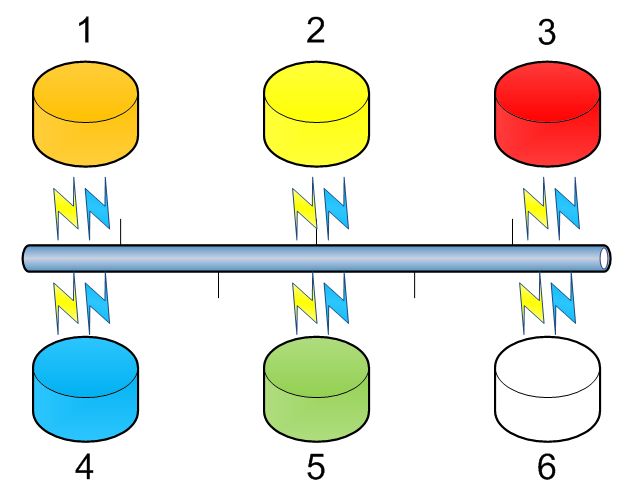 Imagine there are 6 discipline tools, an engineering environment optimized for plant engineering, a project management environment, an execution environment connecting suppliers and materials, a delivery environment assuring the content of a project is delivered in the right stages and finally a knowledge environment, capitalizing lessons learned, standards and best practices.
This results in 6 tools and 12 interfaces to a common service bus connecting these tools. 12 interfaces as information needs to be send and received from the service bus per application. Each tools will have redundant data for its own execution.
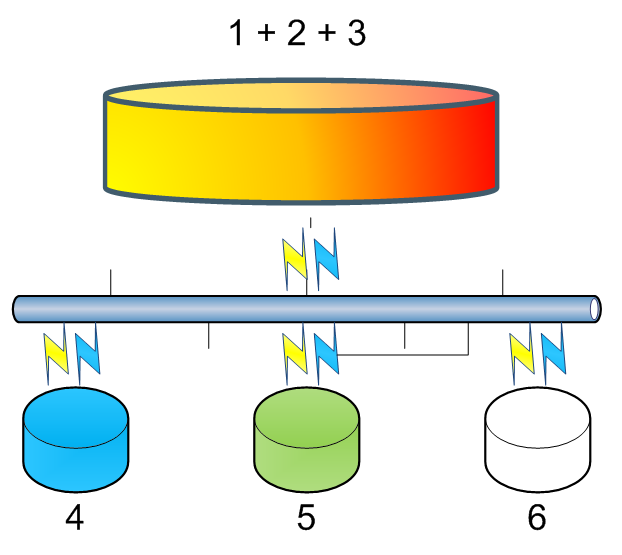
What happens if a PLM provider could offer three of these tools on a common platform? This would result into 4 tools to install and only 8 interfaces. The functionality in the common PLM system does not require data redundancy but shares common information and therefore will provide better performance in a cross-discipline scenario.
In the ultimate world all tools will be on one platform, providing the best performance and support for this EPC contractor. However this is utopia. It is almost impossible to have a 100 % optimized system for a group of independent companies working together. Suppliers will not give up their environment and own IP to embed it in a customer´s ideal environment. So there is always a compromise to find between a best integrated platform (optimal performance – reduced cost of interfaces and cost of ownership) and the best connected environment (tools connection through open standards).
And this is why both Steve and Oleg have a viewpoint that makes sense. Depending on the performance of the tools and the interaction with the supplier network the PLM platform can provide the majority of functionality. If you are a market dominating OEM you might even reach 100 % coverage for your own purpose, although the modern society is more about connecting information where possible.
MY CONCLUSION after reading both posts:
- Oleg tries to provoke, and like a soap, you might end up confused after each episode.
- Steve in his post gives a common sense guidance, useful if you spend time on digesting it, not a soap.
Now I hope you are not longer confused and wish you all a successful and meaningful 2013. The PLM soap will continue in alphabetical order:
- Will Aras survive 21-12-2012 and support the Next generation ?
- Will Autodesk get of the cloud or have a coming out ?
- Will Dassault get more Experienced ?
- Will Oracle PLM customers understand it is not a database ?
- Will PTC get out of the CAD jail and receive $ 200 ?
- Will SAP PLM be really 3D and user friendly ?
- Will Siemens PLM become a DIN or ISO standard ?
See the next episodes of my PLM blog in 2013
 Early this year Dassault Systèmes (DS) announced their future strategy called 3DExperience and it is only now after their two major events, the 3DExperience forums in the US and Europe, that the discussion has started around the meaning of 3DExperience.
In February, I thought 3DExperience was just a new marketing approach from DS to differentiate themselves from other vendors. A little more 3D, PLM has a bad connotation and as some of the newcomers redefined what is PLM, it made sense to be different again..
One of my fellow European bloggers, Yoann Maingon started a discussion with his provoking blog post: Different Marketing Strategies And Naming in PLM. Read the post and specially the comments from Jim Brown and Joe Barkai, who bring perspective to this post. In addition this post got traction in some closed LinkedIn PLM groups and it was interesting to observe that different interpretations of PLM created somehow the same feeling that I have with religion.
 Stay with the book and the definition of PLM and complete your portfolio was the message. But which book and what is PLM ? Even if I would write the book: “The Truth about PLM”, who would consider my book as the authority.
We have learned from religion that concepts based on a book can lead to wars.
I am sure PLM will not go into that direction and it remains important not to focus on the definition of PLM, but at the end you want your customers (current and future) to be more efficient, more innovative and profitable. And in order to achieve that, you need to look at the whole process, starting with market interaction and delivery to the customer.
And for that there are many tasks to perform in a company. During your sales process, you need to make sure you address in the best manner the demands from the customer or market, so you can differentiate yourself from others. It can be based on your track record (best in class since 1845), your price (always the cheapest as you manage the process efficient) or your experience (the price and the good feeling it gives justifies the decision)
What has become clear in the past ten years is that we are in a global, changing market and specially traditional companies struggle to make a change which is future oriented. Customer loyalty was in the past based on the fact that you were in the same region, later the same country, but now everyone is shopping or sourcing around the world. Traditional markets and business are no longer secure.

So companies have to change and to my opinion one of the most important changes they have to go through is managing all information in their company (and from outside) in a shared manner. Products can no longer be defined without taking into account feedback and interaction from the market. Trends (positive or negative) related to your company or products need to be followed as they can kill or hype a product or your company.
To realize this change a company needs to start working different and this leads at then end to the need for different tools to support your changing processes. Here I see PLM systems coming into the picture. And here there are the two approaches: will you be selecting a single vendor with the richest PLM platform, or will you integrate a set of best in class applications. As we saw in the Tech4PD discussion there is no ultimate decision here.
I see the 3DExperience strategy from DS in this light. The classical scope of PLM tools and practices does not provide a base for the current and future markets. The solution is bigger than tools, it is the focus on the total experience (I could not find another name either).
It is a way to become attractive for your customers and not focus only on the product but also the way you can influence your potential customers to choose your product or service above others. DS call this the new era of 3DExperience, others will market it different.

In a consumer market we select products based on experience. Has anyone ever tried to justify the purchase of an iPad as an affordable device they need for their work ?
It is the experience.
There is one thing I dislike from the 3DEXperience approach. Blogging becomes expensive, as writing down the word 3DExperience – a mix of numbers and characters – slows down my efficiency. I prefer 3DE or3DX as the most efficient set of keystrokes related to a TLA.
To my opinion PLM is not dead at all for DS. They just market the bigger picture different to be different from the classical PLM platforms. All PLM vendors have their unique marketing approach. Companies need to define what is their next step to remain in business and they are afraid for the old PLM, due to the horror stories – complexity, expensive, etc.
Is it selling experiences or perhaps is it making sure a new generation of workers will be motivated to work for your company. It remains a mix of classical PLM functionality, but it is also big data, social media and more interactive and friendly interfaces which are expected.
Finally one observation from the 3DExperience forum in Brussels where I believe they could have done a better job. Usually when customers and prospects go to this kind of events, they want to hear that they have chosen the right software provider. So it should be a mix of assuring them they are not alone (many others have chosen our solutions) and excited by the future vision your vendor has. Here they message that all companies need to sell experiences in the future otherwise they will be a commodity created a bad mood. Fear does not push people to change, it paralyzes people.
Conclusion: Dassault Systemes new 3DExperiences is understandable as a way to introduce a bigger picture than PLM alone. If every company needs THE EXPERIENCE approach has to be seen. In addition I believe DS still needs to work on more understandable examples where the 3DE approach is a differentiator. For sure there is PLM inside
A week later after the PLM Innovation conference in the US, I have time to write down my impressions. It was the first time this event was organized in the US, after having successful events the past years in Europe. For me it was a pleasure to meet some of my PLM friends in reality as most of my activities are in Europe.
With an audience of approximate 300 people, there were a lot of interesting sessions. Some of them in parallel, but as all session are recorded I will soon catch up with the sessions I have been missing.
My overall impression of the event: Loud en Positive, which is perhaps a typical difference between the US and Old Europe.
Here some impressions from sessions that caught my attention

Kevin Fowler, Chief Architect Commercial Airplanes Processes and Tools from The Boeing Company presented the PLM journey BCA went through. Their evolution path is very similar to the way Siemens and Dassault Systemes went through (driven by Boeing’s challenges).
Impressive was the amount of parts that need to be managed aircraft (up to a billion) and with that all its related information. Interesting to see that the amount of parts for the 787 have strongly decreased.
After PLM Generation 1 based on Teamcenter and Generation 2 based on Dassault Kevin demonstrated that functionality and cost of ownership increased due to more complexity, it was evident that usability decreased.
And this will be a serious point of attention for Generation 3, the PLM system BCA will be selecting for 2015 and beyond. Usability has to increase.
And as we were among all the PLM vendors and customers, during the breaks there was a discussion, which PLM vendor would be the preferred next partner for PLM. I had a discussion related to PLM vision and visibility with one of the SAP partners (DSC software Inc.). He is convinced that SAP provides one of the best PLM platforms. I am not convinced as I see SAP still as a company that wants to do everything, starting from ERP. And as long as their management and websites do not reflect a PLM spirit I am not convinced. In 2015 I might be wrong with my impression that PLM, Usability and SAP are not connected.
Note: browse to this SAP PLM rapid-deployment solution page and view the Step by Step guide. Now the heading becomes SAP CRM rapid-deployment solution. A missing link, marketing or do they know the difference between PLM and CRM ?
 Next Nathan Hartman from Purdue University described his view on future PLM which will be model-based and he presented how PLM tools could work together describing a generic architecture and interfaces. This is somehow the way the big PLM Vendors are describing their platform too, only in their situation more in a proprietary environment.
- Nathan gave an interesting anecdote related to data sharing. He mentioned as example a 3D model that was built by one student and he asked another student to make modifications on it. This was already a challenge and even working with the same software lead to knowledge issues, trying to understand the way the model was built. Demonstrating PLM data sharing is not only about having the right format and application, but also the underlying knowledge needs to be exposed
 Monica Schnitger, as business analyst presented her thoughts on PLM justification. Where in Munich I presented Making the case for PLM session, Monica focused on a set of basic questions that you need to ask (as a company) and how you can justify a PLM investment. It is not for the big kids anymore and you can find her presentation here (with another PLM definition).
I liked the approach of keeping things simple, as sometimes people make PLM too complex. (Also as it serves their own businesses). Monica presented that a company should define its own reasons for why and how PLM. Here I have a slight different approach. Often mid-market companies do not want PLM, they have pains they want to get rid of or problems that they want to solve. Often starting from the pain and with guidance from a consultant companies will understand which PLM practices they could use and how it fits in a bigger picture instead of using plasters to fix the pain.
 Beth Lange, Chief Scientific Officer from Mary Kay presented how her organization, operating from the US (Texas), managed a portfolio of skin care products sold around the world by an independent local sales force all around the world. In order to do this successfully and meet all the local regulatory requirements, they implemented a PLM system where a central repository of global information is managed.
The challenge for Mary Kay is that from origin a company with a focus on skin care products and an indirect sales force, where sometimes the sales person has no IT skills, this project was also a big cultural change. Beth explained that indeed the support from Kalypso was crucial to manage the change. Something which I believe is always crucial in a global PLM project where the ideal implementation is so different from current, mainly isolated practices.
As regulatory compliance is an important topic for skin care products, Beth explained that due to the compliancy rules for China, where they have to expose their whole IP, the only way to protect their IP was putting a patent on everything, even on changes.
Would NPI mean New Patent Introduction in the CPG market ?

Ron Watson, Director, PLM COE and IT Architecture
from Xylem Inc. presented their global PLM approach. As the company is is relative young (2011) but is a collection of businesses all around the world, they have the challenge to operate as a single company and sharing the synergy.
Ron introduced PDLM (Product Data Lifecycle Management) and he explained there was first a focus getting all data under control and make it the single source for all product data in a digital format, preferably with a minimum of translation needed.
Here you see xylem has chosen for an integrated platform and not the best of breed applications. After having the product data under control the focus can be on standardizing processed overall the company. Something which other companies that have followed this approach, confirm it brings huge benefits.
As it was a PTC case study, Graham Birch, senior director of Product Management from PTC did the closing part. Unfortunate by demoing some pieces of the software. A pity as I believe people do not get impressed by seeing some data on the screen they recognize. Only when there is a new paradigm to demonstrate related to usability I would be interested.

And as-if they have read my mind, Daniel Armour from Joy Global demonstrated the value and attractiveness of 3D Visualization tools in their organization. Joy Global is manufacturer of some of the biggest mining equipment and he demonstrated how 3D Visualization can be used in the sales and marketing process, but also during training and analysis of work scenarios.
His demonstration showed again that 3D as a communication layer is attractive and appeals to the user (serious gaming in some cases).
As it was a SAP case, I was surprised to hear the words from Brian Soaper, explaining the power of 3D for SAP users and how SAP users will benefit from better understanding, higher usability etc. Iw as as-if a 3D-CAD/PLM was talking, was this a dream ?
I woke up out of this dream when someone from the audience asked to Daniel how they would keep the visualizations actual, is there a kind of version management ? Daniel mentioned currently not but you could build a database to perform check-in/checkout of data. Apparently all the 3D we have seen is not connected to this single database SAP always promotes.

Peter Bilello, CIMdata’s president had a closing session with the title: Evaluate the tangible benefits from PLM can prove complex, which indeed is true. Peter’s presentation was partly similar to the presentation he gave early this year in Munich. And this is what I appreciate about CIMdata. Some people in the audience mentioned that many times it is the same story and many of the issues Peter was presenting are somehow known facts. And this is what I like about CIMdata, PLM is not changing per conference or new IT-hype. If you want to understand PLM, you need to keep to the purpose and meaning of PLM. And these known facts apparently are not so known, a majority of PLM projects are executed or lead by people that decided to invent the wheel,as inventing the wheel seems cheaper than renting a wheel, and this lead again to issues later that every experienced consultant could foresee.
 The evening with a champagne reception on the paddle boat making a tour around the lake and a dinner at the lake side concluded this first day.
The combination of presentations, scheduled network meetings and enough network time made it a successful first day
 Next day I started with a BOM management Think Thank were in the target was to come to some common practices and understanding of BOM management. As the amount of participants was large and the time was short we only had a chance to touch the surface of the cases brought in.
What was clear from this session to me is that most challenges reported were due to the fact that the tools were already in place and only afterwards the PLM team (mostly engineering people) had to struggle to make it into a consistent process. They do not get a real help from PLM vendors or implementers, as their focus is on selling more tools and services.
What is missing for these organizations is a PLM for Dummies methodology guide, which is business centric instead of technology centric. For sure there are people who have published PLM books, but either they are not found of relevant. And as nothing comes for free, these companies try to invent the wheel again. PLM is serious business.
 The first keynote speech from the second day was from Dantar Oosterwal, Partner and President of the Milwaukee Consulting Group, who inspired us with Lean and PLM: Operation Excellence and this all related to his experiences with Harley Davidson.
It was interesting how described the process of focusing on the throughput to get market results. There are various parameters how you can influence market share, by a price strategy, by increased marketing , but the most impact on Harley Davidson sales result was the effect of innovation. More model variants being the choice for more potential customers. By measuring and analyzing the throughput of the organization an optimal tuning could be found.
Dantar also shared an interesting anecdote about an engineer that had to study the impact of ethanol as fuel for a certain engine. And after a certain time the engineer came back with the answer: yes we can. He answered the question but left no knowledge behind. Where a similar question was asked about performance to a supplier and he came back with an answer and graphs explaining where the answered was based upon. This answer created knowledge as it could be reused for similar questions. It is a good example how companies should focus on collecting knowledge in their PLM environment instead of answers on a question.
 The second keynote speaker was from the world biggest brand, Christopher Boudard, PLM Director from the Coca Cola Company. With its multiple brands and global operations it is a challenge to work towards a single PLM platform. He explained that at this stage they are still busy loading data into the system, where a lot of time is spent on data cleansing as the system has only value when the data is clean and accurate.
And this requires a lot of motivation for the PLM team to keep the executive management involved and sponsoring a project that takes five years to consolidate data and only then through the right processes make sure the data remains correct.
Christopher demonstrated in a passionate manner that leadership is crucial for such a project to be successful and implemented. For me as an European it was interesting to see that the world biggest brand PLM Director is a French citizen inspiring the management of such an American company.
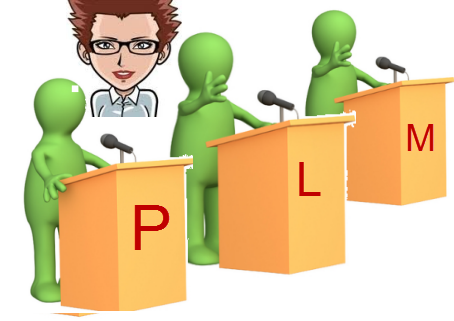 Monica Schnitger conducted an interesting session about the state-of-the-state of multi-platform PLM.
If you cannot understand this tittle, it was a debate between the PLM vendors ( Aras, Autodesk, Dassault Systemes, PTC, SAP and Siemens) about openness, interoperability, cloud and open source.
After the first question from Monica about the openness of each of the vendor’s systems, it was clear there are no problems to expect in the future. All systems were extremely open according to the respondents and I lost my attention for the debate somehow as I had the feeling I was listening to an election debate. Monica did her best to make it an unbiased discussion, however I feel when some people want to make a specific point and use every question to jump on that it becomes an irritation.
 Chad Jackson, this time dressed up as the guy that is always killed in the first 5 minutes of a Star Trek episode, shared with us the early findings of the 2012 State of PLM. Tech4PD followers, and who is not a follower, understood he lost the bet of the second episode.
Chad let me know if this picture needs to be removed, as it can kill your future career.
The preliminary findings Chad was sharing with us that manufacturing and service where significant interested and consumers of PLM data, but do not consider it as their data, where they have to contribute too also. The fact that it is available makes them involved in using the data, still these departments do not show active participating in PLM. Somehow this confirms the observation that PLM is still considered as an engineering tool, not as an enterprise wide platform.
As the initial group of participants (n = 100) is small and not random selected from an overall population, the questions remains what the state of PLM is in 2012. I assume Chad will come back on that in a later time.
The last plenary sessions, David Karamian from Flextronics and Michael Grieves, a Virtual Perfect Future, had the ungrateful position being the last two speakers of this event. I have to review David’s presentation again as it was not easy to digest and recall a week later what were his highlights. Michael’s presentation was easier to digest and I also believe with the new upcoming concepts and technology the virtual perfect future is there.
Looking back on a successful event, where I met many of my PLM peers from across the ocean, I will take the upcoming weeks to review the sessions I missed. Final good news for all PLM mind sharers, is the fact that CIMdata and MarketKey announced the coordination of their upcoming events next year – more content and more attendees guaranteed.
If your are reading blogs related to PLM, I am sure you have seen a blog post from Stephen Porter (Zero Wait State), for example: The PLM state the walking dead – PLM projects that never end.
Like Stephen, I am often triggered by an inspiring book, a touching movie or a particular song combined with my PLM-twisted brain I relate the content to PLM (there is no official name for this abnormality yet).
When driving home last week, I was listening to Phil Collins – In the air tonight
As I was just coming back from a discussion around PLM tools, BOMs and possible PLM expansion strategies in a company with customers and resellers, my twisted brain was thinking about two PLM related topics that were in the air tonight (at least for me).
Granularity vs. Integration: Suites vs. Best-in-class PLM
You must have noticed it, and if not, now you are aware: Jim Brown and Chad Jackson started a PLM duel discussion platform at Engineering.com to bring PLM related topics to the table: TECH4PD. Watch them argue and I hope with your feedback and the feedback of the PLM community, it will help us to make up your mind.
The topic they discussed in their first session was about two different approaches you can have for PLM. Either start from a best in class PLM platform or build your PLM support by using dedicated applications and integrate them.

This is to my opinion one of the fundamental PLM topics to discuss. And if I would have to vote (as Jim and Chad ask you to do so), I would first vote for Chad (integration of software) and after a second thought, vote for Jim (best in class PLM). So see my problem.
If I relate the discussion to my experiences with different companies, I realized that probably both answers are correct. In case you are an OEM you likely would benefit from a best in class PLM platform, as PLM systems aim to cover and integrate all data through the product lifecycle in a single system, single data model, etc.. So a good PLM platform would have the lowest cost of ownership in the long term. OEMs are by definition not the smallest companies and in general have the highest need for global coverage.
But not every company is an OEM. Many mid-market companies are specific suppliers,serving different OEMs and although they also develop products, it is in a different context of market delivery. There is a need to be flexible, as their products used by OEMs might become obsolete in the near term, they need to be more flexible, reactive. and the best in class companies innovate and are proactive. For that reason they do want to invest in a best in class PLM system, which somehow brings some rigidness , but keep on optimizing these areas where improvement is needed in their organization, instead of changing the organization.
I believe this question will remain in the air until we get a clear split between these two types of PLM. There is a trend splitting classic PLM (OEM oriented) and new upcoming PLM solutions. Till that time, we will be confused by the two approaches. It is a typical PLM disease and the reason you do not experience the same discussion for ERP is obvious. ERP is much more a linear process that both for the OEMs and mid-market companies is aiming to manufacture products or goods at a single location. The differentiation is in global manufacturing. Where do you manufacture your products ? Here the OEMs might have a bigger challenge. Global manufacturing is a PLM challenge too, which is in the air.
Where is the MBOM ?
This is the topic most visited in my blog and I am preparing a session with the MBOM as theme combined with PLM for the upcoming PLM Innovation US conference end of October in Atlanta. I am not going to disclose all the content here, but I will give you some thoughts that are in the air.
Companies historically manage their BOM in ERP, but as a result of globalization they now need to manage their manufacturing BOM at different locations. But each location has its own ERP and a local (M)BOM. What to do ?
This is in the air:
 |
|
I hope you will participate in both discussions that are the air, either by commenting to this blog, through Tech4PD, your blog (Oleg ? 😉 ) or your participation at PLM Innovation US.
Looking forward to discuss with you about what you believe is in the air tonight.

Conclusion (as usual): It is a busy time – we are heading towards the end of the year, which for some reason is a deadline for many companies. So no long thought processes this time, just what is in the air.
 It is interesting to read management books and articles and reflect the content in the context of PLM. In my previous post How the brain blocks PLM acceptance and in Stephen Porter´s (not yet finished) serial The PLM state: the 7 habits of highly effective PLM adoption, you can discover obvious points that we tend to forget in the scope of PLM as we are so focused on our discipline.
 This summer holiday I was reading the Innovator´s Dilemma: When New Technologies Cause Great Firms to Fail by Clayton Christensen. Christensen is an associated professor at the Harvard Business School and he published this book already in 1997. Apparently not everyone has read the book and I recommend that if you are involved in the management of a PLM company to read it.
Sustaining technology
Christensen states there are two types of technologies. Leading companies are supporting their customers and try to serve them better and better by investing a lot in improving their current products. Christensen calls this sustaining technology as the aim is to improve existing products. Sustaining technologies lead to every time more and more effort to improve the current product performance and capabilities due to the chosen technology and solution concepts. These leading companies are all geared up around this delivery process and resources are optimized to sustain leadership, till ….
Disruptive technology
The other technology Christensen describes is disruptive technology, which initially is not considered as competition for existing technologies as it under performs in the same scope, so no way to serve the customer in the same way. The technology underperforms if you would apply to the same market, but it has unique capabilities that make it fit for another market. Next if the improvement path of disruptive technology can be faster than the improvement path for the sustaining technology, it is possible that their paths meet at a certain point. And although coming from a different set of capabilities, due to the faster improvement process the disruptive technology becomes the leading one and companies that introduced the disruptive technology became the new market leaders.
Why leading companies failed..
 Christensen used the disk drive industry as an example as there the change in technology was so fast that it was a perfect industry to follow it´s dynamics. Later he illustrates the concepts with examples from other industries where the leading firms failed and stopped to exist because disruptive technologies overtook them and they were not able to follow that path too.
Although the leading companies have enough resources and skills, he illustrates that it is a kind of logical path – big companies will always fail as it is in their nature to focus on sustaining technology. Disruptive technologies do not get any attention as they are targeting a different unclear market in the beginning and in addition it is not clear where the value from this disruptive technology comes from, so which manager wants to risk his or her career to focus on something uncertain in an existing company.
Christensen therefore advises these leading companies, if they expect certain technologies to become disruptive for their business, to start a separate company and take a major share position there. Leave this company focus on its disruptive technology and in case they are successful and cross the path of the sustaining technology embed them again in your organization. Any other approach is almost sure to fail, quote:
Expecting achievement-driven employees in a large organization to devote critical mass of resources, attention and energy to disruptive projects targeted at a small market is equivalent to flapping one´s arms in an effort to fly

As the book was written in 1997, it was not in the context of PLM. Now let´s start with some questions.
Is ERP in the stage of sustaining technology?
 Here I would say Yes. ERP vendors are extending their functional reach to cover more than the core functionality for two reasons: they need continuous growth in revenue and their customers ask for more functionality around the core. For sustaining technologies Christensen identifies four stages. Customers select a product for functionality, when other vendors have the same functionality reliability becomes the main differentiation. And after reliability the next phase is convenience and finally price.
From my personal observations, not through research, I would assume ERP for the major vendors is in the phase between convenience and price. If we follow Christensen´s analysis for SAP and Oracle it means they should not try to develop disruptive technologies inside their organization, neither should they try to downscale their product for the mid-market or add a different business model. Quote:
What goes up – does not go down. Moving to a high-end market is possible (and usually the target) – they will not go to small, poor defined low-end markets
How long SAP and Oracle will remain market leaders will depend on disruptive technologies that will meet the path of ERP vendors and generate a new wave. I am not aware of any trends in that area as I am not following the world of ERP closely
Is PLM in the stage of sustaining technology?
 Here I would say No because I am not sure what to consider as a clear definition of PLM. Different vendors have a different opinion of what a PLM system should provide as core technologies. This makes it hard to measure it along the lifecycle of sustaining technology with the phases: functionality, reliability, convenience and price.
Where the three dominant PLM providers (DS/PTC/Siemens) battle in the areas of functionality, reliability and convenience others are focusing on convenience and price.
Some generalized thoughts passed my mind:
- DS and PTC somehow provoke their customers by launching new directions where they believe the customer will benefit from. This somehow makes it hard to call it sustaining technology.
- · Siemens claiming they develop their products based on what customers are asking for. According to Christensen they are at risk in the long term as customers keep you captive and do not lead you to disruptive technologies.
- · All three focus on the high-end and should not aim for smaller markets with the same technology. This justifies within DS the existence of CATIA and SolidWorks and in Siemens the existence of NX and SolidEdge. Unifying them would mean the end of their mid-market revenue and open it for others.
Disruptive technologies for PLM
Although PLM is not a sustained technology to my opinion, there are some disruptive technologies that might come into the picture of mainstream PLM.
 First of all there is the Open Source software model, introduced by Aras, which initially is not considered as a serious threat for the classical PLM players – “big customers will never rely on open source”. However the Open Source model allows product improvements to move faster than main stream, reaching at a certain point the same level of functionality, reliability and convenience. The risk for Open Source PLM is that it is customer driven, which according Christensen is the major inhibitor for disruptive steps in the future
 Next there is the cloud. Autodesk PLM and Kenesto are the two most visible companies in this domain related to PLM. Autodesk is operating from a comfort zone – it labels its product PLM, it does not try to match what the major PLM vendors try to do and they come from the small and medium mid-size market. Not too many barriers to come into the PLM mid-market in a disruptive manner. But does the mid-market need PLM? Is PLM a bad annotation for its cloud based product? Time will tell.
The management from Kenesto obviously has read the book. Although the initially concept came from PLM++ (bad marketing name), they do not to compete with mainstream PLM and aim their product at a different audience – business process automation. Then if their product picks up in the engineering / product domain, it might enter the PLM domain in a disruptive manner (all according to the book – they will become market leaders)
 Finally Search Based Applications which are also a disruptive technology for the PLM domain. Many companies struggle with the structured data approach a classical PLM system requires and especially for mid-market companies this overhead is a burden. They are used to work in a cognitive manner, the validation and formalization is often done in the brain of experienced employees. Why cannot search based technology not be used to create structured data and replace or support the experienced brain?
If I open my Facebook page, I see new content related to where I am, what I have been saying or surfing for. Imagine an employee´s desktop that works similar, where your data is immediately visible and related information is shown. Some of the data might come from the structured system in the background, other might be displayed based on logical search criteria; the way our brain works. Some startups are working in this direction and Inforbix (congratulations Oleg & team) has already been acquired by Autodesk or Exalead by DS.
For both companies if they believe in the above concept, they should remain as long as possible independent from the big parent company as according to Christensen they will not get the right focus and priorities if they are part of the sustainable mainstream technology
Conclusion
This blog post was written during a relaxing holiday in Greece. The country here is in a crisis, they need disruptive politicians. They did it 3500 years ago and I noticed the environment is perfect for thinking as you can see below.
Meanwhile I am looking forward to your thoughts on PLM, in which state we are what the disruptive technologies are.



 The brain has become popular in the Netherlands in the past two years. Brain scientists have been publishing books sharing their interpretations on various topics of human behavior and the brain. Common theme of all: The brain is influencing your perceptions, thoughts and decisions without you even being aware of it.
Some even go that far by claiming certain patterns in the brain can be a proof if you have a certain disorder. It can be for better or for worse.
“It was not me that committed this crime; it was my brain and more…”
Anyway this post will be full of quotes as I am not the brain expert, still giving the brain an important role (even in PLM)
“My brain? That´s my second favorite organ” – Woody Allen
It is good to be aware of the influence of the brain. I wrote about this several times in the past, when discussing PLM vendor / implementer selection or when even deciding for PLM. Many of my posts are related to the human side of justifying and implementing PLM.
As implementing PLM for me primary is a business change instead of a combination of IT-tools to implement, it might be clear that understanding the inhibitors for PLM change are important to me.
In the PLM communities, we still have a hard job to agree between each other what is the meaning of PLM and where it differs from ERP. See for example this post and in particular the comments on LinkedIn (if you are a member of this group): PLM is a business process, not a (software) tool
And why it is difficult for companies to implement PLM beside ERP (and not as an extension of ERP) – search for PLM and ERP and you find zillions of thoughts and answers (mine too).
 The brain plays a major role in the Why PLM we have ERP battle (blame the brain). A week ago I read an older publication from Charles Roxburgh (published in May 2003 for McKinsey) called: Hidden flaws in strategy subtitle: Can insights from behavioral economics explain why good executives back bad strategies. You can read, hear and download the full article here if you are a registered user.
The article has been written long before the financial and global crises were on the agenda and Mr. Roxburgh describes 8 hidden flaws that influence our strategic decision making (and PLM is a strategy). I recommend all of you to read the full article, so the quotes I will be making below will be framed in the bigger picture as described by Mr. Roxburgh. Note all quotes below are from his publication.
Flaw 1: Overconfidence
We often make decisions with too much confidence and optimism as the brain makes us feel overconfident and over optimistic about our own capabilities.
Flaw 2: Mental accounting
Avoiding mental accounting traps should be easier if you adhere to a basic rule: that every pound (or dollar or euro) is worth exactly that, whatever the category. In this way, you will make sure that all investments are judged on consistent criteria and be wary of spending that has been reclassified. Be particularly skeptical of any investment labeled “strategic.”
Here I would relate to the difference in IT-spending and budget when you compare ERP and PLM. ERP spending is normal (or strategic) where PLM spending is not understood.
Flaw 3: The status quo bias
People would rather leave things as they are. One explanation for the status quo bias is aversion to loss—people are more concerned about the risk of loss than they are excited by the prospect of gain.
Another reason why adapting and implementing PLM in an organization is more difficult than for example just automating what we already do.
Flaw 4: Anchoring
Anchoring can be dangerous—particularly when it is a question of becoming anchored to the past
PLM has been anchored with being complex and expensive. Autodesk is trying to change the anchoring. Other PLM-like companies stop talking about PLM due to the anchoring and name what they do different: 3DExperience, Business Process Automation, …..
Flaw 5: The sunk-cost effect
A familiar problem with investments is called the sunk-cost effect, otherwise known as “throwing good money after bad.” When large projects overrun their schedules and budgets, the original economic case no longer holds, but companies still keep investing to complete them.
I have described several cases in the past anonymously; where companies kept on investing and customizing their ERP environment in order to achieve PLM goals. Although it never reached the level of acceptance and quality a PLM system could offer, stopping these projects was impossible.
Flaw 6: The herding instinct
This desire to conform to the behavior and opinions of others is a fundamental human trait and an accepted principle of psychology.
Warren Buffett put his finger on this flaw when he wrote, “Failing conventionally is the route to go; as a group, lemmings may have a rotten image, but no individual lemming has ever received bad press.”
A quote in a quote but so true. Innovative thinking, introducing PLM in a company requires a change. Who needs to be convinced? If you do not have consensus (which usually happens as PLM is vague) you battle against the other lemmings.
Flaw 7: Misestimating future hedonic states
Social scientists have shown that when people undergo major changes in circumstances, their lives typically are neither as bad nor as good as they had expected—another case of how bad we are at estimating. People adjust surprisingly quickly, and their level of pleasure (hedonic state) ends up, broadly, where it was before
A typical situation every PLM implementation faces: users complaining they cannot work as efficient anymore due to the new system and their work will be a mess if we continue like this. Implementers start to customize quickly and we are trapped. Let these people ‘suffer’ with the right guidance and motivation for some months (but this is sometimes not the business model the PLM implementer pushes as they need services as income)
Flaw 8: False consensus
People tend to overestimate the extent to which others share their views, beliefs, and experiences—the false-consensus effect. Research shows many causes, including these:
- confirmation bias, the tendency to seek out opinions and facts that support our own beliefs and hypotheses
- selective recall, the habit of remembering only facts and experiences that reinforce our assumptions
- biased evaluation, the quick acceptance of evidence that supports our hypotheses, while contradictory evidence is subjected to rigorous evaluation and almost certain rejection; we often, for example, impute hostile motives to critics or question their competence
- groupthink, the pressure to agree with others in team-based cultures
Although positioned as number 8 by Mr. Roxburgh, I would almost put it as the top when referring to PLM and PLM selection processes. So often a PLM decision has not been made in an objective manner and PLM selection paths are driven to come to the conclusion we already knew. (Or is this my confirmation bias too  )
)
Conclusion
As scientists describe, and as Mr. Roxburgh describes (read the full article !!!) our strategic thinking is influenced by the brain and you should be aware of that. PLM is a business strategy and when rethinking your PLM strategy tomorrow, be prepared to avoid these flaws mentioned in this post today.
The problem with a TLA is that there is a limited number of combinations that make sense. And even once you have found the right meaning for a TLA, like PLM you discover so many different interpretations.
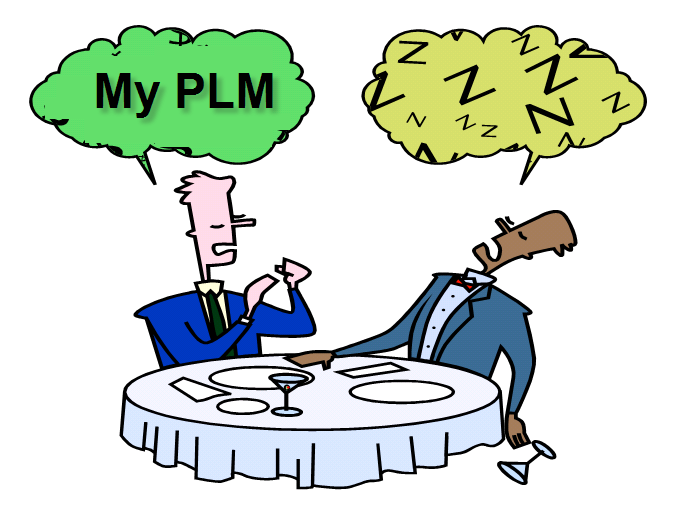 For PLM I wrote about this in my post PLM misconceptions –: PLM = PLM ?
I can imagine an (un)certain person, who wants to learn about PLM, might get confused (and should be – if you take it too serious).
At the end your company’s goal should be how to drive innovation, increase profitability and competiveness and not about how it is labeled.
As a frequent reader of my blog, you might have noticed I wrote sometimes about ALM and here a similar confusion might exist as there are three ALMs that might be considered in the context I am blogging.
Therefore this post to clarify which ALM I am dedicated to.
So first I start with the other ALMs:
ALM = Application Lifecycle Management
 This is an upcoming discipline in the scope of PLM due to the fact that more and more in the product development world embedded software becomes a part of the product. And like in PLM where we want to manage the product data through its lifecycle, ALM should become a logical part of a modern PLM implementation. Currently most of the ALM applications in this context are isolated systems dealing only with the software lifecycle, see this Wiki Page
ALM = Asset Lifecycle Management (operational)
In 2009 I started to focus on (my type of) ALM, called Asset Lifecycle Management, and I discovered the same confusion as when you talk about a BOM. What BOM really means is only clear when you understand the context. Engineers will usually think of an Engineering BOM, representing product as specified by engineering (managed by PDM). Usually the rest of the organization will imagine the Manufacturing BOM, representing the product the way it will be produced (managed mostly in ERP).
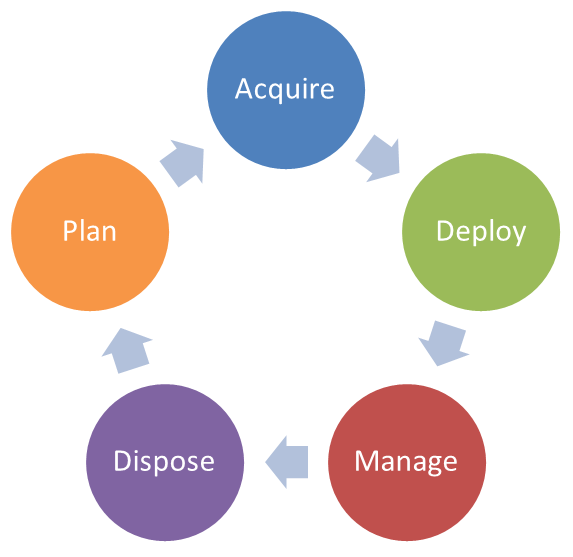 The same is valid for ALM. The majority of people in a production facility, plant or managed infrastructure will consider ALM as the way to optimize the lifecycle of assets. This means optimizing the execution of the plant, when to service or replace an asset ? What types of MRO activities to perform. Sounds a lot like ERP and as it has direct measurable impact on finance, it is the area that gets most of the attention by the management.
ALM = Asset Lifecycle Management (information management)
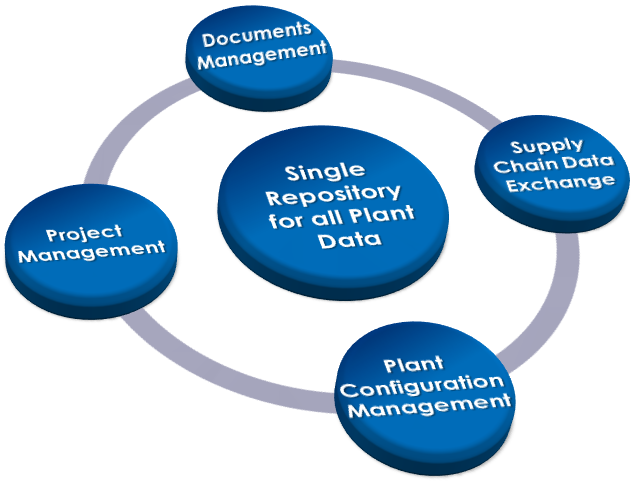 Here we talk about the information management of assets. When you maintain your assets only in a MRO system, it is similar like in a manufacturing company when only using an ERP system. You have the data for operations, but you do not have the process in place to manage the change and quality of data. In the manufacturing world this is done in PDM and PLM system and I believe owners/operators of plant can learn from that.
I wrote a few posts about this topic, see Asset Lifecycle Management using a PLM system, PLM CM and ALM – not sexy or using a PLM system for Asset Lifecycle Management requires a vision and I am not going to rewrite them in this post. So get familiar with my thoughts if you read the first time about ALM in my blog.
What I wanted to share is that thanks to modern PLM systems, IT infrastructure/technologies and SBA it becomes achievable for owner/operators to implement an Asset Lifecycle Management vision for their asset information and I am happy to confirm that in my prospect and customer base, I see companies investing and building this ALM vision.
And why do they do this:
 Reduce maintenance time (incidental and planned) by days or weeks due to the fact that people have been working with the right and complete data. Depending on the type of operations, one week less maintenance can bring millions (power generation, high demand/high cost chemicals and more)

.
 Reduce the failure costs dramatically. As maintenance is often a multi-disciplinary activity errors due to miscommunication are considered as normal in this industry (10 % up and even more). It is exactly this multi-disciplinary coordination that PLM systems can bring to this world. And the more you can do in a virtual world the more you can assure you do the right thing during real maintenance activities. Here industries similar as for the previous bullet, but also industries where high-costly materials and resources are used, the impact on reducing failure costs is high.

.
 Improve the quality of data. Often the MRO system contains a lot of operational parameters that were entered there at a certain time by a certain person with certain skills – the fact that although I used the word certain three times, the result is uncertainty as there is no separate tracing and validation of the parameters per discipline and an uncertain person looking at the data might not discover there is an error, till it goes wrong. Here industries where a human error can be dramatic benefit the most from it (nuclear, complex chemical processes)

Conclusion: The PLM system based ALM implementations are more and more becoming reality next to the ALM operational world. After spending more then three years focused on this area, I believe we can see and learn from the first results.
Are you interested in more details or do you want to share your experience ? Please let me know and I will be happy to extend the discussion
Note: On purpose I used as much TLA’s to assure it looks like an specialist blog, but you can always follow the hyperlink to the wiki explanation, when the TLA occurs the first time.
 Jos Voskuil's Weblog
Interesting reflection, Jos. In my experience, the situation you describe is very recognizable. At the company where I work, sustainability…
[…] (The following post from PLM Green Global Alliance cofounder Jos Voskuil first appeared in his European PLM-focused blog HERE.) […]
[…] recent discussions in the PLM ecosystem, including PSC Transition Technologies (EcoPLM), CIMPA PLM services (LCA), and the Design for…
Jos, all interesting and relevant. There are additional elements to be mentioned and Ontologies seem to be one of the…
Jos, as usual, you've provided a buffet of "food for thought". Where do you see AI being trained by a…