clip_image002_thumb.pngThis time an article explaining the basics of the Engineering Change Request (ECR) and Engineering Change Order (ECO) as they are common processes across many different industries, often named different, either by the customer or by the PLM supplier.

Although with the new social, WEB 2.0 collaboration, we find new and interesting concepts of engineering collaboration, I wanted to make sure also the ‘old’ processes are described and available for those who need a reference to it.

This post is related to some of my previous educational posts, listed here below:

BOM for Dummies: Engineering to Order

BOM for Dummies: Build to Order

BOM for Dummies: Configure to Order

BOM for Dummies: BOM and CAD

Connecting PLM and ERP: Post 1, Post 2, Post 3

The Engineering Change Processes(es)

In a manufacturing organization, there are is a need to manage many changes in different stages of the product lifecycle. In the conceptual phase, it is mainly the requirements and the change of requirements against the customer or market needs that need to be managed.

Later during the design and manufacturing preparation, there are changes to be communicated between the shop floor and engineering department, which are still internal. Here depending on the organizational structure we talk about change notifications to other departments and suppliers as long as the product is not yet released. These changes can often occur ad-hoc and for that reason not embedded in processes

After the release of a product, we need to manage changes in a controlled manner. This is done through engineering change process, where theoretically we have two types of processes:

The Engineering Change Request (ECR)

An engineering change request can start from anywhere in- or outside the organization and can have a certain level of importance. But the process is similar

clip_image002

clip_image004The start node can be a customer reporting a problem or an enhancement request from the customer for the future. It can be a service engineer reporting a severe problem (to be solved now) or an enhancement request for the future.

It can be someone in production reporting a manufacturing problem (to be solved now) or an enhancement request. It can be a purchasing agent –working in ERP – reporting that a part is no longer available (to be solved now) or that a part becomes obsolete (to be solved in the future)

clip_image006
The analyze node can be a product manager in case it is related to a product enhancement request, it can be a lead engineer in case of issues to be solved immediately and of course it can be a group of people


clip_image008The Change Control Board (CCB) can be a group of people – product management, production, purchasing, marketing, who decide on what to do with this proposed change. Their decision is based on the analysis done in the previous step.


The CCB has four options.

  1. They can request for further analysis, which means the process goes one step back or they can move the process forward.
  2. The option with no impact is to decline the ECR, which means there is no economical or marketing reason to implement the requested change. It might be clear that this option is only applicable for an enhancement request and not for a severe issue.
  3. clip_image010In case the request makes sense, it will be approved, but in situations that it is not critical for the current product release, it will be put on hold. This means that only when the product is going to be changed, it will be evaluated if this requested change can be implemented at the same time. Usually at major releases of the product, sometime when the product requires a change, and it is easy to implement.
  4. clip_image012In case of an urgent issue, immediately an (Engineering Change Order) ECO is planned and in case of a severe issue, it might even lead to several ECOs. This means the requested change needs to be implemented and engineering gets the order to implement this request. It might be, depending on the timing, that some other approved ECRs might be combined with this approved ECR as they can be managed in one change.

The Engineering Change Order

An Engineering Change Order is the process to implement a change. An Engineering Change Order can be based on one or more ECRs, depending on the urgency. In general, an ECO can be generalized as follows:

clip_image014

Or in case no new engineering activities are required, the major steps are followed as below – mainly when the change does not affect the engineering definition – which flow will be used to start depends on the result of the ECR:

The execution of the engineering change order contains the following steps:

The start node can be a product manager, engineering manager or lead engineer who defines which ECR(s) are going to be implemented. The implemented ECR’s are the ones approved by the CCB. The ones that required immediate implementation, in case of a critical situation or the ECRs that were approved and on hold in case of a platform update

This is the step where engineering changes are defined and implemented. Often using the CAD system and changing the engineering BOM

The approval node marks the formal approval of the engineering work, which means engineering believes the engineering process has been completed and the design is ready for manufacturing. It is not a formal release as manufacturing engineering can still find issues that require re-engineering due to manufacturing issues

dontmiss.pngNote: this generic process is only applicable where the engineering definition is separated from the manufacturing definition. This usually happens in Configure To Order or Make to Stock business processes, as the time between engineering change and manufacturing is not extremely critical.

The manufacturing node is important for companies delivering standard or generic products. In this stage the engineering BOM is translated into a manufacturing BOM, changing the engineering definition into a specific definition for manufacturing – in PLM after this stage the MBOM would be released to ERP.

Note: In many companies, the manufacturing definition is not directly visible in the engineering change order process. For two reasons:

  1. Engineering is already taking the manufacturing tasks into account, when defining an engineering change. This means the company is working with a kind of hybrid BOM, not 100 % pure an engineering BOM and not 100 % pure a manufacturing BOM. This method is often used in the engineering to order process or in companies where the product definition is very basic (single discipline – understandable impact)
  2. Historically companies are used to define their manufacturing BOM in ERP. Engineering provides a BOM, which is used as the base for manufacturing planning in the ERP system. This is a very common situation in many companies and leads to a disconnect between these departments for engineering and manufacturing.

Change Notifications

Change notifications are more used during the go-to-production phase of a product. This happens when between engineering and manufacturing there are several steps defined – engineering release, prototype phase, manufacturing definition. In this case notifications of an upcoming change, an approved changed or discovered issue. As these activities are internal and often need to happen add-hoc they are not supported by processes but by notifications inside PLM systems (and/or connected to email systems)

Some PLM remarks:

  • ECRs can be originated from anywhere. From a PDM user, an ERP user, a marketing person, a service engineer and for sure a customer. Which means implementing ECRs completely requires cross domain services between different systems in your company. However the place where information will be collected, reviewed and decided on, is the PLM system – as change requests are affecting the product knowledge (IP) for current and future products
  • ECO should always start from the PLM side, planning and implementing an engineering change. After finalization the released data will be pushed to ERP for execution


Next week I will share my thoughts about ‘classic’ PLM, PLM 2.0 and all the new social collaboration . Also I hope to meet you in January in London at the PLM Innovation 2011 congress

observation

The past week I was involved in three different situations, which seem to be disconnected from each other, but when looking back, I found one common similarity

The first case was with a company that had implemented pdm with a tight CAD integration many years ago. They have built together with their implementer(s) a dedicated environment, which was working efficient, perhaps never efficient enough. In the beginning of this year they planned an upgrade to the latest available software and after going live with the upgrade of CAD and PLM software, they discovered severe issues both in performance, in data inaccuracy and user acceptance. With ups and downs and serious effort from several sides, it looked like things were going better, but now they are in a down again as some users refuse to work with the system.

What do to: Fix the system everyone would think ?

save In the second case a company has implemented document management and with the support of the IT department the system was defined to cover the known needs.

The users however were reluctant to work with the system, complaining it was too slow, too complex and a lot of extra work, so nothing happened.

More than a year later, the engineering department got the assignment from the management to revive the system and they focused on implementing their main processes in the system, so everyone could work with the system. Still the system has not gone live! As all the time, when the management or users see the system, there are discussions on making it more user-friendly, simple interfaces and more.

What to do: Simplify the system everyone would think?


The third case is a company ready to launch their first PLM implementation and they really go for the full PLM story, including CAD data management, EBOM, MBOM and even BOP (Bill of Process) managed in their PLM system. Main reason they were able to plan the full PLM story was the fact that they were implementing a new ERP system too, so no legacy habits from the ERP side around ‘owning data’ like the Item master, MBOM or BOP. The past year has been spent on building the systems (PLM & ERP) conceptually in a test environment and from there on the PLM side they discovered some performance issues, which were considered critical to fix. And then they would go live both PLM and ERP at the same moment (a big bang), after almost a year of isolated preparation.

What to do: Fix the critical issues and go live everyone would think?


Although all three projects are in different countries, in a different culture and with different software, they all share one thought:

Implementing PLM is like installing an operating system. Once it is installed fix some bugs and the company will work with it. Perhaps not everyone is happy, similar like we have Windows, Apple MAC and UNIX communities, but the platform is there and we make it work. And updates of the system come with the new hardware; check our applications – if they are still running we are happy, if they are not running anymore we implement new versions or other software

By writing it so black and white, I hope you will agree it is more complicated. And I will be very happy that you agree here, as in many PLM implementations, the management of such a company has this impression – not being aware, not being knowledgeable, not being informed it is different. In addition PLM vendors and implementers try to stay close to this simple message, as no-one wants to be the messenger of the bad news that PLM is more than a software installation

myplm The root cause of all these problems is exactly the lack of management understanding and commitment to PLM.

As most of the members in a management team are relying on their ERP system for financial activities, production status, order status, stock value, etc, they also try not to touch ERP anymore once it is running. It is a mandatory system for execution and everyone is aware and somehow comfortable with costs.

And there is the difference with PLM. Do we need PLM ? We have been doing projects, designing projects already before our ERP system ? And if we install a PLM system, isn’t it like the ERP system, you install it and it is up and running ?

No !


PLM is not a system, it a vision how to work more efficient and intelligent. And by collaboration (using modern tools and means) between all stakeholders: market, design, execution (production or construction) and field services, we are better able to understand what is happing and as a next step, we are able to react or even better, be pro-active and come with better and innovative products and services.

So it is not about automation only. It is a change in doing businesses. It is about connecting people who were not used to work together, share information together. And there are various ways to achieve this – but not by installing simple, error free software only.

And this happened in all three companies I described. The vision of PLM was (partly) based on certain software capabilities. In the first example, it was not really PLM. It was automating the existing situation and now several years later, the company assumes after upgrading it still works, without making an evaluation, where the PLM vendor was heading to, without making an evaluation what the current quality of their data was. The focus was again on a system and fixing errors that the system should be able to understand

In the two other situations, there was the thought that once the system is there, users will accept it and start working with it.

Big, big mistake !


Users do not like software that requires them to change their way of working and we forget every time that changing the way someone works is not a software change. For the oldies: remember MS-DOS ? Single screen – no window swapping/multiple applications open. Many users loved the old MS-DOS due its simplicity (now they are retired) and we see the Apple generation (single window and single tasking again, but modern interface)

Building a multi-tasking environment, which PLM often is, requires a guided change process, motivation of the users, but at the end a firm statement from the management that this is the chosen way to go forward -assuming they support the introduction and usage of PLM.

(I received a nice comment on my previous post, stating we should give every user £100 to commit start working with the software, instead of paying thousands of pounds for customization to comfort the user)

image And here is the major pain in all of these three companies. The management is not able to take the ownership of the PLM vision and guide it through the company.

They let the execution to their project leader, lead engineer or IT staff and assume like ERP, everyone knows what to do and fix the bugs – no business change – just software implementation.

This leaves these front-runners in a very difficult position.

  • Not loved by the end-user, who wants no change and if there is a change it should be more fun. The will show the system is not working for them.
  • Not loved by the management as they are wondering why it takes so long to fix the issues. Should not we be up and running already after such a long time ?
  • Not loved by the PLM implementer as there is a limit to fixing the problem. After solving a problem there is always a next problem discovered
  • Not loved by the PLM vendor as they need positive references

And put any combination of people above in a meeting, the ones who are not there are to blame – and I realize I am doing the same – I am pointing to the management who is often invisible.

Call for the management

coop For me the management has the task to feel responsible for PLM – as they are responsible for the company’s future – not the end-users. This means they should be able to judge the steps executed during a PLM implementation, or for an upgrade and assure they fit in the vision. They should realize that they are the voice to the end-users to explain the value of PLM and why there is a different way of working. They do not have to go into the details, but keep the bigger picture in mind.

And the management must show commitment to all –they want PLM . So commitment is needed to the end-users, to the IT department, to project team and to the implementation partner. And commitment is not easy to delegate.

Unfortunate commitment for PLM is also a  long-term engagement, as it is not like ERP. Once it is running do not touch it. The markets change, the people change, technology changes and therefore the software practices change. To decide where, when and how to engage with a next PLM step should be a strategic decision from the management, not from a user who wants a new interface.

My last remark: it is clear that the management does not have the time and in-depth knowledge of PLM today as also the PLM is a young and moving vision due to changes in our society. (In my next post I will go into the new social hype – ask yourself is there also social ERP ?).

listen So the management team needs a sparring partner, a PLM supporter, who will reflect their vision into PLM steps and how to enroll them and communicate them into the organization, without losing visions and faith but also without talking about software features. Either you should make sure this knowledge is in your company, as several companies have already successfully discovered. Or search for an external PLM supporter – looking to my blog questionnaire results they exist !!!


I am curious to learn if you recognize these situations, if you agree, disagree – feel free to comment

questionaire

As promised I would come back to the results of my small questionnaire about PLM for the mid-market. Here are the answers:


What is your relation to PLM ?

PLM consultant 51 %
IT specialist 21 %
Interested in PLM related to my work 14
PLM vendor 9 %
Student 5 %

The answers show that the majority of readers are professionals directly involved with PLM, which is of course not strange for my blog. And good to see, the real majority is PLM consultant. At that time when I launched the questionnaire, I was not making a differentiation between independent consultants and PLM supplier specific consultants. And you need them both.

Do you believe PLM has a place in the mid-market?

Yes, it is already happening 57 %
Yes, it is a matter of time and education 38 %
No, mid-market companies do not need PLM 5 %
No, there is no place for a PLM system next to CAD and ERP 0 %

Of course it is a PLM blog, so this explains the 0 % for the last alternative. Also it is clear that the readers of this blog believe PLM has a place in the mid-market. Some remarks here were:

  • It depends on product and maturity cycles and on whether this service is provided by the larger companies who the mid market company is supplying (IT enterprise architect)
  • PLM is a strategy and can be implemented by any tool (Student)

Who should provide PLM functionality in the mid-market

A special PLM provider 72 %
A CAD supplier as extension of their data management 14 %
A system integrator 7 %
An IT supplier, like Microsoft, as part of their architecture 5 %
An ERP supplier as extension of their BOM management 2 %

Good news, we are among PLM friends and believe it must be a PLM provider that will bring the PLM functionality to the market, not a CAD or IT-supplier. System integrators are the majority of the minority here. Some remarks here were:

  • One size doesn’t fit all. A special solution need to be provided (PLM Consultant)
  • For me, the best solutions for mid market involve low-cost of ownership, easy to use and limited but straight forward capabilities. ERP and CAD vendors are far from there from what I can see, but at least they are integrated with one or the other part. Cloud computing solutions would be the best, that could integrate with ERP and CAD would be the best. (PLM Consultant)
  • Any one, who have technical sound knowledge, broad thinking and customized software tools like ERP and CAD (Student)

I would like to see more discussion about:

PLM implementation experiences 44 %
PLM basic principles / best practices 34 %
PLM vendors and their specific coverage 10 %
PLM selection guidelines 8 %
PLM functions and features 5 %

It is clear that readers from this blog want to read PLM related topics vendor independent and I will focus on this the upcoming post about the two major responses: PLM implementation experiences and PLM basic principles and best practices. Some of the other requests were:

  • How PLM can support inter-company collaboration at design time, manufacturing time and operational support time and how service oriented technologies have a role in this, especially when products can now be supported by 3rd party companies (not the OEM). (IT Enterprise Architect)
  • As we have not came to final Point of PLM as it is vast field and will not be, so we will be discussing on different points (student)


Conclusion:

So I want to thank all of you who responded to this mini-questionnaire and as we are PLM supporters, I will focus in my upcoming post again on mid-market PLM experiences and practices.


This time I will conclude with an anecdote:

Some time ago a Christian PLM Sales professional died (let’s call him Jack) and according to his believe he faced Saint Peter at the gates of Heaven and Hell.
Saint Peter greeted Jack and said: “Jack, With your PLM Sales you have done good and bad things to the world and for that reason, I cannot decide if you should go to Heaven or to Hell. Therefore I allow you to make the choice yourself”.


Jack replied: “But Saint Peter, how can I make such an important decision for the rest of my eternal life. It is too difficult !”

Saint Peter replied: “No problem Jack, take a look at Heaven and Hell, take your time and then come back to tell me your decision”

Jack entered Heaven and he was surprised about the quietness and green atmosphere there. Angels were singing, people were eating from golden plates with the best food ever, people were reading poetry and everything was as peaceful as you could imagine. In the distance he could see God surrounded by some prophets talking about the long-term future. After some time Jack had seen it and went to Hell to have a view there.

And when he opened the gates of Hell, he was astonished. Everywhere he looked there were people partying, having fun. It reminded him off these sales kick-offs, he had in the past, exotic places with lots of fun. In the distance he could see the Devil as DJ playing the latest dance music – or was it DJ Tiësto ?

Jack did not hesitate and ran back to Saint Peter, no time to lose. “Saint Peter” he said “I want to go to Hell, no doubt and pity I did not know it before”

“So be it” said Saint Peter “go for it.”

SNAGHTML883dbfAnd then once Jack entered Hell, it was suddenly all fire around him, people were screaming of pain and suffering and also Jack felt the first flames.

“Devil!!”  he screamed “what happened to what I have seen before?”


With a sarcastic voice the devil replied: “That ? That was a demo”

In my previous post (PLM Selection – Don’t do this) – I wrote about what not to do, if you want to make a PLM selection and many thanks for the responses and feedback I got on this post. It is obvious that a PLM selection is not as simple as purchasing a new car, but for the sake of the simplification, I will use it as a comparison once and a while in this post.

 Understanding the need

All around you, people are driving cars and there are objectives you can only achieve in an efficient matter if you have the flexibility of car. In some countries, the governments are pushing people to public means of transport for obvious reasons. However this reduces the flexibility, and in general it fails due to our individual (read customer centric) needs.

imageFor PLM this is somehow the same. Many companies require an implementation of the PLM vision to achieve their goals and being more customer-centric. Of course there are lots of standard tools available which bring you from A to B, but then you have to walk from B to C in order to get connected again for the next part. Not efficient and not connected. The challenges of public transport as an analogy for connectivity in a tool based environment.

So let’s assume which PLM to look for is similar to which car to select. From your needs and budget you will narrow down the search.

Do you need a bus, a jeep, a van, a sports car, an SUV, etc, etc?

 You can write down all the features and functions that you can imagine to do with your new car on a checklist and send this list out to somebody (a car consultant?) to do the verification with all the known car manufacturers. (You use a car consultant as it is too time consuming and you are not the expert in this area)

From the previous post we learned this is waste of time and budget, except for the consultant. I am pretty sure that most of the companies are aware of their pains and if they would invest in understanding the PLM vision, without jumping immediately into products, they would be able to create a shortlist of needs based on their main characteristics:

  • What is my main businesses process (ETOBTOCTOMTS – etc) and where do I want to be in the long term?
  • Am I using a single CAD platform or do I require a multi-CAD strategy?
  • Do I go with the flow (low risk/lower costs/less different) or do I want to be outside the flow (develop new practices / new technology / differentiate)
  • Is my company really independent in its processes and data or are we depending on specific collaboration. For example in a supply chain or conglomerate of companies?


For those questions, to formalize the company’s strategy and dependencies between business goals and organization, it is not as easy as buying a car. Often external help is needed, as inside your company it is very rare that you will find someone, who can spend the time to collect this knowledge (or has this broad knowledge) and to bring it back to the company in an ‘objective’ manner.

That’s the role of an independent PLM consultant. I underlined the word independent as you can read some remarks in the footnote of this post on what independent means in this context.

There must be hundreds of independent PLM consultants, who can assist a company formalizing their PLM needs, without jumping and starting to talk immediately from the point of view of a specific product. Complementary you have the dependent PLM consultants and also there you will find good expertise. Their knowledge and focus however is more to fit you in their product range – good once you have made your choice.

 Or you might say: “I do not need this consultant. Let’s spent some money on reports from known independent PLM consultancy firms”. They have general reports about PLM and for each of the major PLM vendors, they will have a specific, sponsored reports explaining the PLM capabilities of these platforms. Again look at the footnote of what it means independent.

Narrowing down the choice

Finish the first phase would mean in car selection terminology, you understood now where to look – it will be:

  • An electrical car (new technology, sustainable, short distances required so far)
    going for the future – knowing the future is open
  • A high-end tuned CAR (a big investment, but now you can enjoy)
    as long as you do not get in or out a personal crisis
  • the mid-range CAR (everyone uses this car, it is price effective)
    but you do not want to be like everyone
  • the nano (it is cheap – it is a car)
    understanding this car does not fit expansion of the family
  • the MPV – (it can do everything – even consume fuel)
    never comfortable but it serves all
  • leasing /renting CAR capacity (drive immediately – the on-line CAR)
    you have to get rid of the idea that you need to own it
  • a free CAR (drive now – pay later – the Open Source car)
    freedom comes with other obligations in the long term


Evaluating the need

questionaire Now that you have narrowed down the selection, you are able to go into the details. And then the second most important option of the selection process comes: how does this PLM product/partner fit to my company.

In car terminology, you would do a test drive. You step into the car and you drive and experience. In PLM this is impossible, it is software applied to your company, it is business and people change. So your choice will be more based on feeling comfortable with the future

You might want to start with some basic PLM functionality, which suits best at your current situation, and gradually you extend the PLM coverage (as you own and should have the vision) inside the company.

So what I have seen companies are doing? They invite 3 to 5 suppliers of a PLM system to come and do a benchmark. Sometime they have a predefined scenario which everyone should follow; sometimes they allow the vendor to suggest best practices. I do not believe in this approach as I wrote in one of my older posts – I called it the academic approach.

I believe a PLM implementation requires a partner who understands your business, has experience in your business and is available and affordable to consult and work with.

Here there is not the unique need any more for independent consultants, as most of the PLM vendors have their consultants with product specific experience in your market. Only be aware of the following:

  • In this stage you are in a sales process – so each vendor will explain how easy and fast to implement, how easy to understand and how unique they are. Check here with customers.
  • They will use FUD (Fear, Uncertainty and Doubt) and it is very difficult to understand the reality here. Here an independent consultant or customer reference can help to understand the reality
  • If the PLM supplier is selling hammers, for sure everywhere in your organizations there nails will pop up

image The main goal is to find a partner for the future, which you trust, from whom you feel they understand your business without immediately selling product features or customizations.

In my analogy with the car selection process, I live in a small village where we have one real car dealer for the mid-market from a certain French brand. The car dealer claims 60 % of the people in our village drive a car from this brand, due to the local support (I am sure it is less but it is visible)

Part of their sales process is to explain that if you consider another brand you might get stuck in the village on a snowy morning without support when you urgently need it (horror stories and all the other FUD). And if you want an electrical car, they will explain you that you do not want an electrical car as from insiders (unknown to us), they learned that they are not reliable, not cost-effective, where their brand is in the top of most of the lists.


So what replaces the test drive?

I assume if you have gone through the selection of a partner, who speaks the same language, has a clear vision and has shown the capability to deliver (through references and the interaction you had so far), you have only a short-list of one or maybe two candidates.

 So what is usual the case – the purchasing department starts to negotiate with both candidates (and sometimes invite a third supplier as this is company policy) and they try to squeeze out each of the PLM suppliers to the maximum for the full project scope till both sides have the feeling there is a base for a partnership .

How did you engage with your partner 😉 ?

My recommendation is to discuss with both candidates your possible roadmap. Let them explain in detail what should be done as the first small step and have them propose from there the next following steps. The first step should be with a clear budget, time (max 2 – 3 month) and effort specification – internal and external; the other steps roughly budgeted for costs and efforts

Then you have to make your choice, you do this first step, making sure it is reversible or it can be a single step. It is a verification of your first step (call it engagement / a test drive for a month) and from there you evaluate if you continue for the big step or rethink your first choice.

As choosing a PLM platform is a long term relation – at least 5 – 10 years – you need to use the engagement phase to meet the family and learn and understand the future.

Again the independent consultant?

Yes, when writing down the above paragraphs, I realized again that it is easier said than done. If you are not experienced with the PLM market guiding this process will be difficult and time consuming if you do it once in your life. So also in the selection phase an independent consultant can assist you with the selection process, the most logical roadmap for your company and interface with the PLM suppliers, knowing their strengths & weaknesses

Conclusion

PLM selection is not such a complex process where you need to understand all the details upfront. It is based on common sense, not equal to buying a car but also not rocket science. The independent consultant fits well in this approach, in cases where you did not have the time or people to build the expertise internally to define a PLM vision, justification and selection

Looking forward to your feedback

Independent

  • not influenced or controlled in any way by other people, events or things
  • free; autonomous, self-governing, sovereign; self-reliant, self-sufficient

The above definition says it all – not influenced or controlled. However being independent does not mean you have the knowledge of all products and technologies that exist. So an independent consultant should assist with the common best practices of PLM, independent of the software.

The same for the comments on PLM Research – see the LinkedIn post in case you are group member – The Trouble with PLM Research .

An interesting discussion as also these PLM research organizations work with a certain state of mind – there is no single PLM definition according to the PLM suppliers – and each of the PLM research companies have to deal with their understanding of what these supplier can do, meanwhile keeping their business also alive.

Which means in order to have good relationships with the PLM supplier, they need to be in a good relation and due that relation they sometimes write some biased reports about a single PLM supplier who sponsored the white paper. Nothing wrong with this approach as long as you understand the context of this information.

clip_image002

If you think you have the need for PLM, as everyone around you has PLM and you are sure you need it also, how do you select a PLM system?

If you are not familiar with PLM, PLM (Product Lifecycle Management) stands for a vision and a combination of best practices, industry dependent, that allow you as a company to be more innovative, faster too market, more customer centric and also with a higher quality and efficiency. The result: you are doing better as the competition – more margin, market share etc, etc

Next the implementation of this vision can be done by implementing pieces of the PLM vision on top of the existing systems already in your company. Extending the capabilities of your CAD system with some macros ; programming some capabilities around SharePoint to make information available and combined with Excel macros and an import in our ERP system, you believe you are doing PLM as you implemented parts of the PLM vision, mainly the efficiency part.

And then we get stuck, we would like to be more customer centric. Which macro to write for that? Or we want to connect our 3D designs to be used in a virtual prototype environment so we do not have to make the first real prototype to understand where to improve. Here the local reseller or IT-provider mentions it goes beyond his expertise (if he is fair).

For the full PLM vision, we see that the major PLM vendors have an integrated story, where all best practices and capabilities are connected and available on demand. Of course there is a discussion between themselves who has the best vision, the best integration between all these modules and who is the most efficient, but this is normal in a competitive world. You will find out the details during your selection process, but let’s agree you want all these benefits now or in the future, so the first conclusion is, you need to implement a PLM system in your company, and not small pieces of PLM capabilities in different systems and infrastructure.

And now comes the do not do this part, which I encountered in the past two months several times and from which I thought this approach was already considered by people, knowledgeable in this are as leading to failure.

clip_image004


The content below might lead to dissatisfaction in the near or longer future and the writer warns you NOT to use the methodology below

The company starts collecting requirements from all departments to assure they can implement the new vision. And as collecting requirements is a lot of work, they hire an external consulting company to do this work. The consultant(s) go and talk with all the different departments and at the end they collected a list of 100+ requirements, which after discussing them with the management are completed with another 50 requirements to assure the company is not going to select the wrong PLM system.

clip_image006

Then the company sends this book to all the known PLM vendors, telling them to respond within a timely matter (two – four ) weeks. And questions will be answered only through a very formal process via the consultancy company.

  This type of questions you will find (and they are real):

  • There should be a control for the renaming of CAD-parts and links
  • It should be possible to search from the top to the bottom in the structure with all documents
  • It should be possible to work with the following formats (3 common and 15 rare formats mentioned)
  • It should be able to drag and drop information from one structure to the other
  • The system should protect the users to make an error
  • The system should run integrated with our ERP system (xyz mentioned)
  • The system should be able to identify and manage project risk to support product and process changes throughout the product lifecycle

And one of my favorites:

  • The system shall be able to create, update, maintain and process main and typical sorts and types of documents and their source data. Both “tabular” data (lists/datasheets) and graphic (diagrams, etc.) data, as well as text data (technical reports, etc.) are understood in this requirement. However see also requirement 18 and requirement 54. The scope and types of documents should be possible to be modified in an easy way for various projects and various stages of development documentation for those projects

And the management added:

  • The implementer should come with a detailed implementation plan and budget
  • The implementer should guarantee the budget stays with xxx range
  • The implementer should provide 3 references of similar companies and tools.


clip_image008 The RFP document is usually a 20 to 50 page document – the amount of pages seems to have a correlation with the amount of money spent to consultancy. The total assembly costs for this document: 400 to 1000 man-hours (do your math for the initial costs)

Then the RFP document is sent to 5 or more potential suppliers, who need to answer for each requirement in detail if:

  • It is standard in the system
  • It can be done through configuring the system, explain.
  • It can be done through customization, please specify
  • It is not supported

Each vendor spends at least 500 man-hours to answer all these questions as much as possible with yes, it is standard. An although not understanding the requirements at all at some points, they only give positive answers, trying to stay away from the “It is not supported answer”.



So after at least 2500 (5 times 500) man-hours the company assisted by the consultant(s) think the know who to invite for the next stage of the PLM selection.


Did they make the right choice?

My statement is perhaps yes. So far they have wasted 3000 man-hours or more in the world just to be busy and come to a result which an experienced independent PLM consultant could do in a few days:

If you are this type of company – look at these vendors: company A, company B and perhaps company C for your PLM solution as you are in this industry, this IT-platform and this maturity – let’s discuss with them what we want to achieve

Next the real PLM selection process starts, here the investment and research should begin – and I would do this different. In my next post I will explain my approach.

Do you agree and would you do it different?
I am looking forward to your feedback.


dontmiss In my previous post (PLM for the mid-market – your opinion) I started a very small questionnaire – if you did not have the time (takes less than 5 minutes) or encouragement (please, please) to answer the 4 anonymous questions, please go there. End of October I promised to publish the results in this blog.

Direct link to the questionnaire: http://www.enquetemaken.be/toonenquete.php?id=48804

questionnaire The past two years I have been blogging about PLM, with a special focus on the mid-market. My previous post was about PLM selection (which PLM to choose) and thanks to Oleg (How To Choose PLM? (Visual guide)) this became a broader discussion. It made me realize that although we are all talking about PLM, I am not sure if we all have the same opinion about the mid-market.

To be aligned my previous definition of the mid-market:

Mid market company: For me the definition of a mid-market company does not have to do with revenue or the amount of people working for this company. I characterize a mid-market company as a company, where everyone has a focus on the company’s primary process. There is no strategic layer of people, who are analyzing the current business and defining new strategies for the future. In addition, the IT-staff is minimal, more seen as an overhead than as strategic. Mid-market companies have their strength in being flexible and reacting fast on changes, which might contradict with a long term strategic approach.

question

Now I am curious about your opinion. Therefore I published a small questionnaire on a Belgium website, to get a quick feedback and I am looking forward to your response. Although I do not consider it as scientific research, your (anonymous) response will enable me review my opinion and to focus on some specific topics.

Please take the time so answers this questionnaire from the link below:

PLM for the mid-market – your opinion

Thanks for your feedback and I will publish the results end of October

Jos Voskuil

observation As a follow-up of my holiday thoughts, I want to discuss this time the various interpretations of PLM that exist. Of course we have the ‘official’ definitions of the consultancy companies like CIMdata and 2PLM ( I took an American and European example).  They describe clearly that it is a business approach, not necessary a set of technologies and tools to implement.

plm_txt Then we have the PLM vendors, where Dassault Systems and Siemens claim their visionary leadership. Looking at their websites, it is hard to find an explicit message. They both claim PLM brings innovation (how ?) , where Dassault Systemes has a strong message around 3D and virtual product development and Siemens focuses more on efficiency and better collaboration benefits. I am not going in depth into PTC and Aras or other PLM vendors as I am only taking two examples per type of company, but look at their websites and find out how (and if) they describe PLM as a business approach.

erp_txt For a PLM definition at SAP you have to dig a little deeper and I got even more surprised when searching through the Oracle web site. Here it was difficult to find a generic PLM message. There was the list of acquisitions (which make me wonder if this means they are all integrated) and there was the list of industries and only when drilling down into the industries, you will find PLM related information.  Here I still have the feeling that these companies understand there is a need for PLM, but that it is not in their veins, they want to manage product data as a ‘single version of the truth’ – which is not a bad idea and I will come back on that later – but they want to manage different data.

Also upcoming are the generic PLM on-line solutions (Arena and PLM+), which for me still are somehow a contradiction to what consultancy companies describe as PLM. Instead of a bussiness approach it is an IT-solution.  In parallel there are more dedicated on-line solutions that support a specific business process  (where PLM practices are embedded) – like for Apparel, CPG.

For these type of solutions, I have a more positive opinion as they are lowering the threshold to implement PLM in a certain industry. However the biggest skepticism I have for these types of solutions is the degrees of flexibility it will offer the implementing company to be different from standard best practices. As all companies have their uniqueness in being competitive, will they be able to support this ?

And then there was the press release from Zero Wait-State which struck me:

point Zero Wait-State is launching a new website that will provide a central location for Product Lifecycle Management software and partner reviews. This site will be a valuable resource for companies trying to assess different PLM solutions and which partners to work with. The site will be driven by users and allow them to share their experiences with different software products and implementation partners.

See the full press release here: Zero Wait-State Announces New Website for PLM and Service Provider Reviews.
I believe in these times of product selection and reviews certainly a good initiative. Where do we find vendor independent reviews of various PLM products ? Bringing PLM to social communities.

But ……

Here I want to take a step back. What is the essence of PLM and how do you know as a company you want to implement PLM ?

The majority of mid-market companies are not looking for a PLM system. Most of the mid-market companies have the impression that PLM is complex and expensive and typical mid-market vendors like Autodesk or SolidWorks are not pushing PLM (try for fun to search for PLM on their websites).

So will a mid-market company be able to select a PLM product through communities in the same manner as you select a consumer product ?

I believe the main challenge for a PLM implementation is not the software, but the business change.

In a company where most people are thinking (and rewarded) departmental, it is difficult to implement a new system that affects all departments. Creating the single version of the truth for product data is one of the basics for PLM. Try to get an agreement with sales, engineering, production and service who will be responsible for which part of the BOM. SAP’s single version of the truth is much more a statement from an IT-infrastructure point of view not focusing and pushing a change of business processes.

I believe, and this is also based on discussions and comments from colleagues focusing on the mid-market, that many mid-market companies are implementing basics of PLM, not always using a ‘certified’ PLM system or PLM vendor, but a pragmatic solution (customization / piece of software) which connects parts of the product information. These solutions are usually extensions on top of the CAD data management environment or the ERP system.

And here PLM vendors have a mission. Provide building blocks (services) that allow mid-market companies to connect data between departments based on known standard authoring tools. For classical PLM industries (Automotive/Aero/Fabrication & Assembly) the major CAD systems and virtual product development plus analysis software are major disciplines to manage. Other industries also have their authoring tools. Connecting them through services and provide an easy to implement backbone for product information. This should be not a big-boom effect in the mid-market, but more an evolution – moving to PLM 2.0 or beyond ?

Will this come from PLM providers or IT-providers ?

Conclusion:
For the mid-market it is not about which PLM, but more about who can provide a gradual business change from sequential and departmental business processes towards company-wide processes, where people share and collaborate around the single version of data. So which PLM should be called which provider …..

I am looking forward to your opinion.

As today it was again ‘Black Saturday”, the day that the French and German roads are filled with cars and traffic jams above100 km length, it was a moment for me to reflect in the middle of my summer holiday. I do not want to make other continents jealous, but the summer holiday is important (and long), still time for some thoughts.

PLM is dead, long live Social / User focused PLM ?

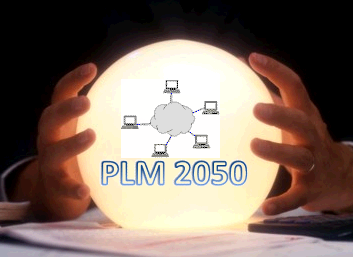
In one of my old 2008 posts, PLM in 2050, I predicted that PLM would no longer exist at that time, as companies would no longer focus on individual systems, but on full coverage of business processes, through integrated  and federated data sources. I see this trend coming from two major PLM vendors (Dassault Systems / Siemens) with their 3DLive / HD PLM concepts. These concepts are trying to provide a unique user experience, where in an intuitive manner, a user in a specific role can obtain relevant data, analyze and simulate it in a virtual environment. Here the PLM vendors are really taking the lead to become the main platform for product development processes. Will the name PLM disappear at a certain stage ?

Additional you see startups and also some of the major PLM vendors experimenting with community concepts, social media. Moving towards a “Facebook’- like environment for product development and collaboration processes. The idea behind this direction is partly driven by the fact that the old generation of workforce slowly moves towards retirement where the new generation is not motivated to follow up the same working processes and procedures. The old generation moved from paper-based, manual processes to terminal-like screens, email and excel sheets.

If the new generation of employees will benefit from Facebook like environments is the question. Product development and collaboration requires a lot of boring data entry, even if we have a unique user experience. In addition, I was reading a preview of some research done with American and Dutch students, stating that study results from those students active on Facebook are significant lower as the result of student not active on Facebook, although they spend the same time on internet. I haven’t found the original source – here is a Dutch link. Curious to learn who will develop and bring better products to the market in the future with modern social PLM ?

ALM based on PLM is underestimated by owner /operators

alm_1 As I have been active the past two years in some Asset Lifecycle Management projects based on PLM, I also feel that many owner/operators do not have the understanding or guts to change the way they are working. Understandable from their point of view – as long as the errors and risks are acceptable, why change the way the whole industry is working ? 

In the nuclear industry you see the awareness growing. People know the risks of a nuclear disaster (after Chernobyl) and as we need more energy resources, nuclear energy with enhanced containment of risks is a natural way to go.

Perhaps after the BP disaster in the Mexican gulf, where apparently to the various reports, people were taking the wrong decisions due to inaccurate data or due to lack of information (could not be found in time) ALM based on PLM could be considered. However, investing even a few millions and changing the company’s way of working will never be approved by the BP management, as it will never happen a second time. It is all about being proactive (which is not a natural behavior) or being reactive and trying to control the damage. Here I have no predictions for 2050, I only believe that the proactive companies have a higher chance of survival – no matter which industry

But now my holiday activities call me back – for those not blessed by a holiday, here an overview of some of the relevant posts from the past year/

PLM and Organization

PLM, CM and ALM are not sexy

Mid Market deadlocks for PLM

How to get users excited for PLM ?

Some users do not like the single version of the truth

Implementing PLM requires a vision

What not to do in a bottom up PLM implementation ?

Where is the MBOM ?

Culture change in a mid-sized company a management responsibility !

PLM selection

PLM for mid-market a mission impossible ?

Who decides for PLM in a mid-market company ?

More on who decides for PLM in a mid-market company

The academic conclusion on who decides for PLM in a mid-market company

Can ERP vendors do PLM ?

Free PLM does not help companies

ALM

Asset Lifecycle Management based on PLM experiences

Asset Lifecycle Management using a PLM system

Tutorials

BOM for Dummies: BOM and CAD

BOM for Dummies: CTO

BOM for Dummies: BTO

BOM for Dummies: ETO

Connecting PLM and ERP – 1

Connecting PLM and ERP – 2

Connecting PLM and ERP – 3

and if these links are not enough – look at my favorite blogs:

http://plmtwine.com/

http://www.global-plm.com/

http://tech-clarity.com/clarityonplm/

observation This time it is hard to write my blog post. First of all, because tomorrow there will be the soccer final between Holland and Spain and as a Virtual Dutchman I still dream of a real cup for the Dutch team.

Beside that I had several discussions around PLM (Product Lifecycle Management), CM (Configuration Management) and ALM (Asset Lifecycle Management), where all insiders agreed that it is hard to explain and sell the value and best practices, because it is boring, because it is not sexy, etc, etc. 

So why am I still doing this job…..

Product Lifecycle Management (PLM)

3dlive

If you look at trade shows and major events of PLM vendors, the eye-catching hdplmstuff is 3D (CAD).  

Dassault Systemes introduced in 2006 3DLive as the 3D collaboration layer for all users with the capability to provide in a 3D manner (see what you mean) on-line role specific information, coming from different information sources.  Recently Siemens introduced their HD PLM, which as far as I understood, brings decision making capabilities (and fun) to the user.

Both user interfaces are focusing on providing information in a user-friendly and natural way – this is sexy to demonstrate, but a question never asked: “Where does the information come from ? “

And this is the boring but required part of PLM. Without data stored or connected to the PLM system, there is no way these sexy dashboards can provide the right information. The challenge for PLM systems will be to extract this information from various applications and from users to have the discipline to enter the needed data. 

Those software vendors, who find an invisible way to capture the required information hold the key to success. Will it be through a more social collaboration with a lot of fun, I am afraid not. The main issue is that the people who need to enter the data are not rewarded for doing it. It is downstream the organization, in the product lifecycle, that other people benefit from the complete information. And I even suspect in some organizations that there are people who do not want share data to assure being required in the organization – see also Some users do not like the single version of the truth

important

So who can reward these users and make them feel important. I believe this is a management job and no sexy (3D) environment will help here


Configuration Management (CM)

cmii Although it is considered a part of PLM, I added configuration management to my post as a separate bullet. Two weeks ago, I attended the second day of the  CMII Europe conference in Amsterdam. What I learned from this event was that the members of the CMII community are a group of enthusiastic people with somehow the same vision as PLM missionaries. 

Quoting the organization:  “CMII is about changing faster and documenting better. It is about accommodating change and keeping requirements clear, concise and valid.” 

And it was interesting to listen to speeches of the members. Like with PLM, everyone is convinced configuration management brings a lot of value to a company, they are also fighting for acknowledgement. Not sexy is what I learned here and also here those people who are responsible for data accuracy are not necessary the ones that benefit (the most).

Like PLM, but even more in Configuration Management, the cultural change should not be neglected. Companies are used to have a certain level of “configuration management”, often based on manual processes, not always as efficient, clear and understood and satisfactory for the management, till something happens due to incorrect information.

whyworry

  Of course the impact of an error differentiates per industry, a problem occurring due to wrong information for an  airplane is something different compared to a problem with a  sound system.

So the investment in configuration management pays of for complex products with critical behaviors and in countries where labor costs are high. It was interesting to learn that a CM maturity assessment showed that most companies score below average when it comes to management support and that they score above average when talking about the tools they have in place.

This demonstrates for me that also for configuration management, companies believe tools will implement the change without a continuous management push. I remember that in several PLM selection processes, prospects were asking for all kind of complex configuration management capabilities, like complex filtering of a product structure. Perhaps pushed by a competitor, as at the end it was never implemented 😦

Asset Lifecycle Management (ALM)

iaea In some previous posts,  I wrote about the benefits a PLM system can bring, when used as the core system for all asset related information. For nuclear plants, the IAEA (International Atomic Energy Agency) recommends to use configuration management best practices and I have met an owner/operator of a nuclear plant who recognized that a PLM system brings the right infrastructure, instead of SAP for example, which has more focus on operational data.

Also I had a meeting with another owner/operator, who was used to manage their asset data in a classical manner – documents in an as-built environment and changes of documents in various projects environments.

alm_1 When discussing the ALM best practices based on a PLM system, it was clear all the benefits it could bring, but also we realized that implementing these concepts would require a conceptual revolution. People would need to start thinking asset centric (with lifecycle behavior) instead of document centric with only revisions.

This kind of change requires a management vision, clear explanation of the benefits and a lot of attention for the user. Only then when these changes have been implemented, and data is available in a single repository, only then the fun and sexy environments become available for use.

Conclusion

PLM, CM and ALM are not sexy especially for the users who need to provide the data. But they provide the base for sexy applications where users have instant access to complete information to make the right decisions.  To get there a cultural change is required. The management needs to realize that the company changes into becoming proactive (avoiding errors) instead of being reactive  (trying to contain errors);  investing upfront and never be able to know what the losses would be in case an error occurred.

Not sexy, however the benefits this approach can bring allow employees and companies to continue to do their work for a secure future


And now … time to close as the final is near

spain_nl

observation The past month I have been very busy in a specific area where PLM is not yet as understood. Where PLM is a ‘must have’ for companies developing and manufacturing products, in the world of Asset Development and Asset Management not many companies are yet aware of the benefits PLM can bring. I wrote about it in one of my previous posts . I will share some of my experiences here and I must thank Stephen Porter for mentioning my blog in his review (and pushing me to write today –  even during the soccer championships in South Africa.

PLM benefits for Owner / Operators

I had discussions with a few owner/operators in the past week and as they all came from different industries (nuclear power generation / gas distribution / chemical processing), the details might differ but the values a PLM system can bring is for all of them the same.

When talking to Owner/Operators there are a few standard situations you observe:

  • The usage of a transactional system (MRO / ERP /SCADA) which is managing the operational and financial activities as job scheduling and purchasing. Main dominant players in this area are Maximo and SAP. Most Owner / Operators believe that this is the only main system they need.This looks very similar to what we see in the typical manufacturing companies. They all have an ERP system, and specially in the mid-market these companies are not looking for another major IT-system.

The problem with only the transactional system as the core system for the company is that there is no natural storage for product or process information that can change (the Intellectual Property of the company). Transactional systems use pointers to actual product or process information that they require. But where do they store other and historical information ?

  • The challenge to manage in parallel data for maintenance, rework and  innovation projects.  As the transactional system provides data for the operational environment, these companies are used to copy out data to their project environment avoiding not released project data can be seen in the operational environment. Another situation in relation to the engineering projects is that the owner / operator usually outsources the engineering work to EPC contractors and only coordinates the activities taking ownership of the data only after the new installation is under operation

scandinavia The two owner / operators I met in the past month were in two different stages. The first one had already many years of experience in maintaining the plant operational  and there they understood that the SAP PM module could not help them managing all required plant information around scheduled maintenance projects. Having already four different document management systems in place, the biggest challenge remained to coordinate the different baselines for the various projects scheduled for the annual maintenance. At the end they developed the concept where the PLM system is the owner of all plant related information, based on an Asset Structure in PLM and the PLM system ‘pushes’ the right information to SAP when the changes become operational.

italy_greece The other owner / operator was in the early stage. They were planning to have a process to become operational. Their understanding is that they need only one system that provides them all the time the actual information and if needed also all the history and approvals of each of the components. For sure the actual information needs to be managed in a transactional system  (SCADA) and for sure the SCADA vendor will say they can manage all information in their system. The pity for this owner / operator is that once they need historical data, or need to manage complex maintenance projects, they have lost the opportunity to do it right from the beginning.

No_roiOf course there is also a significant difference between the two owner operators.. The first owner / operator is situated in the Nordics, where the cost of labor is high. This means investing in IT-solutions to assure people are working with the right information brings a much faster ROI as compared to the owner / operator from South Europe. Sometime the labor cost can be one-third or less in comparison to the Nordic countries.

The owner/operator in the South Europe will initially not focus on efficiency and reducing labor costs. Due to the economical crisis unemployment is also high, so working with less people – improving by investments in IT are also not a popular measure.

But for all owner/operators a main consideration should be to remain competitive also over 10 – 20 years. Short term strategy   is not good for this type of companies

Conclusion so far:

PLM concepts are bringing competitive benefits for Owner/Operator, despite the fact that they do not develop products. The value is based on bringing a single version of the truth (no island systems) and working in a single environment for the as-built and the to-be environment, without data conversions or transitions

next post I will talk about Asset Development and the PLM benefits

alm_1

Translate

  1. Unknown's avatar
  2. Håkan Kårdén's avatar

    Jos, all interesting and relevant. There are additional elements to be mentioned and Ontologies seem to be one of the…

  3. Lewis Kennebrew's avatar

    Jos, as usual, you've provided a buffet of "food for thought". Where do you see AI being trained by a…

  4. Håkan Kårdén's avatar