
You are currently browsing the monthly archive for March 2026.
 Last week I listened to a Dutch podcast that gave me an unexpected inspiration. The podcast “Zo Simpel is het Niet” (“It is not that simple “in English) is a podcast with a focus on economic topics and trends, not at all about PLM, sometimes a little about the effects of digital transformation and AI is more and more mentioned.
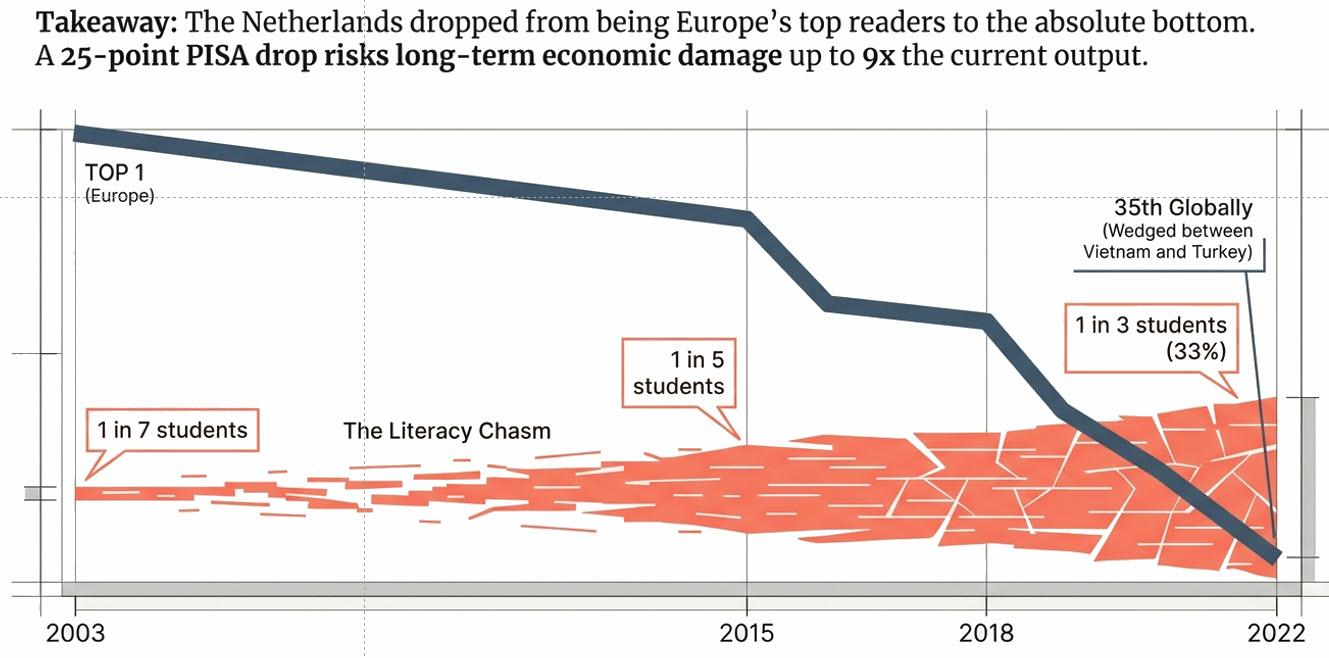
The episode I listened to was about the decline of literacy in the Netherlands. The conclusion is based on research discussed from the PISA test from the OECD. Learn more about the OECD and PISA test here on this Wiki page.
I asked Notebook LM to make an English slide deck from the podcast – You can download the deck HERE.
The conclusion: We are in a free fall in the Netherlands (image below) and likely in other countries too, because we are reading less, writing less, and consequently thinking less deeply.
Social media was identified as one of the root causes. Short-form content, the endless scroll, the dopamine loop of likes and shares — it is all rewiring how we process information – short-term, quick results without building deeper skills.
 And then the connection between social media and the drop in literacy and science skills hit me. We are doing the same thing at the moment with AI!
Third Way of Thinking
 In my posts, I sometimes refer to Daniel Kahneman’s book and his research: Thinking Fast and Slow, as this is for me a foundational theory for understanding human behavior.
Kahneman describes our brain as a combination of System 1, which is the fast, intuitive brain (low energy), and System 2, which is the slow, deliberative one (burns energy). As humans, we avoid using energy when thinking, although nowadays, outside our brains, we are hooked to fossil energy 😉.
Next, I read a research from Steven Shaw and Gideon Nave, from The Wharton School of the University of Pennsylvania, that indicated that AI is going to have an additional impact on our behavior as humanity.
Their paper Thinking—Fast, Slow, and Artificial: How AI is Reshaping Human Reasoning and the Rise of Cognitive Surrender introduces System 3 as artificial cognition. External, automated, data-driven reasoning that lives not in your brain but in the cloud.
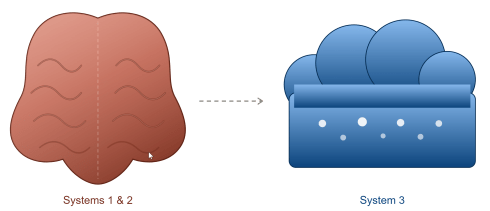
 Their central finding is something they call “cognitive surrender” – access to AI made people more confident, regardless of whether the AI was right or wrong. An enforcement of the Dunning-Kruger effect?
The most vulnerable are people with higher trust in AI, lower need for cognition, and lower fluid intelligence, who showed the greatest cognitive surrender. The least critical thinkers delegate most, and then feel most certain about the result.
Benedict Smith, my True Intelligence friend, pointed to the same pattern in his post: When the Graph talks back. Read it and think!

Both their conclusions made me even more worried, combined with the results of the Dutch literacy developments – are we all racing downhill?
 I believe our brain is a muscle. Like any muscle, it needs resistance to stay strong. You do not become a better cyclist by riding an eBike everywhere — the motor does the work, and your legs lose the real strength needed when you are without your bike. The same applies to cognitive effort.
We Have Been Here Before
 It is not the first time a transformative technology arrived with enormous promise and created a deeply unequal outcome. The Industrial Revolution reduced most workers to resources while a few became extraordinarily wealthy.
John D. Rockefeller (oil & railroad industries), Andrew Carnegie (steel industry), J.P. Morgan (financing the new industries) and Cornelius Vanderbilt (shipping and railroads) as examples.
These industry leaders did not care so much about humans, and it took roughly a hundred years — and the rise of labour unions — to begin correcting that imbalance.
 The AI revolution is moving much faster! And if history teaches us anything, it is that working more efficiently with new tools does not automatically raise your value. The more companies invest in AI solutions, the more pressure there will be to develop your individual skills.
Efficiency without insight is a commodity.
 My friend Helena Guitierrez wrote this weekend this supporting post: Preparing for AI Adoption
What does it mean for Product Lifecycle Management?
Purposefully, I wrote Product Lifecycle Management to focus on the strategy, and not an all-around capable PLM system, as PLM systems have never quite delivered on their original promise.
 The PLM vendors benefited from selling the dream, the consultants benefited from its complexity and the users, initially engineers and later more stakeholders in the product lifecycle, often suffered under rigid processes and complex systems. As the systems were designed to store information. User-friendlyness was not a priority.
Will AI, being layered on top of PLM and other enterprise systems, be the solution for these underperforming systems?
Oleg Shilovitsky believes in that, as you can read in his recent post: PLM’s OpenClaw Moment: How AI Agents Will Break Closed Systems
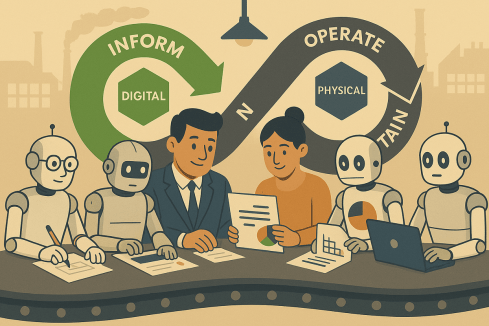
The risk is that we repeat the same pattern. AI will be positioned as the solution to problems actually caused by poor implementation and insufficient investment in the human side of change.
There is an interesting discussion ongoing about the future of PLM infrastructures, well described recently by Rainer Mewaldt in his post: What would a 𝗣𝗟𝗠 𝘀𝘆𝘀𝘁𝗲𝗺 look like if it were 𝗱𝗲𝘀𝗶𝗴𝗻𝗲𝗱 𝗳𝗼𝗿 𝗔𝗜 𝗳𝗿𝗼𝗺 𝘁𝗵𝗲 𝗴𝗿𝗼𝘂𝗻𝗱 𝘂𝗽?
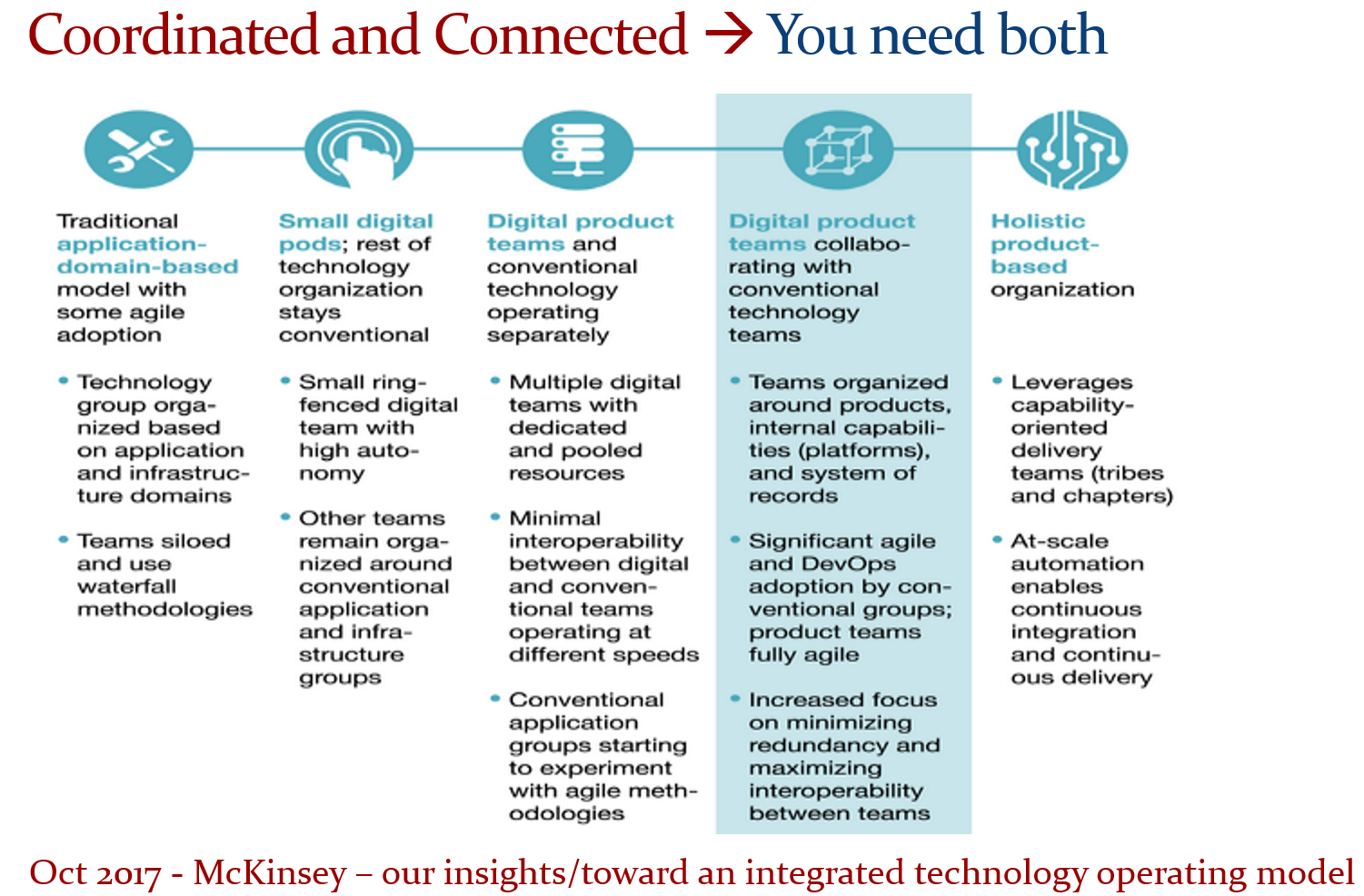
The principles are there, like 10 years ago, before AI became hyped, when we discussed digital transformation as moving from a coordinated infrastructure to a coordinated and connected infrastructure, with a mix of Systems of Record and Systems of Engagement.
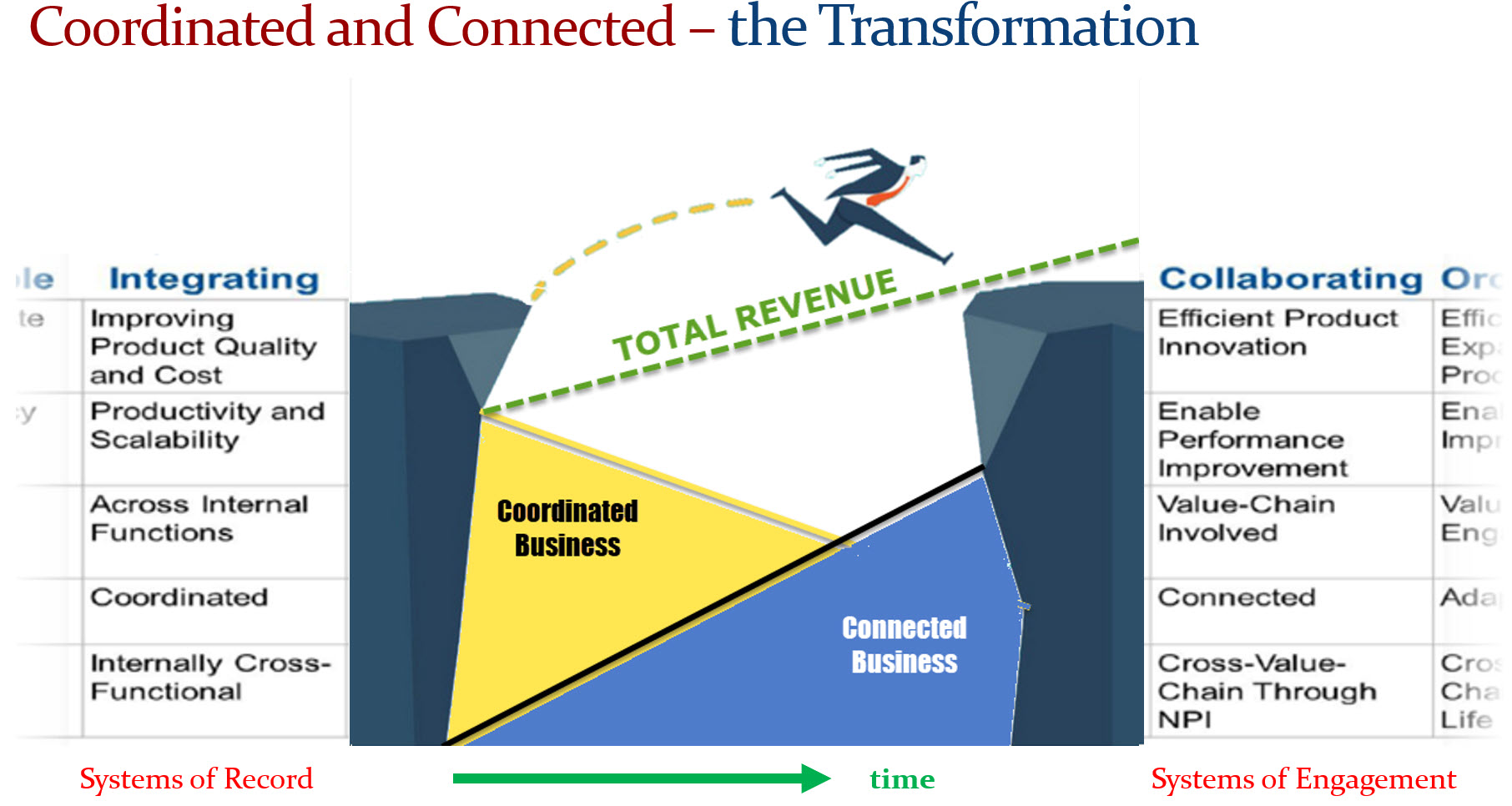
I have not seen much progress with the customers I have been working with in the past five to ten years. The change did not seriously happen due to the need for new ways of working, different people skills and organizational change.
Will it happen now with the AI-wave? A question Ilan Madjar also asked this weekend.
What should we – companies and individuals – actually do?
As an approach, the res earch from Wharton suggests that using rewards (incentives) and providing feedback can help people stay mentally engaged and avoid disengaging or losing motivation.
In other words, these strategies can combat the tendency to mentally “check out” or stop trying.
When participants were rewarded for accuracy and received immediate feedback, their override rates on faulty AI roughly doubled.
This observation means we should design AI-assisted workflows so that people remain accountable for outcomes and receive clear feedback when AI-assisted decisions go wrong. Work to do for startups and existing PLM vendors to develop the best combination of agents and content.
BUT: do not let the AI absorb the accountability while the human takes the credit – System 3!
Companies are in an uncomfortable situation. Before AI became the focus for improving businesses, the most heard statement was:
“Our employees are our assets – they create the value of our company,”
And this is one of the reasons that HR departments exist. Although not all HR departments are there for the employees – their role is to balance the HUMAN RESOURCES in a company – we are still talking about resources.
With AI, the new statement might be
“Our AI-supported employees are our assets, where part of the asset value comes from the AI tools used”.
This raises the question of who will remain as the AI-supported employee. We already see that entry-level jobs in any type of business get replaced by AI, creating stress on the job market. This, combined with the observed reduced mastery of deep-skills in math, reading and science, as described in the PISA research earlier shared in this post, puts a generation at risk.
Like the winners of the Industrial Revolution, the winners of the AI revolution do not care about humans – they care about profits.
 As individuals, we need to keep on training our brain-muscles without AI where the muscle matters. As the Dutch podcast mentioned: write your first draft before asking Claude to improve it, think through a problem before asking ChatGPT to solve it, and read a book of 100 pages.
In PLM, judgment and contextual reasoning are the core of what people need to do. You should protect the practice of doing that work yourself. Use AI to accelerate and refine, not to replace the effort that builds competence.
Invest in yourself to remain independent. Read broadly — actually read, not skim AI summaries. The people who will remain valuable in an AI-saturated world are not the ones who prompt best, but the ones who can evaluate, challenge, and contextualise what AI produces.
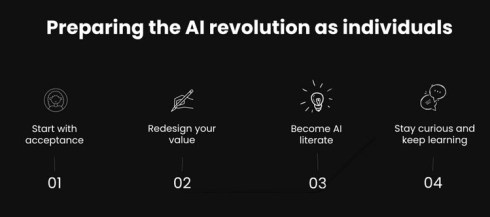
And with that, I want to come back to the post from Helena Guitierrez that I mentioned before, where she focused on what we can do as individuals.
 Helena is one of the founders of Share PLM, a company with the purpose: BUILDING A HUMAN-CENTERED DIGITAL FUTURE, as is written on their website. We both believe that in order to enjoy the AI revolution, we have to invest in ourselves. The above image illustrates steps to take- click on the image for the full post.
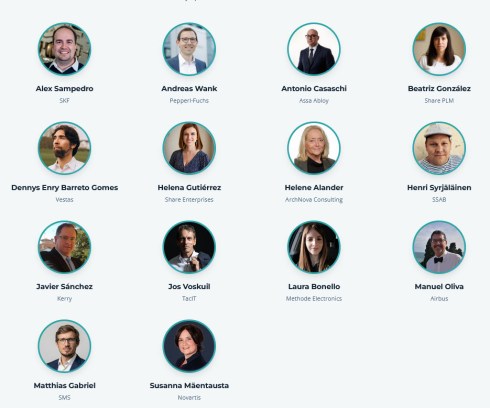
Talking about the human-centered digital future, have a look at the agenda of the upcoming Share PLM Summit on 19-20 May in Jerez de la Frontera (Spain) – our sessions and discussions will, of course, be based on PLM and AI experiences, with the focus on what it means for humans – it will not be a technology conference.
Conclusion
The Wharton researchers close with a question worth “What happens when our judgments are shaped by minds not our own?” Their answer so far: we become more confident, less accurate when the AI is wrong, and largely unaware of the difference – a big risk.
The challenge is not artificial intelligence. The challenge is whether we will remain genuinely intelligent in the presence of it – take care of yourself!
What do you think? I am looking forward to your comments and feedback.
 Do you ever think about where we’ll be ten years from now? I’ve noticed I ask that question more and more these days. Probably because I have the time, not being involved anymore in day-to-day business and alerts.
Interestingly, we tend to assume that long-term thinking is someone else’s job — left to business management and governments. Roadmaps, strategies, and vision stories have always been part of my work with companies.
And yet, the dominant reality right now is a dramatic focus on the short term — driven by populism on one side and quarterly profit targets on the other. The result is a collective inability to make decisions that matter for the next decade, let alone the next generation.
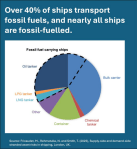 The current war in the Middle East has made something painfully visible that many of us already knew: we are dangerously dependent on fossil fuels.
Around 40 percent of global shipping is tied to fossil fuel supply chains. Countries that have not invested in energy independence are now feeling that vulnerability acutely.
The energy transition is not just an environmental ambition — it is a geopolitical necessity.
- China understood this years ago and has been investing accordingly.
- AI data centers are now one of the fastest-growing sources of electricity demand, and even in Texas, they are building wind and solar parks to keep that energy demand under their own control.
- And Cuba — pushed by American sanctions — has been forced to innovate into wind and solar energy, with Chinese support. These are not coincidences.
They are signals that working on an energy transition makes you less vulnerable!
A real “burning platform”!
While we see burning platforms in the Middle East, we are also in a classic “burning platform” situation — a phrase from the world of change management that captures a simple truth: people only change when staying the same becomes more costly than changing.
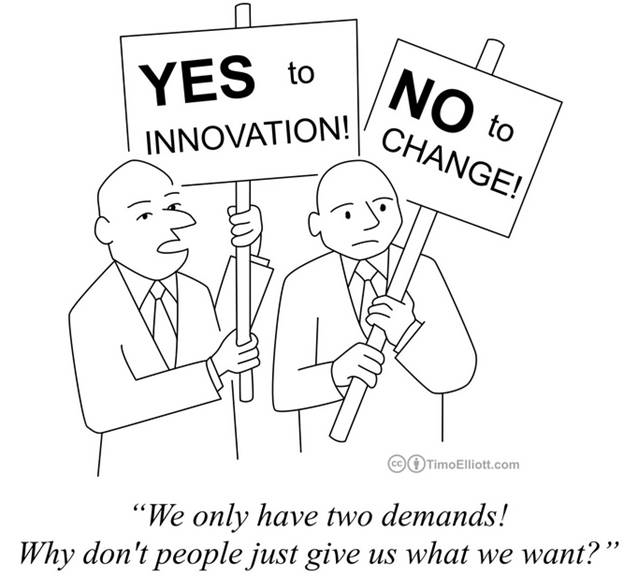
It’s a depressing observation about human nature — and one I keep coming back to whenever I see exciting possibilities on the horizon that we simply refuse to act on.
The fossil fuel dependency is one burning platform, willingly used at the moment by those countries and companies that are benefiting from this industry.
The downside is that the path towards a more circular economy — reducing waste, rethinking production, designing for longevity — is equally urgent and equally neglected.
This is precisely why the PLM Green Global Alliance (PGGA) exists — to keep these conversations alive and focus on the topics that support a sustainable future.

Four weeks ago, I launched a survey among our new LinkedIn group members. Due to a low response rate, I extended it to the whole group two weeks later.
The takeaway? Even within this community, the energy transition and sustainability don’t appear to feel like a burning platform — something demanding urgent action.
PLM Green Global Alliance survey
A quick overview of the responses — given the low number of replies, treat this as an indication rather than a statistically solid survey.
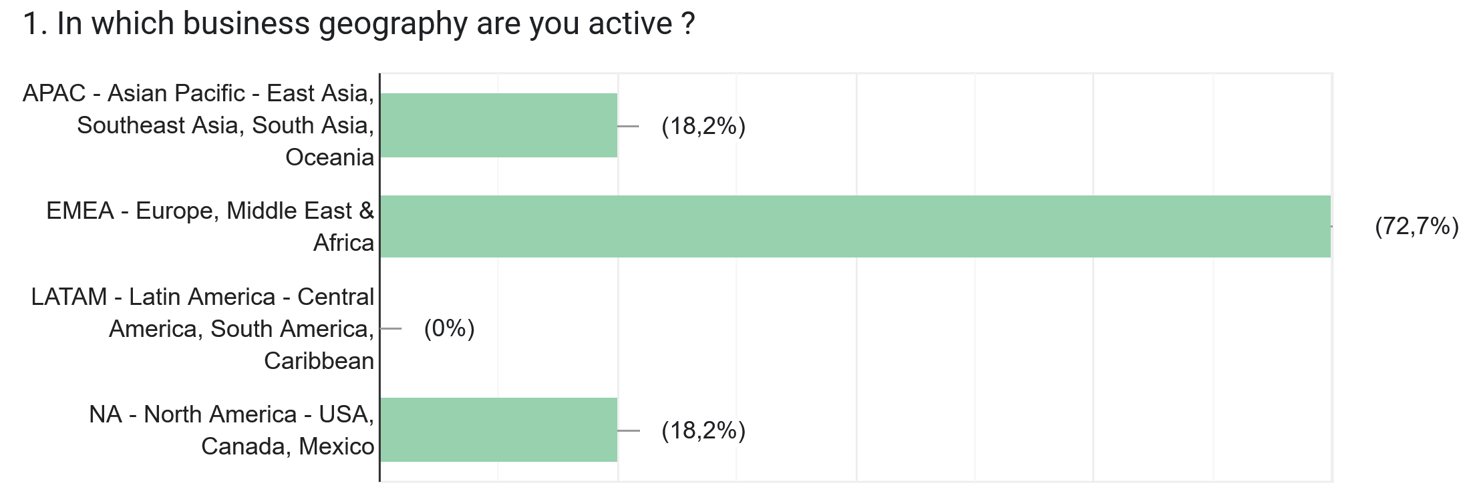
Although we launched the PGGA as a truly GLOBAL alliance — with core team members from both the US and Europe — the membership skews heavily toward the EMEA region. The political climate and culture of each region explain a lot about that.
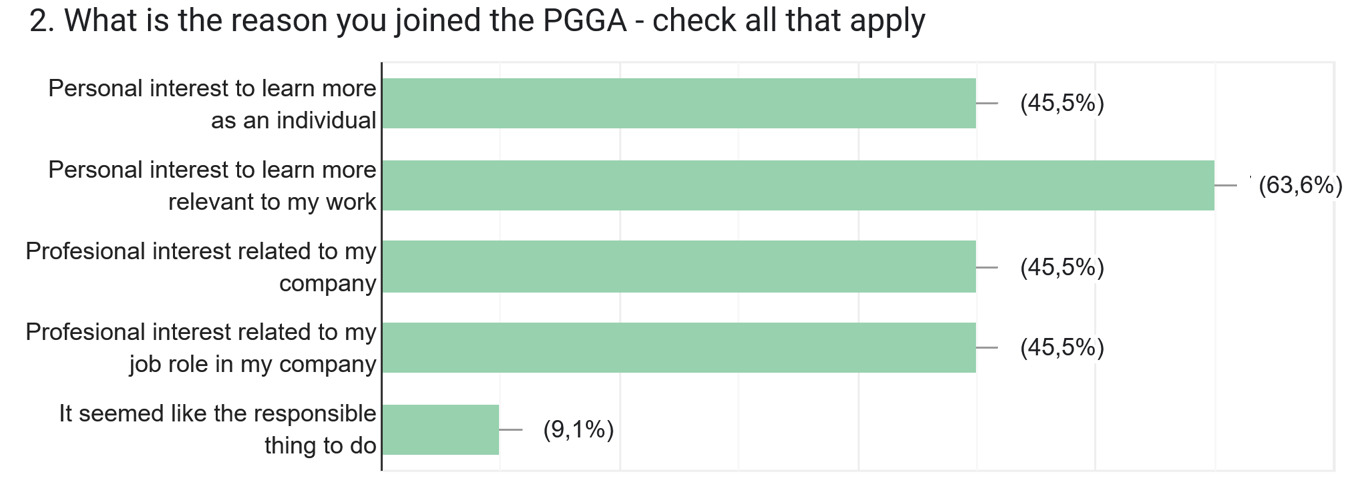
It’s encouraging to see that most people joined out of personal interest, with professional motivations also playing a role. That tells us the PGGA needs to keep its focus on sharing real experiences — not just theory.
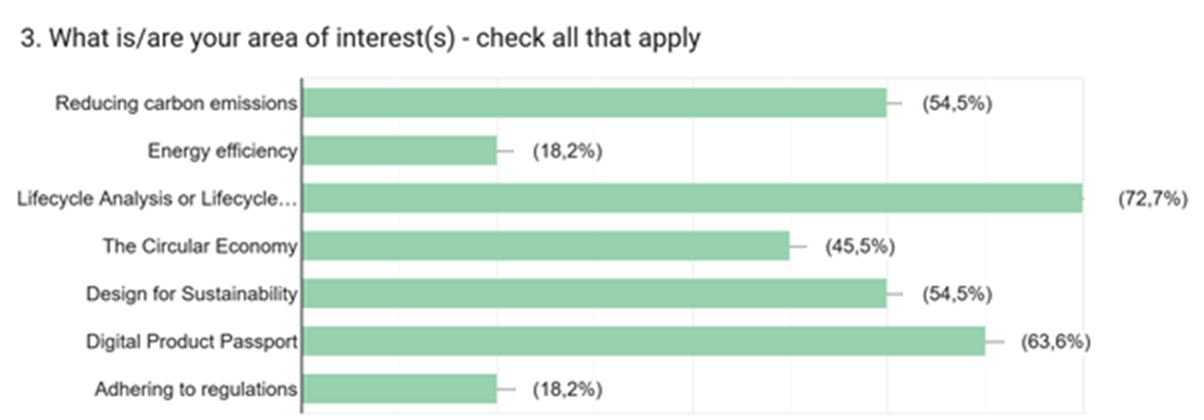
LCA (Life Cycle Analysis or Life Cycle Assessments) stands out as a strong area of interest — and the good news is that several of our core team members are actively working on it. Don’t hesitate to post your questions to the group.
On the Digital Product Passport (DPP), we’re planning an interview and/or webinar. The DPP is a great example of a topic that’s as much about digitizing product information as it is about methodology.
As you may have seen the post The show must go on – but will it be sustainable? last week. Erik Rieger and Matthew Sullivan, the Design for Sustainability team, are actively looking for more participants to help shape guidance in this area.
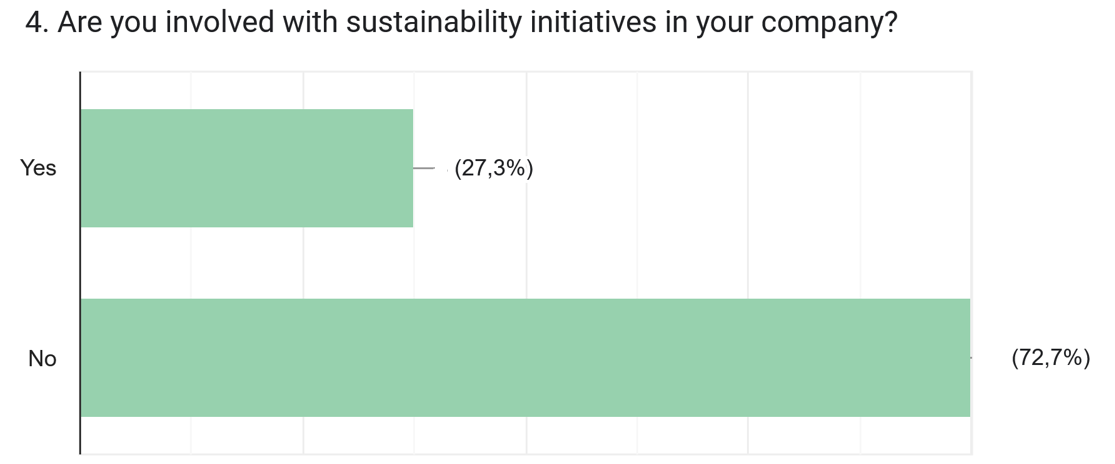
The answers illustrate that for most people, working on sustainability activities is (still) not part of their daily mission.

Question 5 allowed the participants to vote for topics of interest, and we can summarize the answers as follows:
- Understand what PLM solution providers are offering (we continue with our interviews)
- Discussing how to determine the carbon impact/LCA in the full scope, not only in the design scope and how various platforms contribute to it in the various lifecycle stages.
- Design for Sustainability guidance and info
- The role of PLM and AI in the context of sustainability
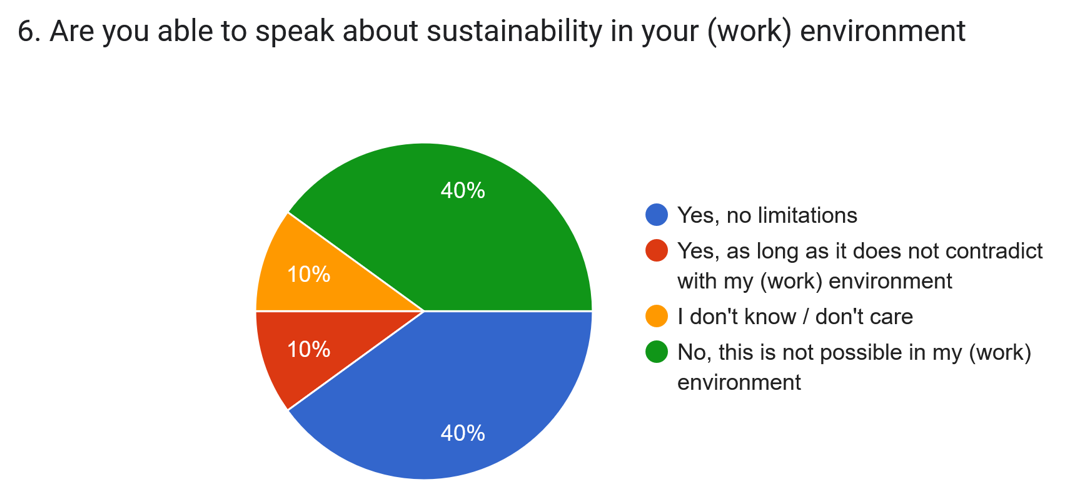
Since the survey was anonymous, we can’t link answers to specific regions. But we’re aware that in some countries, polarization has made certain topics off-limits — either by mandate or out of fear of a difficult working atmosphere.
The last two questions were about potential involvement for the PGGA from the people answering the survey. 3 people responded positively to support the PGGA in action.
 Within the PGGA, everyone is welcome to share their perspective — with respect for those who see it differently. It’s not about being right or wrong. It’s about the dialogue, and about finding paths forward to a future that’s sustainable not just for the planet, but for businesses and the people within them.
A low response or apathy?
The survey results are interesting on their own — but when you combine them with the low response rate, they say something more: even in communities that care, mobilizing action is hard.
 Are we too busy with the short term, or have we become apathetic to what is happening around us and have the feeling our efforts do not matter?
On that last point, I keep thinking of Hannah Arendt — the German-American historian and philosopher who lived from October 1906 till December 1975.
Her famous book, published after the Second World War, is The Origins of Totalitarianism (1951), an alarming book if you read it in today’s context.
My favorite quote from this book:

Written in the context of the Holocaust, it explained how the indifference of ordinary people allowed atrocities to unfold. Arendt warns against moral detachment. Staying informed and engaged takes effort — but it’s the effort that matters.
Today, she might write:
“Evil thrives on social media, and cannot exist without it.”
To conclude
So what can we do? The conclusion is simple, even if the execution is not directly possible: don’t just watch it burn. Every one of us has a space of influence — in our companies, in our communities, in our professional networks. The energy transition, the circular economy, the push for longer-term thinking — none of these will happen because a government issued a directive or a CEO signed a strategy paper. They happen because individuals within their sphere of influence decide to make them happen.
Where are you standing?
Respond with a “like” if you care!
Recently, I have been reading some interesting posts beyond all the technical discussions related to PLM and AI. Is PLM becoming obsolete? Are we heading to a new type of infrastructure based on MCP agents? Are these agents an example of new ways of collaboration?
Collaboration – it pops up everywhere!

Here is a quote from the article that triggered me:
The 𝐧𝐮𝐦𝐛𝐞𝐫 𝐨𝐧𝐞 𝐫𝐞𝐚𝐬𝐨𝐧 organizations deploy MBSE is not simulation or architecture development. It is 𝐞𝐧𝐡𝐚𝐧𝐜𝐞𝐝 𝐜𝐨𝐥𝐥𝐚𝐛𝐨𝐫𝐚𝐭𝐢𝐨𝐧 𝐚𝐧𝐝 𝐜𝐨𝐦𝐦𝐮𝐧𝐢𝐜𝐚𝐭𝐢𝐨𝐧 — at 67%. But here is the uncomfortable part.
Only 24% reported actually achieving collaboration as a business outcome. That is a 43-point gap between intent and result. Traceability is even worse — 48% deploy MBSE for it, 9% say they have realized it.
What if the problem is not that MBSE fails to deliver collaboration — but that most organizations 𝐧𝐞𝐯𝐞𝐫 𝐝𝐞𝐟𝐢𝐧𝐞 𝐰𝐡𝐚𝐭 𝐛𝐞𝐭𝐭𝐞𝐫 𝐜𝐨𝐥𝐥𝐚𝐛𝐨𝐫𝐚𝐭𝐢𝐨𝐧 𝐥𝐨𝐨𝐤𝐬 𝐥𝐢𝐤𝐞 in measurable terms?
Chad Jackson’s article aligns with many other discussions I had with companies related to PLM (and MBSE) – itinspired me to focus this time on collaboration.
How do we measure collaboration?
 My 2015 blog post has the same title: How do you measure collaboration? The post was written at a time when PLM collaboration had to compete with ERP execution stories. Often, engineering collaboration was considered an inefficient process to be fixed in the future, according to some ERP vendors.
 ERP always had a strong voice at the management level—boxes on an org chart, reporting lines, clear ownership and KPIs flowing upward. You could see how the company was performing.
From the management side, accountability flows downward. The architecture of the organization mirrors the architecture of the product, and the architecture of the product mirrors the architecture of the organization.
We have known this for decades; it is Conway’s Law. Yet we are still surprised when silos emerge exactly where we designed them.
The Management Dilemma
 In many of my engagements, the company’s management often struggles to understand the value of collaboration because there is no direct line between collaboration and immediate performance. Revenue can be measured. Cycle times can be measured. Defects can be measured. Even employee turnover can be measured.
But collaboration? What is the KPI?
It is a fair question. If something cannot be quantified, it becomes subjective and depends on gut feelings. And if it cannot be tied directly to quarterly results, it often becomes optional.
 The problem is not that collaboration has no impact on performance – look at the introduction of email in companies. Did your company make a business case for that?
Still, it improved collaboration a lot, and sometimes it became a burden with all the CC-messages and epistles exchanged.
Collaboration has an impact, deeply and systematically. But its impact is indirect, delayed, and distributed. It reduces friction, can improve shared understanding and prevent expensive rework.
 The return on investment on collaboration is real, but it does not show up as a clean, linear metric.
For a hierarchical and linearly structured organization, horizontal collaboration is often hard to “sell.”
Back to Conway’s Law
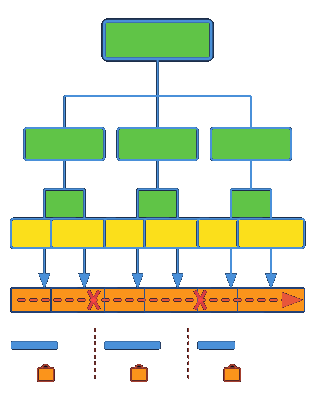 Organizational structure shapes communication patterns. Communication patterns shape systems.
If your organization is vertical, your product will be vertical. If your incentives are local, your decisions will be local. If your teams are isolated, your solutions will be fragmented.
You cannot expect horizontal behavior from a vertically optimized structure without friction.
Disconnected collaboration initiatives fail because they try to overlay horizontal tools on top of vertical incentives.
Attempts like a new collaboration platform or using shared workspace technology to incentivize collaboration are examples of this approach.
But the underlying structure remains untouched. People are still measured on local performance. Budgets are still allocated per department. Promotions still reward vertical success.
First question to ask in your company: Who is responsible for your PLM/collaboration infrastructure for non-transactional information?
Most likely, it is in the IT or Engineering silo, rarely on a higher organizational level.
And then we are surprised when collaboration stalls?
The Myth of the Tool
Whenever collaboration becomes a pain, people look for IT tools as a cure.
 “We need better platforms.”
“We need integrated systems.”
and now:
“We need AI – the AI agents will do the collaboration for us.”
Tools matter, but they are amplifiers. They amplify existing behavior. They do not create it. While finalizing this article, I saw this post from Dr. Sebastian Wernicke coming in, containing this quote:
Agents are software. Maturity is culture. And culture, inconveniently, doesn’t come with an install package.
If trust is low, a collaboration platform becomes a battlefield. If incentives are misaligned, shared dashboards become weapons. If fear dominates, transparency becomes a threat.
Collaboration is not a software problem. It is a human problem. Which brings us to something that is rarely discussed in boardrooms: the intrinsic motivation of its employees.
The Limbic Brain Is Always There
Beneath the rational layer of strategy and planning sits something older: the limbic system. The part of us that cares about belonging, safety, recognition, autonomy, and purpose.
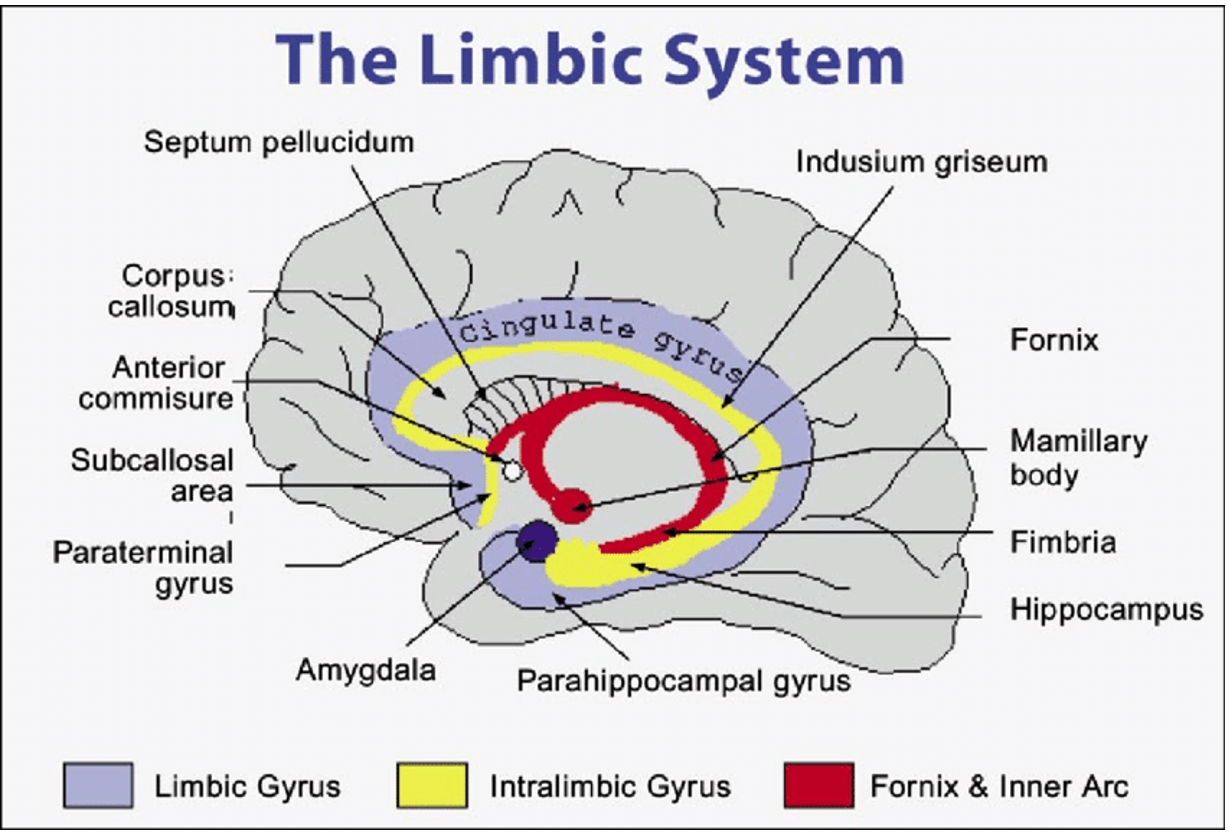
Collaboration thrives when the limbic brain’s needs are met. It collapses when they are threatened.
- If people feel unsafe, they protect information!
- If they feel undervalued, they withdraw effort!
- If they feel controlled, they resist alignment!
You cannot mandate collaboration if the emotional system of the organization is defensive.
The question is not “How do we force collaboration?”
The question is “How do we create conditions where collaboration feels natural?”
And that requires leaders to connect to the human, not just to the role or an artificial intelligence solution. They should be inspired by this iconic image from Share PLM:
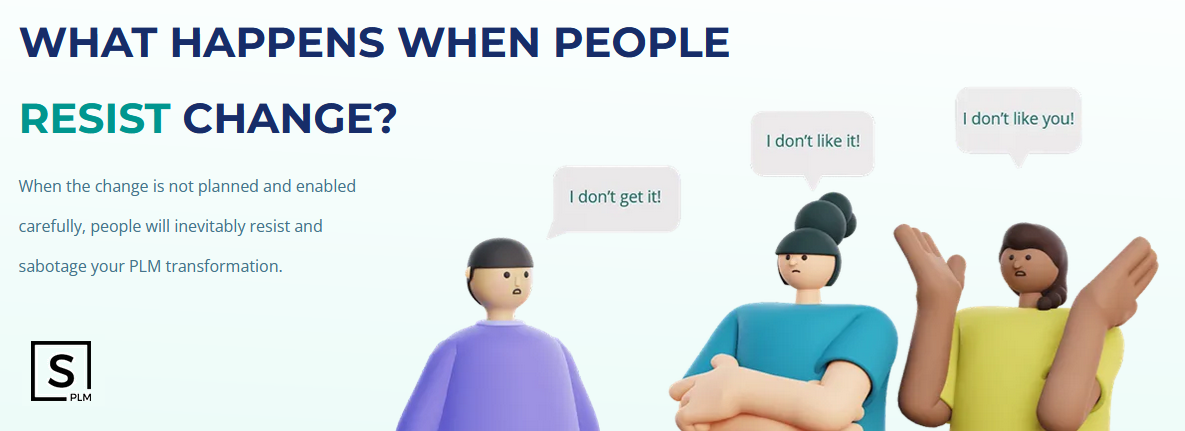
Besides a difficult-to-quantify ROI, there is another reason why collaboration struggles to gain executive traction: it rarely creates immediate success.
It prevents future failure, and we humans in general do not prioritize prevention, thinking of our environmental, financial and potential even health behavior. Where prevention has the lowest cost, most of the time, fixing the damage lies in our nature.
 For companies, it is easier to celebrate the hero who fixes a late-stage integration disaster than the quiet team that prevented it months earlier through cross-functional dialogue.
For me, the firefighters are the biggest challenge to successfully implementing a PLM infrastructure. The image to the left comes from a 2014 presentation when discussing potential resistance to a successful PLM implementation.
In vertical systems, firefighting is visible. Prevention is silent and therefore collaboration activities feel like a cost center rather than a strategic lever.
Where to Push, Where to Invest?
 If you cannot directly measure collaboration, where should you push? Not in tools alone, slogans or one-off workshops. Invest in shared experiences.
When people meet outside their vertical silos, something subtle shifts. They see faces instead of functions. They understand constraints instead of assuming incompetence. They replace narratives with conversations.
 Note: shared experiences are not the same as planned online webmeetings that became popular during and after COVID. They have a rigid regime of collaboration enforcement, back-to-back in many companies, most of the time lacking the typical “coffee machine” experiences.
Also, when looking at events where people share experiences, there is a difference between a traditional vertical PLM/CM/IT/ERP conference where specialists focus on one discipline and on the other side, a human-centric conference, where humans share their experiences in an organization.
The Share PLM Summit in May last year was an eye-opener for me. Starting from the human perspective brought a lot of energy and willingness to discuss various insights – collaboration at its best.
Events, summits, workshops—when done well—create human connection. They remind participants that behind every deliverable sits a person trying to do meaningful work.
The focus on the human perspective is not soft. It is strategic because collaboration is not primarily about information exchange. It is about relationship quality and trust.
The Real Question
 The question is not whether collaboration is valuable. The question is whether we are willing to adjust our vertical incentives to make it possible.
Because collaboration is not free, it requires time. It requires emotional energy. It requires psychological safety. It sometimes requires giving up local control for global benefit.
In systems terms, it requires shifting from local optimization to whole-system optimization.
That is uncomfortable.
But if our products are complex, interconnected, and rapidly evolving—as most are today—then vertical thinking alone is no longer sufficient. The world has become horizontal, even if our org charts have not.
And perhaps the real challenge is not how to measure collaboration, but how to design organizations where collaboration is no longer something we need to sell at all. An article from McKinsey might inspire you here for this transition – for me, it did: Toward an integrated technology operating model.
Beyond AI
While everyone talks and writes about AI, I do not believe AI will solve the collaboration issue. For sure, AI collaboration with agents will increase personal and organizational effectiveness, but it never touches our limbic brain, the irreplaceable part that makes us typical humans and unique.
There will always be a need for that, unless we become numb and addicted to the AI environments. There are various studies popping up on how AI “untrains” our brain muscles, reduces patience and deep thinking. Finding a new human balance is crucial.
Conclusion
Triggered by Chad Jackson’s post about MBSE and collaboration, I took the time to deep-dive into the aspects of collaboration in the PLM domain. How do you manage collaboration?
Come and share your experiences at the upcoming Share PLM 2026 summit from 19-20 May in Jerez. The title of my keynote: Are Humans Still Resources? Agentic AI and the Future of Work and PLM.
 Jos Voskuil's Weblog
Interesting reflection, Jos. In my experience, the situation you describe is very recognizable. At the company where I work, sustainability…
[…] (The following post from PLM Green Global Alliance cofounder Jos Voskuil first appeared in his European PLM-focused blog HERE.) […]
[…] recent discussions in the PLM ecosystem, including PSC Transition Technologies (EcoPLM), CIMPA PLM services (LCA), and the Design for…
Jos, all interesting and relevant. There are additional elements to be mentioned and Ontologies seem to be one of the…
Jos, as usual, you've provided a buffet of "food for thought". Where do you see AI being trained by a…