
You are currently browsing the category archive for the ‘Digital Enterprise’ category.
 In my previous post, I talked about the unstoppable trend towards digital information and knowledge based on data becoming the new business paradigm.
Building knowledge based on information extracted from data, instead of working with documents and people, who need to manipulate these documents.
Moreover, the reasons to move towards a digital data-oriented approach are the immense business benefits it can bring to an organization. Having online visibility on information in context of other information from different stakeholders allows companies to be more proactive.
A proactive company will react faster to the market or customer. This will reduce waste and resources (materials / people) and therefore in the end be more competitive. This is all described in my first post, with relevant links to various global references.
In this post, I want to describe in an example what the differences are between a document-oriented and a data-oriented approach and how it affects people and business. This might give you an impression of the expected business benefits.
The ultimate goal behind a data-oriented approach is to have a single version of the truth for a product, project or plant. This can be realized by treating information as data elements in various connected database, where on demand reports or dashboards can be created based on actual information, instead of documents generated by duplicating data in new systems and locations. Digital data will provide paperless processes accessible almost anywhere around the world.
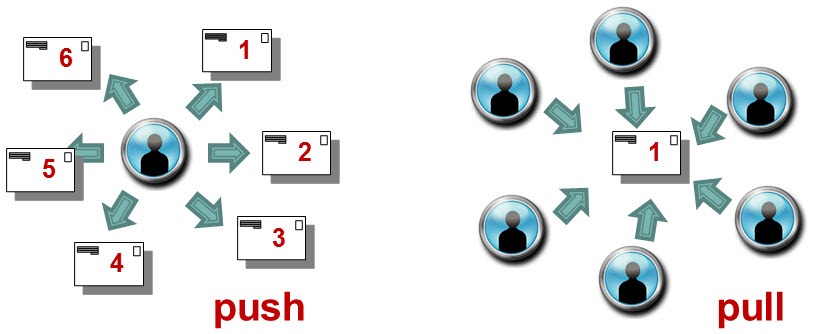
As an example, I will explain the difference between document-centric and data-centric when dealing with specifications.
The specification
Everyone knows the challenge with specifications. Most of the time in printed documents describing how a product or service should work from the client point of view. There are two principles behind specifications:
- Complexity. The more complex product or service is, the bigger chance that specifications are not complete or hundred percent understood, leading to an iterative change process. The challenge here is to manage the change and the consistency of the full specifications.
- Industry and margins. In a repetitive business, for example, the automotive or other mass consumer products, products can be quiet complex and once sold hard to maintain and repair. In a competitive business, an error in the field can consume a lot of the expected profit. In the construction industry, where most of the time single projects are executed by a chain of disciplines, the industry (still) accepts the costs overrun and the high costs of fixing issues in the field, instead of being clearer upfront during the design and planning.
Let’s stay with the example in the middle of complexity and industry volume. In color the various stages of the process.
The document based specification – 1
 When the document based specification arrives, the company has to get an understanding of the content. The project manager has a first read through the document (100+ pages) and decides to send the document (it is a pdf) to sales, engineering, legal and planning. Engineering decides to distribute the document internally to mechanical, electrical and quality (for compliance).
The project manager stresses everyone on a weekly base to deliver the responses and tries to understand if the answers will come in time. There are some meetings needed with the stakeholders as the whole understanding needs to be consistent. Based on several iterations a response is compiled.
The data-oriented approach – 1
 When the document based specification arrives, the project leader first stores the document as a reference in the PLM system and extracts all the customer requirements as data elements in the system. While extracting the requirements, the projects manager groups them into digital folders (functional / non-functional, contractual, regulations, etc.) and assigns them to the relevant stakeholders, who get notified by the system. Each of the persons assigned, again the engineering manager has distributed the discipline specific requirements internally.
The project manager watches the progress of the requirements analyses which are around a virtual model. There is still a need for meetings with the stakeholders to agree on the solution approach. Everything is stored and visible online in the system. This visibility has helped some of the stakeholders to be better-aligned upfront. In the end, the response is generated and converted to the customer’s format.
Not much benefit for step 1
 If you compare the two approaches, there is mainly one person happy: the project manager. Instead of spending time to collect the status of all information, direct visibility on the response helps him/her to prioritize of focus where attention is needed, instead of discovering it on a weekly base.
There is some small benefit from the virtual model as other stakeholders can have a better understanding of the actual progress.
However, for the rest, all stakeholders are complaining. It is difficult to work. (Fl)Excel was much easier. Moreover, thinking about a virtual model takes time as we are not used working in this way. Typically something for aerospace you might think.
And now the benefits come – step 2
The customer has placed the order, and the project has started. The design has started, and people start to discover discrepancies or ambiguous demands that need to be negotiated with the customer. Is it part of the project and if not, should it become part of the project and at which costs (for whom)
The document oriented approach – 2
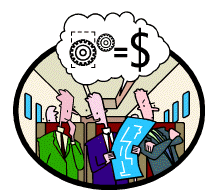 Several engineers are now discussing with the counterparts at the customer the detailed interpretation of the requirements, either through face-to-face meetings or emails. Changes are collected and sent to the project manager, who tries to understand what has changed and how to merge it in an on-going specification document. To avoid many revisions, he/she tries to update the document on a bi-weekly base, send it to the internal stakeholders for review and with their feedback generates a specification document for the customer that supposed to cover the latest agreements.
Unfortunate not all changes have reached the document as some of the stakeholders were busy and forgot to include some of the changes agreed with the customer as they were in a lost email. Also, a previous change of a requirement was overwritten as an update from quality used the old data. Finally, some design solutions were changed, which raised the costs. And not sure if the product with all its changes will be compliant after delivery. However, luckily nobody noticed so far, not even the customer
The data-oriented approach – 2
 Thanks to the virtual model and the relations between all the requirements, any change in a requirement gets notified in the system. When a requirement is further clarified, it is updated in the system. When a requirement needs to be changed, it is clear what the impact of this change is. A change workflow assures that decisions are made visible and approved. Potentially changes that lead to more work were quoted to the customer for acceptance. Luckily the compliancy engineer noted that the change of materials used would lead to a compliancy issue. On a bi-weekly base, the project manager generates an agreed specification for the customer based on the data in the system.
Benefits are growing.
 The project manager remains the happiest person and is even happier as less discussion is needed about who changed what and why. Alternatively, discussions about changes that should exist and cannot be found. The time saved by the project manager could be used to collaborate even better with the teams (without annoying them) or perhaps a second project to manage in parallel.
Other stakeholders start to enjoy the data-oriented approach too. Less ambiguity on their side too, fewer iterations because changes were not apparent. As all information is related to the virtual model online, the actual status is clear when making a decision. Less fixing afterwards and luckily still project meeting between the stakeholders to synchronize. The PLM system does not eliminate communication; it provides a reliable baseline of the truth. No need (and option) to look in your archives.
At this stage, benefits start to become clear. Fewer iterations and better decisions will have an impact on the costs and project stress. Still a complaint from the engineers might be that they need to do too much upfront thinking although some years later they might discover that this will be their main job. Fixing issues from the past have diminished.
And then the ultimate benefits
Now the project has reached the physical state. It is manufactured or under commissioning.
The document oriented approach – 3
 In the document oriented approach, many issues might pop-up because they have not been considered in the early phase, or they got lost during document exchanges. Does the product work as specified? Is the building certified as specified?
The customer is king and for manufacturing companies this might lead to product recalls or launch delays. In the construction world, people in the field, will fix the issues by using skilled resources and creating a waste of materials and/or resources.
Data handover to the owner is a nightmare for a the project-centric delivery. Several people have been searching for documents, specifications and emails to build and compile the required documents for handover.
The data-oriented approach – 3
 In the data-centric approach, the behavior of the physical product works as expected as most of the issues have been solved in the virtual model. When testing the product it works as specified as the specifying requirements have always been linked to the product. Moreover, they have been agreed and approved by the relevant stakeholders. Where relevant, the customer has paid for the extra work specified.
The handover process was not so stressful as before with the document-oriented approach. As the required information was known and specified upfront related to the requirements, the maturity process of the virtual model assured this data exists in the system. Now the as-built information matches the as-specified information. What a relief.
Conclusion
 It is clear that the significant benefits can be found in step 3. I wrote the comparison in an extreme manner, knowing that reality lies in the middle. Excellent people can comprehend and fix more upfront because of their experience. Building the ultimate virtual model is not yet an easy achievement either.
The savings in materials and required resources are significant in a data-oriented approach. The time savings and the quality enhancements might change your company into a market-leader. The cost savings achieved through a pro-active approach will make your margin growing (unless competition does the same) and enable you to innovate.
One final remark on business change
 If business change could be achieved by selecting the right tool or system without a business change, you will never get a competitive advantage. As your competitor can buy these too.
However, if you change to a data-centric approach, it will be a though change process and therefore once implemented you will leave competitors behind that keep on hanging on the past.
 My holidays are over. After reading and cycling a lot, it is time to focus again on business and future. Those of you who have followed my blog the past year must have noticed that I have been talking on a regular base about business moving to a data-oriented approach instead of a document / file-based approach. I wrote an introduction to this topic at the beginning of this year: Did you notice PLM has been changing?
It is part of a bigger picture, which some people might call the Second Machine Age, Industry 4.0, The Third Wave or even more disturbing The onrushing wave.
This year I have had many discussions around this topic with companies acting in various industries; manufacturing, construction, oil & gas, nuclear and general EPC-driven companies. There was some commonality in all these discussions:
- PLUS: Everyone believes it is a beautiful story and it makes sense
- MINUS: Almost nobody wants to act upon it as it is an enormous business change and to change the way a company works you need C-level understanding
- PLUS: Everyone thinks the concept is clear to them
- MINUS: Few understand what it means to work data-oriented and what the impact on their business would be
Therefore, what I will try to do in the upcoming blog posts (two-three-four ??) is to address the two negative observations and how to make them more precise.
What is data / information / knowledge?
 Data for me is a collection of small artifacts (numbers, characters, lines, sound bits, …) which have no meaning at all. This could be bundled together as a book, a paper drawing, a letter but also bundled together as a digital format like an eBook, a CAD file, an email and even transmission bytes of a network / internet provider can be considered as data.
 Data becomes significant once provided in the context of each other or in the context of other data. At that time, we start calling it information. For that reason, a book or a drawing provides information as the data has been structured in such a manner to become meaningful. The data sent through the network cable only becomes information when it is filtered and stripped from the irrelevant parts.
 Information is used to make decisions based on knowledge. Knowledge is the interpretation of information, which combined in a particular way, helps us to make decisions. And the more decisions we make and the more information we have about the results of these decisions, either by us or other, it will increase our knowledge.
Data and big data
Now we have some feeling about data, information and knowledge. For academics, there is room to discuss and enhance the definition. I will leave it by this simple definition.
Big data is the term for all digital data that is too large to handle in a single data management system, but available and searchable through various technologies. Data can come from any source around the world as through the internet an infrastructure exists to filter and search for particular data.
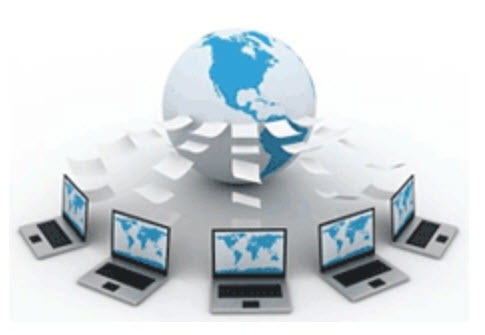 By analyzing and connecting the data coming from these various sources, you can generate information (placing the data in context) and build knowledge. As it is an IT-driven activity, this can be done in the background and give almost actual data to any person. This is a big difference with information handling in the old way, where people have to collect and connect manual the data.
The power of big data applies to many business areas. If you know how your customers are thinking and associating their needs to your products, you can make them better and more targeted to your potential market. Or, if you know how your products are behaving in the field during operation (Internet of Things) you can provide additional services, instant feedback and be more proactive. Plus the field data once analyzed provide actual knowledge helping you to make better products or offer more accurate services.
Wasn’t there big data before?
 Yes, before the big data era there was also a lot of information available. This information could be stored in “analogue” formats ( microfiche, paper, clay tablets, papyrus) or in digital formats, better known as files or collections of files (doc, pdf, CAD-files, ZIP….).
Note the difference. Here I am speaking about information as the data is contained in these formats.
You have to open or be in front of information container first, before seeing the data. In the digital world, this is often called document management, content management. The challenge of these information containers is that you need to change the whole container version once you modify one single piece of data inside it. And each information container holds duplicated information from a data element. Therefore, it is hard to manage a “single version of the truth” approach.
And here comes the data-oriented approach
The future is about storing all these pieces of data inside connected data environments, instead of storing a lot of data inside a (versioned) information container (a file / a document).
Managing these data elements in the context of each other allow people to build information from any viewpoint – project oriented, product oriented, manufacturing oriented, service oriented, etc.
The data remains unique, therefore supporting much closer the single version of the truth approach. Personally I consider the single version of the truth as a utopia, however reducing the amount of duplicated data by having a data-oriented approach will bring a lot more efficiency.
In my next post, I will describe an example of a data-oriented approach and how it impacts business, both from the efficiency point of view and from the business transformation point of view. As the data-oriented approach can have immense benefits . However, they do not come easy. You will have to work different.
Some more details
An important point to discuss is that this data-oriented approach requires a dictionary, describing the primary data elements used in a certain industry. The example below demonstrates a high-level scheme for a plant engineering environment.

Data standards exist in almost any industry or they are emerging and crucial for the longevity and usage of the data. I will touch it briefly in one of the upcoming posts, however, for those interested in this topic in relation to PLM, I recommend attending the upcoming PDT Europe. If you look at the agenda there is a place to learn and discuss a lot about the future of PLM.
I hope to see you there.
Everyone wants to be a game changer and in reality almost no one is a game changer. Game changing is a popular term and personally I believe that in old Europe and probably also in the old US, we should have the courage and understanding changing the game in our industries.
Why ? Read the next analogy.
1974
With my Dutch roots and passion for soccer, I saw the first example of game changing happening in 1974 with soccer. The game where 22 players kick a ball from side to side, and the Germans win in the last minute.
 My passion and trauma started that year where the Dutch national team changed the soccer game tactics by introducing totaalvoetbal.
The Dutch team at that time coached by Rinus Michels and with star player Johan Cruyff played this in perfection.
Defenders could play as forwards and they other way around. Combined with the offside-trap; the Dutch team reached the finals of the world championship soccer both in 1974 and 1978. Of course losing the final in both situations to the home playing teams (Germany in 74 – Argentina in 78 with some help of the referee we believe)
This concept brought the Dutch team for several years at the top, as the changed tactics brought a competitive advantage. Other teams and players, not educated in the Dutch soccer school could not copy that concept so fast
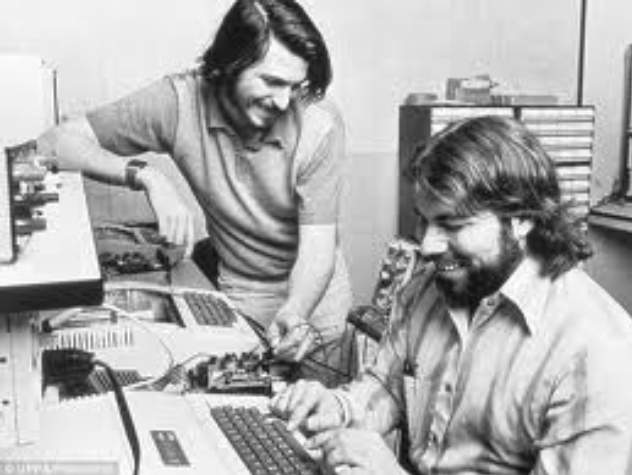
At the same time, there was a game changer for business upcoming in 1974, the PC.
On the picture, you see Steve Jobs and Steve Wozniak testing their Apple 1 design. The abbreviation IT was not common yet and the first mouse device and Intel 8008 processor were coming to the market.
This was disruptive innovation at that time, as we would realize 20 years later. The PC was a game changer for business.
2006
Johan Cruyff remained a game changer and when starting to coach and influence the Barcelona team, it was his playing concept tika-taka that brought the Spanish soccer team and the Barcelona team to the highest, unbeatable level in the world for the past 8 years
![clip_image002[6]](https://virtualdutchman.com/wp-content/uploads/2014/01/clip_image0026.gif "clip_image002[6]") Instead of having strong and tall players to force yourself to the goal, it was all about possession and control of the ball. As long as you have the ball the opponent cannot score. And if you all play very close together around the ball, there is never a big distance to pass when trying to recapture the ball.
Instead of having strong and tall players to force yourself to the goal, it was all about possession and control of the ball. As long as you have the ball the opponent cannot score. And if you all play very close together around the ball, there is never a big distance to pass when trying to recapture the ball.
This was a game changer, hard to copy overnight, till the past two years. Now other national teams and club teams have learned to use these tactics too, and the Spanish team and Barcelona are no longer lonely at the top.
Game changers have a competitive advantage as it takes time for the competition to master the new concept. And the larger the change, the bigger the impact on business.
Also, PLM was supposed to be a game changer in 2006. The term PLM became more and more accepted in business, but was PLM really changing the game ?
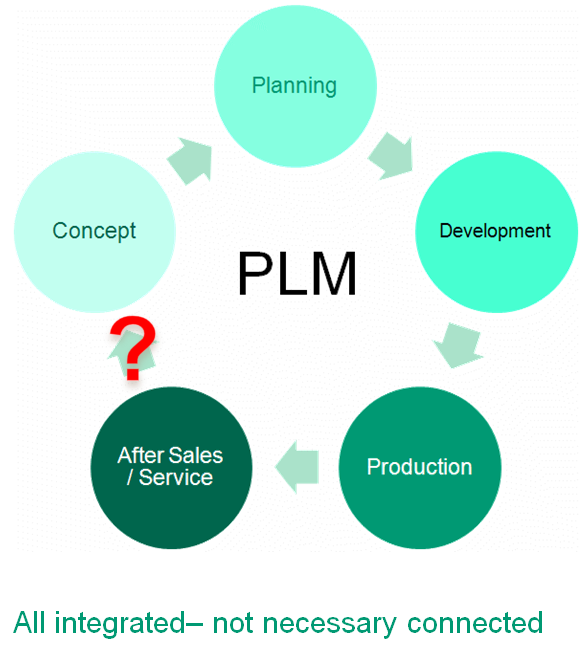 PLM at that time was connecting departments and disciplines in a digital manner with each other, no matter where they were around the globe. And since the information was stored in centralized places, databases and file sharing vaults, it created the illusion that everyone was working along the same sets of data.
The major successes of PLM in this approach are coming from efficiency through digitization of data exchange between departments and the digitization of processes. Already a significant step forward and bringing enough benefits to justify a PLM implementation.
Still I do not consider PLM in 2006 a real game changer. There was often no departmental or business change combined with it. If you look at the soccer analogy, the game change is all about a different behavior to reach the goal, it is not about better tools (or shoes).
The PLM picture shows the ideal 2006 picture, how each department forwards information to the next department. But where is PLM supporting after sales/services in 2006 ? And the connection between After Sales/Services and Concept is in most of the companies not formalized or existing. And exactly that connection should give the feedback from the market, from the field to deliver better products.
The real game changer starts when people learn and understand sharing data across the whole product or project lifecycle. The complexity is in the word sharing. There is a big difference between storing everything in a central place and sharing data so other people can find it and use it.
 People are not used to share data. We like to own data, and when we create or store data, we hate the overhead of making data sharable (understandable) or useful for others. As long as we know where it is, we believe our job is safe.
But our job is no longer safe as we see in the declining economies in Europe and the US. And the reason for that:
Data is changing the game
In the recent years the discussion about BI (Business Intelligence) and Big Data emerged. There is more and more digital information available. And it became impossible for companies to own all the data or even think about storing the data themselves and share it among their dispersed enterprises. Combined with the rise of cloud-based platforms, where data can be shared (theoretically) no matter where you are, no matter which device you are using, there is a huge potential to change the game.
It is a game changer as it is not about just installing the new tools and new software. There are two major mind shifts to make.
- It is about moving from documents towards data. This is an extreme slow process. Even if your company is 100 % digital, it might be that your customer, supplier still requires a printed and wet-signed document or drawing, as a legal confirmation for the transaction. Documents are comfortable containers to share, but they are killing for fast and accurate processing of the data that is inside them.
- It is about sharing and combining data. It does not make sense to dump data again in huge databases. The value only comes when the data is shared between disciplines and partners. For example, a part definition can have hundreds of attributes, where some are created by engineering, other attributes created by purchasing and some other attributes directly come from the supplier. Do not fall in the ERP-trap that everything needs to be in one system and controlled by one organization.
 Because of the availability of data, the world has become global and more transparent for companies. And what you see here is that the traditional companies in Europe and the US struggle with that. Their current practices are not tuned towards a digital world, more towards the classical, departmental approach. To change this, you need to be a game changer, and I believe many CEOs know that they need to change the game.
The upcoming economies have two major benefits:
- Not so much legacy, therefore, building a digital enterprise for them is easier. They do not have to break down ivory towers and 150 years of proud ownership.
- The average cost of labor is lower than the costs in Europe and the US, therefore, even if they do not do it right at the first time; there is enough margin to spend more resources to meet the objectives.
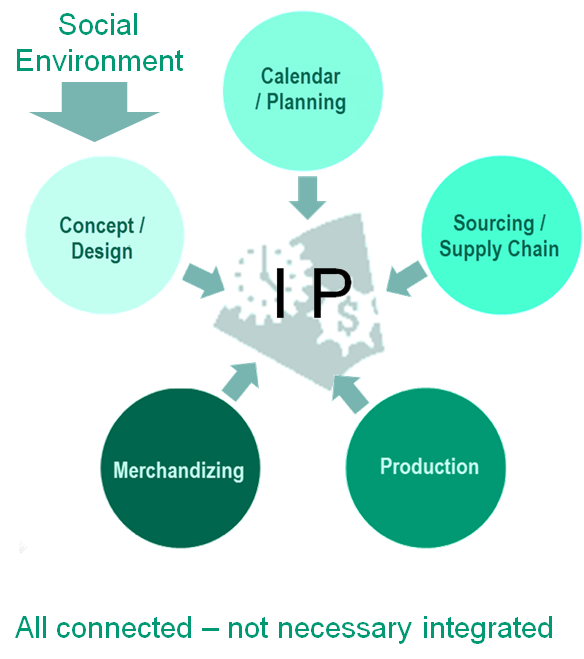 The diagram I showed in July during the PI Apparel conference was my interpretation of the future of PLM. However, if you analyze the diagram, you see that it is not a 100 % classical PLM scope anymore. It is also about social interaction, supplier execution and logistics. These areas are not classical PLM domains and therefore I mentioned in the past, the typical PLM system might dissolve in something bigger. It will be all about digital processes based on data coming for various sources, structured and unstructured. Will it still be PLM or will we call it different ?
The big consultancy firms are all addressing this topic – not necessary on the PLM level:
2012 Cap Gemini – The Digital advantage: …..
2013 Accenture – Dealing with digital technology’s disruptive impact on the workforce
2014 McKinsey – Why every leader should care about digitization and disruptive innovation
For CEOs it is important to understand that the new, upcoming generations are already thinking in data (generation Y and beyond). By nature, they are used to share data instead of owning data in many aspects. Making the transition to the future is, therefore, also a process of connecting and understanding the future generations. I wrote about it last year: Mixing past and future generations with a PLM sauce
This cannot be learned from an ivory tower. The easiest way is not to be worried by this trend and continue working as before, losing business and margin slowly year by year.
As in many businesses people are fired for making big mistakes, doing nothing unfortunate is most of the time not considered as a big mistake, although it is the biggest mistake.
 During the upcoming PI Conference in Berlin I will talk about this topic in more detail and look forward to meet and discuss this trend with those of you who can participate.
The soccer analogy stops here, as the data approach kills the the old game.
In soccer, the maximum remains 11 players on each side and one ball. In business, thanks to global connectivity, the amount of players and balls involved can be unlimited.
![clip_image002[8]](https://virtualdutchman.com/wp-content/uploads/2014/01/clip_image0028.gif "clip_image002[8]") A final observation:
A final observation:
In my younger days, I celebrated many soccer championships, still I am not famous as a soccer player.
Why ?
Because the leagues I was playing in, were always limited in scope: by age, local,regional, etc. Therefore it was easy to win in a certain scope and there are millions of soccer champions beside me. For business, however, there are almost no borders.
Global competition will require real champions to make it work !!!
 Jos Voskuil's Weblog
Hi Jos, Knowing your background in methodology and education, I wanted to share a longer article with you: “What is…
Interesting reflection, Jos. In my experience, the situation you describe is very recognizable. At the company where I work, sustainability…
[…] (The following post from PLM Green Global Alliance cofounder Jos Voskuil first appeared in his European PLM-focused blog HERE.) […]
[…] recent discussions in the PLM ecosystem, including PSC Transition Technologies (EcoPLM), CIMPA PLM services (LCA), and the Design for…
Jos, all interesting and relevant. There are additional elements to be mentioned and Ontologies seem to be one of the…