
You are currently browsing the tag archive for the ‘Product lifecycle management’ tag.
 In the past months, I have talked and working with various companies about the topic of Asset Lifecycle Management (ALM) based on a PLM system. Conceptual it is a very strong concept and so far only a few companies have implemented this approach, as PLM systems have not been used so much outside the classical engineering world.
Why using a PLM system ?
To use a PLM system for managing all asset related information ( asset parameters, inventory, documents, locations, lifecycle status) in a single system assures the owner / operator that a ‘single version of the truth’ starts to exist. See also one of my older posts about ALM to understand the details.
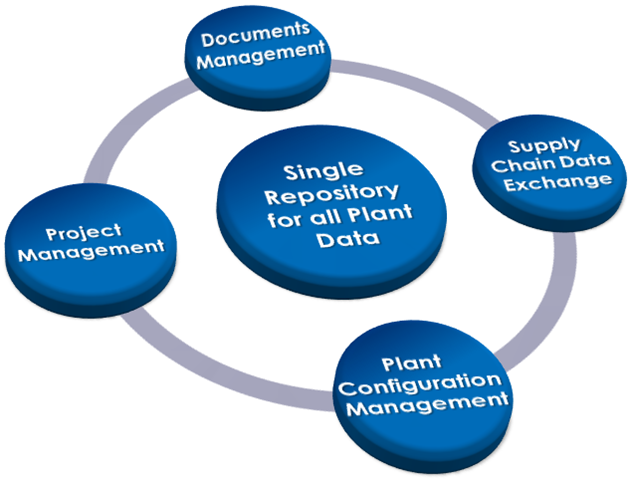 The beauty lies in the fact that this single version of the truth concept combines the world of as-built for operators and the world of as-defined / as-planned for preparing changes. Instead of individual silos the ALM system provides all information, of course filtered in such a way that a user only sees information related to the user’s role in the system.
The challenge for PLM vendors is to keep the implementation simple as PLM initially in its core industries was managing the complexity. Now the target is to keep it extremely simple and easy to used for the various user roles, meanwhile trying to stay away from heavy customizations to deliver the best Return on Investment.
Having a single version of the truth provides the company with a lot of benefits to enhance operations. Imagine you find information and from its status you know immediately if it is the latest version and if other versions exists. In the current owner / operator world often information is stored and duplicated in many different systems, and finding the information in one system does not mean that this is the right information. I am sure the upcoming event from IDC Manufacturing Insights will also contribute to these findings
It is clear that historically this situation has been created due to the non-intelligent interaction with the EPC contractors building or changing the plant. The EPC contractors use intelligent engineering software, like AVEVA , Bentley, Autodesk and others, but still during hand-over we provide dumb documents, paper based, tiff, PDF or some vendor specific formats which will become unreadable in the upcoming years. For long-term data security often considered the only way, as neutral standards like ISO-15926 still require additional vision and knowledge from the owner/operator to implement it.
Now back to the discussions…
In many discussions with potential customers the discussion often went into the same direction:
“How to get the management exited and motivated to invest into this vision ? The concept is excellent but applying it to our organization would lead to extra work and costs without immediate visibility of the benefits !”
This is an argument I partly discussed in one of my previous posts: PLM, CM and ALM not sexy. And this seems to be the major issue in western Europe and the US. Business is monitored and measured for the short term, maximum with a plan for the next 4 – 5 years. Nobody is rewarded for a long-term vision and when something severe happens, the current person in power will be to blame or to excuse himself.
 As a Dutch inhabitant, I am still proud of what our former Dutch government decided and did in the after the flooding in 1953. The Dutch invested a lot of money and brain power into securing inhabitants behind the coast line in a project called the Delta Works. This was an example of vision instead of share holder value. After the project has been finished in the eighties there was no risk for a severe flooding anymore and the lessons learned from that time, brought the Dutch the knowledge to support other nations at risk for flooding. I am happy that in 1953 the government was not in the mood to optimize their bonus ( an unknown word at that time)
Back to Asset Lifecycle Management ….
Using a PLM system for asset lifecycle management provides the economical benefits by less errors during execution (working on the right information), less human involvement in understanding the information ( lower labor costs) and lower total cost of ownership (less systems to maintain and connect by IT).
But these benefits are in no relation with risk containment. What happens if something goes really wrong ?
If you you are a nuclear plant owner, you are in global trouble. A chemical plant owner or oil company can be in regional trouble, but they also will suffer from the damage done to their brand name globally. Other types of plant owners might come away with less, depending on the damage they potential ‘embank’
The emerging visionaries
 For that reason, it is enlightening to see that some companies in Asia think different. There the management understands that they have the opportunity to build their future in a more clever way. Instead of copying the old way EPC contractors and plant owners work together, they start from a single version of the truth concept, pushing their contractors to work more integrated and clever with them. Instead of becoming boiling frogs, they are avoiding to fall into the same trap of many owners / operators in European and US based companies: “Why change the way we work, it does not seem to be so bad”
It requires a vision for the long term, something that will lead to extra benefits in the long term future: more efficient management of their assets, including risk containment and therefore being more competitive. If European and US-based companies want to be dominating in this industry they will need to show their vision too ..
Tomorrow I am attending the European Chemical Manufacturing Masters conference in Berlin, where I hope to learn and discuss this vision with the participants. I will keep you updated if i found the vision …..

 In many PLM communities, you see discussions and statements, that there will be a significant impact on the way we perform product lifecycle management using social media capabilities. In this post I will give my thoughts without going in-depth into certain products. At the bottom of this post you will find some links to posts which contributed to my opinion (the usual suspects).
PLM
Let’s first establish a baseline, why we want Product Lifecycle Management. In a general PLM is a vision, to bring products to the market faster, with better quality, being innovative and more customer focused.
 This vision can be implemented by best practices, like a standardized global staged New Product Introduction process, an enterprise wide Engineering Change Process, integration between different disciplines to work globally on a single repository for product definition and many more depending on your industry..
Two words pop up here: a single repository for product definition and global. This is where the technology comes in. Due to an improved world-wide (internet / WAN) connectivity, the capabilities are there to communicate efficient around a single repository for product definition and reliable, around the globe . The world became a global workplace and we are all connected. The improved connectivity enables PLM vendors (and others) to promote the “single version of the truth” concept.
Single Version of the truth
The idea behind it is that, if you store everything in a single database, you will always find the right information. This idea was developed at the time the world was not yet global and people were thinking more local.
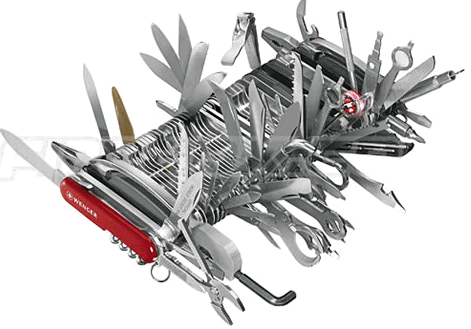 Some of the major ERP vendors also push for this concept. If you store all your data in their single platform, you are sure there is no redundancy of data, so you are always confident about the content is the message. This concept is often embraced by IT-departments, as the message having one single platform or one single system for all enterprise data sound like efficient. (I call it Swiss Knife thinking – it does everything – but would you use it for professional work ?)
As long as we are talking about explicit data and local activities, this concept seems to prove itself. However, a lot of informal activities exist around the product development process, and these activities are not managed.
In 2009, I participated in a COE Automotive panel, where one of the attendees in the audience stood up accused the PLM vendors of making their life so complex. He said:
“If we have an issue on the shop floor with production, we just gather the right people and solve the issue – no need to fill in screens of data that PLM or ERP systems require. And if there was a customer with a problem, we send a service engineer and the problem is fixed”
Of course if his company was a global company, it would be impossible to gather all around the shop floor, or to visit the customer site and solve it in a reasonable time.
 To avoid missing information, PLM and ERP systems try to collect as much as possible information in their systems, to have the best possible single version of the truth. Through immersive integrations and clever business logic, the user has to enter the minimum of information only once. However for the user still too much and way to complex they complain (and still not enough information is captured).
My conclusion so far: Single version of the truth is a concept to collect a majority of product related data, however missing all the informal communication, which is exchanged during talking (and later emailing and modern means of communication).
Extending the single version of the truth
The single version of the truth is an important implementation concept for PLM and it requires already a major challenge for companies. Imagine all information that you produce will be stored in such a manner that everyone authorized can see it and it is stored in such a manner that someone else also can understand the information (and not only you) . This is such an important change process often overlooked by IT-driven PLM implementations.
PLM Vendors focus on the tools to provide a platform to capture and share product data all around the product lifecycle. Not easy either as development is often based on generic functionality not optimized for a certain user role.
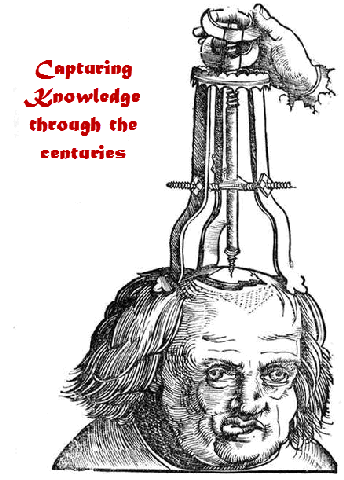
To understand the context of the shared data, you would like to hear or rewind the discussions people had at that time – as from these discussion a lot of implicit information can be retrieved. But no one wants to enter implicit information in a PLM system.
And then going global
Continuing with product development towards a global operation and addressing the communication around the product development is the next logic step. As it is much more difficult to communicate directly with everyone around the world, it is obvious that here social media come in the picture.
 Initial people were using email to exchange ideas with other people around the world. This created new problems – sometimes huge attachments of unmanaged data, sometimes important information in mail boxes of only a few people, relevant for many. Email is against the concept of a single version of the truth as people were creating there own non-pubic archives of product discussions. Before the WEB 2.0 revolution, PLM vendors provided email integrations or embedded email functionality in their PLM system. Still there a millions of email databases (Lotus Notes / Exchange) with product data, development data and more not visible for many.
The 2.0 change
A trend we see in social media is that your ‘old’ email system becomes more a notification system, that you got a direct message through one of your social platforms (RSS feeds, LinkedIn, Facebook, Blog, etc). Of course, if you are connected to all these platforms on-line all the time, you do not need a notification system anymore and you are connected to whom you want and when you want – a little bit back to the old days. If you enter a social environment, you are a participant of the communication going on – you can look around or participate.
 The benefit from social collaboration is that is does not push you into a structure of managed data. And it provides you with on-line communication with everyone who is in your selected community. The downside with the known social media is that it is not clear and secure, what happens with this information shared in social platforms. Will it be sold to special interest groups ? Can you find it through a search engine ?
For product related social collaboration, we need obviously more secure communities to collaborate. And as for this collaboration you do not know who is in your trusted company network, it is clear that cloud based solutions come in as a logical technical infrastructure. Of course these communities must be as easy accessible as popular social media and well integrated in the user’s environment.
Global single version of the truth ?
Combining the single version of the truth concept and the loose communication and content of social media brings us to the challenge of current PLM consultants, vendors and implementers. All the information collected in current social platforms is hard to find or interpret. If you use the embedded search functions in these communities, they are not designed for clever searches – you need to know the context? And then the question pops up if it is all information that existed ? You do not know as you do not see the full picture.
An old-fashioned managing all this data in our PLM system won’t work either. The capturing and classification and linking of data would be too much overhead for the reluctant user. We do not want to manage and justify each action that we do. (although this were knowledge management concepts in the 90’s)
Extended search
And this is where extended search comes in for PLM. The extended search is the glue between the single version of the truth and all the unmanaged data around the product in communities. Integrating this in a single environment is the challenge for PLM vendors (and less important for ERP vendors).
 Why mainly for PLM vendors ? The main reason is that in product development a lot of iterations, knowledge building, searching and capturing of date takes place. The more you know and understand, the better you are capable to make adequate decisions, understanding the right context during your development process. And for that you need the formal and informal information, global available across disciplines, companies and countries.
I see two major requirements for these extended search capabilities.
- First of all the search engine should understand your context and skip irrelevant discussions and posts from your social media. I have seen how this could be done. In 2007, Yedda, an Israeli startup bought by AOL, came with an intelligent question and answer engine. The concept behind the engine was that it mapped the context of the question to your profile, to the community you belonged and compared it to other profiles of people in the community. The more you asked and the more your answered the clearer your context became. In additions your answers were rewarded by others, and the more thumbs up you got, the more value you provided to the community – saving your boss to do appraisals.
- Search engines should provide you with a facetted search to drill down on the search results. As you do not know exactly what you are looking for, some keywords should do and then as a next step based on your context and the search context you should be able to drill down to the information you are looking for. This information should now give you a better understanding of the context of your product – if it is versioned ? if it is the latest ? Leave this to PLM.
My conclusion:
Classic PLM (single version of the truth) and social media capabilities (easy collaboration in communities) combined with an extended search engine are the mandatory capabilities for a modern global PLM implementation where both formal and informal data are managed in the context of a product
Links for reference:

In my previous post (PLM Selection – Don’t do this) – I wrote about what not to do, if you want to make a PLM selection and many thanks for the responses and feedback I got on this post. It is obvious that a PLM selection is not as simple as purchasing a new car, but for the sake of the simplification, I will use it as a comparison once and a while in this post.
Understanding the need
All around you, people are driving cars and there are objectives you can only achieve in an efficient matter if you have the flexibility of car. In some countries, the governments are pushing people to public means of transport for obvious reasons. However this reduces the flexibility, and in general it fails due to our individual (read customer centric) needs.
 For PLM this is somehow the same. Many companies require an implementation of the PLM vision to achieve their goals and being more customer-centric. Of course there are lots of standard tools available which bring you from A to B, but then you have to walk from B to C in order to get connected again for the next part. Not efficient and not connected. The challenges of public transport as an analogy for connectivity in a tool based environment.
So let’s assume which PLM to look for is similar to which car to select. From your needs and budget you will narrow down the search.
Do you need a bus, a jeep, a van, a sports car, an SUV, etc, etc?
You can write down all the features and functions that you can imagine to do with your new car on a checklist and send this list out to somebody (a car consultant?) to do the verification with all the known car manufacturers. (You use a car consultant as it is too time consuming and you are not the expert in this area)
From the previous post we learned this is waste of time and budget, except for the consultant. I am pretty sure that most of the companies are aware of their pains and if they would invest in understanding the PLM vision, without jumping immediately into products, they would be able to create a shortlist of needs based on their main characteristics:
- What is my main businesses process (ETO – BTO – CTO – MTS – etc) and where do I want to be in the long term?
- Am I using a single CAD platform or do I require a multi-CAD strategy?
- Do I go with the flow (low risk/lower costs/less different) or do I want to be outside the flow (develop new practices / new technology / differentiate)
- Is my company really independent in its processes and data or are we depending on specific collaboration. For example in a supply chain or conglomerate of companies?
For those questions, to formalize the company’s strategy and dependencies between business goals and organization, it is not as easy as buying a car. Often external help is needed, as inside your company it is very rare that you will find someone, who can spend the time to collect this knowledge (or has this broad knowledge) and to bring it back to the company in an ‘objective’ manner.
That’s the role of an independent PLM consultant. I underlined the word independent as you can read some remarks in the footnote of this post on what independent means in this context.
There must be hundreds of independent PLM consultants, who can assist a company formalizing their PLM needs, without jumping and starting to talk immediately from the point of view of a specific product. Complementary you have the dependent PLM consultants and also there you will find good expertise. Their knowledge and focus however is more to fit you in their product range – good once you have made your choice.
Or you might say: “I do not need this consultant. Let’s spent some money on reports from known independent PLM consultancy firms”. They have general reports about PLM and for each of the major PLM vendors, they will have a specific, sponsored reports explaining the PLM capabilities of these platforms. Again look at the footnote of what it means independent.
Narrowing down the choice
Finish the first phase would mean in car selection terminology, you understood now where to look – it will be:
- An electrical car (new technology, sustainable, short distances required so far)
going for the future – knowing the future is open - A high-end tuned CAR (a big investment, but now you can enjoy)
as long as you do not get in or out a personal crisis - the mid-range CAR (everyone uses this car, it is price effective)
but you do not want to be like everyone - the nano (it is cheap – it is a car)
understanding this car does not fit expansion of the family - the MPV – (it can do everything – even consume fuel)
never comfortable but it serves all - leasing /renting CAR capacity (drive immediately – the on-line CAR)
you have to get rid of the idea that you need to own it - a free CAR (drive now – pay later – the Open Source car)
freedom comes with other obligations in the long term
Evaluating the need
 Now that you have narrowed down the selection, you are able to go into the details. And then the second most important option of the selection process comes: how does this PLM product/partner fit to my company.
In car terminology, you would do a test drive. You step into the car and you drive and experience. In PLM this is impossible, it is software applied to your company, it is business and people change. So your choice will be more based on feeling comfortable with the future
You might want to start with some basic PLM functionality, which suits best at your current situation, and gradually you extend the PLM coverage (as you own and should have the vision) inside the company.
So what I have seen companies are doing? They invite 3 to 5 suppliers of a PLM system to come and do a benchmark. Sometime they have a predefined scenario which everyone should follow; sometimes they allow the vendor to suggest best practices. I do not believe in this approach as I wrote in one of my older posts – I called it the academic approach.
I believe a PLM implementation requires a partner who understands your business, has experience in your business and is available and affordable to consult and work with.
Here there is not the unique need any more for independent consultants, as most of the PLM vendors have their consultants with product specific experience in your market. Only be aware of the following:
- In this stage you are in a sales process – so each vendor will explain how easy and fast to implement, how easy to understand and how unique they are. Check here with customers.
- They will use FUD (Fear, Uncertainty and Doubt) and it is very difficult to understand the reality here. Here an independent consultant or customer reference can help to understand the reality
- If the PLM supplier is selling hammers, for sure everywhere in your organizations there nails will pop up
 The main goal is to find a partner for the future, which you trust, from whom you feel they understand your business without immediately selling product features or customizations.
In my analogy with the car selection process, I live in a small village where we have one real car dealer for the mid-market from a certain French brand. The car dealer claims 60 % of the people in our village drive a car from this brand, due to the local support (I am sure it is less but it is visible)
Part of their sales process is to explain that if you consider another brand you might get stuck in the village on a snowy morning without support when you urgently need it (horror stories and all the other FUD). And if you want an electrical car, they will explain you that you do not want an electrical car as from insiders (unknown to us), they learned that they are not reliable, not cost-effective, where their brand is in the top of most of the lists.
So what replaces the test drive?
I assume if you have gone through the selection of a partner, who speaks the same language, has a clear vision and has shown the capability to deliver (through references and the interaction you had so far), you have only a short-list of one or maybe two candidates.
So what is usual the case – the purchasing department starts to negotiate with both candidates (and sometimes invite a third supplier as this is company policy) and they try to squeeze out each of the PLM suppliers to the maximum for the full project scope till both sides have the feeling there is a base for a partnership .
How did you engage with your partner 😉 ?
My recommendation is to discuss with both candidates your possible roadmap. Let them explain in detail what should be done as the first small step and have them propose from there the next following steps. The first step should be with a clear budget, time (max 2 – 3 month) and effort specification – internal and external; the other steps roughly budgeted for costs and efforts
Then you have to make your choice, you do this first step, making sure it is reversible or it can be a single step. It is a verification of your first step (call it engagement / a test drive for a month) and from there you evaluate if you continue for the big step or rethink your first choice.
As choosing a PLM platform is a long term relation – at least 5 – 10 years – you need to use the engagement phase to meet the family and learn and understand the future.
Again the independent consultant?
Yes, when writing down the above paragraphs, I realized again that it is easier said than done. If you are not experienced with the PLM market guiding this process will be difficult and time consuming if you do it once in your life. So also in the selection phase an independent consultant can assist you with the selection process, the most logical roadmap for your company and interface with the PLM suppliers, knowing their strengths & weaknesses
Conclusion
PLM selection is not such a complex process where you need to understand all the details upfront. It is based on common sense, not equal to buying a car but also not rocket science. The independent consultant fits well in this approach, in cases where you did not have the time or people to build the expertise internally to define a PLM vision, justification and selection
Looking forward to your feedback
- not influenced or controlled in any way by other people, events or things
- free; autonomous, self-governing, sovereign; self-reliant, self-sufficient
The above definition says it all – not influenced or controlled. However being independent does not mean you have the knowledge of all products and technologies that exist. So an independent consultant should assist with the common best practices of PLM, independent of the software.
The same for the comments on PLM Research – see the LinkedIn post in case you are group member – The Trouble with PLM Research .
An interesting discussion as also these PLM research organizations work with a certain state of mind – there is no single PLM definition according to the PLM suppliers – and each of the PLM research companies have to deal with their understanding of what these supplier can do, meanwhile keeping their business also alive.
Which means in order to have good relationships with the PLM supplier, they need to be in a good relation and due that relation they sometimes write some biased reports about a single PLM supplier who sponsored the white paper. Nothing wrong with this approach as long as you understand the context of this information.

If you think you have the need for PLM, as everyone around you has PLM and you are sure you need it also, how do you select a PLM system?
If you are not familiar with PLM, PLM (Product Lifecycle Management) stands for a vision and a combination of best practices, industry dependent, that allow you as a company to be more innovative, faster too market, more customer centric and also with a higher quality and efficiency. The result: you are doing better as the competition – more margin, market share etc, etc
Next the implementation of this vision can be done by implementing pieces of the PLM vision on top of the existing systems already in your company. Extending the capabilities of your CAD system with some macros ; programming some capabilities around SharePoint to make information available and combined with Excel macros and an import in our ERP system, you believe you are doing PLM as you implemented parts of the PLM vision, mainly the efficiency part.
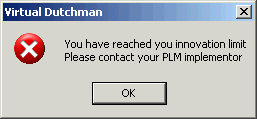 And then we get stuck, we would like to be more customer centric. Which macro to write for that? Or we want to connect our 3D designs to be used in a virtual prototype environment so we do not have to make the first real prototype to understand where to improve. Here the local reseller or IT-provider mentions it goes beyond his expertise (if he is fair).
For the full PLM vision, we see that the major PLM vendors have an integrated story, where all best practices and capabilities are connected and available on demand. Of course there is a discussion between themselves who has the best vision, the best integration between all these modules and who is the most efficient, but this is normal in a competitive world. You will find out the details during your selection process, but let’s agree you want all these benefits now or in the future, so the first conclusion is, you need to implement a PLM system in your company, and not small pieces of PLM capabilities in different systems and infrastructure.
And now comes the do not do this part, which I encountered in the past two months several times and from which I thought this approach was already considered by people, knowledgeable in this are as leading to failure.

The content below might lead to dissatisfaction in the near or longer future and the writer warns you NOT to use the methodology below
The company starts collecting requirements from all departments to assure they can implement the new vision. And as collecting requirements is a lot of work, they hire an external consulting company to do this work. The consultant(s) go and talk with all the different departments and at the end they collected a list of 100+ requirements, which after discussing them with the management are completed with another 50 requirements to assure the company is not going to select the wrong PLM system.

Then the company sends this book to all the known PLM vendors, telling them to respond within a timely matter (two – four ) weeks. And questions will be answered only through a very formal process via the consultancy company.
This type of questions you will find (and they are real):
- There should be a control for the renaming of CAD-parts and links
- It should be possible to search from the top to the bottom in the structure with all documents
- It should be possible to work with the following formats (3 common and 15 rare formats mentioned)
- It should be able to drag and drop information from one structure to the other
- The system should protect the users to make an error
- The system should run integrated with our ERP system (xyz mentioned)
- The system should be able to identify and manage project risk to support product and process changes throughout the product lifecycle
And one of my favorites:
- The system shall be able to create, update, maintain and process main and typical sorts and types of documents and their source data. Both “tabular” data (lists/datasheets) and graphic (diagrams, etc.) data, as well as text data (technical reports, etc.) are understood in this requirement. However see also requirement 18 and requirement 54. The scope and types of documents should be possible to be modified in an easy way for various projects and various stages of development documentation for those projects
And the management added:
- The implementer should come with a detailed implementation plan and budget
- The implementer should guarantee the budget stays with xxx range
- The implementer should provide 3 references of similar companies and tools.
 The RFP document is usually a 20 to 50 page document – the amount of pages seems to have a correlation with the amount of money spent to consultancy. The total assembly costs for this document: 400 to 1000 man-hours (do your math for the initial costs)
Then the RFP document is sent to 5 or more potential suppliers, who need to answer for each requirement in detail if:
- It is standard in the system
- It can be done through configuring the system, explain.
- It can be done through customization, please specify
- It is not supported
 Each vendor spends at least 500 man-hours to answer all these questions as much as possible with yes, it is standard. An although not understanding the requirements at all at some points, they only give positive answers, trying to stay away from the “It is not supported answer”.
So after at least 2500 (5 times 500) man-hours the company assisted by the consultant(s) think the know who to invite for the next stage of the PLM selection.
Did they make the right choice?
My statement is perhaps yes. So far they have wasted 3000 man-hours or more in the world just to be busy and come to a result which an experienced independent PLM consultant could do in a few days:
If you are this type of company – look at these vendors: company A, company B and perhaps company C for your PLM solution as you are in this industry, this IT-platform and this maturity – let’s discuss with them what we want to achieve
Next the real PLM selection process starts, here the investment and research should begin – and I would do this different. In my next post I will explain my approach.
Do you agree and would you do it different?
I am looking forward to your feedback.
 In my previous post (PLM for the mid-market – your opinion) I started a very small questionnaire – if you did not have the time (takes less than 5 minutes) or encouragement (please, please) to answer the 4 anonymous questions, please go there. End of October I promised to publish the results in this blog.
Direct link to the questionnaire: http://www.enquetemaken.be/toonenquete.php?id=48804
 As a follow-up of my holiday thoughts, I want to discuss this time the various interpretations of PLM that exist. Of course we have the ‘official’ definitions of the consultancy companies like CIMdata and 2PLM ( I took an American and European example). They describe clearly that it is a business approach, not necessary a set of technologies and tools to implement.
 Then we have the PLM vendors, where Dassault Systems and Siemens claim their visionary leadership. Looking at their websites, it is hard to find an explicit message. They both claim PLM brings innovation (how ?) , where Dassault Systemes has a strong message around 3D and virtual product development and Siemens focuses more on efficiency and better collaboration benefits. I am not going in depth into PTC and Aras or other PLM vendors as I am only taking two examples per type of company, but look at their websites and find out how (and if) they describe PLM as a business approach.
 For a PLM definition at SAP you have to dig a little deeper and I got even more surprised when searching through the Oracle web site. Here it was difficult to find a generic PLM message. There was the list of acquisitions (which make me wonder if this means they are all integrated) and there was the list of industries and only when drilling down into the industries, you will find PLM related information. Here I still have the feeling that these companies understand there is a need for PLM, but that it is not in their veins, they want to manage product data as a ‘single version of the truth’ – which is not a bad idea and I will come back on that later – but they want to manage different data.
 Also upcoming are the generic PLM on-line solutions (Arena and PLM+), which for me still are somehow a contradiction to what consultancy companies describe as PLM. Instead of a bussiness approach it is an IT-solution. In parallel there are more dedicated on-line solutions that support a specific business process (where PLM practices are embedded) – like for Apparel, CPG.
For these type of solutions, I have a more positive opinion as they are lowering the threshold to implement PLM in a certain industry. However the biggest skepticism I have for these types of solutions is the degrees of flexibility it will offer the implementing company to be different from standard best practices. As all companies have their uniqueness in being competitive, will they be able to support this ?
And then there was the press release from Zero Wait-State which struck me:
 Zero Wait-State is launching a new website that will provide a central location for Product Lifecycle Management software and partner reviews. This site will be a valuable resource for companies trying to assess different PLM solutions and which partners to work with. The site will be driven by users and allow them to share their experiences with different software products and implementation partners.
See the full press release here: Zero Wait-State Announces New Website for PLM and Service Provider Reviews.
I believe in these times of product selection and reviews certainly a good initiative. Where do we find vendor independent reviews of various PLM products ? Bringing PLM to social communities.
But ……
Here I want to take a step back. What is the essence of PLM and how do you know as a company you want to implement PLM ?
The majority of mid-market companies are not looking for a PLM system. Most of the mid-market companies have the impression that PLM is complex and expensive and typical mid-market vendors like Autodesk or SolidWorks are not pushing PLM (try for fun to search for PLM on their websites).
So will a mid-market company be able to select a PLM product through communities in the same manner as you select a consumer product ?
I believe the main challenge for a PLM implementation is not the software, but the business change.
In a company where most people are thinking (and rewarded) departmental, it is difficult to implement a new system that affects all departments. Creating the single version of the truth for product data is one of the basics for PLM. Try to get an agreement with sales, engineering, production and service who will be responsible for which part of the BOM. SAP’s single version of the truth is much more a statement from an IT-infrastructure point of view not focusing and pushing a change of business processes.
I believe, and this is also based on discussions and comments from colleagues focusing on the mid-market, that many mid-market companies are implementing basics of PLM, not always using a ‘certified’ PLM system or PLM vendor, but a pragmatic solution (customization / piece of software) which connects parts of the product information. These solutions are usually extensions on top of the CAD data management environment or the ERP system.
And here PLM vendors have a mission. Provide building blocks (services) that allow mid-market companies to connect data between departments based on known standard authoring tools. For classical PLM industries (Automotive/Aero/Fabrication & Assembly) the major CAD systems and virtual product development plus analysis software are major disciplines to manage. Other industries also have their authoring tools. Connecting them through services and provide an easy to implement backbone for product information. This should be not a big-boom effect in the mid-market, but more an evolution – moving to PLM 2.0 or beyond ?
Will this come from PLM providers or IT-providers ?
Conclusion:
For the mid-market it is not about which PLM, but more about who can provide a gradual business change from sequential and departmental business processes towards company-wide processes, where people share and collaborate around the single version of data. So which PLM should be called which provider …..
I am looking forward to your opinion.
 Jos Voskuil's Weblog
Interesting reflection, Jos. In my experience, the situation you describe is very recognizable. At the company where I work, sustainability…
[…] (The following post from PLM Green Global Alliance cofounder Jos Voskuil first appeared in his European PLM-focused blog HERE.) […]
[…] recent discussions in the PLM ecosystem, including PSC Transition Technologies (EcoPLM), CIMPA PLM services (LCA), and the Design for…
Jos, all interesting and relevant. There are additional elements to be mentioned and Ontologies seem to be one of the…
Jos, as usual, you've provided a buffet of "food for thought". Where do you see AI being trained by a…