
 In the past three weeks, between some short holidays, I had a discussion with Rob Ferrone, who you might know as
“The original product Data PLuMber”.
Our discussion resulted in this concluding post and these two previous posts:
If you haven’t read them before, please take a moment to review them, to understand the flow of our dialogue and to get a full, holistic view of the WHY, WHAT and HOW of data quality and data governance.
A foundation required for any type of modern digital enterprise, with or without AI.
A first feedback round
 Rob, I was curious whether there were any interesting comments from the readers that enhanced your understanding. For me, Benedict Smith’s point in the discussion thread was an interesting one.
From this reaction, I like to quote:
To suggest it’s merely a lack of discipline is to ignore the evidence. We have some of the most disciplined engineers in the world. The problem isn’t the people; it’s the architecture they are forced to inhabit.
My contention is that we have been trying to solve a reasoning problem with record-keeping tools. We need to stop just polishing the records and start architecting for the reasoning. The “what” will only ever be consistently correct when the “why” finally has a home. 😎
Here, I realized that the challenge is not only about moving From Coordinated to Coordinated and Connected, but also that our existing record-keeping mindset drives the old way of thinking about data. In the long term, this will be a dead end.
What did you notice?
 Jos, indeed, Benedict’s point is great to have in mind for the future and in addition, I also liked the comment from Yousef Hooshmand, where he explains that a data-driven approach with a much higher data granularity automatically leads to a higher quality – I would quote Yousef:
The current landscapes are largely application-centric and not data-centric, so data is often treated as a second or even third-class citizen.
In contrast, a modern federated and semantic architecture is inherently data-centric. This shift naturally leads to better data quality with significantly less overhead. Just as important, data ownership becomes clearly defined and aligned with business responsibilities.
Take “weight” as a simple example: we often deal with “Target Weight,” “Calculated Weight,” and “Measured Weight.” In a federated, semantic setup, these attributes reside in the systems where their respective data owners (typically the business users) work daily, and are semantically linked in the background.
I believe the interesting part of this discussion is that people are thinking about data-driven concepts as a foundation for the paradigm, shifting from systems of record/systems of engagement to systems of reasoning. Additionally, I see how Yousef applies a data-centric approach in his current enterprise, laying the foundation for systems of reasoning.
What’s next?
Rob, your recommendations do not include a transformation, but rather an evolution to become better and more efficient – the typical work of a Product PLuMber, I would say. How about redesigning the way we work?
Bold visions and ideas are essential catalysts for transformations, but I’ve found that the execution of significant, strategic initiatives is often the failure mode.
One of my favourite quotes is:
“A complex system that works is invariably found to have evolved from a simple system that worked.”
John Gall, Systemantics (1975)
For example, I advocate this approach when establishing Digital Threads.
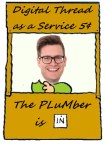 It’s easy to imagine a Digital Thread, but building one that’s sustainable and delivers measurable value is a far more formidable challenge.
Therefore, my take on Digital Thread as a Service is not about a plug-and-play Digital Thread, but the Service of creating valuable Digital Threads.
You achieve the solution by first making the Thread work and progressively ‘leaving a trail of construction’.
The caveat is that this can’t happen in isolation; it must be aligned with a data strategy, a set of principles, and a roadmap that are grounded in the organization’s strategic business imperatives.
Your answer relates a lot to Steef Klein’s comment when he discussed: “Industry 4.0: Define your Digital Thread ML-related roadmap – Carefully select your digital innovation steps.” You can read Steef’s full comment here: Your architectural Industry 4.0 future)
First, I liked the example value cases presented by Steef. They’re a reminder that all these technology-enabled strategies, whether PLM, Digital Thread, or otherwise, are just means to an end. That end is usually growth or financial performance (and hopefully, one day, people too).
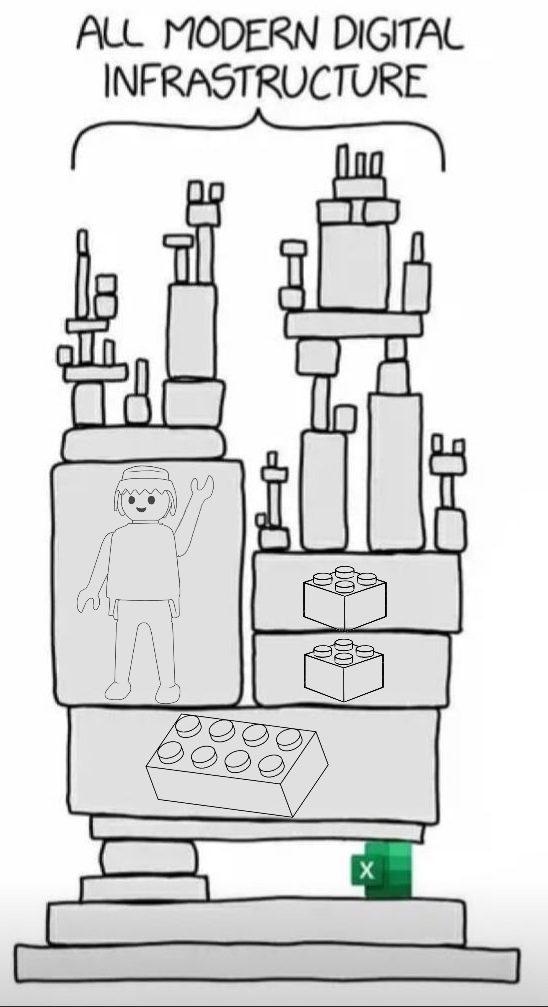 It is a bit like Lego, however. You can’t build imaginative but robust solutions unless there is underlying compatibility and interoperability.
It would be a wobbly castle made from a mix of Playmobil, Duplo, Lego and wood blocks (you can tell I have been doing childcare this summer – click on the image to see the details).
As the lines blur between products, services, and even companies themselves, effective collaboration increasingly depends on a shared data language, one that can be understood not just by people, but by the microservices and machines driving automation across ecosystems.
Discussing the future?
 I think that for those interested in this discussion, I would like to point to the upcoming PLM Roadmap/PDT Europe 2025 conference on November 5th and 6th in Paris, where some of the thought leaders in these concepts will be presenting or attending. The detailed agenda is expected to be published after the summer holidays.
 However, this conference also created the opportunity to have a pre-conference workshop, where Håkan Kårdén and I wanted to have an interactive discussion with some of these thought leaders and practitioners from the field.
 Sponsored by the Arrowhead fPVN project, we were able to book a room at the conference venue in the afternoon of November 4th. You can find the announcement and more details of the workshop here in Hakan’s post:. Shape the Future of PLM – Together.
Last year at the PLM Roadmap PDT Europe conference in Gothenburg, I saw a presentation of the Arrowhead fPVN project. You can read more here: The long week after the PLM Roadmap/PDT Europe 2024 conference.
And, as you can see from the acknowledged participants below, we want to discuss and understand more concepts and their applications – and for sure, the application of AI concepts will be part of the discussion.
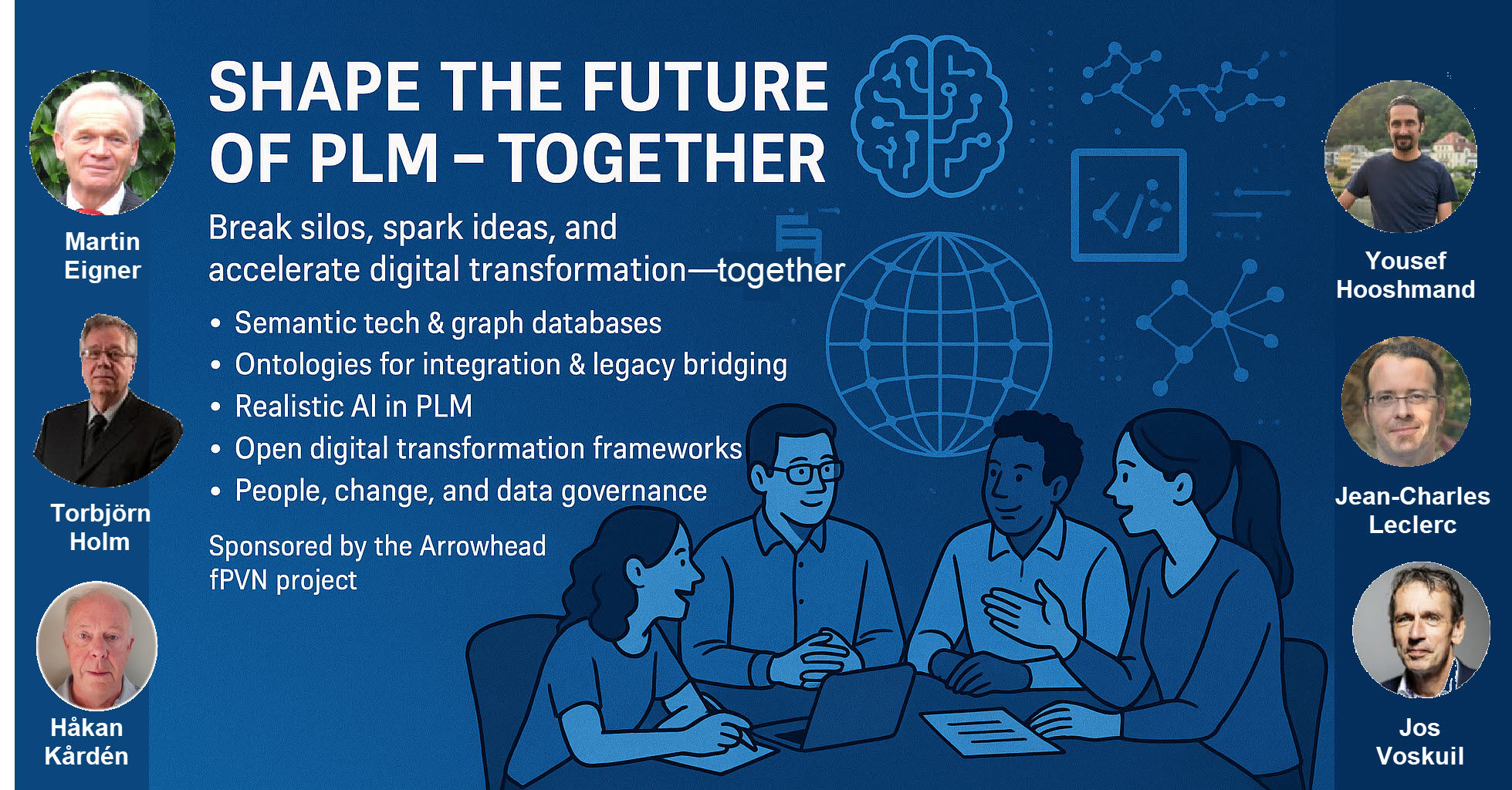
 Mark the date and this workshop in your agenda if you are able and willing to contribute. After the summer holidays, we will develop a more detailed agenda about the concepts to be discussed. Stay tuned to our LinkedIn feed at the end of August/beginning of September.
And the people?
Rob, we just came from a human-centric PLM conference in Jerez – the Share PLM 2025 summit – where are the humans in this data-driven world?
You can’t have a data-driven strategy in isolation. A business operating system comprises the coordinated interaction of people, processes, systems, and data, aligned to the lifecycle of products and services. Strategies should be defined at each layer, for instance, whether the system landscape is federated or monolithic, with each strategy reinforcing and aligning with the broader operating system vision.
In terms of the people layer, a data strategy is only as good as the people who shape, feed, and use it. Systems don’t generate clean data; people do. If users aren’t trained, motivated, or measured on quality, the strategy falls apart.
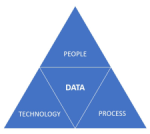 Data needs to be an integral, essential and valuable part of the product or service. Individuals become both consumers and producers of data, expected to input clean data, interpret dashboards, and act on insights. In a business where people collaborate across boundaries, ask questions, and share insight, data becomes a competitive asset.
There are risks; however, a system-driven approach can clash with local flexibility/agility.
People who previously operated on instinct or informal processes may now need to justify actions with data. And if the data is poor or the outputs feel misaligned, people will quickly disengage, reverting to offline workarounds or intuition.
 Here it is critical that leaders truly believe in the value and set the tone, and because it rare to have everyone in the business care about the data as passionately as they do about the prime function of their unique role (e.g. designer);
therefore there needs to be product data professionals in the mix – people who care, notice what’s wrong, and know how to fix it across silos.
Conclusion
- Our discussions on data quality and governance revealed a crucial insight: this is not a technical journey, but a human one. While the industry is shifting from systems of record to systems of reasoning, many organizations are still trapped in record-keeping mindsets and fragmented architectures. Better tools alone won’t fix the issue—we need better ownership, strategy, and engagement.
- True data quality isn’t about being perfect; it’s about the right maturity, at the right time, for the right decisions. Governance, too, isn’t a checkbox—it’s a foundation for trust and continuity. The transition to a data-centric way of working is evolutionary, not revolutionary—requiring people who understand the business, care about the data, and can work across silos.
The takeaway? Start small, build value early, and align people, processes, and systems under a shared strategy. And if you’re serious about your company’s data, join the dialogue in Paris this November.
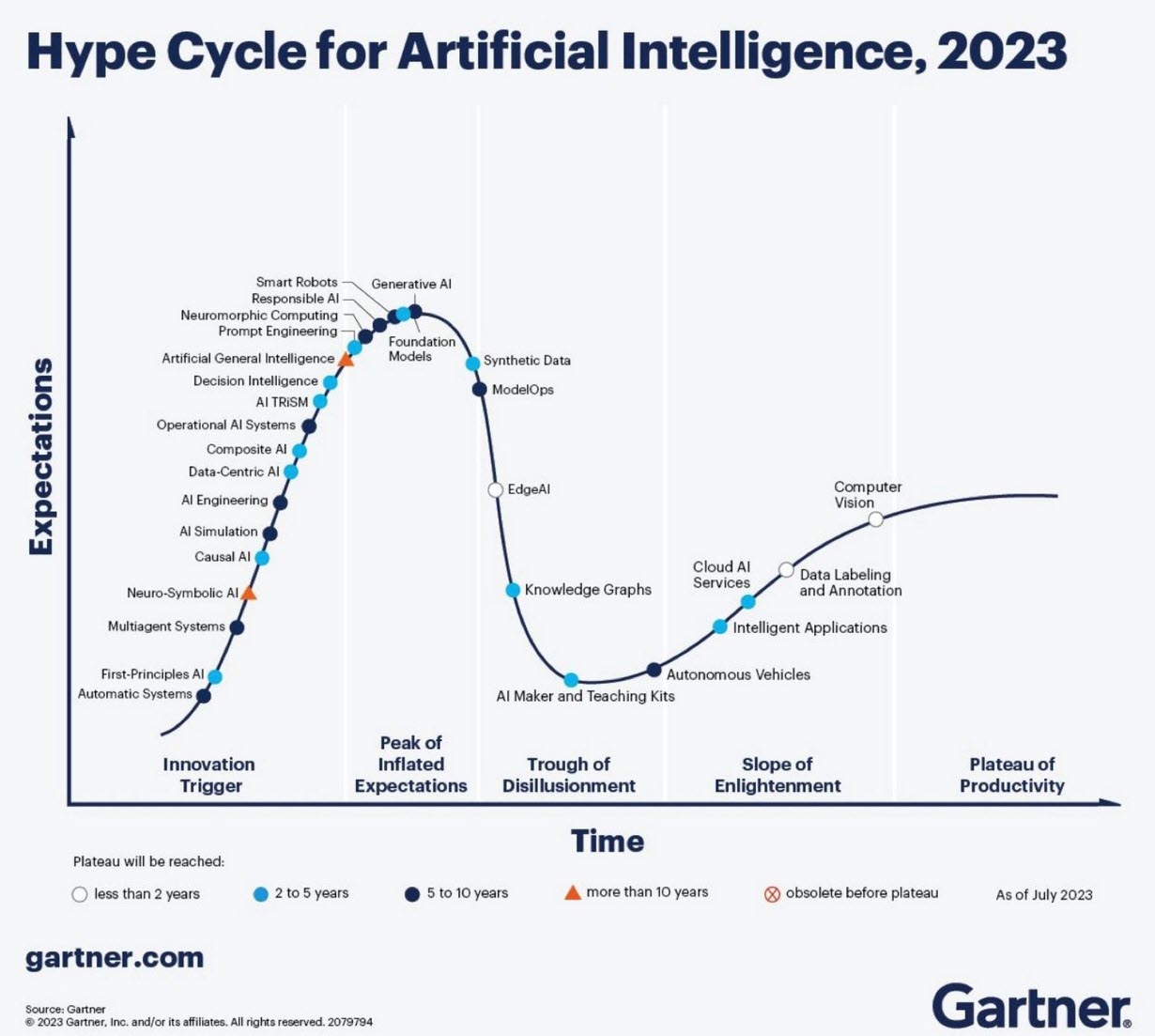
Where are you on the AI hype cycle ?


 Jos Voskuil's Weblog
Leave a comment
Comments feed for this article