
 Congratulations if you have shown you can resist the psychological and emotional pressure and did not purchase anything in the context of Black Friday. However, we must not forget that another big part of the world cannot afford this behavior, as they do not have the means to do so – ultimate Black Friday might be their dream and a fast track to more enormous challenges.
The difference between our societies, all living on the same planet, is illustrated in the image below, illustrating the unfairness of this situation
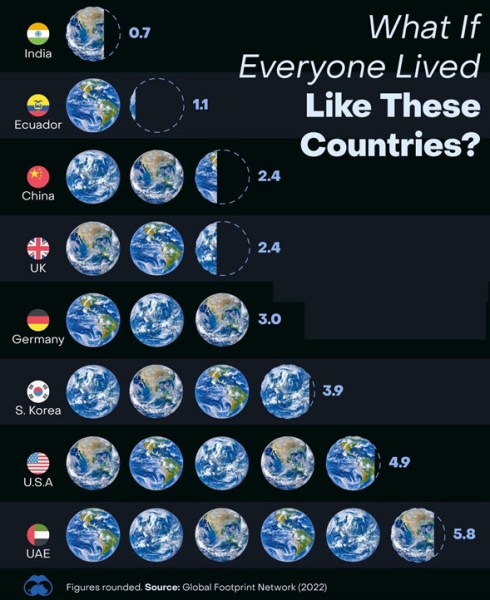
What the image also shows is a warning that we all have to act, as step by step, we will reach planet boundaries for resources.
 Or we need more planets, and I understand a brilliant guy is already working on it. Let’s go to Mars and enjoy life there.
For those generations staying on this planet, there is only one option: we need to change our economy of unlimited growth and reconsider how we use our natural resources.
The circular economy?
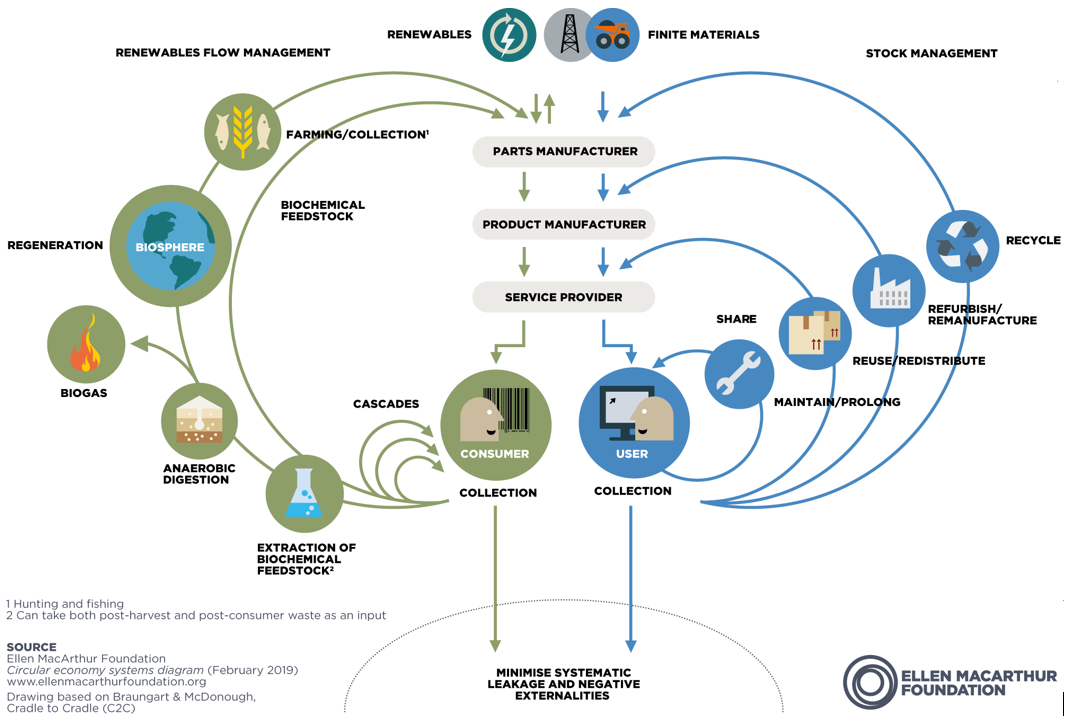
You are probably familiar with the butterfly diagram from the Ellen MacArthur Foundation, where we see the linear process: Take-Make-Use-Waste in the middle.
This approach should be replaced by more advanced regeneration loops on the left side and the five R’s on the right: Reduce, Repair, Reuse, Refurbish and Recycle as the ultimate goal is the minimum leakage of Earth resources.
Closely related to the Circular Economy concept is the complementary Cradle-To-Cradle design approach. In this case, while designing our products, we also consider the end of life of a product as the start for other products to be created based on the materials used.
The CE butterfly diagram’s right side is where product design plays a significant role and where we, as a PLM community, should be active. Each loop has its own characteristics, and the SHARE loop is the one I focused on during the recent PLM Roadmap / PDT Europe conference in Gothenburg.
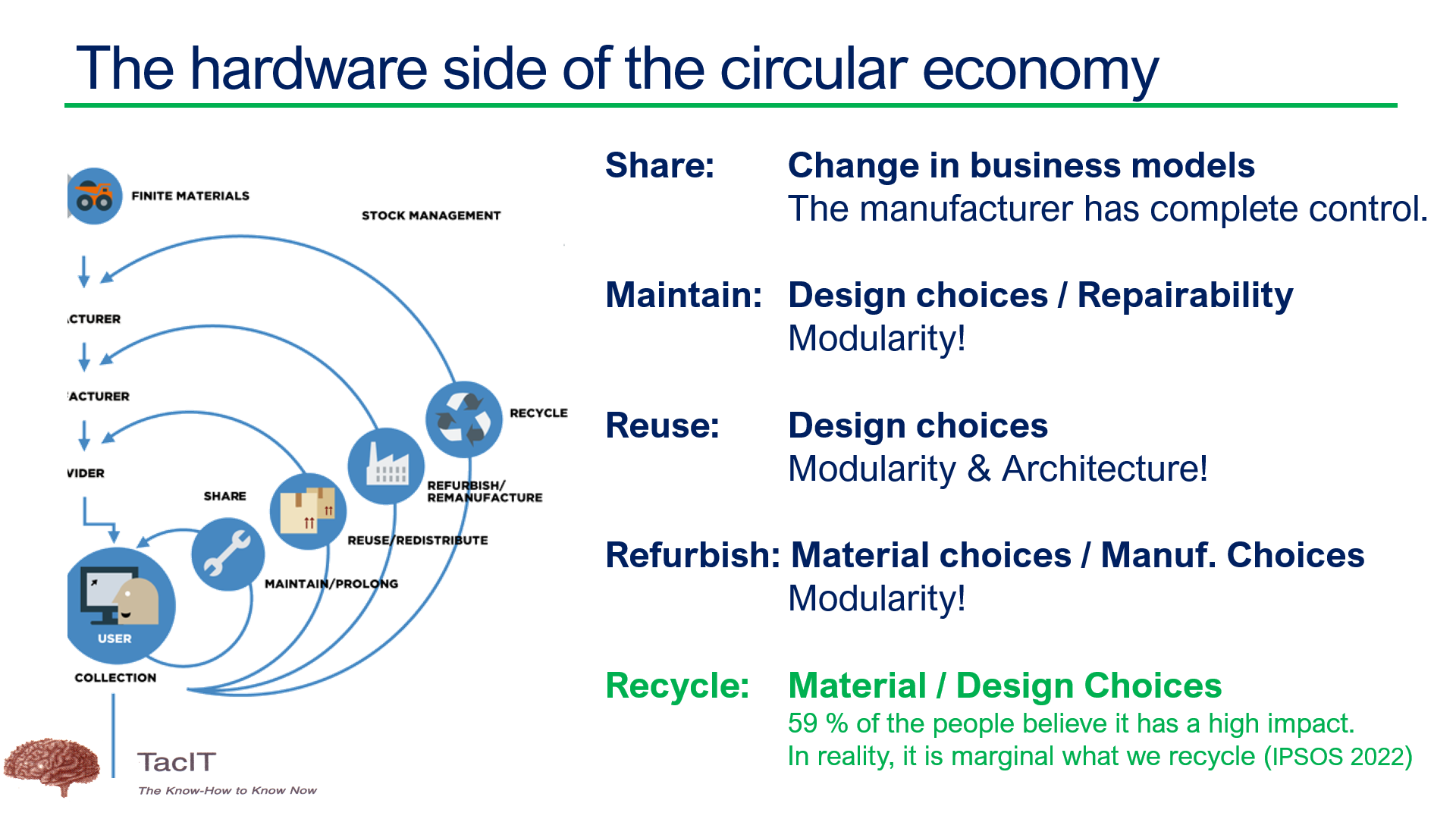
As you can see, the Maintain, Reuse, Refurbish and Recycle loops depend on product design strategies, in particular, modularity and, of course, depending on material choices.
 It is important to note that the recycle loop is the most overestimated loop, where we might contribute to recycling (glass, paper, plastic) in our daily lives; however, other materials, like composites often with embedded electronics, have a much more significant impact.
Watch the funny meme in this post: “We did everything we could– we brought our own bags.”
 The title of my presentation was: Products as a Service – The Ultimate Sustainable Economy?
You can find my presentation on SlideShare here.
Let’s focus on the remainder of the presentation’s topic: Product As A Service.
The Product Service System
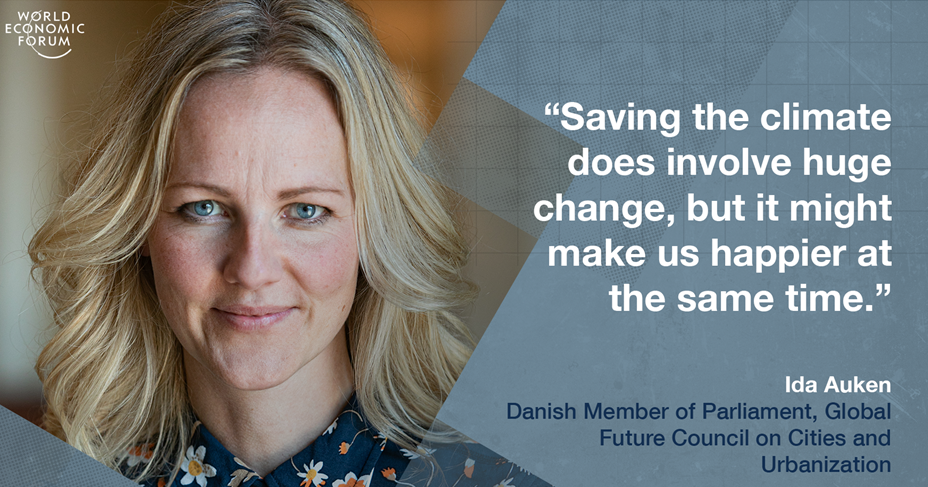 Where Product As A Service might be the ultimate dream for an almost wasteless society, Ida Auken, a Danish member of the parliament, gave a thought-provoking lecture in that context at the 2016 World Economic Forum. Her lecture was summarized afterward as
“In the future, you will own nothing and be happy.”
A theme also picked up by conspiracy thinkers during the COVID pandemic, claiming “they” are making us economic slaves and consumers. With Black Friday in mind, I do not think there is a conspiracy; it is the opposite.
Closer to implementing everywhere Product as a Service for our whole economy, we might be going into Product Service Systems.
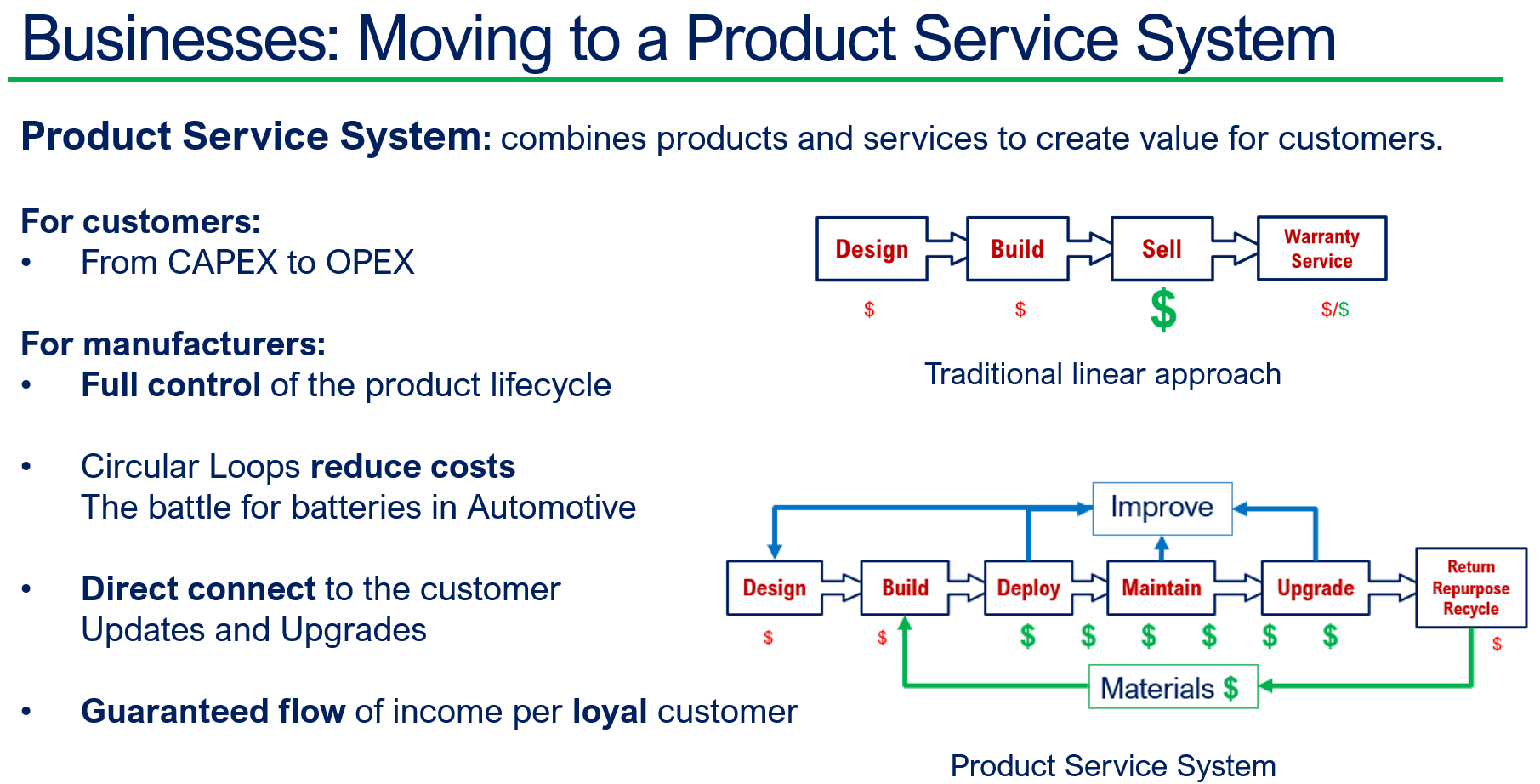
As the image shows, a product service system is a combination of providing a product with related services to create value for the customer.
In the ultimate format, the manufacturer owns the products and provides the services, keeping full control of the performance and materials during the product lifecycle. The benefits for the customer are that they pay only for the usage of the product and, therefore, do not need to invest upfront in the solution (CAPEX), but they only pay when using the solution (OPEX).
 A great example of this concept is Spotify or other streaming services. You do not pay for the disc/box anymore; you pay for the usage, and the model is a win-win for consumers (many titles) and producers (massive reach).
Although the Product Service System will probably reach consumers later, the most significant potential is currently in the B2B business model, e.g., transportation as a service and special equipment usage as a service. Examples are popping up in various industries.
 My presentation focused on three steps that manufacturing companies need to consider now and in the future when moving to a Product Service System.
Step 1: Get (digital) connected to your Product and customer
A foundational step companies must take is to create a digital infrastructure to support all stakeholders in the product service offering. Currently, many companies have a siloed approach where each discipline Marketing/Sales, R&D, Engineering, Manufacturing and Sales will have their own systems.
Digital Transformation in the PLM domain is needed here – where are you on this level?
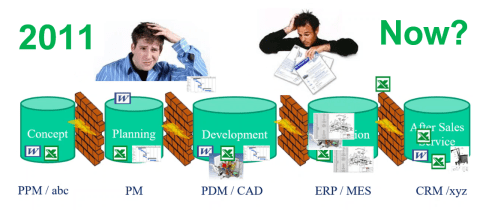
But it is not only the technical silos that impede the end-to-end visibility of information. If there are no business targets to create and maintain the end-to-end information sharing, you can not expect it to happen.
Therefore, companies should invest in the digitalization of their ways of working, implementing an end-to-end digital thread AND changing their linear New Product Development process into a customer-driven DevOp approach. The PTC image below shows the way to imagine a end-to-end connected environment
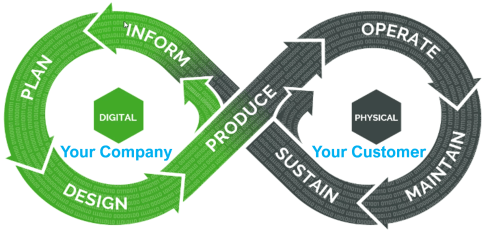
In a Product Service System, the customer is the solution user, and the solution provider is responsible for the uptime and improvement of the solution over time.
 As an upcoming bonus and a must, companies need to use AI to run their Product Service System as it will improve customer knowledge and trends. Don’t forget that AI (and Digital Twins) runs best on reliable data.
Step 2 From Product to Experience
A Product Service System is not business as usual by providing products with some additional services. Besides concepts such as Digital Thread and Digital Twins of the solution, there is also the need to change the company’s business model.
 In the old way, customers buy the product; in the Product Service System, the customer becomes a user. We should align the company and business to become user-centric and keep the user inspired by the experience of the Product Service System.
In this context, there are two interesting articles to read:
- Jan Bosch: From Agile to Radical: Business Model
- Chris Seiler: How to escape the vicious circle in times of transformation?
The change in business model means that companies should think about a circular customer journey.
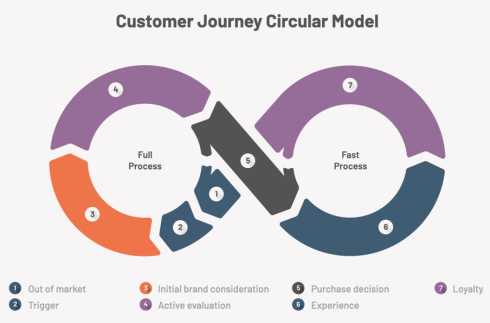
As the company will remain the product owner, it is crucial to understand what happens when the customers stop using the service or how to ensure maintenance and upgrades.
In addition, to keep the customer satisfied, it remains vital to discover the customer KPIs and how additional services could potentially improve the relationship. Again, AI can help find relationships that are not yet digitally established.
 Step 2: From product to experience can already significantly impact organizations. The traditional salesperson’s role will disappear and be replaced by excellence in marketing, services and product management.
This will not happen quickly as, besides the vision, there needs to be an evolutionary path to the new business model.
Therefore, companies must analyze their portfolio and start experimenting with a small product, converting it into a product service system. Starting simple allows companies to learn and be prepared for scaling up.
A Product Service System also influences a company’s cash flow as revenue streams will change.
 When scaling up slowly, the company might be able to finance this transition themselves. Another option, already happening, is for a third party to finance the Product Service System – think about car leasing, power by the hour, or some industrial equipment vendors.
Step 3 Towards a doughnut economy?
The last step is probably a giant step or even a journey. An economic mindset shift is needed from the ever-growing linear economy towards an economy flourishing for everyone within economic, environmental and social boundaries.
Unlimited growth is the biggest misconception on a planet reaching its borders. Either we need more planets, or we need to adjust our society.
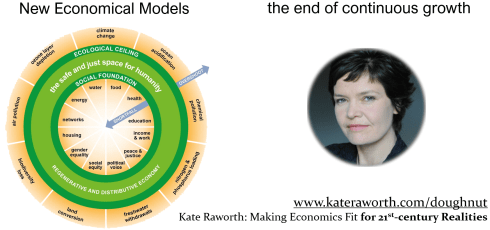
In that context, I read the book “The Doughnut Economy” by Kate Raworth, a recognized thought leader who explains how a future economic model can flourish, including a circular economy, and you will be happy.
 But we must abandon the old business models and habits – there will be a lot of resistance to change before people are forced to change. This change can take generations as the outside world will not change without a reason, and the established ones will fight for their privileges.
It is a logical process where people and boundaries will learn to find a new balance. Will it be in a Doughnut Economy, or did we overlook some bright other concepts?
Conclusion
The week after Black Friday and hopefully the month after all the Christmas presents, it is time to formulate your good intentions for 2025. As humans, we should consume less; as companies, we should direct our future to a sustainable future by exploring the potential of the Product Service System and beyond.


 Jos Voskuil's Weblog
Leave a comment
Comments feed for this article