
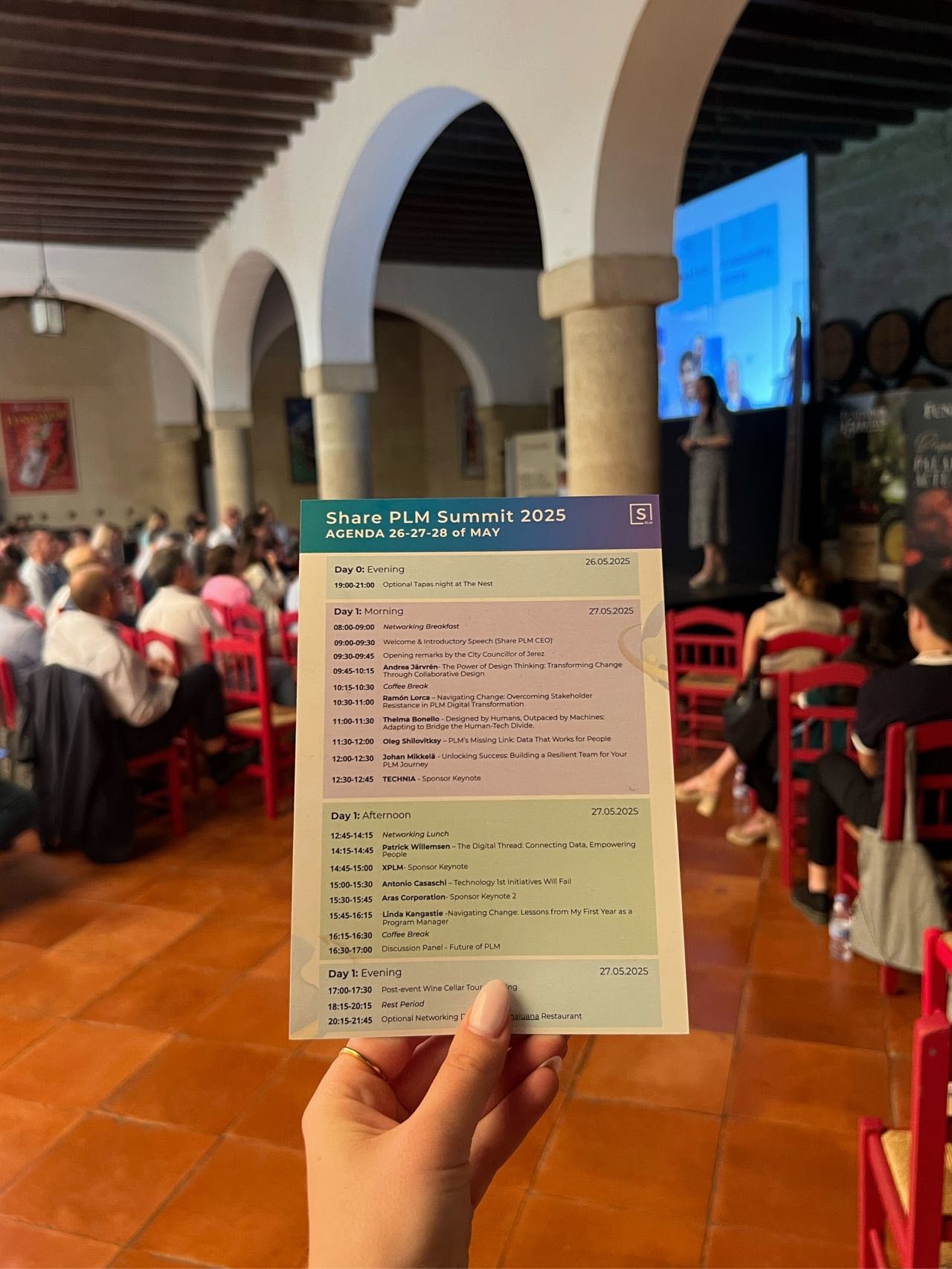
 Wow, what a tremendous amount of impressions to digest when traveling back from Jerez de la Frontera, where Share PLM held its first PLM conference. You might have seen the energy from the messages on LinkedIn, as this conference had a new and unique daring starting point: Starting from human-led transformations.
Look what Jens Chemnitz, Linda Kangastie, Martin Eigner, Jakob Äsell or Oleg Shilovitsky had to say.
For over twenty years, I have attended all kinds of PLM events, either vendor-neutral or from specific vendors. None of these conferences created so many connections between the attendees and the human side of PLM implementation.
We can present perfect PLM concepts, architectures and methodologies, but the crucial success factor is the people—they can make or break a transformative project.
Here are some of the first highlights for those who missed the event and feel sorry they missed the vibe. I might follow up in a second post with more details. And sorry for the reduced quality—I am still enjoying Spain and refuse to use AI to generate this human-centric content.
The scenery
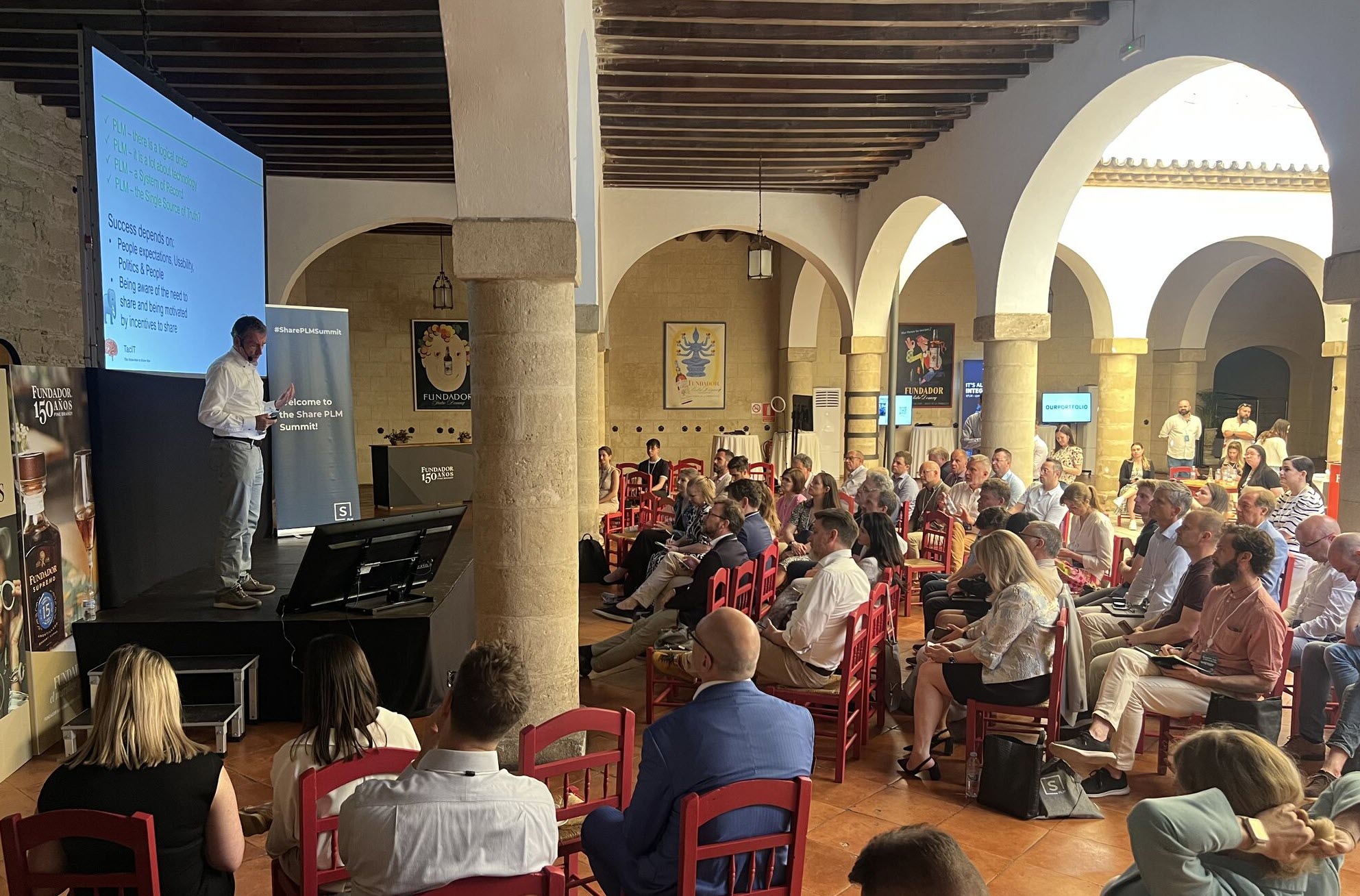
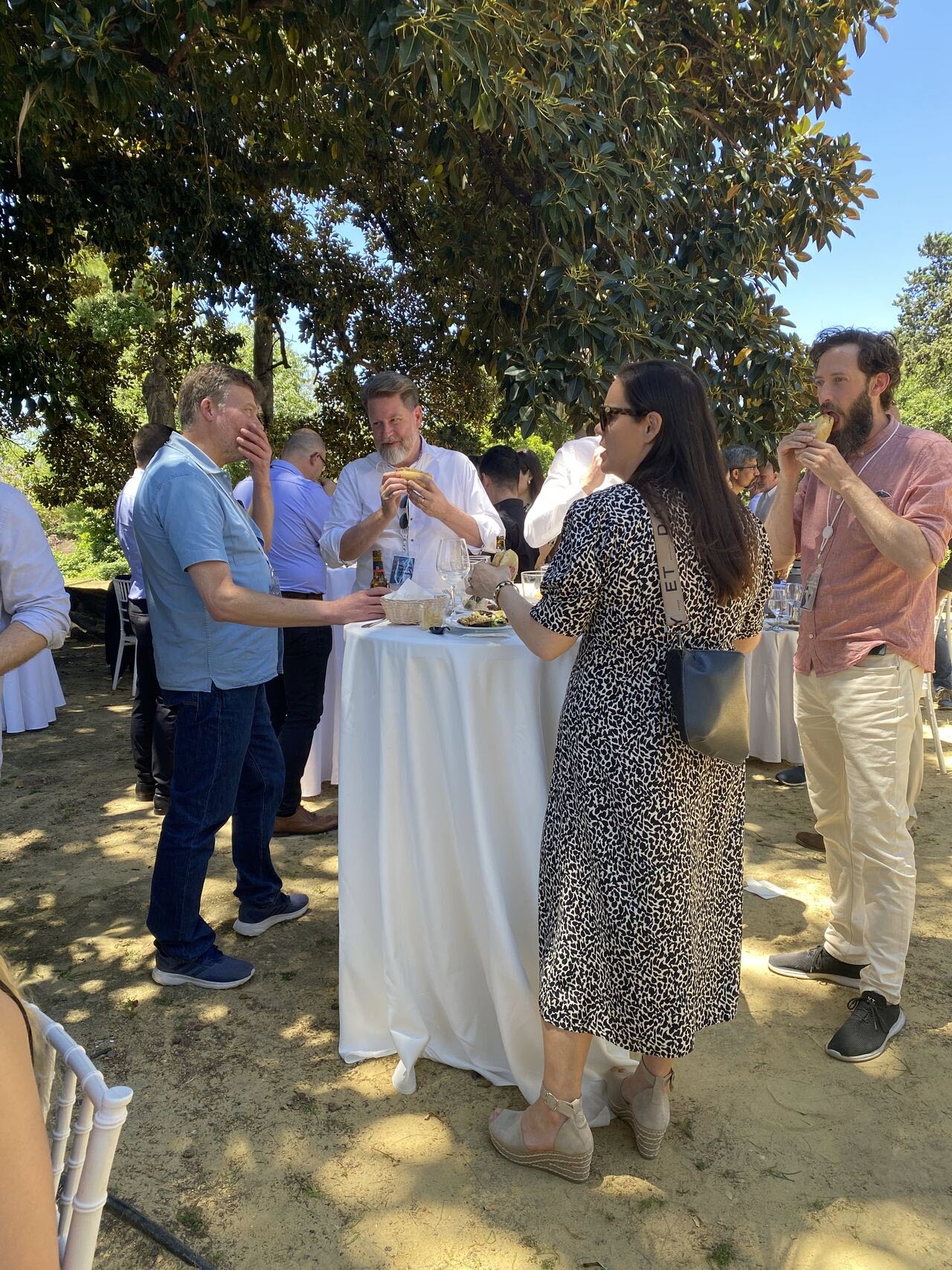
Approximately 75 people have been attending the event in a historic bodega, Bodegas Fundador, in the historic center of Jerez. It is not a typical place for PLM experts, but an excellent place for humans with an Andalusian atmosphere. It was great to see companies like Razorleaf, Technia, Aras, XPLM and QCM sponsor the event, confirming their commitment. You cannot start a conference from scratch alone.
The next great differentiator was the diversity of the audience. Almost 50 % of the attendees were women, all working on the human side of PLM.
 Another brilliant idea was to have the summit breakfast in the back of the stage area, so before the conference days started, you could mingle and mix with the people instead of having a lonely breakfast in your hotel.
Now, let’s go into some of the highlights; there were more.
A warm welcome from Share PLM
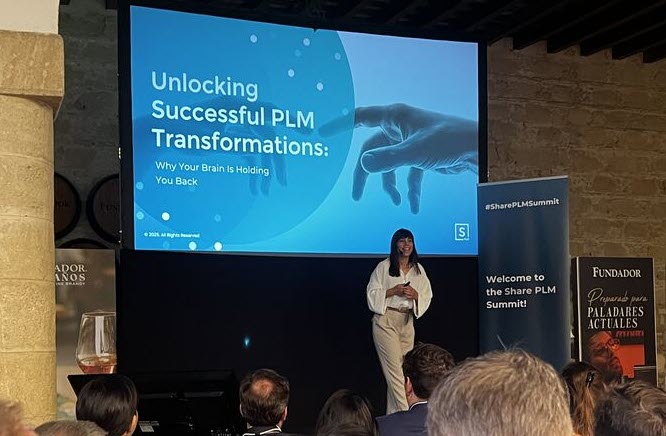
Beatriz Gonzalez, CEO and co-founder of Share PLM, kicked off the conference, explaining the importance of human-led transformations and organizational change management and sharing some of their best practices that have led to success for their customers.
You might have seen this famous image in the past, explaining why you must address people’s emotions.

Working with Design Sprints?
Have you ever heard of design sprints as a methodology for problem-solving within your company? If not, you should read the book by Jake Knapp- Creator of Design Sprint.
 Andrea Järvén, program manager at Tetra Pak and closely working with the PLM team, recommended this to us. She explained how Tetra Pak successfully used design sprints to implement changes. You would use design sprints when development cycles run too looong, Teams lose enthusiasm and focus, work is fragmented, and the challenges are too complex.
Instead of a big waterfall project, you run many small design sprints with the relevant stakeholders per sprint, coming step by step closer to the desired outcome.
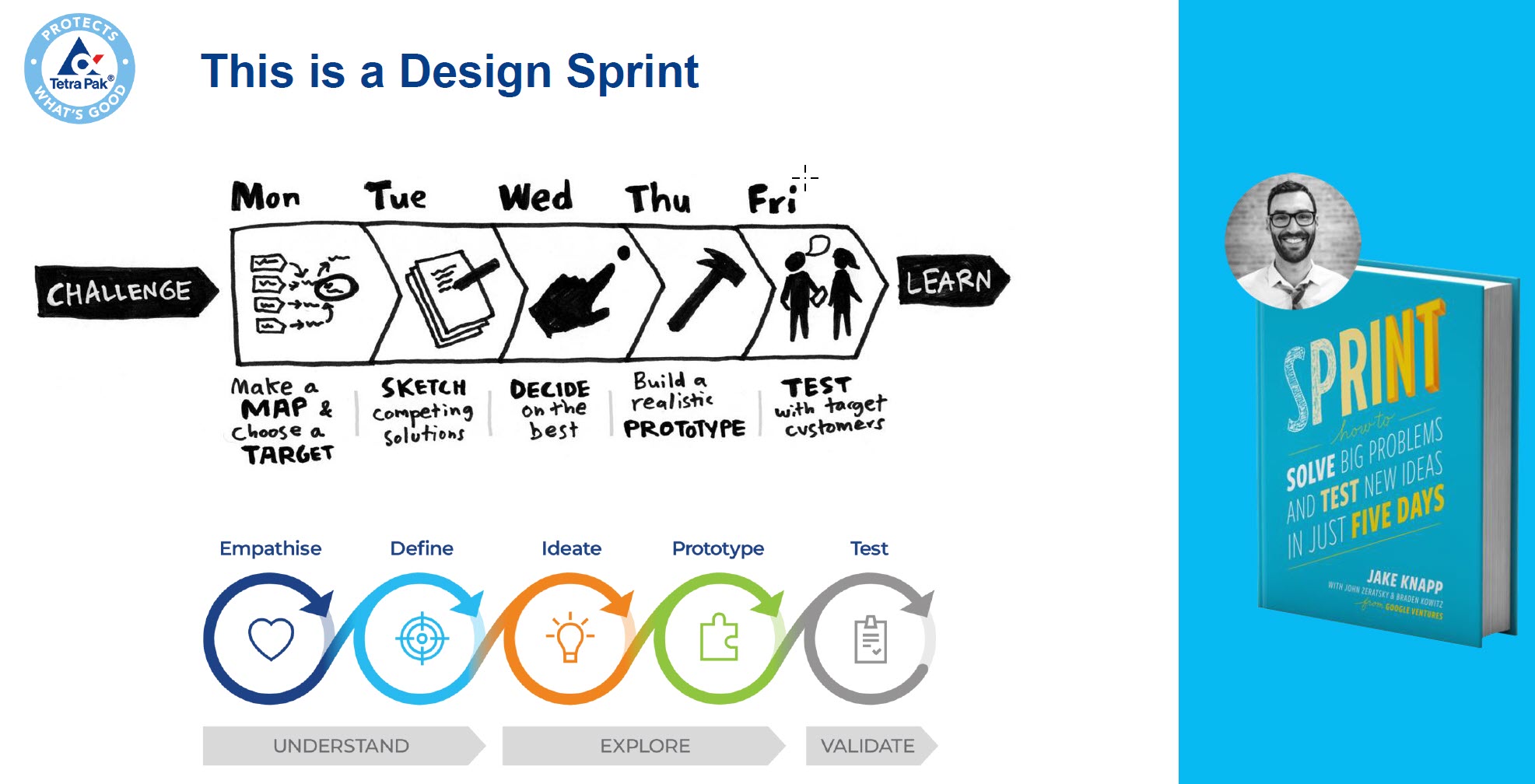
The sprints are short – five days of the full commitment of a team targeting a business challenge, where every day has a dedicated goal, as you can see from the image above.
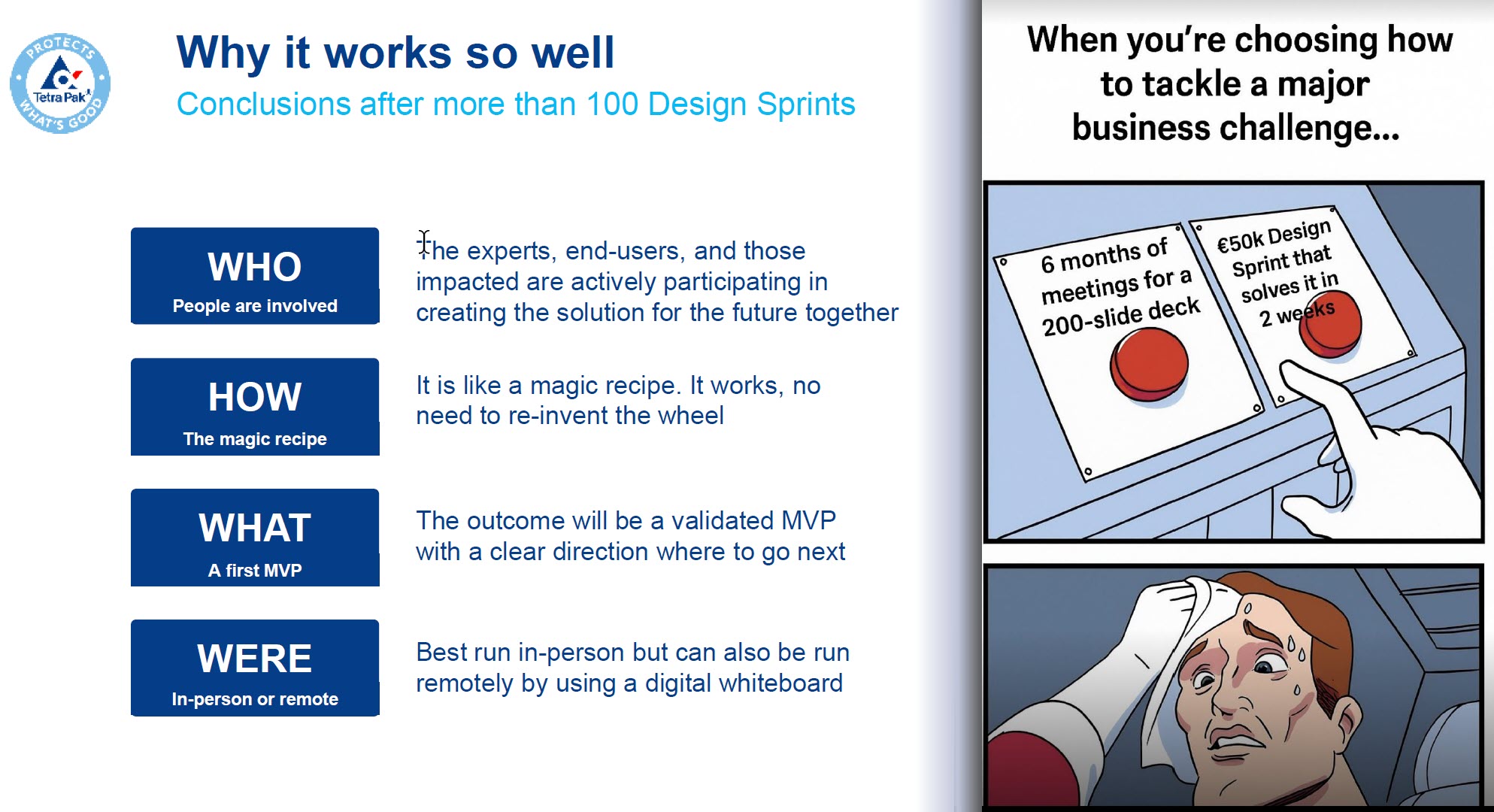
It was an eye-opener, and I am eager to learn where this methodology can be used in the PLM projects I contribute.
Unlocking Success: Building a Resilient Team for Your PLM Journey
 Johan Mikkelä from FLSmidth shared a great story about the skills, capacities, and mindset needed for a PLM transformational project.
Johan brought up several topics to consider when implementing a PLM project based on his experiences.
One statement that resonated well with the audience of this conference was:
The more diversified your team is, the faster you can adapt to changes.
He mentioned that PLM projects feel like a marathon, and I believe it is true when you talk about a single project.
However, instead of a marathon, we should approach PLM activities as a never-ending project, but a pleasant journey that is not about reaching a finish but about step-by-step enjoying, observing, and changing a little direction when needed.
Strategic Shift of Focus – a human-centric perspective
 Besides great storytelling, Antonio Casaschi‘s PLM learning journey at Assa Abloy was a perfect example of why PLM theory and reality often do not match. With much energy and experience, he came to Assa Abloy to work on the PLM strategy.
He started his PLM strategies top-down, trying to rationalize the PLM infrastructure within Assa Abloy with a historically bad perception of a big Teamcenter implementation from the past. Antonio and his team were the enemies disrupting the day-to-day life of the 200+ companies under the umbrella of Assa Abloy.
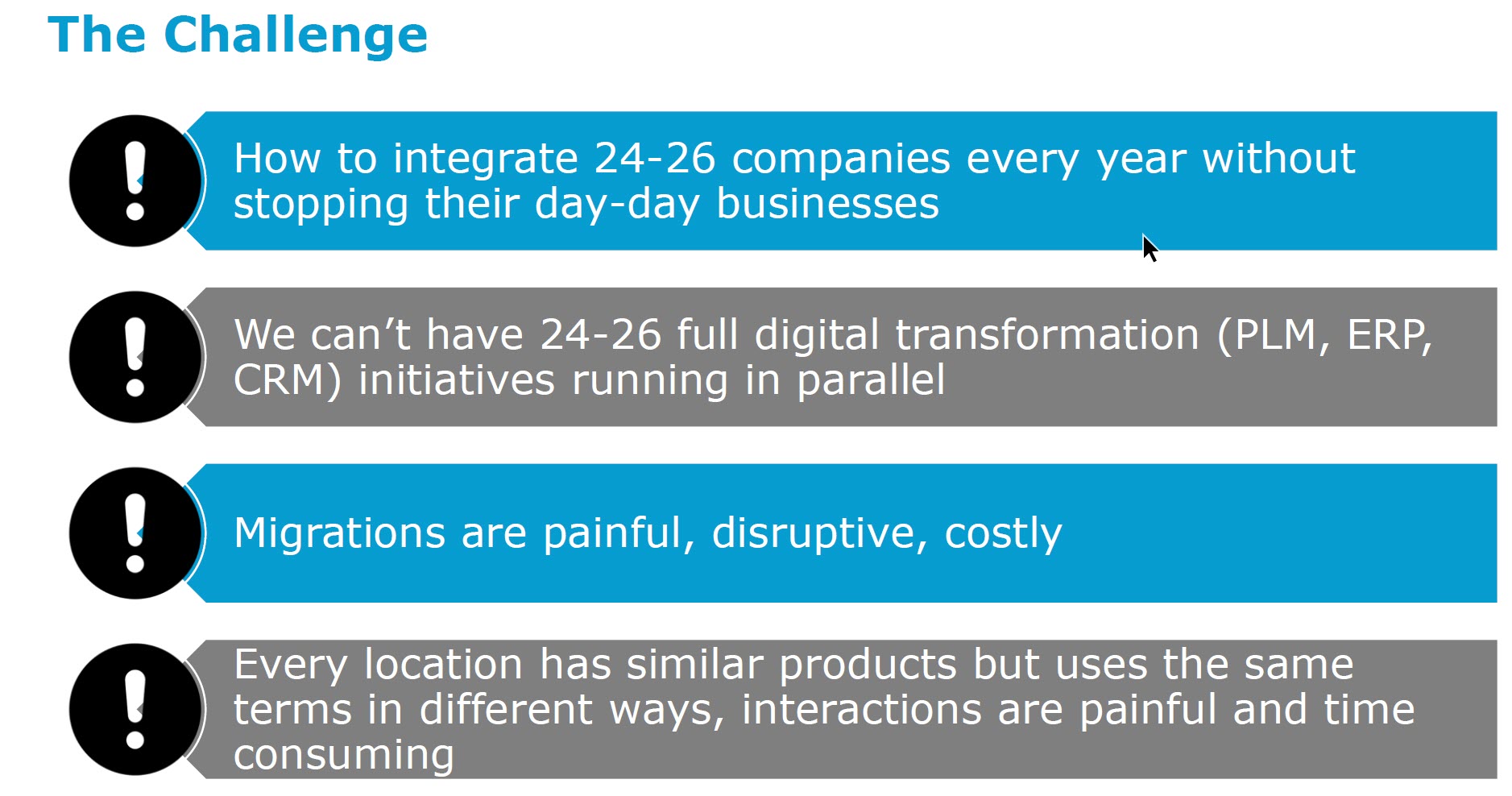
A logical lesson learned here is that aiming top-down for a common PLM strategy is impossible in a company that acquires another six new companies per quarter.
His final strategy is a bottom-up strategy, where he and the team listen to and work with the end-users in the native environments. They have become trusted advisors now as they have broad PLM experience but focus on current user pains. With the proper interaction, his team of trusted advisors can help each of the individual companies move towards a more efficient and future-focused infrastructure at their own pace.
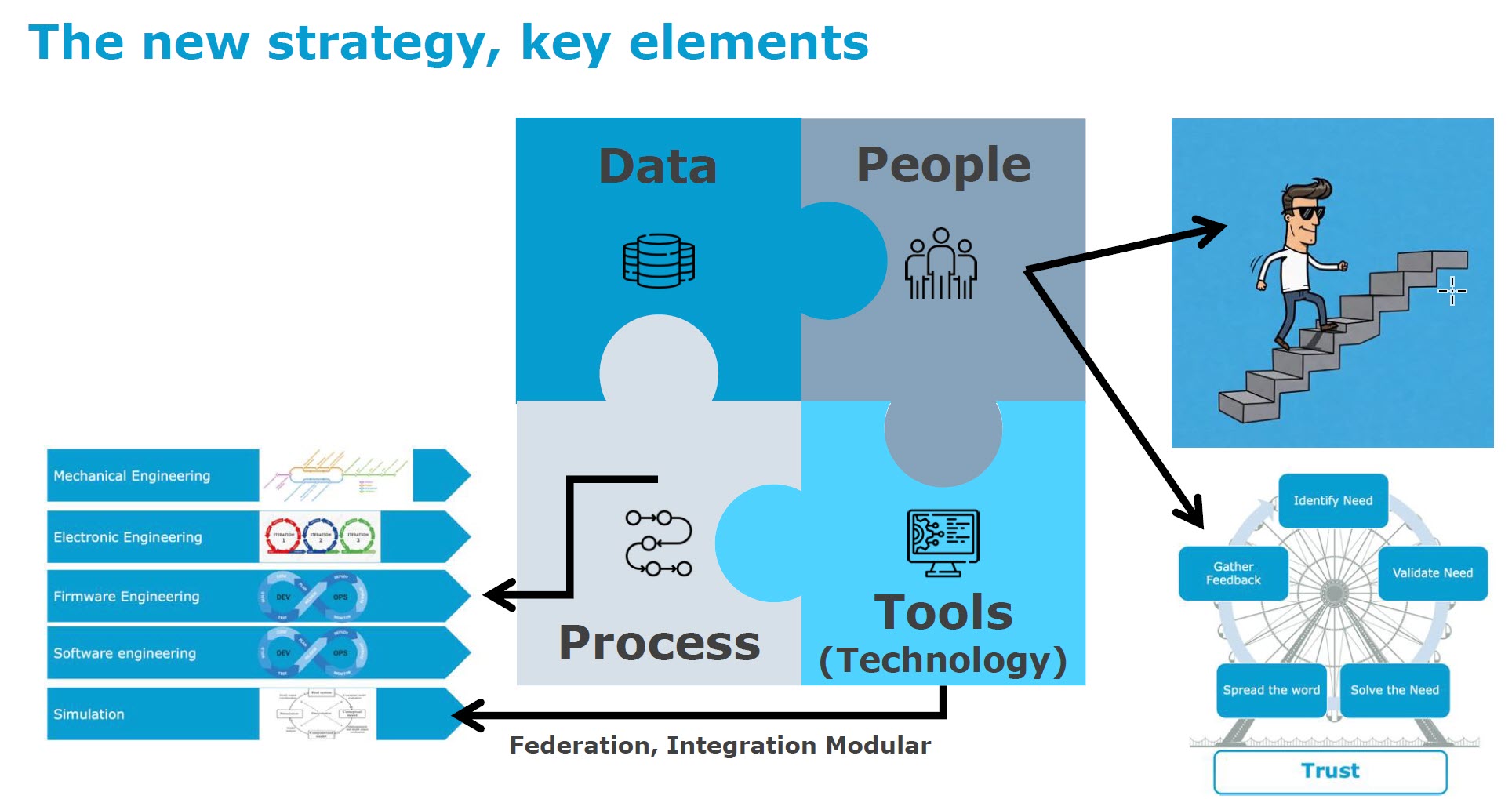
The great lessons I learned from Antonio are:
- If your plan does not work out, be open to failure. Learn from your failures and aim for the next success.
- Human relations—I trust you, understand you, and know what to do—are crucial in such a complex company landscape.
Navigating Change: Lessons from My First Year as a Program Manager
 Linda Kangastie from Valmet Technologies Oy in Finland shared her experiences within the company, from being a PLM key user to now being a PLM program manager for the PAP Digi Roadmap, containing PLM, sales tools, installed base, digitalization, process harmonization and change management, business transformation—a considerable scope.
The recommendations she gave should be a checklist for most PLM projects – if you are missing one of them, ask yourself what you are missing:
- THE ROADMAP and THE BIG PICTURE – is your project supported by a vision and a related roadmap of milestones to achieve?
- Biggest Buy-in comes with money! – The importance of a proper business case describing the value of the PLM activities and working with use cases demonstrating the value.
- Identify the correct people in the organization – the people that help you win, find sparring partners in your organization and make sure you have a common language.
- Repetition – taking time to educate, learn new concepts and have informal discussions with people –is a continuous process.
As you can see, there is no discussion about technology– it is about business and people.
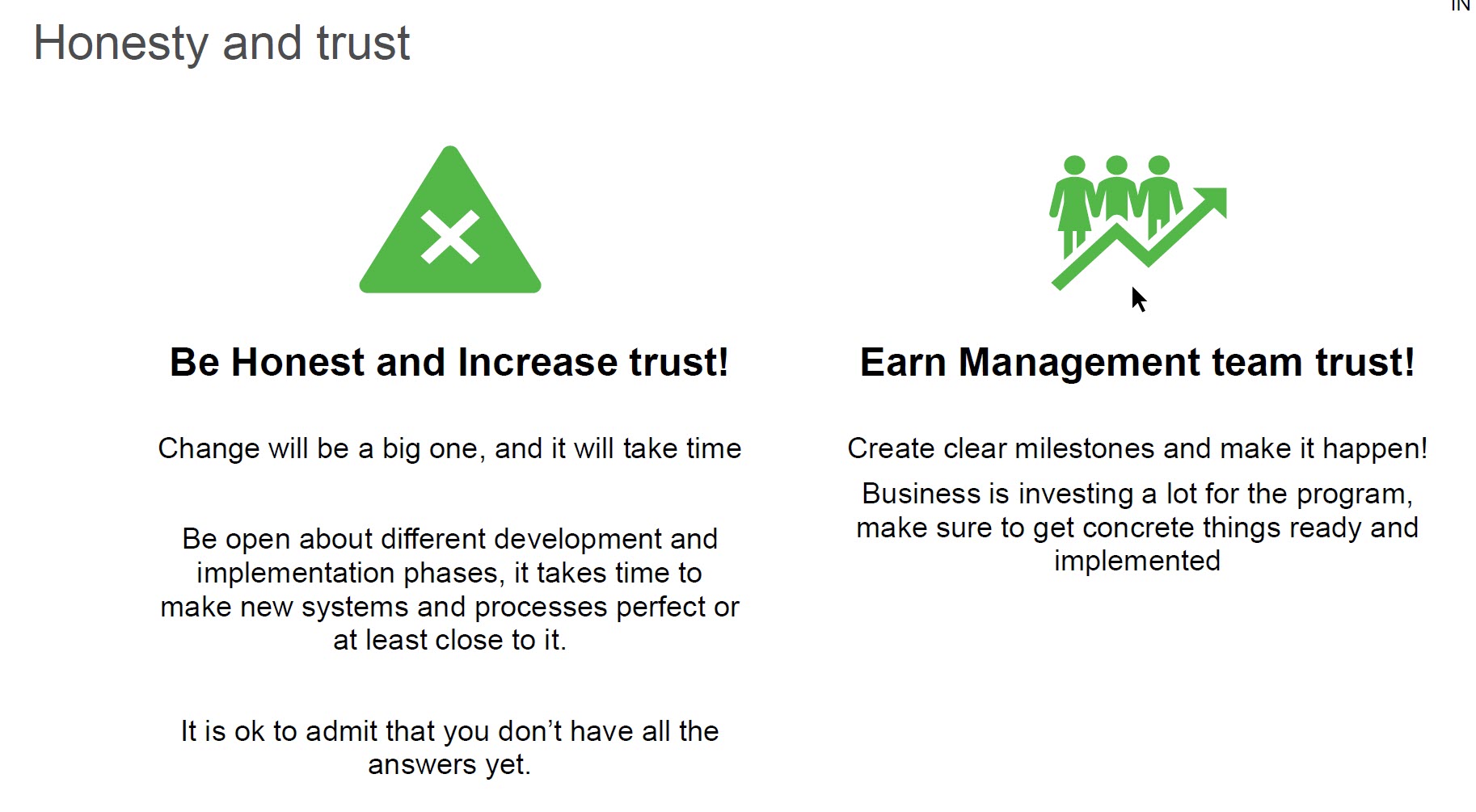
To conclude, other speakers mentioned this topic too; it is about being honest and increasing trust.
The Future Is Human: Leading with Soul in a World of AI
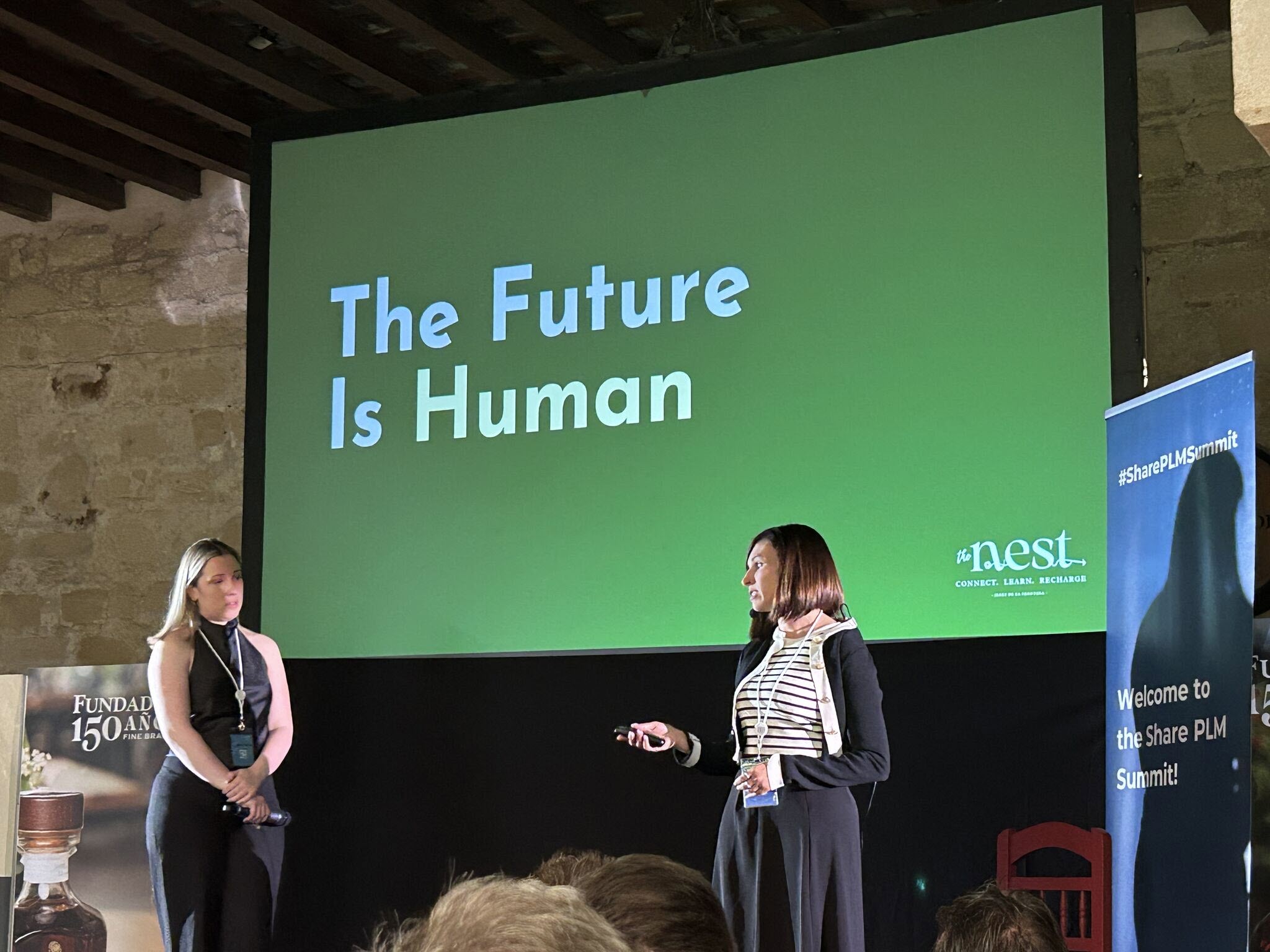 Helena Guitierez‘s keynote on day two was the one that touched me the most as she shared her optimistic vision of the future where AI will allow us to be so more efficient in using our time, combined, of course, with new ways of working and behaviors.
As an example, she demonstrated she had taken an academic paper from Martin Eigner, and by using an AI tool, the German paper was transformed into an English learning course, including quizzes. And all of this with ½ day compared to the 3 to 4 days it would take the Share PLM team for that.
With the time we save for non-value-added work, we should not remain addicted to passive entertainment behind a flat screen. There is the opportunity to restore human and social interactions in person in areas and places where we want to satisfy our human curiosity.
 I agree with her optimism. During Corona and the introduction of teams and Zoom sessions, I saw people become resources who popped up at designated times behind a flat screen.
The real human world was gone, with people talking in the corridors at the coffee machine. These are places where social interactions and innovation happen. Coffee stimulates our human brain; we are social beings, not resources.
Death on the Shop Floor: A PLM Murder Mystery
Rob Ferrone‘s theatre play was an original way of explaining and showing that everyone in the company does their best. The product was found dead, and Andrea Järvén alias Angie Neering, Oleg Shilovitsky alias Per Chasing, Patrick Willemsen alias Manny Facturing, Linda Kangastie alias Gannt Chartman and Antonio Casaschi alias Archie Tect were either pleaded guilty by the public jury or not guilty, mainly on the audience’s prejudices.
You can watch the play here, thanks to Michael Finocchiaro :
According to Rob, the absolute need to solve these problems that allow products to die is the missing discipline of product data people, who care for the flow, speed, and quality of product data. Rob gave some examples of his experience with Quick Release project he had worked with.
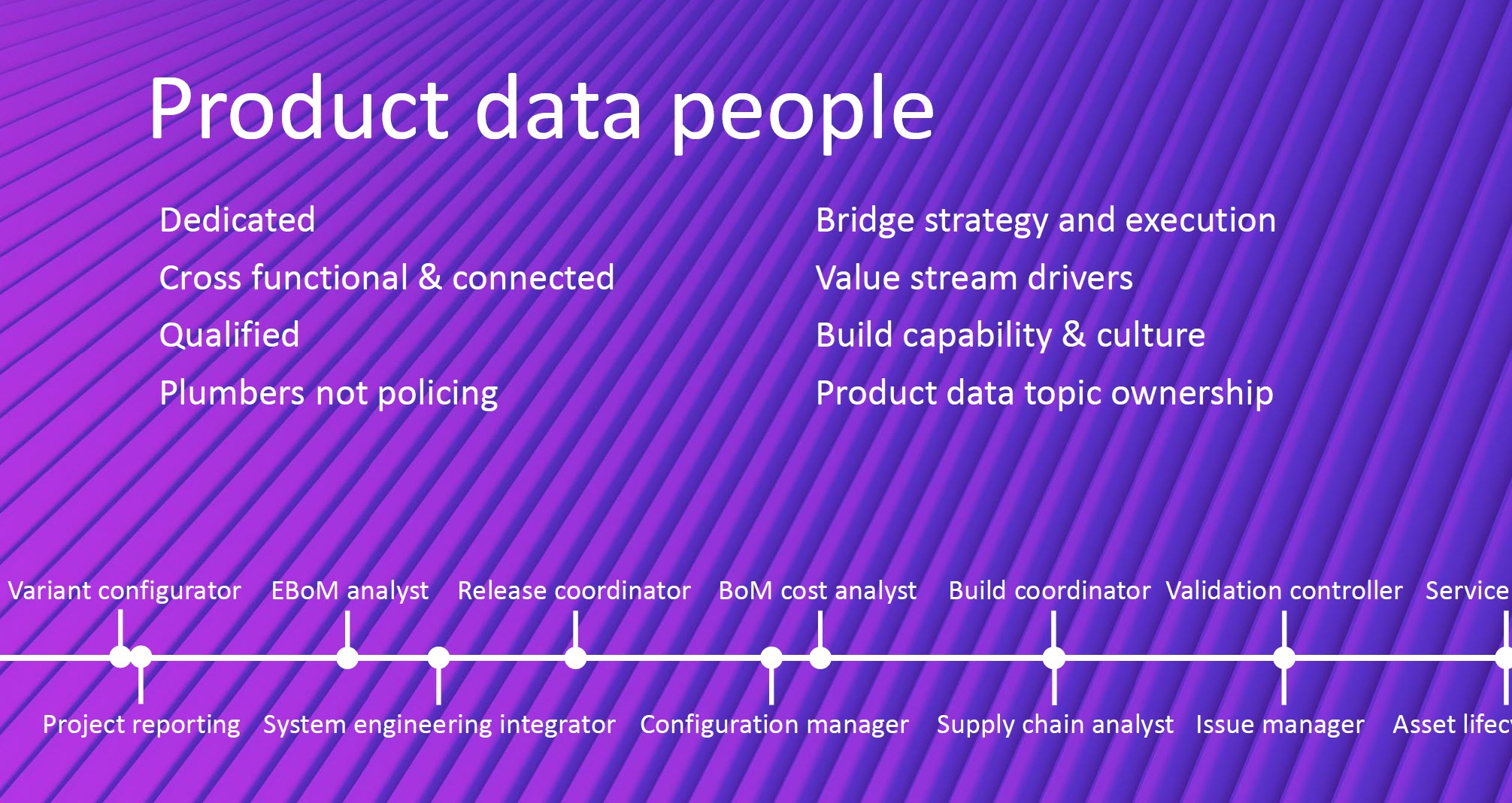
My learnings from this presentation are that you can make PLM stories fun, but even more important, instead of focusing on data quality by pushing each individual to be more accurate—it seems easy to push, but we know the quality; you should implement a workforce with this responsibility. The ROI for these people is clear.
 Note: I believe that once companies become more mature in working with data-driven tools and processes, AI will slowly take over the role of these product data people.
Conclusion
I greatly respect Helena Guitierez and the Share PLM team. I appreciate how they demonstrated that organizing a human-centric PLM summit brings much more excitement than traditional technology—or industry-focused PLM conferences. Starting from the human side of the transformation, the audience was much more diverse and connected.
Closing the conference with a fantastic flamenco performance was perhaps another excellent demonstration of the human-centric approach. The raw performance, a combination of dance, music, and passion, went straight into the heart of the audience – this is how PLM should be (not every day)
There is so much more to share. Meanwhile, you can read more highlights through Michal Finocchiaro’s overview channel here.


 Jos Voskuil's Weblog
Leave a comment
Comments feed for this article