
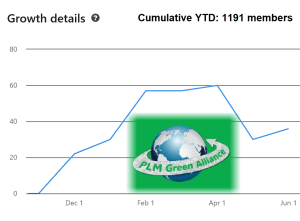
 I am happy to see that the number of members of our PLM Green Global Alliance on LinkedIn has been growing fast recently.
Early this year, we reached 1000 members; now, as of this post, we have almost 1200 members in our LinkedIn group—a growth of 20 % in less than half a year!
Each member of the #plmgreen alliance has a unique story and reason for joining.
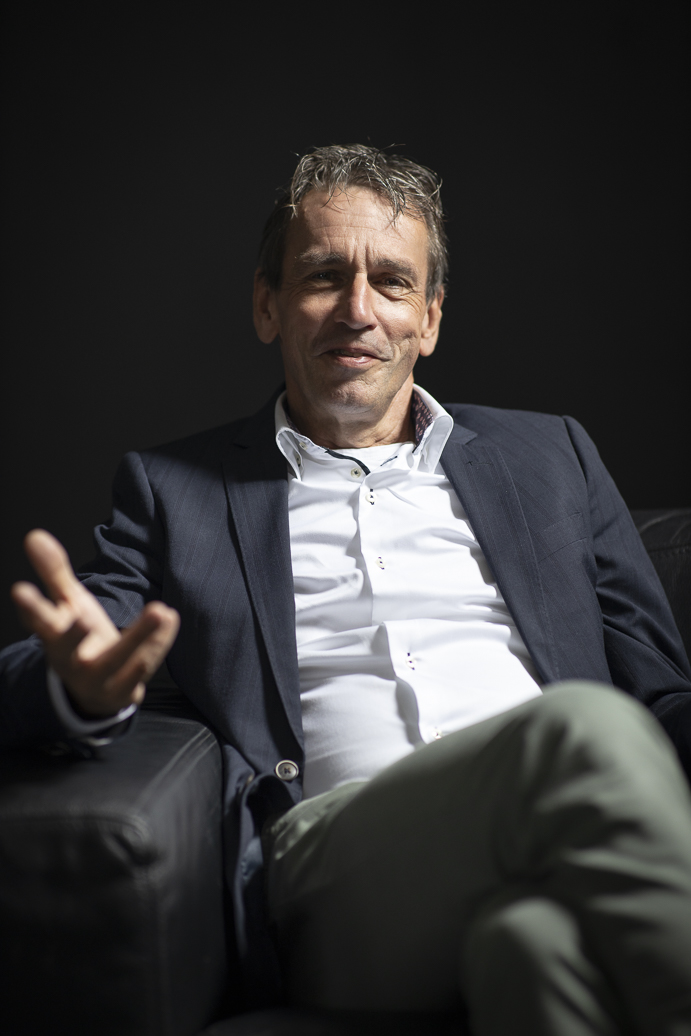 I’m genuinely interested in learning more about your motivation. To kick off this conversation, I am sharing my journey, and I am eager to hear your thoughts, comments, and suggestions.
Being aware this is again a long read, but I encourage you to read the article till the end.
Reading a 1500-word post was a 20th-century skill that helped people understand things with their nuances.
Let’s not lose this skill in the 21st century!
How it all started
 Rich McFall reached out to me in late 2019, seeking individuals who shared our vision of establishing a platform for discussion and collaboration on green PLM. He was drawn to my 2015 blog post, ‘PLM and Global Warming,’ which I wrote six months before the famous Paris Agreement.
In my 2015 blog post, I drew a parallel between the slow response to digital transformation in the PLM domain and our collective inaction against climate change.
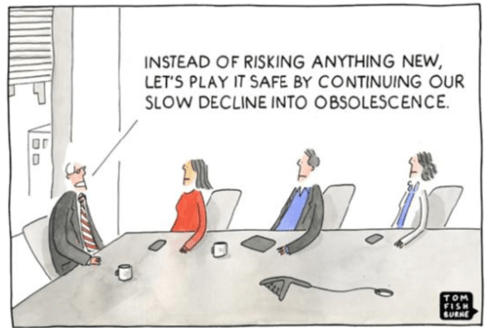
Despite the growing awareness of human-caused greenhouse gas emissions, there needed to be more urgency. This post was a call to action, not just for digital transformation in the PLM domain, but for our planet’s future. The cartoon below illustrates this mindset:
Both Rich and I felt that, when possible, we should use our energy and PLM-related skills to bring together a community of people who would take Climate Change and Sustainability seriously.
 Rich’s focus was primarily on Climate Change and Greenhouse Gas emissions. – a hot topic in the US, where my passion and interest were related to Sustainability and the Circular Economy – two overlapping topics with a different impact, both parts of the UN Sustainable Development Goals (SDG) as formulated and adopted by all United Nations Member States in 2015.
“Climate change creates fear and polarization, whereas the Circular Economy is more of a long-term concept, more complex to grasp, or implement, however crucial for the future of the planet.”
The start in 2020
 When we started in early 2020, a few people were interested in contributing to the alliance—their names are at the bottom of this post. After several internal Zoom meetings, we decided to focus on different Green areas.
The themes are available here: PLM Green Themes, i.e., Sustainability, the Circular Economy, Climate Change, Green Energy and Life Cycle Assessment.
 In the beginning, the alliance was a small group of enthusiastic people supported by approximately 100 members in our LinkedIn group. As an organization of volunteers, we struggled with allocating time and resources to get the needed attention. In 2020, climate change and Sustainability were still niche topics in the PLM domain, and our audience was still small.
Our interactive medium was the LinkedIn group, where comments and likes were easily shared. Our PLM Green Global Alliance website would be the place where we consolidate information—a challenging approach for us with limited skills and budget.
Starting the interviews in 2022
In 2022, we started interviewing PLM-related software vendors. Together with Klaus Brettschneider and, more recently, Mark Reisig, we were happy to discover what the major players in our PLM ecosystem were doing regarding Sustainability.
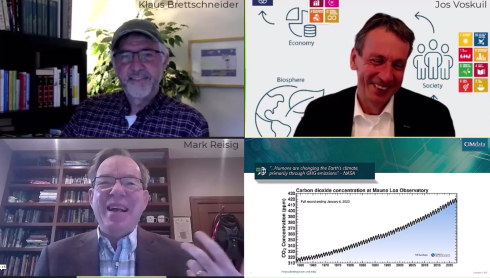
We spoke with SAP (Feb 2022 – Circular Economy), Autodesk (March 2020 – empowering engineers), Dassault Systemes (May 2022 – company targets & Virtual Twin), Sustaira (Sept 2022 – Connecting the dots – ESG reporting) and Aras (Oct 2022 – the need for a digital thread)
2023 – A year of transition
Besides the software vendors, consultancy firms started to address the need for more sustainable product development and understanding of what to do, and we spoke with CIMdata (April 2023 – the importance of sustainable business models) and Transition Technologies PSC (October 2023 – their GreenPLM offering on top of the PTC PLM suite)
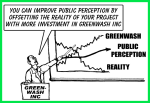 However, as a PLM Green Global Alliance, we discovered that more and more companies were considering moving away from greenwashing and toward implementing actual measures, some of them driven by upcoming regulations and country initiatives.
It was also a significant year for the PLM Green Global Alliance, as besides receiving increasingly encouraging messages, both CIMdata and CIMPA joined the alliance as moderators.
 CIMdata, well known for its PLM consultancy and market analysis, started an additional consultancy practice related to PLM and Sustainability.
Mark Reisig, their lead consultant, joined us on the themes of Sustainability and Energy, also given his previous work career in that field.
 CIMPA, a European PLM consultancy services company with roots in the aerospace industry, decided to support the alliance on the theme of the circular economy. Patrice Quencez and his team lead and moderate this activity.
Green in 2024 – what can we do?
Fear or Optimism? Fast and Slow!
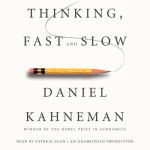 One of the negative characteristics of the human mind is that we only want to act if it is indispensable. The brain’s evolutionary characteristic is to use the maximum amount of energy when there is a dangerous situation that forces us to act.
There is enough proof for this theory, and it is the main reason why we continue bad habits. The best book to recommend is Thinking Fast and Slow by Daniel Kahneman.
Ask yourself:
- Should you study for the whole year or just before the exams?
- Would you start smoking knowing it is likely killing you in the long term?
- Would you save money for later, as then you might need it?
- Would you spend hours/days mastering a topic, or would you be an expert on social media with some easy facts and statistics?
- Would you act against climate change and overconsumption, knowing the reasons?
All the above questions illustrate that the majority of us (me too – there are no saints anymore) think fast, and media and marketing organizations know our weaknesses.
 The result: we only get attention when there is a message of fear
An explanation of why good news channels have no subscribers, whereas bad/fake news and polarising messages create an emotion to act.
In our PLM Green Alliance Group, Rich started with a monthly news digest related to Climate change. In the beginning, it felt like only bad news and the climate changes and disasters were showing us the urgency to handle. Read the last Climate Change Chronicles here.
Bad news and fear might paralyze people. You might think the topic is too big for me to handle; therefore, let’s do nothing. Do you remember the diagram below?
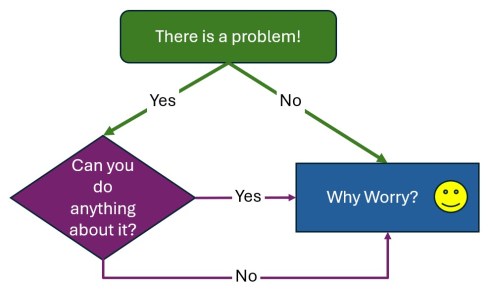
Fortunately, many people believe that something needs to be done.
 A recent UNDP survey shows that 80 percent of people globally want more decisive government climate action. Read the news here, and if you are interested in how your country compares to the rest of the world, check it here.
The good news is that the majority supports measures; the bad news is that the minority is the most vocal and influential by having the means and motives not to change the current status quo. And they have been organizing themselves for years.
Therefore, there is some optimism – we need to organize!
Looking back, particularly over the last 1½ years, there are reasons for optimism. Progress might not go as fast as desired, but if you are open to action and your newsfeed algorithm is also switched to positive, you will find encouraging messages.
For example, follow Assaad Razouk; his posts are often encouraging – not creating rage.
Read the monthly ESG Newsletters published by Vincent de la Mar from Sustaira and discover the positive trend. You can find his latest May newsletter here as an example: Sustainability & ESG Insights May ’24: Biden’s carbon market plans & how to get back on track to Paris Targets.
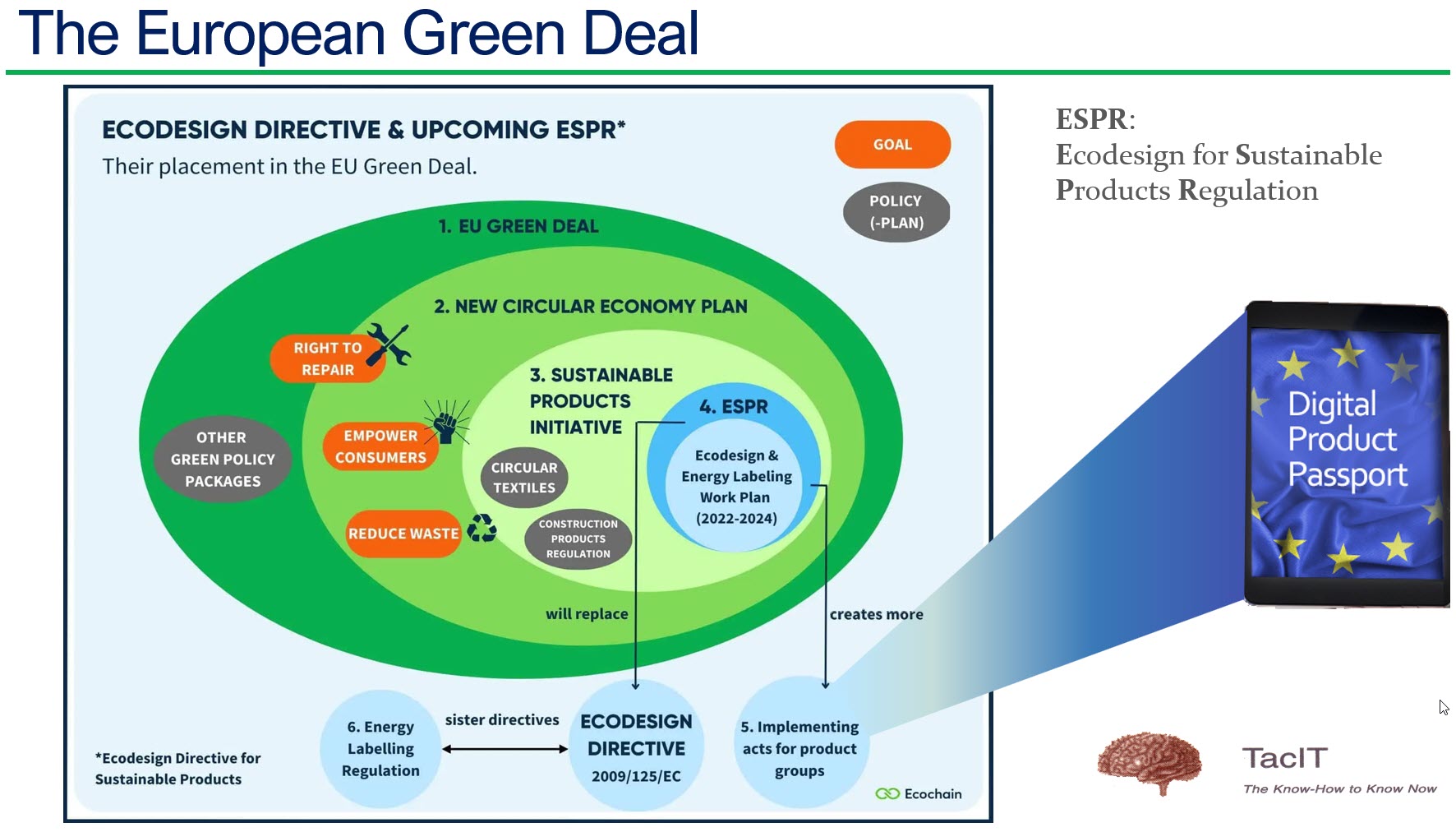
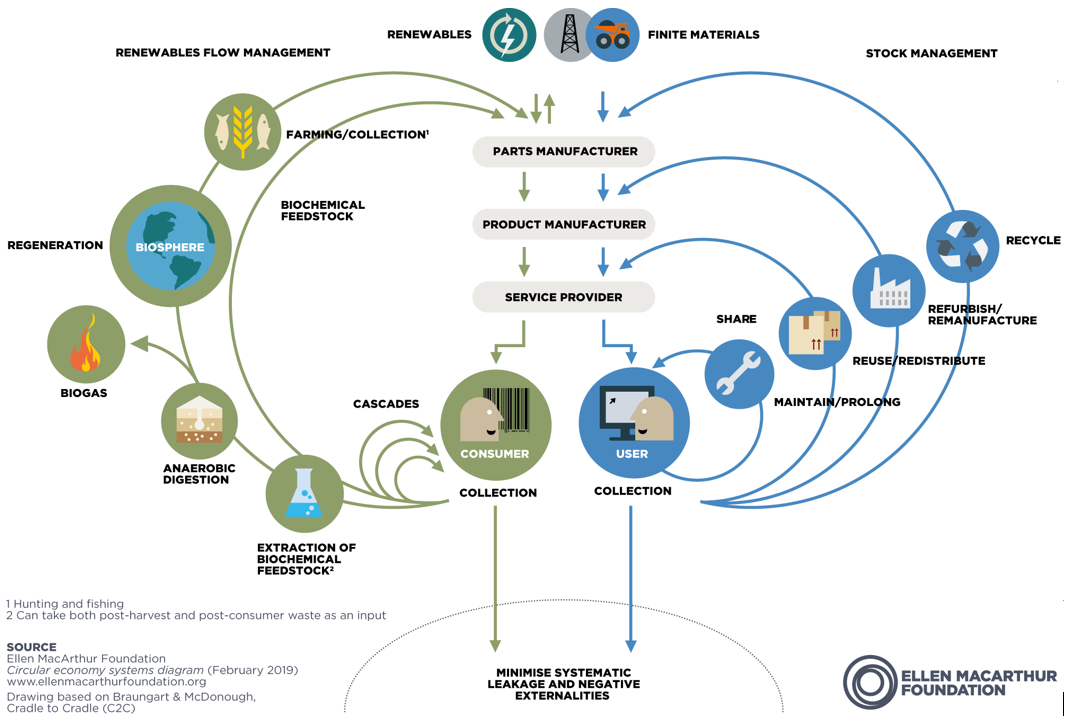
Following the progress within Europe – after the European Green Deal with all its aspects, recently, the Nature Restoration Law was signed, pushing companies to use more generative resources. The Nature Restoration Law and the European Green Deal are regulations pushing for a more circular economy as both the left side (regenerative) and right side (hardware) of the famous butterfly are addressed.
Conclusion
We are making progress, and I hope this post makes you realize that you need to worry about climate change and the Sustainability of our planet. My passion, and the passion of all the people listed below, is to support a movement and not to be silent.
Now, I am asking you to share your story. Which topics do we need to address first? Can you share examples or facts that illustrate—that with 1200 members, we should not be part of the silent majority but become a respected voice?
We’d like to express our exceptional gratitude to all those who supported us or are still supporting us at any stage of our PLM Green Global Alliance. Feel motivated to join this group of the non-silent majority.
In an alfabetical order: Xavier Adam, Zoe Bezpalko, Tom Boudeville, Klaus Brettschneider, Nina Dar, Stephane Declee, Dave Duncan, Stephan Fester, Bjorn Fidjeland, Ryan Flavelle, Matthias Fohrer, Roger L. Franz, Lionel Grealou, Jon den Hartog, Patrick Hilberg, Yousef Hooshmand, Hannes Lindfred, Ilan Madjar, Vincent de la Mar, James Norman, Rich McFall, Frank Popielas, Patrice Quencez, Mark Reisig, Audrey Reyniers, Erik Rieger, Ryan Rochelle, Mark Rushton, Neil D’Souza, Jonathan Thery, Oleg Shilovitsky, Florence Verzelen, Darren West ,Patrick Willemsen, Rafał Witkowski, Morgan Zimmermann.


 Jos Voskuil's Weblog
1 comment
Comments feed for this article
July 3, 2024 at 6:46 pm
David Duncan
Hi Jos, I enjoyed your 1500 words! As requested, here’s my perspective to kick off discussions…
As PLM practitioners, the Circular Economy may be our most impactful pursuit. While finite element preservation is the direct environmental outcome from circularity, it of course highly correlates to our other top impact areas of decarbonization and hazardous material controls.
The Economist and others have recently noted how renewable energy is scaling well, with solar towards excitingly low price points relative to structurally constant-cost fossil alternatives. This will drive previously fossil-powered machines faster towards electrification and other renewably-sourced energy. Renewables outperforming fossil fuel is good news, and PLM practitioners may not need to focus on pushing these actions much more.
However, circularity is still a single-digit outcome for most of our industries. Circularity has a ways to go, but with many promising dials to tune. Material selection, modular design, product service systems, digital product passports, new standards like Asset Administrative Shell. Industry needs a lot of help scaling circularity, and PLM’s “center stage” in this chapter!
Thanks Dave for your contribution – as the PLM Green Global Alliance we are happy to hear your points – again and again – as long as it het become a commodity for all of us to think and live circular. Looking forward to more feedback from others and meet-up in forward-looking discussions. Best regards, Jos
LikeLike