
 Do you ever think about where we’ll be ten years from now? I’ve noticed I ask that question more and more these days. Probably because I have the time, not being involved anymore in day-to-day business and alerts.
Interestingly, we tend to assume that long-term thinking is someone else’s job — left to business management and governments. Roadmaps, strategies, and vision stories have always been part of my work with companies.
And yet, the dominant reality right now is a dramatic focus on the short term — driven by populism on one side and quarterly profit targets on the other. The result is a collective inability to make decisions that matter for the next decade, let alone the next generation.
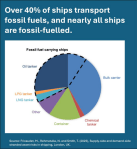 The current war in the Middle East has made something painfully visible that many of us already knew: we are dangerously dependent on fossil fuels.
Around 40 percent of global shipping is tied to fossil fuel supply chains. Countries that have not invested in energy independence are now feeling that vulnerability acutely.
The energy transition is not just an environmental ambition — it is a geopolitical necessity.
- China understood this years ago and has been investing accordingly.
- AI data centers are now one of the fastest-growing sources of electricity demand, and even in Texas, they are building wind and solar parks to keep that energy demand under their own control.
- And Cuba — pushed by American sanctions — has been forced to innovate into wind and solar energy, with Chinese support. These are not coincidences.
They are signals that working on an energy transition makes you less vulnerable!
A real “burning platform”!
While we see burning platforms in the Middle East, we are also in a classic “burning platform” situation — a phrase from the world of change management that captures a simple truth: people only change when staying the same becomes more costly than changing.
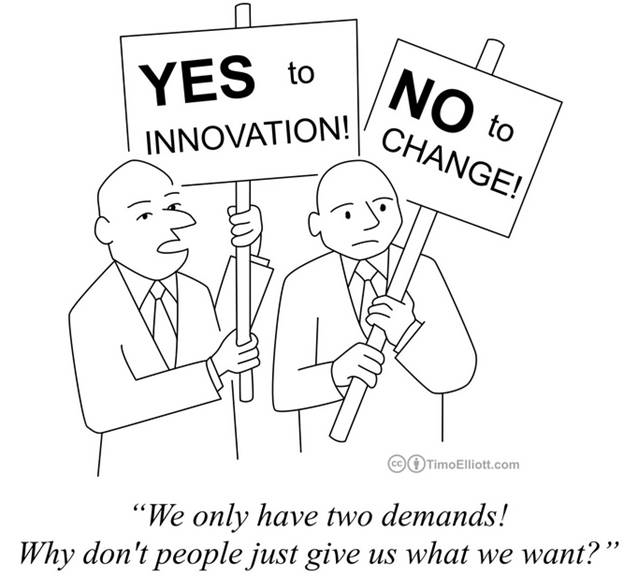
It’s a depressing observation about human nature — and one I keep coming back to whenever I see exciting possibilities on the horizon that we simply refuse to act on.
The fossil fuel dependency is one burning platform, willingly used at the moment by those countries and companies that are benefiting from this industry.
The downside is that the path towards a more circular economy — reducing waste, rethinking production, designing for longevity — is equally urgent and equally neglected.
This is precisely why the PLM Green Global Alliance (PGGA) exists — to keep these conversations alive and focus on the topics that support a sustainable future.
Four weeks ago, I launched a survey among our new LinkedIn group members. Due to a low response rate, I extended it to the whole group two weeks later.
The takeaway? Even within this community, the energy transition and sustainability don’t appear to feel like a burning platform — something demanding urgent action.
PLM Green Global Alliance survey
A quick overview of the responses — given the low number of replies, treat this as an indication rather than a statistically solid survey.
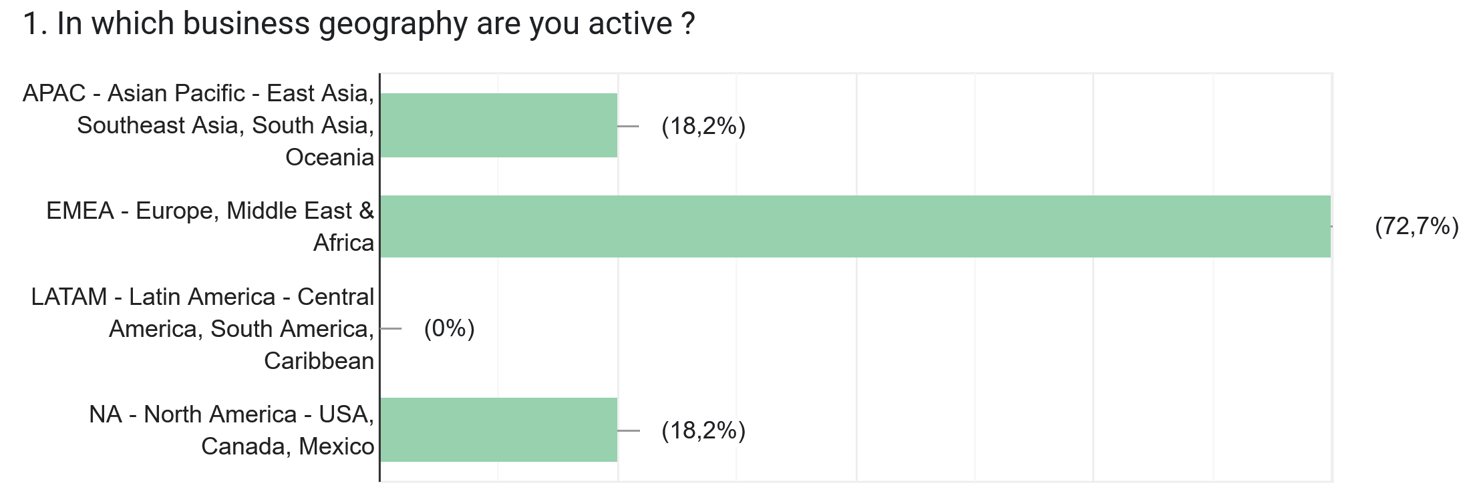
Although we launched the PGGA as a truly GLOBAL alliance — with core team members from both the US and Europe — the membership skews heavily toward the EMEA region. The political climate and culture of each region explain a lot about that.
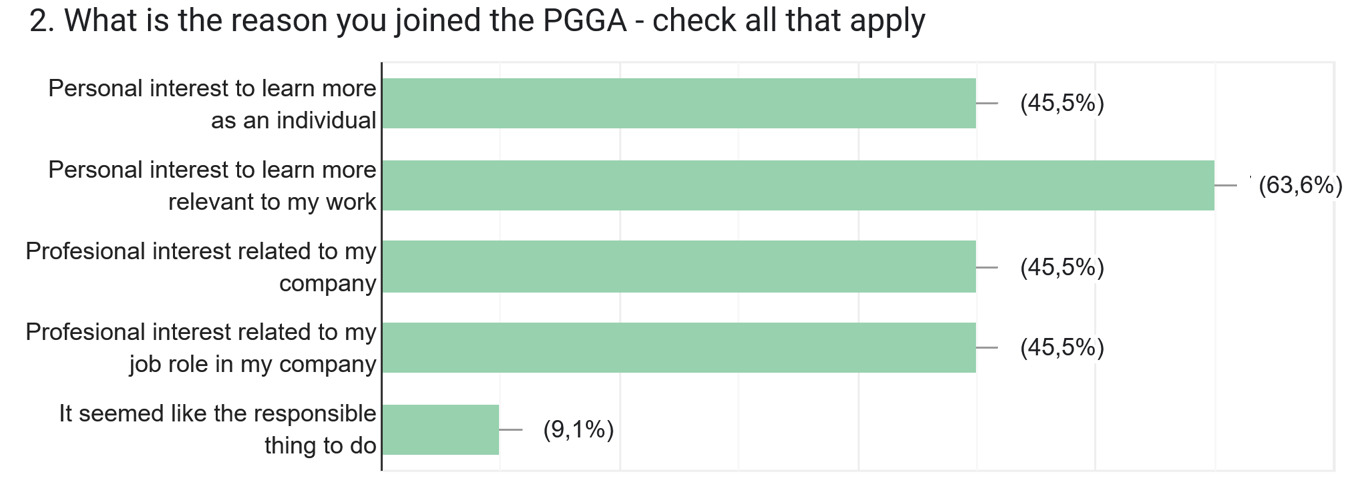
It’s encouraging to see that most people joined out of personal interest, with professional motivations also playing a role. That tells us the PGGA needs to keep its focus on sharing real experiences — not just theory.
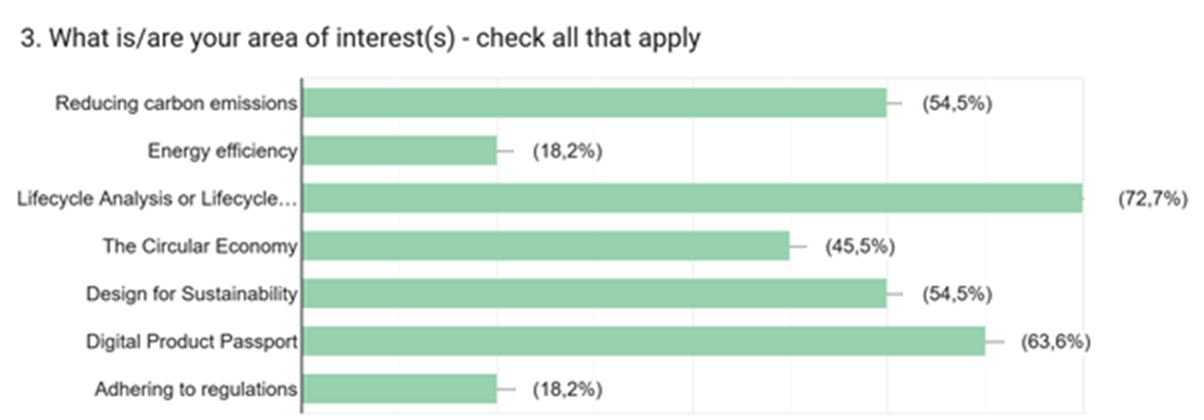
LCA (Life Cycle Analysis or Life Cycle Assessments) stands out as a strong area of interest — and the good news is that several of our core team members are actively working on it. Don’t hesitate to post your questions to the group.
On the Digital Product Passport (DPP), we’re planning an interview and/or webinar. The DPP is a great example of a topic that’s as much about digitizing product information as it is about methodology.
As you may have seen the post The show must go on – but will it be sustainable? last week. Erik Rieger and Matthew Sullivan, the Design for Sustainability team, are actively looking for more participants to help shape guidance in this area.
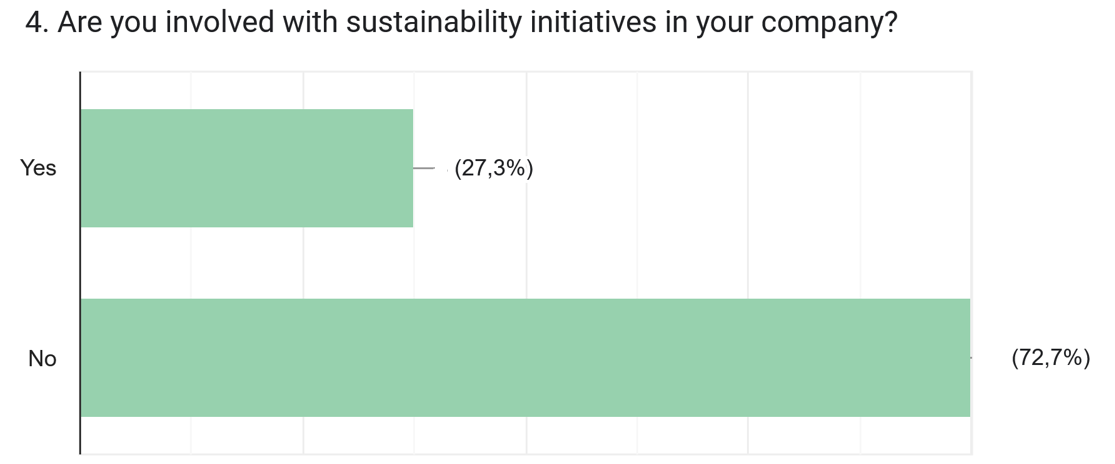
The answers illustrate that for most people, working on sustainability activities is (still) not part of their daily mission.

Question 5 allowed the participants to vote for topics of interest, and we can summarize the answers as follows:
- Understand what PLM solution providers are offering (we continue with our interviews)
- Discussing how to determine the carbon impact/LCA in the full scope, not only in the design scope and how various platforms contribute to it in the various lifecycle stages.
- Design for Sustainability guidance and info
- The role of PLM and AI in the context of sustainability
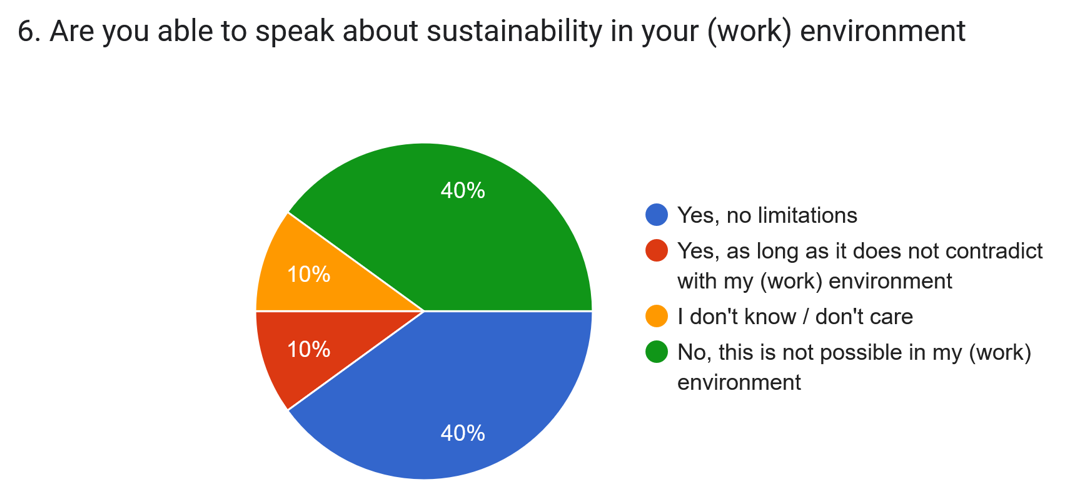
Since the survey was anonymous, we can’t link answers to specific regions. But we’re aware that in some countries, polarization has made certain topics off-limits — either by mandate or out of fear of a difficult working atmosphere.
The last two questions were about potential involvement for the PGGA from the people answering the survey. 3 people responded positively to support the PGGA in action.
 Within the PGGA, everyone is welcome to share their perspective — with respect for those who see it differently. It’s not about being right or wrong. It’s about the dialogue, and about finding paths forward to a future that’s sustainable not just for the planet, but for businesses and the people within them.
A low response or apathy?
The survey results are interesting on their own — but when you combine them with the low response rate, they say something more: even in communities that care, mobilizing action is hard.
 Are we too busy with the short term, or have we become apathetic to what is happening around us and have the feeling our efforts do not matter?
On that last point, I keep thinking of Hannah Arendt — the German-American historian and philosopher who lived from October 1906 till December 1975.
Her famous book, published after the Second World War, is The Origins of Totalitarianism (1951), an alarming book if you read it in today’s context.
My favorite quote from this book:

Written in the context of the Holocaust, it explained how the indifference of ordinary people allowed atrocities to unfold. Arendt warns against moral detachment. Staying informed and engaged takes effort — but it’s the effort that matters.
Today, she might write:
“Evil thrives on social media, and cannot exist without it.”
To conclude
So what can we do? The conclusion is simple, even if the execution is not directly possible: don’t just watch it burn. Every one of us has a space of influence — in our companies, in our communities, in our professional networks. The energy transition, the circular economy, the push for longer-term thinking — none of these will happen because a government issued a directive or a CEO signed a strategy paper. They happen because individuals within their sphere of influence decide to make them happen.
Where are you standing?
Respond with a “like” if you care!


 Jos Voskuil's Weblog
1 comment
Comments feed for this article
March 10, 2026 at 1:19 pm
Bart Willemsen
Interesting reflection, Jos.
In my experience, the situation you describe is very recognizable. At the company where I work, sustainability is certainly considered important. However, the main driver is often compliance — “because it is required” — rather than a strong internal vision or strategic ambition.
A positive development is that work is being done on the Digital Product Passport. Yet I notice that there is still limited awareness of how a PLM system could support this in a structural way. The potential of PLM as the backbone for product lifecycle data, including sustainability information, is largely untapped.
From the PLM side, I have already prepared the system so that the data needed for something like a product passport can be captured. The structure and attributes are there. The challenge, however, is not the technology but the organization: there are currently no clear processes or responsibilities for actually filling and maintaining this information.
What I also observe is that management tends to underestimate the strategic role PLM could play here. I have tried to share insights and possibilities, but the urgency is not widely felt yet. Perhaps this is exactly what you describe with the “burning platform” — many organizations will only start moving once regulations or market pressure make it unavoidable.
Still, I believe PLM can become a key enabler for sustainability, circularity, and digital product passports — if companies start seeing it not only as an engineering tool, but as a lifecycle information platform.
Curious to hear how others are experiencing this within their organizations.
Regards, Bart Willemsen
Thanks for your positive and aligned feedback – and like you, we believe that sharing positive outcomes can help other companies to become (pro)active too!
Best regards, Jos
LikeLike