
 The past two weeks have been a fascinating journey, delving into the intersection of Curiosity, Innovation, and modern PLM. Where many PLM-related posts are about the best products and the best architectures, there is also the “soft” angle – people and culture – which I believe is the most important to start from. Without the right people and the right mindset, every PLM implementation is ready to fail.
 First, I worked with Stefaan van Hooydonk, the founder of the Global Curiosity Institute and author of the bestselling book The Workplace Curiosity Manifesto, on the article Curiosity as Guiding Principle for PLM Change, which explained the importance of Curiosity in the context of sustainable product development (PLM).
The intersection between Curiosity and modern PLM is Systems Thinking.
Systems Thinking: A Crucial 21st Century Skill for Sustainable Product Development, Driven by Curiosity.
Last week, I had the privilege of attending the CADCAM Lab conference in Ljubljana. In addition to my keynote, I was inspired by several presentations on the various aspects of digital transformation: the tools, possible enablement, and the needed mindset.
 One of the highlights was the talk by Tanja Mohorič, the director for innovation culture and European projects in Slovene corporation Hidria and director of Slovene Automotive Cluster ACS. Tanja shared her insights on fostering Innovation, a crucial driver for a sustainable business as companies need to innovate in order to remain significant.
One of the intersections between Innovation and modern PLM is Curiosity
Innovation is defined as the process of bringing about new ideas, methods, products, services, or solutions that have significant positive impact and value.
Let’s zoom in on these two themes.
Curiosity
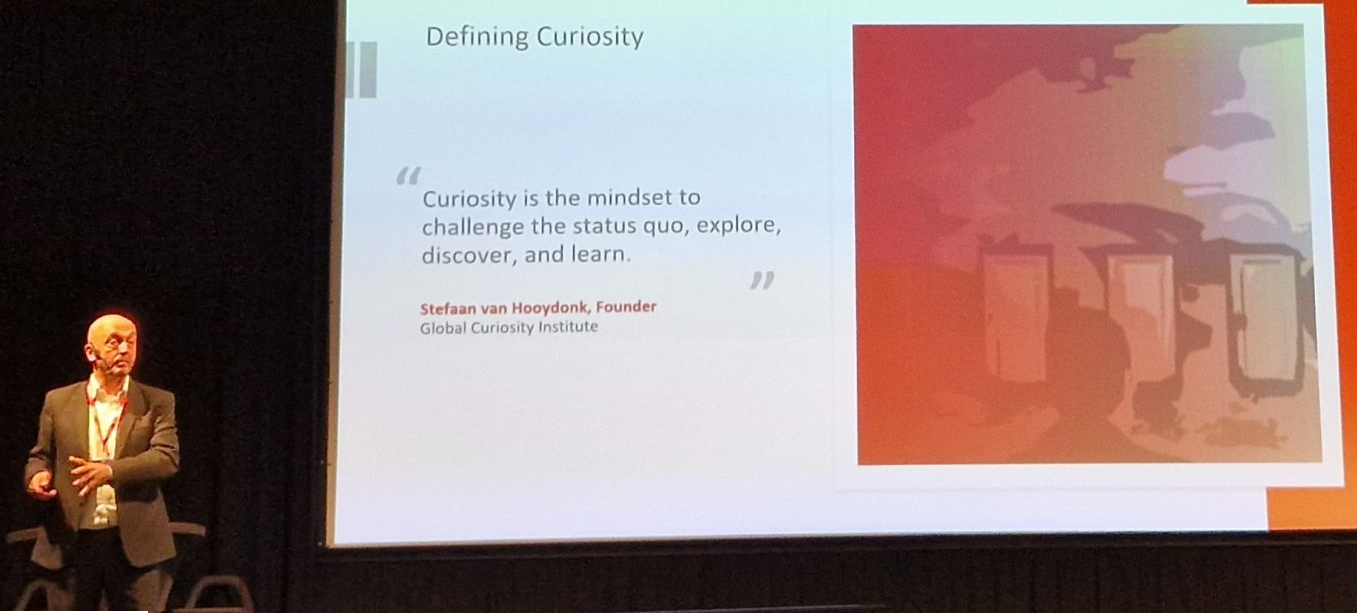
I knew Stefaan from his keynote at the PLM Road Map / PDT Europe 2022 conference; you can read my review from his session here: The week after PLM Roadmap / PDT Europe 2022.
It was an eye-opener for many of us focusing on the PLM domain. Stefaan’s message is that Curiosity is not only a personal skill; it is also something of a company’s culture. And in this age of rapid change, companies that embrace a culture of openness are outperforming their peers.
 This time, on Earth Day (April 22nd), Stefaan organized an interactive webinar titled “Curiosity and the Planet,” which addressed the need for new technologies and approaches to living in a sustainable future. With my Green PLM-twisted mind, I immediately saw the overlap and intersection between our missions.
We decided to write an article together on this topic, in which we described a pathway for companies that want to develop more sustainable products or solutions, using Curiosity as one of the means.
 As companies need to find their path to the digitization of their PLM infrastructure due to regulations, ESG reporting, and potentially the introduction of digital product passports and the circular economy, they need to act fast in an area not familiar to them.
Here, a curious organization will outperform the traditional, controlled enterprise.
 You can read the full article here: Curiosity as Guiding Principle for PLM Change.
And as I know in our hasty society, not everyone will read the article although I think you should. For those who do not read the details, I close this topic with a quote from the article:
We define Curiosity as the mindset to challenge the status quo, explore, discover and learn.
Curiosity is often considered a trait linked to an individual, as exemplified by the constant questions of children or scientists. Groups of people or organizations can also be curious collectively. Research from INSEAD studying the level of Curiosity across the executive team uncovered that these teams are superior in two distinct ways: first, they are better at future Innovation, and second, they are better at optimizing their current operations. Curiosity on the executive team leads not only to future success but also to better short-term business results. Such teams create the perfect environment for their teams to thrive.
Change, however, is hard, and people are often left to their own devices; they prefer to perpetuate the known past rather than invite an unknown future. Curiosity helps us lean into uncertainty. It encourages us to slow down and observe whether the status quo we hold dear is still relevant. Curiosity is the prime catalyst for change. It invites open questions.
Innovation
There is often confusion between Invention and Innovation. Where invention is the “Eureka” moment where a new idea gets its shape, Innovation is the process of bringing new ideas, methods, products, services, or solutions to the market.
 I presented this topic at the 2013 Product Innovation Conference in Berlin. The title of the presentation was PLM Loves Innovation, and you can find it here on SlideShare.
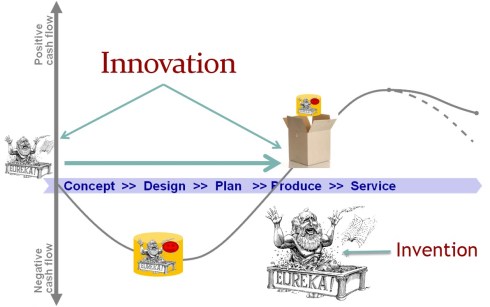
Looking back at the presentation, I realized we were thinking linear.
Concepts of an iterative approach, DevOps and a Minimum Viable Product (MVP) were not yet there. Meanwhile, thanks to digitization, bringing Innovation to the market has changed, which made Tanja Mohorič’s presentation a significant refresh of the mind.
Tanja’s lecture was illustrated by various quotes, you can find them in her presentation . Here are a few examples:
If you really look closely, most overnight successes took a long time. (Steve Jobs)
If you read Steve Jobs’s history at Apple, you will discover it has been a long journey. Although we like to praise the hero, there were many other, less visible people and patents involved in bringing Apple’s Innovation to the market.
Innovation is the ability to convert ideas into invoices (Lewis Dunacan)
What I like about this quote is that it also shows the importance of having a positive financial outcome. Bringing Innovation to the market is a matter of timing. If you are too early, there is no market for your product (yet), and if you are too late, the market share or margin is gone.
Minds are like parachutes – they only function when open (Thomas Dewar)
Curiosity and an open mind remain needed. The parachute quote is a quote to remember, mainly if you work in a traditional, established company. The risk of conformance is high, and a “we know the best” attitude might be killing the company, as we have seen from some management examples, like Kodak, NOKIA, and others.
Tanja’s presentation addressing the elements that support Innovation and those that kill Innovation can be found here: INNOVATION AS A PRECONDITION TO SUCCESS_Tanja Mohorič.
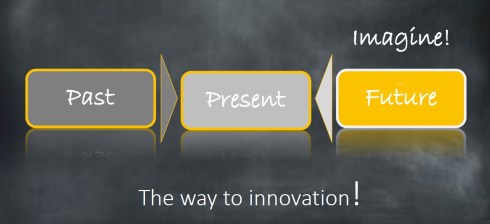
I want to close with one of the essential images that she shared, which is very aligned with how I see companies should consider their future, not as an evolutionary path to survive but as a journey to be inspired.
Coaching
As the CADCAM Group is a significant implementer of the Dassault Systèmes portfolio, my presentation about digital transformation in the PLM Domain was focused on their terminology and capabilities. You can find my presentation on SlideShare here.
However, the HOW part of digital transformation is more or less independent of the software. Here, it is about people, digital skills and new ways of working, which can be challenging for an existing enterprise as the linear business must continue. You might have seen the diagram below from previous blog posts/presentations.
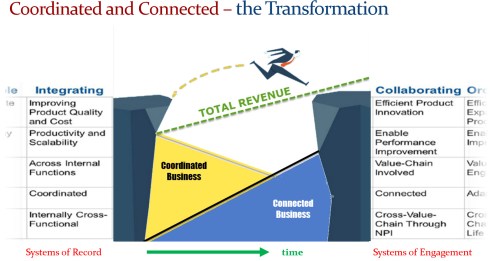
The challenge I discussed with a few companies was how to apply it to your company.
First of all, I am still promoting McKinsey’s approach described in their article Our insights/toward an integrated technology operating model from 2017, which might not directly mention PLM at first glance. The way you work in your business should reflect the way you work with PLM and vice versa.
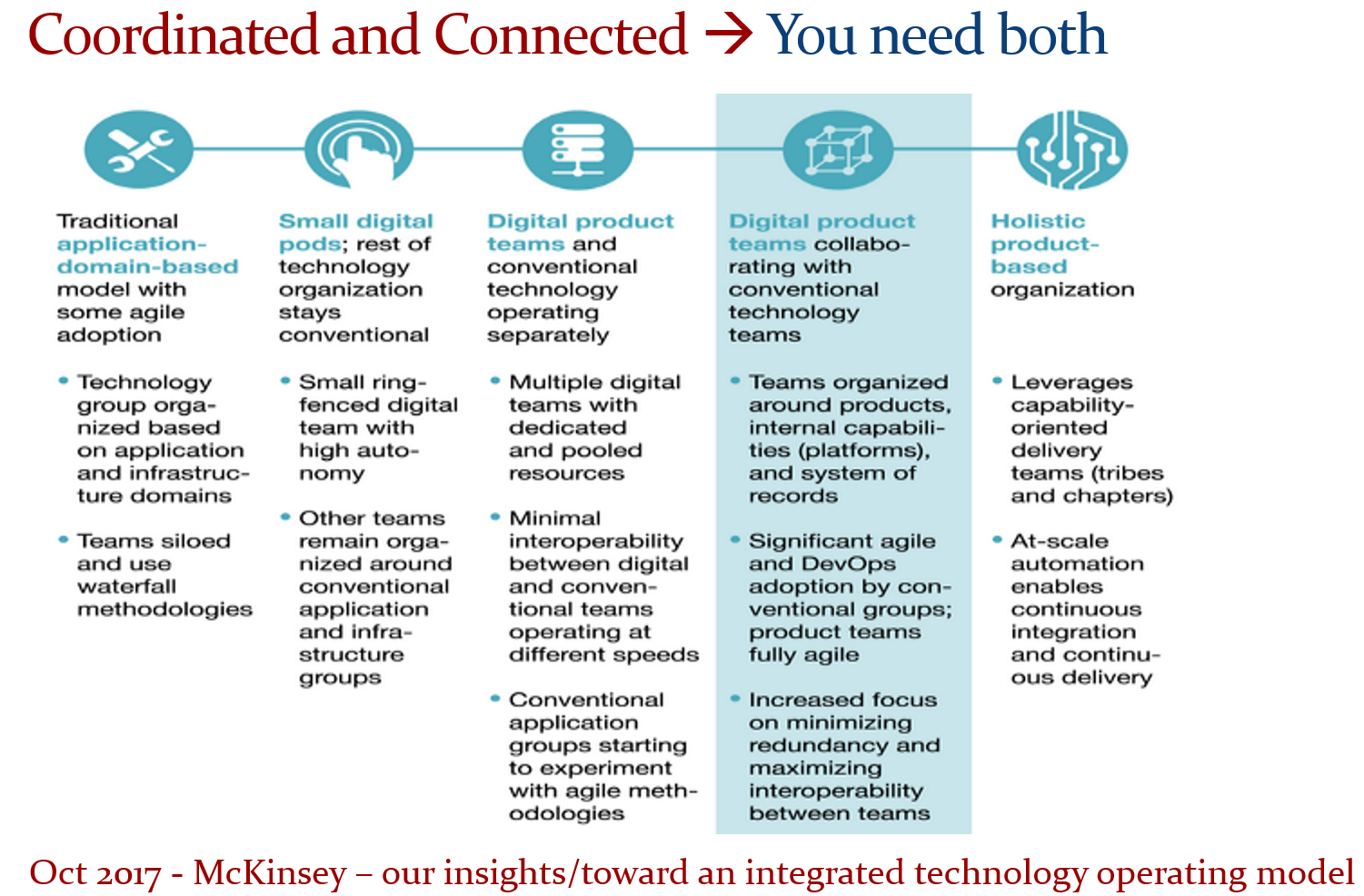
Where the traditional application-domain-based model reflects the existing coordinated business, the transformation takes place by learning to work first in small pods and later in digital product teams.
It seems evident that these new teams will be staffed with young, digital-native people. However, it remains crucial that these teams are coached by experienced people who help the team benefit from their vast experience.
 It is like in soccer. Having eleven highly skilled young players does not make a team successful. Success depends on the combination of the trainer and the coach, and it is a continuous interaction throughout the season.
Therefore, a question for your organization: “Where are your coaches and trainers?”
I addressed this topic in my post: PLM 2020- The next decade (4 challenges), where the topic of changing organizations and retiring people became apparent.
As a rule of thumb, I would claim that you should try to give somebody with unique knowledge and who will be retiring in 2 – 3 years the role of coach and is no longer an operational mission. It may look less effective; however, it will contribute to a smooth knowledge transition from a coordinated to a coordinated and connected enterprise.
Conclusion
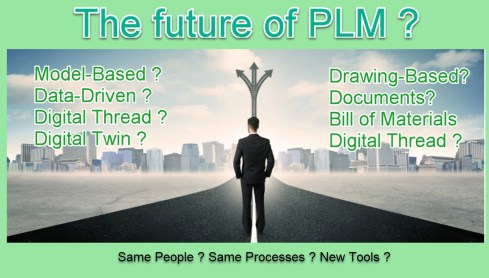
It was great to be inspired by some of the “soft” topics related to modern PLM. We like to discuss the usage of drawings, intelligent part numbers, the EBOM, MBOM, and SBOM or a cloud infrastructure. However I enjoyed discussing perhaps the most essential parts of a successful PLM implementation: the people, their motivation and their attitude to Curiosity and Innovation – their willingness to get inspired by the future.
What do you see as the most important topic to address in the future?


 Jos Voskuil's Weblog
Leave a comment
Comments feed for this article