
This post is for the 1,564 members of the PLM Green Global Alliance LinkedIn group—and for those wondering why they should join.
 Since October 2019, when Rich McFall launched the group alongside the PLM Green Global Alliance website, we’ve been building a shared space to consolidate insights, discussions, and lessons learned.
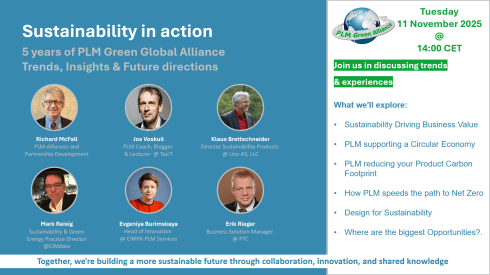
Today, the core team—Jos Voskuil, Klaus Brettschneider, Mark Reisig, Evgeniya Burimskaya, and Erik Rieger—continues to contribute deep expertise across sustainability, LCA, energy, circular economy, and design.
In November 2025, we marked our fifth anniversary with a webinar reflecting on past learnings and looking ahead to 2026. The conversation is still worth revisiting.
Now, as 2026 unfolds, the mood may feel mixed. Progress is never automatic. There are ups, downs, and work to be done.
Rich McFall stepping back!
 In early December, it became clear that Rich would no longer be able to support the PGGA for personal reasons. We respect his decision and thank Rich for the energy and private money he has put into setting up the website, pushing the moderators to remain active and publishing the newsletter every month. From the frequency of the newsletter over the last year, you might have noticed Rich struggled to be active.
Rich, we all wish you a happy and healthy continuation of your life and hope we will see you back once in a while as a contributor.
Meanwhile, Klaus Brettschneider is working on taking over and upgrading the PGGA website to bring our mission to the next level.
PGGA – the challenge is in the name
When you launch a  product or start an alliance, the name can be excellent at the start, but later it might work against you. I believe we are facing this situation too with our PGGA (PLM Green Global Alliance)
Let’s analyze the name.
The P stands for PLM.
 Whether a business delivers products or services, most of the environmental impact is locked in during the design phase—often quoted at close to 80%. That makes design a strategic responsibility not only for engineering.
Any company with a long-term vision—call it sustainable in the broad sense—must understand the environmental footprint of its offerings across manufacturing, operation, and repurposing.
Today’s “we don’t care” wave may be loud and egoistic, but it lacks durability. Forward-looking countries and companies already know this.
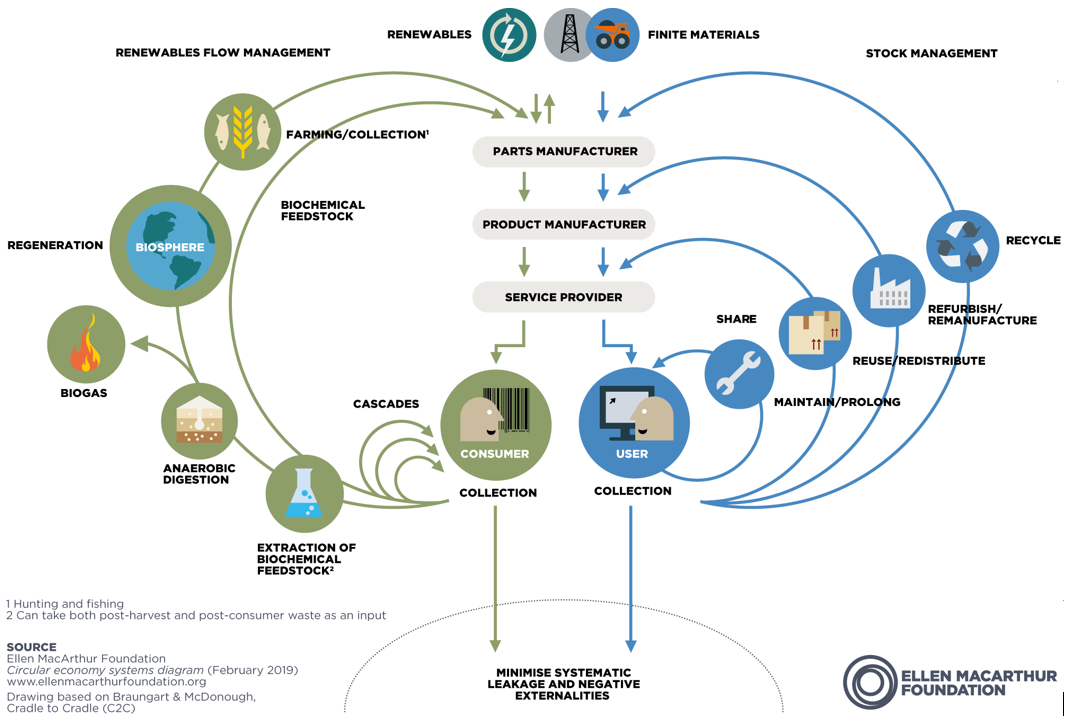
Moving toward a circular, fossil-free economy demands innovation. In that future, waste and recycling are costly options, pushed out by regulation and resource scarcity alike. Better to change your product or service delivery to align with a circular economy where possible. You can read more in my 2024 post: The Product Service System and a Circular Economy
Changing business models only possible by changing your PLM approach is often overlooked at the board level. PLM as a strategy shapes outcomes—and ultimately drives business success.
 Therefore, the P remains our primary focus area.
The G for Green
 Green has gradually acquired a negative connotation, weakened by early marketing hype and repeated greenwashing exposures. For many, green has lost its attractiveness.
After the 2015 United Nations Climate Change Conference, countries began exploring how to contribute to a healthier planet, increasingly at risk from rising carbon emissions caused by fossil fuels. This momentum led Europe, in 2020, to launch the Green Deal.
The spirit was right, but as with every new direction, failures followed. Lessons were learned, and perhaps too much academic work was done without involving businesses or the populations affected.
 It resembles old, failing PLM projects, where management launches a big-bang implementation without grasping the friction and complexity of a fundamental transformation. Behavioral change, as always, is hard, as the iconic Share PLM image illustrates – click on the image for the details.
Meanwhile, threatened industries stirred resistance, science came under pressure, and a brown movement began pushing the green one aside.
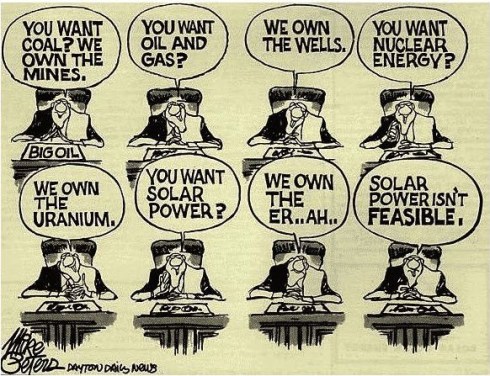
The good news is that sustainability is still alive, progressing quietly. Long-term sustainability means reducing dependence on fossil fuels, while a new battle emerges over scarce materials for the energy transition. Those who understand this are already acting—now calling it future risk avoidance.
Green has gone, replaced by proactive business sustainability.
The G from Global
 When reading or listening to the news, it seems that globalization is over and imperialism is back with a primary focus on economic control. For some countries, this means even control over people’s information and thoughts, by restricting access to information, deleting scientific data and meanwhile dividing humanity into good and bad people.
And while these countries might control 25 % of their population, the majority of people still have the opportunity to fight climate change within their reach, work on a more sustainable economy and world.
 As a global community, we have to fight and ensure that what we do is based on science and sharing facts and findings is crucial. As a coincidence, while writing this post, this article from my fellow Dutchman Robert Dijkgraaf, who is a leader in research and policy in many roles, including as minister of Education, Culture, and Science of the Netherlands (2022-2024) and director of the Institute for Advanced Study in Princeton (2012-2022).
His article: The fight to keep science global fits the mindset of our PGGA – take the time to read it and reflect on it.
Global remains our goal, and given the global population, we are looking for more voices from Asia and Africa.
The A from Alliance
 With more than 1500 members in our LinkedIn group, we are curious why you joined the PLM Global Green Alliance and assuming your positive intent to contribute to a sustainable future, where can we help you best?
There are the contributions from the leading PLM software vendors (PTC, Dassault Systèmes, SAP, Siemens, Aras, Autodesk), solution providers(Sustaira, Makersite, aPriori, Direktin) and service partners (CIMPA, ecoPLM, CIMdata) that focus on providing capabilities, methodologies and consultancy to support the transition to a more sustainable economy and bearable climate.
Let us know your questions, struggles, and intentions, either through personalized or anonymized interactions on LinkedIn – together we are an alliance.
Conclusion
Although the political climate is currently in the same condition as the planetary climate, there is still work to be done. Being an observer is the worst option, and changing the world as an individual is also a mission impossible.
However, with our niche group, The PLM Green Global Alliance, we can be part of the generation that actively pursues a sustainable future for ourselves and the next generations.
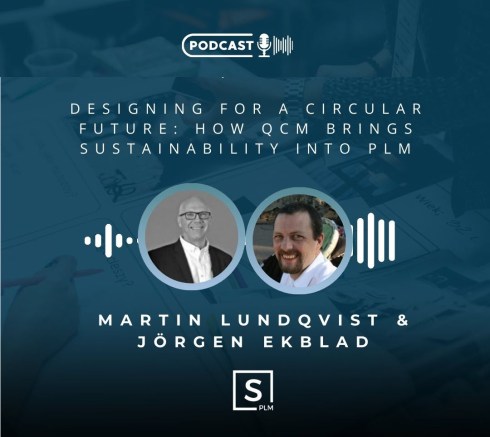
And as you can learn from this podcast, you are not alone.


 Jos Voskuil's Weblog
Leave a comment
Comments feed for this article